Table of Contents
A clean toilet bowl makes the whole bathroom feel better.
It is one of those chores nobody gets excited about, but the difference is obvious the second it is done. The room looks fresher. The smell is better. The whole space feels more cared for, even if nothing else changed.
The problem is that toilet bowls are also one of the easiest places for buildup to show up. Hard water stains. Mineral rings. Odors that do not go away fully with a quick flush. That dull, not-quite-clean look that keeps coming back no matter how often the surface gets wiped.
That is where vinegar becomes surprisingly useful.
Not as a miracle product. Not as some magical shortcut. Just as a simple, practical cleaner that helps break down buildup without making the job more complicated than it needs to be.
And honestly, that is why it works so well.
Because when it comes to bathroom cleaning, the best method is usually the one that is simple enough to repeat.
Why Vinegar Works So Well in a Toilet Bowl
The reason vinegar is so useful is that it helps loosen the kinds of buildup that toilets collect over time.
A toilet bowl deals with more than just what you can see. It also picks up:
- hard water minerals
- stains
- odor buildup
- residue along the water line
- grime around the bowl and under the rim
Vinegar is especially helpful for mineral deposits and light staining. It can soften the crusty buildup that forms from hard water and make scrubbing much easier.
That is the main reason people keep coming back to it.
It does not replace every other cleaner in the world. But for routine toilet bowl cleaning, it is an easy and effective option that keeps the job manageable.
What You Need
You do not need much.
That is part of the appeal.
For a basic vinegar toilet bowl clean, you usually only need:
- white vinegar
- a toilet brush
- gloves
- water
- optional baking soda for extra scrubbing power
That is it.
No long list of products. No complicated process. Just a few simple things that are easy to keep on hand.
The Basic Method
This is the straightforward version that works for regular toilet bowl cleaning.
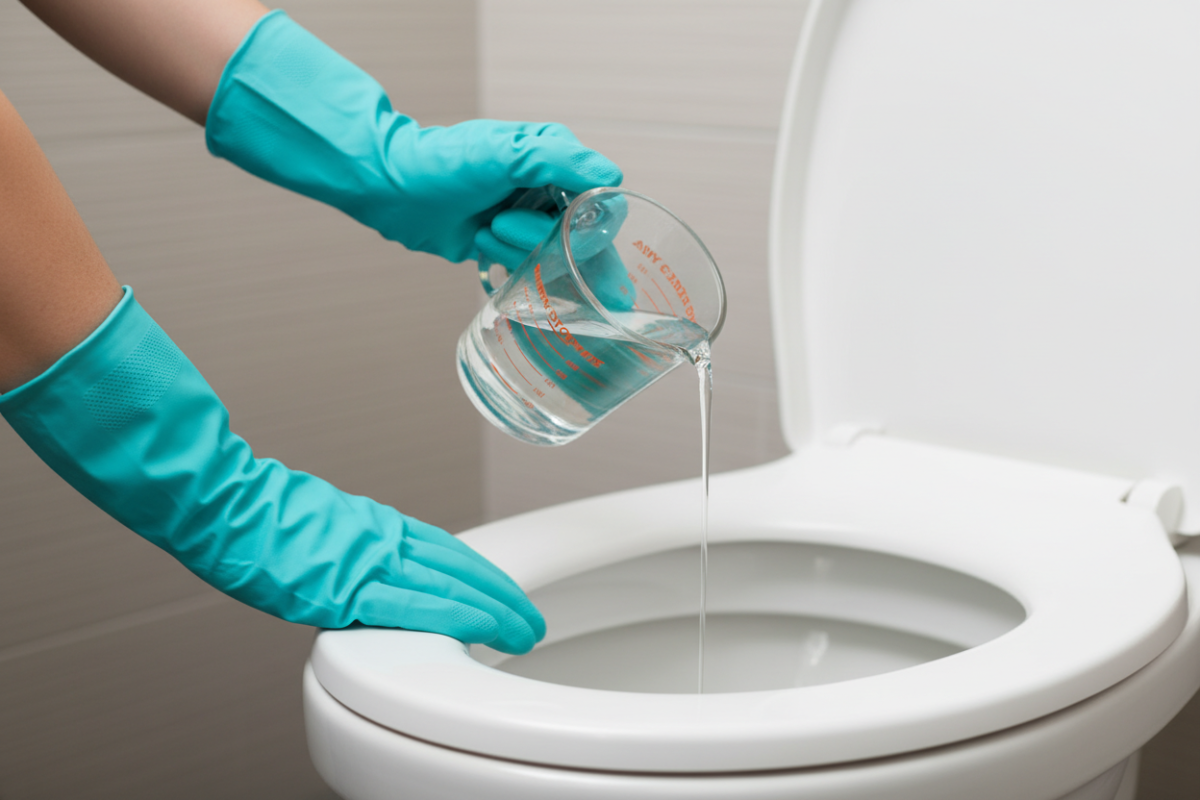
1. Pour vinegar into the bowl
Start by pouring white vinegar into the toilet bowl. Try to get some of it around the sides and under the rim if possible.
The goal is to let the vinegar reach the stained and mineral-heavy areas.
If the water level in the bowl is high, the vinegar will still work, but the more contact it has with the buildup, the better.
2. Let it sit
This part matters more than people think.
Do not rush it.
Let the vinegar sit in the bowl for a while so it has time to loosen the buildup. The longer it sits, the more helpful it can be, especially if you are dealing with hard water stains.
3. Scrub the bowl
After soaking, use a toilet brush to scrub the inside of the bowl.
Focus on:
- the water line
- the bowl walls
- under the rim
- any visible stains
Once the buildup has softened, scrubbing becomes much easier.
4. Flush
After scrubbing, flush the toilet to rinse everything away.
If needed, repeat the process on stubborn areas.
That is the basic method. Simple, practical, and easy to fit into a regular cleaning routine.
Why Waiting Helps So Much
One of the biggest mistakes people make is scrubbing too quickly.
That usually means more effort and less result.
Vinegar works best when it has time to sit on the surface. That waiting period is what helps dissolve or loosen the mineral deposits so you do not have to force them off with heavy scrubbing.
It is not exciting, but it is effective.
And in cleaning, effective usually wins.
When to Use Vinegar Instead of Other Cleaners
Vinegar is useful when the problem is:
- hard water stains
- light discoloration
- routine maintenance
- mild odor
- general buildup
It is a good choice when the toilet is not severely neglected but just needs regular care.
If the bowl is heavily stained, the buildup is thick, or the marks have been sitting there for a long time, vinegar may still help, but it may need more time or a second round.
That is why it works best as part of regular maintenance instead of waiting until the toilet is badly stained.
Adding Baking Soda
For tougher spots, baking soda can help.
When combined with vinegar, it adds a little extra scrubbing power and can make the process feel more complete.
A simple version looks like this:
- add vinegar to the bowl
- let it sit
- sprinkle in baking soda
- scrub the bowl
- flush
The texture of baking soda helps lift residue while the vinegar helps loosen deposits.
Together, they make a pretty reliable cleaning combo.
What I Like About This Method
The biggest advantage is that it is easy to repeat.
That matters more than it seems.
A lot of cleaning methods work once, but they are annoying enough that nobody keeps doing them. This one is different. It is easy to understand, easy to start, and easy to maintain.
That makes it one of the best methods for routine cleaning.
And routine cleaning is what keeps the toilet bowl from becoming a bigger project later.
What Vinegar Helps With Most
Vinegar is especially helpful for:
Mineral buildup
This is the crusty white or off-white layer that forms from hard water.
Waterline stains
These appear around the bowl where water sits or splashes repeatedly.
Light odor
It helps freshen the bowl and reduce that stale bathroom smell.
General maintenance
It is good for keeping the toilet from looking dull between deeper cleans.
That does not mean it solves everything. But it handles a surprising amount.
What It Does Not Do Perfectly
It is important to be realistic.
Vinegar is useful, but it is not magical.
It may not fully remove:
- deep rust stains
- very old mineral rings
- extreme discoloration
- heavy buildup that has been sitting for months
In those cases, vinegar may still help soften the stain, but it might not be enough on its own.
That is why the best use for it is regular upkeep.
A Good Cleaning Routine
You do not need to wait until the bowl looks bad.
A simple routine keeps things much easier.
For example:
- once a week for light maintenance
- more often if you have hard water
- deeper cleaning if you notice buildup starting
That kind of routine keeps the toilet from getting to the point where you have to fight it.
And fighting the toilet is never fun.
The Best Time to Clean It
The easiest time is when you are already doing bathroom cleaning.
If you are wiping sinks, cleaning mirrors, or scrubbing the shower, add the toilet bowl to the same session.
That way the task feels smaller and more manageable.
It also helps you keep a rhythm, which is what makes a cleaning routine actually last.
What to Do With Stubborn Rings
If there is a visible ring in the toilet bowl, vinegar can still help.
The key is to let it sit longer.
You can also:
- add more vinegar
- scrub more than once
- repeat the process if needed
A stubborn ring usually means the buildup has had time to set. That does not mean it cannot be cleaned. It just means it may take more patience.
Why Toilet Bowls Need Regular Attention
It is easy to ignore the toilet because it gets flushed constantly.
But flushing does not mean cleaning.
Over time, the bowl can still collect:
- mineral deposits
- hidden grime
- stains around the water line
- odors in the bowl and around the seat area
That is why regular maintenance matters.
The bowl may seem fine day to day, but a little buildup can become very visible if it is ignored.
A Simple Habit That Helps a Lot
One of the easiest ways to keep the toilet bowl cleaner is to stay ahead of the problem.
That means not waiting until it looks bad.
A quick vinegar treatment now and then can prevent deeper stains later.
It is much easier to maintain a clean bowl than to rescue a dirty one.
That is true for almost every cleaning task, but especially this one.
Why This Method Feels Less Overwhelming
A lot of people put off toilet cleaning because it feels unpleasant before they even begin.
But a simple vinegar method reduces that mental barrier.
There is less equipment. Less mess. Less decision-making.
Once the process is simple, it is easier to actually do it.
And that is often the difference between a bathroom that stays clean and a bathroom that slowly gets away from you.
Safety Notes
This part matters.
Vinegar is simple and useful, but it should still be used responsibly.
A few basic things to keep in mind:
- wear gloves if you prefer
- make sure the bathroom is ventilated
- do not mix vinegar with chemicals you should not combine
- always rinse and flush properly afterward
The goal is to clean the toilet safely and keep the process easy, not create a stronger mess.
What Makes This Such a Practical Option
A lot of cleaning products promise dramatic results.
But most people do not need dramatic.
They need practical.
Vinegar is practical because it is:
- easy to find
- easy to use
- inexpensive
- effective for routine buildup
- simple enough to repeat regularly
That combination is hard to beat.
The Real Benefit of Cleaning This Way
The biggest benefit is not just that the toilet looks cleaner.
It is that the whole bathroom feels more maintained.
A clean bowl changes the impression of the entire room. It makes the space feel fresher and less neglected.
That is why small cleaning habits matter so much.
They create a better feeling in the room without requiring a full-day cleaning project.
If You Want Better Results Over Time
Consistency is the key.
The more often you clean before buildup becomes heavy, the easier the process gets.
That means:
- vinegar treatments before stains become strong
- regular scrubbing before rings get dark
- quick attention instead of long delays
That is the real secret.
Not stronger effort. Just earlier effort.
Final Thoughts
Cleaning a toilet bowl with vinegar is one of those tasks that seems almost too simple.
But simple is often the point.
If you want a method that helps with hard water stains, light buildup, and routine toilet maintenance, vinegar is a strong option. It softens deposits, makes scrubbing easier, and helps keep the bowl looking fresher between deeper cleans.
The biggest thing to remember is this:
cleaning works best when it becomes a habit, not a rescue mission.
Once you treat toilet bowl care as a regular part of your bathroom routine, it stops feeling like a bigger job than it really is.
And that makes the whole room easier to keep under control.