Table of Contents
Winter has a way of turning something ordinary into a daily negotiation.
You wake up cold. You walk into a room that feels a little too brisk. You think about the thermostat. Then you think about the bill. Then you think about whether it is worth nudging the heat up just one more degree.
And suddenly, a tiny number on a wall becomes a full-time decision.
That was the part I used to underestimate.
I thought the “right” winter thermostat setting was supposed to feel obvious. Warm enough to be comfortable, low enough to save money, simple enough to forget about after a while. But in real life, it rarely works that neatly. A house has different rooms, different people, different routines, and different tolerance levels for cold. What feels cozy to one person feels unnecessary to another. What seems efficient in theory can feel miserable by morning.
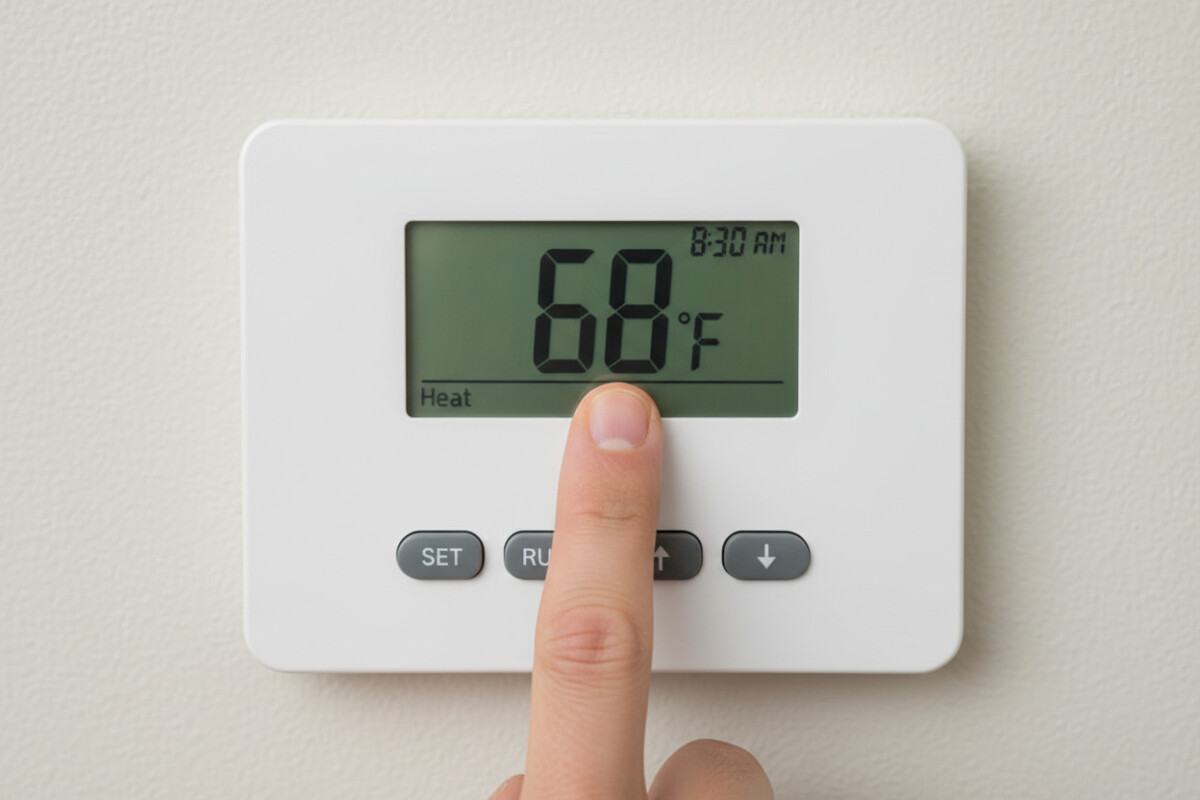
Over time, I learned that the best thermostat setting for winter is not about pushing the heat as high as possible. It is about finding a steady rhythm that keeps the home comfortable without making the heating system do more work than necessary. The basic starting point most people use is 68°F when you are home and awake, and that turned out to be a much more useful rule than I expected.
What changed everything for me was not just the number itself. It was understanding how to use it through the day.
Why 68°F Became My Starting Point
There is a reason 68°F (20°C) comes up so often in winter heating conversations. It is a balanced setting. It is warm enough for daily living in most homes, but not so high that the furnace has to keep cycling constantly to maintain the temperature. The idea is simple: the bigger the gap between indoor and outdoor temperatures, the harder your home works to hold onto heat. A moderate indoor setting reduces that strain and helps slow heat loss.
At first, 68°F may sound a little low if you are used to 72°F or higher. I felt that too. The first few days can feel like a small adjustment, especially if your home has drafty spots or tile floors that seem to pull the warmth right out of the room. But once you get used to it, 68°F starts to feel less like a compromise and more like a comfortable baseline.
That is the key difference.
It is not about making the house feel warm in the same exaggerated way a summer day feels hot. It is about creating a background warmth that supports daily life without overdoing it. In a lot of homes, that is enough.
The Temperature That Feels Best Changes During the Day
One thermostat setting for the entire day sounds convenient, but it is not usually the smartest approach. A better winter routine is to use a few different settings depending on what you are doing.
When people are active around the house, 68°F works as a good general target. When everyone is asleep, the home does not need to feel the same way it does at noon. And when nobody is there for several hours, heating empty air is simply wasted energy.
That shift in thinking matters.
A thermostat is not just a comfort dial. It is a schedule tool.
Once I started treating it that way, winter got easier. I stopped asking, “What should the house be all the time?” and started asking, “What does the house actually need right now?” That small change made the whole system feel more manageable.
The Best Setting When You Are Home and Awake
If you are home, moving around, cooking, working, or just living in the space, 68°F is the best place to begin. It is the standard setting most people can use without making the house feel too warm or too cold.
What I like about this number is that it is realistic. It does not pretend every home is perfectly insulated. It does not assume everyone is wearing a sweater indoors all day. It gives you enough warmth to be functional while still keeping the furnace from running harder than it needs to.
That matters because every extra degree has a cost. The difference between a home set at 68°F and one set at 72°F is not just four numbers on a screen. It is a difference in how often the system turns on, how long it stays on, and how much energy it uses to maintain that extra warmth. The thermostat does not care whether the house feels “a little nicer.” It just keeps responding to the target you give it.
And that is why the standard daytime setting matters so much.
What to Do When You Are Sleeping
Nighttime is where a lot of people miss easy savings.
There is no real reason to keep the whole house heated the same way when everyone is under blankets. A cooler sleeping environment is often more comfortable for rest anyway. A practical nighttime range is 60°F to 65°F.
That range makes sense because it gives you a noticeable setback without making the room feel unlivable. You are still protecting the house from getting too cold, but you are no longer paying to maintain daytime comfort levels while nobody is awake to benefit from them.
This was one of the easiest changes for me to adopt because it fits how sleep actually works. Most people sleep better when the room is cooler than their waking space. Once I stopped expecting the house to stay at one cozy temperature all night, the whole routine felt more natural. The bedtime temperature became part of the rhythm, not a sacrifice.
If you are someone who hates getting into cold sheets, the fix is not necessarily to raise the thermostat all night. It can be as simple as warmer bedding, heavier pajamas, or making the bedroom itself the room you prioritize instead of the whole house.
What to Do When You Are Away for the Day
This is the easiest place to save energy without feeling deprived.
If the house is empty for several hours while you are at work, at school, or out running errands, there is no reason to keep it at the same temperature you want when you are home. A drop of 7 to 10 degrees from your normal setting is a sensible move, which puts many homes around 58°F to 61°F during the day.
That kind of setback works because it reduces the amount of heat your home loses while nobody is inside using it. The house still stays safe and protected, but the system is not spending hours maintaining a level of warmth that nobody is there to enjoy.
This was the change that made winter bills feel less frustrating. It is one thing to pay for heat when you are using it. It is another to pay for empty rooms to stay warm just because you forgot to adjust a setting.
A lot of people assume it is easier to leave the thermostat alone, but in practice, a small scheduled drop usually pays off quickly. The habit becomes automatic after a while.
What to Do When You Leave for Vacation
Vacations need a different strategy.
You do not want to turn the heat off completely in winter. That may sound efficient, but it can put your plumbing at risk. Pipes need protection from freezing, and a home left too cold can create serious damage if water inside the plumbing system freezes and expands. A safe winter vacation setting is generally 50°F to 55°F.
That range is low enough to save energy while still keeping the house within a safer temperature zone. It protects the structure without wasting heat on an empty home.
This is one of those settings you do not want to guess about casually. It is not just about comfort anymore. It is about avoiding a problem that can cost far more than any seasonal heating bill.
When I started thinking of the thermostat as part of home protection, not just personal comfort, the vacation setting made much more sense.
How Much You Can Save by Lowering the Thermostat
The savings are not imaginary.
A commonly cited rule is that you can save about 1% on your annual heating bill for every degree you lower the thermostat, as long as the lower setting lasts for at least eight hours a day.
That means the small changes really do matter.
If you lower the temperature at night and while you are away, the savings can add up more than most people expect. You are not just shaving off one tiny moment of use. You are changing the heating pattern across long stretches of the day. Over the course of a winter, that becomes meaningful.
What I like most about this idea is that it gives a real reason to stay consistent. It is not about obsessing over every degree. It is about using a setting that makes sense for the whole season instead of reacting emotionally to every cold breeze.
A thermostat set with intention can cut waste without making the house uncomfortable.
Why It Feels Colder Than the Number Suggests
One of the strange things about winter is that the thermostat number and the human feeling of warmth are not the same thing.
A home at 68°F can feel warmer or colder depending on several factors:
- drafty windows
- flooring material
- humidity
- air movement
- sunlight
- how many people are in the room
So sometimes the thermostat is technically fine, but the room still feels off.
That was the part I had to stop arguing with. If a room feels cold, the answer is not always to raise the entire house temperature. Often, the room needs a different fix. Maybe the draft is coming from a window. Maybe the air is moving too much. Maybe the curtains are thin. Maybe the ceiling fan is pushing air the wrong direction.
Once you understand that, the thermostat becomes just one piece of the winter comfort puzzle instead of the whole puzzle.
The Clothing Trick That Makes a Big Difference
This sounds basic because it is basic, and that is exactly why it works.
If the house is set a little cooler, your clothing can make up the difference. Warm socks, thicker layers, slippers, and cozy loungewear all help the lower setting feel more natural.
A lot of people try to solve a clothing problem with thermostat changes. That becomes expensive fast. Sometimes the easier answer is simply to dress for the season indoors the same way you do outdoors.
I noticed this most in the evening. If I was sitting still for a while, 68°F felt cooler than I wanted. But once I got used to wearing a sweater or keeping a blanket nearby, the same room felt completely reasonable.
That is the point where comfort stops being purely about temperature and starts becoming about habits.
Why Curtains and Sunlight Matter More Than People Think
Windows are one of the biggest places heat is lost. They are also one of the easiest places to gain some free warmth during the day.
Opening curtains on sunny windows during daylight can help bring natural heat into the house. Closing them at night helps keep that warmth from escaping through the glass. Heavy curtains can help reduce drafts and act as an extra layer of insulation.
This is one of the few winter habits that feels almost unfairly effective. It does not cost anything. It does not require a major upgrade. It just asks you to use the sunlight while it is available and block the cold when it is not.
I started paying more attention to how much warmth was escaping through the windows, and it changed how I thought about the whole house. A thermostat is important, but it cannot fix a room that is quietly leaking heat all day long.
Why Ceiling Fans Can Help in Winter
Ceiling fans are usually associated with summer, but they can help in winter too.
If your fan has a reverse setting, running it slowly clockwise can help push warm air that rises near the ceiling back down into the room. That can make the space feel warmer without changing the thermostat at all.
This is one of those details that sounds small until you actually notice the difference. Warm air naturally rises. If it collects near the top of the room, you are paying to heat air that you are not really using. Reversing the fan helps make better use of that warm layer.
It is not dramatic. But winter comfort rarely comes from one dramatic fix. It usually comes from a handful of small ones working together.
Why Sealing Drafts Is So Worth It
A heating system cannot win against constant heat loss.
If warm air is escaping through gaps around windows, doors, attic edges, or other cracks, the furnace keeps working harder to replace what is being lost. That means more cycling, more strain, and more wasted energy. Sealing drafts with weatherstripping, caulk, or door stoppers is one of the most effective things you can do to support your thermostat setting.
This is where the thermostat becomes only part of the solution.
If the house is sealed better, 68°F feels easier to maintain. If the house leaks, even a warmer setting may never feel truly comfortable. A drafty house can make a very reasonable thermostat setting feel like it is not working.
That is why I stopped treating temperature and insulation as separate issues. They go together.
Why HVAC Maintenance Matters More in Winter
A dirty filter or neglected heating system makes everything harder.
If the air filter is clogged, the system has to work harder to move heated air through the home. That can reduce efficiency and create avoidable wear on the equipment. Regular filter checks and an annual heating tune-up help the system perform the way it should.
This is one of those chores that is easy to ignore because the thermostat still seems to be doing its job. But “still working” is not the same as “working well.”
A well-maintained system supports every other heating decision you make. You can set the thermostat correctly, but if the HVAC system is struggling, the house will not respond the way it should.
Why Programmable Thermostats Make Winter Easier
Manually changing the thermostat all day is possible, but it is not always realistic.
A programmable thermostat lets you set a routine. You can lower the heat at night and raise it again before morning. That removes the need to remember every change yourself. Smart thermostats take it even further by learning routines, tracking schedules, and adjusting remotely through an app. Some can even lower the heat automatically when you leave the house.
That kind of automation is useful because the best winter thermostat setting is not just a number. It is a pattern.
The more the schedule matches real life, the easier it becomes to keep energy use under control without feeling like you are constantly managing the house. A smart thermostat does not replace judgment, but it removes a lot of the friction.
And friction is often what makes good habits fail.
How Pets Affect the Winter Setting
Pets change the calculation a little.
Most healthy dogs and cats can handle indoor temperatures in the 60°F to 68°F range comfortably. But that does not mean every pet is the same. Hairless animals, young pets, and older pets with health issues may need extra warmth or a heated bed.
That is one reason I do not like treating winter thermostat advice as one-size-fits-all. A house with a senior cat is different from a house with no pets at all. A home with a hairless breed is different from one with a thick-coated dog that curls up on a blanket and sleeps through the night.
Comfort is not only a human issue.
Why Some People Need a Warmer Home
There are also health-related exceptions.
For infants, older adults, and people with certain medical conditions, 68°F may feel too cool, and a setting around 70°F to 72°F is often more appropriate.
That is an important reminder that the “best” thermostat setting depends on the people living in the home. Efficiency matters, but comfort and health matter too. A smart winter plan is one that respects both.
So while 68°F works well as a general starting point, it should never be treated like a rigid rule that overrides common sense.
Why Houseplants Are Part of the Conversation Too
This surprised me the first time I saw it mentioned, but it makes sense.
Many houseplants, especially tropical ones, prefer temperatures in the 65°F to 75°F range. If a home drops too low for too long, some plants can react badly by dropping leaves, slowing growth, or struggling more than expected.
If you keep a lot of indoor plants, this is worth remembering before lowering the thermostat too far while you are away. The house does not have to be tropical, but it should still stay within a range that does not harm the living things inside it.
That is another reason why winter settings should be thought through carefully, not guessed.
The Myth That Heating More Is Always Better
One of the most persistent winter myths is the idea that it takes more energy to let the house cool down and then reheat it than to keep it warm all day. That is not how the physics works. A house loses heat faster when the indoor and outdoor temperatures are farther apart, so keeping it warmer all day can actually waste more energy overall.
This was a mental shift for me.
At first, I assumed steady warmth meant less effort. But once you think about how heat escapes, it becomes clear that a lower setback during sleep or absence is not a sacrifice. It is efficiency.
The house does not “remember” that it was warm earlier. It only responds to the conditions it has right now.
Why Space Heaters Are Not the Easy Fix People Think They Are
Space heaters have their place, but they are not a magical replacement for central heating.
They are useful for warming one room briefly, especially if you are working in a small area that needs extra comfort. But using them to heat an entire house is usually inefficient and expensive compared with keeping the home’s main system set correctly.
I think people reach for space heaters when the main thermostat setting feels inconvenient. That is understandable. But it often creates a different kind of cost. The better approach is usually to adjust the home itself, then use a small heater only where needed.
That keeps the overall system cleaner and simpler.
The Winter Routine That Finally Felt Sustainable
The routine that worked for me was not dramatic.
It was just consistent.
At home and awake, I aimed for 68°F. At night, I let it drop into the 60°F to 65°F range. When I was out for the day, I lowered it by 7 to 10 degrees. When I traveled, I kept it safely at 50°F to 55°F.
Then I supported those settings with a few habits:
- heavier curtains at night
- warmer clothes indoors
- better draft control
- regular HVAC maintenance
- smarter fan use
None of those things alone changed everything. But together, they made winter easier to live with.
That is the real lesson.
The best thermostat setting for winter is not just a number. It is a system that makes the number work.
Final Thoughts
If winter has ever made your home feel like a constant argument between comfort and cost, you are not imagining it.
That tension is real. But it does not have to stay that way.
For me, the simplest routine works best:
- 68°F when home and awake
- 60°F to 65°F when sleeping
- 58°F to 61°F when away for the day
- 50°F to 55°F when traveling
A good winter setting starts with 68°F when you are home and awake, then shifts lower at night and while you are away. A small setback can save real money over the course of the season, especially when it is paired with smart habits like sealing drafts, using curtains well, maintaining your HVAC system, and adjusting for pets or vulnerable people in the house.
What I like most about this approach is that it does not ask for perfection.
It just asks for consistency.
And in winter, consistency is usually what makes a home feel warm enough, manageable, and a lot less expensive to live in.