Table of Contents
Welcome to the exciting world of parenthood! Preparing for a new baby is a magical time, filled with tiny socks, adorable onesies, and endless baby gear. But let’s be honest—all those miniature items can quickly turn a peaceful room into a chaotic mess. If you are feeling overwhelmed, don’t worry. Learning the best methods for organizing a nursery is the key to maintaining your sanity and creating a calming environment for both you and your little one.
In this comprehensive guide, we will explore the most effective and easy tricks for organizing a nursery. Whether you are working with a spacious room or a tiny apartment corner, these practical tips will help you maximize your space, streamline your daily routines, and ensure that everything you need is always right at your fingertips.
Why Organizing a Nursery is Crucial for New Parents
When you bring your newborn home, your life will change in beautiful but exhausting ways. Sleep deprivation makes even the simplest tasks feel monumental. This is exactly why organizing a nursery before your baby arrives is so essential.
A well-organized space saves you precious time. Imagine dealing with a diaper blowout at 3:00 AM; the last thing you want to do is frantically search for wipes or a clean outfit in the dark. By implementing smart nursery organization ideas, you establish a system where every single item has a dedicated home. This not only reduces stress but also ensures safety, as you can keep one hand on your baby while easily grabbing what you need with the other.
Moreover, a tidy room promotes a serene atmosphere. Babies are highly sensitive to their environment, and a clutter-free room can contribute to better sleep for your baby—and consequently, for you!
Clever Nursery Organization Tricks You Need to Try
Ready to transform that chaotic room into a perfectly curated sanctuary? Here are the top tricks and strategies for organizing a nursery efficiently and stylishly.
1. Create Functional Zones
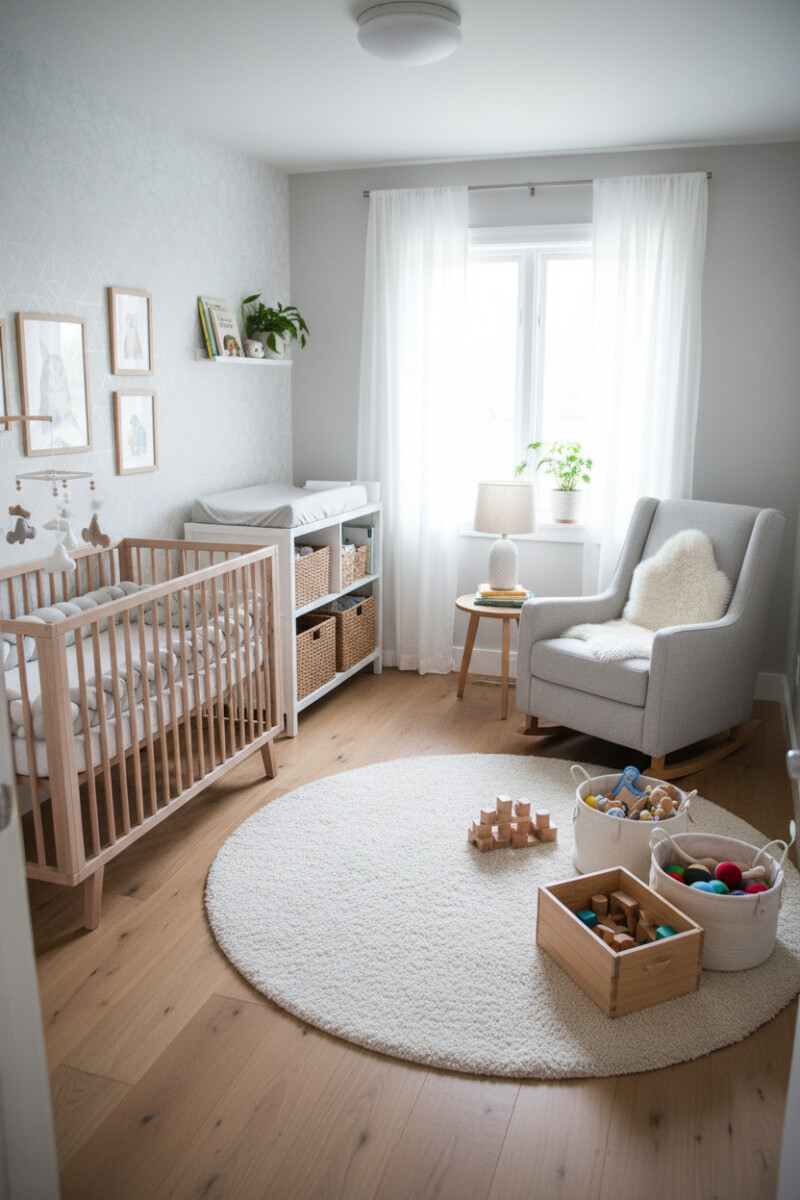
The secret to a highly functional room is dividing the space into distinct zones based on your daily activities. Typically, a baby’s room should have four main areas: a sleeping zone, a changing zone, a feeding zone, and a play zone.
- Sleeping Zone: Keep the area around the crib free of heavy wall hangings and clutter. Store extra crib sheets and swaddles in a nearby drawer.
- Changing Zone: Your changing table should be the ultimate command center. Keep diapers, wipes, diaper rash cream, and a diaper pail within an arm’s reach.
- Feeding Zone: Place a comfortable glider or rocking chair in a quiet corner. Add a small side table for your water bottle, burp cloths, and a soft nursing light.
- Play Zone: Designate a floor space with a soft rug, a play gym, and easily accessible toy bins.
2. Maximize Closet Space with Clever Add-Ons
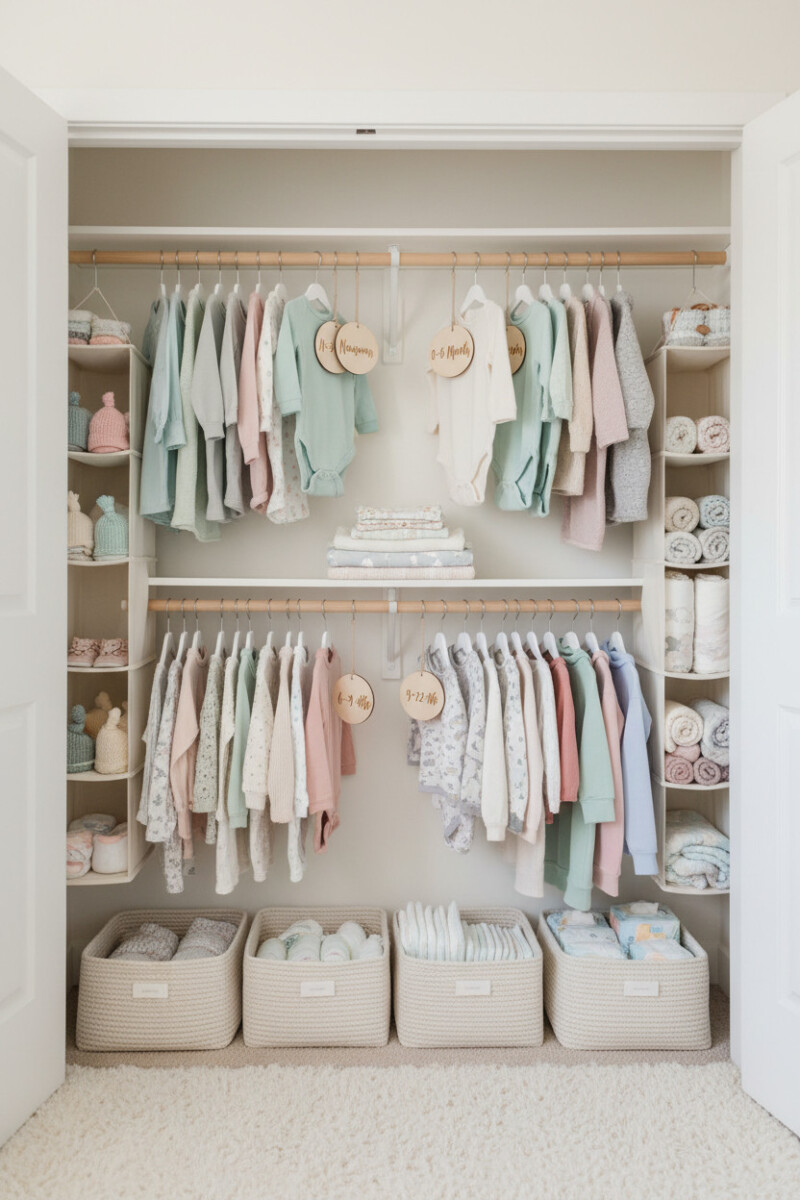
Baby clothes are incredibly small, which means traditional closets often leave a lot of wasted vertical space. To optimize your nursery closet, install a double hanging rod. This instantly doubles your hanging capacity, allowing you to separate clothes by size or season.
Additionally, utilize hanging closet organizers with open shelves. These are perfect for storing folded sweaters, swaddles, or extra boxes of wipes. Don’t forget to use closet size dividers! These handy little tags go on the closet rod and separate clothing by age (e.g., 0-3 months, 3-6 months), making it incredibly easy to find the right fit as your baby grows at lightning speed.
3. Use a Rolling Cart for a Mobile Diaper Station
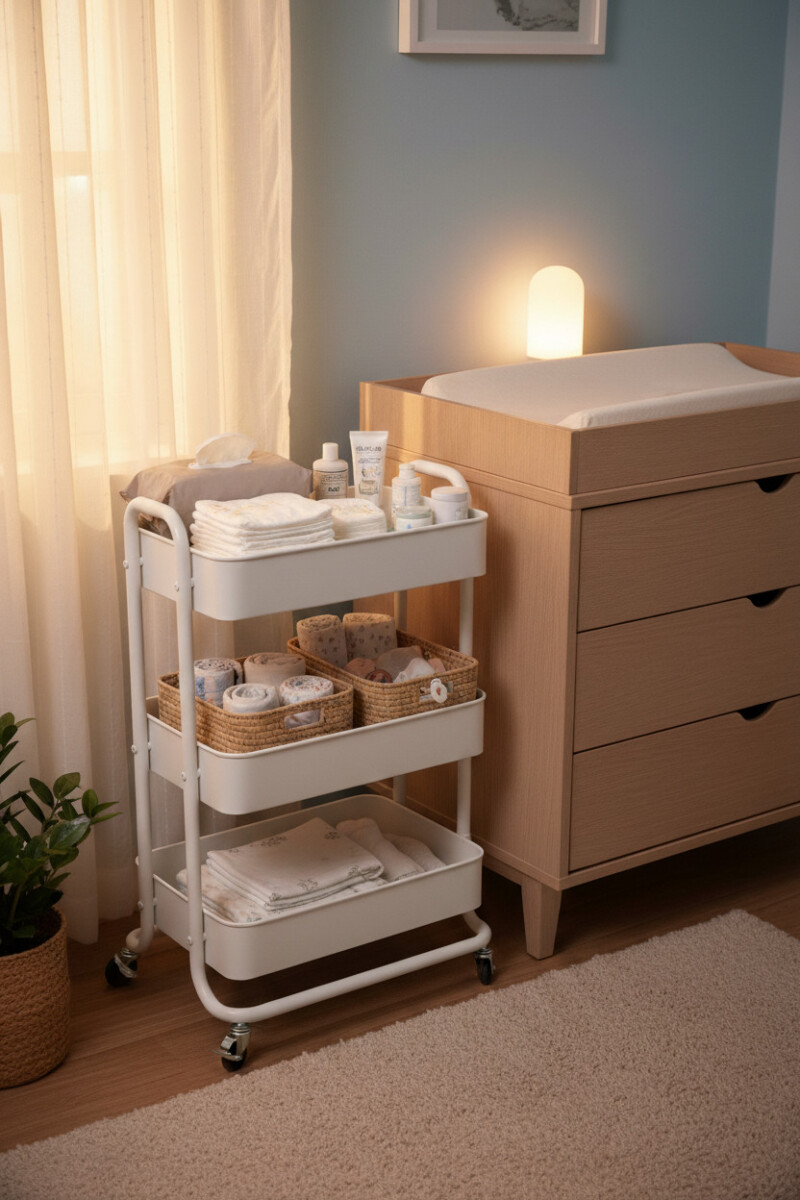
One of the most popular and versatile tools for organizing a nursery is a multi-tier rolling cart. Often referred to as a “utility cart,” this piece of furniture is a massive game-changer for new parents.
Stock the top tier with your most frequent necessities: diapers, wipes, and hand sanitizer. Use the middle tier for lotions, nail clippers, and diaper rash creams, and the bottom tier for extra burp cloths or receiving blankets. The best part? Because it’s on wheels, you can easily roll your mobile diaper station into the living room or your bedroom during those early weeks when the baby is sleeping in your room.
4. Master the Art of Drawer Dividers
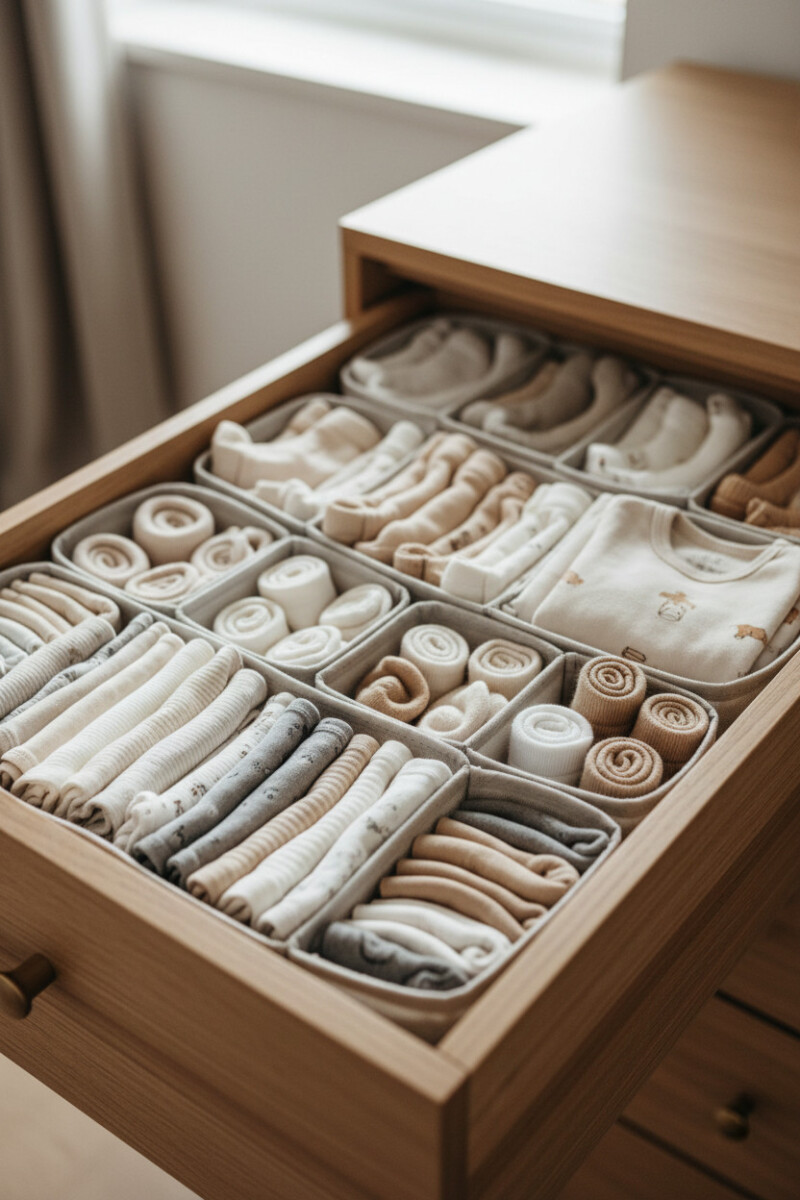
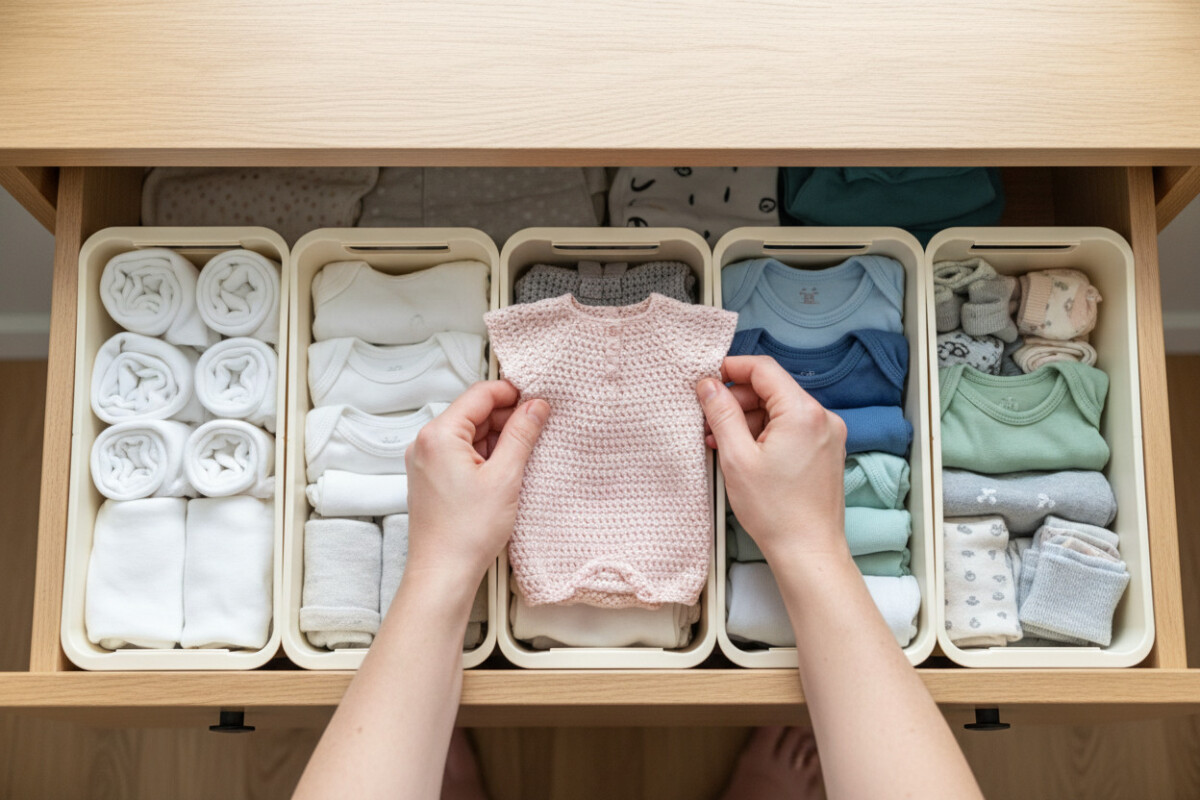
If you simply throw baby clothes into a dresser, they will quickly become a tangled, disorganized mess. Tiny socks and miniature onesies easily get lost. The solution? Drawer dividers.
Use spring-loaded dividers or small fabric storage boxes to compartmentalize your dresser drawers. Instead of stacking clothes on top of each other, use the file-folding method (folding clothes so they stand upright). This allows you to see every single item at a glance without messing up the entire stack. Dedicate specific compartments for long-sleeve onesies, short-sleeve onesies, pants, and pajamas to keep your dresser organization flawless.
5. Utilize Under-Crib Storage Space
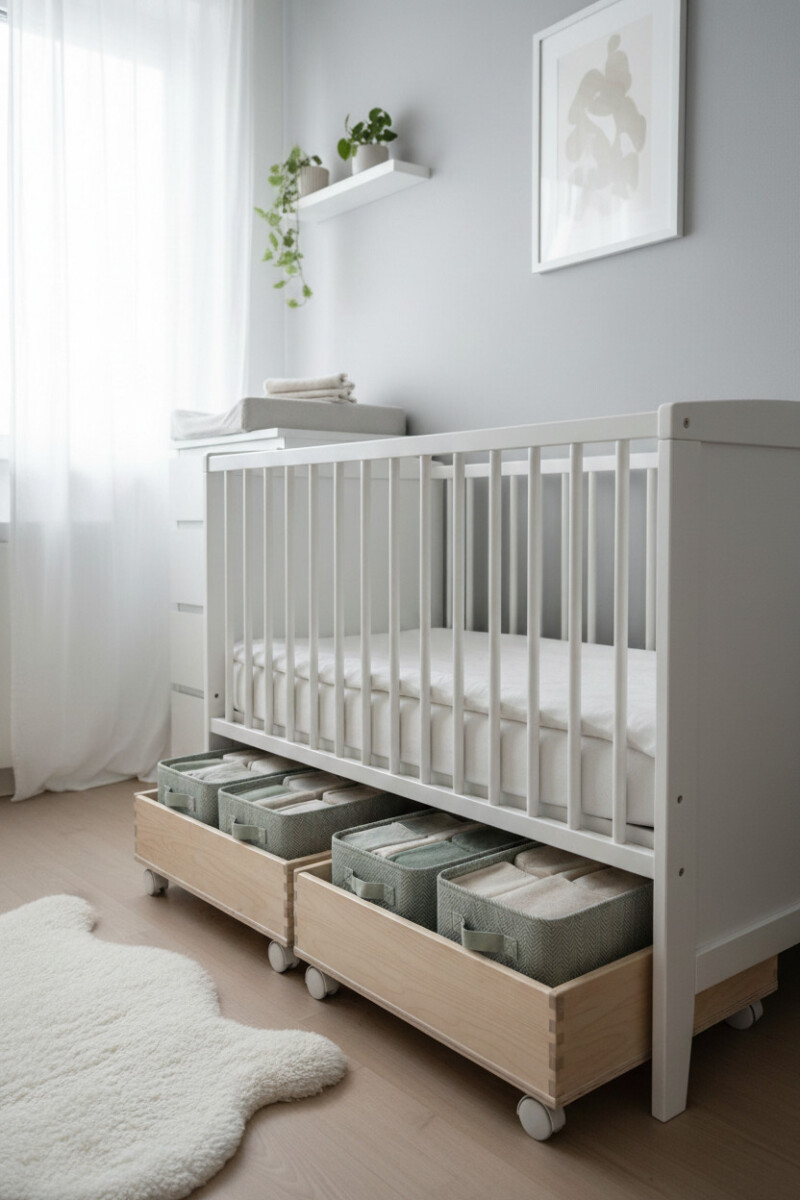
When you are working with a small space, you need to use every square inch available. The gap beneath your baby’s crib is prime real estate for hidden storage.
Invest in shallow, rolling storage bins or soft, zippered fabric bags that can easily slide under the crib. This is the perfect spot to stash items you don’t need on a daily basis, such as out-of-season clothing, clothes your baby hasn’t grown into yet, or bulky extra packages of diapers and wipes. To keep dust away, ensure the bins have secure lids.
6. Install Floating Shelves for Books and Decor
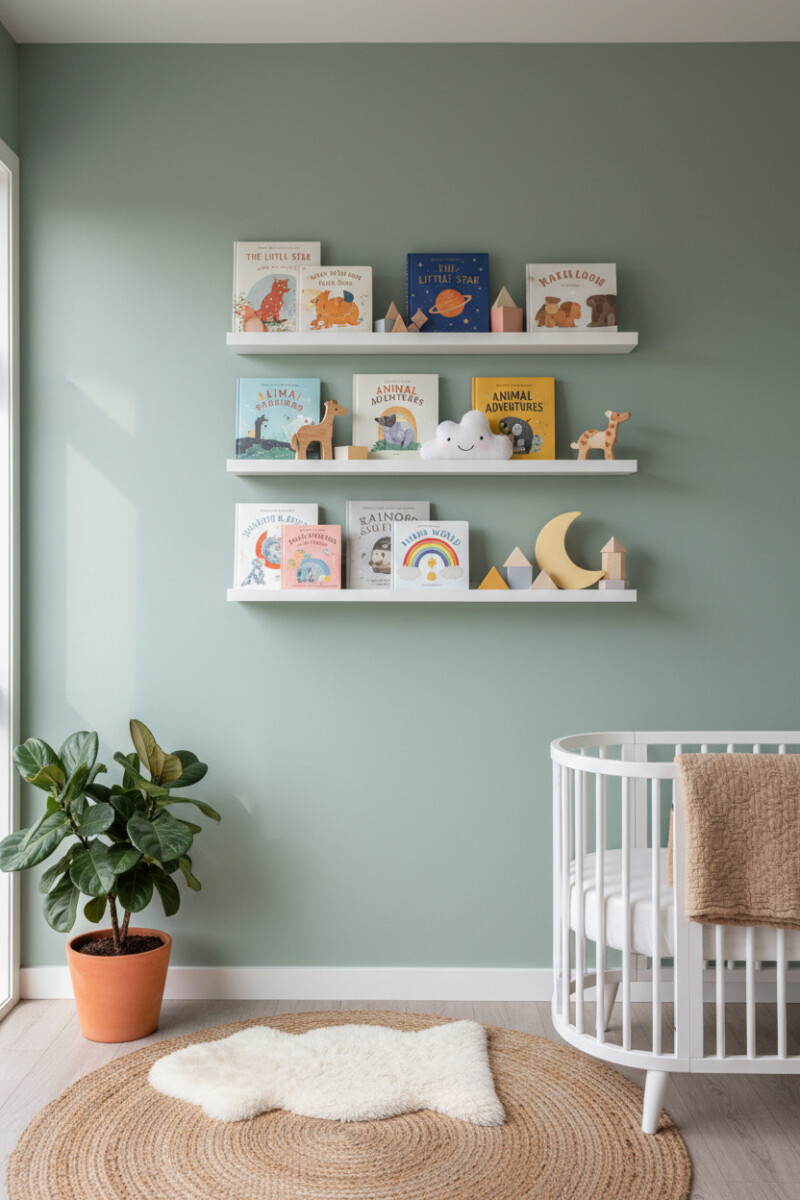
Floor space is precious, so look to your walls! Installing floating shelves or picture ledge shelves is an excellent way to display your child’s growing book collection. Not only does this keep books off the floor and out of toy boxes where they can get damaged, but it also turns beautiful book covers into affordable nursery wall decor.
Place the shelves at a low height if you want your toddler to eventually reach them, or place them higher up to store delicate items, keepsakes, and baby monitors safely out of reach of curious little hands.
7. Label Everything for Easy Maintenance
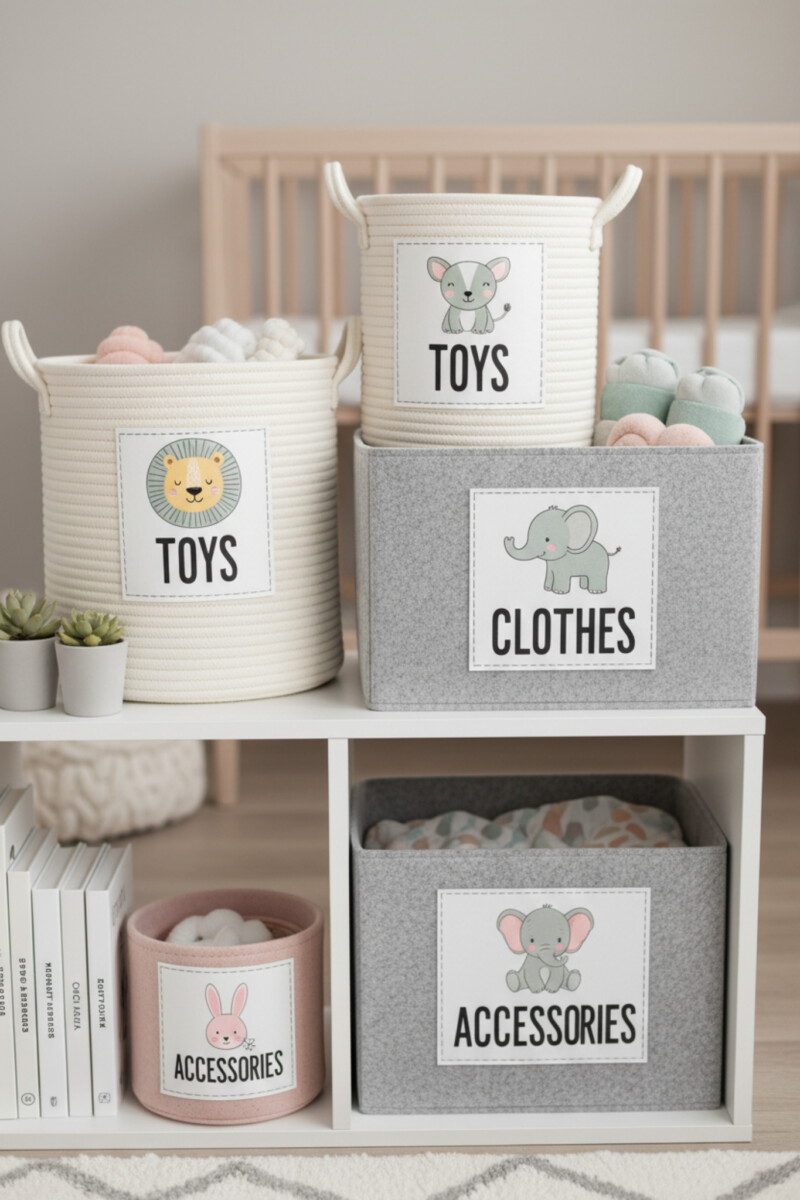
You might know exactly where the extra pacifiers are, but will your partner, the babysitter, or the grandparents? To make sure your meticulously organized system stays intact, label everything.
Use a label maker or cute printable tags for baskets, bins, and drawers. Labeling is a cornerstone of organizing a nursery because it removes the guesswork. When it’s time to put away laundry, a labeled drawer ensures that socks go exactly where they belong, keeping your nursery organization system flawlessly maintained month after month.
8. Hang an Over-the-Door Organizer
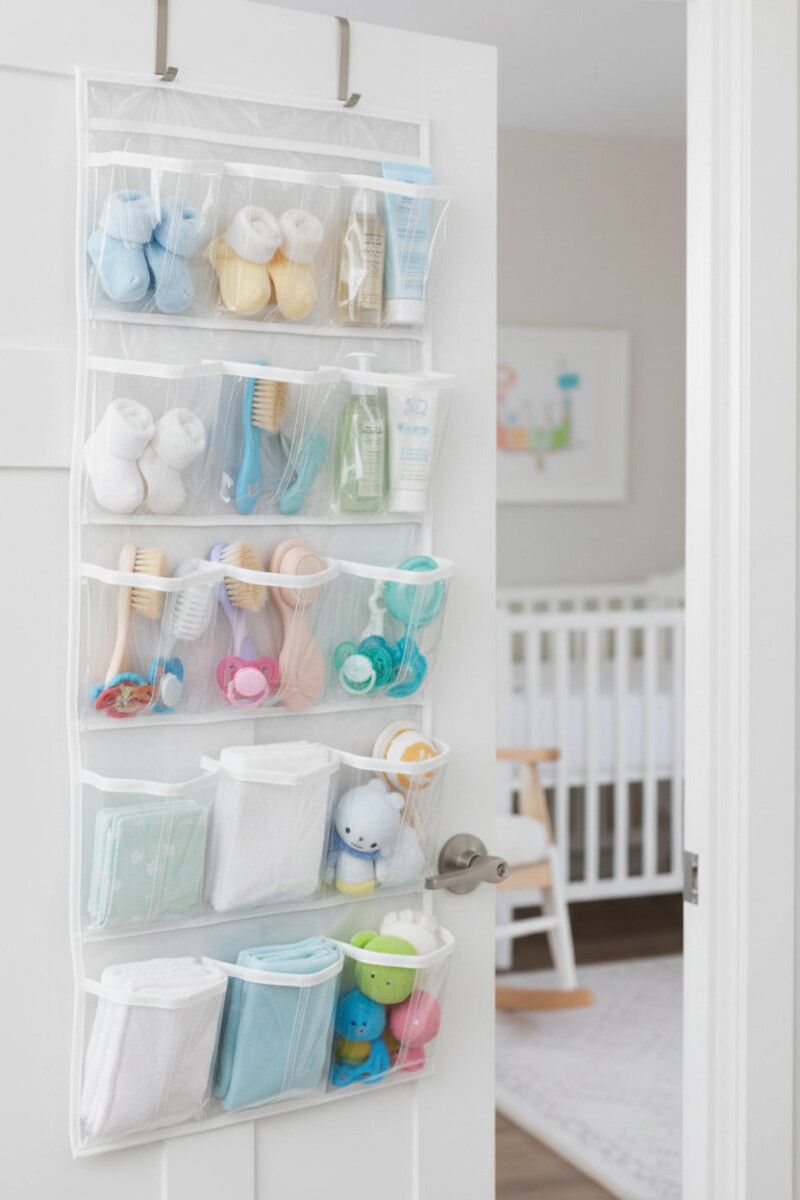
The back of the nursery door (or closet door) is a frequently overlooked storage opportunity. An over-the-door shoe organizer with clear plastic pockets is incredibly useful in a baby’s room.
You can use these pockets to store a multitude of small items: rolled-up burp cloths, rolled socks, baby lotions, hairbrushes, thermometers, and tiny shoes. Because the pockets are clear, you can easily spot exactly what you need in seconds. It’s an inexpensive trick that provides a massive amount of accessible storage without taking up an inch of floor space.
9. Rely on Baskets and Bins for Toys and Blankets
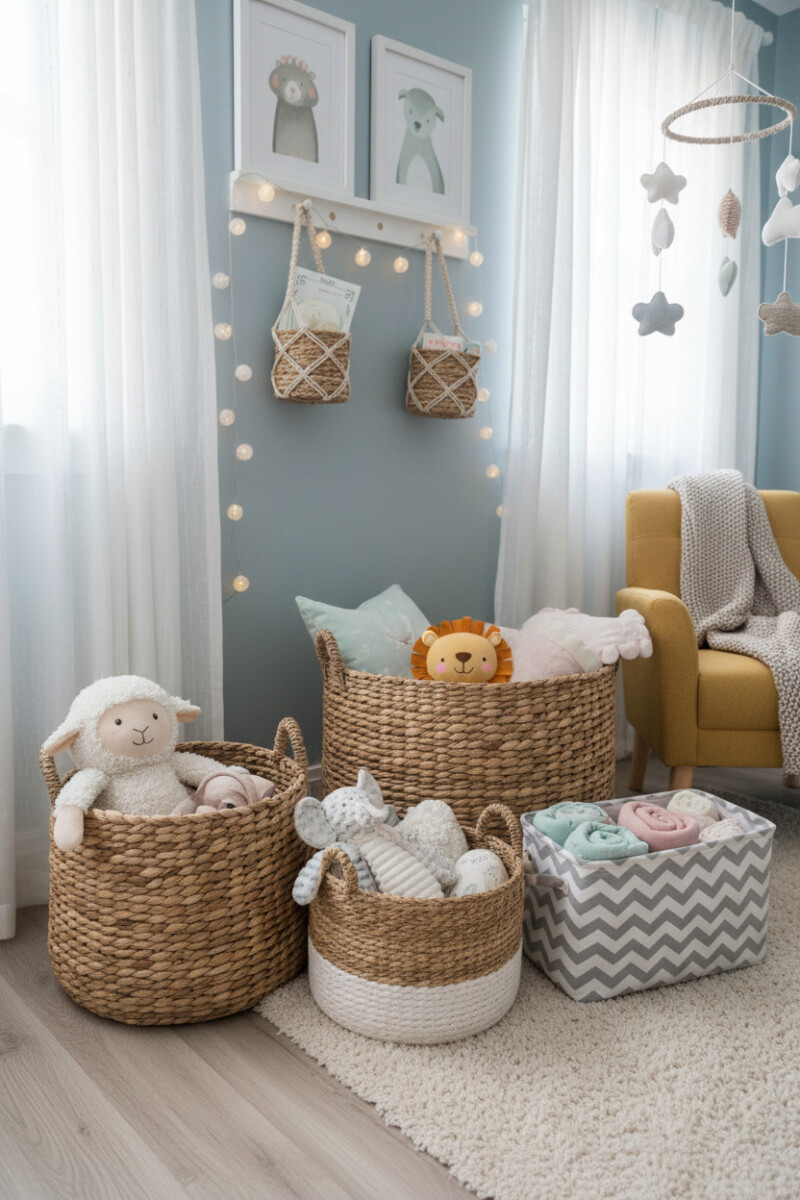
You can never have too many baskets when setting up a baby’s room. Woven baskets, canvas bins, and rope totes are aesthetically pleasing and highly functional.
Keep a large, soft-sided basket near the glider for cozy blankets and stuffed animals. Use smaller bins on shelves for building blocks, rattles, and teething toys. Baskets make cleanup incredibly fast—at the end of an exhausting day, you can just toss all the scattered toys into a bin, and the room instantly looks tidy and peaceful again.
10. Keep Everyday Essentials Within Arm’s Reach
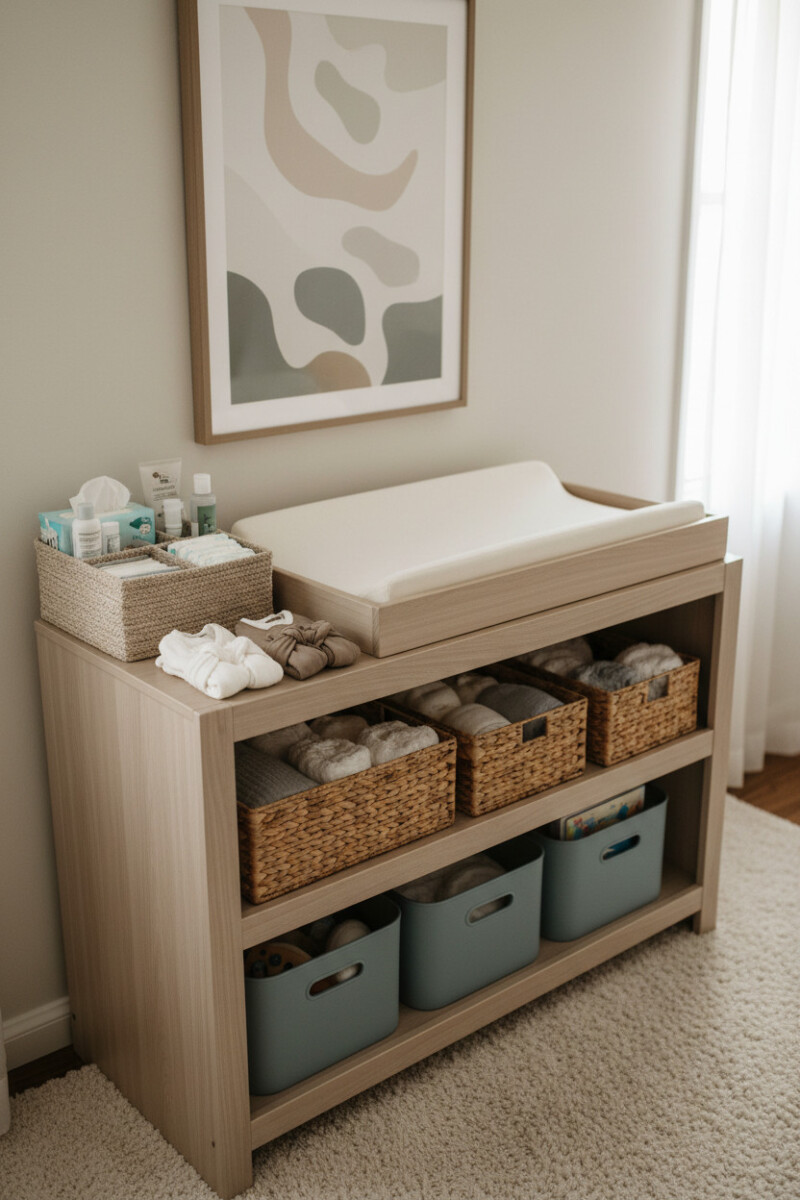
The golden rule of nursery organization and safety is accessibility. You should never have to step away from your baby while they are on the changing table to grab a wipe.
Take inventory of what you use every single day: diapers, wipes, diaper cream, burp cloths, and an extra change of clothes. Ensure these everyday essentials are stored within arm’s reach of the changing station. Use drawer organizers in the top drawer of the dresser, or place a stylish caddy directly on top of the changing table to keep these critical items easily accessible.
Maintaining Your Organized Nursery
Setting up the space is only half the battle; keeping it organized as your baby grows is the real challenge. As your baby transitions from newborn to infant to toddler, their needs—and their stuff—will change dramatically.
To maintain your hard work, schedule a mini-decluttering session every three months. Babies outgrow clothes astonishingly fast. Keep a dedicated “donate” or “store” bin in the bottom of the closet. The moment you realize a piece of clothing no longer fits, wash it and drop it in the bin. This prevents small clothes from clogging up your beautifully organized dresser drawers.
Furthermore, make it a habit to do a five-minute tidy-up every evening. Putting toys back in their baskets and restocking the diaper caddy at night ensures you wake up to a fresh, organized space the next morning, allowing you to start the day off right.
Conclusion: A Clutter-Free Space for a Happy Baby
Bringing a new baby home is a joyful adventure, and having a well-prepared space makes the transition much smoother. By utilizing these easy tricks for organizing a nursery, you can create a room that is not only beautiful but incredibly functional.
From maximizing closet space and mastering drawer dividers to creating smart functional zones, these strategies will help you conquer the clutter before it even begins. Remember, the goal of organizing a nursery isn’t just about creating a magazine-worthy room; it’s about creating a stress-free environment where you can focus on what truly matters—bonding with your beautiful new baby.
Take a deep breath, grab some baskets, and start organizing. You’ve got this!