
Table of Contents
If you love cooking with fresh flavors, nothing beats clipping a few fragrant sprigs right where you prep dinner. The best Indoor Herb Garden Ideas don’t just look pretty; they’re practical, space-savvy, and perfectly tuned to the light and humidity you already have at home. Below you’ll find thirty-four creative setups—from minimalist to rustic, techy to bohemian—that will keep basil, mint, rosemary, and friends thriving through every season.
Along the way, I’ll share care tips, styling notes, and clever twists you can borrow whether you have a sunny window, a dim corner, or a stainless-steel chef’s kitchen. Consider this your comprehensive guide for how to start an indoor herb garden for beginners and beyond, plus inspiration for cooks who want the best herbs to grow indoors year round.
Before we dive into the ideas, a few core principles apply to almost every setup:
- Light: Most herbs want 6–8 hours of bright light. South- or west-facing windows are ideal; supplemental grow lights fill the gaps.
- Soil & Drainage: Use a high-quality potting mix (not garden soil) and ensure containers have drainage. Terracotta is forgiving because it “breathes.”
- Watering: Water thoroughly, then allow the top inch of soil to dry. Basil likes more moisture; rosemary prefers to dry slightly between waterings.
- Airflow & Spacing: Good airflow deters mildew and fungus gnats. Don’t overcrowd planters; harvest regularly to keep plants compact.
- Feeding: A half-strength, balanced liquid fertilizer every 2–3 weeks during active growth is plenty for most herbs.
With that foundation, let’s explore distinctive Indoor Herb Garden Ideas you can adapt to your space and style.
1. Birdcage Herb Planter
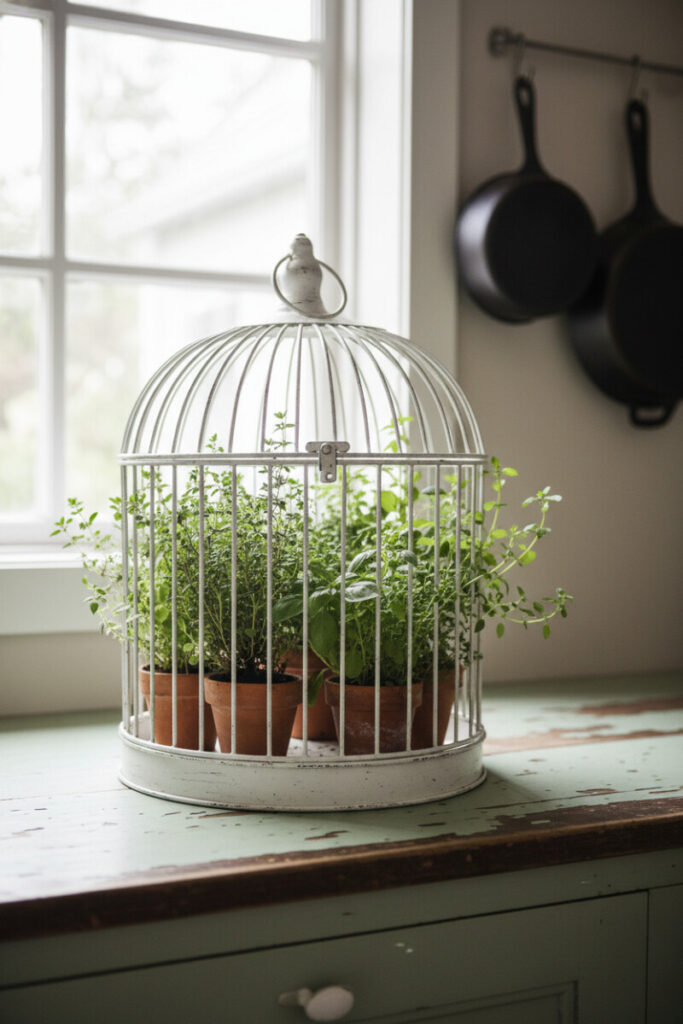
Repurpose a vintage white metal birdcage into a charming herb conservatory. Nestle small terracotta pots of thyme, basil, or oregano inside the cage and set it on a weathered countertop for shabby-chic character. The domed wires offer natural trellising for trailing thyme, while the open lattice keeps airflow strong. Because backlit windows can heat the cage, line the base with a thin cork mat to buffer warmth and protect surfaces. This is one of those herb planter ideas that doubles as sculpture—ideal for a cottage kitchen or farmhouse pantry.
Care tip: Rotate the cage weekly so all plants receive equal light. Water pots individually rather than misting to prevent leaf spot on basil.
2. Ceiling-Hung Herb Planters
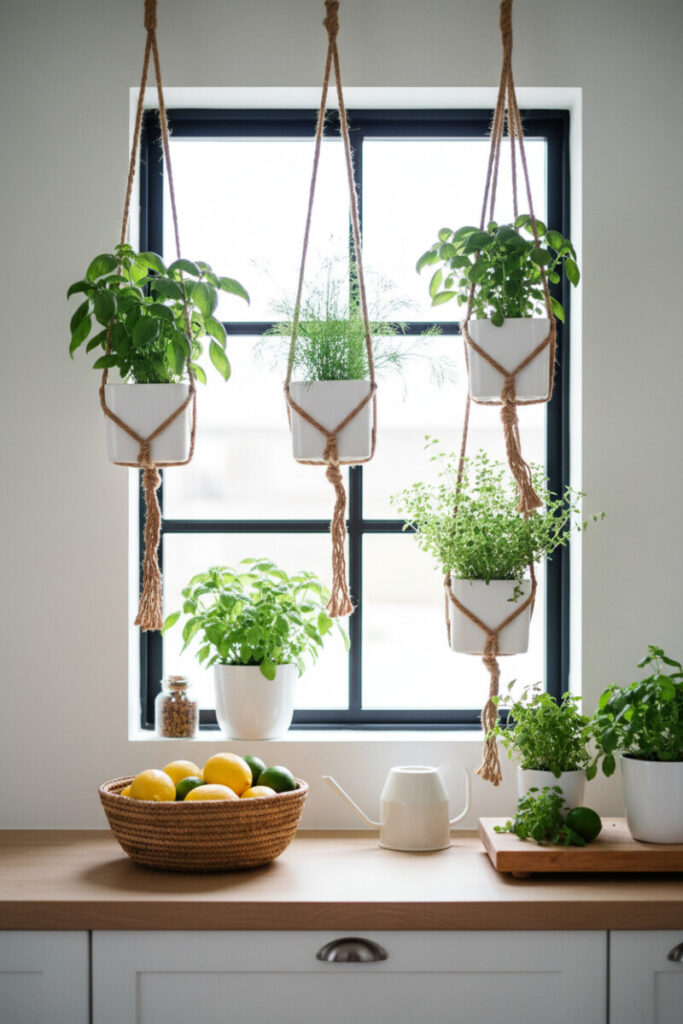
Suspend square white planters from the ceiling with sturdy jute ropes in front of a large window. Hanging planters free counter space and bathe herbs in light without clutter. Use lightweight, soil-moisture-retaining mixes and install discreet saucers or self-watering inserts to prevent drips. Tuck a basket of lemons and a slim watering can below on the counter for a fresh, Scandinavian vibe.
Best for: Basil, dill, and oregano that appreciate bright, indirect light and regular harvesting.
3. Color-Coordinated Herb Pots
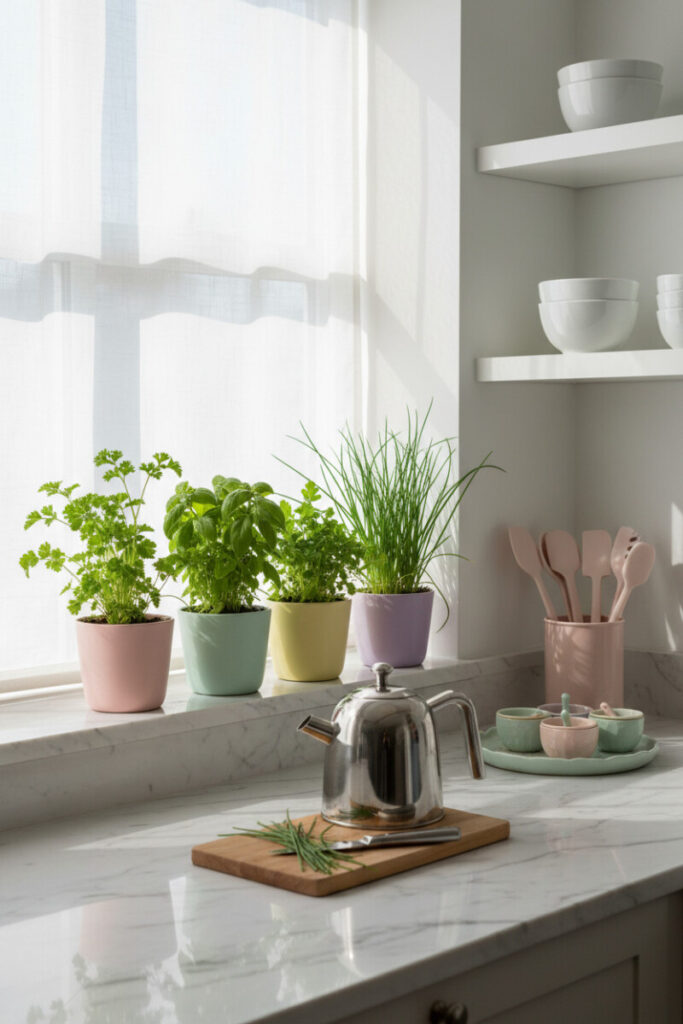
Line a windowsill with minimalist ceramic pots in blush, mint, butter yellow, and lavender. Coordinated color helps busy kitchens look intentional and serene. Grow parsley, basil, and chives—the classic trio for quick pastas and omelets. This idea sings in a bright kitchen where morning sun throws crisp diagonal shadows, enhancing the glossy leaves and smooth ceramic.
Pro styling: Echo the colors with utensil holders or tiny spice bowls to create a “gradient” effect that reads as curated rather than cluttered.
4. Colorful Painted Pots
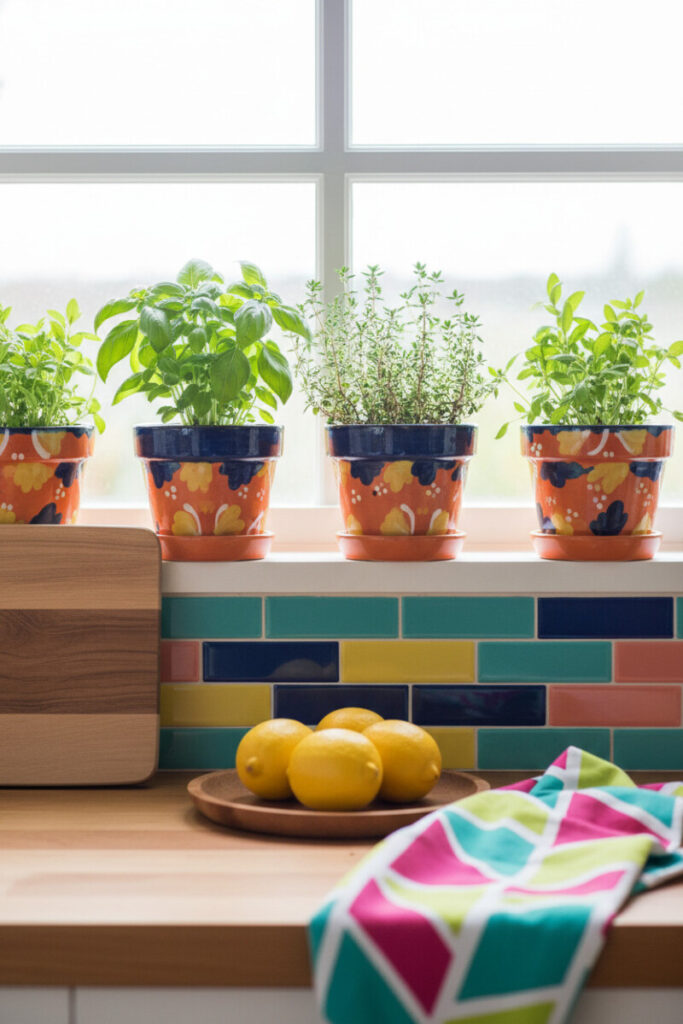
Bold, hand-painted ceramic planters bring cheer to a neutral kitchen. Think tangerine, cobalt, and sunflower yellow with folk-art patterns. Backlighting from a white-paned window accentuates the glaze and leaf textures. Keep the look cohesive by repeating one accent color (such as cobalt) in your tea towel or cutting board stripes.
Harvest hint: Frequent pinching at the top of basil stems makes plants bushier and prevents premature flowering. It’s a great ritual while the kettle boils.
5. Compact Indoor Mini Greenhouse
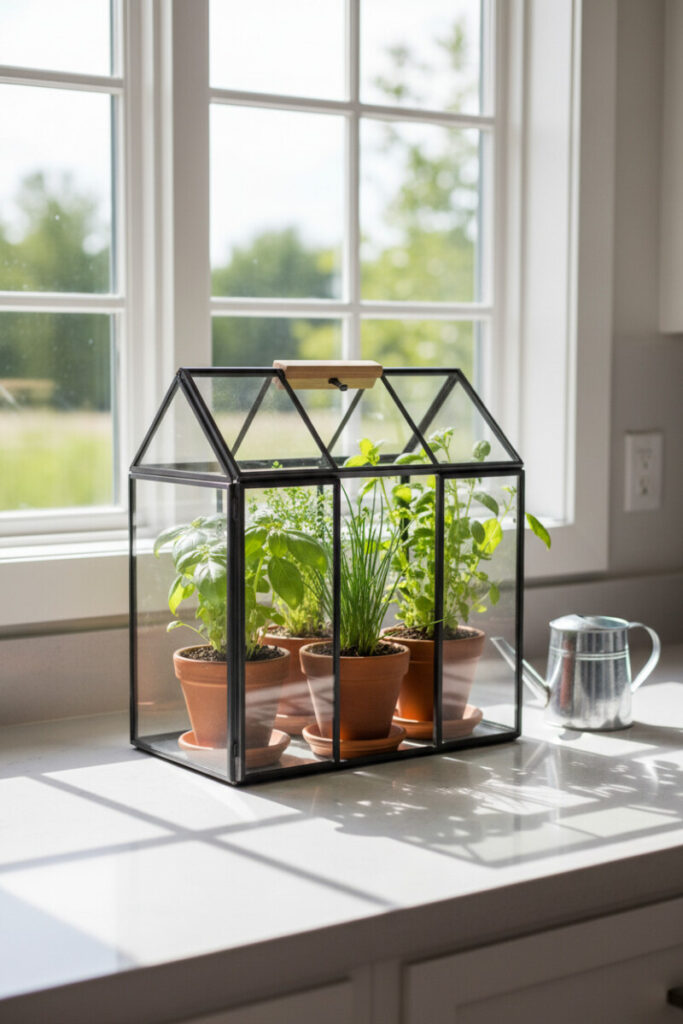
A house-shaped glass greenhouse (with a dark metal frame) creates a high-humidity microclimate—perfect for tender basil and chives during dry winter heat. Place terracotta pots inside; prop the roof slightly ajar to avoid stagnant air. The structure amplifies bright windows, casting beautiful geometric shadows that make even weekday lunches feel special.
Good to know: Greenhouses warm up quickly. On sunny winter days, crack the lid; on overcast days, close to conserve warmth and humidity.
6. Countertop Aquaponic Herb Setup
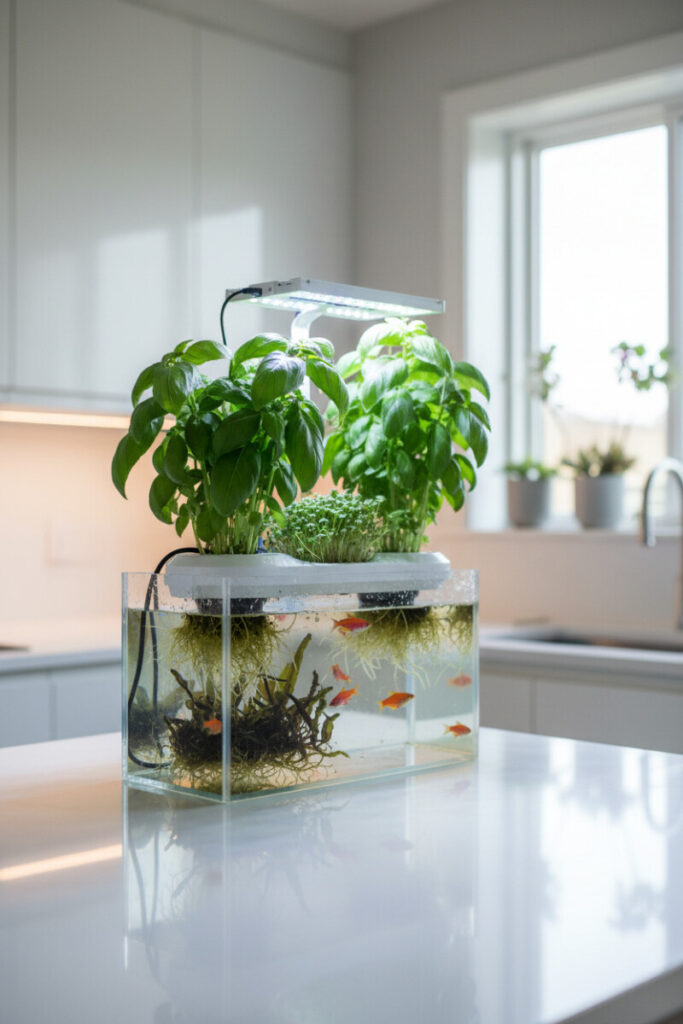
For tech-loving cooks, a compact aquaponics system with a clear reservoir and feeder fish can power microgreens and basil using fish waste as fertilizer. Integrated LED grow lights keep production steady even in low-light kitchens. This is one of the smartest Indoor Herb Garden Ideas for apartments without sunny windows.
Maintenance: Test water ammonia and nitrate levels monthly, feed fish lightly, and rinse plant roots under tepid water if salts build up.
7. Framed Herb Planter Wall Art
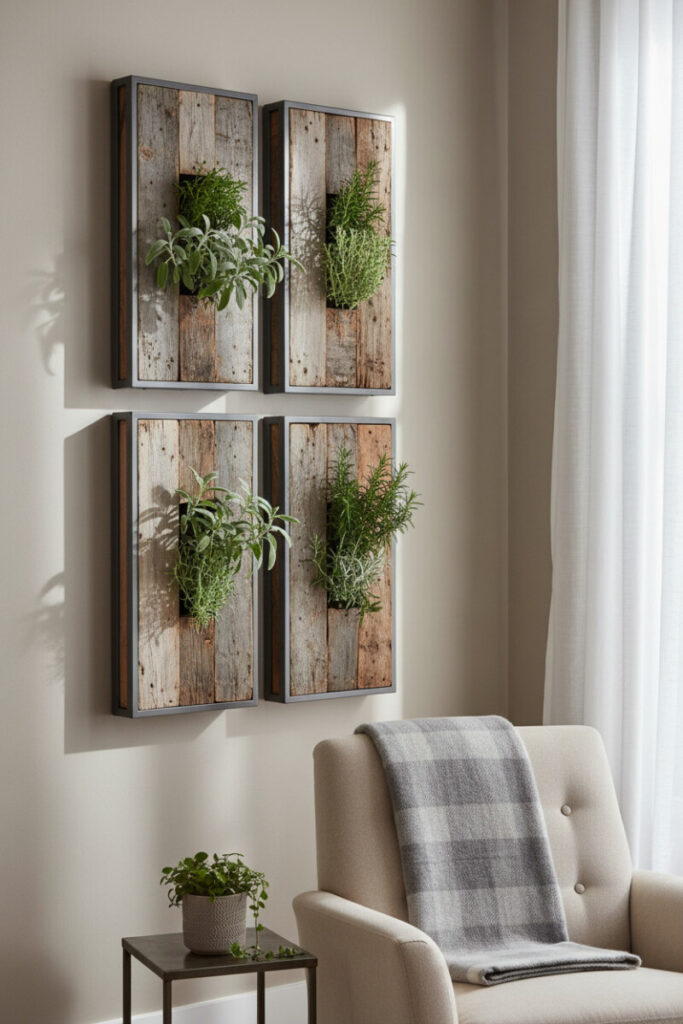
Treat herbs as living artwork with a 2×2 grid of rustic wood boxes framed in matte charcoal. Mount the planters on a taupe wall near a bright window. Sage and rosemary thrive here; their silvery and needle-like textures provide tonal contrast against the rough timber. The result is both architectural and aromatic, ideal over a reading chair or next to a breakfast nook.
Pro move: Install a hidden drip tray at the base of each frame and line boxes with landscape fabric to protect the wood.
8. Grow Light Herb Setup
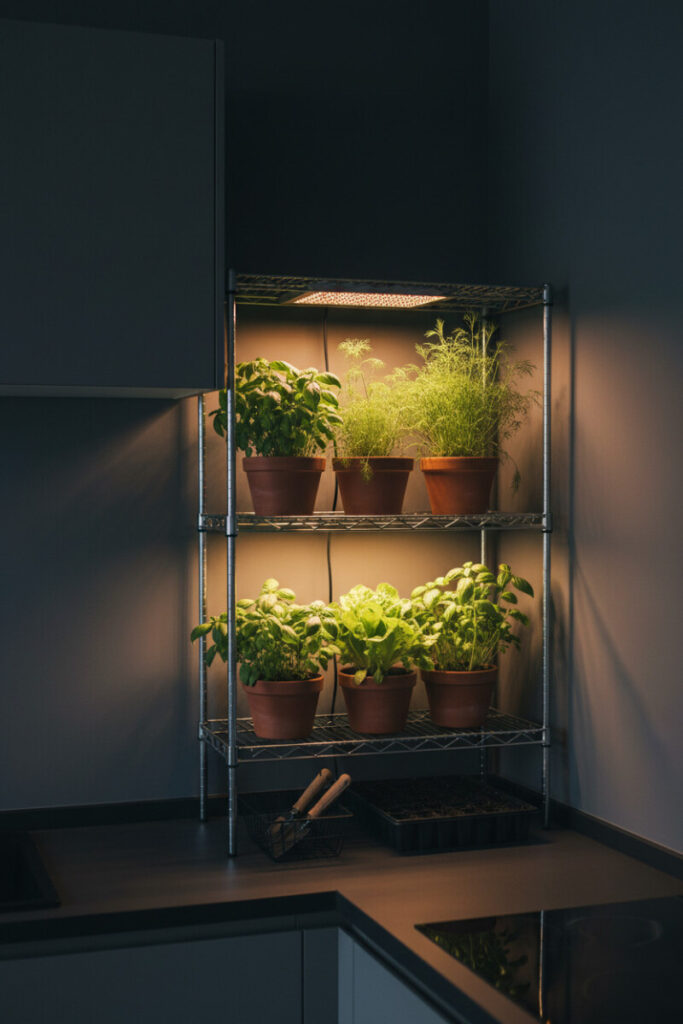
Turn a dark corner into a leafy glow spot with a chrome wire shelf and a warm LED grow panel under the cabinets. Matte terracotta pots anchor the look. This approach gives you precision control over day length (set to 12–14 hours in winter) and spectrum, which is helpful if you’re aiming for the best herbs to grow indoors year round without relying on windows.
Grower’s note: Keep lights 6–10 inches above foliage. If leaves pale or stretch, increase intensity or lower the fixture slightly.
9. Hanging Herb Baskets
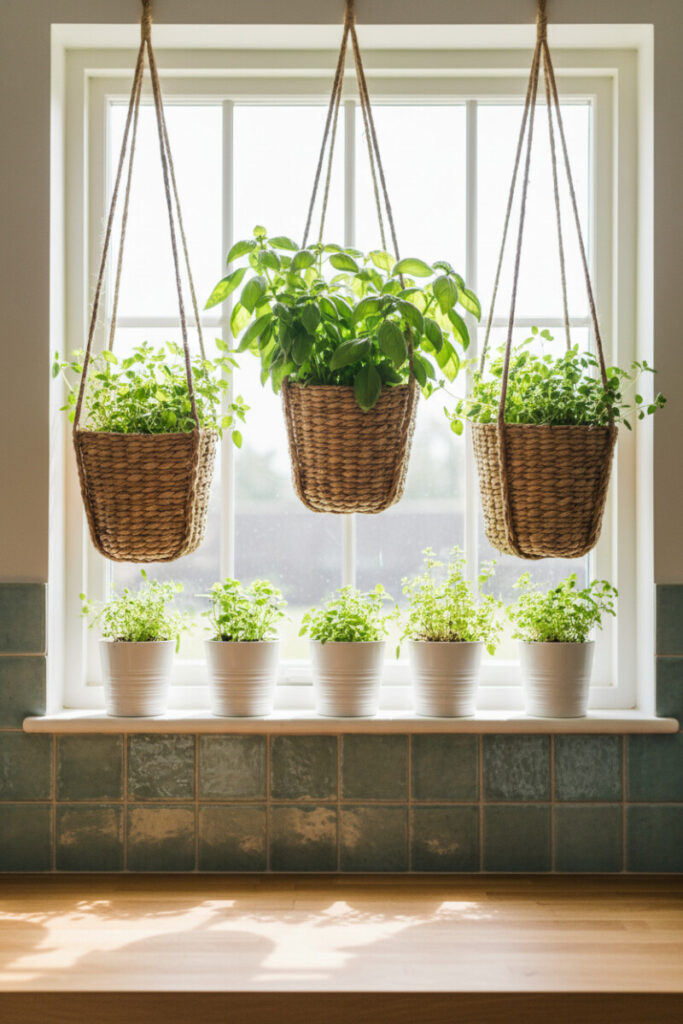
Suspend tightly woven straw baskets from thick jute twine in a sunny window. The natural wicker wicks moisture and breathes, reducing root rot. Below, a shelf of ceramic pots and a teal-tiled backsplash pull the whole scene together. Use lightweight liners to hold potting mix, and remember that baskets dry faster than ceramic—water more often during heat waves.
Flavor pairings: Basil and oregano love direct light here; tuck in a few trailing marjoram starts for softness along the rim.
10. Herb & Succulent Combo Pots
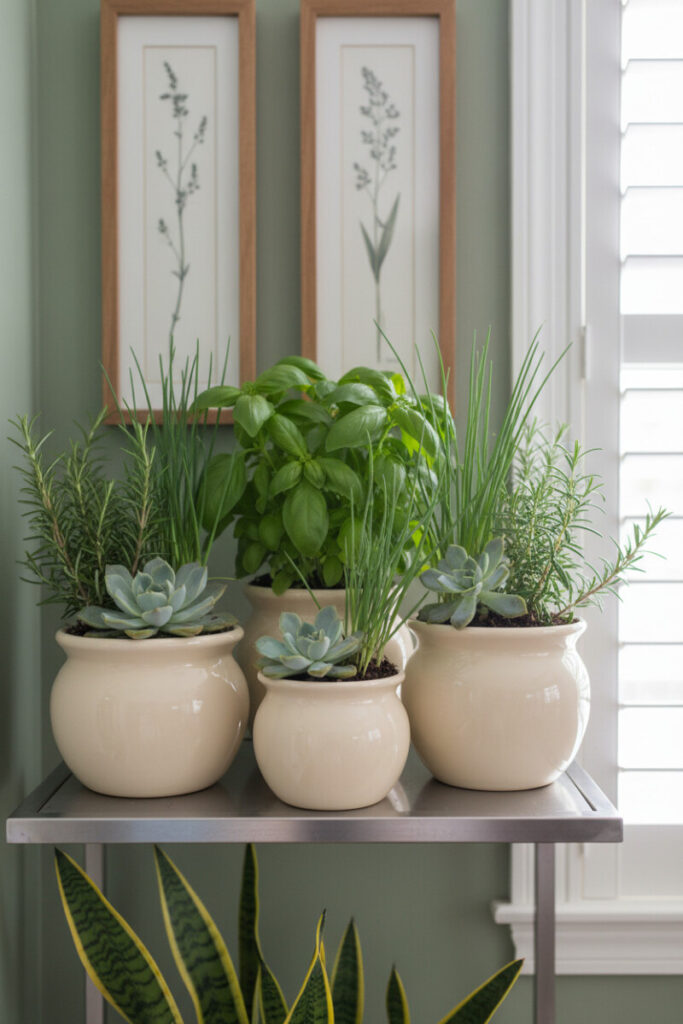
Mix textures by pairing glossy basil with spiky rosemary and blue-green Echeveria rosettes in glossy off-white ceramic. Succulents prefer drier soil, so plant them around the periphery and water basil more precisely near its root zone. Strategically placed near plantation shutters, this arrangement feels sculptural and serene.
Design tip: Use pots of varying heights to create a staggered skyline; repeat the ceramic color to keep the ensemble cohesive.
11. Herb Pots with Chalk Labels
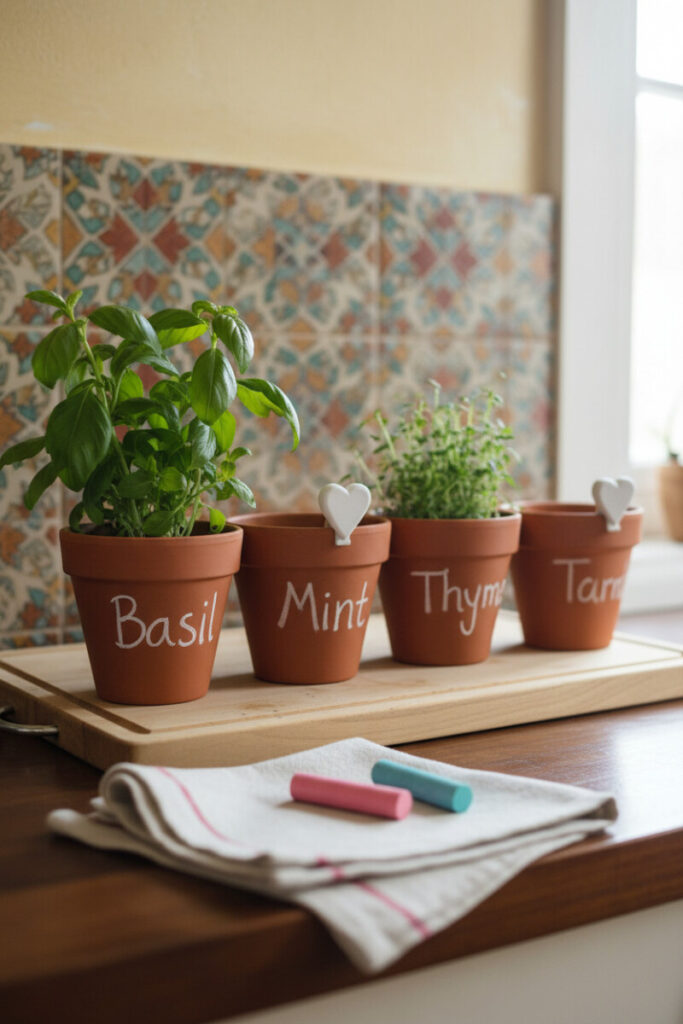
Nothing beats terracotta pots labeled with chalk—Basil, Mint, Thyme—on a pale wooden cutting board. It’s charming and functional: housemates know what’s what, and you’ll remember which potting mix each plant liked best. Keep chalk markers handy so you can update names as plants rotate in and out.
Beginner advice: If you’re wondering how to start an indoor herb garden for beginners, this setup is perfect—low cost, flexible, and easy to expand.
12. Herb Spiral Garden
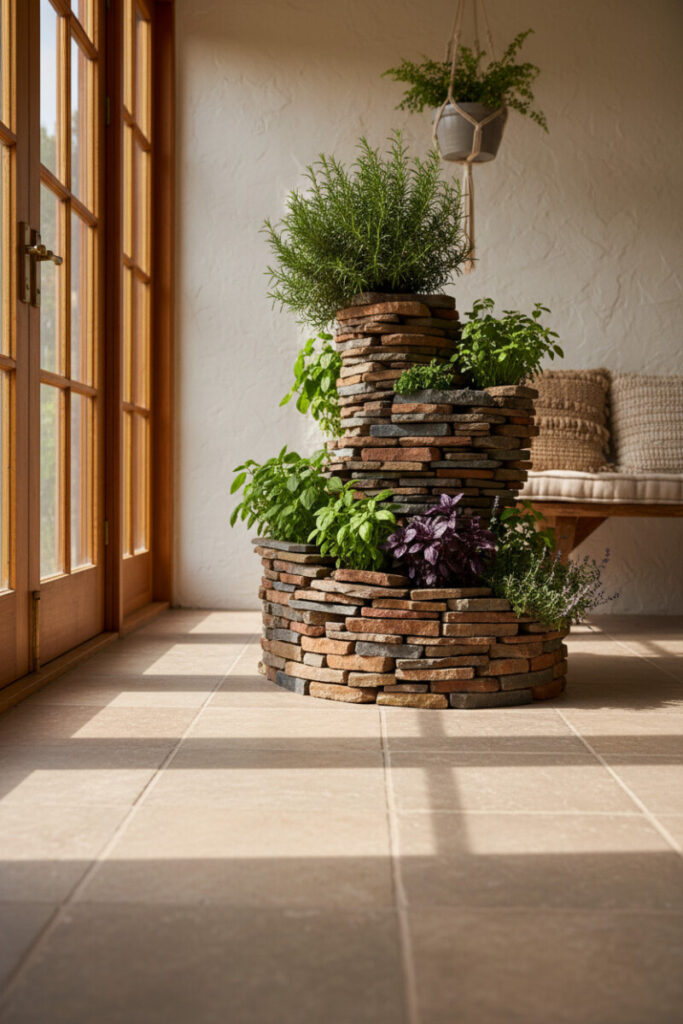
Bring the permaculture classic indoors: a stacked flagstone spiral that offers micro-zones for herbs with different preferences. The top stays drier and sunnier (great for rosemary), mid-levels suit basil and parsley, and the lower, shaded tiers accommodate mint and lavender. Place the spiral near warm wood doors where afternoon light rakes across the stones, emphasizing texture.
Water strategy: Water at the base of each tier rather than from above to keep foliage dry and disease at bay.
13. Herbs in Upcycled Crates
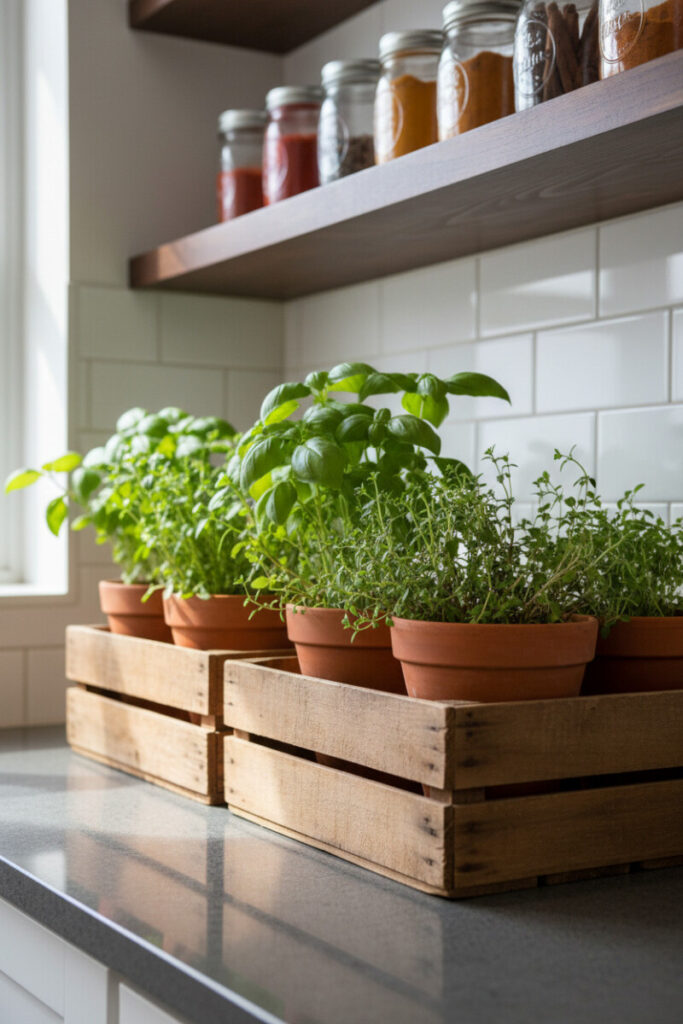
Nest terracotta pots inside weathered wooden crates on a dark countertop. The rough wood, glossy white subway tile, and thick shelf above evoke an artisan pantry. Crates corral multiple pots and let you rotate the whole collection to chase the sun. This is one of the most adaptable herb planter ideas for renters who can’t mount heavy fixtures.
Bonus: Slide a thin, waterproof tray beneath each crate to catch errant drips before they reach your counters.
14. Kitchen Island Herb Centerpiece
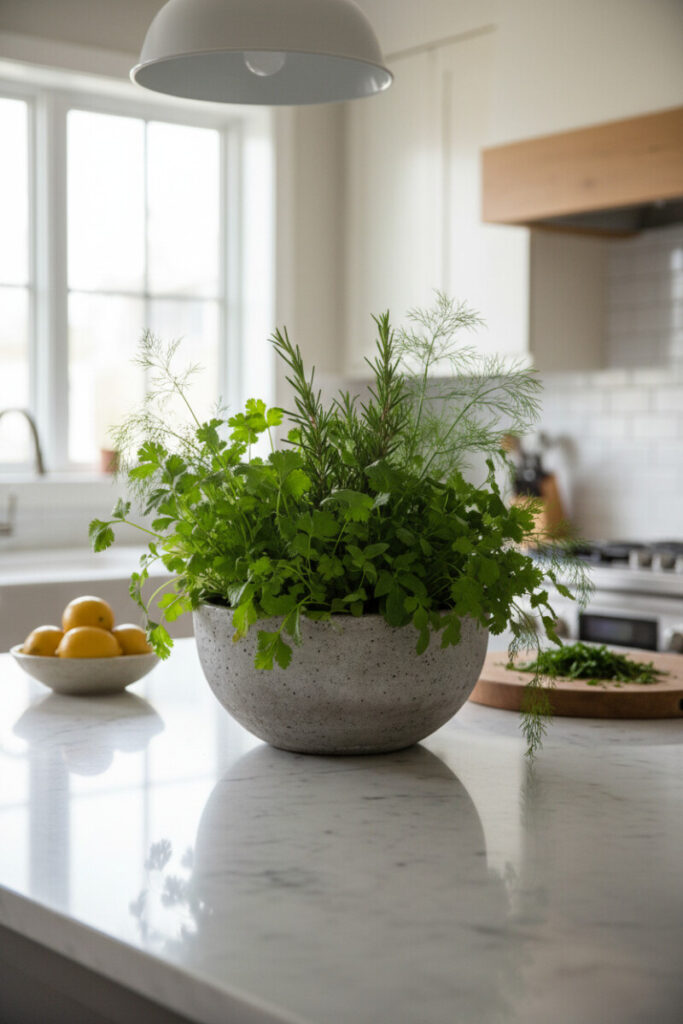
Grow an exuberant bouquet of cilantro, rosemary, and dill in a wide, low ceramic bowl and set it center stage on your island. In high-key light, the polished marble countertop mirrors the greenery, turning everyday cooking into a showpiece. Keep a small bowl of lemons and a cutting board nearby to signal “clip and cook.”
Harvest routine: Cut dill at soil level and cilantro by the outer stems; both grow back quickly when not overharvested.
15. Macramé Hanging Herb Display
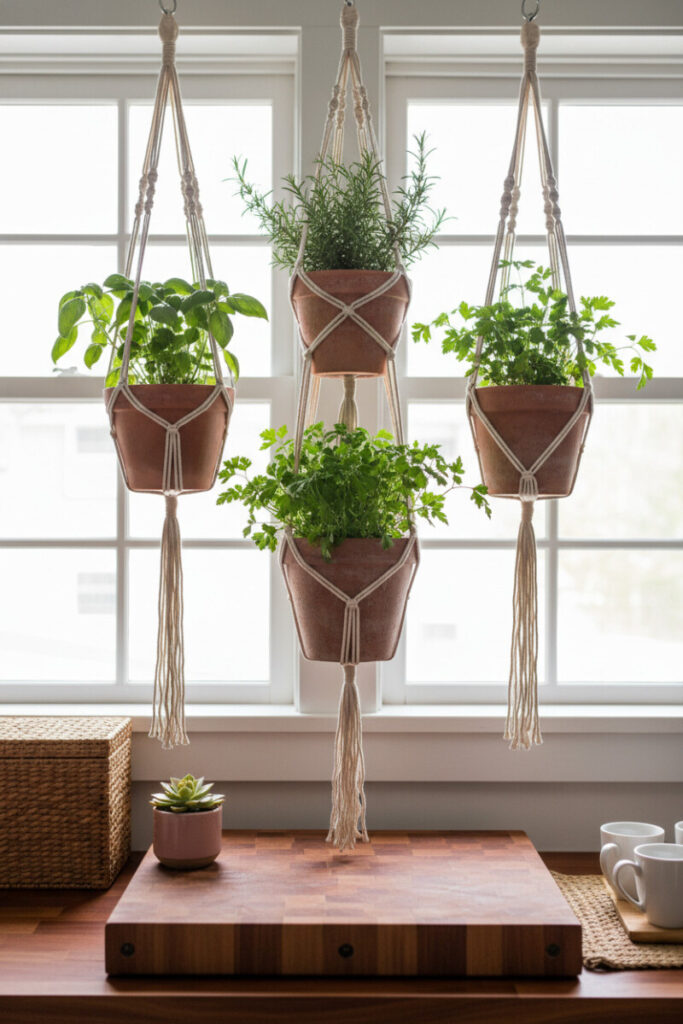
Creamy macramé hangers with tassels bring soft texture to a sun-washed window. Their airy spacing creates even light and airflow for basil, parsley, and rosemary. Pair with a mahogany butcher-block counter and a woven basket for a boho-modern blend.
Practicality check: Use plastic nursery pots hidden inside terracotta cachepots to keep macramé free from moisture stains.
16. Magnetic Spice Jars with Dried Herbs
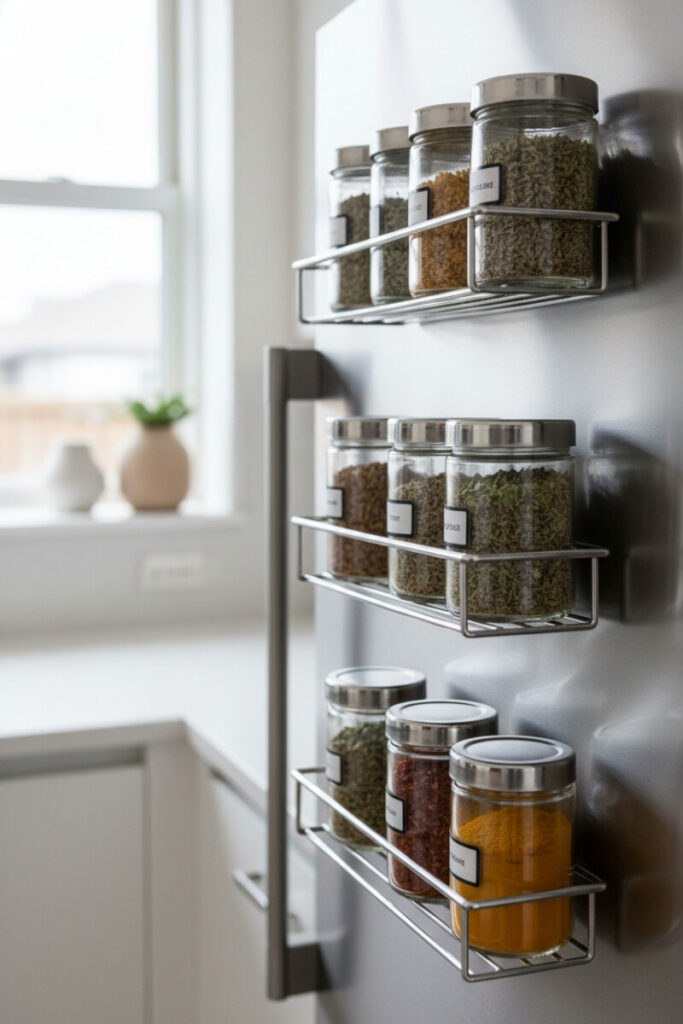
Fresh is fabulous, but a kitchen herb garden also benefits from a tidy stock of dried essentials. Mount magnetic glass spice jars on your stainless fridge for basil, oregano, chives, and paprika. Label clearly and keep the jars out of direct sun to preserve color and volatile oils. This hybrid approach means you always have flavor—even when a fresh plant takes a breather.
Tip: Replace dried herbs yearly; crush a pinch in your palm—if aroma is faint, it’s time to refresh.
17. Mason Jar Herb Planters
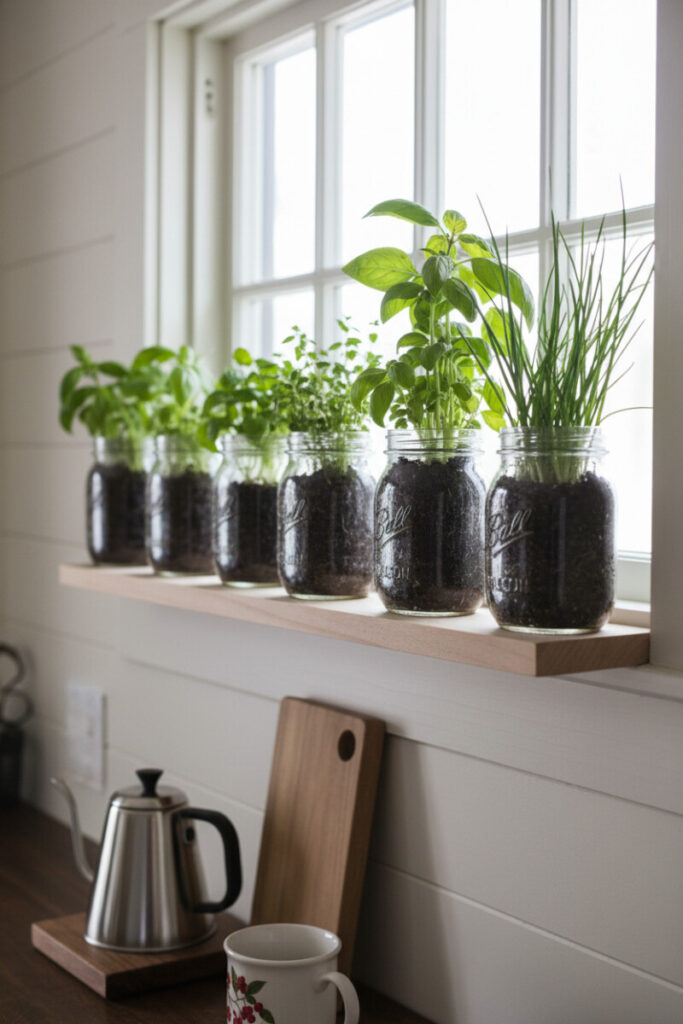
Line up clear glass mason jars on a narrow floating shelf right in front of a bright window. You’ll see the roots and soil layers—a built-in biology lesson. To avoid waterlogging, add 1–2 inches of pebbles or expanded clay at the bottom and water lightly. A gooseneck kettle and a berry-patterned mug on the counter below complete the cozy vignette.
Great for: Basil, chives, and mint. Mint especially appreciates consistent moisture in jar setups.
18. Metal Herb Planters
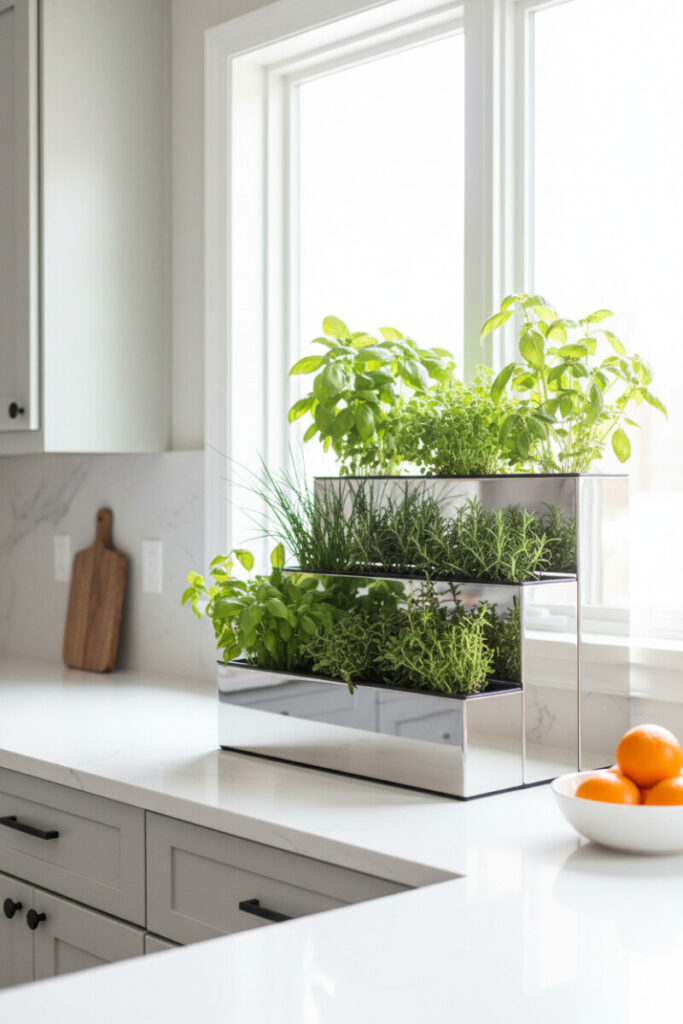
Tiered stainless-steel planters pop against a glossy white quartz counter. The reflective metal amplifies light to the inner leaves and lends a professional kitchen feel. Basil, chives, and rosemary shine here, especially when placed in front of a big window with pale gray cabinets as a quiet backdrop.
Aesthetic tip: Introduce a warm accent (like a wooden cutting board or a bowl of oranges) to balance the cool metal and white palette.
19. Mini Herb Terrarium
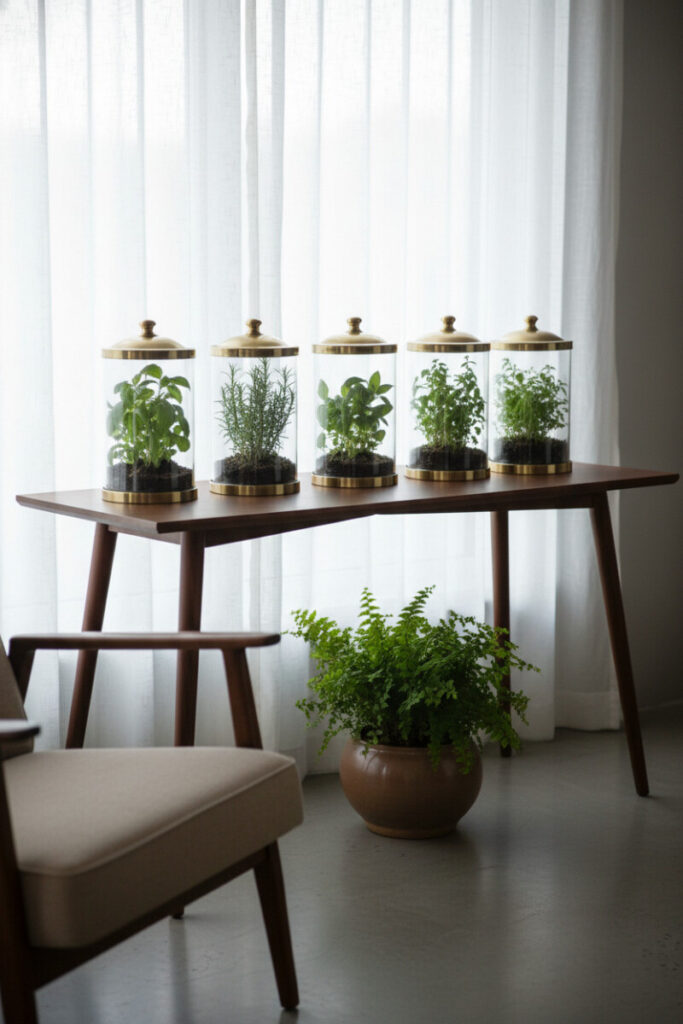
Line five cylindrical glass terrariums on a mid-century walnut console. Each holds a different herb—tiny basil, baby rosemary, compact thyme—capped with polished brass lids. Set the row near sheer-curtained windows for soft backlight. Terrariums elevate humidity while keeping soil isolated from your furniture. They’re particularly helpful for small apartments or rooms without sinks.
Ventilation: Crack lids or open briefly each day to prevent condensation and mold, especially with basil.
20. Pallet Wood Herb Wall
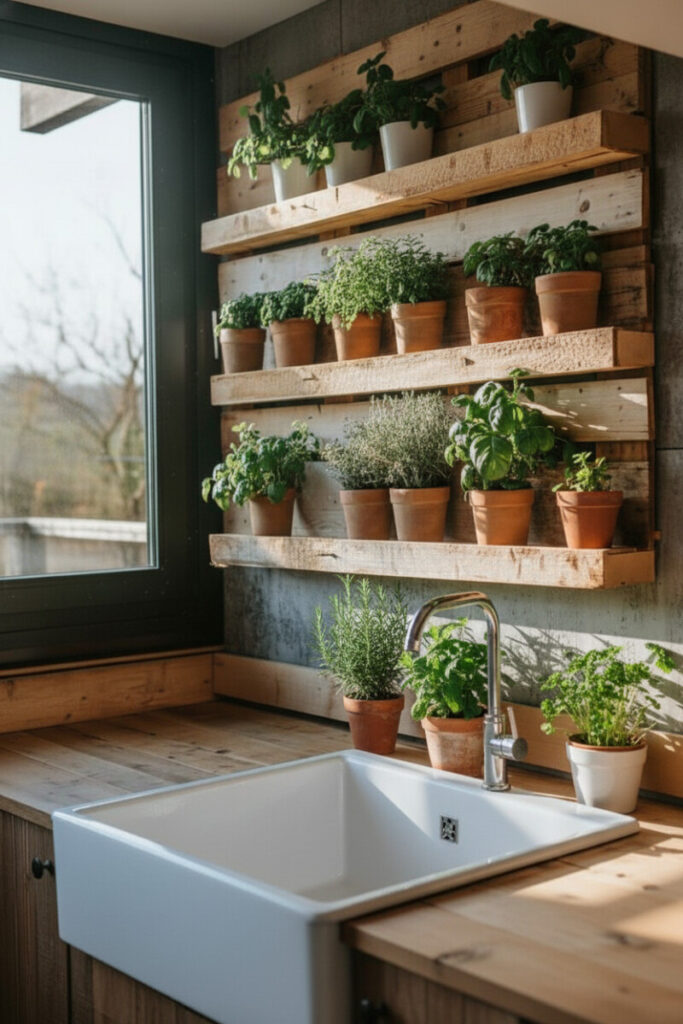
Salvaged pallet planks become a dramatic herb wall above a farmhouse sink. Mix terracotta and white pots for a collected-over-time look. Golden-hour sunlight grazing the wood will reveal every groove and knot—your herbs will look like a still life. Install secure brackets and use lightweight potting mixes to keep the load reasonable.
Water management: Keep a small tray or absorbent mat on the counter to catch drips when you water; a handheld sprayer helps target the soil.
21. Potted Herbs in Glass Cloches
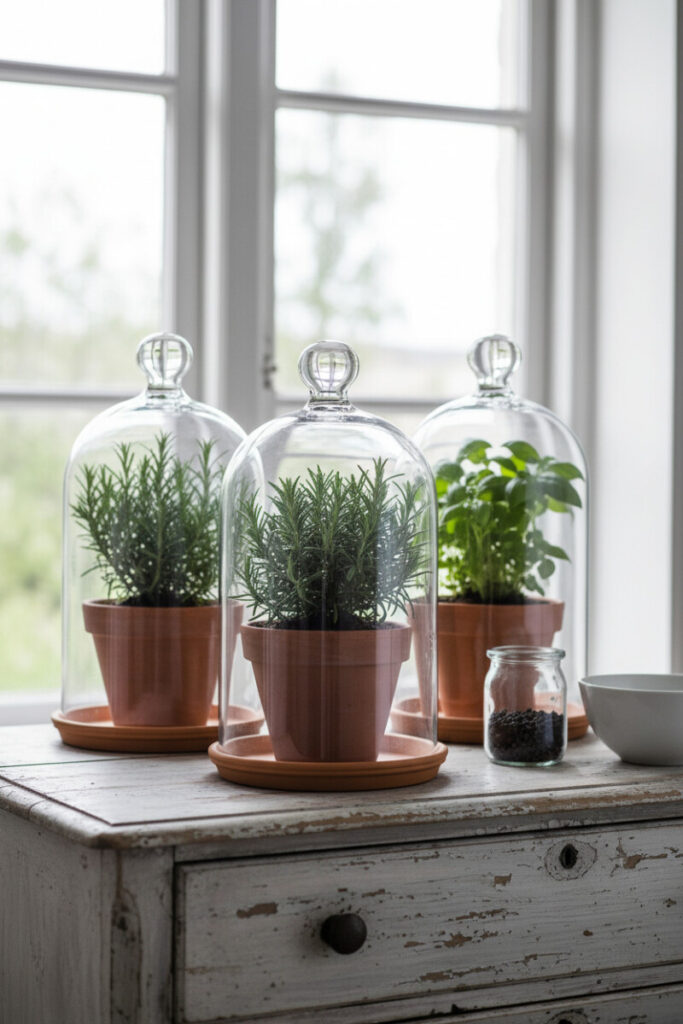
Slip terracotta pots beneath glass cloches to create tiny, steamy micro-greenhouses for rosemary and basil. The domes trap humidity and shield against cold window drafts. On bright mornings, the glass glows; on cloudy afternoons, remove the cloches briefly to allow fresh air.
Watch outs: Don’t leave cloches sealed in full sun—heat can build quickly. Wipe condensation to keep leaves dry.
22. Repurposed Bottle Herb Planters
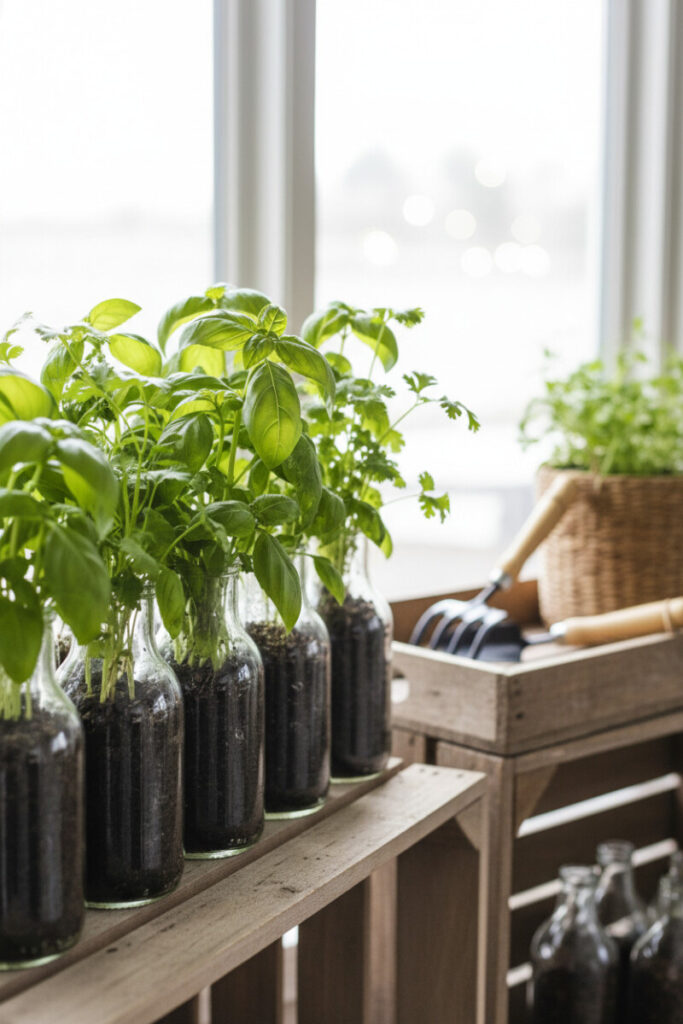
Upcycle clear glass bottles into planters and arrange them on light, unfinished wood shelves. The see-through sides showcase rich, dark soil and the threadlike roots—great for kids who are curious about plant anatomy. Bright backlighting outlines each leaf, and a nearby basket of tools keeps the scene both pretty and practical.
Sustainability note: Use bottle cutters to create wide openings; smooth edges with fine sandpaper and add a small layer of pebbles for drainage.
23. Rustic Hollow Log Herb Planters
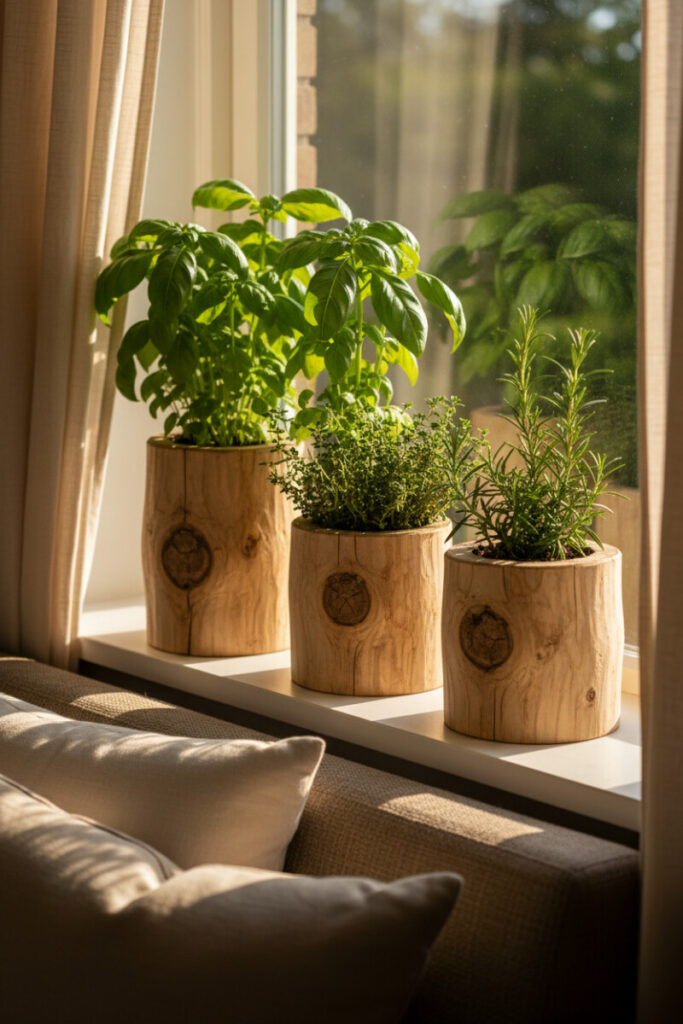
Turn cylindrical sections of hollowed wood into planters for basil, thyme, and rosemary. The visible rings and knots celebrate nature’s handiwork, and warm sunlight makes basil leaves look almost translucent. Nestle the logs on a wide windowsill next to a comfy sofa to bring forest vibes indoors.
Soil tip: Line the interior with landscape fabric to hold soil while letting excess water drain.
24. Rustic Ladder Herb Shelf
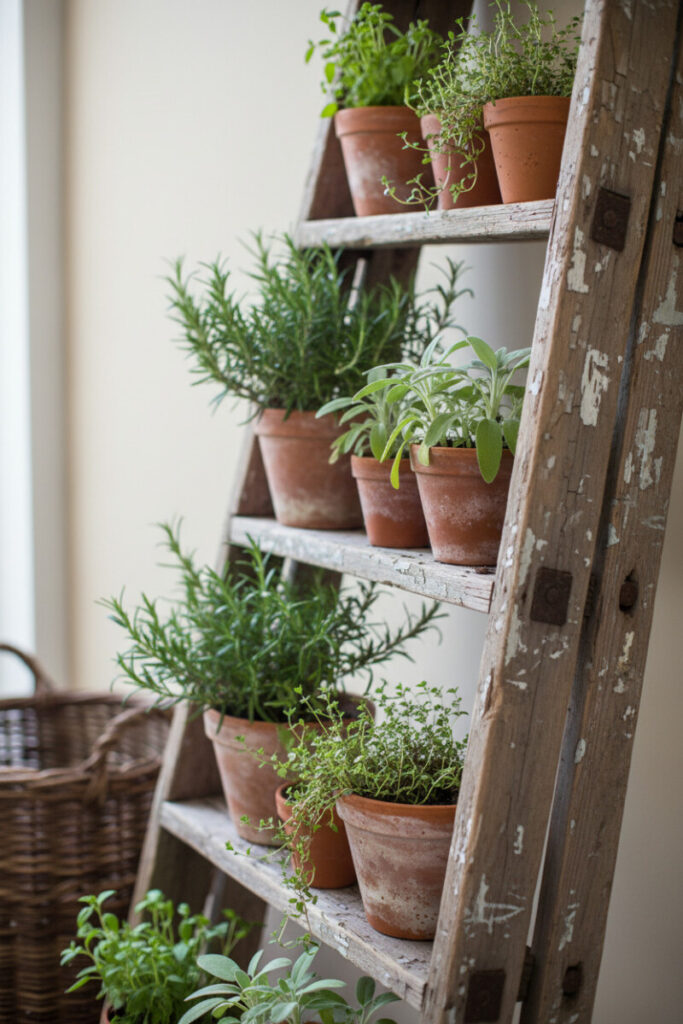
Lean a weathered A-frame ladder against a pale wall and stack tiers of terra cotta pots. The faded gray-brown wood and slightly damp pot surfaces give the whole setup a serene, organic mood. Because the ladder is airy, even the lower tiers get decent light—especially in a room with big windows.
Safety: Anchor the ladder to the wall with discreet brackets if you have pets or kids.
25. Scented Bathroom Herb Garden
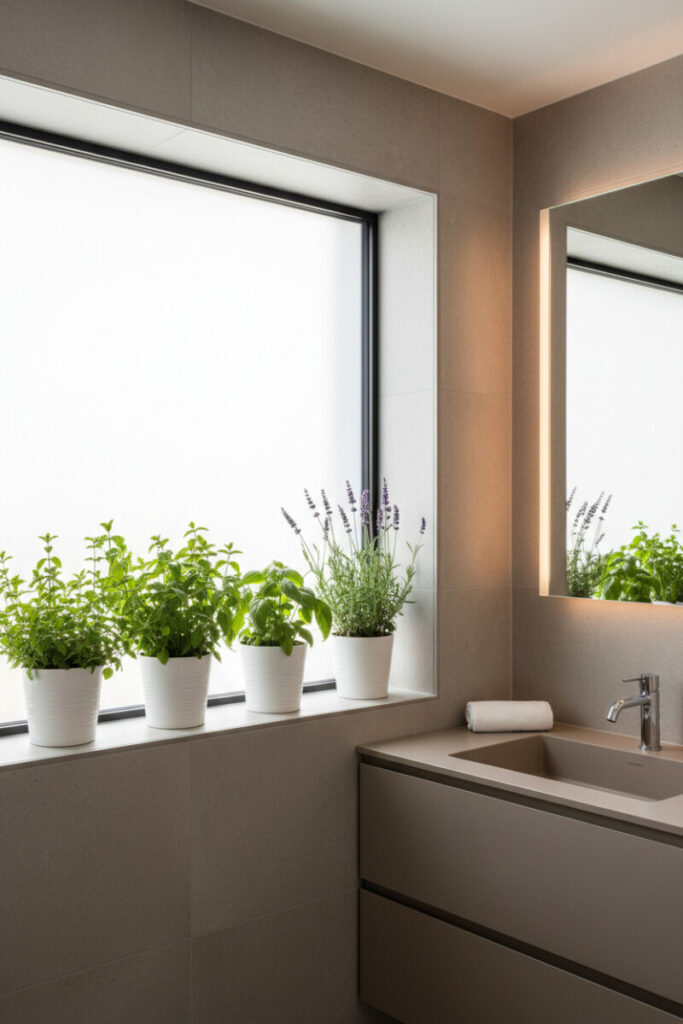
Place a line of peppermint, basil, and flowering lavender in matte white pots on a bathroom ledge just beneath a frosted window. The diffused light and higher humidity make bathrooms surprisingly herb-friendly. Combine with a floating taupe vanity and subtle LED accents for spa calm.
Use case: Clip peppermint for morning tea or to muddle into homemade mouthwash; harvest lavender flowers for sachets.
26. Shelf-Top Herb Glass Jars
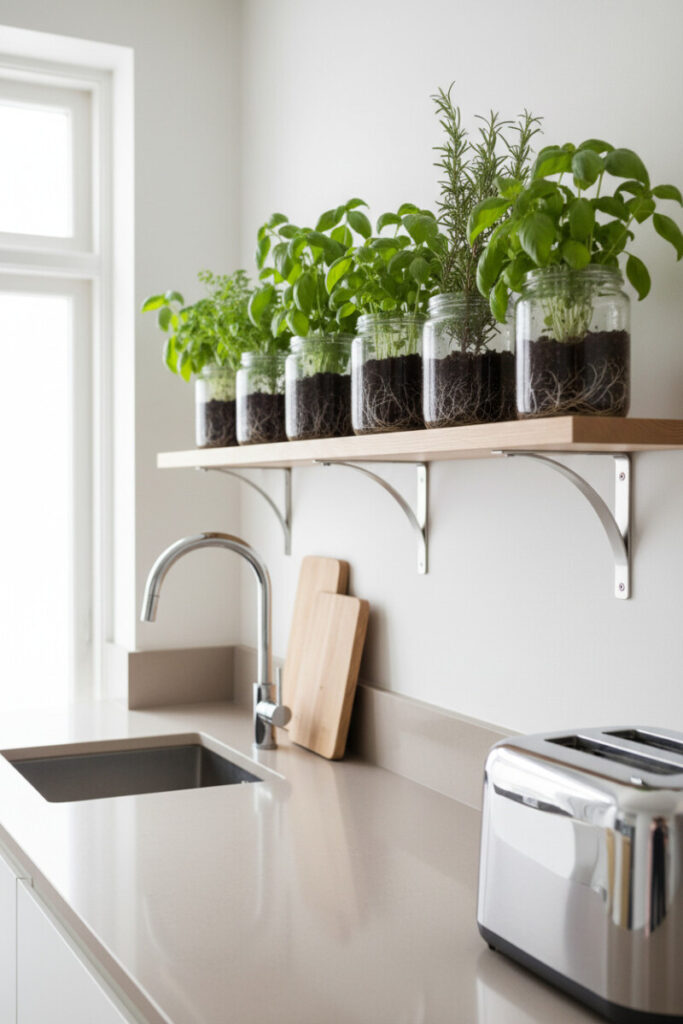
Set seven glass jars packed with herbs on a floating shelf above a pale taupe quartz counter. Visible white root fibers look dramatic against dark soil, and intense side light creates crisp highlights on the glossy leaves. A chrome faucet and a couple of maple cutting boards keep the palette warm and clean.
Hydro-hack: If drainage holes aren’t possible, measure water in tablespoons and irrigate sparingly. Add a thin charcoal layer on top of pebbles to reduce odors.
27. Tiered Plant Stand
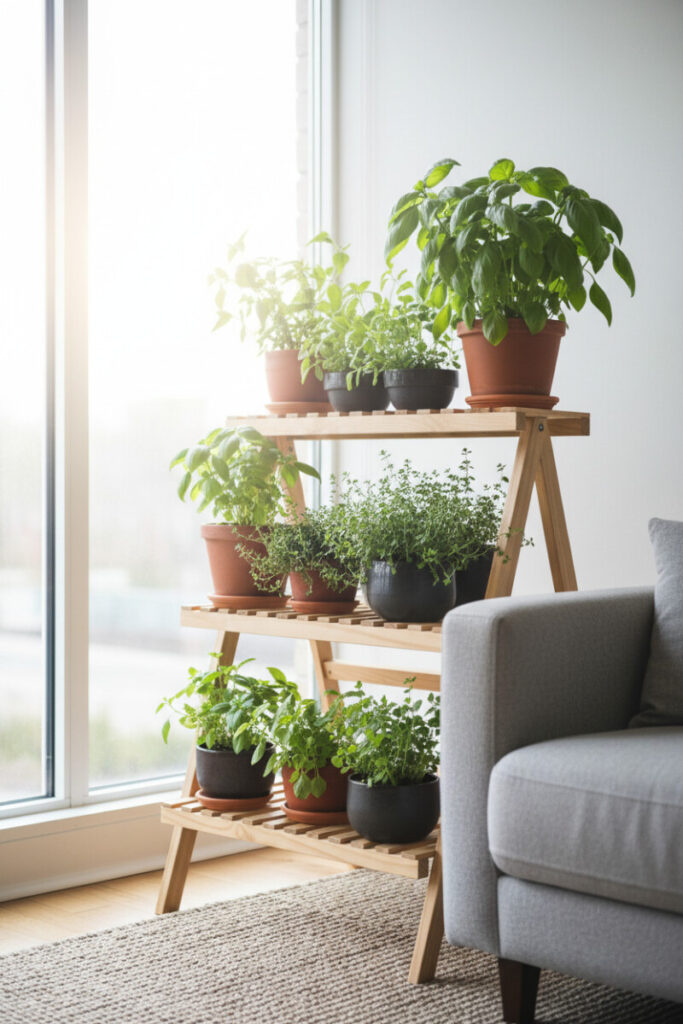
A four-tier natural wood A-frame stand turns a bright corner into a lush herb tower. Mix terracotta and dark ceramic pots for texture and color depth. Intense backlighting from a floor-to-ceiling window creates a magical halo around the leaves—think greenhouse vibes without leaving the living room.
Workflow: Put thirsty herbs (basil, parsley) on upper tiers where they’ll get more light and attention; place tougher thyme and oregano lower down.
28. Vertical Wall Planters
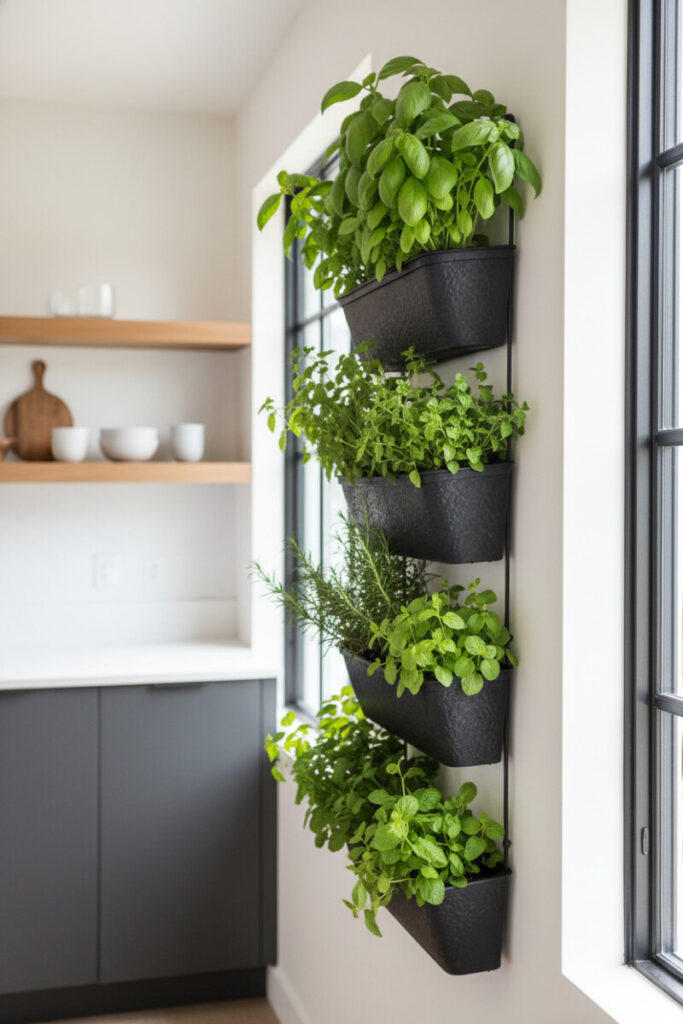
Install a sleek black frame with curved rectangular planters along a bright kitchen wall. This space-saving vertical garden keeps counters clear while delivering arm-length harvests of basil, rosemary, and mint. In modern kitchens with slate-gray cabinets and warm wooden shelves, the deep green foliage becomes the star.
Irrigation: Consider self-watering inserts or a drip line if the wall garden is wide. Even moisture prevents tip burn on basil.
29. Vintage Suitcase Herb Display
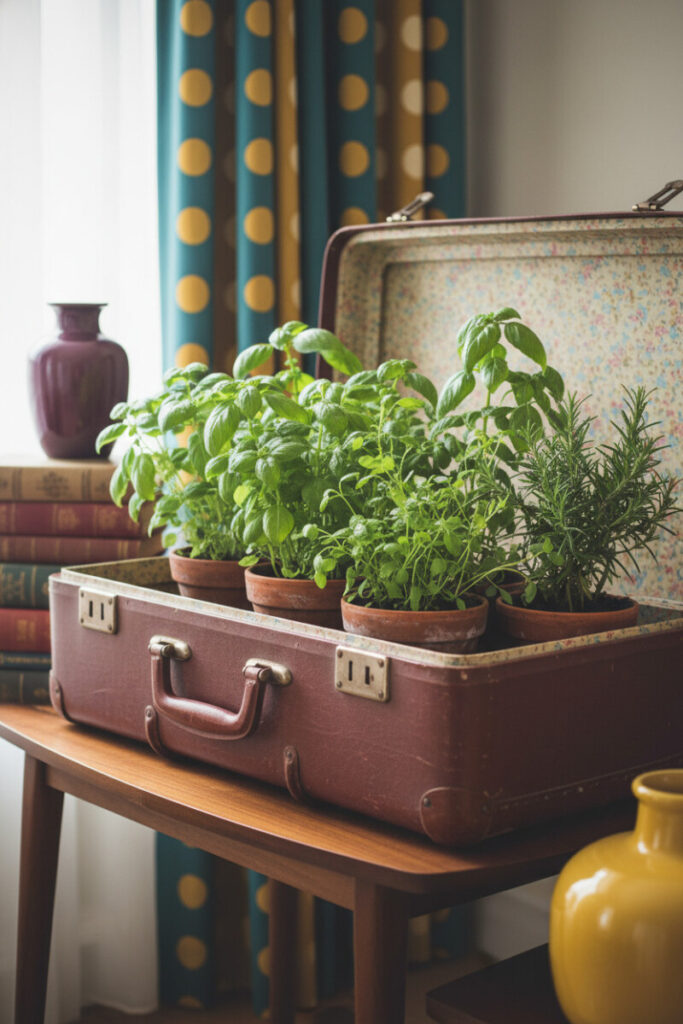
Open a reddish-brown leather suitcase and fill it with terracotta pots. The patina of the leather and the floral lining turn your herbs into a nostalgic vignette. Position near patterned curtains for a playful contrast and flood the scene with gentle window light.
Practical tip: Place a waterproof tray inside the suitcase before adding pots; the tray catches drips and protects the lining.
30. Vintage Wheelbarrow Herb Garden
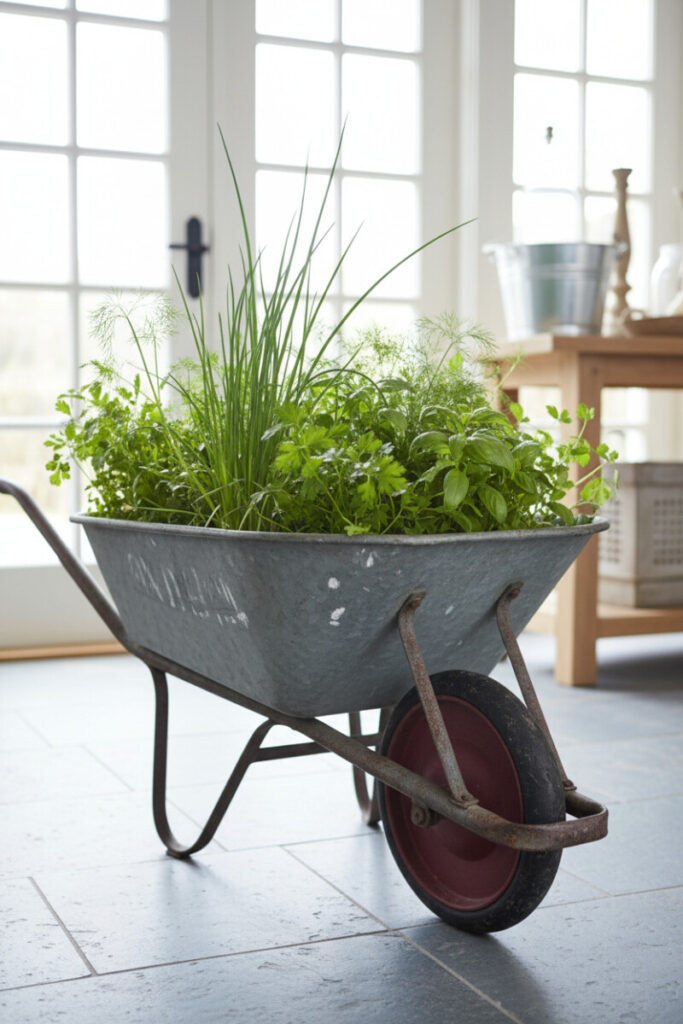
Park a slate-gray metal wheelbarrow beneath bright French doors and pack it with parsley, dill, chives, and basil. The burgundy spoked wheel provides a striking color accent. Because the wheelbarrow is deep, add a layer of lightweight filler (like packing peanuts in a mesh bag) to reduce soil volume and improve drainage.
Mobility bonus: You can roll the whole garden closer to light in winter and pull it back on blazing summer afternoons.
31. Wine Rack Herb Holder
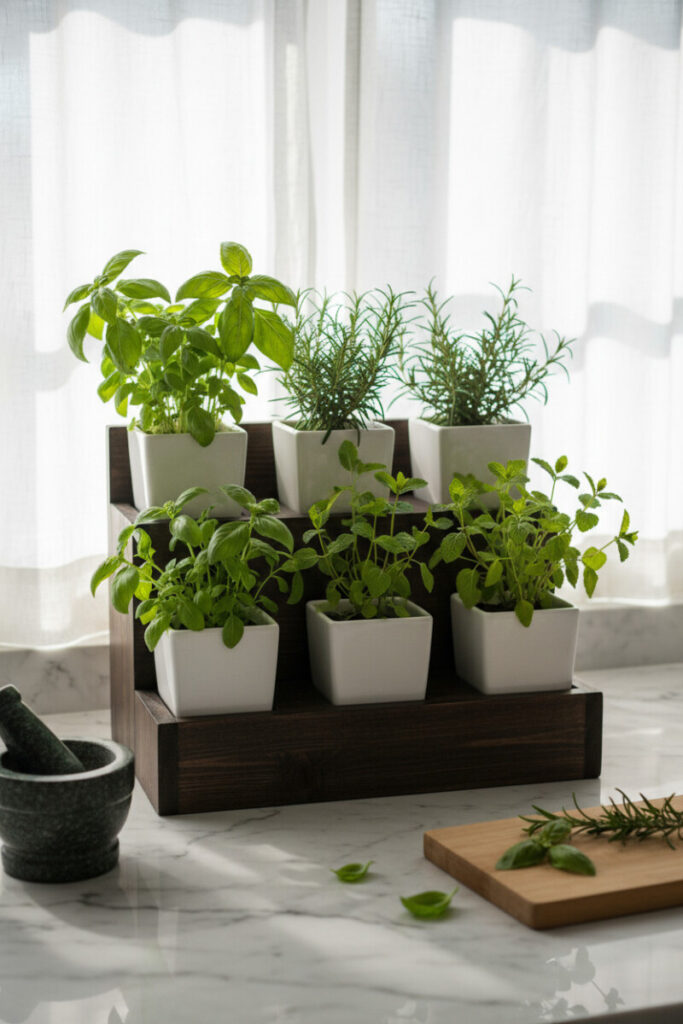
Transform a stepped, dark espresso-stained wine rack into a tiered herb display. Square white ceramic pots nestle into each slot, creating a crisp grid with strong vertical rhythm. Backlighting through sheer curtains highlights the translucent basil leaves and the glossy marble counter.
Culinary note: Keep a mortar and pestle nearby for quick pesto or rosemary salt—when the tools sit within reach, you’ll use the herbs more often.
32. Wooden Bench Herb Station
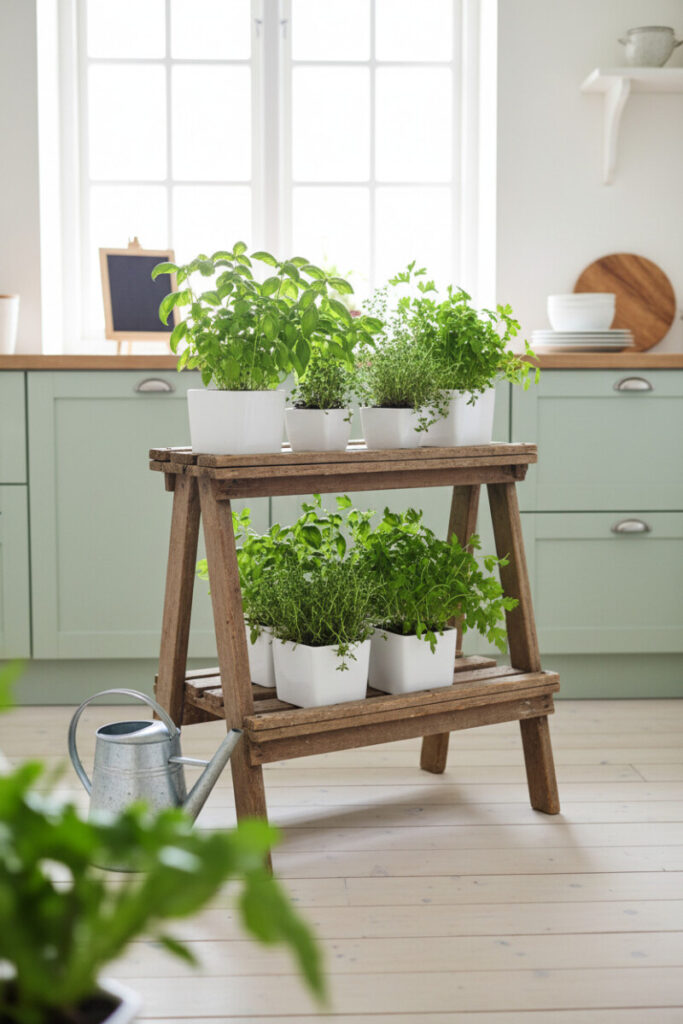
Load a rustic A-frame wooden bench with white square pots of basil, thyme, and parsley. Pale mint or sage-green cabinetry and a light plank floor form a gentle backdrop. A galvanized watering can and a tiny chalkboard sign make the station feel intentional, not temporary.
Routine: Check moisture every other day; because bench setups are exposed on all sides, airflow is strong and soil can dry a bit faster.
33. Wooden Pallet Herb Garden
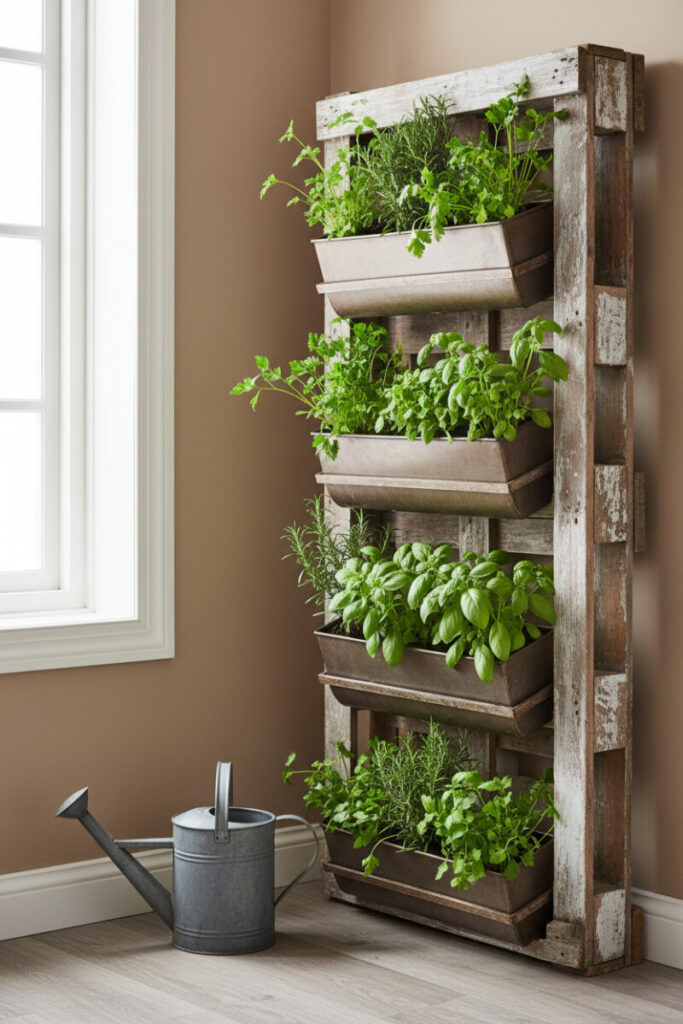
Stand a weathered pallet vertically against a beige wall and slot in bronze-brown metal planters brimming with parsley, basil, and rosemary. A dark slate watering can on the floor finishes the rustic palette. This is an efficient way to turn an otherwise blank wall into a thriving kitchen herb garden without bulky furniture.
Build basics: Sand rough edges, seal with a plant-safe finish, and anchor to studs. Use landscape fabric pockets inside each row to hold soil.
34. Wooden Toolbox Herb Garden
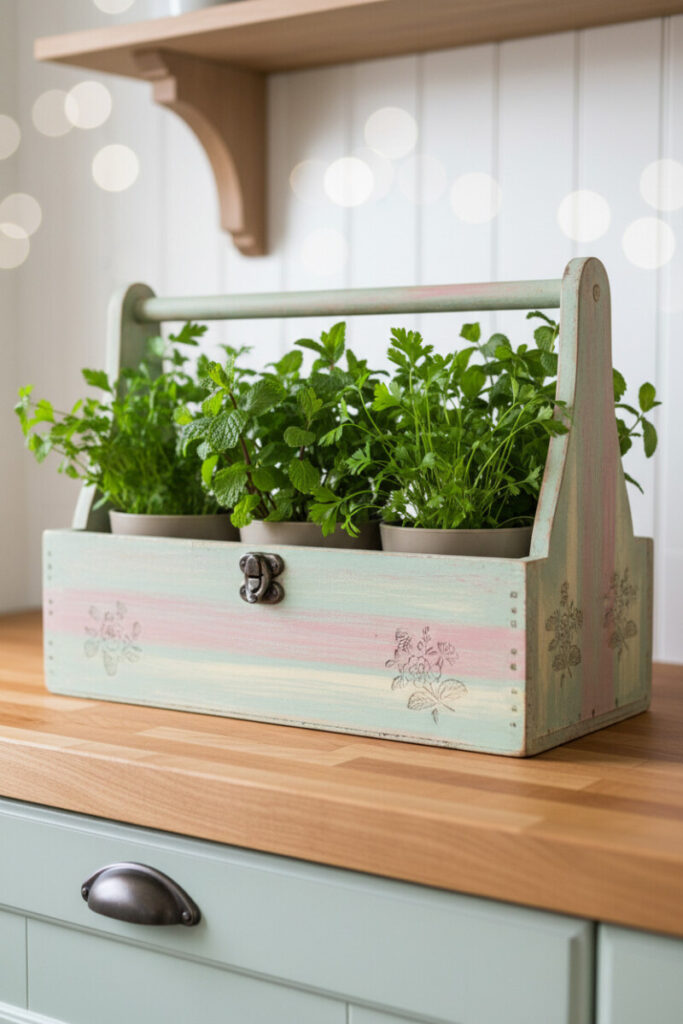
Finally, tuck several matte taupe pots into a shabby-chic wooden caddy painted in soft layers of mint, blush, and pale yellow. Set it on a warm butcher block over mint-green cabinets for instant cottage charm. Because it’s portable, this toolbox can chase sun across the kitchen or move outdoors for a few hours on gentle days.
Plant picks: Ruffled mint and parsley flourish here; they also tolerate the extra handling that comes with a portable garden.
Choosing the Best Herbs for Your Space
If you’re deciding on the best herbs to grow indoors year round, start with these reliable workhorses:
- Basil (Genovese, Thai, Lemon): Loves warmth and bright light; pinch often to prevent bolting.
- Mint (Peppermint, Spearmint): Moisture-friendly; keep in its own pot to contain runners.
- Parsley (Flat-leaf/Italian): Cooler-tolerant and steady; harvest outer stems first.
- Chives: Thrive in jars and small pots; cut a third at a time for quick regrowth.
- Rosemary: Needs excellent drainage and airflow; let the top inch of soil dry between waterings.
- Thyme & Oregano: Compact and drought-tolerant; perfect for sunny windows and wall planters.
- Dill & Cilantro: Fast but short-lived; succession-plant every 3–4 weeks for continuous supply.
- Sage: Hardy with velvet leaves; loves bright light and less water.
Mix at least one tender herb (basil, cilantro) with one woody herb (rosemary, thyme) in your plan so you always have contrasting textures and flavors.
Care Calendar: Year-Round Rhythm
- Winter: Light is scarce; cluster plants in the brightest spots or run grow lights 12–14 hours. Reduce watering. Consider cloches or mini greenhouses.
- Spring: Repot root-bound herbs, refresh 30–50% of potting mix, start dill and cilantro from seed. This is the perfect season for testing new Indoor Herb Garden Ideas as sunshine returns.
- Summer: Watch for heat stress near windows; shade with sheer curtains during heatwaves. Harvest generously to prevent bolting.
- Fall: Take cuttings of basil and mint to root in water; transition outdoor herbs inside gradually to avoid shock.
Troubleshooting Common Issues
- Leggy growth: Not enough light; move closer to windows or add grow lights.
- Yellowing leaves: Overwatering or poor drainage; check for compacted soil and ensure pots drain freely.
- Fungus gnats: Let soil dry between waterings, use yellow sticky traps, and top soil with a thin layer of sand.
- Powdery mildew: Improve airflow, thin inner stems, and avoid overhead watering.
- Flavor loss: Herbs grown too lush on heavy fertilizer may taste mild; dial back feeding and increase light.
Styling Your Herb Garden Like a Pro
- Repeat materials. Pick one or two finishes—terracotta + matte white, or stainless + walnut—and echo them across multiple planters for cohesion.
- Vary heights. Tiered stands, hanging planters, and wall grids create a lively skyline of greens.
- Create harvest stations. Keep shears, a small cutting board, and a bowl nearby so using herbs is effortless.
- Blend fresh and dried. Magnetic jars (Idea 16) keep a dependable flavor baseline, while living pots deliver brightness.
From Ideas to Action
If you’re daunted by choice, begin with how to start an indoor herb garden for beginners in three moves:
- Pick a sunny zone (a kitchen windowsill or a bright shelf) and choose three herbs you cook with weekly—basil, parsley, and chives are a strong trio.
- Use uniform pots with drainage and a high-quality potting mix. Add a saucer to each pot and water thoroughly, then wait until the top inch dries.
- Harvest often, pinching basil tops and trimming chives with scissors. Success breeds momentum; expand later into a ladder shelf, vertical wall, or mini greenhouse from the ideas above.
From birdcage planters to aquaponic systems, these thirty-four Indoor Herb Garden Ideas prove there’s a tailored solution for every home, light level, and style. Start with one, learn what your herbs love, and soon your kitchen will smell like summer—every day of the year.