Table of Contents
If your kitchen feels a little flat lately, you don’t need a remodel—you need the right curtains. Thoughtful Kitchen Curtain Ideas can transform light, color, and mood in a snap, and they cost a fraction of new cabinets. Whether you’re aiming for breezy coastal vibes, rustic warmth, or modern drama, your window treatment is the easiest style dial you can turn.
This guide collects 30 distinct Kitchen Curtain Ideas—from classic to wildly creative—so you can match a look to your space, your cooking routine, and the way you like light to behave. Along the way, you’ll learn how to choose the right fabric, length, and mounting method, plus smart tips for privacy, cleaning, and mixing patterns without chaos. We’ll also weave in practical advice on kitchen window treatments for small spaces and how to choose kitchen curtains with confidence, so even a first-time decorator can make a polished, personal choice.
Before we jump into the looks, two quick principles to anchor your decision:
- Let the room’s light lead you. Kitchens are task spaces; you chop, stir, read recipes. Ask what your light needs to do—diffuse glare, block morning beams, or glow softly at night—and select fabric and fullness accordingly.
- Let the palette play rhythm section. Curtains don’t have to match cabinets, but they should echo one or two tones already in the room—countertops, flooring, cookware, a print on a tea towel—so the whole design hums.
Now, let’s tour the Kitchen Curtain Ideas you can put to work today.
1. Abstract Prints
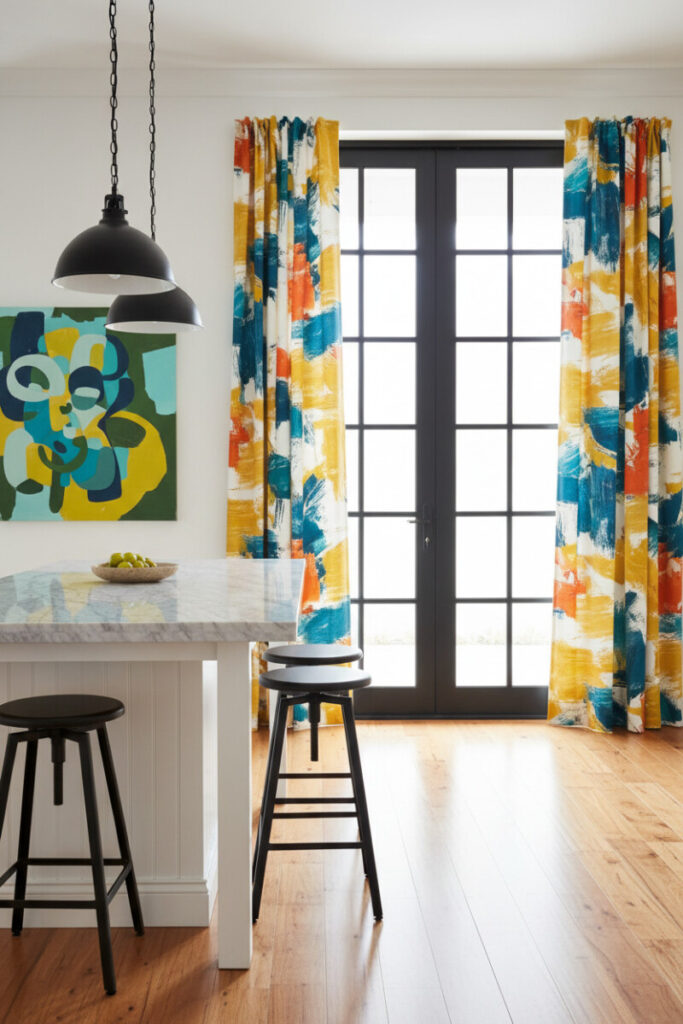
If you love art-forward interiors, abstract prints bring gallery energy straight to your breakfast nook. Big brushstrokes in marigold, cobalt, and teal hit like a double espresso, especially in otherwise white or black-and-white kitchens. The trick is scale: oversize, painterly motifs read modern and intentional, while tiny multicolor patterns can feel busy. Use these curtains to pull together a bold pendant lamp or a single splashy canvas on the wall. For renters, they’re the fastest way to inject personality without paint.
Light tip: Choose a cotton-linen blend to keep the pattern crisp but still allow daytime glow. At night, a separate roller shade can add privacy without killing that daylight bounce.
2. Animal Prints

Hear us out: animal prints are neutrals with a kick. Leopard or cheetah velvet looks fierce in contemporary spaces where glass and wood dominate, and it pairs beautifully with forest views or plants. Because the pattern is organic, it plays nicely with linear cabinetry and long kitchen islands. Keep metals simple (black or brushed steel) so the print gets the spotlight, and ground the look with warm wood stools or woven pendant lights.
Best for: open-plan lofts or modern cabins where the kitchen shares views with living space. It’s a mood.
3. Blackout Curtains
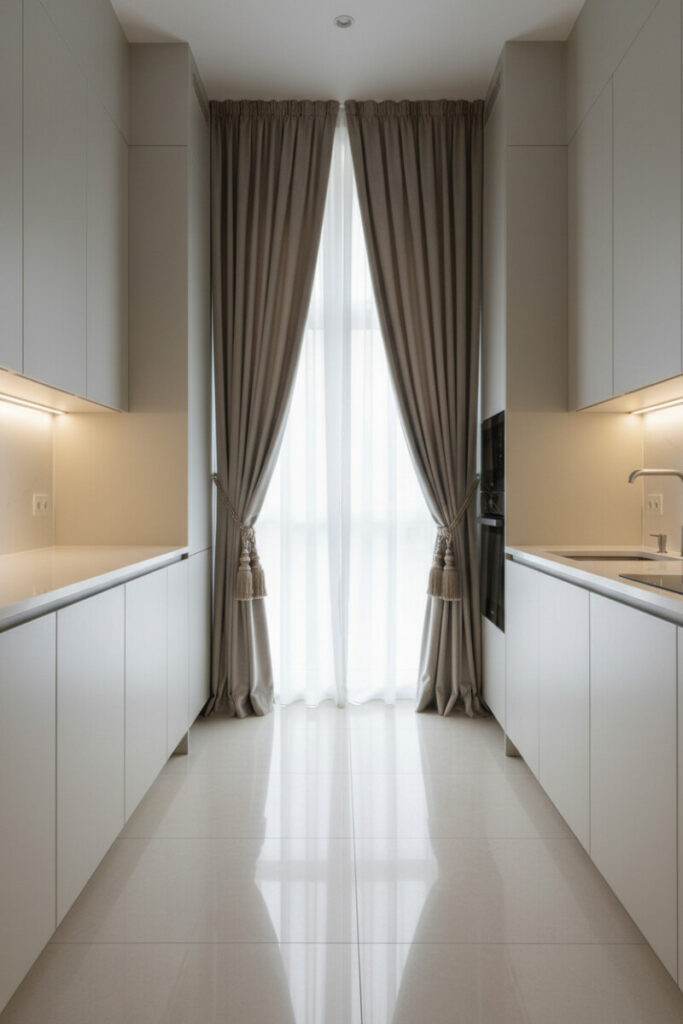
Not just for bedrooms, blackout curtains are clutch when your window blasts direct sun during meal prep. In a galley layout, floor-to-ceiling blackout panels in taupe-grey feel sleek and hotel-polished. Layer them over a simple white sheer so you can choose between soft daylight and full shade depending on the task. Tied back, they frame your sight line and calm a busy backsplash.
Pro tip for small kitchens: mount the rod 6–10 inches wider than the frame; when open, the panels stack off the glass so you keep every daylight inch.
4. Bold Stripes

Stripes instantly say “crisp and clean,” especially in coastal or modern farmhouse kitchens. A Roman shade with vertical blue-and-white bands above an apron sink emphasizes height and draws the eye upward, which is ideal for low ceilings. Keep accessories in the same color family—blue planters, striped containers—to reinforce the scheme without introducing competing patterns.
Design rule: if the stripe is wide, keep the rest of the room quiet; if the stripe is narrow, you can layer a second small-scale pattern (like dotty dishware) for charm.
5. Botanical Prints
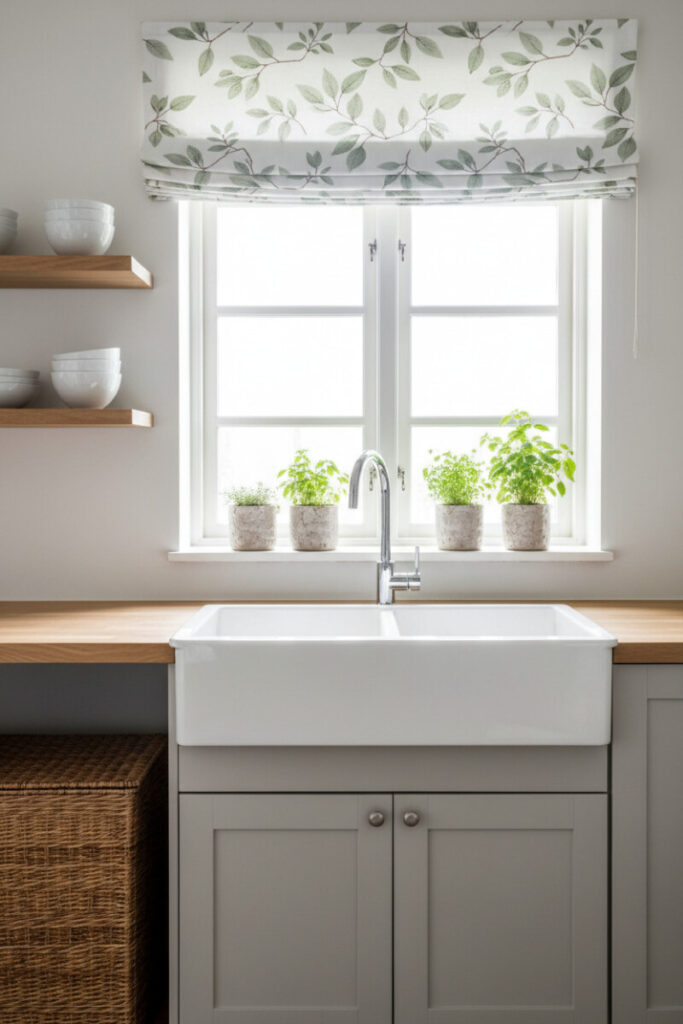
Botanical-printed Roman shades—sage leaves on white—are a serene way to bring nature inside without going full tropical. They pair beautifully with butcher-block counters, greige cabinetry, and chrome gooseneck faucets. Because the pattern is soft and airy, it works for best curtains for small kitchen windows where you want interest without visual weight. Add potted herbs on the sill to echo the motif and to perfume the room when you brush by.
6. Bright Colors
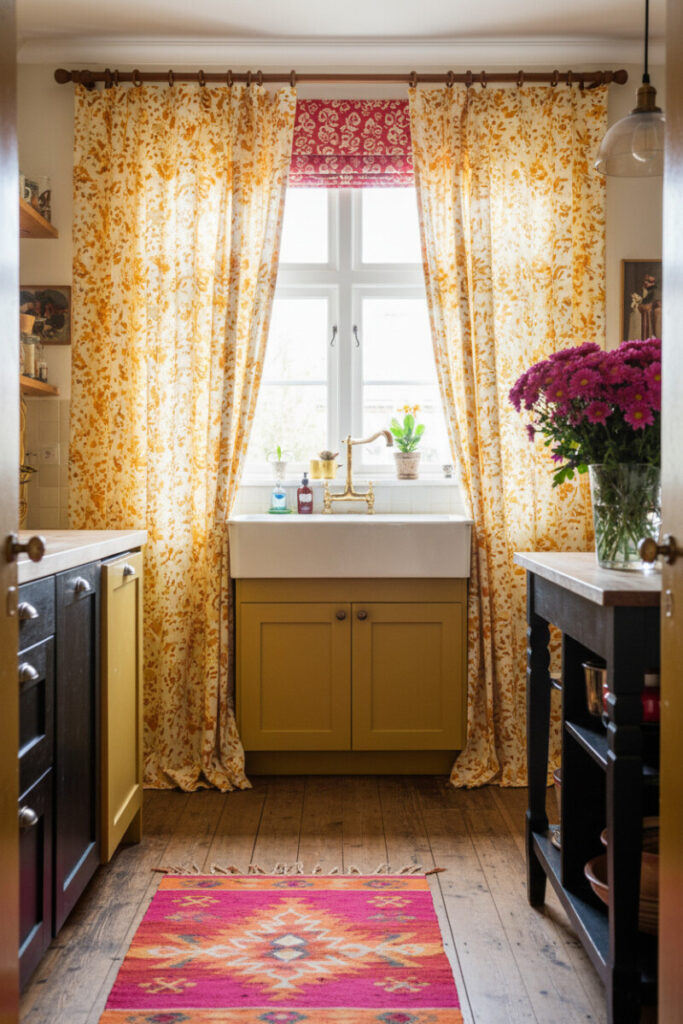
Maximalism is alive and well in the kitchen. Saffron and deep-orange curtains against mustard cabinetry can make even a cloudy day feel like sunshine. To keep bright color from overwhelming, balance it with one anchoring dark element—a charcoal island, black cabinet hardware—so the palette reads intentional, not chaotic. A patterned valance can add a playful break at the top without sacrificing length.
Light behavior: lightweight cotton diffuses beautifully and lets color glow from behind, so the curtains look lit, not flat.
7. Checkered Patterns

Checkerboard never really goes out of style. In a retro-modern kitchen, gathered black-and-white check curtains feel confident and satisfyingly graphic, especially against stainless counters and glossy tile. Because the pattern is binary, it’s easy to coordinate: black hardware, white walls, and a single pop color (mint, mustard, or cherry red) in small appliances keep the look cohesive.
Cleaning note: in a high-splash zone, choose a fabric that handles frequent laundering—cotton or a cotton-poly blend—to keep whites bright.
8. Chevron Patterns
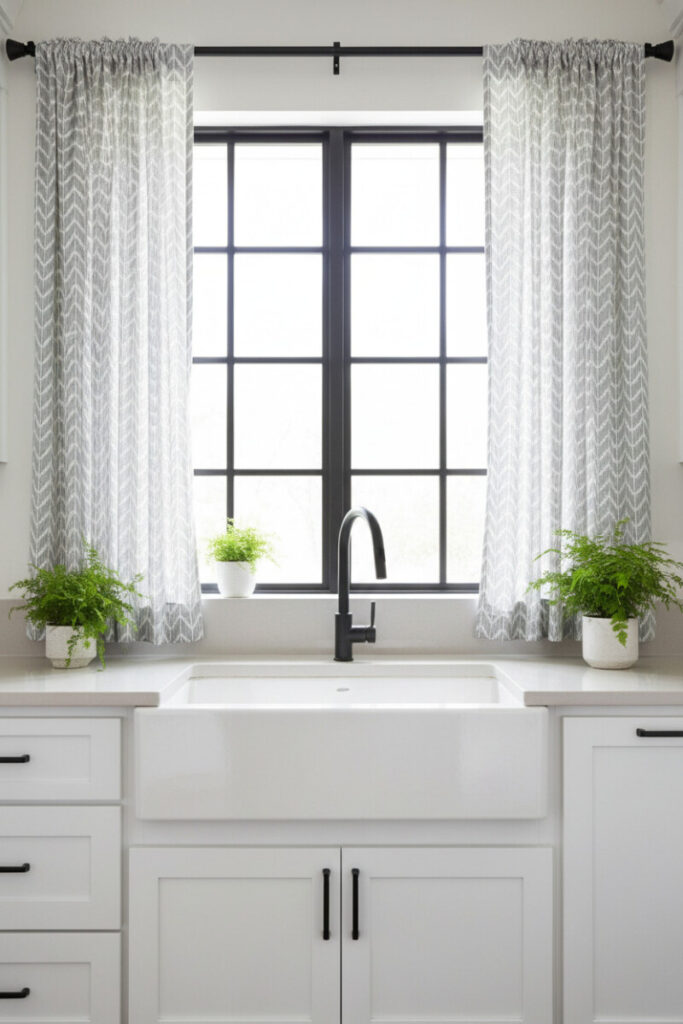
A tight chevron in grey and white, framed by a black rod and sink hardware, injects subtle movement without stealing the show. The zigzag echoes the verticals in shaker cabinets and the grid of a black-framed window. If your kitchen leans minimalist, this is one of the safest Kitchen Curtain Ideas to add texture without visual clutter.
Styling tip: set small ferns or rosemary near the panels—the fine foliage plays beautifully with the chevron’s rhythm.
9. Classic Damask
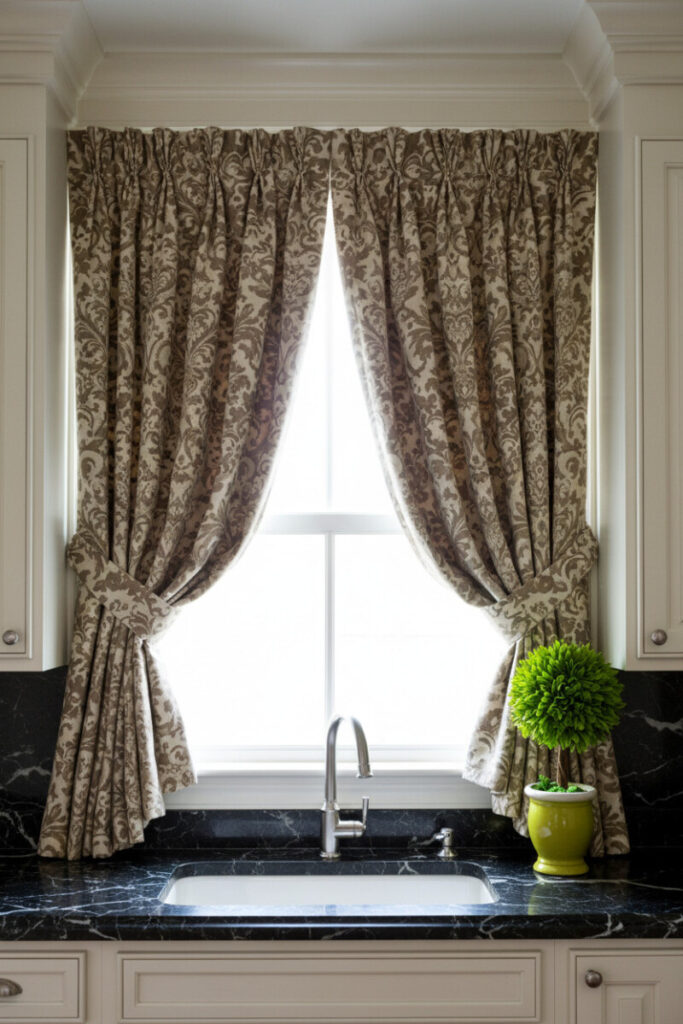
Balloon shades in taupe-and-ivory damask bring quiet luxury to traditional kitchens. The raised fabric texture and full gathers look rich in strong daylight, while a black marble counter provides a sophisticated counterpoint. Add one high-contrast accent—like a chartreuse topiary—to keep the palette from skewing too beige.
Where it shines: formal layouts, or kitchens that share a palette with a nearby dining room.
10. Earthy Tones
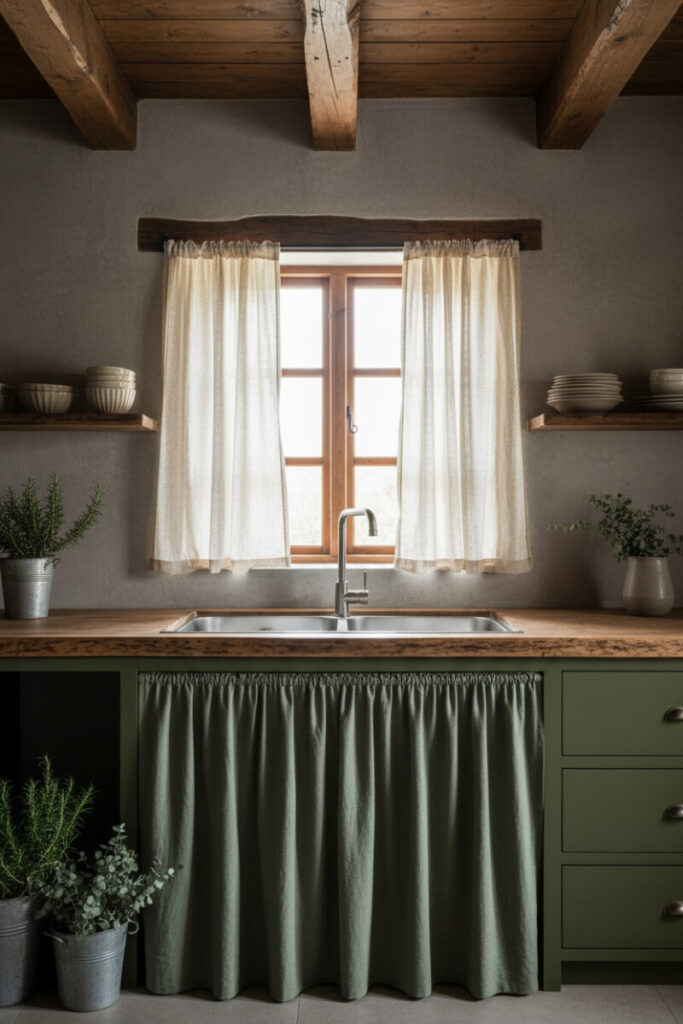
Wabi-sabi kitchens celebrate imperfect materials: live-edge counters, plaster walls, and linen. Unbleached ecru sheers paired with a sage green sink skirt create layers of softness against wood beams and aged tile. This combo filters light gently so your space feels grounded and calm. Bonus: a sink skirt hides storage and adds major character for almost no cost.
Budget tip: make a sink skirt from a single yard of fabric and clip rings—no sew skills required.
11. Embroidered Curtains
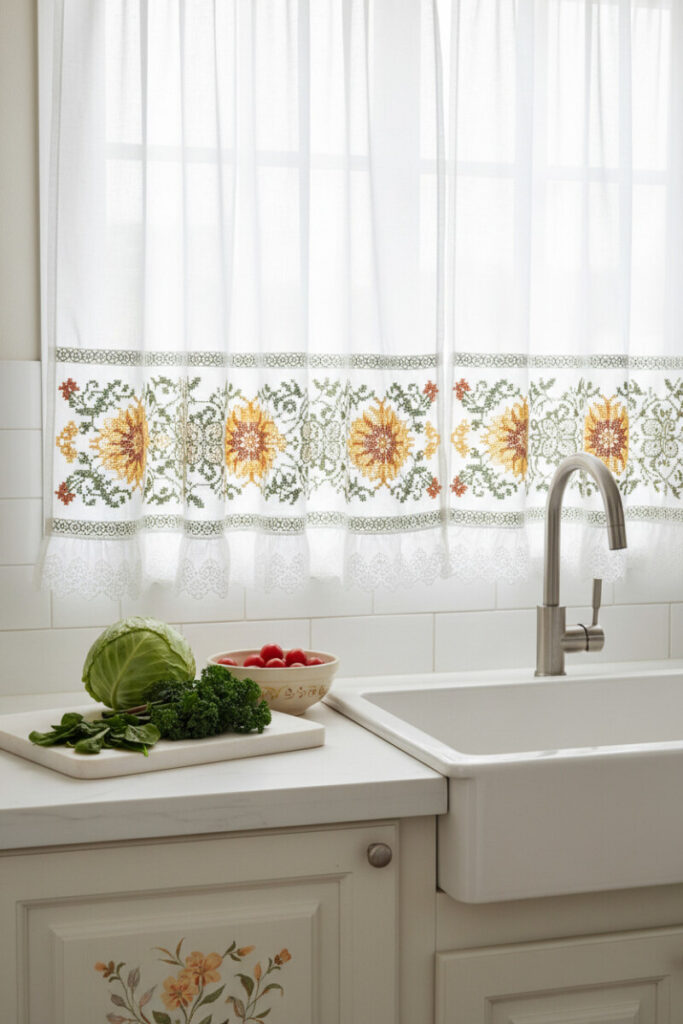
If you love tactile detail, embroidered sheer curtains deliver it in spades. Multicolored floral cross-stitch bands add vintage romance without going fussy, especially when framed by an all-white sink and tile backdrop. They let abundant daylight in but still offer a touch of privacy—perfect for city kitchens where your neighbor’s window sits just across the way.
Pair with: a few painted floral drawer fronts or hand-painted knobs to echo the motif in smaller doses.
12. Ethnic Prints
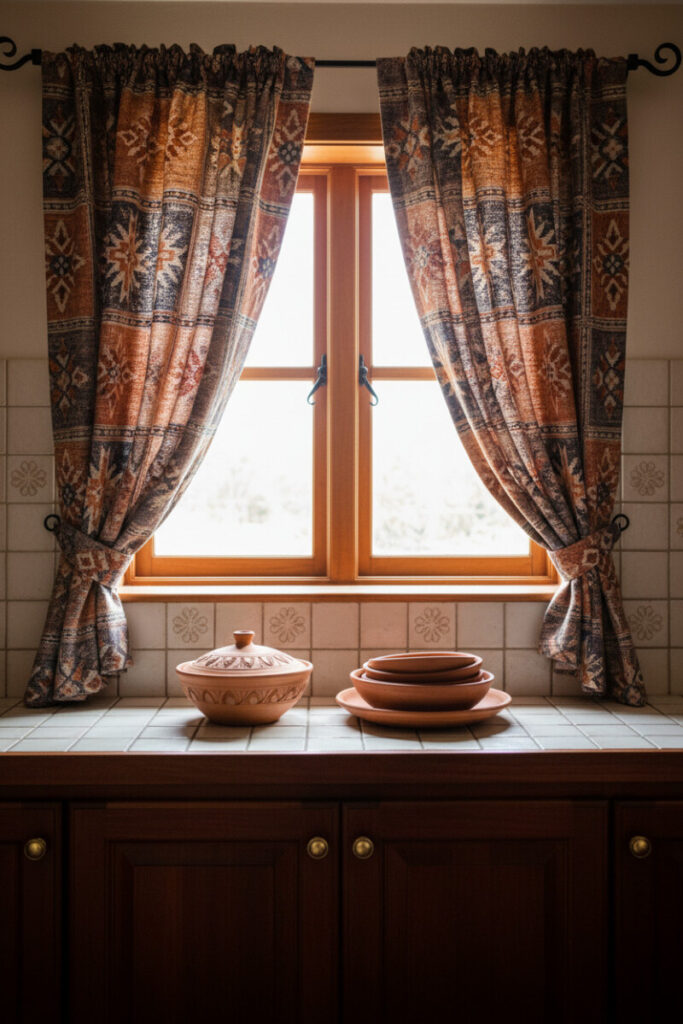
Heavy curtains with deep terracotta, navy, and cream ethnic patterns bring worldly depth to the kitchen. They warm up tile counters and dark wood cabinets instantly. Use wrought iron rods and finials to reinforce the old-world mood, and keep accessories earthy: terracotta bowls, carved wood spoons, textured pottery. These curtains read as art—especially backlit—so don’t overcrowd nearby walls.
13. Floral Patterns
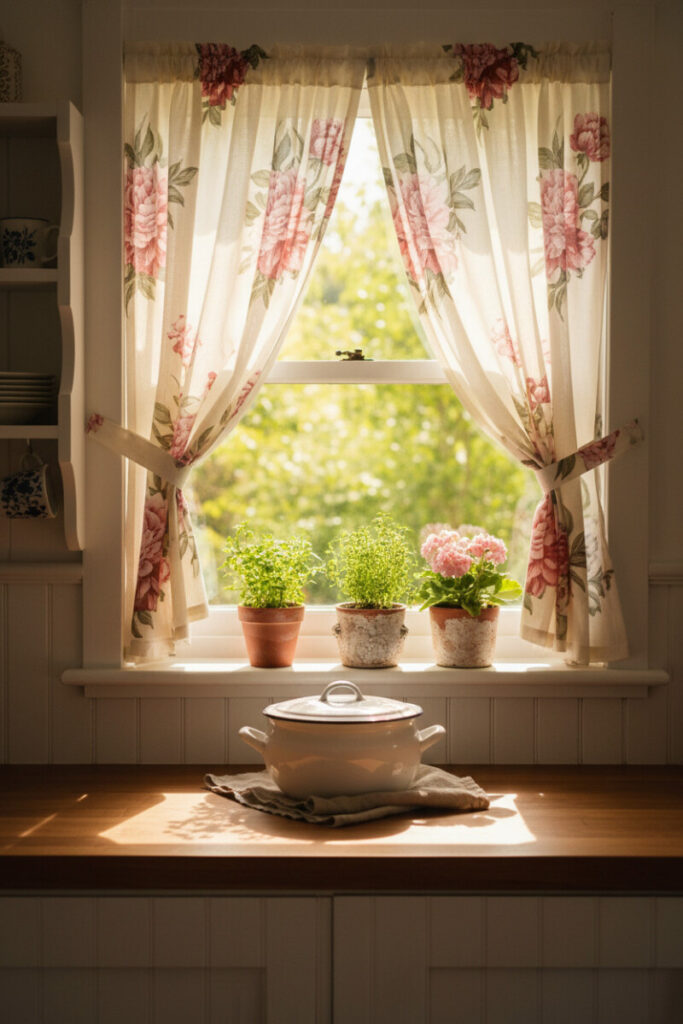
Vintage peony prints in rose-red and pink evoke cottage kitchens where the kettle’s always on. Tie them back to frame sunlight and let botanicals on the sill take center stage. Floral curtains work beautifully in spaces with lots of wood grain; the feminine motif softens strong horizontal lines and reflects golden afternoon light. For balance, keep plates and linens simple—white with a single colored edge.
Good for renters: floral panels can make standard apartment beadboard feel bespoke.
14. Geometric Prints
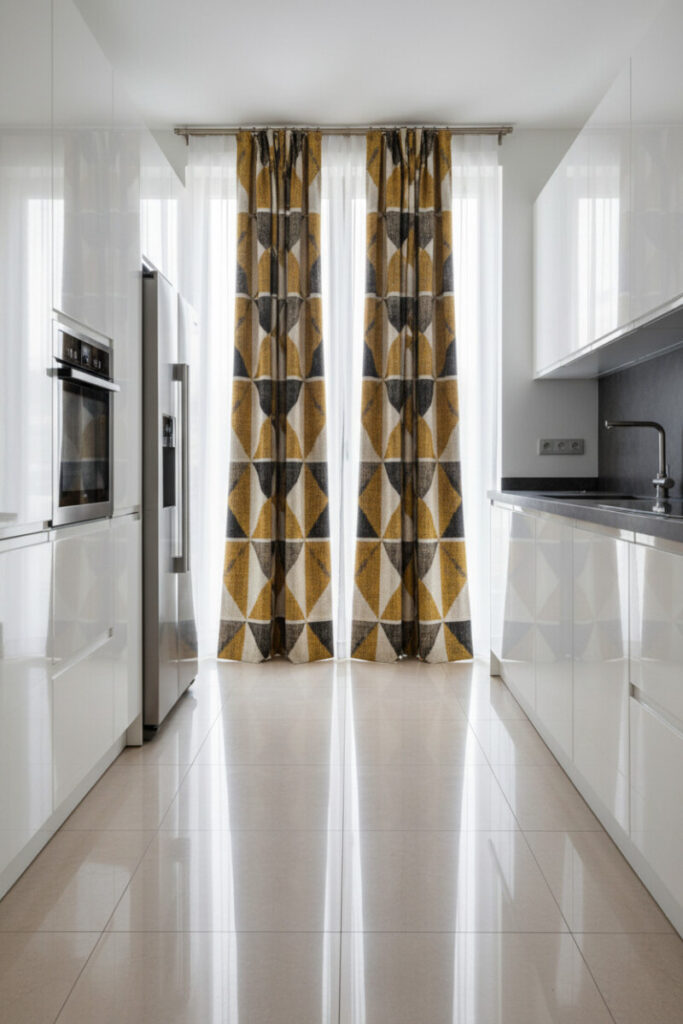
Want punch without color overload? Choose a geometric print in ochre, black, and cream and hang the panels floor-length to create height. The pattern’s interlocking triangles and diamonds flatter glossy, handleless cabinetry and stainless appliances. When backlit, the coarse woven texture adds dimension and softens hard surfaces.
Lighting note: with large-scale geometrics, use diffused daylight rather than direct sun to avoid visual flicker.
15. Gray Canvas
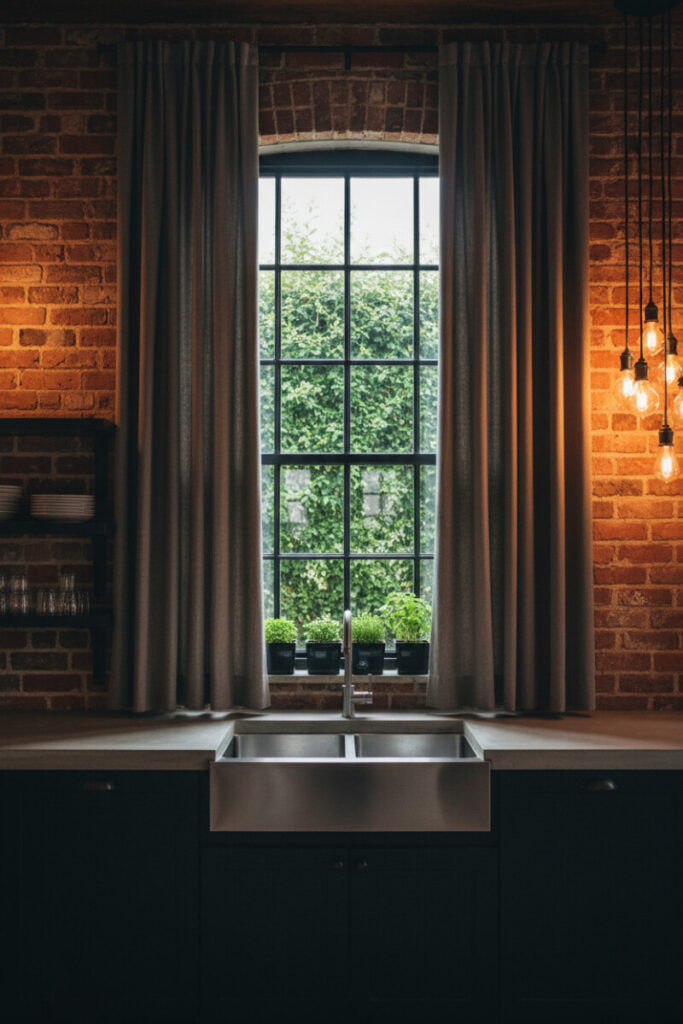
Industrial kitchens love honest materials: brick, concrete, metal. Enter dense gray canvas curtains—straight, heavy, chic. Against a black-framed window and Edison bulbs, they underline the loft’s bones while lending softness to the sink zone. A row of herbs in dark planters bridges the industrial palette with living green.
Privacy boost: canvas blocks night views better than sheer, making it ideal for street-level apartments.
16. Holiday Patterns
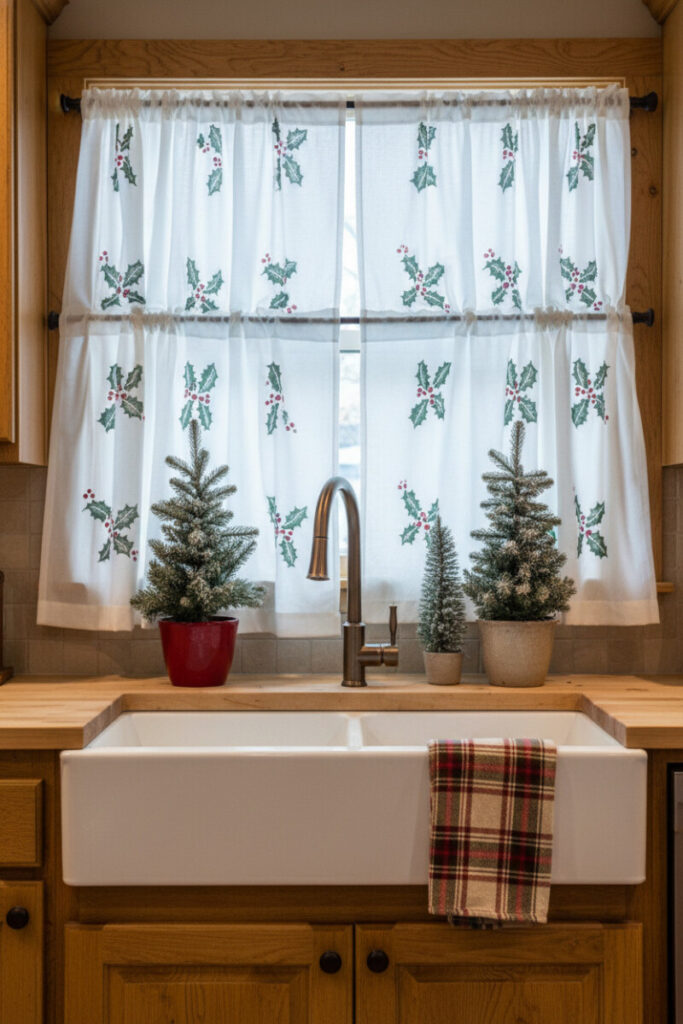
Seasonal doesn’t have to mean kitsch. Cafe curtains with emerald holly leaves and red berries bring winter joy while the top half of the window stays open for light. Pair them with a plaid towel and miniature fir trees to complete the story. Because they’re short, you can swap them out after the holidays without a major storage burden.
Tip: If you host often, keep a “party pair” of curtains to pop up for gatherings—holiday or not.
17. Metallic Accents
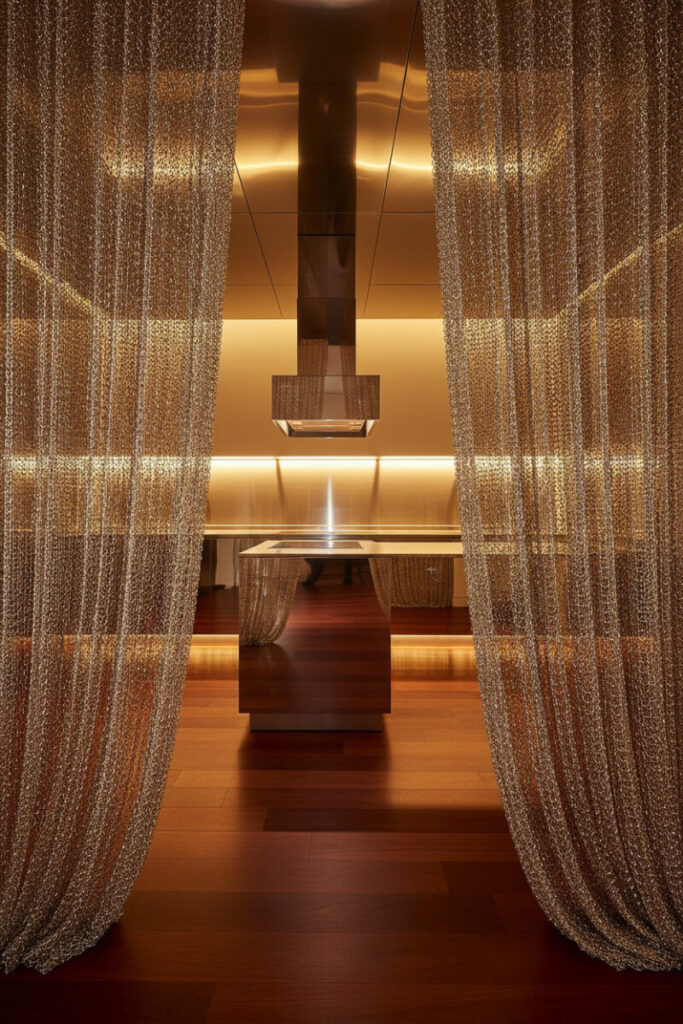
Chainmail curtains in champagne and bronze turn a kitchen into a jewel box. The mesh shimmers under spotlights and plays gorgeously with mirror-finish steel and wood floors. It’s a glamorous take that still filters light, and it doubles as a conversation piece. Keep accessories disciplined—too many reflective surfaces can tip into nightclub territory.
Where it works: minimalist layouts that want drama; condo kitchens with evening entertaining.
18. Monochrome Shades
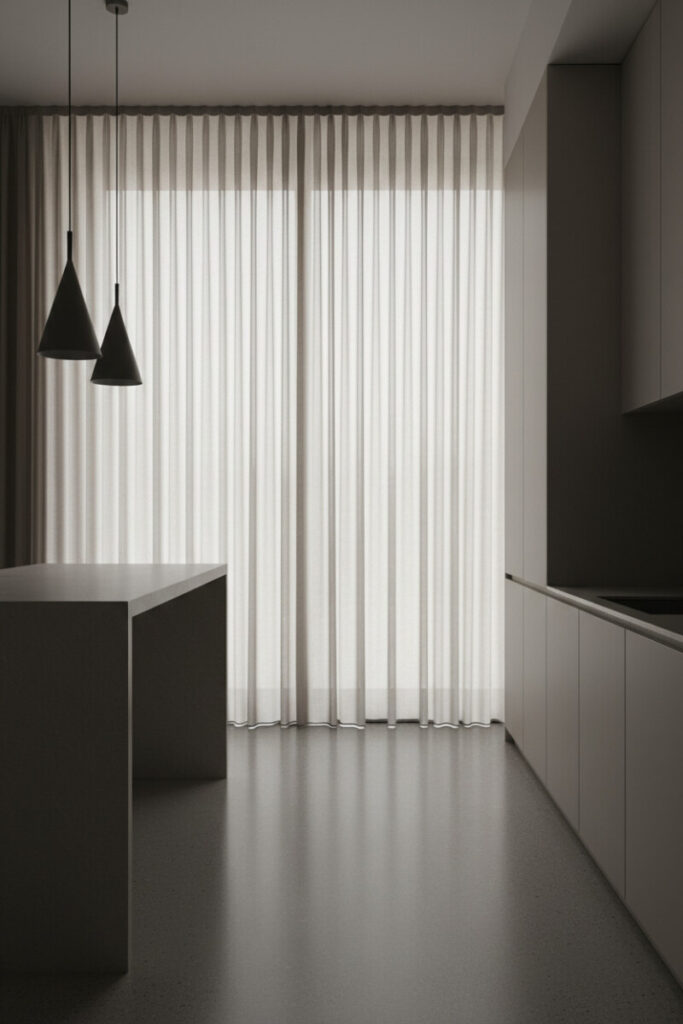
When the palette sticks to greige, off-white, and slate, texture matters even more. Floor-to-ceiling sheer panels in ripple fold create a serene curtain wall that turns sunlight into an architectural feature. The effect is spa-like: effortless, calm, and quietly expensive. Microcement floors mirror the vertical folds, enhancing depth.
Design move: keep pendant lights sculptural but matte so they don’t compete with the luminous wall of fabric.
19. Muted Blues
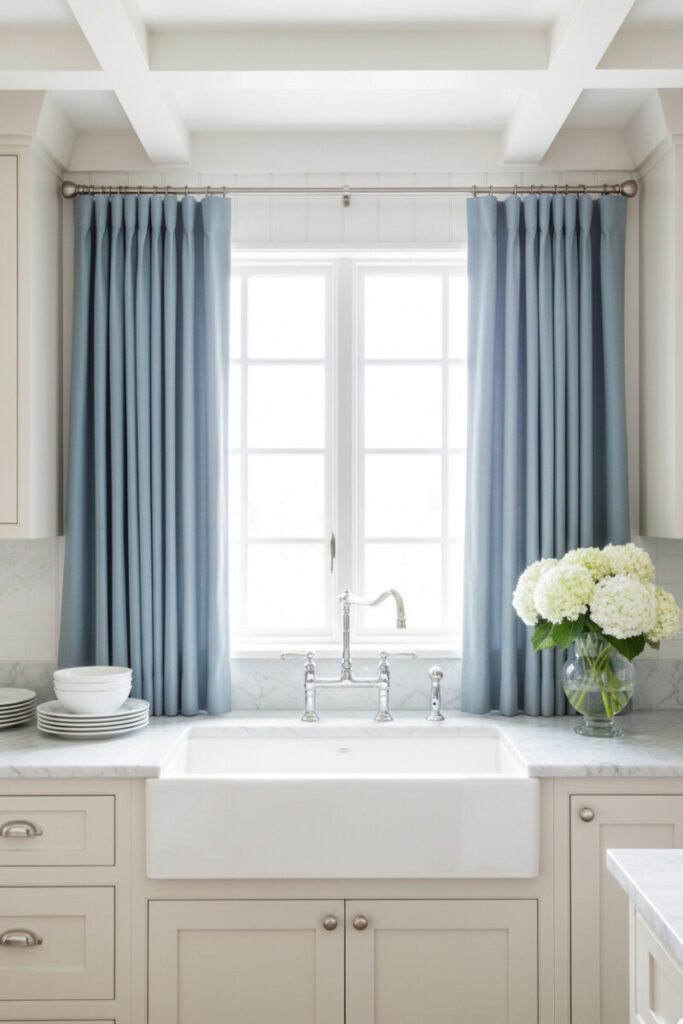
Dusty sky blue curtains are the softest way to add color without shouting. They flatter white beadboard, marble counters, and chrome fixtures while keeping the kitchen bright. Arrange white hydrangeas or dishes nearby to echo the cloudlike vibe. For kitchens with a lot of white, muted blue provides the gentlest contrast and photographs beautifully.
Good for resale: blue reads universally soothing, so this is a safe upgrade before listing.
20. Nautical Themes
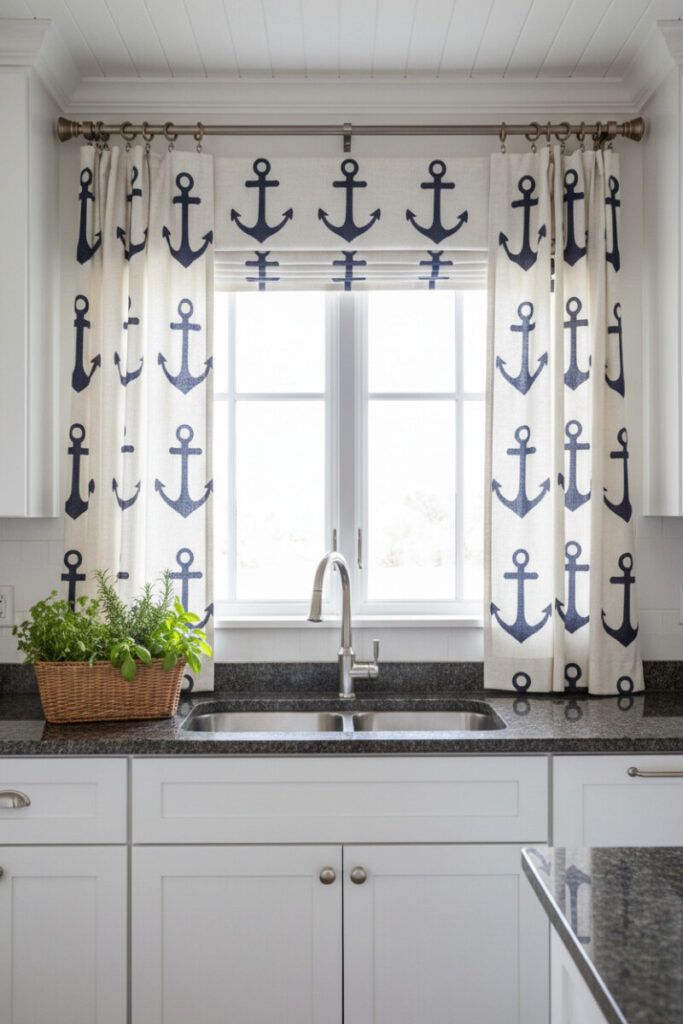
Anchors aweigh—but make it chic. Natural linen panels and a flat Roman valance printed with deep navy anchors deliver coastal charm with texture first, theme second. Mount the rod with rope or chain hardware for an authentic touch. Pair with rattan baskets, beadboard, and granite counters for a crisp, collected look.
Light tip: semi-sheer linen keeps glare in check on bright coastal mornings while preserving ocean views if you’re lucky enough to have them.
21. Pastel Tones
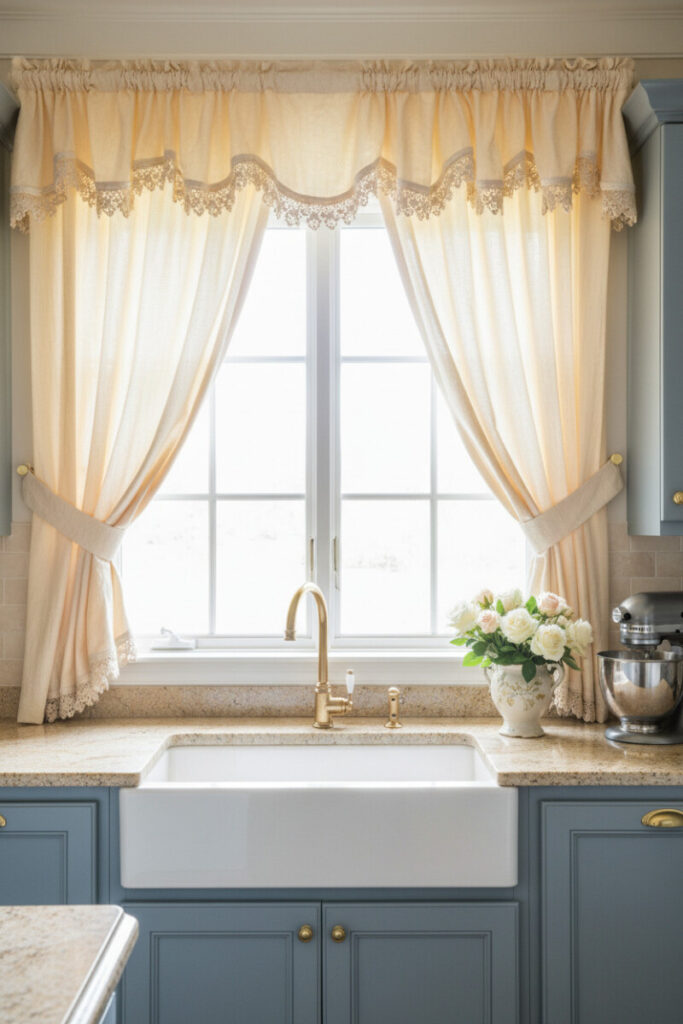
French Country kitchens thrive on softness: robin’s-egg blue cabinetry, butter-yellow sheers, and scalloped lace valances. Brass fixtures gleam, stone counters reflect, and the whole scene feels sun-washed and welcoming. Pastel curtains take the edge off stainless appliances and make even a cloudy day feel gentle. If you’re tempted to go bolder on walls, try pastel curtains first—they’re easier to change.
22. Plaid Curtains
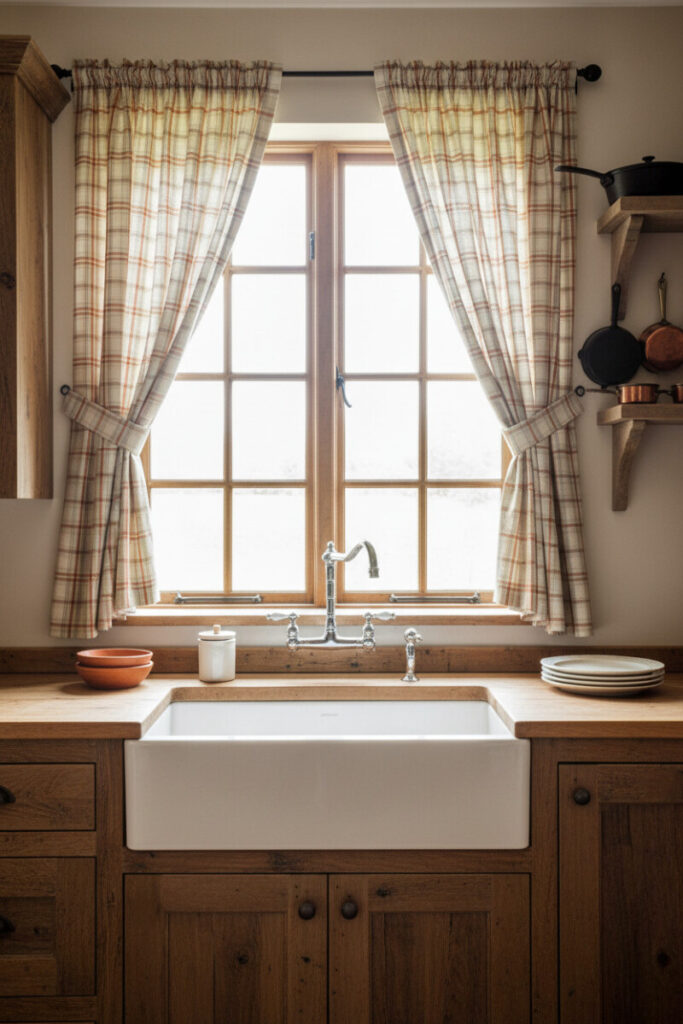
Plaid in beige, cream, and rust is a farmhouse staple, and for good reason: it’s orderly but warm. Tied back around a farmhouse sink, plaid curtains frame bright daylight and balance the heft of dark-stained wood counters and cabinets. Keep the rest of the styling minimal—stacked plates, nested bowls—to let the craftsmanship of wood and fabric breathe.
Pro portioning: in a small kitchen, thinner plaid lines are less visually heavy; in a large one, go bolder.
23. Polka Dots
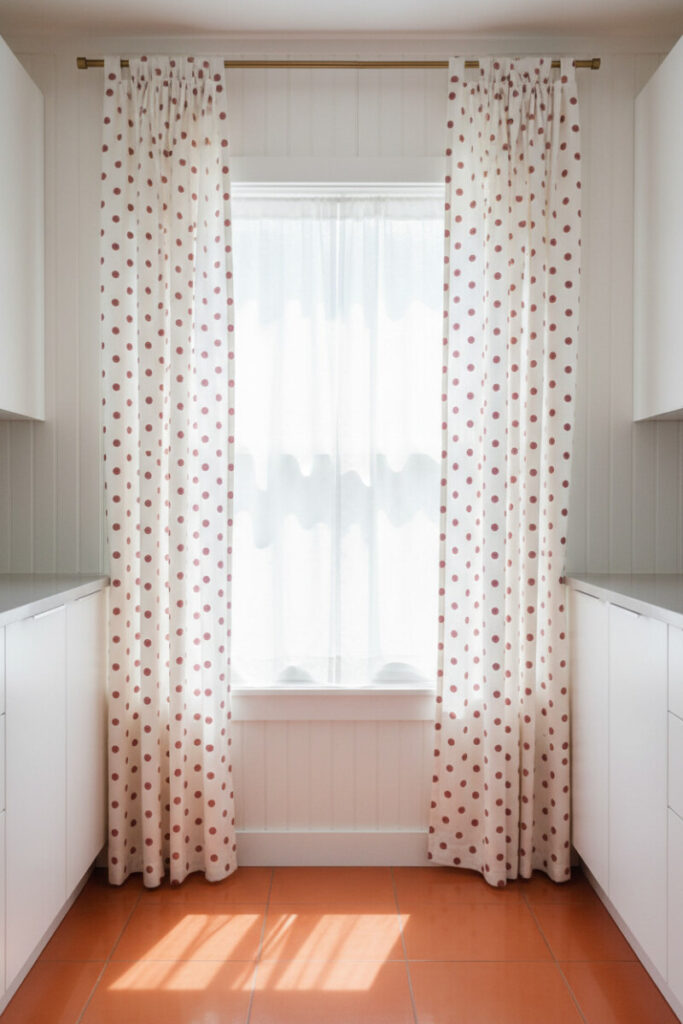
Polka dots are the smile of the pattern world. Deep maroon dots on thick white cotton read nostalgic yet fresh, especially when paired with a high-gloss terracotta floor that bounces light around. Clip rings in aged brass introduce a tiny sparkle and keep swapping easy. Layer with a central sheer to maintain privacy while still letting in a ton of sun.
Best used where: you want cheer without primary colors—think breakfast corners and rental galley kitchens.
24. Sheer White Curtains
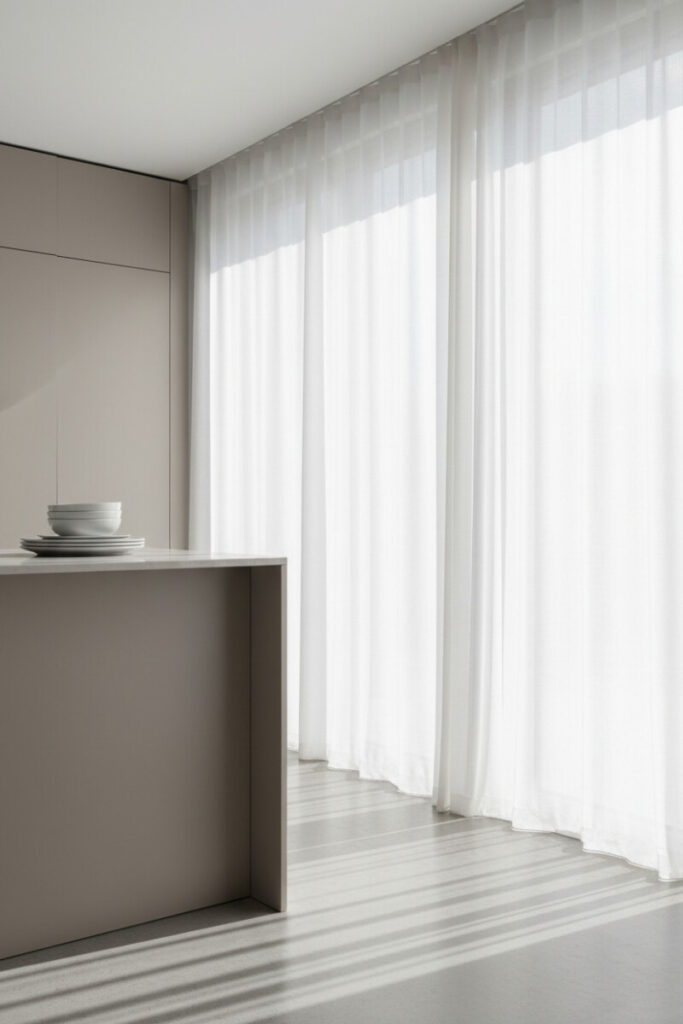
Sometimes the best Kitchen Curtain Ideas are the simplest. Floor-to-ceiling white voile across a window wall turns hard morning light into a soft wash and casts elegant shadows on the floor. It’s museum-level serenity. Because the palette is restricted to whites, taupes, and grays, texture becomes your design language: pleats, folds, and the soft edge of shadow.
Maintenance tip: wash sheers more often than heavy curtains; they trap cooking micro-splatter you don’t see until sunlight hits.
25. Soft Linen Curtains

Pale oat linen curtains are the unofficial uniform of hygge kitchens. The fabric’s slub and weight make even simple panels look expensive, and the color plays nicely with butcher block, white cabinets, and pine trim. Keep the folds generous and let them break slightly on the floor for that relaxed, editorial drape.
Sizing for small spaces: mount the rod high and wide to exaggerate height—one of the most reliable kitchen window treatments tricks for tiny rooms.
26. Tropical Prints
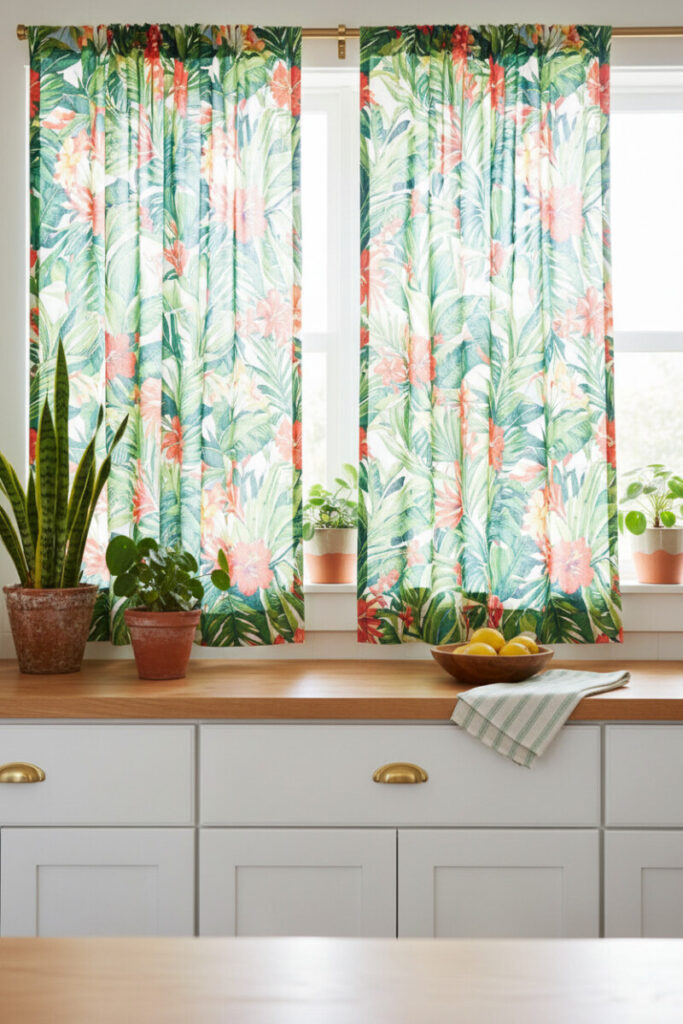
If summer’s your favorite season, say it with leaves and hibiscus. Semi-sheer tropical prints welcome intense daylight and look theatrical when backlit. Pair them with a snake plant or Pilea on the sill, warm wood counters, and a bowl of lemons to nail the breezy, vacation-at-home look. These are mood-boosters on rainy days.
Palette note: keep cabinetry white or pale to avoid color clashes; the curtains carry the energy.
27. Vintage Florals
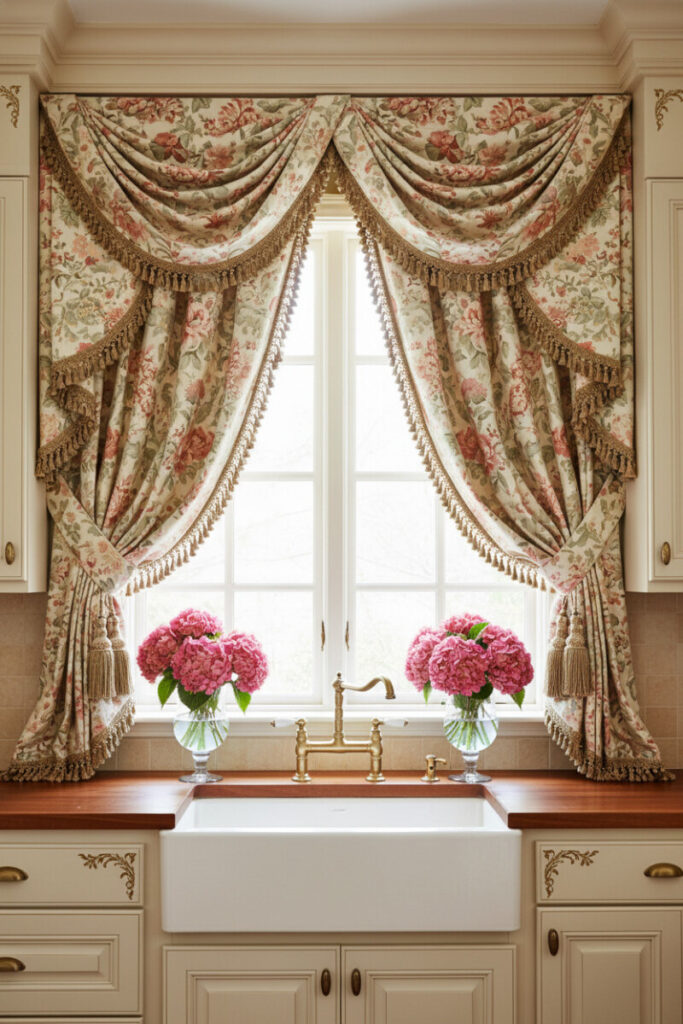
Victorian-inspired chintz—structured swags, tassel fringe, layered jabots—delivers unapologetic romance. Against a farmhouse sink and brass bridge faucet, the effect is stately and cozy at once. If your kitchen opens to a formal dining room, vintage florals link the spaces beautifully.
Editing tip: let the curtains be the star. Choose simple glass vases and plain dishware to avoid competing frills.
28. Vintage Lace Curtains

Delicate antique lace filters morning light into a soft halo. It’s the visual equivalent of butter on toast. A single white pitcher of hydrangeas on the sill, wooden utensils on a shadowed shelf, and the whole composition feels cinematic. Lace is a top pick for small windows where you want the most light with the least visual bulk.
Care: handwash or delicate cycle in a mesh bag, and hang to dry to preserve pattern.
29. Warm Neutrals

Heavy taupe-beige linen curtains tied back with braided gold cords create a gracious, transitional look. Combined with Carrara marble, brass hardware, and chevron wood floors, the result is serene and upscale. Warm neutrals are incredibly versatile—they play nicely with both cool whites and creamier tones, so you can change paint later without swapping curtains.
Layering idea: add a discreet roller shade for night privacy that disappears by day.
30. Whimsical Valance
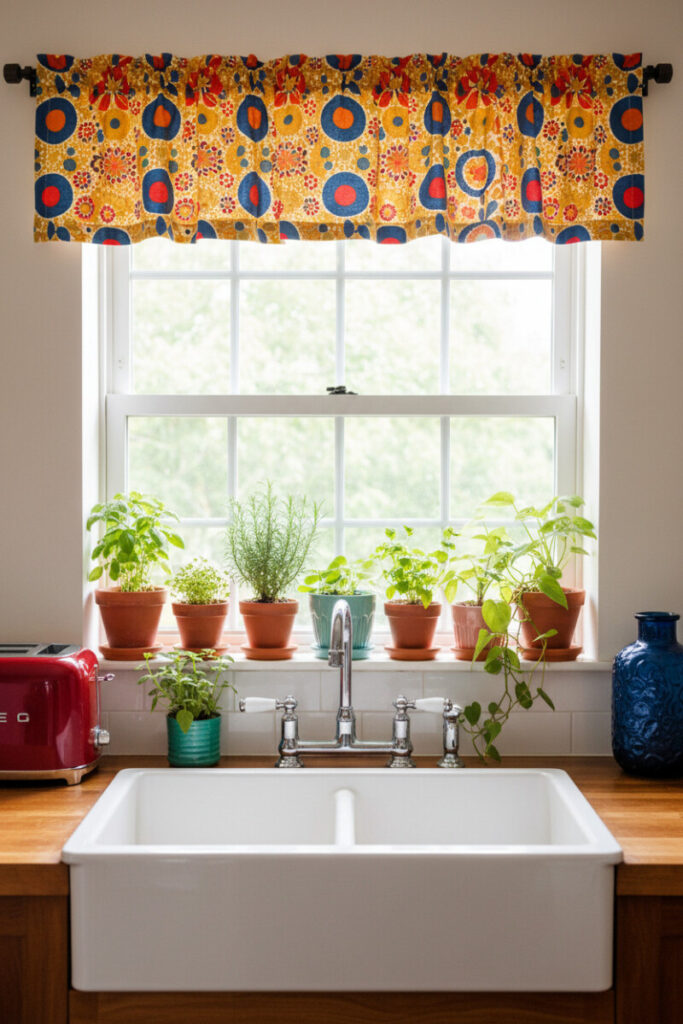
End on a smile: a gathered valance in sunny, retro primaries—mustard, deep blue dots, cherry red, orange—crowns a sink setup packed with houseplants and cheerful accessories. Because a valance uses less fabric, it’s an easy way to test bold color before committing to full-length panels. It also frees the window for herbs to drink in every beam.
Where it shines: rentals, breakfast nooks, and family kitchens that welcome a little lightheartedness.
How to Choose Kitchen Curtains Like a Pro
Choosing curtains can feel overwhelming because there are endless fabrics, styles, and mounting systems. Here’s a practical roadmap—how to choose kitchen curtains without second-guessing.
- Start with light. Do you need glare control at a certain time of day? If yes, plan a layered solution: a sheer for daytime and a heavier panel or roller shade for peak sun or night privacy. Blackout (Idea 3) and canvas (Idea 15) are your strongest blockers, while sheers (Ideas 24 and 18) are your best diffusers.
- Pick a role for pattern. If the rest of your kitchen is quiet (slab cabinets, pale counters), go bold—Abstract Prints, Geometrics, or Tropical Prints. If you already have patterned tile or heavy grain wood, choose texture-forward neutrals (Soft Linen, Warm Neutrals, Monochrome Shades).
- Color-match smartly. Repeat a countertop hue, appliance accent, or backsplash grout color in your fabric. Muted Blues and Pastel Tones harmonize most kitchens. Bright Colors and Animal Prints need one or two echo points elsewhere to look intentional.
- Size for impact. In small spaces, the best curtains for small kitchen windows are those mounted high and wide so the glass looks bigger. Cafe curtains (Holiday Patterns) or short valances (Whimsical Valance) are practical near sinks where splashes happen.
- Choose hardware that finishes the sentence. Black rods read modern; brass warms; wrought iron feels rustic. Clip rings are the easiest for frequent washing—very kitchen-friendly.
Fabric, Function, and Maintenance
Kitchens are hardworking spaces; your curtains should be, too.
Fiber: Cotton and cotton-linen blends strike a balance between washability and natural drape. Pure linen looks luxe but can shrink—prewash before hemming. Polyester sheers resist wrinkles and handle steam well. Canvas is durable and blocks light.
Lining: Add a light cotton lining to protect prints and extend fabric life, especially in sunny windows. For Roman shades, interlining adds body and helps the fold.
Cleaning cadence: Plan a quick wash every 6–8 weeks for sheers and every season for heavy panels. If you fry often, shorten the cycle; airborne oil can dull fabric faster than you think.
Safety: Keep fabric clear of cooktops and open flames. If the window sits right by the range, choose a short Roman shade or a washable roller behind a decorative valance.
Pattern Mixing Without the Headache
Pattern mixing works when scale and rhythm play nicely:
Pair a large-scale hero (Abstract Prints, Tropical Prints) with a tiny secondary pattern (micro-stripe towels) and one solid anchor (cabinet color).
Keep to a shared palette of 2–3 hues. For instance, repeat navy from Nautical Themes in barstools, and let brass or black serve as the neutral metal.
Use white space. Plain counters or a stretch of open wall lets patterns breathe.
Privacy and Light for Every Layout
Galley kitchens crave daylight depth; floor-length panels hung just outside the frame keep the glass clear. Corner sinks benefit from top-only treatments (Roman shades, valances) to prevent fabric from crowding the counter. For street-facing windows, mix sheer day panels with a night layer—Blackout Curtains or Gray Canvas—to feel cozy without shutters. And remember: kitchen window treatments don’t have to match in an open plan. The sink window can wear sheers while a nearby sliding door showcases Monochrome Shades; just keep the palette continuous.
Budget and Sustainability Tips
Clip-ring miracle: Turn a tablecloth, vintage sheet, or even hemmed painter’s canvas into curtains with clip rings. Instant style, tiny spend.
Repurpose: Old embroidered linens become beautiful cafe curtains (see Embroidered Curtains); mismatched napkins can assemble into a quirky valance.
Buy once, love long: If you’re investing, prioritize good lining and sturdy rods. Fabric is easy to update later; hardware holes last.
Clean green: Wash with gentle detergents; sun-dry when possible. It preserves fibers and color and cuts energy use.
Quick FAQ: Kitchen Curtain Ideas
What’s the easiest curtain style to keep clean? Sheer White Curtains or Soft Linen Curtains with clip rings—off and on in a minute. For heavy cooking, consider machine-washable cottons and avoid delicate trims near the stove.
How high should I hang the rod? As high as possible without hitting the ceiling. For small windows, extend the rod 6–10 inches beyond the frame on either side; the glass looks larger and the curtains stack outside the view.
Do curtains work with blinds? Absolutely. A roller shade or cellular blind can handle privacy and insulation; side panels add softness and color. This layered approach is central to modern Kitchen Curtain Ideas.
What about moisture near the sink? Avoid puddling fabric near the apron sink. Try a Roman shade (Bold Stripes, Botanical Prints) or a short cafe pair (Holiday Patterns) to keep hems dry.
Bringing It All Together
The beauty of Kitchen Curtain Ideas is how forgiving they are. Swap a color, test a print, layer a sheer—the stakes are low, and the reward is high. Curtains frame your view, filter your light, and—maybe most importantly—set the tone for how mornings and evenings feel. If you cook daily, consider how your hands will interact with the fabric: clip rings for quick washing, durable fibers for longevity. If your kitchen doubles as a gathering space, let a bolder pattern or Metallic Accents telegraph celebration.
Most of all, choose what makes you smile when you flip on the coffee maker. Maybe it’s the painterly splash of Abstract Prints, the easy romance of Vintage Lace Curtains, or the centered calm of Monochrome Shades. Your home deserves a little theater; the window is your stage.