Table of Contents
A clean countertop makes the whole kitchen feel different.
It doesn’t matter how nice your cabinets are or how expensive your appliances look. If the countertop is messy, greasy, or cluttered, everything feels off.
The frustrating part is this:
You clean it… and somehow, it gets dirty again almost immediately.
At one point, it felt like a constant cycle of wiping, cleaning, and starting over.
But over time, I realized something that changed everything:
keeping countertops clean longer is not about cleaning harder — it’s about reducing what makes them dirty in the first place.
Once I understood that, maintaining a clean kitchen became much easier.
Why Countertops Get Dirty So Fast
Before fixing the problem, it helps to understand why it happens.
Kitchen countertops deal with constant activity:
- food prep
- spills
- grease from cooking
- daily hand contact
- small items collecting dust
Even when things look clean, there’s often a thin layer of residue building up.
And the longer it sits, the harder it becomes to remove.
That’s why prevention matters more than deep cleaning.
The Habit That Changed Everything: Cleaning Small Messes Immediately
This is the simplest trick, but also the most effective.
Instead of waiting until the end of the day, I started cleaning small messes right away.
That includes:
- crumbs after cutting food
- water splashes near the sink
- oil spots near the stove
Because here’s the truth:
fresh mess is easy to remove — dried mess is not.
Even just a quick wipe with a cloth can prevent buildup completely.
Daily Wipe-Down: The 30-Second Routine That Works
I used to skip daily cleaning unless things looked messy.
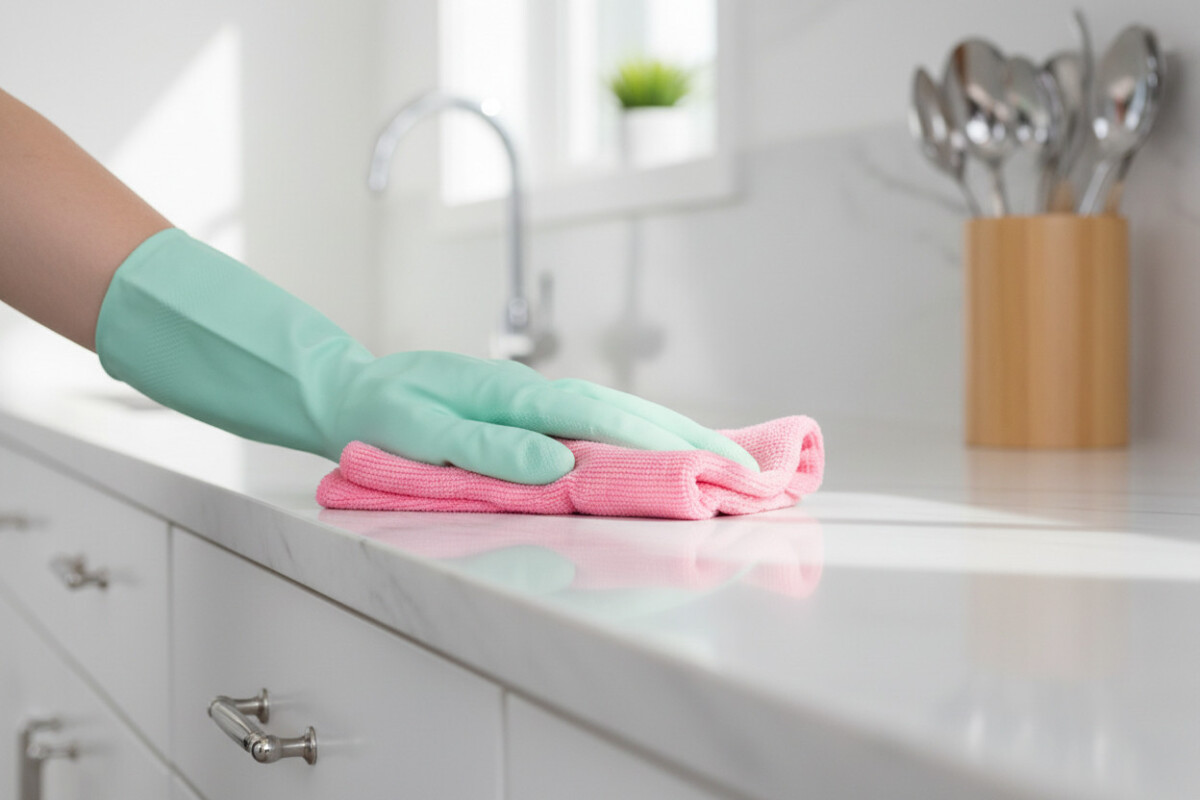
Now I do a quick wipe every day.
Nothing complicated.
Just:
- warm water
- a soft cloth
- sometimes a little mild dish soap
This removes:
- invisible grease
- bacteria
- surface residue
And the difference over time is huge.
Because instead of buildup, you’re maintaining a clean surface.
Why Gentle Cleaning Works Better Than Strong Products
It’s tempting to use strong cleaners to keep things spotless.
But that often causes more problems.
Harsh products can:
- damage the finish
- create dull spots
- leave residue
Now I stick to gentle cleaning methods.
Because most dirt on countertops isn’t heavy — it’s just daily buildup.
And that doesn’t require aggressive chemicals to remove.
The Power of Decluttering Your Countertop
This is something I didn’t expect to matter so much.
But it makes a huge difference.
The more items you keep on your countertop, the harder it is to clean.
Think about it:
- crumbs collect under appliances
- dust builds around containers
- grease settles behind items
Now I keep only essentials on the surface.
Everything else goes into cabinets or drawers.
Because a clear surface is easier to keep clean — and stays clean longer.
The “Zones” Trick That Keeps Everything Under Control
Instead of treating the countertop as one big space, I started thinking in zones.
For example:
- cooking zone
- prep zone
- sink area
Each area gets dirty in a different way.
So I adjust how I maintain each one.
Near the stove:
- focus on grease control
Near the sink:
- focus on water spots
Prep area:
- focus on crumbs and bacteria
This makes cleaning more efficient and prevents problems before they spread.
Tools Matter More Than You Think
One small change made a big difference:
Using the right cleaning tools.
Now I always use:
- microfiber cloths
- soft sponges
Because rough materials can:
- scratch the surface
- trap dirt
- spread residue
Also, I make sure the cloth itself is clean.
Because using a dirty cloth just spreads bacteria around.
Drying the Surface: The Step Most People Skip
After cleaning, many people leave the surface to air dry.
I used to do that too.
But it often leaves:
- streaks
- water spots
- residue marks
Now I always dry the surface with a clean cloth.
Because a dry surface stays cleaner longer and looks better immediately.
Preventing Grease Before It Builds Up
Grease is one of the biggest reasons countertops feel dirty.
Especially near cooking areas.
Instead of waiting for buildup, I started preventing it.
Simple things like:
- wiping after cooking
- cleaning small splashes immediately
make a big difference.
Because once grease hardens, it becomes much harder to remove.
Using Barriers to Reduce Mess
This is one of the easiest tricks that works surprisingly well.
I use simple barriers during daily tasks:
- cutting boards for food prep
- trays under oils or condiments
- mats in high-use areas
This keeps the actual countertop protected.
And cleaning becomes much easier because you’re cleaning the barrier, not the surface.
Heat and Damage: The Hidden Causes of Dirt
At first, I didn’t think heat mattered.
But placing hot items directly on the surface can cause:
- discoloration
- surface damage
- rough spots
And rough surfaces attract dirt faster.
Now I always use:
- trivets
- heat pads
Because protecting the surface helps keep it cleaner long-term.
Deep Cleaning Without Overdoing It
Even with good habits, countertops still need occasional deep cleaning.
But I don’t do it often.
Instead, I:
- clear everything off
- wipe thoroughly
- focus on edges and corners
This resets the surface without damaging it.
Because over-cleaning with strong products can do more harm than good.
The Material Factor (Why Care Needs to Adjust)
Not all countertops behave the same.
Some are more sensitive than others.
For example:
- natural stone surfaces need gentle care
- laminate can handle a bit more but still needs protection
That’s why I avoid using the same method for everything.
Understanding your surface helps prevent damage and keeps it clean longer.
Sealing: The Step That Makes Cleaning Easier
For certain surfaces, sealing makes a big difference.
It creates a protective layer that:
- reduces stains
- prevents liquid absorption
- makes cleaning easier
I didn’t think this mattered at first.
But after doing it, I noticed:
- spills don’t sink in as quickly
- cleaning takes less effort
Small Daily Habits That Make a Big Difference
Over time, I realized that it’s not one big trick.
It’s small habits combined.
Things like:
- wiping after each use
- keeping surfaces clear
- using the right tools
These don’t take much time.
But together, they completely change how clean your kitchen stays.
What Actually Made the Biggest Difference
If I had to narrow it down, these are the habits that mattered most:
- cleaning immediately instead of later
- daily quick wipe instead of occasional deep cleaning
- keeping the surface uncluttered
- avoiding harsh cleaners
Everything else builds on these.
The Truth About “Clean” Countertops
At one point, I thought clean meant perfect.
No marks. No crumbs. Always spotless.
Now I see it differently.
clean countertops are about consistency, not perfection.
There will always be some mess.
But if you manage it early and regularly, it never becomes overwhelming.
Final Thoughts
Keeping countertops clean longer doesn’t require more effort.
It requires better habits.
Once you shift from reacting to mess to preventing it, everything becomes easier.
Focus on:
- daily maintenance
- gentle cleaning
- decluttering
- quick response to spills
And over time, you’ll notice something surprising.
Cleaning takes less time.
And your kitchen stays clean much longer without constant effort.