Table of Contents
There are certain design elements in a home that feel almost mysterious.
Not because they are complicated, but because they don’t look like they belong to modern logic.
Witches’ stairs are one of those things.
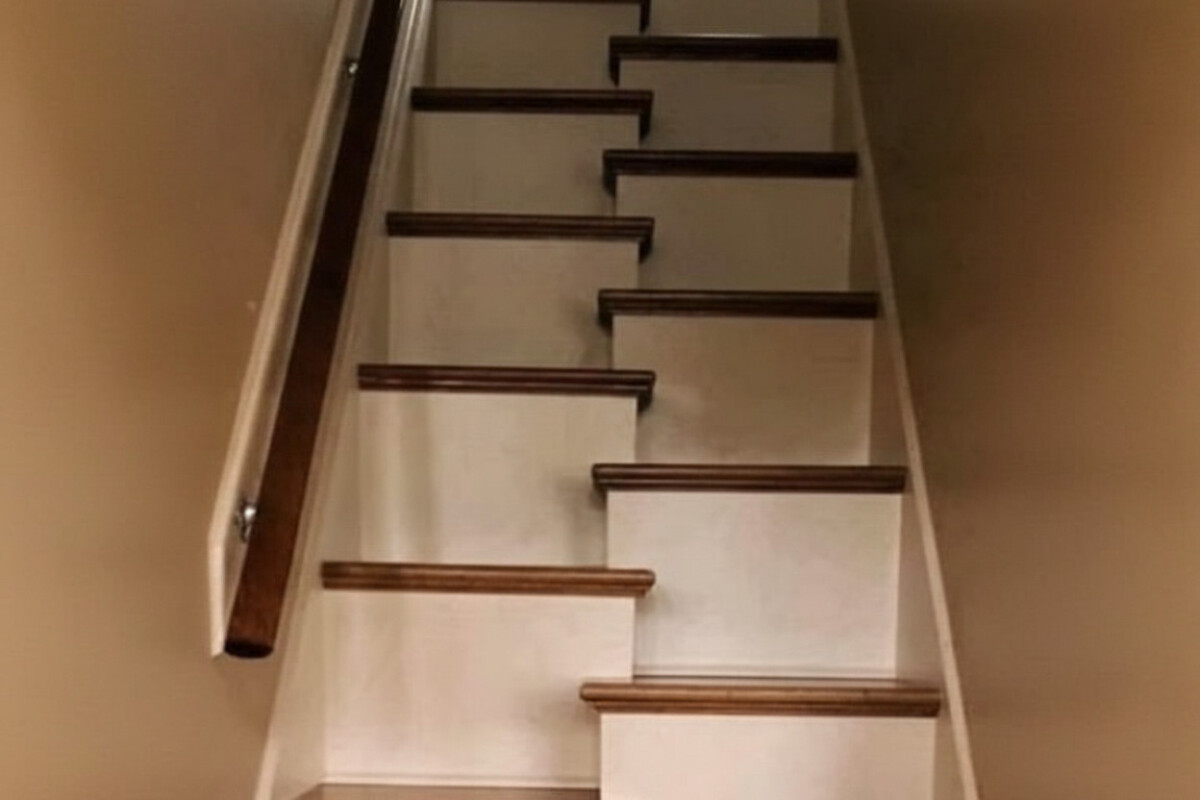
The first time I came across them, they didn’t even look like stairs in the usual sense. The steps were uneven, alternating left and right, almost like a pattern rather than a structure.
It felt strange.
And at the same time, oddly clever.
Then I heard the story.
That these stairs were designed so witches couldn’t climb them.
That alone was enough to make them unforgettable.
But as I looked deeper into it, I realized something much more interesting:
witches’ stairs are not about superstition — they’re about solving a very real problem in a very unconventional way.
What Exactly Are Witches’ Stairs
At their core, witches’ stairs are a type of alternating tread staircase.
Instead of each step being a full rectangle, each step is split:
- one side supports your left foot
- the next supports your right foot
This creates a pattern where the steps alternate as you move up or down.
The result is something that looks unusual but functions surprisingly well once you get used to it.
And more importantly:
it allows the staircase to be much steeper and narrower than a traditional one.
That’s the key idea behind the entire design.
Why They Exist in the First Place
Most design innovations come from a problem.
Witches’ stairs are no different.
The problem is simple:
stairs take up a lot of space.
In small homes, cottages, or lofts, a traditional staircase can take up a large portion of the available floor area.
That’s not always practical.
So instead of widening the space, the solution was to rethink the staircase itself.
By alternating the steps, designers found a way to:
- reduce the footprint
- keep each step usable
- maintain a level of safety better than a ladder
And that’s where witches’ stairs come in.
The Myth That Made Them Famous
The name “witches’ stairs” didn’t come from architecture.
It came from folklore.
According to legend:
these stairs were designed so witches couldn’t climb them.
The idea was that witches, unable to navigate the alternating pattern, would lose balance and fall.
It’s a story that sounds convincing at first.
Especially when you consider how unusual the design looks.
But here’s the truth:
there is no historical evidence that witches’ stairs were ever built to stop witches.
The connection to witches is purely an urban legend.
Still, the name stuck.
And in many ways, it made the design more memorable than it would have been otherwise.
Why the Myth Still Matters
Even though the story isn’t true, it plays an important role.
Because design isn’t just about function.
It’s also about narrative.
And witches’ stairs carry a story that:
- sparks curiosity
- creates intrigue
- makes people look twice
That’s why they continue to trend online today.
Not just because they are practical.
But because they feel like something out of a story.
Where Witches’ Stairs Actually Come From
While the myth points to the 17th century, the actual documented design appears later.
The earliest recorded examples of alternating tread stairs appear in architectural references from the late 19th century.
They were commonly used in:
- older homes in New England
- small residential buildings
- industrial settings with limited space
Over time, the design spread beyond residential use.
It became common in:
- ships
- warehouses
- tight vertical access areas
Because in all these places, space efficiency matters more than comfort.
The Alternate Names You Might See
Witches’ stairs go by several names.
You might also hear them called:
- alternating tread stairs
- ship stairs
- Jefferson stairs
The term “Jefferson stairs” comes from the belief that Thomas Jefferson may have been involved in developing the concept.
But like the witch story, this isn’t fully confirmed.
Still, the name appears often in design discussions.
Why the Design Works So Well
At first glance, the design looks uncomfortable.
But once you understand it, it makes sense.
When you walk upstairs, you don’t use the full width of each step.
You naturally alternate your feet.
So instead of building full-width steps that aren’t fully used, witches’ stairs:
remove the unused portion of each step.
This allows:
- steeper angles
- narrower structures
- more efficient use of space
It’s a simple idea, but incredibly effective.
The Trade-Off: Space vs Comfort
Like most clever designs, witches’ stairs involve a trade-off.
You gain space.
But you lose some comfort.
They require:
- attention when walking
- a consistent stepping pattern
- a bit of practice
They are not as intuitive as traditional stairs.
And that’s why they are rarely used as the main staircase in a home.
Safety: Are Witches’ Stairs Dangerous
This is one of the most common questions.
The answer is not simple.
they are not inherently dangerous, but they are not for everyone.
Compared to a ladder:
- they are safer
Compared to a traditional staircase:
- they are less forgiving
They can be challenging for:
- children
- elderly individuals
- anyone with mobility issues
That’s why they are usually used for:
- loft access
- storage areas
- spaces with limited traffic
Why Building Codes Often Restrict Them
Modern building codes prioritize safety and accessibility.
Because witches’ stairs are:
- steeper
- narrower
- less conventional
they often don’t meet standard requirements.
However, some areas allow them in specific situations, such as:
- secondary access points
- lofts
- tiny homes
Where You’ll Commonly See Witches’ Stairs Today
Even though they’re not mainstream, they haven’t disappeared.
In fact, they’re becoming more popular again.
You’ll often find them in:
- tiny homes
- loft apartments
- cabins
- modern minimalist designs
Because these spaces prioritize efficiency over tradition.
The Design Appeal Beyond Function
There’s something visually striking about witches’ stairs.
They don’t just solve a problem.
They create a statement.
The alternating pattern adds:
- rhythm
- contrast
- architectural interest
In some homes, they are even hidden behind panels or built into cabinetry.
Which makes them feel almost like a secret feature.
Materials That Work Best
Because of their structure, material choice matters.
Each step carries more weight than a traditional staircase.
That’s why stronger materials are preferred.
Common choices include:
- hardwood like oak
- engineered wood
- metal for industrial designs
Weaker materials can wear down faster and become unsafe over time.
The Experience of Using Them
Using witches’ stairs feels different at first.
There’s a slight learning curve.
But once you get used to the rhythm, it becomes natural.
The key is consistency.
You don’t step randomly.
You follow the pattern.
And once that clicks, movement becomes smoother.
Why People Are Talking About Them Again
Recently, witches’ stairs have gained attention online.
Especially on platforms like TikTok and Pinterest.
Why?
Because they combine:
- unusual design
- story-driven appeal
- practical function
That combination is rare.
And it makes them highly shareable.
The Psychological Effect of Unusual Design
There’s a reason witches’ stairs feel so intriguing.
They break expectations.
Our brains are used to symmetry and repetition.
But this design introduces:
- asymmetry
- pattern disruption
- visual tension
And that creates curiosity.
Comparing Witches’ Stairs to Other Space-Saving Designs
There are other ways to save space with stairs.
For example:
- spiral staircases
- ladders
- compact straight stairs
Each has pros and cons.
Witches’ stairs sit somewhere in the middle.
They are:
- safer than ladders
- more compact than traditional stairs
- more structured than spiral designs
When They Make Sense (And When They Don’t)
Witches’ stairs work best when:
- space is limited
- usage is occasional
- users are comfortable with the design
They are not ideal when:
- safety is the top priority
- frequent use is required
- accessibility is important
The Biggest Misunderstanding About Them
The biggest misconception is the name itself.
People assume they were built for supernatural reasons.
But in reality:
they are a purely practical solution wrapped in a memorable story.
A Design That Balances Logic and Imagination
That’s what makes witches’ stairs so interesting.
They sit between two worlds:
- practical engineering
- cultural storytelling
And that combination gives them lasting appeal.
Final Thoughts
Witches’ stairs are more than just a staircase.
They are an example of how design evolves.
Not from tradition.
But from necessity.
They show that even something as ordinary as stairs can be reimagined.
And sometimes, the most unusual ideas turn out to be the most effective.
Once you understand the logic behind them, they stop feeling strange.
And start feeling clever.
And maybe that’s why they continue to capture attention.
Not because of witches.
But because of the way they challenge what we expect from everyday design.