Table of Contents
When the weather turns cold, windows become one of the first places where a home starts to feel uncomfortable.
You notice it in small ways at first.
The room feels a little colder near the glass. The heat seems to disappear faster than it should. You catch yourself avoiding certain spots in the house because they never quite feel warm enough.
And then there is the part that really gets people thinking:
Should you insulate the windows for cold weather, or is that just one more home project that sounds helpful but does not actually make much difference?
That question matters more than it seems.
Because once winter settles in, every bit of heat that escapes your home has a cost. Not just in energy bills, but in comfort. A drafty window can make a room feel unfinished, even if the rest of the house is perfectly fine.
That was the part that changed how I looked at winter prep.
Window insulation is not just about saving money. It is about making your home feel steady, comfortable, and easier to live in during cold weather.
And once you understand how it works, the whole decision becomes much simpler.
Why Windows Become a Problem in Winter
Windows are one of the weakest points in a house when temperatures drop.
That does not mean they are bad. It just means they behave differently from walls.
Walls are built to hold warmth in. Windows are built to let light in. That trade-off is useful in many seasons, but in winter it becomes obvious.
Cold air can gather near the glass. Warm air inside can escape more easily. If the window is older, has gaps, or has poor seals, the problem gets worse.
You may notice:
- cold drafts
- condensation
- uneven room temperatures
- higher heating costs
- rooms that never feel fully warm
The thing about heat loss is that it is often quiet. You do not always see it. You feel it.
That is why insulating windows can make such a noticeable difference.
So Should You Insulate Windows for Cold Weather?
For most homes, the answer is yes.
If your windows are drafty, older, single-pane, or just not performing well in winter, insulation can help a lot.
It can reduce:
- heat loss
- drafts
- condensation
- energy waste
It can also make your home more comfortable without turning the thermostat into a constant battle.
That said, not every window needs the same solution. Some homes need a simple temporary fix. Others need better sealing. Some need a layered approach. And in some cases, the real answer is replacement, not patching.
The best choice depends on what problem you are trying to solve.
What Window Insulation Actually Does
A lot of people think insulation is only about stopping cold air from coming in.
That is part of it, but not the whole story.
Good insulation helps create a barrier between the inside of your house and the cold outside air. That barrier slows down heat transfer, which means your warm indoor air stays inside longer.
It also helps reduce drafts around the edges of the window. Those little leaks may seem minor, but they can make a room feel much colder than it should.
So when people say a room feels “drafty,” they usually mean the window is letting too much outside air affect the space around it.
That is exactly the kind of thing insulation helps with.
The Difference Between Cold Glass and Drafty Windows
This part is important because not every cold window means the same thing.
Sometimes the glass just feels cold because the outdoor temperature is low. That is normal.
Other times, the problem is a draft. That means air is leaking in through gaps, poor seals, or frame damage. Drafts are much more of a problem because they actively move cold air into the room.
A cold pane of glass may be uncomfortable. A drafty window can make the whole room feel worse.
That is why one of the first things I always check is whether the issue is:
- cold surface
- air leakage
- condensation
- old seals
- single-pane construction
Once you know which problem you are dealing with, you can choose the right fix.
The Benefits of Insulating Windows
When window insulation is done well, the benefits are easy to notice.
1. Better comfort
Rooms feel less drafty and less uneven. You stop getting that cold air feeling near the window every time you walk by.
2. Lower energy waste
Your heating system does not have to work as hard to keep the house warm.
3. Less condensation
Better insulation can reduce the temperature difference that causes moisture to collect on the glass.
4. A more stable indoor temperature
You get less of that hot-cold cycle that makes winter feel uncomfortable.
5. More control over older windows
If you live with older windows, insulation can help you get more life out of them before thinking about replacement.
That last point matters a lot. Not everyone wants or needs to replace windows right away. Sometimes improving the performance of what you already have is the smarter first step.
The Most Common Window Insulation Methods
There is no single solution for every home. But most winter insulation methods fall into a few familiar categories.
1. Weatherstripping
Weatherstripping is one of the easiest and most practical ways to reduce drafts.
It seals small gaps around the edges of the window frame, which helps stop cold air from sneaking in.
This works especially well when the problem is air leakage rather than the glass itself.
It is simple, affordable, and often one of the best first steps.
2. Caulking
If the gap is between the frame and the wall, caulking may be the answer.
This helps seal cracks and small openings that allow air to move through the edges of the window.
It is especially useful if the seal around the window has aged or deteriorated.
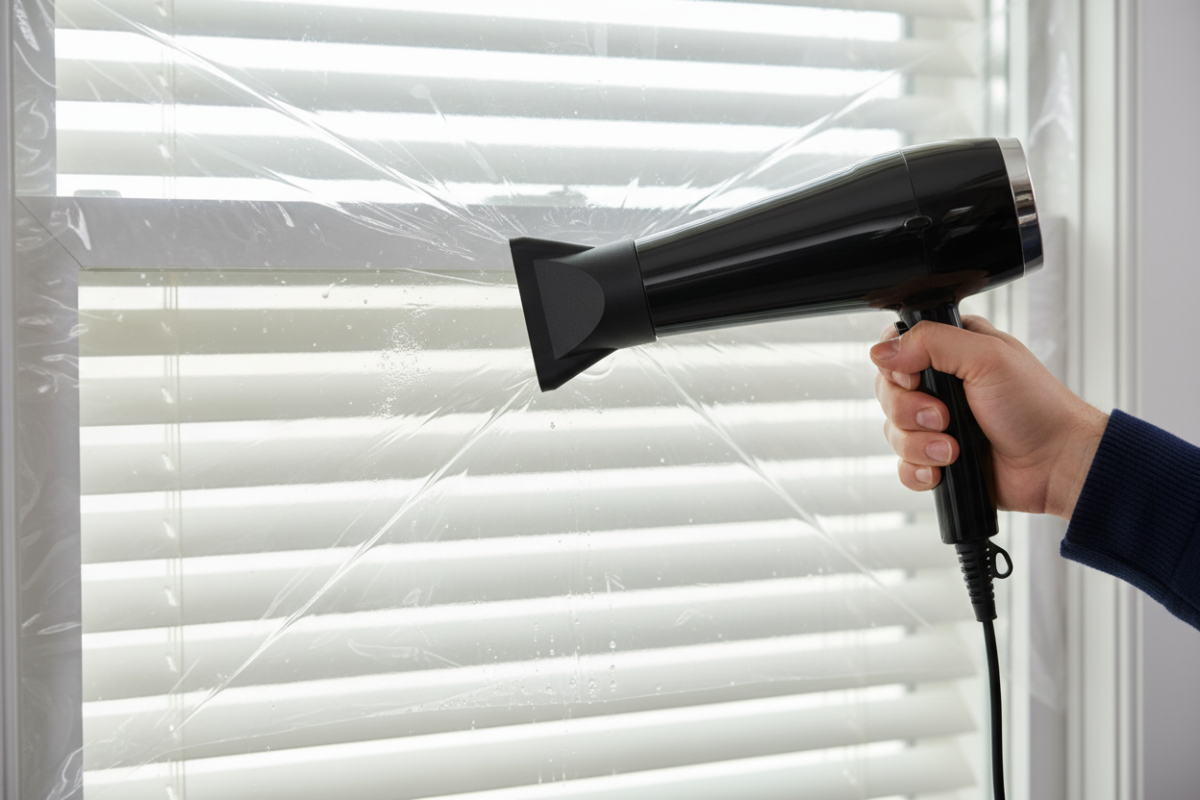
3. Plastic window film
This creates an extra barrier over the interior side of the window.
It can help reduce drafts and make the room feel warmer during winter. It is especially useful for older windows or windows that are not easy to replace.
4. Thermal curtains
Heavy curtains do not seal the window completely, but they can help reduce heat loss and make a room feel more comfortable.
They are especially useful at night.
5. Draft stoppers
These can help with lower-level leaks near the bottom of windows or around nearby edges.
They are not a full solution, but they can support the rest of the setup.
6. Cellular shades
These are designed with air pockets that help improve insulation. They can be a cleaner-looking option than film if you want something more permanent and decorative.
Each option has a different purpose. Some help with air leaks. Some help with surface heat loss. Some are temporary. Some are more permanent. The best results usually come from combining methods.
When Window Insulation Makes the Most Sense
Insulating windows is especially helpful when:
- the house feels drafty in winter
- heating costs keep rising
- some rooms are colder than others
- condensation forms often
- the windows are old or inefficient
- you want a temporary fix before replacement
It is also useful if you rent and cannot make major changes. Temporary insulation can still improve comfort a lot without requiring permanent work.
That is one reason it is such a popular winter project. It is flexible.
When Insulating Windows May Not Be Enough
Sometimes insulation helps, but it is not the full solution.
If the window frame is damaged, the seal is broken, or the window is severely outdated, insulation can only do so much.
In those cases, you may notice that:
- the draft still returns
- moisture keeps appearing
- the room still feels cold
- the window does not close tightly
That usually means the issue is structural, not just surface-level.
At that point, insulation can still be useful as a short-term fix, but it may not solve the root problem.
That is an important distinction.
The Biggest Mistake People Make
The most common mistake is waiting until winter is already making the house uncomfortable.
By then, the cold has already moved in. Drafts feel more obvious. Condensation has already started. The heating bill is already climbing.
Window insulation works best when it is handled early.
That gives you time to:
- inspect the seals
- clean the frames
- seal gaps
- install temporary solutions before the cold gets worse
This is one of those projects that is much easier when done before the problem becomes urgent.
What I Would Check First
If I were starting from scratch, I would look at the window in this order:
1. Are there visible gaps?
Small cracks or openings around the frame can let in a surprising amount of cold air.
2. Is the seal worn out?
A failed seal often means the window is not performing the way it should.
3. Does the window feel drafty?
If you can feel moving air near the edge, that is a strong sign of leakage.
4. Is condensation forming?
Moisture can point to insulation problems or temperature imbalance.
5. Is the glass itself very cold?
That may suggest the window needs an extra insulating layer.
Once you know which of these issues you have, the solution becomes much easier to choose.
Temporary vs Permanent Solutions
This is another useful way to think about it.
Some insulation methods are temporary, meaning they are best for seasonal use.
Others are more permanent, meant to stay in place long term.
Temporary options include:
- plastic film
- draft stoppers
- removable window coverings
Permanent or semi-permanent options include:
- caulking
- weatherstripping
- upgraded shades
- structural repairs
A lot of homeowners use both.
They fix the immediate winter issue first, then improve the window more fully later.
That is often the most practical approach.
Why Comfort Matters Just as Much as Savings
People often think about insulation only in terms of lower heating bills.
That is fair, but it is not the whole story.
A drafty room changes how you use your home.
You avoid sitting near the window. You turn up the heat more often. You feel like the room is always slightly unfinished. Over time, that affects the way the house feels in daily life.
That is why a good insulation upgrade can feel so satisfying. It is not just technical. It is emotional.
Your home feels calmer, warmer, and easier to settle into.
That matters.
What to Use for the Best Results
There is no magic product that solves everything by itself. The best results usually come from layering.
For example:
- seal obvious gaps first
- add insulation film if the glass is the issue
- use thermal curtains at night
- keep curtains from blocking heat during the day
- check for drafts again after the temperature drops
That kind of layered approach usually works better than relying on only one fix.
The goal is not perfection. The goal is to reduce enough heat loss that the room feels better.
A Few Signs You Are Probably Doing It Right
You will usually know the insulation is helping if:
- the room feels less cold near the window
- the draft is reduced
- the heater does not run as often
- the window area feels less uncomfortable at night
- condensation seems less severe
Sometimes the difference is subtle. Sometimes it is dramatic.
Either way, even a small improvement can matter a lot in winter.
The Truth About Winter Window Insulation
The truth is simple:
insulating windows for cold weather is usually worth it if your home has drafts, older windows, or noticeable heat loss.
It does not always require a big budget. It does not always mean replacing the window. And it does not always require professional work.
Sometimes the fix is surprisingly straightforward.
And once it is done, the difference is one of those things you feel immediately but forget to notice later because the house simply feels better.
That is a good sign.
Final Thoughts
So, should you insulate windows for cold weather?
For most homeowners, yes.
Especially if you want a warmer home, fewer drafts, and better energy efficiency through the winter months.
The key is choosing the right method for the right problem. Small gaps need sealing. Weak surfaces need insulation layers. Older windows may need a temporary fix now and a bigger solution later.
But in almost every case, doing something is better than doing nothing.
Because when winter hits, windows can either help your home hold onto warmth or quietly let it go.
And once you understand that, insulating them stops feeling like an optional project.
It starts feeling like smart home care.