Table of Contents
Stainless steel appliances look amazing right up until the first layer of grease shows up.
A kitchen can be clean overall, the counters can be wiped down, the floor can be swept, and still the whole room feels a little off because the fridge door has fingerprints all over it or the stove front has a greasy haze on it. Stainless steel is funny that way. It looks sleek, modern, and polished when it is clean, but it also seems to reveal every smudge, splash, and oily fingerprint the moment anything touches it.
That was the part I had to figure out the hard way.
At first, I assumed all cleaning products worked about the same. Spray it, wipe it, done. But stainless steel is a little more particular than that. If you use the wrong cleaner, you can end up with streaks, dull patches, or a finish that looks worse than the grease itself. And if you use too much product, it just leaves a film behind that attracts more dirt later.
So over time, I learned that degreasing stainless steel appliances is not really about scrubbing harder.
It is about using the right method, in the right order, with the right kind of touch.
Once that clicked, everything got easier.
Why Stainless Steel Gets Greasy So Quickly
Stainless steel shows grease more than a lot of people expect.
Part of the reason is simply the surface. It reflects light, so any buildup stands out more. And because kitchen appliances are touched constantly, the grease builds up faster than you notice. Hands leave oils behind. Cooking sends tiny particles through the air. Steam carries residue. Splashes from pans, ovens, and stovetops land in places you do not always see right away.
The worst part is that grease does not always look dramatic at first.
Sometimes it is just a slightly cloudy finish. Sometimes the surface feels a little sticky instead of smooth. Sometimes you only see it when the light hits at the right angle. That is usually when you realize the appliance is not actually clean, even though it looks “fine” from a distance.
That is why regular degreasing matters.
If you wait too long, the buildup gets harder to remove and the surface starts looking dull instead of bright.
The Biggest Mistake People Make
The most common mistake is using something too harsh.
It feels logical at first. Grease is stubborn, so a strong cleaner should fix it, right?
Not always.
Some products leave behind residue. Some can streak the surface. Some are too abrasive for the finish. And some clean the grease but leave the appliance looking cloudy or uneven afterward.
The goal is not just to remove grease.
The goal is to clean the stainless steel without damaging the finish.
That is a very different thing.
What You Actually Need
You do not need a huge collection of products to do this well.
In most cases, you only need a few basics:
- warm water
- mild dish soap
- microfiber cloths
- a dry towel
That alone can handle a surprising amount of grease.
For tougher buildup, you may also need a slightly stronger degreasing step, but I still like to start simple. It is easier to build up to a stronger method than to undo damage from one that was too aggressive.
The main thing is to work with tools that lift grease instead of grinding it around.
The Method I Use Most Often
When a stainless steel appliance is greasy, I do not start with the strongest cleaner first. I begin with the gentlest method that still works.
That usually looks like this:
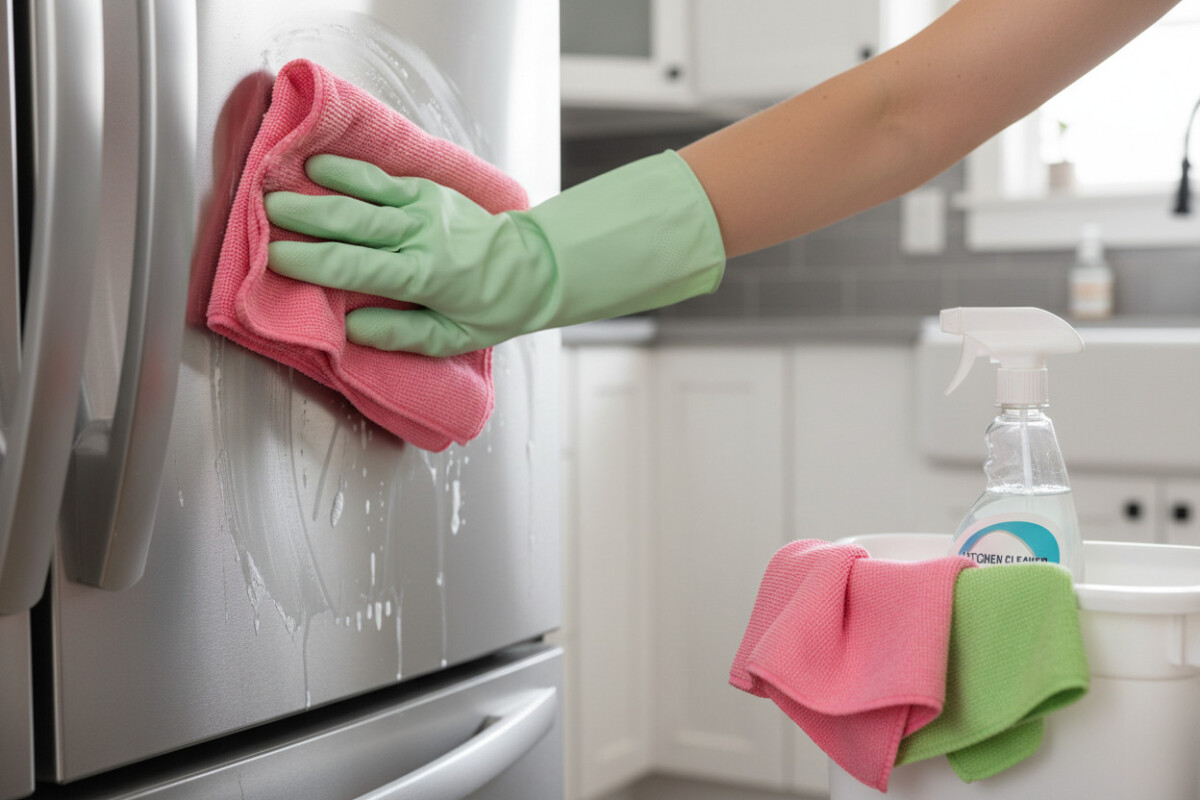
First, I wipe away loose dust and surface debris with a dry microfiber cloth. This matters more than people think. If you skip this part, you can end up spreading little bits of grime around and making the surface look streaky later.
Next, I use warm water mixed with a small amount of mild dish soap. I dampen a cloth, not soak it, and wipe along the grain of the stainless steel. The direction matters because it helps reduce visible streaking and gives a cleaner finish.
After that, I use a second cloth dampened with clean water to remove any soap residue.
Then I dry the surface immediately with a clean towel or dry microfiber cloth.
That last step makes a huge difference.
A lot of stainless steel looks streaky not because it is dirty, but because it was not dried properly.
Why the Grain Matters
Stainless steel has a grain, just like wood has a direction.
You can usually see it if you look closely. It runs in one direction across the surface. Wiping with the grain helps the cleaner follow the natural texture instead of working against it.
This does two things:
- it reduces streaks
- it makes the finish look more uniform
It is a small detail, but it makes a big difference in how polished the appliance looks when you are done.
If you have ever cleaned a stainless steel fridge and still thought, “Why does it look slightly off?” this is often the reason.
How to Handle Heavy Grease
Some appliances get much more buildup than others.
The front of a stove, the handle of a refrigerator, the edge near the microwave, and the area around vented cooking zones tend to collect more grease than the rest of the kitchen.
When the grease is heavier, I do not scrub right away.
Instead, I let the cleaning solution sit on the surface for a short time. Not enough to dry, just long enough to loosen the grease. That makes wiping much easier and reduces the temptation to press too hard.
Then I wipe gently, again following the grain.
If needed, I repeat the process instead of trying to force everything off in one aggressive pass.
That approach takes a little longer, but it is much safer for the finish.
What Not to Use
This part matters a lot.
There are several things that can make stainless steel look worse instead of better.
I avoid:
- abrasive scrubbers
- steel wool
- harsh powders
- bleach-heavy products
- anything that leaves a cloudy film
These may remove stubborn grime, but they can also scratch or dull the surface.
The trouble with stainless steel is that damage does not always show up immediately. Sometimes the appliance still looks clean right after, but later you notice dull spots or uneven reflection where the finish was worn down.
Once that happens, fixing it becomes much harder.
Fingerprints and Grease Are Not the Same Problem
A lot of people treat fingerprints and grease as if they are exactly the same thing.
They are related, but not identical.
Fingerprints are usually lighter and easier to remove. Grease is thicker and more stubborn. A simple wipe may be enough for fingerprints, but grease often needs a proper cleaning solution to break it down.
That is why some appliances seem to need constant attention. The fridge handle gets fingerprints every day. The stove front catches cooking residue. The dishwasher door gets a mix of both.
Once you understand the difference, it becomes easier to choose the right method for the amount of buildup you are dealing with.
The Secret to Keeping It from Coming Back So Fast
Cleaning is one part of the job. Preventing the grease from coming back too quickly is the other part.
The easiest habit I picked up was simple: I wipe small messes immediately.
Not later.
Not after dinner.
Not when I “get around to it.”
Right away.
That includes:
- fingerprints on handles
- oil splashes near the stove
- small smudges after cooking
- spills around appliance edges
The faster you catch those little marks, the less likely they are to become a full greasy layer.
This is one of those habits that feels tiny but saves a lot of time later.
The Best Way to Dry Stainless Steel
Drying matters more than people think.
If you clean stainless steel and leave it wet, it is much more likely to streak. Water spots can also show up, especially if your water is hard or mineral-heavy.
A dry microfiber cloth works best for me. It absorbs water without leaving lint behind. I usually use gentle pressure and move in the same direction as the grain.
If I want the appliance to look extra polished, I go back once more with a completely dry cloth after the initial wipe-down.
That final pass makes the surface look smoother and more finished.
What to Do with Stubborn Smudges
Sometimes a surface looks clean until you tilt it into the light.
Then you notice those faint greasy marks that did not come off the first time.
That usually means there is still a thin layer of residue left behind.
In that case, I repeat the process rather than escalating immediately. A second round of warm water and mild soap often removes the leftover haze without needing anything stronger.
If the smudge is still there after that, I focus on whether I am using too much product, too little water, or the wrong cloth.
Sometimes the issue is not the cleaner at all. It is the wiping method.
Appliance-by-Appliance Thinking Helps
Not every stainless steel appliance gets dirty in the same way.
Refrigerator
Mostly fingerprints, hand oils, and occasional kitchen splashes.
Stove and range hood
Usually the heaviest grease buildup because they are closest to cooking.
Dishwasher
More fingerprints and water spots than heavy grease, but still needs regular wiping.
Microwave
Often gets greasy film on the front and handle from nearby cooking.
Once you know which appliance collects what kind of mess, you can clean each one a little differently instead of doing the exact same thing everywhere.
That makes the whole process faster and more effective.
Why Consistency Matters More Than Deep Cleaning
A lot of people wait until the stainless steel looks obviously dirty before cleaning it.
That works, but it also makes the job harder.
Regular light cleaning is easier than occasional deep cleaning. If you wipe the surfaces often, grease never gets a chance to settle into a stubborn layer.
That means:
- less scrubbing
- less streaking
- less risk of damage
- less time spent cleaning overall
It also helps the appliances keep that bright, polished look that makes a kitchen feel more put together.
When the Finish Starts Looking Dull
If stainless steel has started to look dull, it is often because of one of three things:
- leftover residue
- water spots
- product buildup
Sometimes the appliance is actually clean but still looks off because the cleaner was not fully removed. Other times the finish has a film from repeated use of the wrong products.
The fix is usually not to scrub harder. It is to simplify the cleaning routine and remove whatever is sitting on the surface.
A clean microfiber cloth, a mild cleaner, and a final dry wipe usually solve more than people expect.
A Simple Routine That Works Well
For me, the easiest routine is this:
- wipe the appliance lightly every few days
- clean grease spots as soon as they appear
- do a more thorough wipe-down once a week
- dry the surface fully every time
This keeps buildup low enough that I never feel like I am fighting the appliance instead of cleaning it.
That is the sweet spot.
You are not obsessing over every smudge, but you are not letting the grease sit there for weeks either.
What Actually Makes Stainless Steel Look Good
It is not fancy products.
It is not aggressive scrubbing.
It is not overcomplicating the process.
What makes stainless steel look good is:
- gentle cleaning
- consistent care
- drying properly
- wiping with the grain
- removing grease before it settles
That is it.
The surface looks better when it is treated with patience instead of force.
The Feeling of a Clean Stainless Steel Kitchen
There is something satisfying about cleaning stainless steel well.
When the fridge door reflects light evenly, when the stove front is free of oily haze, when the handles are smooth instead of sticky, the whole kitchen feels calmer.
It is a small thing, but it changes the room.
A clean stainless steel surface makes the kitchen look cared for. It makes everything around it look cleaner too.
That is why this one task matters more than people expect.
Final Thoughts
Knowing how to degrease stainless steel appliances properly saves time, protects the finish, and keeps the kitchen looking better for longer.
The key is not being harsh.
It is being consistent.
Start with a simple cleaner. Wipe with the grain. Dry the surface fully. Avoid abrasive products. And handle small grease spots before they have a chance to become a bigger job.
Once that becomes part of your routine, stainless steel stops feeling difficult to manage.
It still shows everything, of course.
But now you know how to keep it looking the way it should: clean, smooth, and actually polished instead of just temporarily wiped down.