Table of Contents
A bathroom does not need to be large to feel good.
Some of the prettiest bathrooms I have seen were small, simple, and very thoughtfully put together. They did not rely on square footage. They relied on spacing, light, and the right design choices.
The opposite is also true.
A bathroom can be perfectly functional and still feel tight, heavy, and uncomfortable if a few small design mistakes pile up. Too many items on the counter. Dark colors in the wrong places. Oversized fixtures. Clutter that never gets cleared out. All of it can make a room feel much smaller than it actually is.
That is what makes bathroom design so tricky.
The room is already limited by walls, plumbing, and storage needs. So when the wrong decisions are made, the space can start to feel crowded very quickly.
The good news is that most of these problems are fixable.
1. Choosing a Vanity That Is Too Large
One of the fastest ways to make a bathroom feel crowded is to install a vanity that takes up more room than it should.
A vanity can be beautiful, but if it pushes too far into the space, the whole room starts to feel blocked. You lose floor area, movement becomes awkward, and even simple tasks like opening drawers or standing at the sink can feel tighter than they need to.
This problem shows up a lot in small bathrooms. People want storage, which makes sense, so they choose a bigger vanity hoping it will solve the clutter issue. Sometimes it does create more storage. But if the piece is too bulky, the trade-off is not worth it.
A better approach is to choose a vanity that fits the room instead of dominating it. Clean lines, slimmer depth, and open space around the base can make a surprisingly big difference.
The goal is not to cram in as much furniture as possible. The goal is to let the room breathe.
2. Using Dark Colors Everywhere
Dark colors can be elegant, dramatic, and beautiful. That is not the problem.
The problem is when they are used too heavily in a small bathroom with little natural light.
A dark wall, a dark vanity, a dark floor, and a dark shower enclosure can all absorb light and make the room feel smaller than it really is. Instead of feeling cozy, the space starts to feel enclosed.
That does not mean you have to avoid dark colors completely. It just means they work best in balance. A dark vanity paired with light walls. A deep accent color used on one feature wall. Dark tile combined with bright trim and reflective finishes.
A cramped bathroom often feels that way because every surface is competing for attention in the wrong way.
Light usually opens space. Darkness usually compresses it.
3. Filling Every Inch With Storage
Bathrooms need storage, but too much visible storage can make a room feel crowded fast.
Shelves stacked with bottles. Baskets on every surface. Drawer organizers spilling out onto the counter. Cabinet doors that barely close because too much is stuffed inside.
At some point, storage stops being helpful and starts becoming visual clutter.
This is one of the most common reasons a bathroom feels cramped even if it is technically clean. The room is full, but not in a good way.
The solution is not to remove storage entirely. It is to make storage quieter. Closed cabinets instead of open shelves when possible. A few chosen containers instead of many small ones. Only keep the items that are actually used often and move the rest out of sight.
When storage is done well, the bathroom feels calmer almost immediately.
4. Using the Wrong Mirror Size
A mirror can make a bathroom feel bigger, but only if the scale is right.
A tiny mirror over a large vanity can make the whole wall feel chopped up and awkward. It leaves too much empty space around it, and instead of creating openness, it creates imbalance.
On the other hand, a mirror that is too large for the wall can overwhelm the space and feel heavy.
The right mirror size helps reflect light and visually expand the room. A wider mirror often works better in smaller bathrooms because it gives the eye more room to move across the wall.
Framed mirrors can also help, as long as the frame is not too thick or bulky. Slim, simple shapes usually work best in compact spaces.
This is one of those details that seems minor until you see the difference it makes.
5. Hanging the Lighting Too Low or Too Heavy
Lighting is one of the most overlooked factors in how big a bathroom feels.
If the light fixture hangs too low, has a bulky design, or creates too much shadow, the room can instantly feel tighter. Heavy fixtures can also make the ceiling look lower, which reduces the sense of space.
The same goes for poorly placed lighting. If the mirror area is too dark, the room often feels smaller because the eye cannot move comfortably through it.
The best bathroom lighting usually feels light, bright, and well-distributed. Wall sconces, slim fixtures, and layered lighting help a bathroom feel open and usable.
Harsh overhead light alone can flatten the room. Dim or awkwardly placed light can make it feel even smaller.
Good lighting does not just help you see better. It changes the whole mood of the room.
6. Choosing Oversized or Busy Tile Patterns
Tile can make a bathroom feel polished, but it can also make the room feel busier than it should.
Large contrasting patterns, overly detailed mosaics, or tiles with too much visual movement can overwhelm a small space. Instead of helping the room feel bigger, they pull attention in too many directions.
That does not mean patterned tile is bad. It just has to be used carefully.
If the bathroom is already compact, a simpler tile choice usually works better. Clean lines, lighter tones, and more uniform surfaces tend to open the room visually. Even a plain tile can look elevated when the layout is thoughtful.
When too many patterns compete, the bathroom starts to feel chopped up and smaller.
Less visual noise usually means more space, at least visually.
7. Letting Clutter Take Over the Countertop
Bathroom counters can become crowded almost overnight.
Toothbrush holders, skincare products, hair tools, soap bottles, makeup, cotton pads, random containers, and half-used products all begin to collect in one place.
Once the countertop fills up, the room feels smaller instantly.
This is not just a cleaning issue. It is a space issue.
A clear countertop gives the room breathing room. A crowded one makes the bathroom feel busy, even if everything else is nicely designed.
One of the simplest ways to improve a cramped bathroom is to reduce what stays visible. Keep only the essentials on the counter. Move the rest into drawers, baskets, or a cabinet.
The more open the surfaces are, the larger the room feels.
8. Using Bulky Shower Curtains or Enclosures
The shower area often has a huge impact on how spacious the bathroom feels.
A heavy shower curtain with too much fabric can feel visually dense. It blocks part of the room and creates a soft but noticeable wall inside the room. In a very small bathroom, that can make the shower zone feel larger than it is and the rest of the room feel tighter.
The same thing happens with bulky shower frames or dark, opaque enclosures.
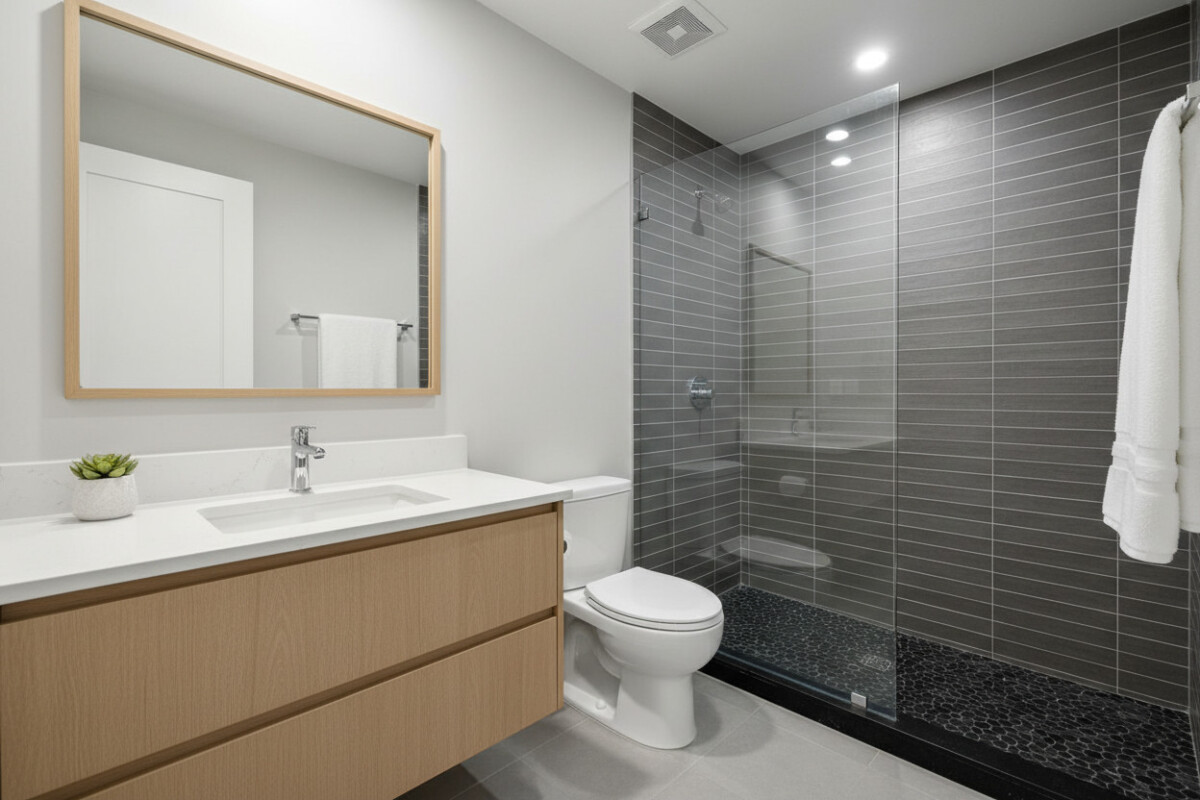
A clear glass panel or a lighter visual barrier usually keeps the room feeling more open. If a curtain is necessary, a simple one in a light color works better than something thick, dark, or decorative in a heavy way.
The shower takes up a lot of visual real estate. It is worth making that zone feel as light as possible.
9. Ignoring Vertical Space
A cramped bathroom often happens when everything sits low and spreads outward.
That creates a crowded feeling at eye level.
Vertical space is one of the easiest ways to make a bathroom feel bigger without adding square footage. Tall shelving, wall-mounted storage, hooks placed higher up, and slim vertical cabinets can move the eye upward and create a feeling of height.
When the room draws attention upward, it feels less boxed in.
The mistake many people make is focusing only on the floor and counter areas. But walls are useful too. A bathroom can stay organized while still feeling open if the storage is lifted instead of spread across every flat surface.
Using height well is one of the smartest small-space design moves available.
10. Choosing Heavy, Dark Flooring
Flooring has a huge effect on how open a bathroom feels.
Dark flooring can absolutely work, but when it is combined with small square footage and limited light, it can make the room feel visually heavy. The floor is such a large surface that any dark or busy material immediately affects the whole mood.
A lighter floor often helps a bathroom feel more open and cleaner. It does not have to be plain or boring. Subtle texture, soft tone, and a finish that reflects light a little can all help.
The biggest issue with heavy flooring is that it grounds the room too strongly. Instead of feeling airy, the bathroom feels anchored and compressed.
If the room already lacks space, the floor should support openness, not weigh it down.
11. Overdecorating the Room
Bathrooms do not usually need a lot of decoration to feel finished.
A candle here, a plant there, maybe a framed print or a nice tray. That can work beautifully.
But when the room starts collecting too many decorative items, the effect is the opposite of what people expect. The bathroom stops feeling styled and starts feeling crowded.
This is especially true in small bathrooms. Every little decorative object takes up visual space, even if it does not take up much physical room.
The key is restraint. Choose a few details that make the room feel intentional, and stop there. A bathroom feels bigger when it has room to breathe visually.
Overdecorating is one of the fastest ways to make a small bathroom feel like it is running out of space.
12. Not Leaving Enough Empty Space
This is the mistake that ties all the others together.
A bathroom feels cramped when every surface is full, every wall is busy, and every corner has something in it.
What the room often needs most is empty space.
That can feel strange at first because people are used to trying to fill rooms. But in a small bathroom, emptiness is part of the design.
A blank wall can make the room feel calmer. A clear counter can make it feel wider. A little floor space can make it feel easier to move around. Even a bit of visual silence can change the whole mood.
This does not mean the room should feel unfinished. It means the design should give the eye places to rest.
Without that pause, everything feels compressed.
And once the room feels compressed, it starts to feel smaller than it really is.
How to Make a Cramped Bathroom Feel Bigger
Once you remove the mistakes, the room often improves fast.
But a few extra moves can help even more.
Use lighter colors where possible. Keep the counter as clear as you can. Choose slim fixtures instead of bulky ones. Let natural light in if the room has a window. Use mirrors to reflect brightness. Keep storage simple and intentional.
The main idea is to reduce visual weight.
A bathroom does not need a complete remodel to feel better. Sometimes it just needs fewer things competing for space.
The Real Secret Behind Small Bathroom Design
The best small bathrooms are not the ones with the most features.
They are the ones that feel calm.
That calm usually comes from fewer visual obstacles, better light, smarter storage, and design choices that do not fight the size of the room.
A cramped bathroom is usually not a sign of bad taste. It is just a sign that too many decisions were made without thinking about how the eye moves through the space.
Once you fix that, the bathroom can feel much larger, even if the footprint never changes.
Final Thoughts
A bathroom does not have to be big to feel comfortable.
But it does have to be designed with care.
The mistakes that make it feel cramped are often small on their own, yet powerful when combined. A too-large vanity. Too much clutter. Dark finishes everywhere. Heavy lighting. Busy tile. Weak use of vertical space. Each one adds to the pressure in the room.
The good news is that almost all of them can be corrected.
Focus on light, balance, and simplicity. Leave some room empty. Keep only what matters. Let the room breathe.
That is usually what turns a cramped bathroom into one that feels open, calm, and much more livable.