Table of Contents
Cast iron has a reputation for being tough, dependable, and almost impossible to ruin.
And for the most part, that reputation is deserved.
A good cast iron pan can last for decades. It can handle heat beautifully. It gets better with use. It develops that dark, seasoned surface that makes cooking feel a little more satisfying every time you use it.
But cast iron also has one weakness that catches a lot of people off guard.
Rust.
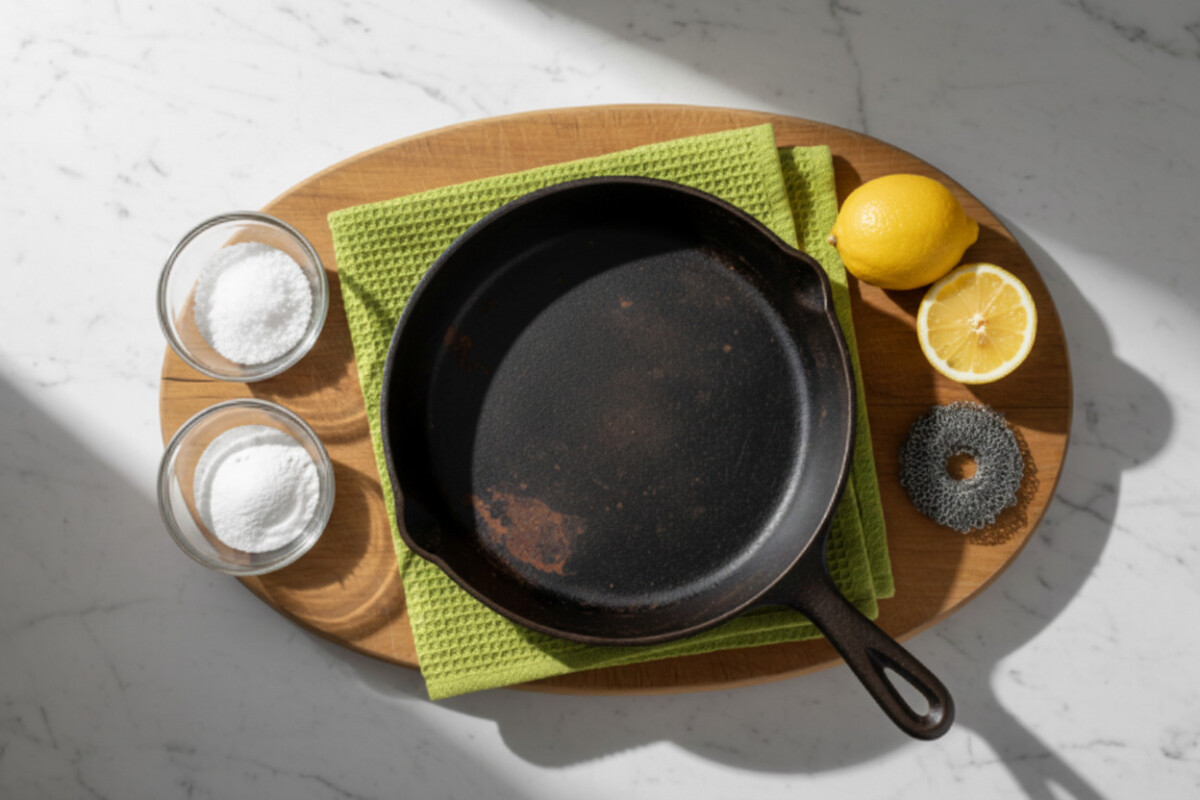
The first time you see rust on a cast iron pan, it can feel discouraging. Maybe the pan was left in the sink too long. Maybe it sat in a humid kitchen. Maybe it was stored before it was fully dry. Suddenly, the surface looks rough and orange instead of smooth and seasoned.
The good news is this:
rust does not mean the pan is ruined.
In most cases, it can be restored.
And once you understand the process, bringing cast iron back to life becomes much less intimidating.
Why Cast Iron Rusts in the First Place
Rust forms when iron is exposed to moisture and oxygen.
That is all it takes.
Because cast iron is made from iron, it is naturally vulnerable to rust if the protective seasoning layer is damaged or if the pan stays wet for too long.
Seasoning is the thin layer of oil that has been baked onto the surface over time. It helps protect the pan and creates that smooth cooking surface cast iron is known for.
When that layer wears down, gets scratched, or is never fully built up in the first place, the metal underneath becomes exposed. Once that happens, rust can show up surprisingly fast.
Some common causes include:
- leaving the pan wet after washing
- storing it in a humid space
- not drying it properly
- using too much water during cleaning
- keeping food residue on the surface
So if rust appears, it usually means the pan needs a little restoration, not a goodbye.
Can You Still Save a Rusted Cast Iron Pan?
In most cases, yes.
That is one of the best things about cast iron.
Unlike some cookware that becomes useless once damaged, cast iron can often be cleaned, reseasoned, and used again. Even if it looks rough now, the pan may still have plenty of life left in it.
The main thing to remember is that rust is a surface problem when caught early enough.
That means:
you do not need to panic.
You just need to remove the rust, dry the pan completely, and rebuild the protective layer.
What You Need Before You Start
The process does not require anything fancy.
Most of the time, you only need a few basic supplies:
- warm water
- mild dish soap
- a non-abrasive scrubber
- paper towels or a clean cloth
- cooking oil
- an oven or stovetop for reseasoning
If the rust is heavier, you may also need a little extra scrubbing power, but the goal is still the same:
remove the rust without damaging the pan more than necessary.
Step 1: Assess the Damage
Before scrubbing anything, take a close look at the pan.
Not all rust is the same.
Sometimes you are dealing with just a few light orange spots. Other times the pan may have a larger rust patch across the cooking surface, the handle, or even the underside.
If the rust is light, the cleanup will be quicker.
If it is thick, flaky, or covering a large area, you may need a deeper cleaning and a full reseasoning afterward.
The important part is not to judge the pan too quickly. Cast iron can look worse than it actually is.
Step 2: Wash Off Loose Debris
Start by rinsing the pan with warm water.
If there is food residue, dust, or loose rust, remove that first.
A little mild dish soap is fine here, especially if the pan is heavily rusted or dirty. Some people avoid soap entirely out of habit, but for restoration, a small amount is not a problem.
The goal at this stage is simply to clear the surface so you can work on the rust directly.
Step 3: Scrub the Rust Away
This is the part that actually removes the damage.
Use a non-abrasive scrubber, stiff brush, or similar tool and scrub the rusted areas firmly. You want enough pressure to loosen the rust, but not so much that you gouge the surface.
For light rust, this may come off fairly quickly.
For heavier rust, you may need to scrub, rinse, and repeat several times.
Some people also use a paste of coarse salt and oil, but the exact method matters less than the principle:
remove all visible rust before moving on.
Do not leave orange patches behind if you can help it. Those will continue to spread if they are not addressed.
Step 4: Dry the Pan Completely
This part matters just as much as the scrubbing.
If you leave cast iron even slightly damp, the rust can come right back.
After washing, dry the pan with a clean towel. Then dry it again.
Yes, really.
It helps to place the pan on low heat for a few minutes after towel-drying, just to make sure every bit of moisture evaporates.
This step is one of the most important habits in cast iron care.
A dry pan is a protected pan.
Step 5: Check Whether the Surface Still Feels Rough
Once the pan is dry, run your hand over the surface carefully.
If it feels smooth and the rust is gone, you are ready for the next step.
If it still feels gritty, flaky, or orange in spots, you need to scrub a little more.
This is the moment where patience pays off. A rushed cleanup can leave tiny rust patches behind, and those patches are what cause trouble later.
It is better to spend a few extra minutes now than to have to repeat the whole process later.
Step 6: Apply a Thin Layer of Oil
Now comes the part that restores the surface.
Once the pan is completely dry, rub a very thin layer of cooking oil all over the pan.
That includes:
- the cooking surface
- the sides
- the handle
- the underside
You do not want the pan to feel greasy. You want it to look almost dry, just lightly coated.
A thin layer is best because too much oil can turn sticky or uneven during heating.
The purpose of the oil is to begin rebuilding the seasoning layer that protects the metal.
Step 7: Reseason the Pan
This is where the pan really gets restored.
Once the oil is applied, heat the pan so the oil can bond to the surface.
You can do this in the oven or on the stovetop, depending on the pan and your setup.
The heat transforms the oil into a protective layer. That is seasoning.
And that seasoning is what helps keep rust from returning too quickly.
If the pan was badly rusted, you may want to repeat the oiling and heating process more than once. A single round may be enough for light rust, but a more damaged pan often benefits from several layers.
Why Reseasoning Matters So Much
People sometimes think rust removal alone is the solution.
It is not.
If you clean the rust but do not restore the protective layer, the pan remains vulnerable. The metal is exposed again, which means rust can return the next time moisture gets involved.
That is why reseasoning is essential.
It does two things:
- protects the surface
- improves cooking performance
A well-seasoned pan is easier to clean, less likely to stick, and far more resistant to future rust.
What If the Rust Is Really Heavy?
If the pan has a thick rust layer or has been neglected for a long time, the process may take longer.
You may need to:
- scrub more aggressively, but still carefully
- repeat the wash-and-dry cycle
- reseason several times
In very serious cases, the pan may need a more thorough restoration process, but even then, cast iron is usually worth saving.
That is one of the reasons people love it so much.
It can survive mistakes.
What Not to Do
There are a few things worth avoiding if you want to restore the pan properly.
Do not:
- leave it wet after washing
- use harsh abrasives that damage the surface
- skip the drying step
- apply too much oil
- store it immediately after cleaning without protection
Those mistakes make rust more likely to return.
The goal is not just to make the pan look better for one day.
The goal is to build a routine that keeps it usable long-term.
How to Know the Pan Is Ready Again
Once the rust is gone and the surface has been seasoned again, the pan should look darker, smoother, and more even.
It may not look brand new. That is normal.
Cast iron does not need to be perfect to work well.
What matters is that the orange rust is gone, the surface is dry, and the protective layer is back in place.
That is when the pan is ready to cook again.
How to Prevent Rust in the Future
Restoring the pan is only half the job.
The other half is making sure rust does not come back.
That part is actually easier than most people think.
Here is what helps most:
1. Dry it immediately after washing
Never let cast iron air dry if you can avoid it.
2. Use a light coat of oil
A thin layer after cleaning can help keep moisture out.
3. Store it in a dry place
Humidity is one of the biggest rust triggers.
4. Do not soak it
Cast iron should never sit in water for long.
5. Re-season it when the surface starts to look dull
You do not need to wait for rust to return before taking action.
These habits make a huge difference over time.
A Good Cast Iron Pan Gets Better With Care
What makes cast iron special is that it rewards consistency.
The more you use it properly, the better it tends to perform.
That dark, seasoned surface is not just cosmetic. It is the result of care. It shows that the pan has been protected, maintained, and used the right way.
So when rust appears, it is not the end of the story.
It is just a sign that the pan needs a little attention.
Common Misconceptions About Rusted Cast Iron
A lot of people assume a rusty pan should be thrown away.
Usually, that is not true.
Another common misconception is that a little rust means the pan is unsafe forever.
That is also not true.
Once the rust is cleaned off and the pan is restored, it can often go right back into regular use.
The key is understanding that cast iron is repairable. It is not fragile in the way many people expect.
How Often You Should Check It
You do not need to obsess over it.
But it helps to inspect your cast iron every so often, especially if it has not been used recently.
Look for:
- orange spots
- dull patches
- rough texture
- leftover moisture
- signs of flaking seasoning
A quick check takes very little time and can save you from a much bigger cleanup later.
What I Like Most About Cast Iron Care
There is something satisfying about restoring cast iron.
It feels practical, a little old-fashioned, and very direct.
You do not throw the pan away. You do not replace it. You fix it.
And once it is restored, you get to use it again, knowing it is ready.
That kind of repair feels different from buying something new. It feels earned.
Final Thoughts
Cleaning rust off cast iron is really about giving the pan a second life.
Rust looks alarming, but it is usually fixable. With the right cleaning, proper drying, and a fresh layer of seasoning, most cast iron cookware can be brought back to a strong, usable condition.
The most important steps are simple:
- remove the rust
- dry the pan completely
- apply oil
- re-season it
- store it properly
Once those habits become routine, cast iron stops feeling high-maintenance and starts feeling like what it really is:
durable cookware that just needs a little respect.
And that is exactly why so many people keep using it for years.