Table of Contents
Ants have a way of showing up exactly when you do not want them to.
One small trail on the counter turns into ten. Then twenty. Then suddenly it looks like they know the layout of your kitchen better than you do. They seem to appear out of nowhere, follow the same path every time, and return even after you clean the area.
That is what makes ants so annoying.
The good news is that many people want a more natural way to make their home less attractive to them. That is where essential oils for ants come in. They are not a magic fix, and they will not solve a bigger infestation on their own, but they can absolutely be part of a smart prevention routine.
What makes essential oils useful is simple:
ants rely heavily on scent trails.
When you disrupt those trails or introduce smells they do not like, you make it harder for them to navigate and more likely for them to avoid the area.
That does not mean the problem disappears overnight. It means you create conditions that are less inviting.
And for many people, that is the whole point.
How Essential Oils Work Against Ants
Ants communicate through smell.
They leave behind chemical trails so other ants can follow the same route to food and back to the nest. Once that trail is established, more ants keep coming.
That is why simply killing a few visible ants is not always enough. If the trail remains, more can show up later.
Essential oils may help by:
- masking the scent trail
- making the area smell unpleasant to ants
- reducing their interest in certain entry points
That is why they are often used near windows, baseboards, counters, doorways, and other common ant paths.
The key word is support. Essential oils can help discourage ants, but they work best when paired with cleaning, sealing food, and removing attractants.
1. Peppermint Essential Oil
If you want the most popular option, peppermint essential oil is usually the first one people try.
It has a strong, sharp scent that many people find refreshing, but ants tend to dislike it. The smell is powerful enough to interfere with the scent signals they use to move around.
That makes peppermint useful for:
- kitchen edges
- door frames
- windowsills
- cracks and entry points
It is one of the easiest oils to use because it smells clean and strong without feeling overly heavy.
A lot of people like peppermint because it has that clear “fresh home” feeling while also being practical.
If ants keep appearing in the same spot, peppermint is often a good place to start.
2. Tea Tree Essential Oil
Tea tree essential oil has a more medicinal, intense scent. It is not as light or sweet as some of the others, and that stronger smell can make it useful in places where ants are active.
This oil is often chosen because it feels direct and potent. It does not blend quietly into the background. It announces itself.
That can be useful if you are trying to discourage ants from:
- countertops
- trash areas
- bathroom corners
- thresholds and gaps
Tea tree is not usually the most pleasant-smelling option for everyday use, but it is one of the more assertive ones.
If you want something that feels strong and focused, tea tree is a solid choice.
3. Cinnamon Essential Oil
Cinnamon essential oil is another strong option, and it is often appealing because of its warm, familiar scent.
It can make a room smell cozy to people, but ants do not always react the same way. The scent is intense enough to work as a deterrent in many cases, especially around entry points.
Cinnamon is especially useful when you want something that feels seasonal, warm, and natural rather than sharp or medicinal.
It works well near:
- window frames
- baseboards
- pantry edges
- areas where ants keep reappearing
There is also something psychologically satisfying about using cinnamon because it makes the home smell cleaner and more intentional while still serving a practical purpose.
That combination is hard to beat.
4. Clove Essential Oil
Clove essential oil has a deep, rich, spicy scent that stands out immediately.
It is one of those oils that can fill a room quickly, which is part of why it is often mentioned in ant control discussions. Ants tend not to enjoy strong, penetrating smells that interfere with the trails they use to travel.
Clove is especially helpful if you are dealing with:
- repeated ant traffic
- kitchen corners
- cracks along walls
- spaces near food storage
It has a slightly heavier scent than peppermint or lemon, so it may not be the first choice for every room. But in the right spot, it can be very effective as part of a barrier strategy.
If you want a strong-smelling option that feels serious, clove is one of the better ones.
5. Lemon and Citrus Essential Oils
Lemon and citrus essential oils are popular because they smell fresh, bright, and clean.
Many people already associate citrus with cleanliness, which makes these oils especially appealing in kitchens and common areas.
Ants often dislike citrus scents because they are strong and sharp in a way that interferes with their normal path-following behavior.
These oils are often used around:
- countertops
- appliance edges
- pantries
- sink areas
- window sills
They are a nice option if you want something that smells light and cheerful rather than spicy or medicinal.
Citrus oils are often one of the easiest choices for daily home use because they make the space feel fresher at the same time.
6. Lemongrass Essential Oil
Lemongrass essential oil has a clean, grassy, citrus-like scent that feels fresh without being too sweet.
It is a strong contender because it combines brightness with a scent profile that is often unwelcome to ants.
People often like lemongrass because it feels more subtle than peppermint or clove while still being noticeable. That makes it useful for regular household use.
It works well around:
- entryways
- floor corners
- door bottoms
- pantry shelves
- outdoor thresholds
Lemongrass has a nice balance of smelling pleasant to people while still being practical in areas where ants tend to move.
If you want something a little softer than peppermint but still effective, lemongrass is worth trying.
7. Lavender Essential Oil
At first, lavender essential oil may not seem like the obvious choice.
People often think of it for relaxation, sleep, or calming the room. But it also has a strong floral scent that can work as part of an ant-deterring routine.
This makes it especially useful if you want a more gentle fragrance in the home without going too far into sharp or spicy territory.
Lavender is a good option for:
- bedrooms
- living areas
- hallways
- lightly used corners
It is not always the first oil people think of for ant control, but it can be a smart choice if you want the space to smell soft and clean while still being less appealing to ants.
That balance is what makes it interesting.
8. Cedarwood Essential Oil
Cedarwood essential oil has a warm, woody scent that feels steady and grounding.
It is not as bright as citrus or as sharp as peppermint, but it has a quiet strength that makes it useful in certain spots around the home.
Cedarwood is especially nice for:
- closets
- baseboards
- storage areas
- entry points
- corners that stay undisturbed
Because the scent is woodsy and deep, it can help create a less inviting environment for ants without making the house smell overly intense.
It is also a good option if you prefer more natural, earthy smells over anything sweet or floral.
Cedarwood tends to feel subtle at first, but that is part of its appeal.
Which Essential Oil Works Best
There is no single perfect answer.
Some people prefer peppermint because it is strong and fresh. Others like lemon or citrus because it smells clean. Some prefer cinnamon or clove because they feel more powerful. And others like lavender or cedarwood because they are softer and easier to live with day to day.
The best choice usually depends on:
- where the ants are showing up
- how strong you want the scent to be
- what kind of smell you are comfortable using in the house
If you want the simplest starting point, peppermint is often the go-to. If you want something warmer, cinnamon or clove may be better. If you prefer a brighter home scent, lemon or lemongrass can feel more natural in everyday spaces.
The Most Important Thing to Remember
Essential oils can help make your home less appealing to ants, but they work best as part of a bigger routine.
That means:
- clean up crumbs quickly
- store food properly
- wipe surfaces regularly
- seal possible entry points
- watch for repeated trails
If ants already have a strong food source or a hidden nest nearby, scent alone will not solve the problem.
But as a natural, low-fuss way to make the space less inviting, essential oils can be a very useful tool.
Final Thoughts
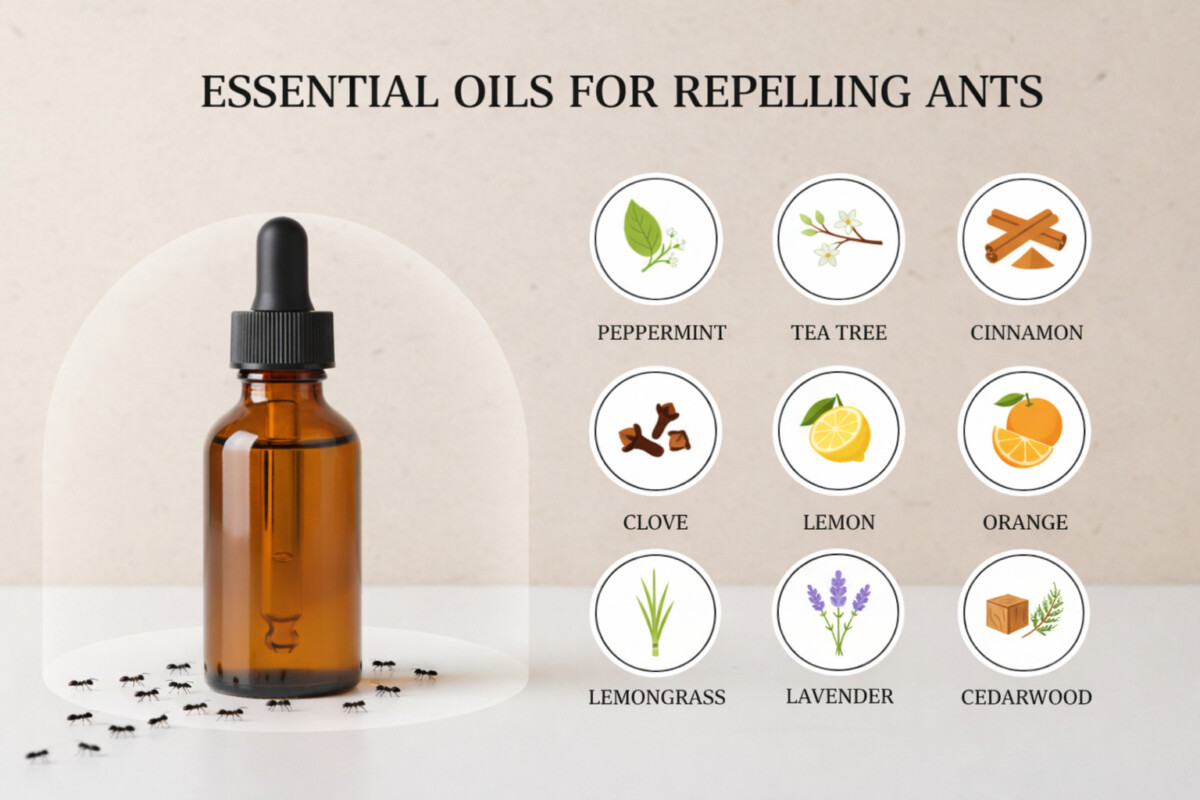
If you are looking for a natural way to make ants think twice, these are the oils people reach for most often:
- Peppermint Essential Oil
- Tea Tree Essential Oil
- Cinnamon Essential Oil
- Clove Essential Oil
- Lemon and Citrus Essential Oils
- Lemongrass Essential Oil
- Lavender Essential Oil
- Cedarwood Essential Oil
Each one has its own scent profile, and each one can play a different role depending on the space.
The real secret is not finding one perfect oil. It is finding the one you will actually use consistently.
That is usually what makes the biggest difference.