Table of Contents
A couch can look fine for a long time and still be hiding a mess.
That is what makes upholstery cleaning so tricky. You do not always see the dirt right away. It settles into the fabric slowly. A little body oil here. A drink spill there. Some crumbs, a few pet marks, a faint smell you can’t quite explain. Then one day you sit down and realize the couch does not feel fresh anymore.
That was the point where I stopped pretending a quick vacuum was enough.
Because once a couch starts to absorb odor or stain, surface cleaning alone usually does not solve the problem. The good news is that you do not always need a complicated product or an expensive machine. In a lot of cases, baking soda and hydrogen peroxide can do a surprisingly good job when used the right way.
The key is not to rush it.
The key is to treat the couch gently, work in stages, and use the mixture with a little care instead of pouring it on and hoping for the best.
Why This Method Works So Well
The reason this combination is so useful is simple.
Baking soda helps absorb odor and loosen surface grime.
Hydrogen peroxide helps break down stains and freshen the fabric.
Together, they create a cleaning method that is strong enough to help with common couch stains, but still simple enough to use at home.
That said, not every couch is the same. Some fabrics handle moisture well. Others do not. Some cushion covers are safe for light spot cleaning. Others need more caution. That is why it helps to know what you are working with before you start.
If the couch fabric is delicate, badly stained, or labeled for professional-only care, you should be more careful. But for many everyday fabric couches, this method is one of the easiest ways to improve the look and smell of the upholstery.
Before You Start: Check the Fabric Type
This part matters more than most people think.
Not every couch should be cleaned the same way. Some fabrics can handle light moisture and gentle scrubbing. Others can water stain, discolor, or react badly if you use the wrong product.
Before cleaning, it helps to check the care tag if your couch has one. That tag usually tells you how the material should be cleaned.
If you do not have a tag, be extra careful. Test the cleaner on a hidden area first. A small spot in the back or under a cushion is usually a safer place to check how the fabric reacts.
That one step can save you from turning a small cleaning job into a much bigger problem.
What You Need
You do not need much for this.
Most of the time, the list is short:
- baking soda
- hydrogen peroxide
- a soft brush or cloth
- a vacuum
- clean towels or paper towels
That is enough to handle a basic couch refresh in many homes.
If the stain is older or the smell has set in, you may need to repeat the process a little more carefully. But you still do not need a huge collection of products.
Step 1: Vacuum the Couch First
This step is easy to skip, but it makes a big difference.
Before using any cleaner, vacuum the couch thoroughly. Get into the creases, under the cushions, along the seams, and around the arms. If there are crumbs, dust, hair, or dry debris sitting on top of the fabric, you want that gone first.
Why?
Because if you start with cleaning solution before vacuuming, you can end up pushing dirt deeper into the fabric.
A clean surface gives you a better result and makes the rest of the process easier.
Step 2: Remove Loose Odors with Baking Soda
If the couch smells stale, musty, or just a little “lived in,” baking soda is a good first move.
Sprinkle a light, even layer over the fabric. Do not dump a huge pile in one area. The goal is coverage, not thickness.
Let it sit for a while so it can absorb odor and help loosen surface buildup.
This is one of those steps that looks simple but helps more than you expect. Sometimes the smell is the biggest problem, and baking soda alone already makes the couch feel fresher.
After it sits, vacuum it up carefully.
At that point, the couch should already feel a little better.
Step 3: Make a Gentle Cleaning Mixture
This is where hydrogen peroxide comes in.
For spot cleaning, a gentle mixture is usually enough. You do not need to drench the couch. In fact, too much liquid can create water rings or make the inside of the cushion stay damp for too long.
The goal is a light, controlled application.
Use a small amount of the solution on the stained area rather than soaking the whole section.
That keeps the cleaning focused and reduces the chance of creating a new problem while fixing the old one.
Step 4: Test a Hidden Spot First
This is one of the smartest habits you can build.
Even if the fabric looks sturdy, test the cleaner in a hidden area first. Wait a little while and see if the color changes, the texture shifts, or the fabric reacts in any strange way.
If everything looks fine, continue.
If not, stop there and do not risk the visible parts of the couch.
This part may feel slow, but it is worth it. Upholstery can surprise you, and once the fabric changes, there is no easy undo button.
Step 5: Treat the Stain Gently
Once you know the fabric is safe, apply the cleaner to the stained area.
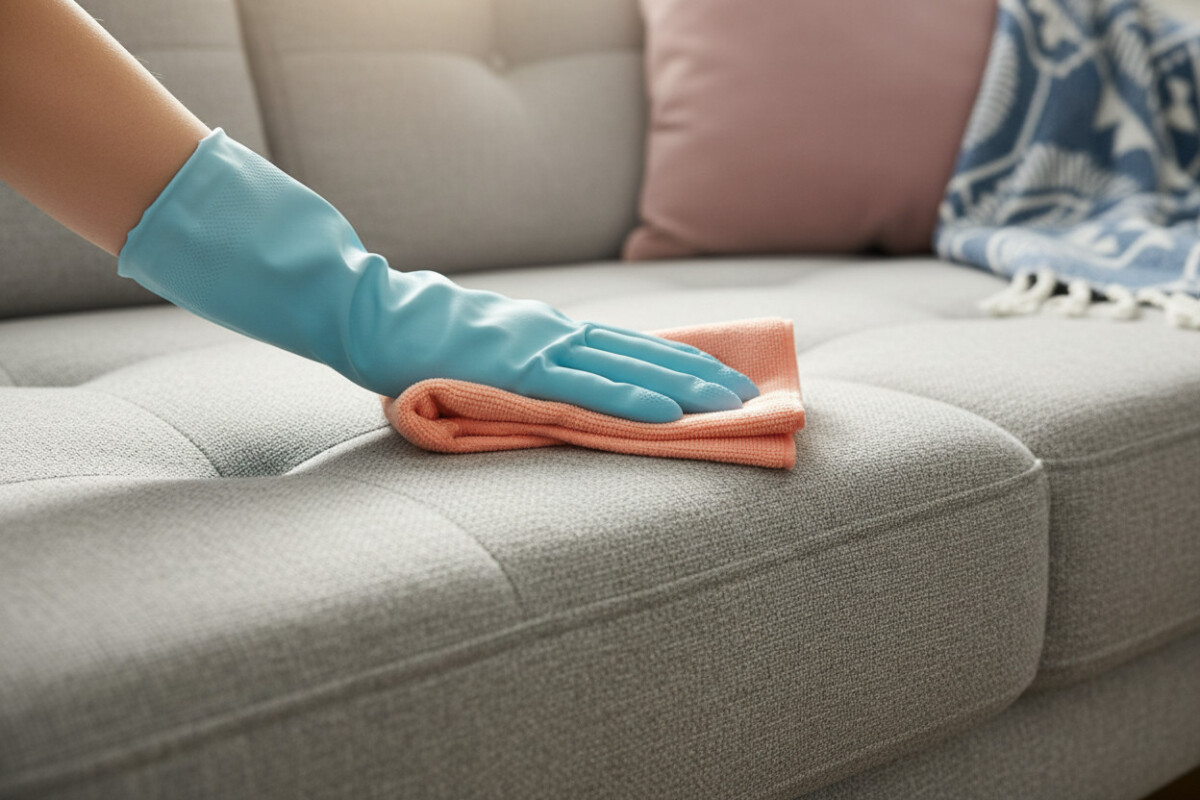
Use a cloth or soft brush and work lightly. Do not scrub hard. Hard scrubbing can push the stain deeper, rough up the fibers, or make the spot look worse.
Instead, use gentle circular motions or light dabbing depending on the stain.
For most stains, the goal is not to attack the fabric. The goal is to help the cleaner lift the mess while keeping the upholstery intact.
If the spot is older, it may take a little longer. That is normal.
Step 6: Let It Sit for a Bit
This is where patience helps.
Once the cleaning solution is applied, give it time to work. Do not immediately wipe everything off after a few seconds.
Baking soda and hydrogen peroxide need a little time to loosen residue and help break down the stain.
The trick is to let the solution do the work so you do not have to force it with heavy scrubbing.
That is one of the reasons this method feels easier than people expect. A lot of the effort comes from waiting, not pushing.
Step 7: Blot, Don’t Rub
After the solution has had time to sit, blot the area with a clean towel or paper towel.
This helps lift moisture and loosened dirt out of the fabric.
Try not to rub aggressively. Rubbing can spread the stain or press it deeper into the upholstery. Blotting is calmer, safer, and usually more effective.
If the towel picks up dirt, that is a good sign. It means the cleaner is working.
You may need to repeat the process on a stubborn area, but always keep the motions gentle.
Step 8: Let the Couch Dry Completely
This is a step people often rush.
Even if the surface looks better right away, the couch still needs to dry fully. That matters for two reasons.
First, damp upholstery can smell bad if it stays wet too long.
Second, moisture trapped inside the cushions can create new problems later.
If possible, let the couch dry in a room with good airflow. Open a window if you can. A fan helps too.
The fabric should feel dry before you sit on it again or put the cushions back in place.
What to Do If the Stain Is Still There
Not every stain disappears on the first pass.
That does not mean you failed. Some stains have had time to settle deeply into the fibers.
If the stain is still visible after drying, repeat the process carefully. Sometimes it takes more than one round to improve the area.
The important thing is to avoid overdoing it. Too much moisture, too much scrubbing, or too many products at once can damage the couch more than the stain itself.
Sometimes gradual improvement is the best result.
What This Method Is Best For
This baking soda and hydrogen peroxide method works especially well for:
- light to moderate stains
- surface odors
- dingy areas
- small spills that have dried
- general freshening
It is less ideal for:
- delicate upholstery
- deeply set stains
- antique or specialty fabric
- anything labeled for professional cleaning only
That is why the fabric test matters so much.
What I Avoid When Cleaning a Couch
A lot of people assume stronger is always better.
But with upholstery, that can backfire fast.
I avoid:
- soaking the fabric
- scrubbing aggressively
- using random harsh chemicals together
- skipping the drying step
Too much product can leave residue. Too much water can cause rings. Too much force can damage the weave.
For a couch, gentle and controlled is usually the smarter path.
Keeping the Couch Clean Longer
Once the couch is clean, the real goal is keeping it that way.
A few habits help a lot:
- vacuum regularly
- clean spills right away
- avoid eating messy food on the couch when possible
- use throw blankets or covers in high-use areas
- refresh with baking soda when odors start building
These small habits do not take much time, but they stop the couch from getting to the point where deep cleaning feels necessary all the time.
That is what makes maintenance easier.
The Biggest Lesson I Learned
A couch does not usually get dirty all at once.
It happens slowly.
That is why cleaning it also works best in stages.
Vacuum first.
Treat odor.
Spot clean gently.
Let it dry fully.
Once you stop trying to fix everything with one aggressive pass, the results usually improve.
That was the biggest shift for me.
The couch did not need harsher treatment. It needed a smarter one.
Final Thoughts
Cleaning a couch with baking soda and hydrogen peroxide is one of those simple home tasks that feels a lot more complicated before you actually do it.
Once you break it into steps, it becomes much easier to handle.
The process is straightforward:
- vacuum first
- test a hidden area
- apply baking soda
- use hydrogen peroxide carefully
- blot gently
- let everything dry fully
That is often enough to make a big difference in how the couch looks and smells.
And the best part is that you do not need to make it into a huge project. A little patience and the right method can bring the fabric back to life without much drama.
Sometimes that is all a couch really needs.