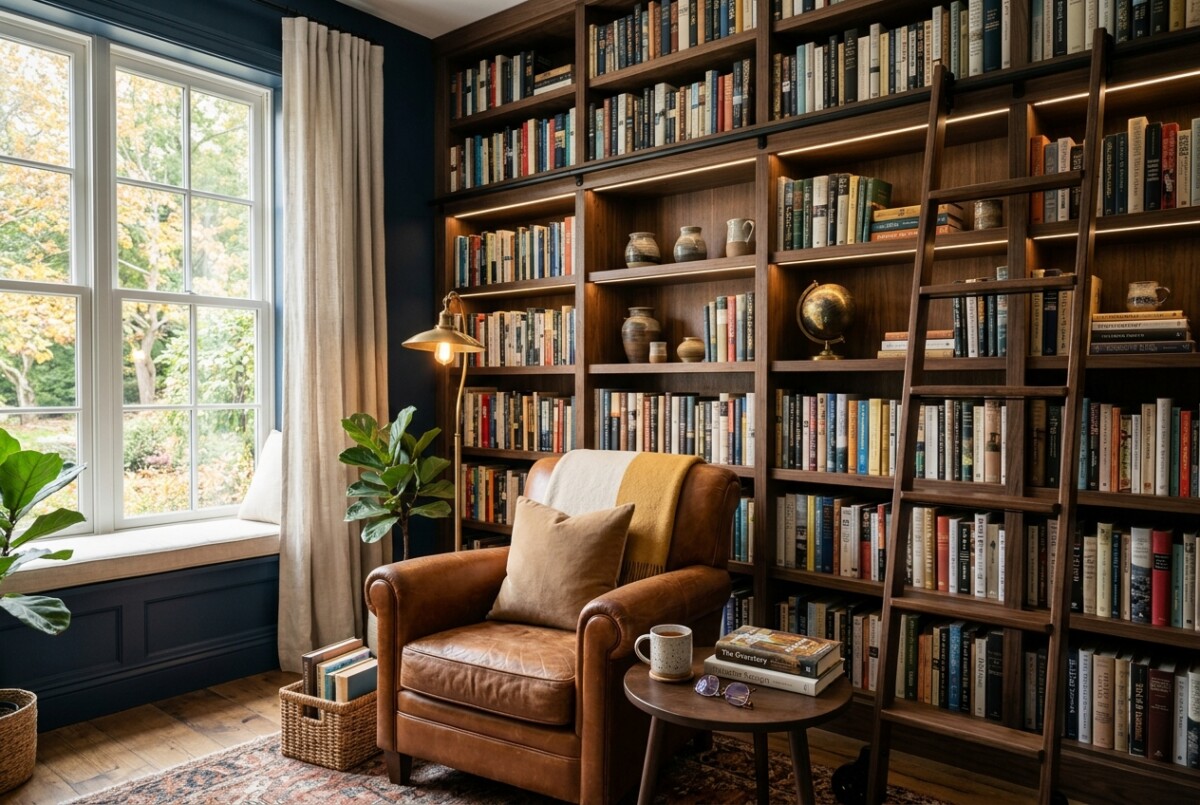
Table of Contents
Books have a habit of spreading around the house. A few on the bedside table can turn into a stack on the coffee table, another pile beside the sofa, and a shelf that suddenly has no room left. Giving your collection a proper place makes it easier to keep everything organized and gives you somewhere comfortable to sit down and read.
You don’t need a spare room or custom cabinetry to create a home library. A bookcase in the dining room, shelves around a doorway, or a reading chair beside a window can all work. These ideas cover a range of layouts, from full-height built-ins to small-space solutions, so you can find an approach that suits your home and the way you like to read.
1. Full-Height Built-In Walls
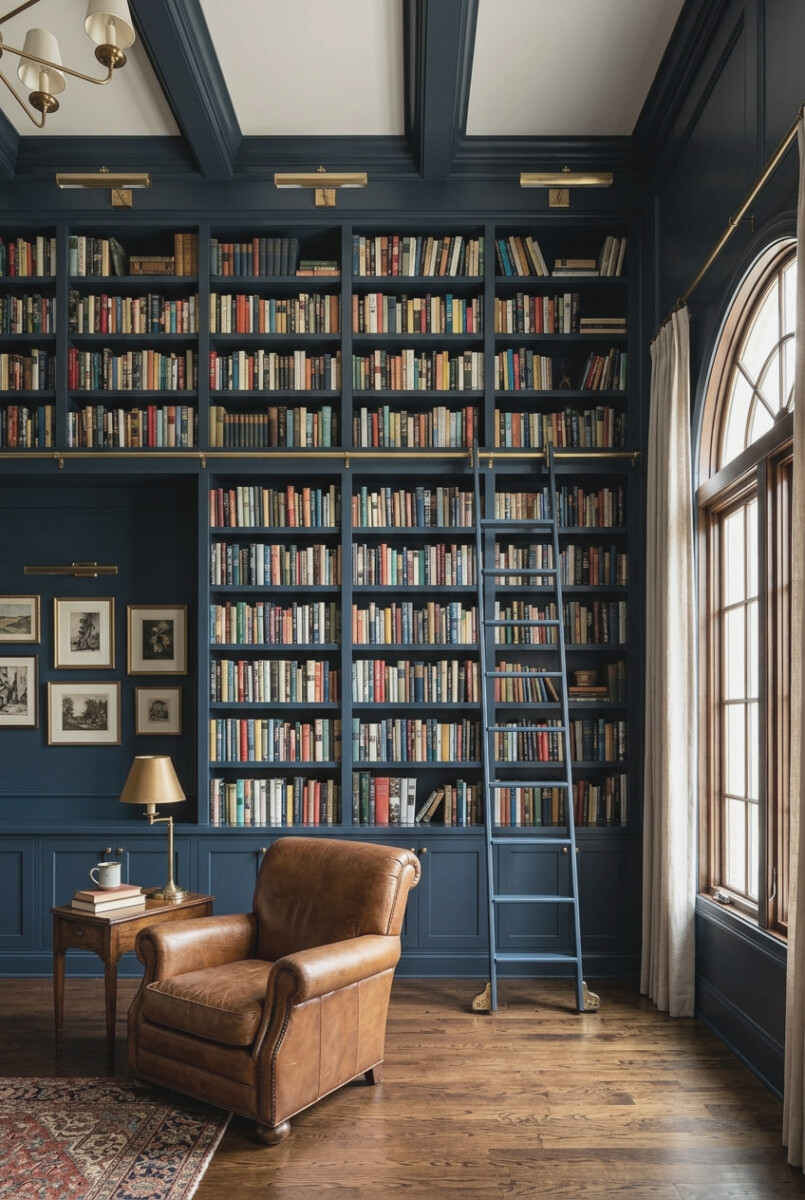
Floor-to-ceiling shelves make use of an entire wall and give a room a finished, built-in look. Painting the shelves the same color as the walls helps them blend into the space, while the book spines add color and pattern.
Before choosing the design, think about shelf depth, the length of each span, and how much weight the shelves will need to hold. Solid wood or good-quality plywood with suitable support will be more reliable than thin shelving that may sag over time.
2. The Classic Rolling Library Ladder
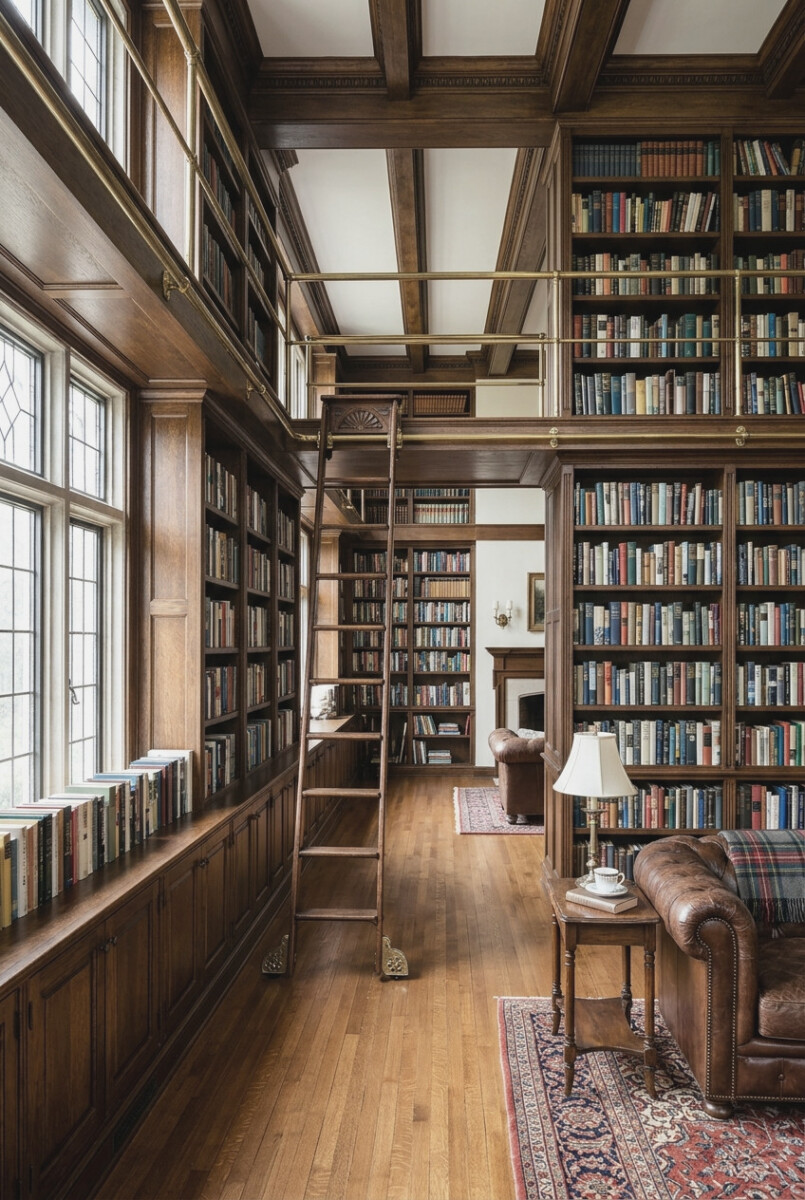
If your room has high ceilings, extending the shelves upward can provide valuable storage. A rolling ladder makes the upper shelves easier to reach and adds a traditional library feel.
Choose a ladder and rail system designed to support the intended load, and make sure the rail is securely fixed to the wall framing according to the manufacturer’s instructions. Keep the floor around the ladder clear so it can move safely.
3. The Library-Dining Room Hybrid
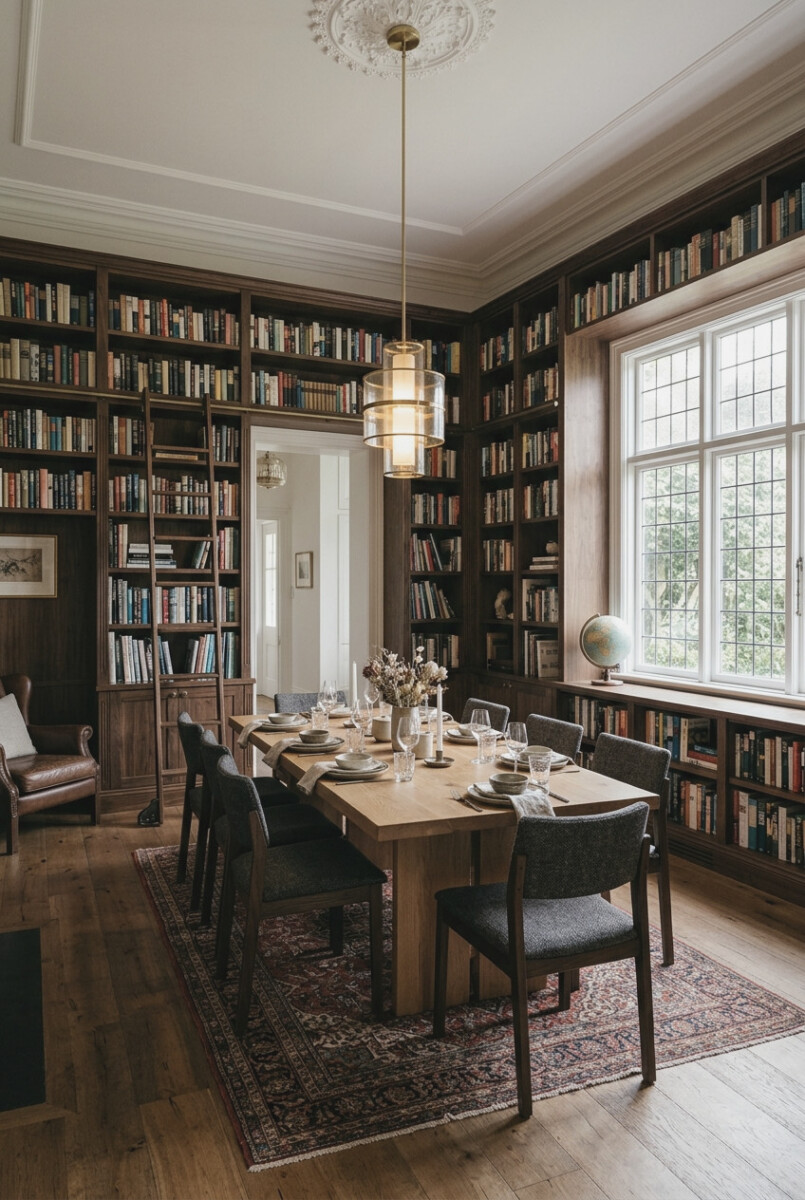
A dining room can do more than host meals and special occasions. Adding bookcases along one or more walls gives the room a warmer, more personal feel and makes good use of space that might otherwise sit empty.
Books can also soften some of the hard surfaces in a dining area, although they won’t replace proper sound treatment in a noisy room. Leave enough space to pull out chairs comfortably, and keep shelves away from damp areas or strong direct sunlight.
4. Window Seat Sanctuaries
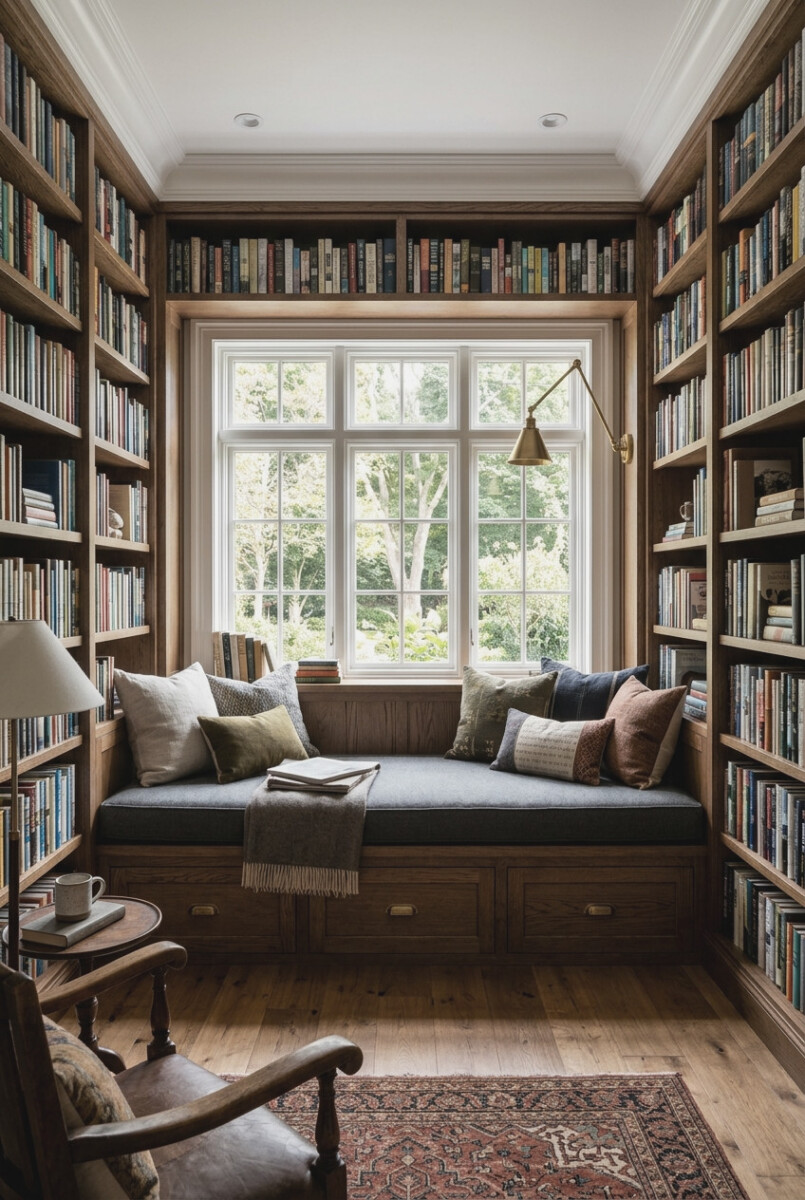
A window seat with bookshelves on either side creates a comfortable place to read while making good use of the surrounding wall space. Deep drawers beneath the seat can hold larger books, magazines, or extra cushions, while open shelves keep everyday reads close at hand.
Add a reading light for cloudy days and evenings, and choose a seat depth and cushion that let you sit comfortably for more than a few minutes.
5. The Under-Stairs Alcove
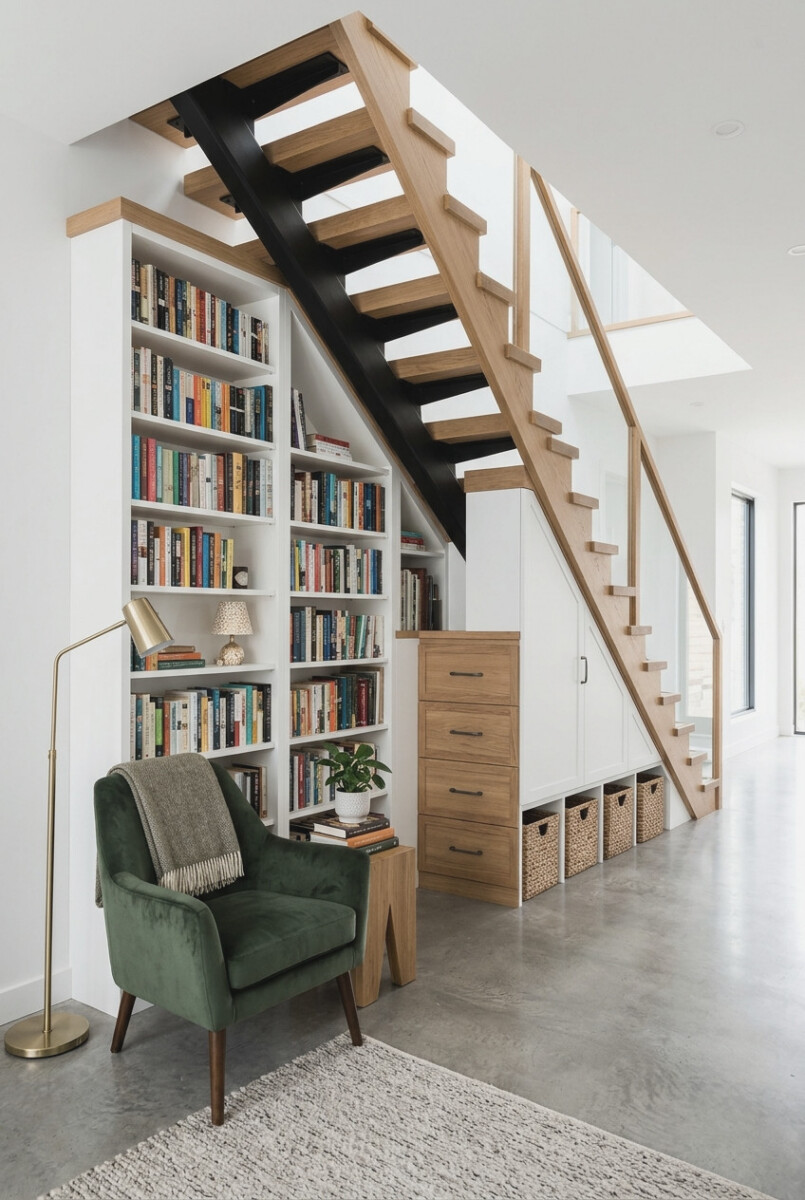
The space beneath a staircase is often awkward to furnish, but it can be a useful spot for a small library. Fit shelves to the slope of the stairs, using the taller section for standard bookcases and the lower area for drawers or baskets.
In an entryway, a closed cabinet at the lowest point can help keep smaller items tidy. Make sure the design doesn’t interfere with access, doors, or the normal use of the staircase.
6. Around-the-Door Frame Shelving
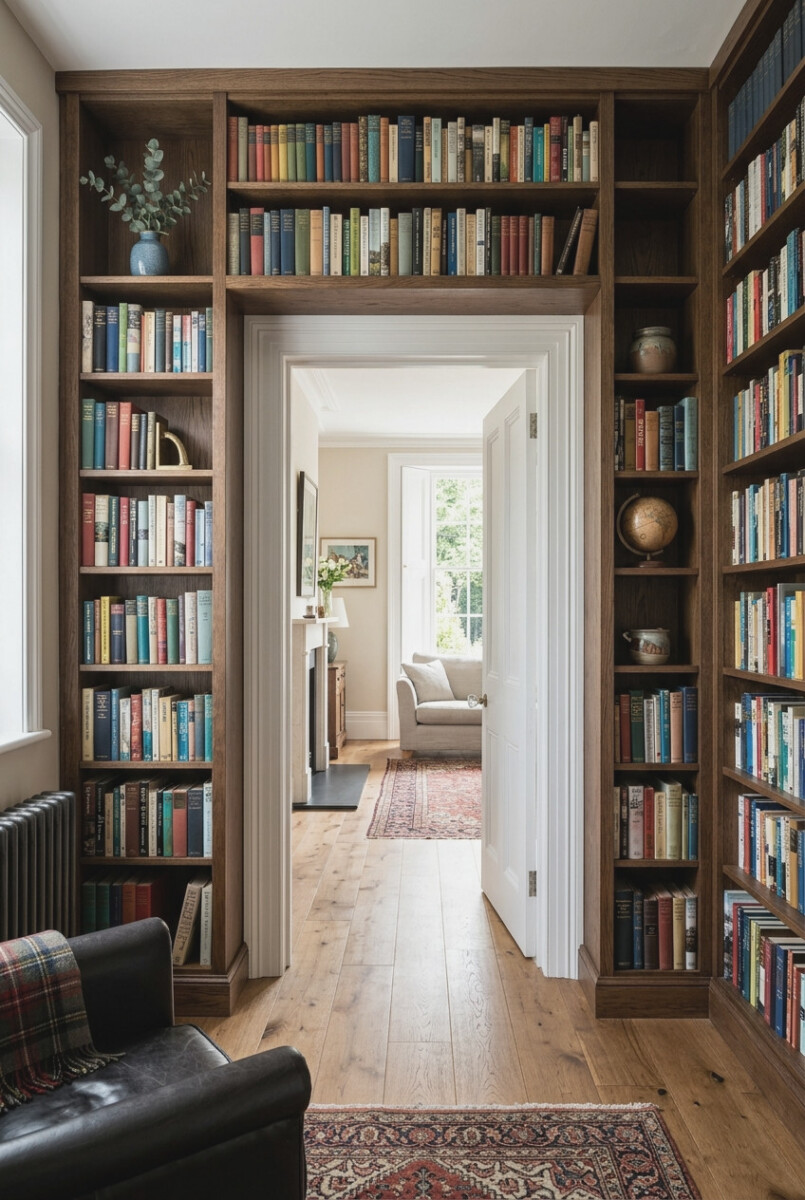
The wall space around a doorway can hold more books than you might expect. Shelves fitted above the door and down one or both sides create a frame that makes use of an area often left empty. This works especially well in small homes where uninterrupted wall space is limited.
Because books are heavy, the shelves and brackets need proper support, particularly across the top of the doorway. Keep the surrounding trim and door movement clear.
7. Narrow Hallway “Galleries”
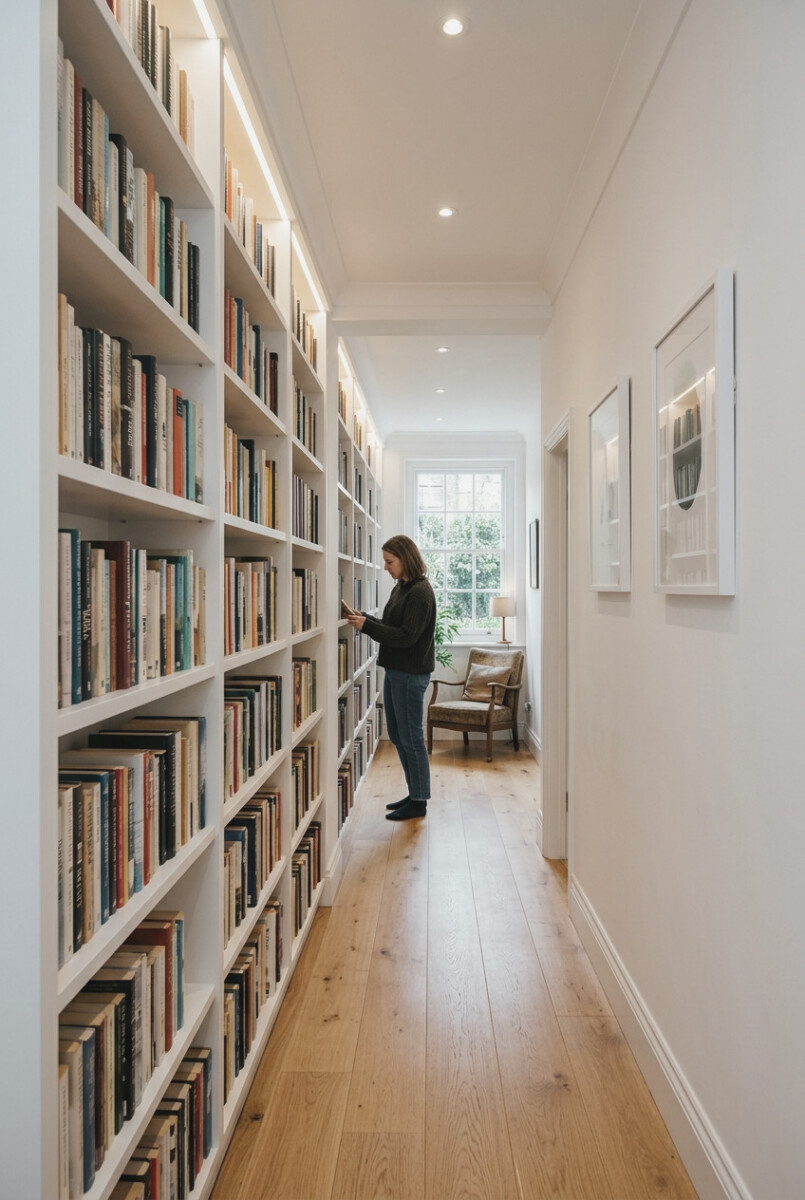
A hallway can become a useful place to store books if the shelves are kept shallow. Paperback books often fit on ledges around 6 to 8 inches deep, while larger hardcovers need more room.
A slim run of shelving lets you browse as you walk through the house, but don’t let it make the passage difficult to use. Leave a comfortable clear walkway and check local requirements for hallways and exit routes before installing shelves.
8. The Moody “Dark Academia” Study
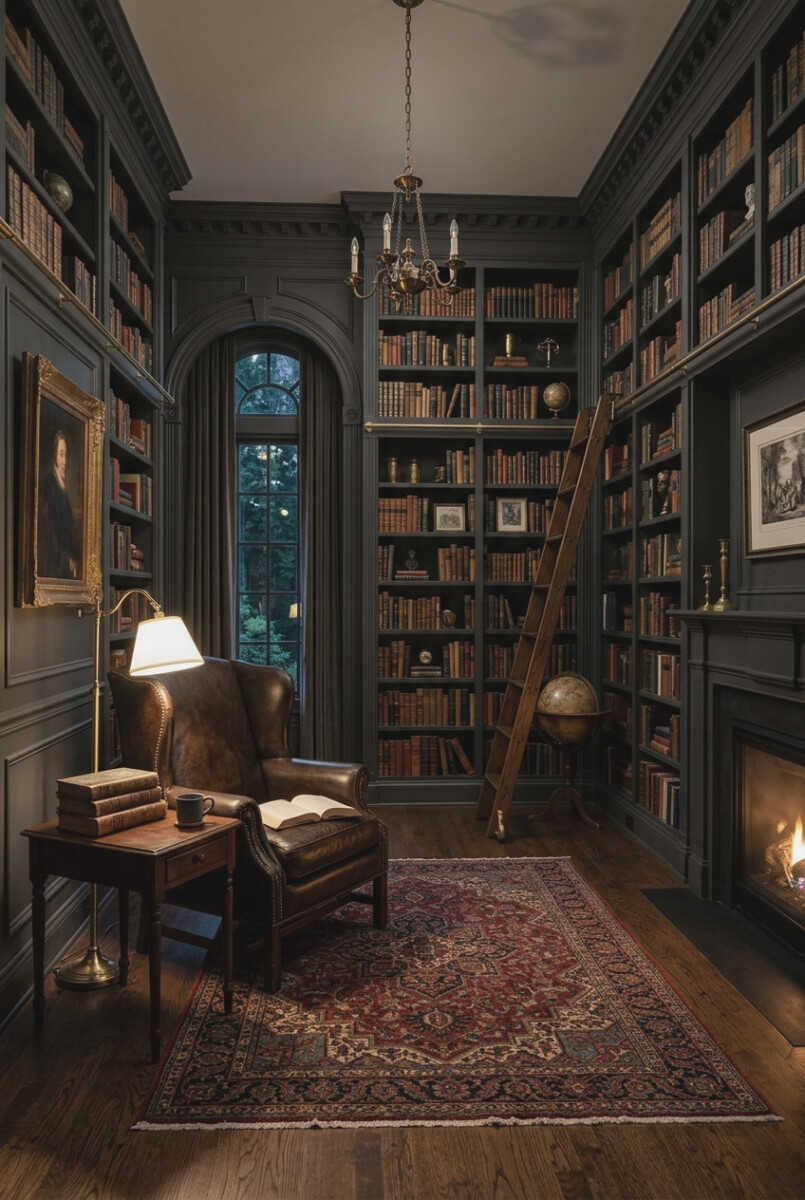
Deep green, navy, and charcoal shelves can give a reading room a cozy, traditional look. Brass details, wood furniture, and warm-white lighting work well with these darker colors, while a comfortable armchair gives the room a place to settle in with a book.
Dark paint can make a small or poorly lit room feel even dimmer, so include a good reading lamp and enough general light to make the shelves easy to use.
9. Minimalist Floating Ledges
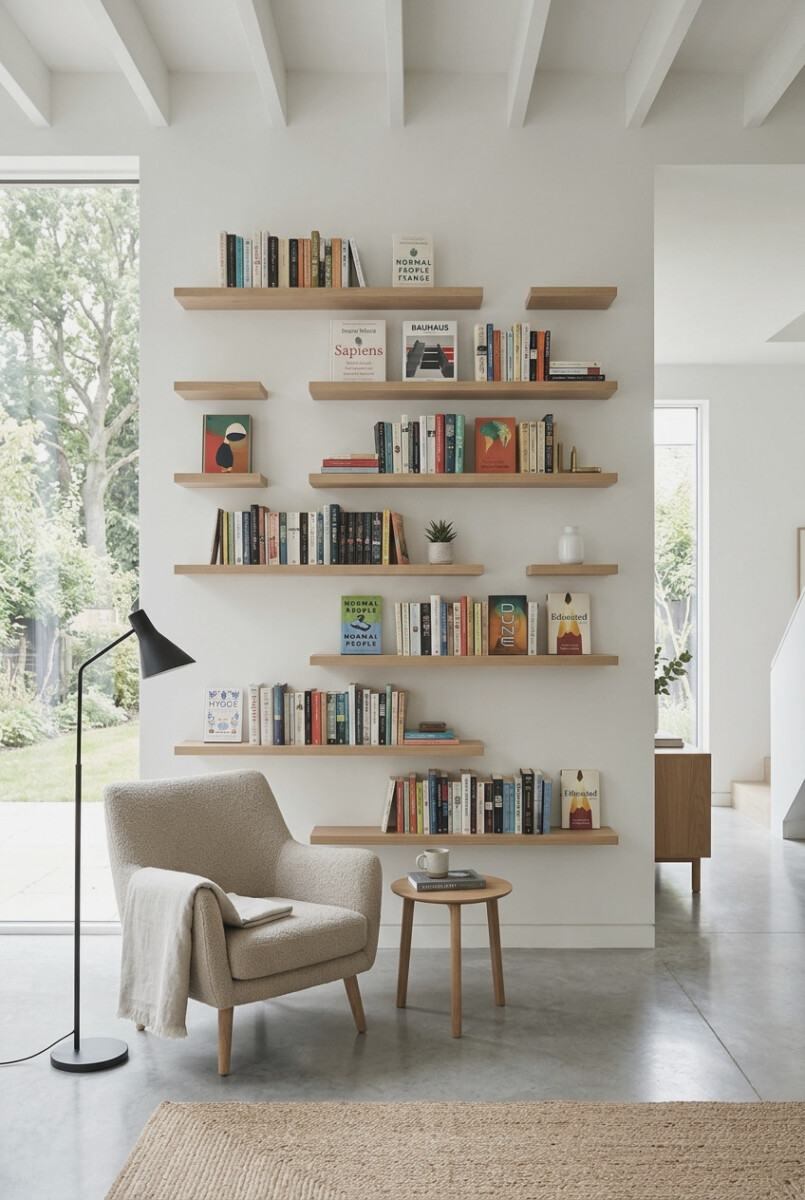
Floating ledges offer a lighter alternative to full bookcases and work well for smaller collections or books you want to display with their covers facing out. Arrange several in a row or stagger them to suit the wall.
Check the weight rating of the ledges and use fixings suitable for your wall type; heavier collections may need brackets secured into studs. A front lip also helps keep books from slipping off.
10. Color-Coded Curation
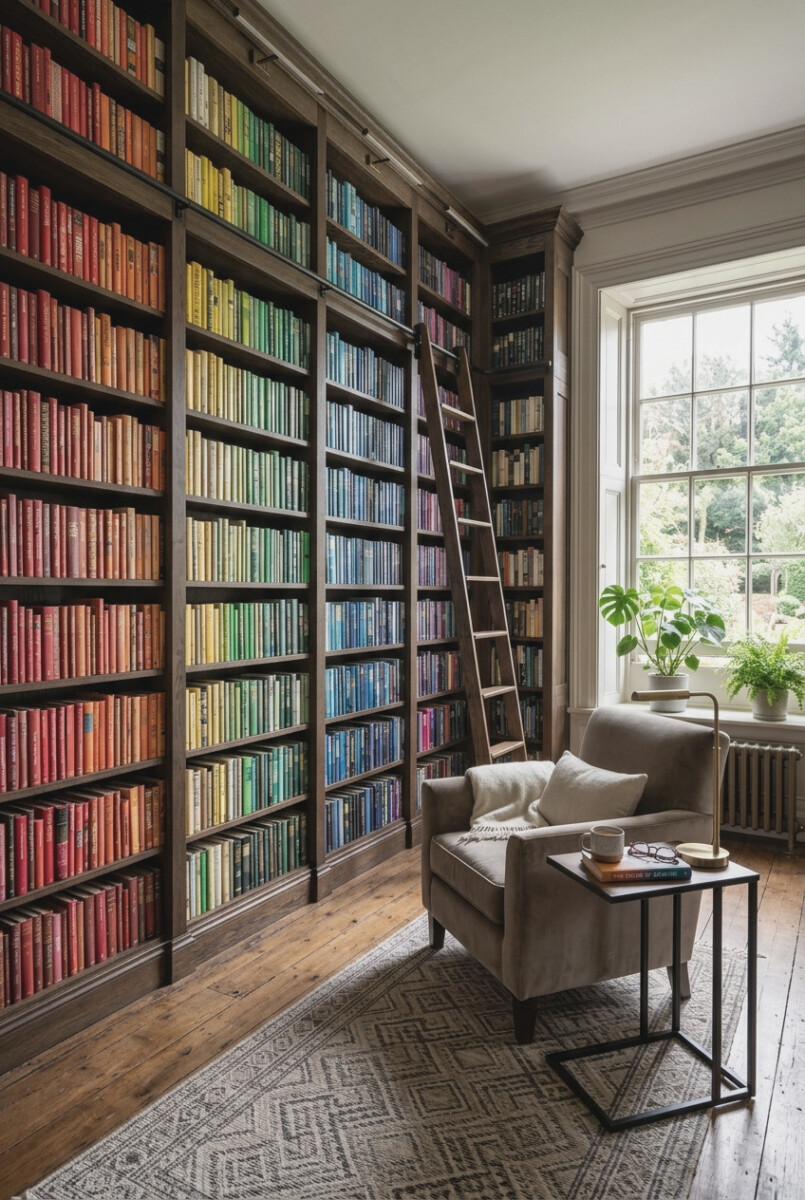
Arranging books by spine color can turn an ordinary bookcase into a striking feature. A gradual shift from one color to another creates a rainbow effect, while grouping a few favorite shades together gives the shelves a more relaxed look.
The main drawback is that it can be harder to find a particular title if you usually remember books by author or subject. You could keep the method for display shelves and use a more practical system for the rest of your collection.
11. Fireplace Flanking Alcoves
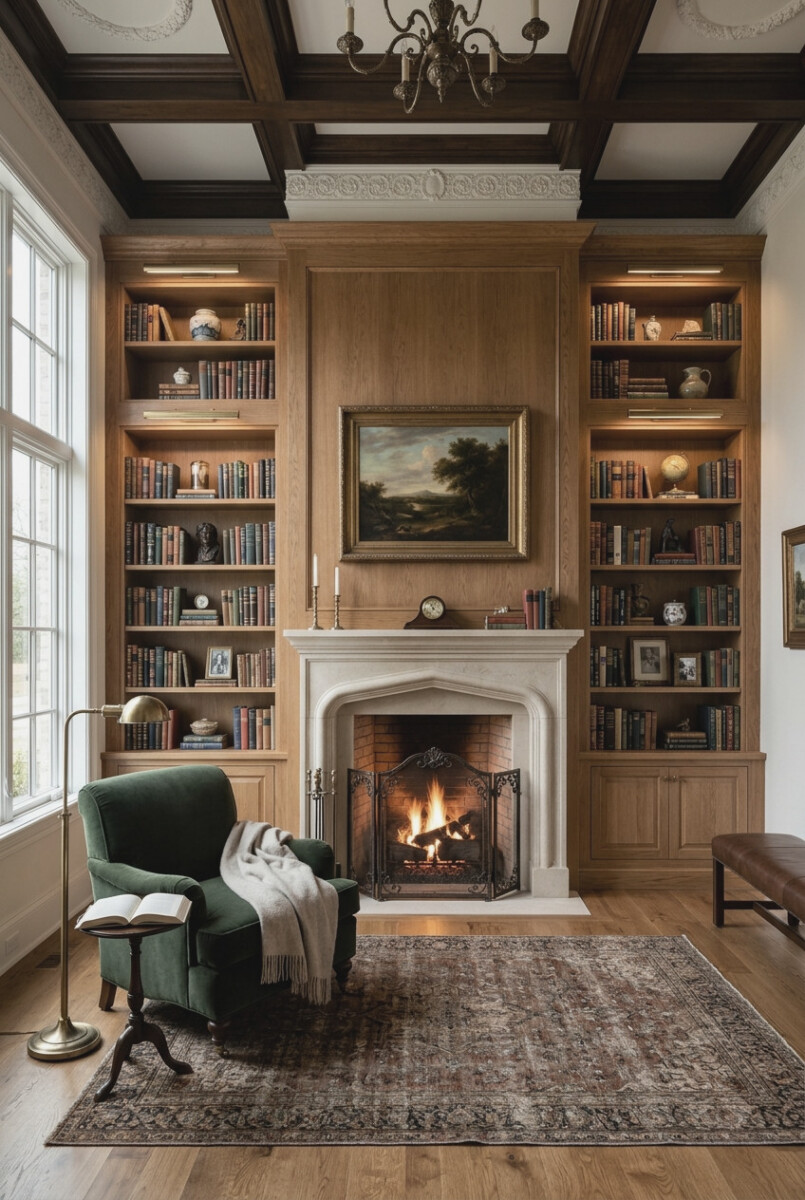
Recessed spaces on either side of a fireplace are natural places for built-in bookshelves. Matching the shelves on both sides creates a balanced arrangement and makes the fireplace feel connected to the rest of the room.
You can line the shelves up with the mantel or vary their heights to fit your books and display pieces. Keep books, wood shelves, and other combustible items at a safe distance from the fireplace, following the appliance or fireplace manufacturer’s clearance guidance.
12. Hidden “Secret Door” Bookshelves
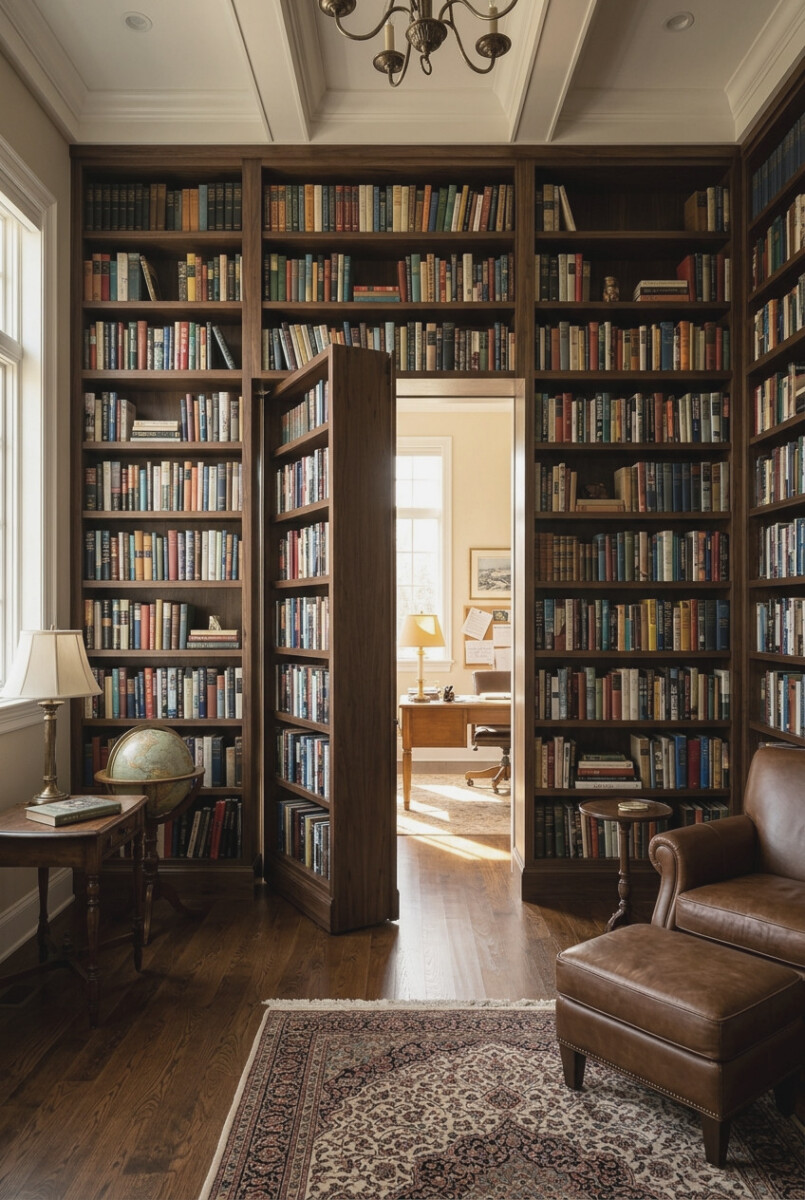
A bookcase that swings open to reveal a doorway can hide a home office, pantry, or storage area. This type of installation needs careful planning because the books add considerable weight to the door.
Use a purpose-built pivot or hinge system rated for the finished load, and have the frame and hardware installed by an experienced carpenter. Leave enough room for the bookcase to swing without hitting nearby furniture or walls.
13. The Headboard Library
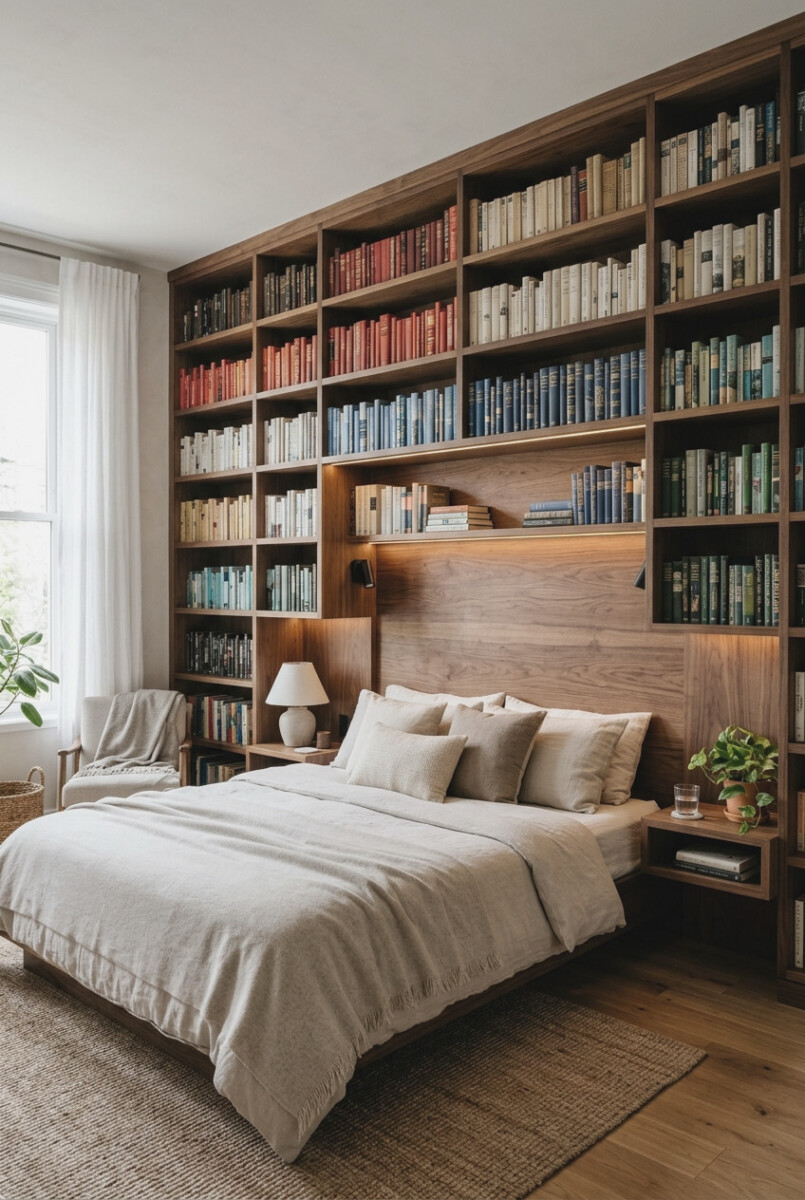
A headboard with built-in shelves or niches keeps bedtime reading close without needing large nightstands. Use the compartments for a few current reads, a small lamp, and other essentials you like to keep nearby.
Closed storage can help the bedroom look less cluttered, while open niches make favorite books easy to reach. Make sure the design has no sharp edges and leaves enough space for pillows and comfortable movement around the bed.
14. Over-the-Bed Bridge Shelving
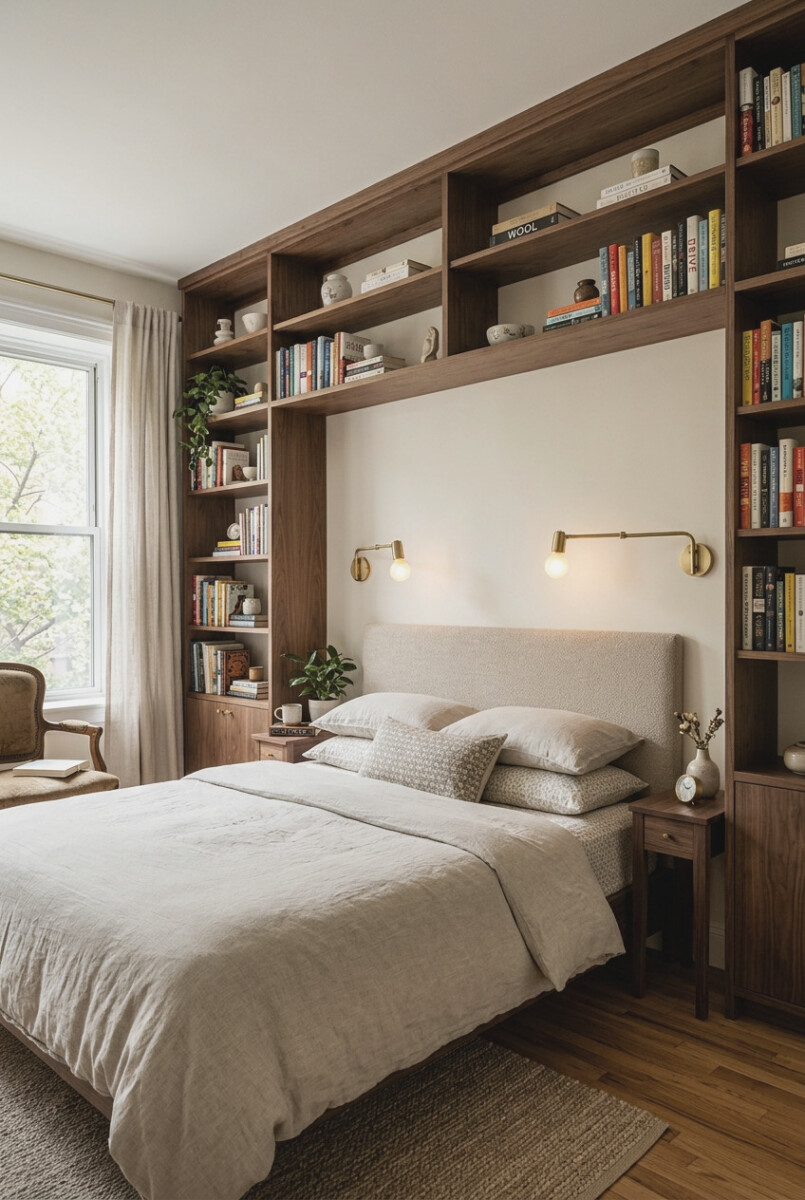
A shelf or cabinet running across the wall above the bed can provide extra storage in a small bedroom. It needs particularly secure installation, since anything stored overhead could fall if the fixings fail.
Use hardware suited to the wall structure, follow the load rating, and avoid placing heavy books directly above where someone sleeps. A shallow unit for lightweight books or display pieces is a safer choice than a deep, heavily loaded shelf.
15. Low-Profile Bench Storage
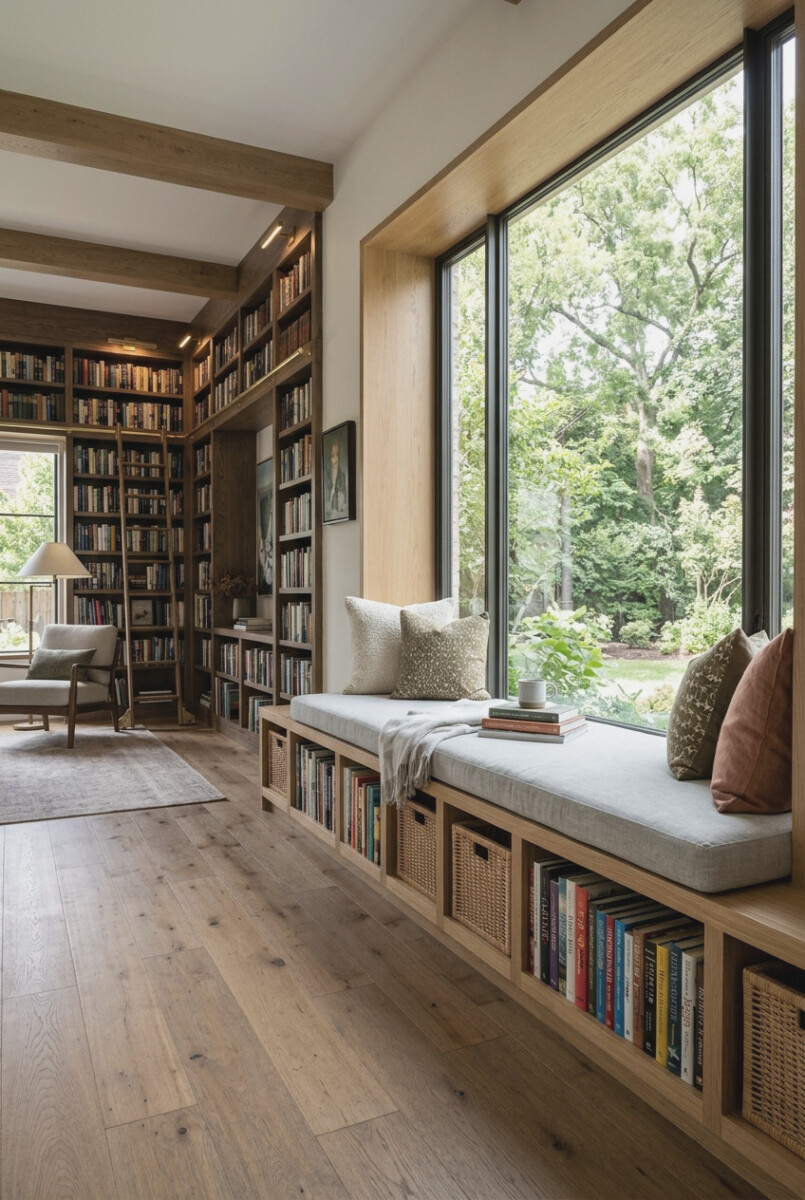
A long, low bookcase can double as a bench beneath a window or along an open wall. Choose a unit designed to carry the weight of people sitting on it, rather than assuming an ordinary bookcase will be strong enough.
Add a fitted cushion for comfort and use the shelves or compartments below for books and baskets. Its low height keeps the room feeling open and can provide extra seating when you have guests.
16. The Kitchen Island Cookbook Nook
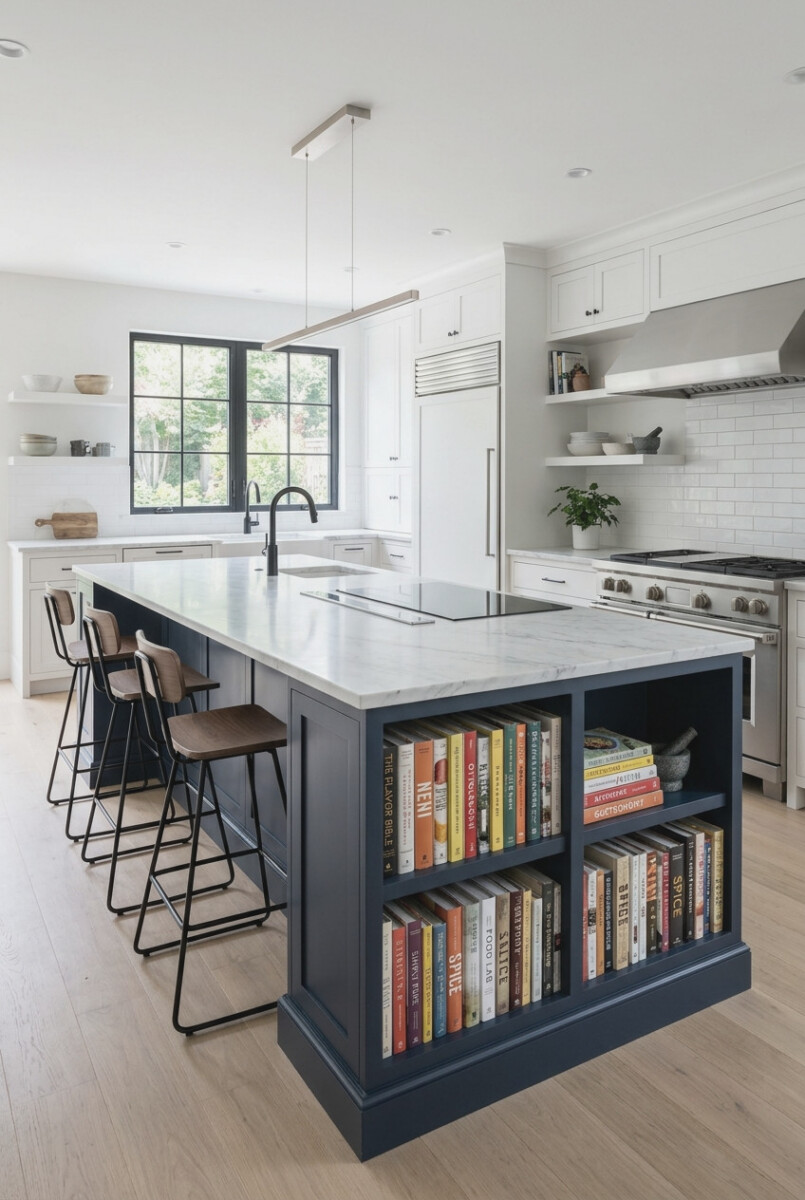
Cookbooks are easier to use when they are stored near the area where you prepare meals. An open shelf at the end of a kitchen island can keep frequently used titles within reach and add color to the room.
Choose a spot away from the stove, sink, and areas where oil or water tends to splash. If the kitchen gets steamy or messy, a cabinet with doors may protect the books better than open shelving.
17. The Humidity-Proof Bathroom Library
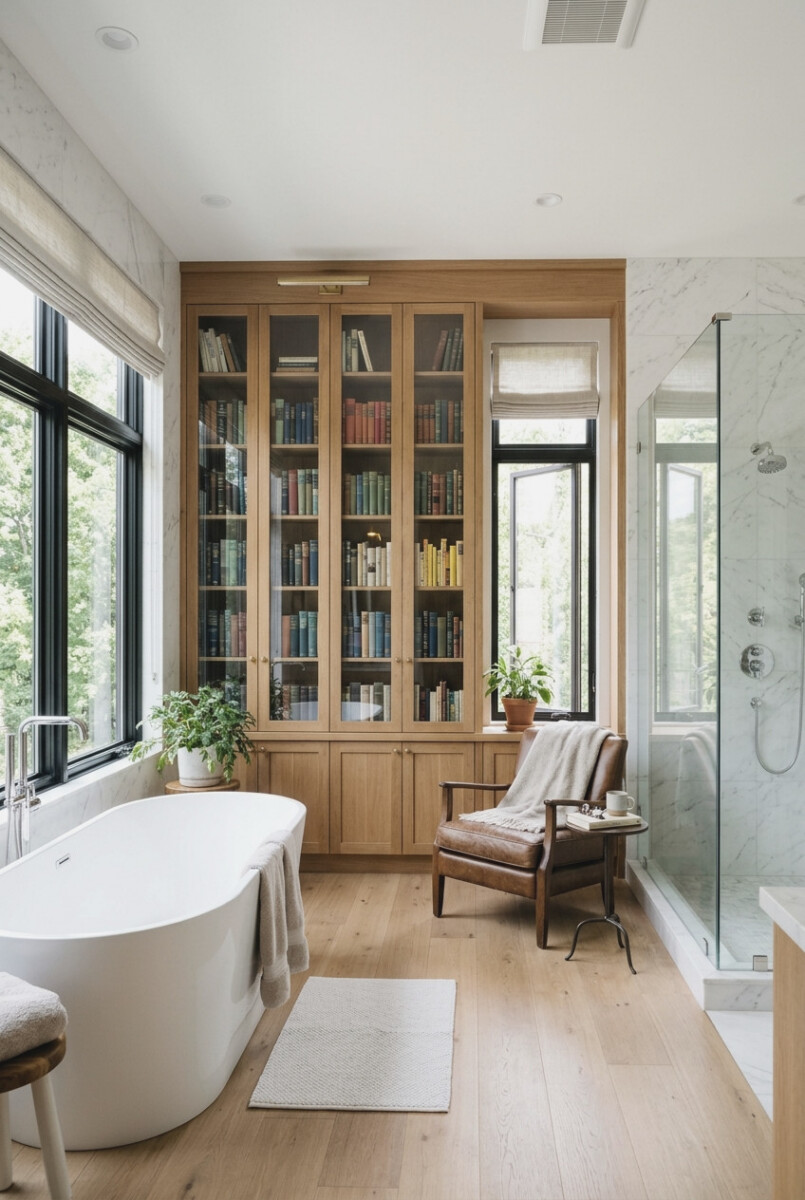
Books and damp bathrooms are not an ideal combination, since moisture can cause pages to warp and encourage mold. If you like keeping something to read in the bathroom, limit it to a few books and place them well away from the shower and bath.
A closed cabinet may reduce splashes, but it won’t solve high humidity on its own. Good ventilation is essential, and valuable or delicate books are better stored in a dry room.
18. Staircase Riser Storage
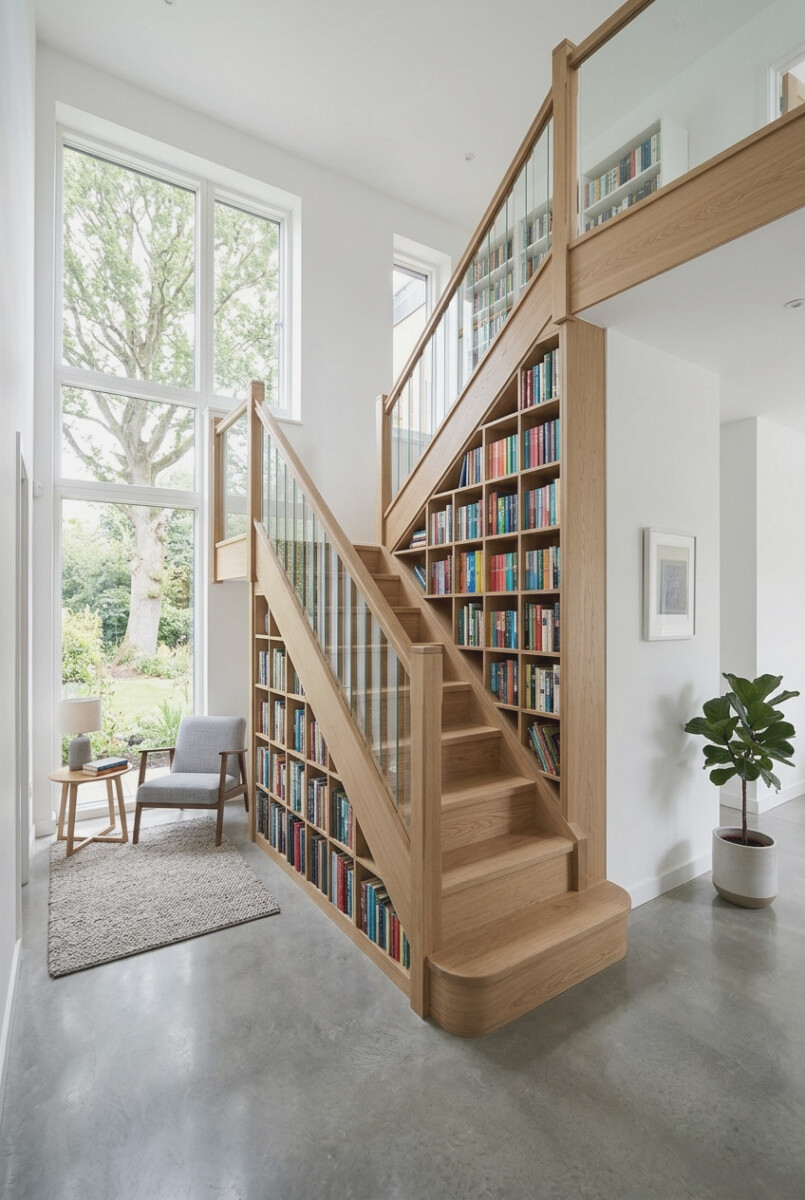
Drawers or cubbies built into a staircase can make use of space that would otherwise be hidden. This is usually a custom project, so the design needs to account for the stair structure, tread dimensions, and safe access.
Avoid altering the stairs without advice from a qualified builder, and make sure drawers cannot obstruct the steps when open. The compartments are best for smaller books and everyday items rather than a large collection of heavy volumes.
19. The Upper-Landing Lounge
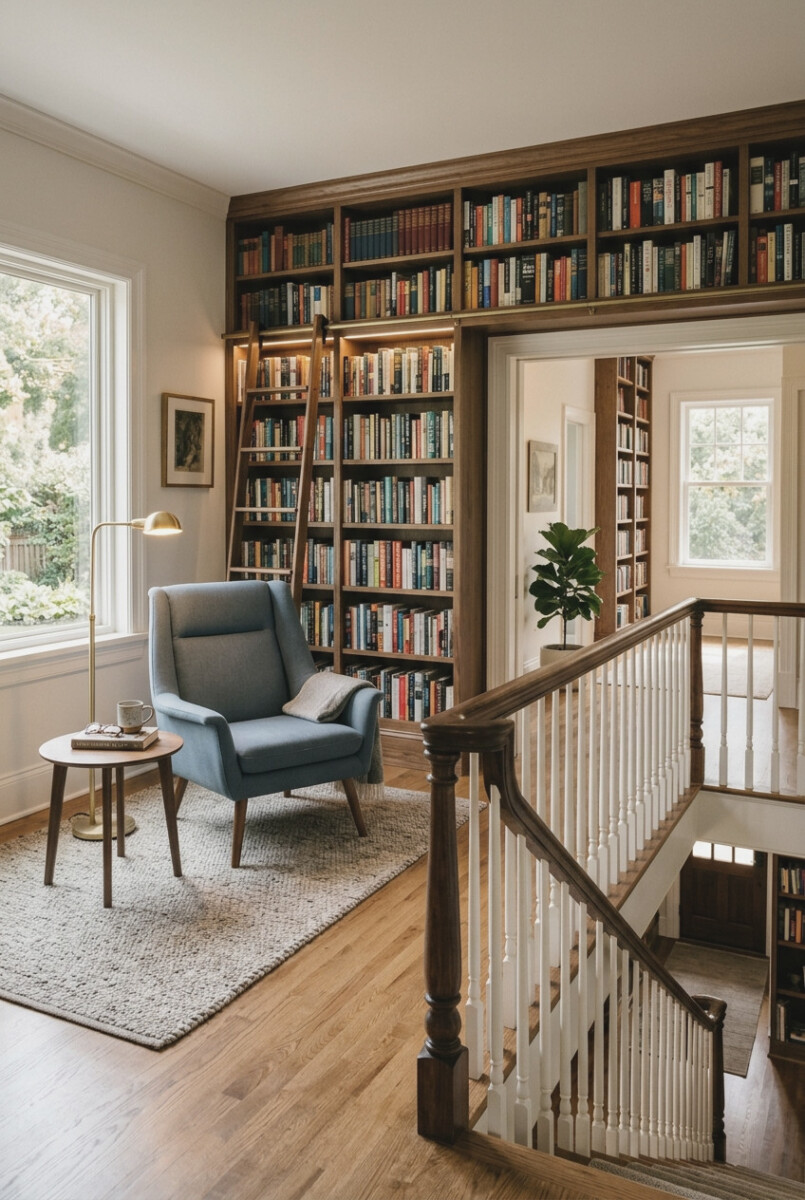
A wide landing at the top of the stairs can become a useful reading spot with just a few pieces of furniture. Add a comfortable chair, a small side table, a reading lamp, and a nearby bookcase or wall shelves.
Choose compact furniture that leaves enough room for people to pass safely. Since an upper landing is still a circulation area, avoid layouts that make the stairs or nearby doors difficult to use.
20. Attic Slopes and Eaves
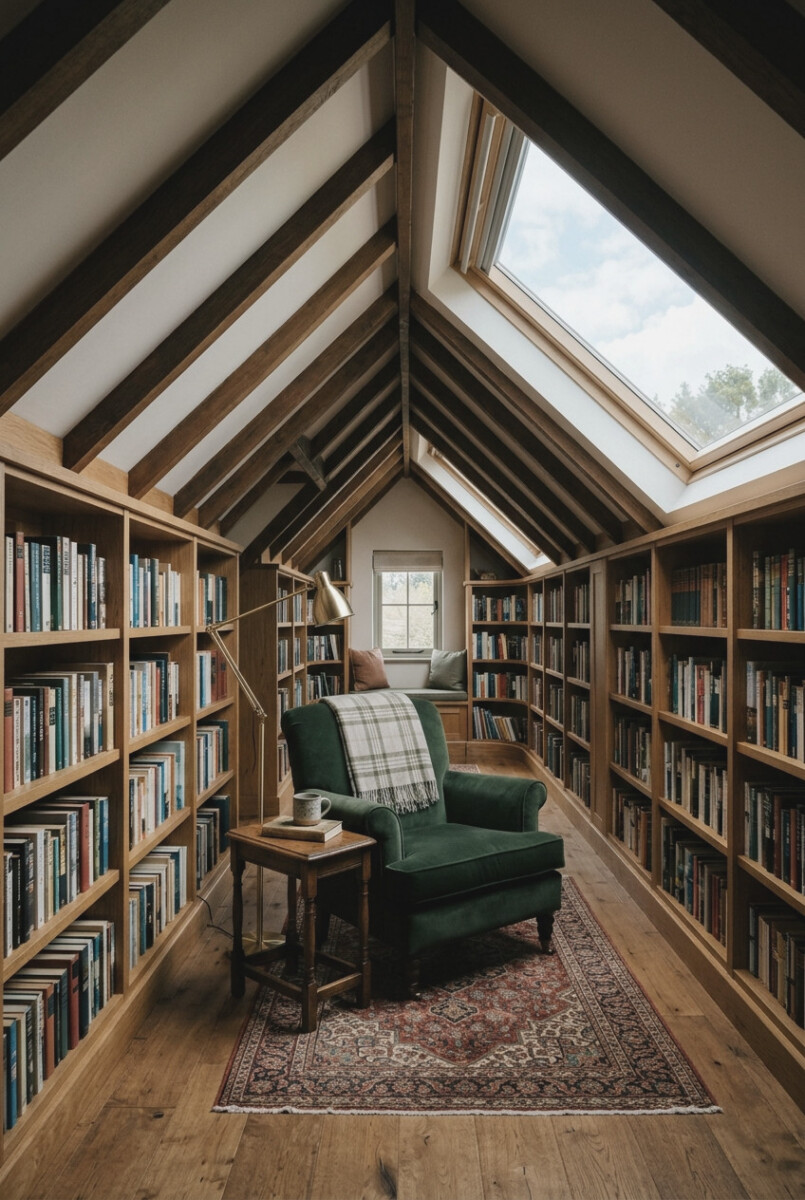
Sloped attic ceilings can make standard bookcases difficult to fit, but the lower sections beneath the roof are often suitable for custom shelves. Build storage into the knee walls or use low units that follow the roofline, leaving the higher part of the room open for seating.
Before storing books in an attic, check for leaks, damp, and large temperature changes, all of which can damage paper. A stable, dry environment is important for a long-term collection.
21. Glass-Fronted Apothecary Cabinets
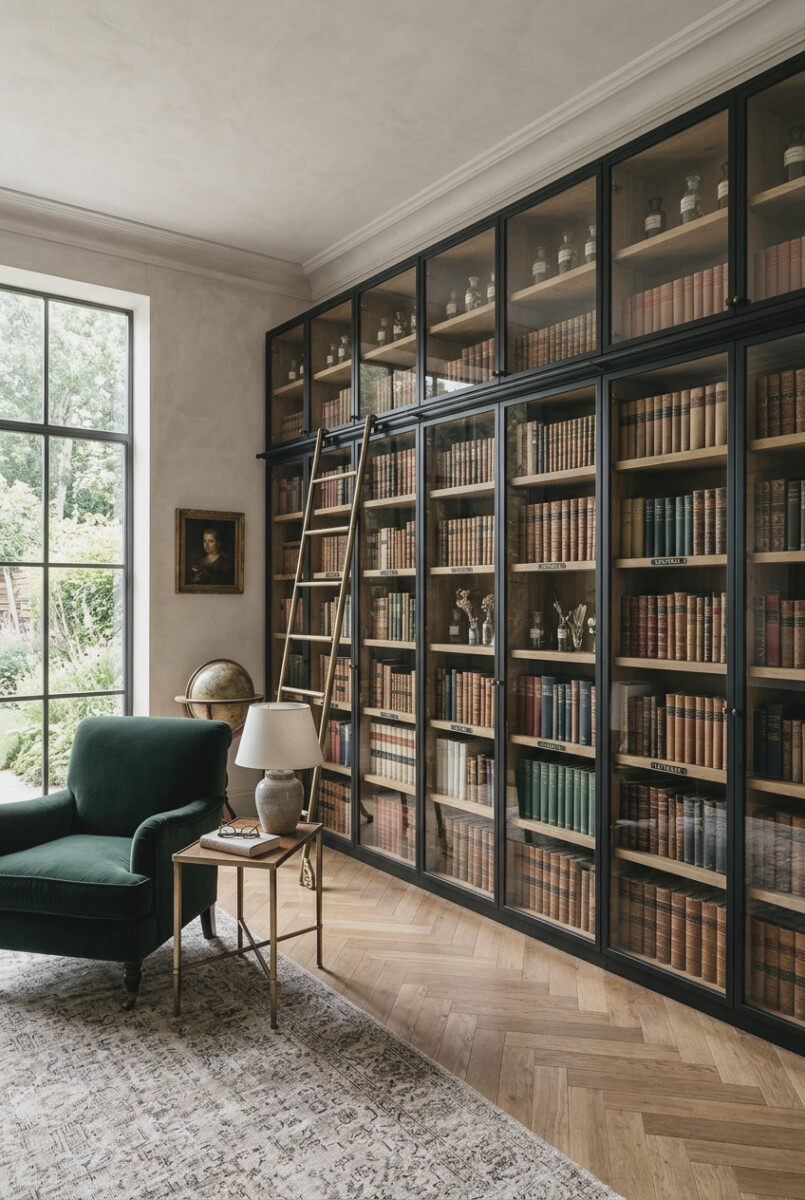
Glass-fronted cabinets keep books visible while helping protect them from dust and curious pets. Slim metal frames give the cabinet a modern look, while oak or other traditional finishes feel more classic.
Glass can reduce dust, but ordinary glass does not necessarily protect books from harmful sunlight, so avoid placing the cabinet in direct sun unless the glazing is designed for UV protection. Leave enough room inside for books to stand upright without being squeezed.
22. Freestanding Double-Sided Room Dividers
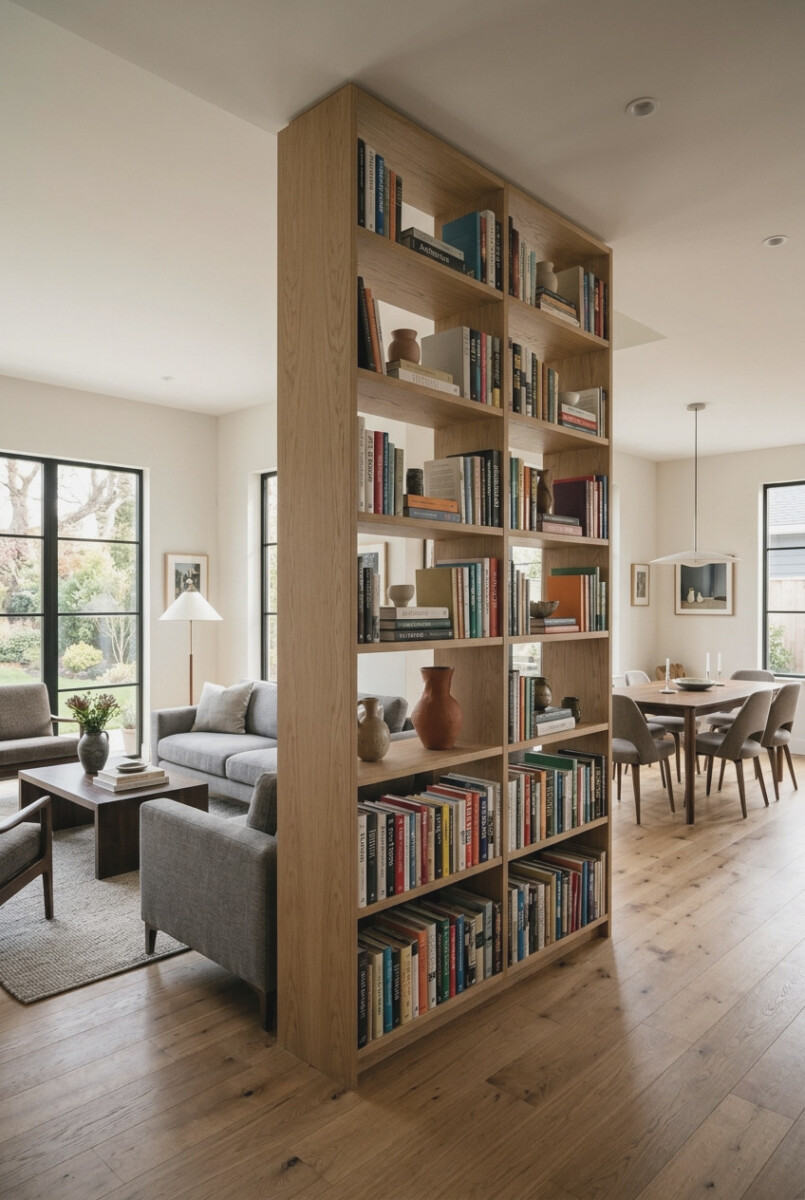
An open-backed bookcase can separate areas in an open-plan room without blocking all the light. Use it to mark the boundary between a living area and a dining space, or to create a little reading corner beside a desk.
Books and a few carefully chosen objects make the divider useful from both sides. Tall or heavily loaded units should be secured against tipping, especially in homes with children or pets.
23. The Guest-Library Hybrid
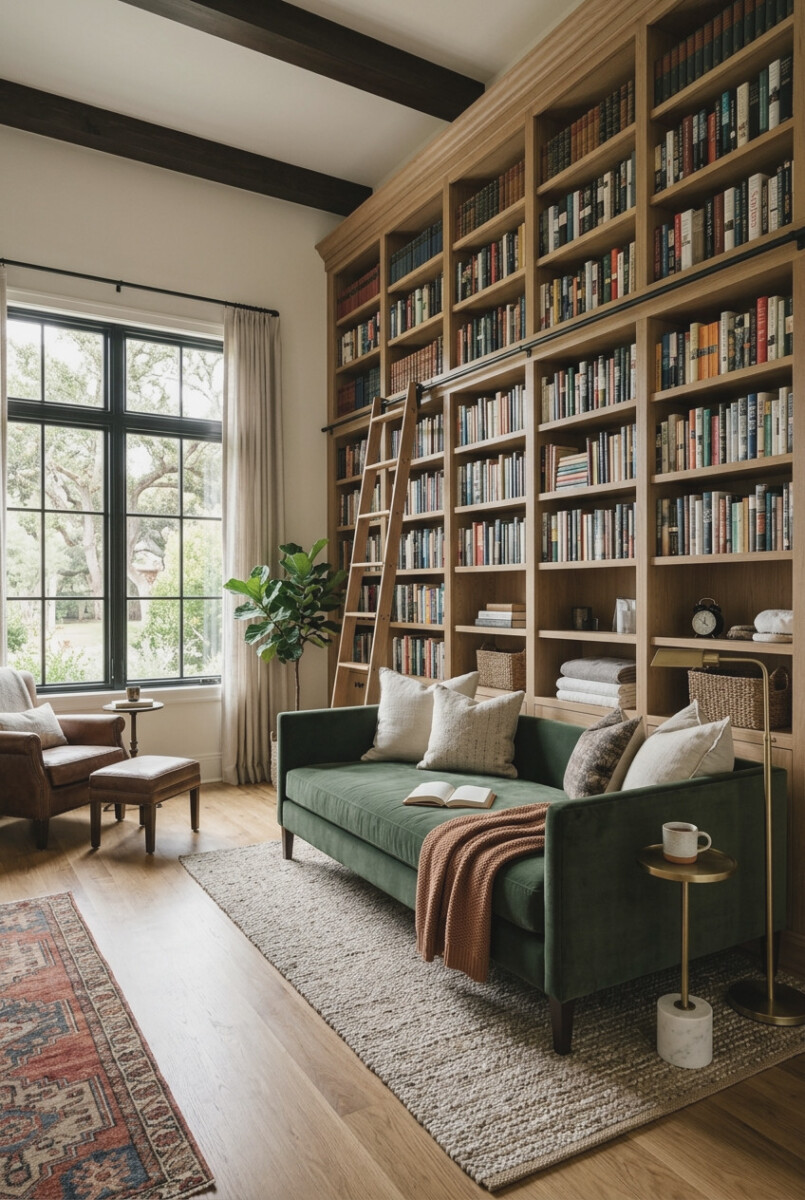
A guest room can serve as a library when visitors aren’t staying over. Line one wall with shelves and add a daybed or sofa bed that works for reading as well as sleeping.
Keep some shelves free for guests’ belongings and leave a clear path to the bed, closet, and door. A small selection of novels, magazines, or local guidebooks can make the room feel welcoming without overcrowding it.
24. Front-Facing Children’s Library
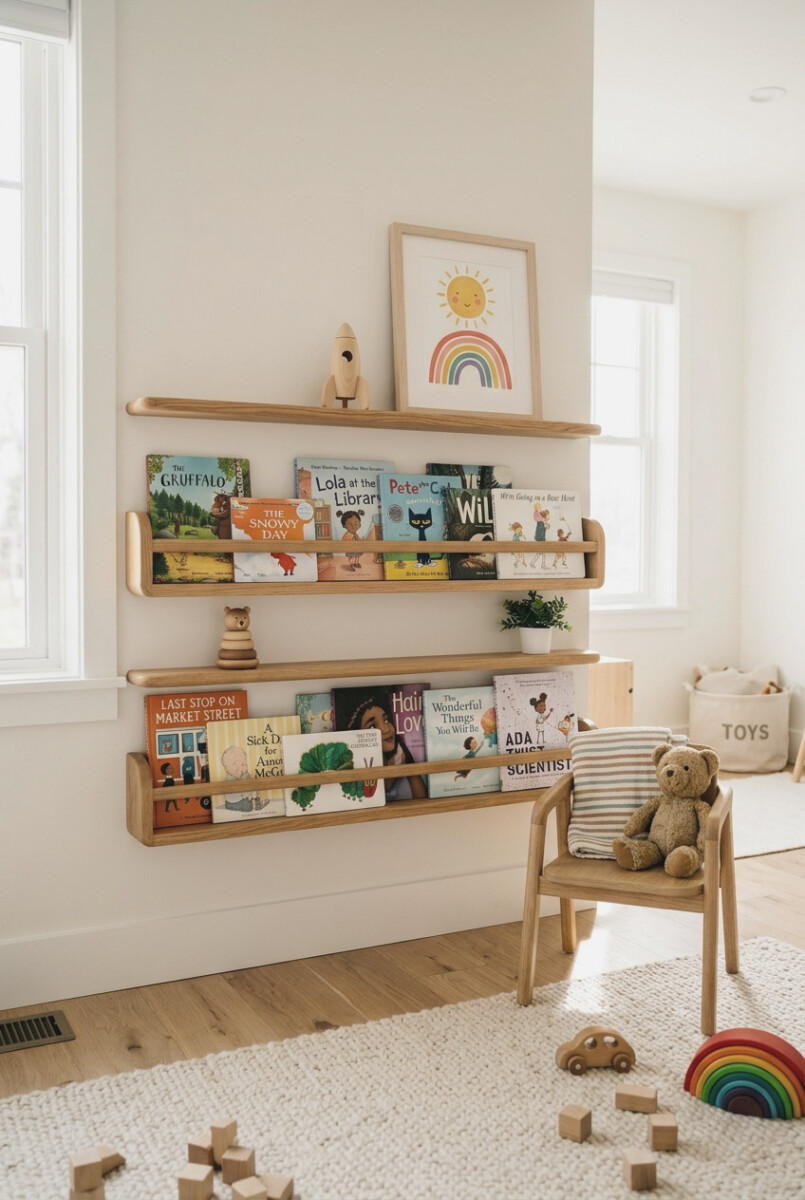
Children often find it easier to choose a book when they can see the cover. Low picture ledges or front-facing shelves make favorite titles easy to spot and allow younger readers to put them back themselves.
Choose sturdy units with rounded edges and fix them securely to the wall. As children’s interests change, the ledges can hold artwork, puzzles, or other small items as well as books.
25. Industrial Pipe Shelving
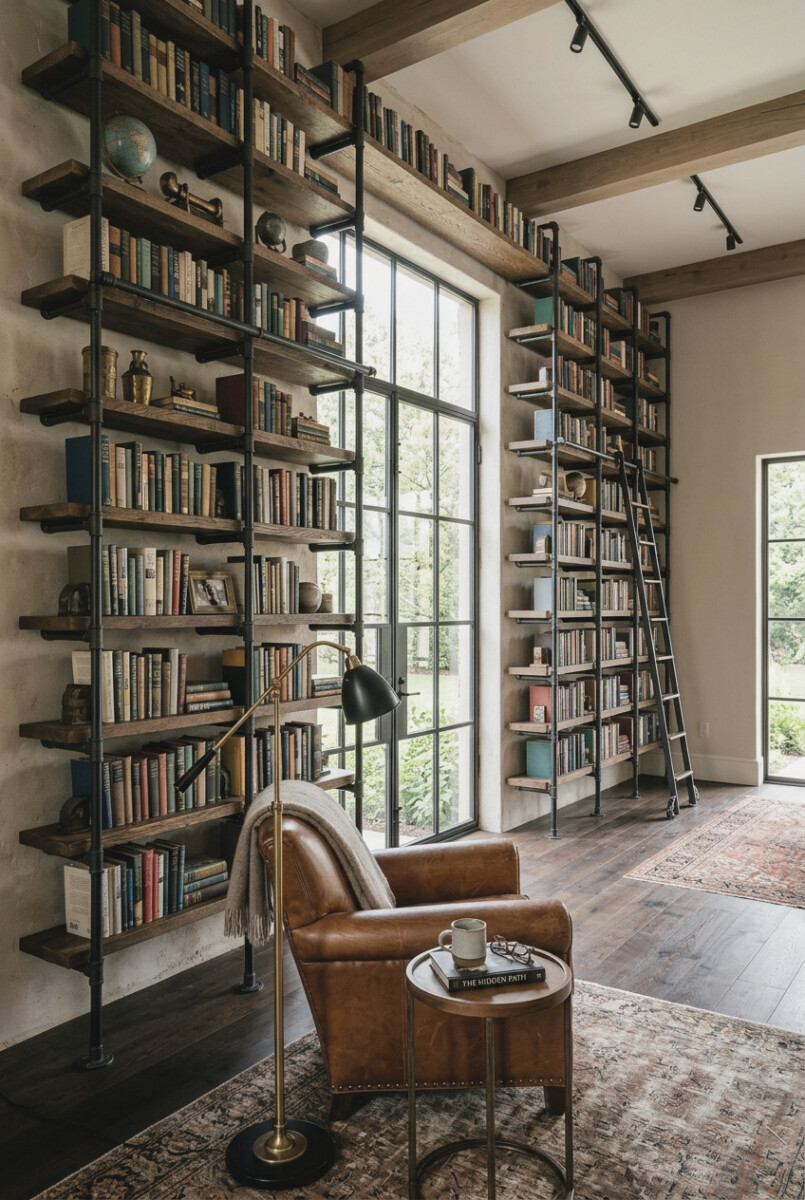
Black metal pipes paired with reclaimed or stained wood create a practical shelving system with an industrial look. The layout can be adapted around windows, radiators, or existing furniture, which makes it useful in lofts and rooms with unusual dimensions.
Use pipe fittings and wall fixings designed for shelving, and check the load capacity before adding heavy books. Sand and seal reclaimed wood where needed to reduce splinters and make the shelves easier to clean.
26. Integrated Shelf Lighting
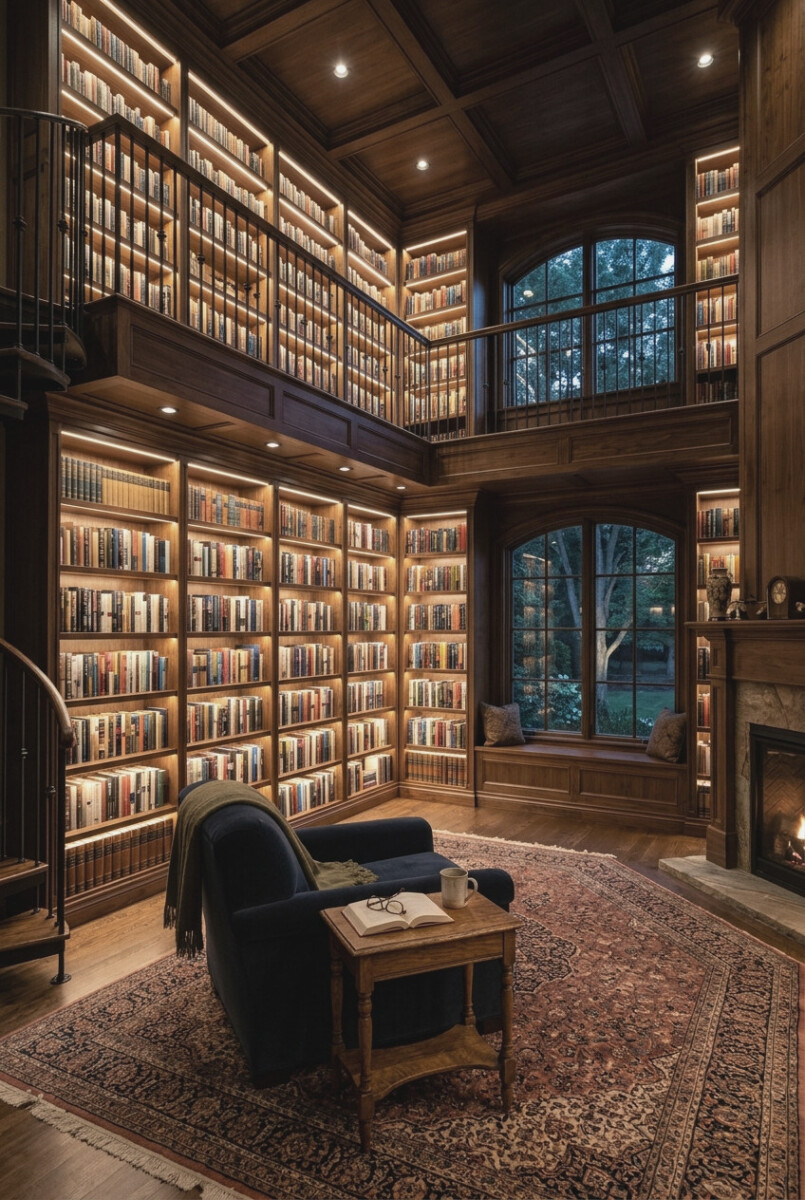
LED strips fitted beneath shelves can make book spines easier to see and add a soft glow to the room. Choose a warm or neutral color temperature to suit the rest of your lighting, and use diffusers to avoid seeing individual LED points.
Keep wiring neat and use products suitable for built-in or furniture lighting. If the installation requires new wiring or changes to the electrical system, have a qualified electrician handle the work.
27. The Deep-Seat Reading Corner
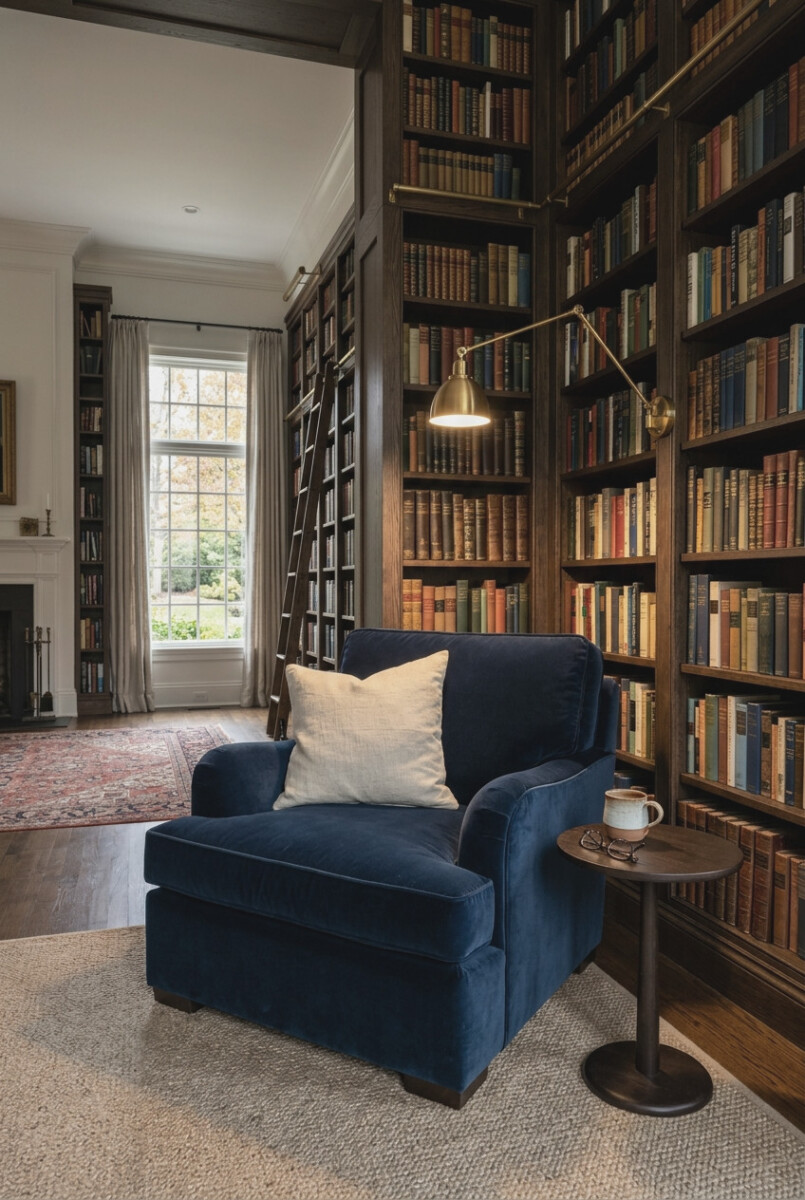
If you have a favorite deep armchair, arrange the library around it. Place a bookcase or a few shelves within easy reach, then add a side table for a drink and a swing-arm lamp for focused light.
Leave enough room to stretch your legs and get in and out of the chair without bumping into furniture. A small rug and a cushion can make the corner feel more comfortable without filling it with unnecessary accessories.
28. Mirrored-Back Bookcases
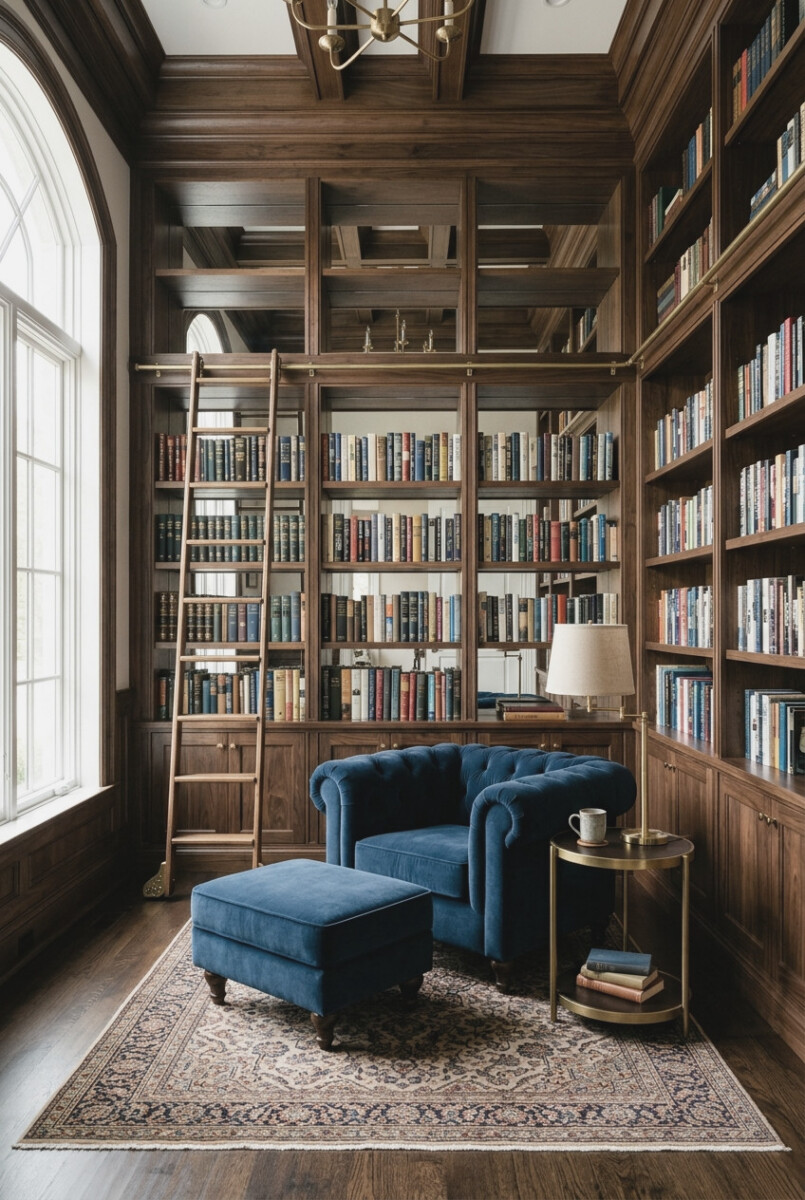
Mirror panels at the back of a bookcase can reflect light and make a small room feel brighter. They also add depth behind the books, especially in a compact study or an office with limited natural light.
The effect works best when the shelves are not too crowded, since a mirror will reflect everything in front of it. Use securely fitted mirror panels with suitable safety backing, and consider whether the extra reflections will make the room feel busy.
29. Repurposed Vintage Armoires
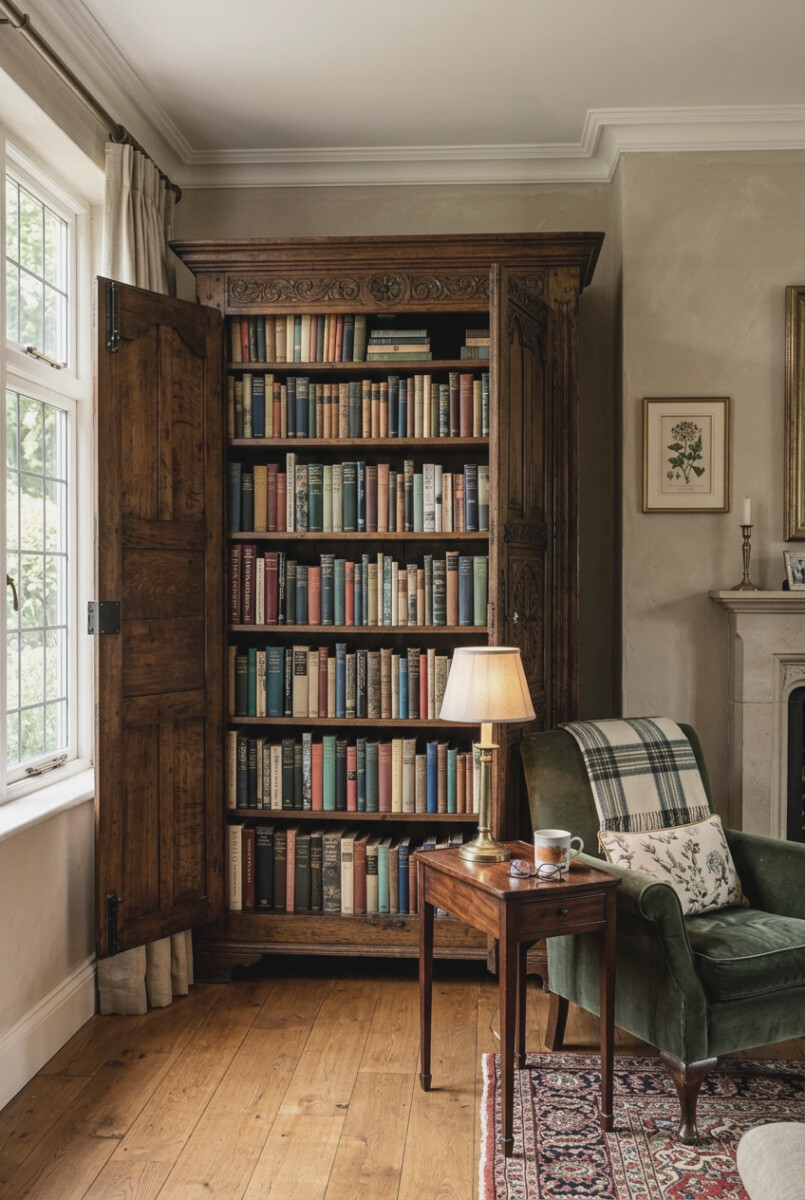
A vintage armoire can become a compact library, especially if you rent or prefer furniture that can move with you. Adjustable shelves can replace the hanging rail, giving you space for books of different sizes.
Check the condition of the cabinet and make sure the shelves can support the added weight. Tall armoires should be secured against tipping, and the doors need enough clearance to open fully.
30. Gallery-Style Picture Ledges
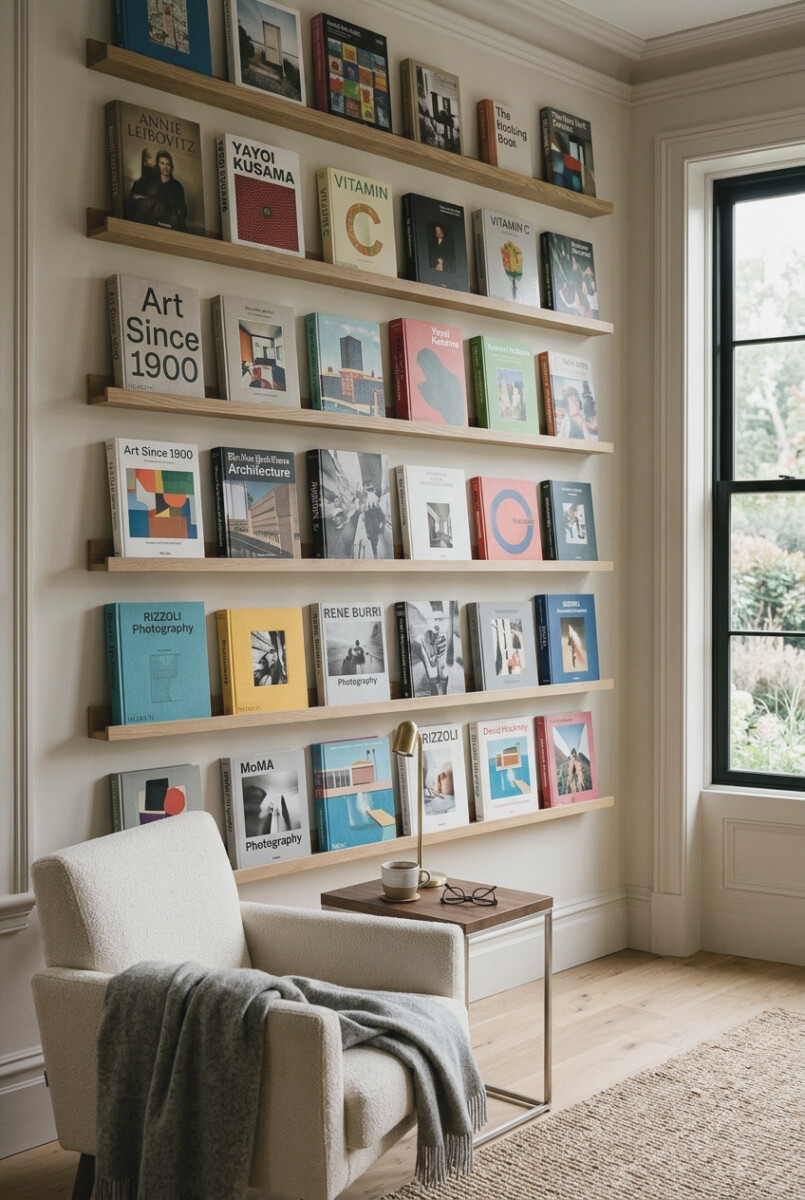
Picture ledges are a simple way to display a small collection with the covers facing outward. They work especially well for art books, photography titles, children’s books, and editions with attractive covers.
Choose ledges with a front edge that keeps books in place, and check their weight limits before filling them. Since each ledge holds fewer books than a standard shelf, this approach is best for a rotating display rather than a large library.
31. Professional Office Backdrop
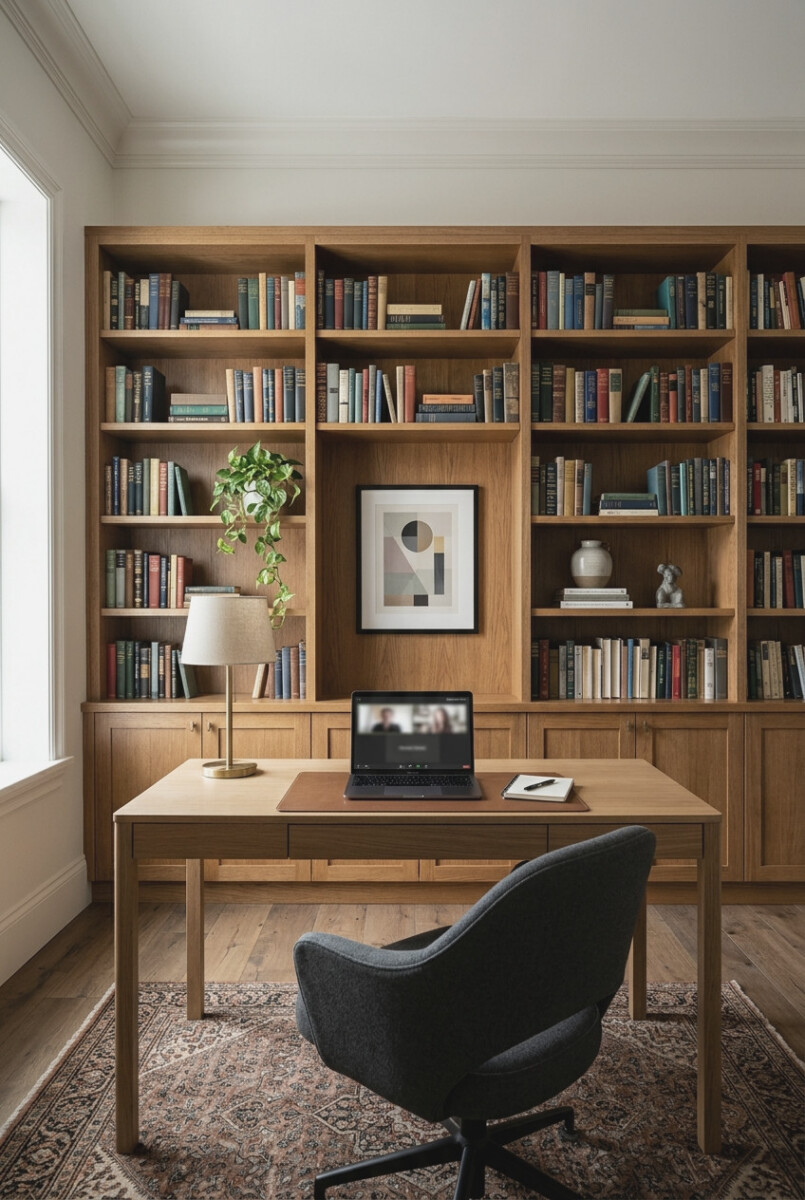
Bookshelves behind a desk can make a video-call background feel more personal and give the room a finished look. Arrange books in groups and leave some open space for a plant, a framed print, or a few objects that matter to you.
You don’t need to follow a strict ratio of books to decor; aim for shelves that look organized on camera and are easy to maintain. Keep the most distracting items away from the area directly behind your head.
32. Custom Radiator Covers
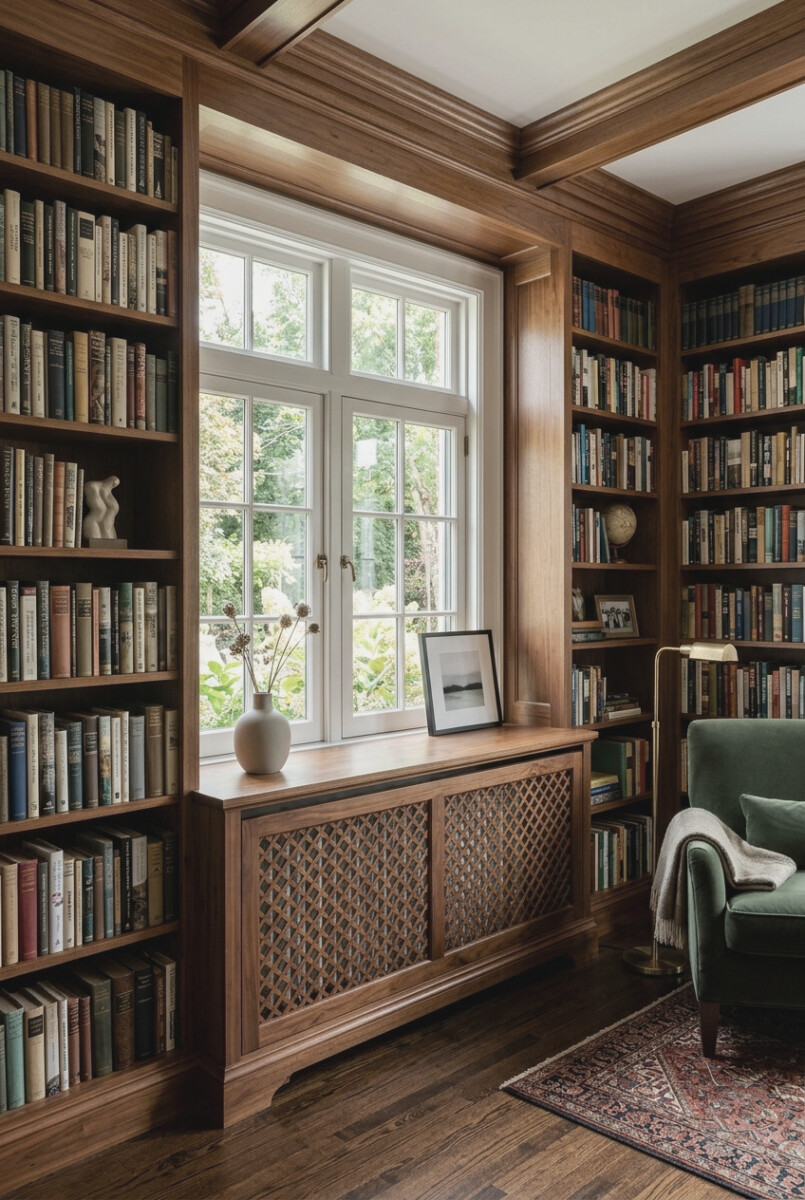
A fitted radiator cover can provide a surface for display and, in some designs, connect to nearby shelving. The cover must allow enough airflow for the radiator to work properly, so use a design made for your specific heating system.
Avoid storing books directly above or beside a hot radiator, where heat and dry air can damage paper over time. A carpenter or heating professional can help plan a safe arrangement that doesn’t reduce the room’s heating performance.
33. The Warm Welcome Entryway
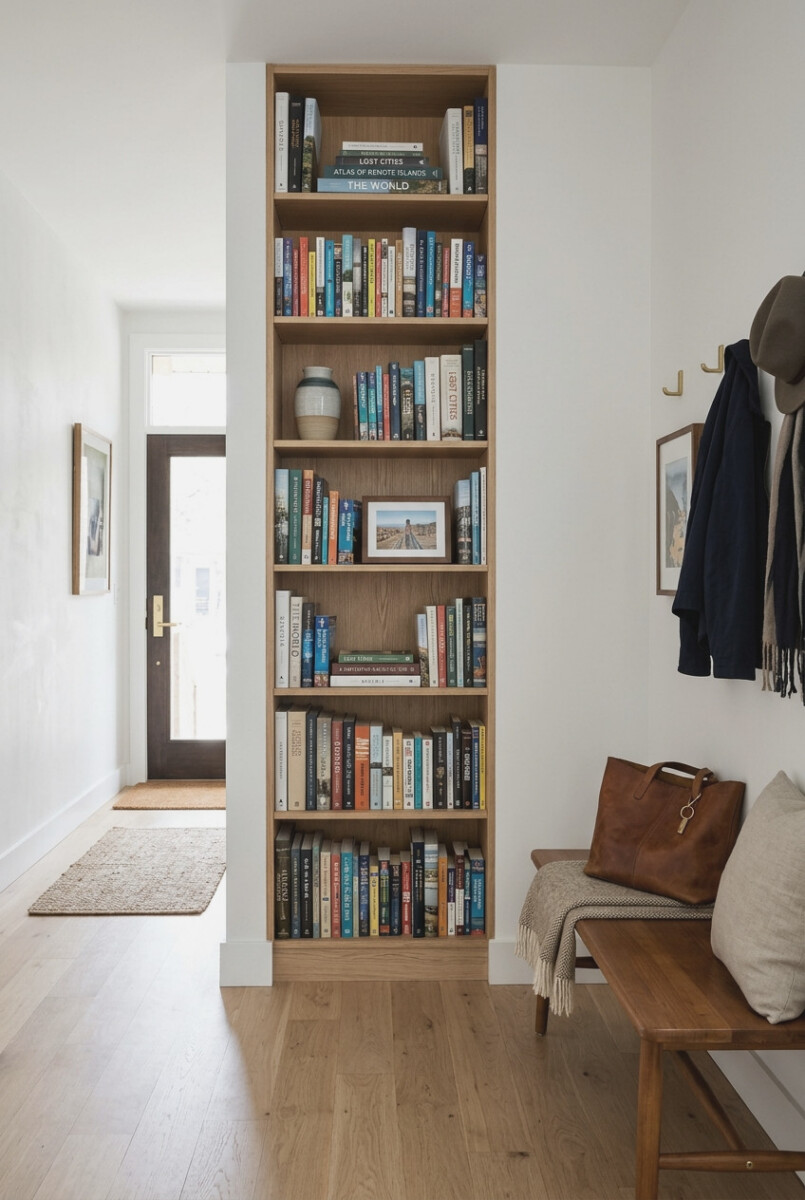
A slim bookcase in the entryway can make use of a narrow wall and give the home a personal touch as soon as people come in. Store smaller books, poetry collections, or travel guides that are easy to pick up and browse.
A shelf near a bench can also hold books you want to return or pass along. Keep the unit out of the main walking path and leave enough room for coats, bags, and the front door to open fully.
34. The Mobile Library Cart
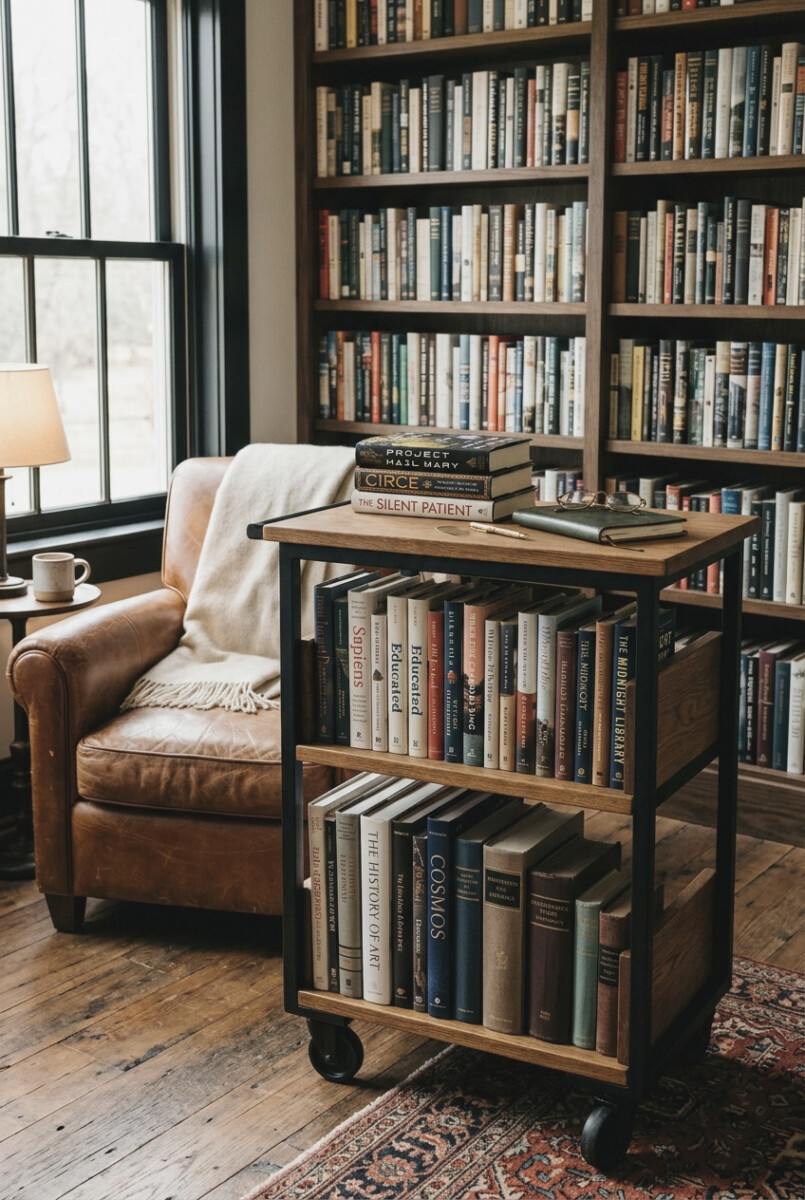
A rolling cart is a handy option if you like to move your books from room to room. Use the shelves for current reads, notebooks, and a few reading accessories, then wheel it beside the sofa or bed when needed.
Choose a cart with sturdy wheels, working brakes, and a weight rating that suits what you plan to store. Keep heavier books on the lower shelves so the cart is less likely to tip when moved.
35. Contrasting Painted Shelf Backs
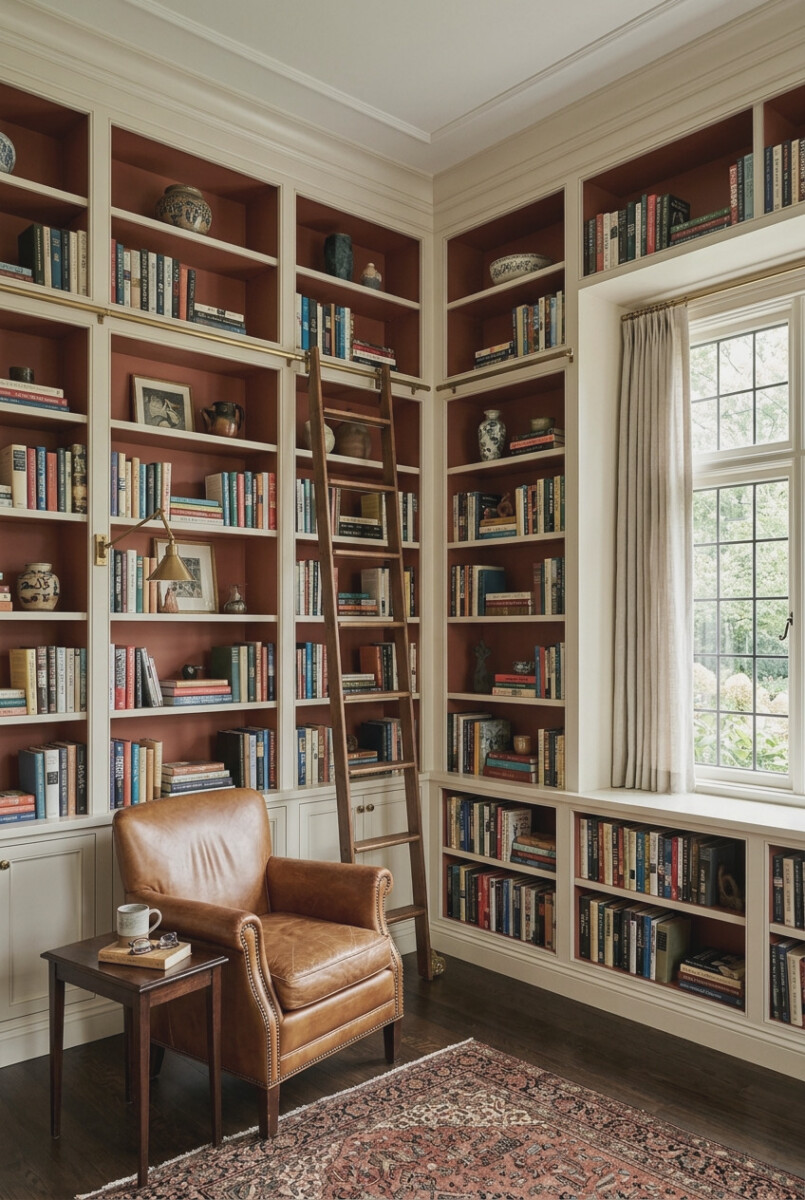
Painting the back panels of built-in shelves is an easy way to add color without changing the whole bookcase. Terracotta, mustard, deep green, or a muted blue can make book spines stand out against the background.
Test a paint sample in the room first, since the color may look different in daylight and under lamps. Use a durable finish suited to the shelf material, and let it dry fully before putting the books back.
36. Architectural Wall Niches
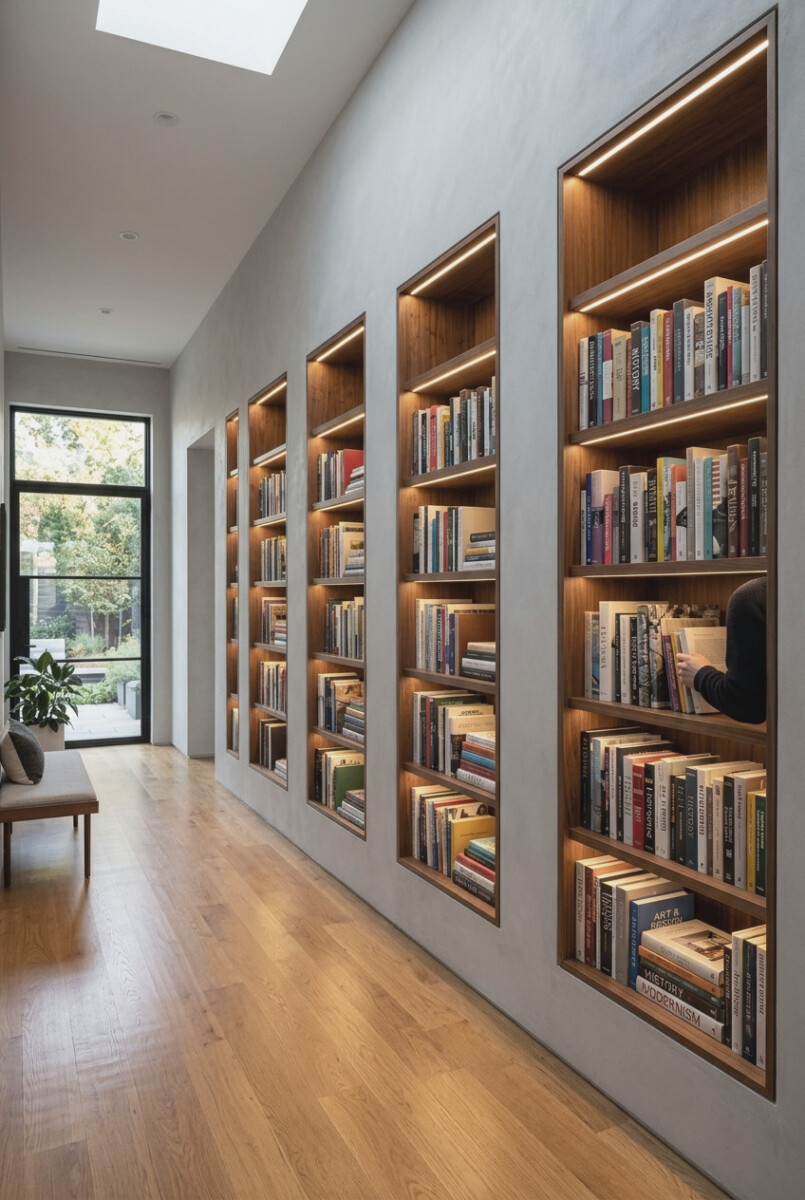
Recessed wall niches provide storage without taking up floor space. They can be added during a renovation or built into a suitable section of an existing wall, depending on the wall’s construction.
Before cutting into drywall, check for wiring, plumbing, and structural elements; some walls cannot be altered safely without professional advice. Niches are often shallower than standard bookcases, so measure your books before deciding what they will hold.
37. High-Level Perimeter Shelving
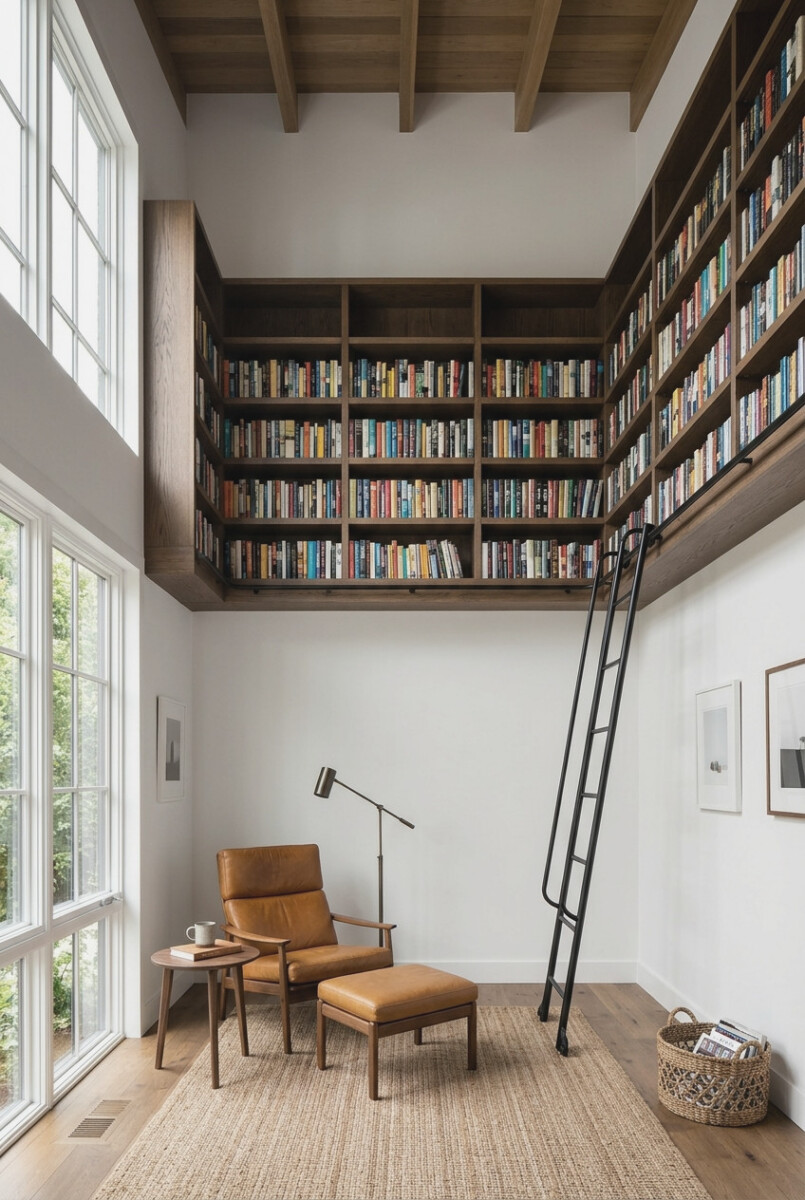
A shelf running around the upper part of a room can provide extra storage while keeping the lower walls free for furniture. It is best for books you don’t need to reach every day, since retrieving them may require a step stool or ladder.
Secure the shelf into suitable wall framing and check that it can carry the weight of a full row of books. Keep the display simple and avoid placing heavy items where they could fall onto people below.
38. Leaning Ladder Bookshelves
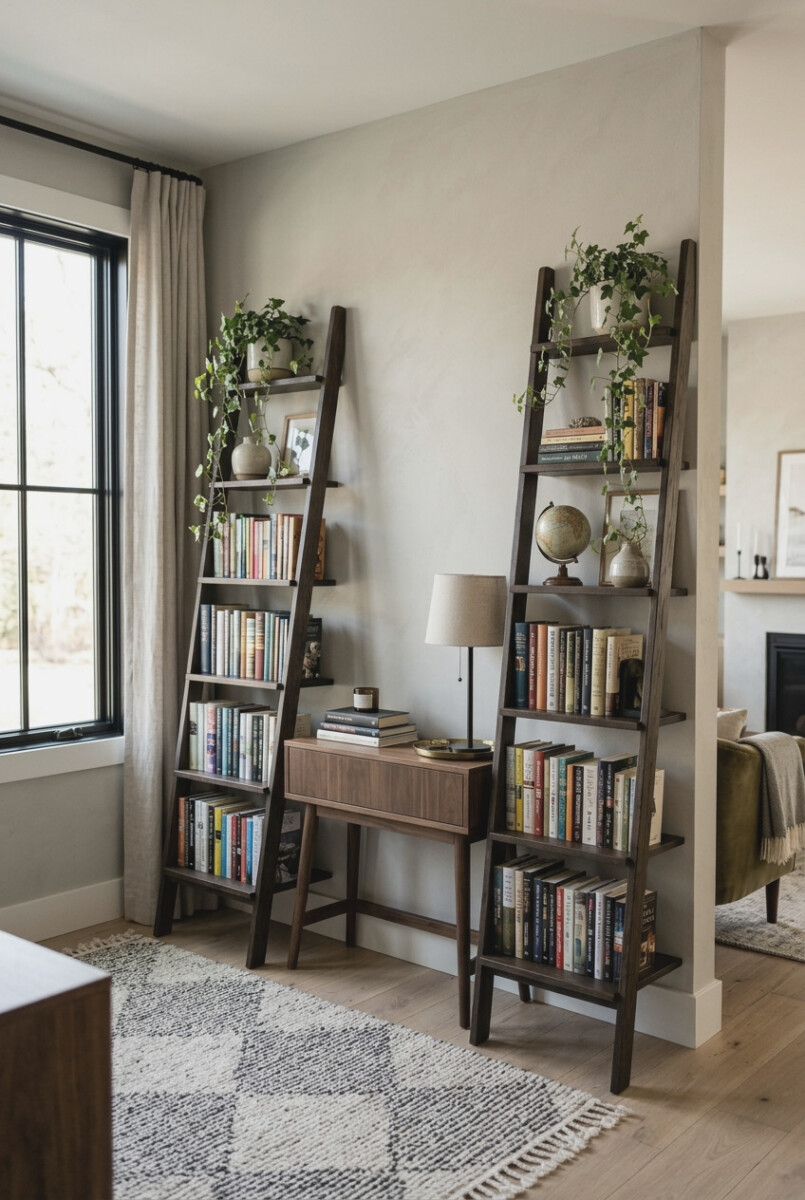
Leaning ladder shelves have a narrow profile and can fit into spaces where a deeper bookcase would feel bulky. They work well beside a desk, near a doorway, or in pairs on either side of a media unit.
Use the wall restraint supplied with the shelf, or another suitable anti-tip fixing, and follow the weight limits for each level. A few trailing plants can soften the look, but keep watering pots where spills won’t damage the books.
39. Modular Cubist Systems
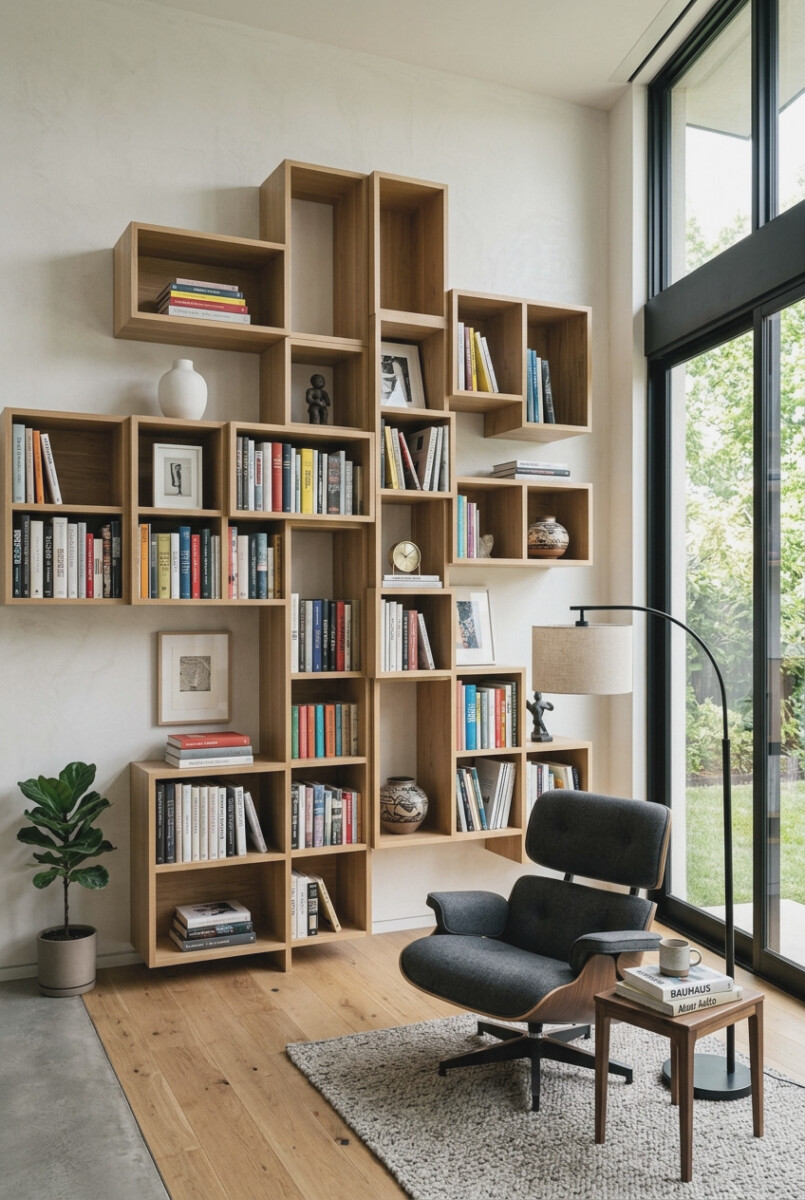
Modular cube shelves make it easy to start with a small setup and add more storage later. Use individual units horizontally or vertically, or combine them to fit an alcove or a wall.
Check the load limit for each cube, especially if you plan to store large art books or other heavy volumes. Taller arrangements should be secured to the wall, and the layout should leave enough room for doors, drawers, and nearby furniture to open properly.
40. Vertical Book Towers
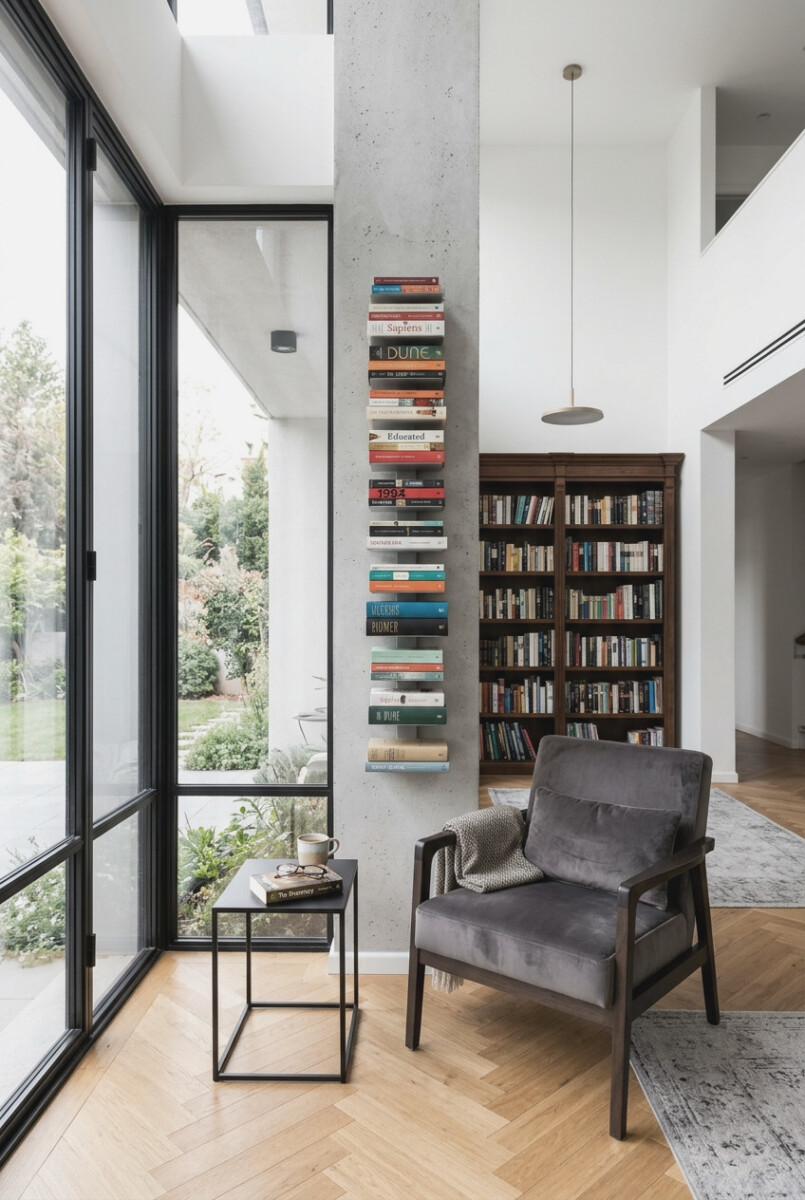
A vertical book tower can make use of a narrow strip of wall beside a pillar, doorway, or corner. Some designs use concealed supports that make the books appear to form a floating stack, while others have slim visible shelves.
Check the product’s weight limit and install it exactly as directed, since a tall stack of books can become unstable if it is overloaded. This style is best for a small selection of books you want to display rather than your entire collection.
Building a Library That Lives With You
A home library can grow and change as your collection and your needs change. You might start with one bookcase or a reading chair beside a window, then add more shelves when you need them. The best arrangement is one that makes your books easy to reach and gives you a comfortable place to read, without making the rest of the room harder to use.
Before you start, think about shelf strength, room layout, lighting, and the conditions where your books will be stored. Mix open shelves with closed storage if you want to keep some books dust-free, and leave a little room for objects or artwork that make the space feel like yours. Start with the corner or wall you have available and build from there.
