Table of Contents
A lot of homeowners use the words boiler and water heater as if they mean the same thing.
It is an easy mistake to make. Both deal with hot water. Both are usually tucked away in a basement, utility room, or closet. Both are connected to the home in ways most people only think about when something stops working.
But they are not the same appliance.
And once you understand the difference, a lot of home maintenance decisions start making more sense.
That includes what to ask a contractor, what kind of replacement you actually need, and why one system may be heating your house while another is only handling your showers.
The simplest way to think about it is this:
a boiler heats your home, while a water heater heats the water you use.
That one sentence clears up most of the confusion.
What a Boiler Actually Does
A boiler is designed primarily for space heating.
That means its main job is not to give you water for the sink or shower. Its job is to keep your house warm. It does that by heating water and sending that heat through a closed system that reaches different parts of the home.
Most modern boilers do not actually boil water in the dramatic sense the name suggests. Instead, they heat water to a high temperature and circulate it through pipes.
From there, the heat is delivered through things like:
- radiators
- baseboard heaters
- radiant floor systems
That is why homes with boilers often feel different from homes with forced-air systems. The heat tends to come from warm surfaces or panels rather than vents blowing air.
The water inside the boiler stays in a closed loop. It keeps circulating instead of being used once and drained away.
That matters, because it means the water inside a boiler is not the same as the water you drink or bathe in.
How a Boiler Works in Real Life
The whole process is easier to understand when you picture it in motion.
The boiler heats the water. A pump moves that hot water through the home. The radiators or baseboard units release the heat into the rooms. Once the water cools down, it returns to the boiler to be heated again.
It is a cycle.
Nothing is being wasted. Nothing is going down the drain. The same water keeps moving through the system.
That closed-loop setup is one of the main things that separates a boiler from a water heater.
It also explains why boilers are so closely tied to home heating rather than everyday plumbing.
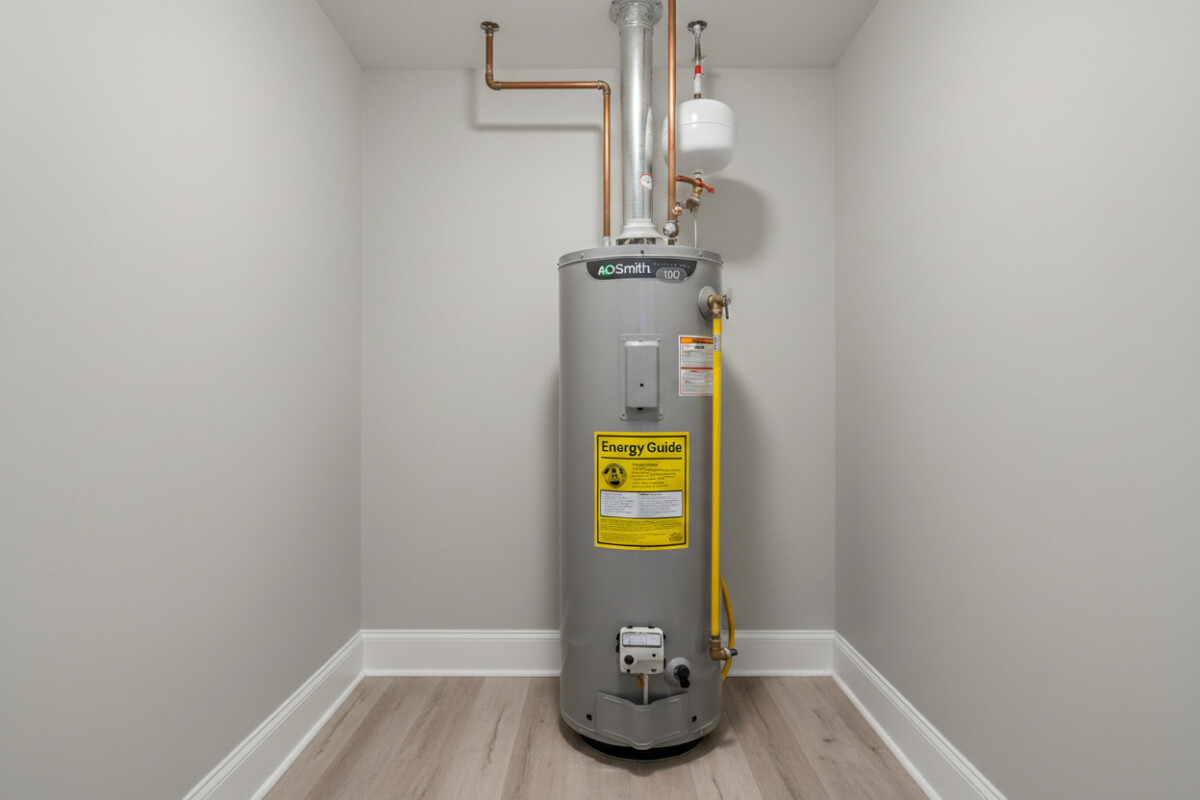
What a Water Heater Does
A water heater has a much narrower job.
Its purpose is to provide hot potable water for everyday household use.
That means the hot water coming from your shower, bathroom sink, kitchen sink, or dishwasher usually comes from the water heater.
Unlike a boiler, a water heater works with fresh water that enters the unit, gets heated, and then travels out to the taps and fixtures you use around the home.
Once that water goes down the drain, it is gone.
New cold water keeps entering the tank or unit, gets heated, and replaces what was used.
That is the key difference:
a water heater supplies domestic hot water, not space heat.
How a Water Heater Works
There are a few common setups, but the basic idea stays the same.
Cold water enters the unit. The appliance heats it. The hot water is delivered to the household plumbing system when you turn on a faucet or shower.
That can happen through:
- a storage tank
- a tankless system
- a heat pump system
- a solar system
Each type works a little differently, but all of them are focused on one job: giving you hot water for daily use.
If you wash dishes, shower, run the washing machine, or clean your hands with warm water, the water heater is usually behind that comfort.
The Biggest Difference Between a Boiler and a Water Heater
| Feature | Water Heater | Boiler |
| Primary Purpose | Domestic hot water (showers, sinks, appliances) | Space heating (warming the house) |
| Water Supply | Open system: Fresh water comes in, goes down the drain | Closed loop: The same water continuously circulates |
| Delivery Method | Plumbing pipes to faucets and fixtures | Pipes to radiators, baseboards, or radiant floors |
| Drinkable Water? | Yes, it handles potable water | No, the water is stale and often chemically treated |
| Energy Source | Gas, Electric, Propane, Solar, or Heat Pump | Gas, Oil, Electric, or Wood pellets |
| Average Lifespan | 8 to 12 years (up to 20 for tankless) | 15 to 30 years |
| Upfront Cost | Lower cost ($600–$3,500) | Higher cost ($4,000–$10,000) |
| Maintenance | Annual flushing to remove sediment | Annual inspection; bleeding radiators |
The easiest way to separate them is by purpose.
A boiler is part of your heating system.
A water heater is part of your plumbing system.
That distinction matters more than the names suggest.
A boiler warms the house.
A water heater warms the water.
One supports room temperature.
The other supports bathing, cleaning, and cooking.
That is really the heart of the comparison.
Why People Confuse Them
The confusion makes sense.
Both appliances heat water. Both can use gas or electricity. Both may sit in the same general part of the house. And both can make a loud enough sound to get your attention when they are running.
If you are not working with HVAC systems every day, it is easy to lump them together.
But the plumbing and heating systems in a home are usually more separate than people realize.
Once you understand that separation, it becomes much easier to tell which appliance you have and what role it plays.
The Water Inside Is Not the Same
This is an important point that gets overlooked a lot.
In a standard boiler system, the water is usually not potable.
That means you should not drink it, and it should not be used for bathing or cooking.
Why?
Because boiler water is part of a heating loop. It may be treated to prevent corrosion or to protect the system. It is not meant to be used as domestic water.
Water heaters, on the other hand, work with fresh potable water that is safe for household use.
That difference alone makes the systems fundamentally separate.
The Main Types of Boilers
Not all boilers are built the same way. There are a few common styles homeowners may run into.
Conventional boilers
These are traditional systems that often use both a cold water tank and a hot water cylinder. They are usually found in homes with older heating setups or larger spaces.
System boilers
These are a bit more compact. Some components are built in, which makes installation simpler than a fully conventional setup.
Combi boilers
A combi boiler is the exception that blends more than one function into a single unit. It can heat the home and also provide hot water for taps.
That makes it somewhat closer to a hybrid system, which is why it often comes up in the boiler vs water heater conversation.
But even then, the job it performs is still different from a standard standalone water heater.
The Main Types of Water Heaters
Water heaters also come in several common forms.
Storage tank water heaters
These are probably the most familiar. A tank holds a supply of hot water so it is ready when needed.
Tankless water heaters
These heat water only when you turn on a tap. They save space and avoid the need for a storage tank.
Heat pump water heaters
These use surrounding air to help heat the water more efficiently.
Solar water heaters
These rely on solar energy, usually with backup support for times when sunlight is not enough.
Even though these systems are different, they all serve the same basic purpose: providing domestic hot water.
Which One Uses More Energy?
That depends on what the appliance is doing.
A boiler usually has to heat a whole home, which means it can use a lot of energy, especially in colder months.
A water heater has a different task. It is focused only on hot water for daily use, so its energy demand is usually more limited.
That does not mean one is always cheaper to run than the other. It depends on the home, the fuel source, the size of the system, and how efficiently the appliance works.
But in general, a boiler has a bigger heating job to do.
Which One Costs More to Install?
In most cases, boilers cost more than standard water heaters.
That makes sense when you think about the complexity.
A boiler has to connect to a full heating system. It may need radiators, baseboards, or radiant piping. That is more involved than installing a basic water heater.
A water heater is usually more straightforward.
Tank water heaters tend to be the more affordable option. Tankless units usually cost more than standard tanks but can save space and improve efficiency.
Boilers usually sit in the higher range because they are more complex systems with more parts and more labor involved in installation.
Which One Lasts Longer?
A boiler often lasts longer than a typical water heater.
That is partly because boilers use a closed-loop system, which means the same water keeps circulating instead of constantly introducing new water and minerals.
A water heater usually deals with fresh incoming water all the time, which can lead to sediment buildup over the years.
That buildup can shorten the lifespan of the unit if it is not maintained properly.
So in general:
- boilers often last longer
- water heaters usually wear out sooner
That said, maintenance matters a lot in both cases.
What Kind of Maintenance Do They Need?
A boiler usually needs regular inspection, pressure checks, and occasional service from a qualified technician. If the system has radiators, they may need bleeding from time to time.
A water heater often needs flushing to remove sediment, especially if the home has hard water. That helps the unit run more efficiently and last longer.
Neither appliance is truly “set it and forget it.”
They both need attention.
But the kind of maintenance is different because the systems are doing different jobs.
Can One Replace the Other?
This is where homeowners often get tripped up.
A boiler can sometimes be part of a setup that also provides domestic hot water. A water heater can sometimes work alongside a boiler. And a combi boiler can do both in one compact system.
But a regular water heater does not replace a boiler if your house relies on radiators or radiant floor heating.
And a boiler does not automatically replace a dedicated water heater unless it is specifically set up to do both.
So the answer is:
it depends on the home’s existing system.
That is why contractors usually ask what kind of heating setup you already have before recommending a replacement.
How to Tell What You Have
If your home uses radiators, baseboards, or radiant floor heating, there is a good chance you have a boiler.
If your home gets hot water at the taps from a separate appliance but uses vents for heating, you probably have a furnace and a water heater.
If one unit seems to handle both the home heating and the hot water, you may have a combi boiler or a similar combined system.
The easiest clue is to look at what the appliance actually supports.
- heating the rooms points to a boiler
- heating water for taps points to a water heater
Which One Is Right for Your Home?
That depends on the house, not just the appliance.
If your home already has a radiant system in place, a boiler may be the right fit.
If your home uses forced-air heating, a separate water heater is usually what you need for domestic hot water.
If you are renovating or building new, the best choice depends on space, budget, efficiency goals, and the kind of comfort you want.
There is no one universal answer.
The right system is the one that fits the home’s design and your daily needs.
Final Thoughts
The boiler vs water heater question gets confusing because both appliances deal with hot water, and both are essential in their own way.
But the difference is actually very straightforward:
a boiler heats your house, while a water heater heats the water you use every day.
Once you keep that in mind, the rest becomes much easier to understand.
It helps with maintenance. It helps when talking to contractors. And it helps you make better decisions when a replacement or upgrade is on the table.
A boiler is about space heating.
A water heater is about domestic hot water.
That is the real difference, and it is the one that matters most.