Table of Contents
Spring always feels like a reset.
The light changes. The air softens. The garden starts waking up in a way that makes you want to get outside and do something useful. Even if the yard still looks a little tired from winter, there is this feeling that things are about to move again.
And that is exactly why early spring is the perfect time to clean gardening tools and containers.
Not after you start planting.
Not once the mess builds up.
Before.
Because the difference between a smooth gardening season and a frustrating one usually starts with what you do first.
That was a lesson I learned slowly. At the beginning, I thought the important part of gardening was soil, seeds, watering, and sunlight. The tools and containers were just support items. Useful, but not especially important. As long as they were somewhere nearby, that felt good enough.
It turns out that was wrong.
Dirty tools can spread disease. Old containers can hold bacteria, mold, leftover roots, and pest problems. Rusted pruners become annoying to use. Cracked pots make a mess. A neglected watering can or trowel can turn a simple task into an irritating one.
Once I started treating my tools and containers like part of the garden rather than accessories to it, everything became easier.
That is what this is really about.
Not just cleaning.
Resetting.
Giving yourself a fresh start before the season begins.
Why Cleaning Gardening Tools and Containers Matters So Much
At first glance, it might seem a little excessive to clean garden tools before spring. They are tools. They get dirty. That is what they are for.
But dirt is not the only thing they collect.
Over time, gardening tools and containers can hold:
- soil residue
- plant sap
- rust
- old roots
- fungal spores
- bacteria
- pest eggs
- mineral buildup
That means last season’s problems can quietly carry into this season if you do not clear them out.
The scary part is that you often do not see the issue right away. A plant starts struggling, a cutting fails, a seedling looks weak, and you do not immediately think of the tool or pot. You blame the weather, the soil, or your watering routine. But sometimes the real problem is something that was sitting in the background the whole time.
That is why spring cleaning for gardening supplies matters.
It is not just about making things look nice.
It is about starting fresh with clean, functional, reliable tools.
The Best Time to Do It
The best time to clean gardening tools and containers is before you get busy.
That means before the first big planting wave, before the seed trays fill up, and before you are rushing to get things in the ground.
There is a big difference between cleaning in a calm moment and cleaning while you are trying to plant ten things at once.
A pre-spring cleanup gives you time to:
- inspect damage
- remove old debris
- decide what to keep
- repair what can still be used
- replace what no longer works
If you wait until the middle of the season, the job feels bigger than it really is.
A little early effort saves a lot of stress later.
Start With the Tools You Actually Use
Not every garden tool needs the same level of attention.
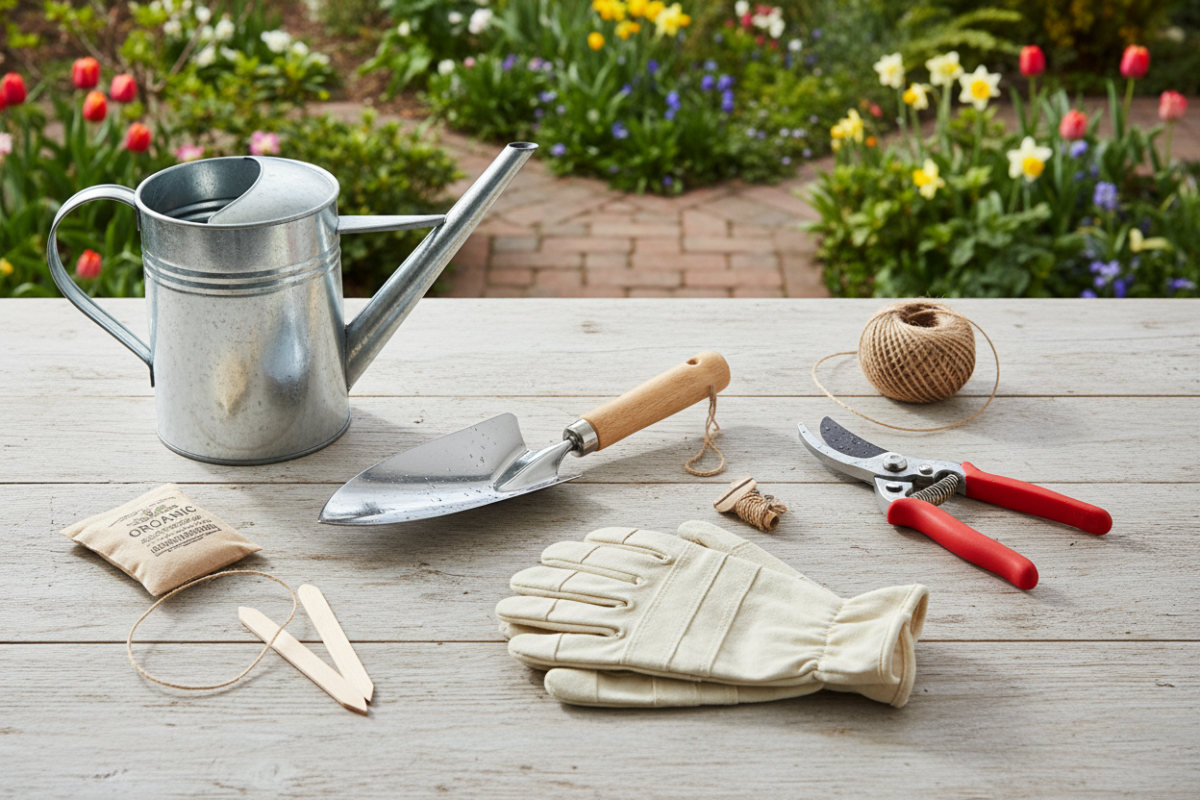
Some tools are used constantly. Others are pulled out once in a while. Start with the ones you reach for most often:
- pruners
- trowels
- spades
- gloves
- watering cans
- cultivators
- hand forks
- plant ties
- small scoops
These are the items most likely to carry old dirt and residue from one season to the next.
I like starting here because it gives the fastest sense of progress. Even if the whole garden area still feels messy, clean tools make it feel like you are ready to work again.
That feeling matters more than people think.
When your tools are clean and ready, you are more likely to use them properly instead of reaching for the nearest thing and making do.
How I Clean Hand Tools
Hand tools are usually the easiest place to begin.
For most of them, I follow a simple process.
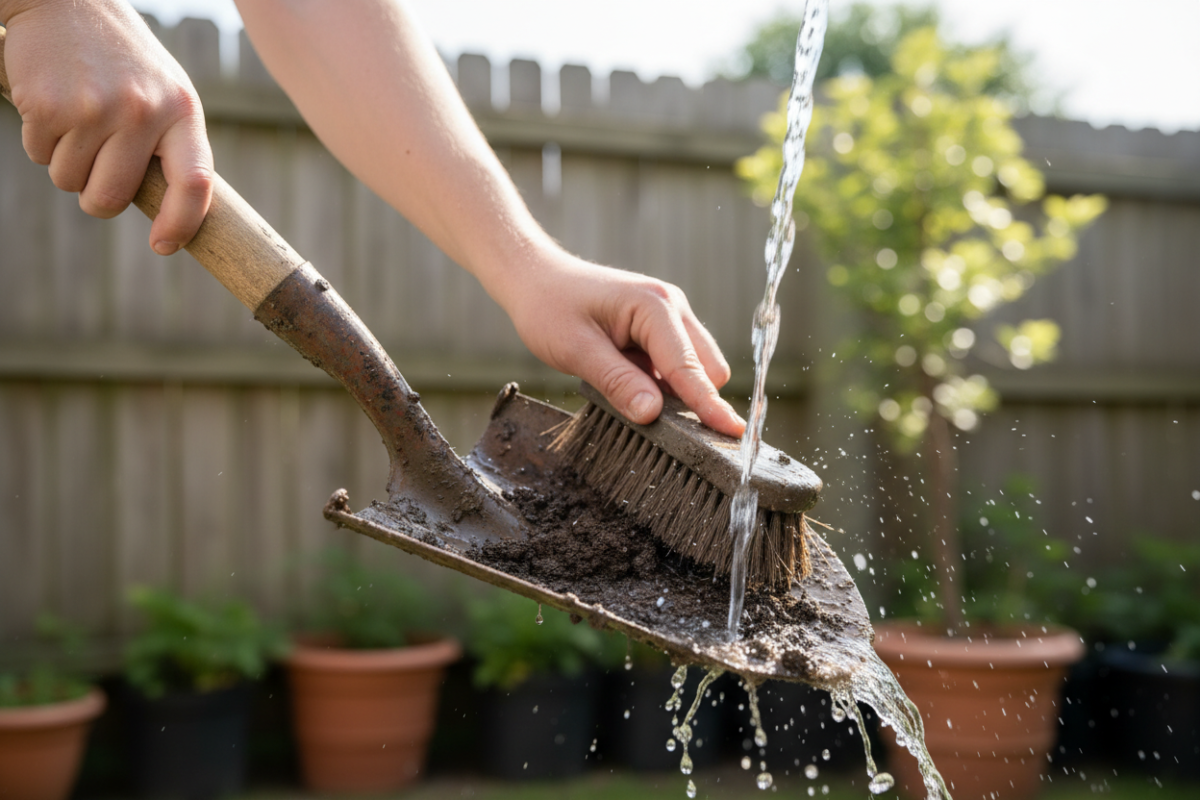
First, I knock off any loose dirt. A stiff brush or even a dry cloth works well for this. If there is caked soil, I loosen it before washing. There is no point scrubbing mud when the mud is still thick and dry.
Then I wash the tools with warm water and a mild soap solution. If they are especially dirty, I let them soak briefly so the grime softens.
After that, I scrub gently around:
- the blade
- the handle
- the joints
- any grooves where dirt collects
Once they are clean, I dry them completely.
That part matters a lot.
Leaving metal tools damp is one of the fastest ways to encourage rust.
A lot of people stop after the washing part and assume that is enough. It is not. Drying is just as important as cleaning.
Rust Is the Enemy You Want to Catch Early
Rust does not always show up dramatically.
Sometimes it begins as a faint orange stain or a rough patch on the metal. If you catch it early, it is much easier to handle. If you ignore it, it spreads and makes the tool harder to use.
For light rust, I usually:
- scrub with a dry brush
- use a bit of gentle abrasion
- wipe the tool clean
- dry it fully afterward
The goal is not perfection. The goal is to stop the damage from getting worse.
If rust is severe, the tool may not be worth saving. But many tools can last much longer if you clean and store them properly.
That is why spring is such a good moment to inspect everything. You are not just cleaning. You are deciding what still deserves a place in your garden routine.
Don’t Forget the Handles
It is easy to focus only on the metal part of a tool and ignore the handle.
That is a mistake.
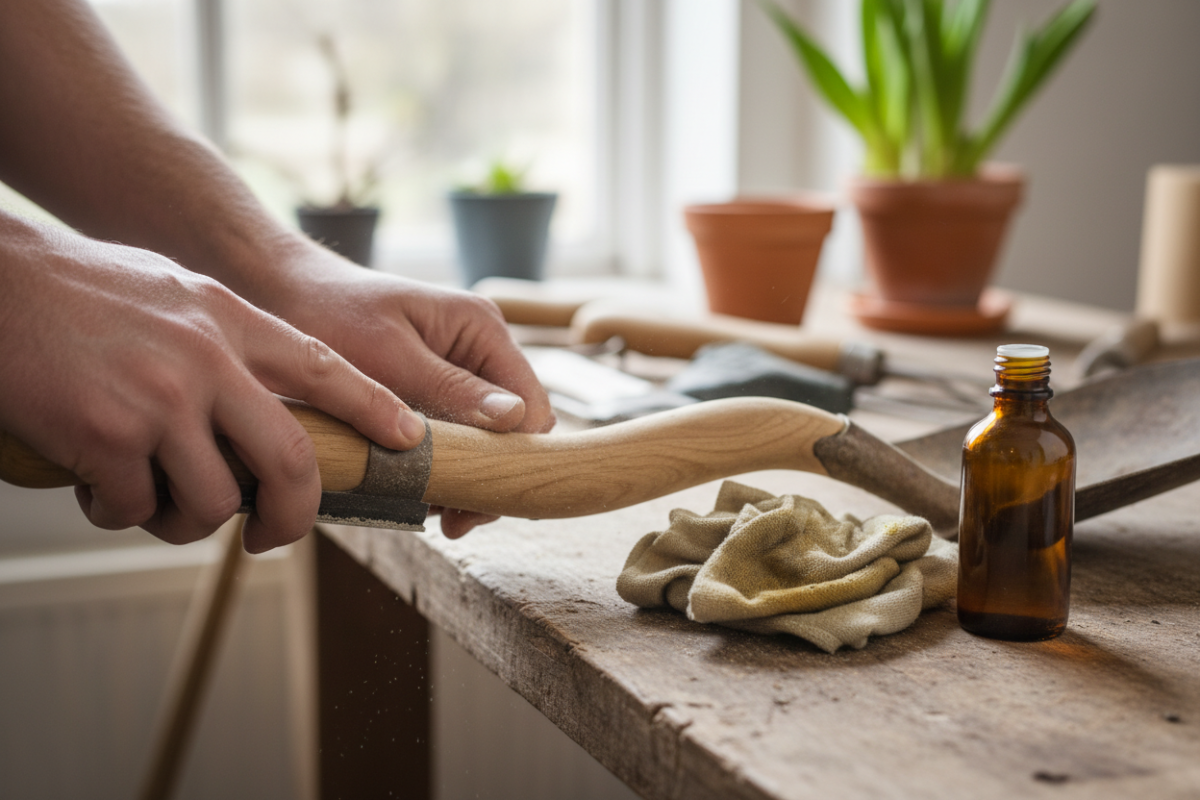
Wood handles can dry out, crack, or get grimy. Plastic handles can become sticky or worn. Rubber grips can collect dirt in the grooves.
I usually wipe handles down carefully and check for:
- cracks
- splits
- loose fittings
- rough edges
- weak spots
If a handle is uncomfortable or damaged, the tool becomes harder to use even if the blade is still fine.
A good spring cleaning is a chance to spot problems before they turn into frustration halfway through planting season.
Why Sharpening Matters Too
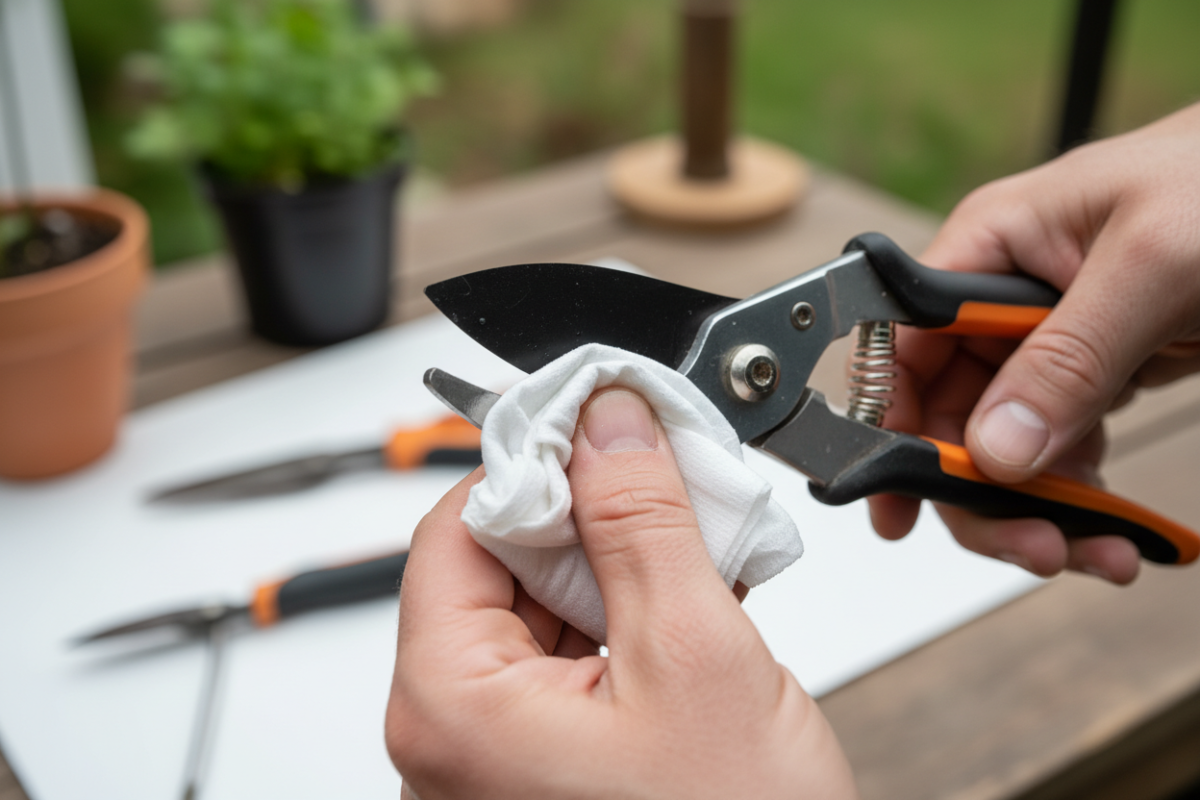
Cleaning and sharpening go together.
A clean blade cuts better than a dirty one, but a sharp blade cuts better than a clean one.
That matters for pruners, shears, and cutting tools. Dull blades crush stems instead of slicing cleanly. That can damage plants and make pruning feel harder than it should.
Once tools are cleaned and dried, I check whether they need sharpening.
This small step changes how the tool performs right away.
And when you are cutting dead stems, trimming growth, or dividing plants, a sharp tool makes the entire job smoother and safer.
Garden Gloves Need Attention Too
Gloves are easy to overlook because they do not look like traditional tools. But they are part of the system.
Dirty gloves can hold soil, moisture, and even lingering plant issues from one task to another.
If the gloves are washable, I clean them according to the material. If they are worn out, stiff, or damaged, I replace them.
There is no reason to keep a pair of gloves just because they have been around a long time. If they no longer protect your hands properly, they are not helping you.
A clean, comfortable pair of gloves makes garden work much less annoying.
How to Clean Containers the Right Way
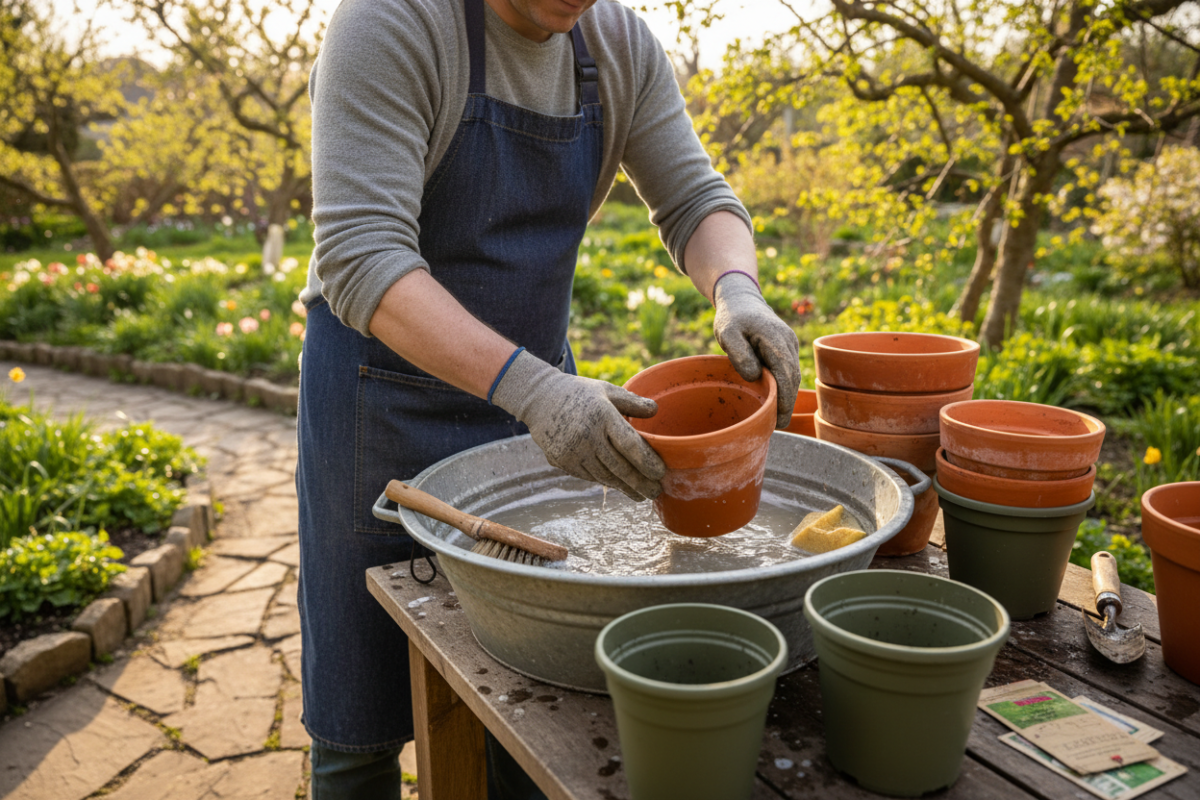
Containers are just as important as tools, and often more overlooked.
Pots, trays, planters, seed starting containers, and nursery pots can all hold onto residue from previous use.
That includes:
- old root fragments
- salt buildup
- algae
- mold
- pest eggs
- soil left in corners
Even if a container looks clean on the outside, the inside can still carry problems from last season.
That is why I clean every reusable container before using it again.
A quick rinse is not enough.
You want to remove the stuff that can affect new plants before those plants ever go in the pot.
The Container Cleaning Process
My process is simple, but thorough enough to matter.
First, I empty every container completely. Any loose soil or root bits go out first.
Then I brush off the dry debris.
After that, I wash the container with warm water and mild soap. For stubborn buildup, I scrub the inside edges where residue tends to collect.
If there is mineral buildup from watering or hard water, I pay extra attention to the inner surface and drainage holes.
Then I rinse everything well and let it dry fully.
That last part matters a lot.
Damp containers stored in a pile can develop more mold or mildew before you even get to use them.
Why Drainage Holes Need Special Attention
Drainage holes are easy to ignore because they are small, but they are one of the most important parts of a container.
If they are clogged, water cannot escape properly. That creates the kind of wet, stagnant environment that plants hate.
So when I clean containers, I always check the drainage holes for:
- dried soil
- roots
- mineral buildup
- debris blocking flow
Sometimes a simple poke with a small tool clears the blockage. Other times a good rinse is enough.
Either way, this step saves future trouble.
A pot that cannot drain well is not a good pot, no matter how nice it looks.
Don’t Reuse Containers Too Fast
This is another area where patience helps.
It is tempting to clean a pot quickly and reuse it immediately. But if the container still has moisture or residue inside, it can cause problems later.
I prefer to let containers dry completely before storing or reusing them.
That helps prevent:
- mold
- mildew
- bad smells
- hidden moisture pockets
It sounds like a small detail, but small details are what make the difference between a clean setup and a frustrating one.
Seed Trays Need Extra Care
Seed trays and small starter containers deserve their own attention.
These are the items that deal with fragile young plants, so even tiny amounts of residue can matter.
If I reuse seed trays, I clean them carefully and make sure they are completely free of old soil and buildup.
Young seedlings are especially vulnerable, so giving them a clean starting environment is one of the easiest ways to support strong growth.
It is a simple act of prevention, but it pays off quickly.
What to Do With Broken Tools and Damaged Pots
Spring cleaning is not just about washing things.
It is also about making decisions.
Some tools are beyond repair. Some containers are cracked, brittle, or warped. Some items are no longer worth the space they take.
If a pot is split, if a tool no longer works properly, or if something is so damaged that it would fail mid-season, I let it go.
Keeping broken items around feels practical until you actually need them. Then they become frustrating.
The spring reset is the perfect time to sort out what still belongs in your gardening routine and what no longer does.
Storage Matters Too
A clean tool is only useful if it stays clean.
That means storage matters.
After cleaning and drying everything, I store tools in a place that is:
- dry
- organized
- easy to reach
- protected from the weather
I also try not to throw everything into one pile.
When tools are stacked carelessly, they get damaged faster. Sharp edges dull each other. Handles crack. Dirt transfers from one item to another.
A little organization goes a long way here.
You do not need a perfect system. You just need a way to keep clean tools from becoming dirty again immediately.
A Simple Spring Workflow That Helps
If the whole thing feels overwhelming, break it into steps.
Start with one category at a time:
- hand tools
- containers
- gloves
- watering items
- storage space
That makes the work feel manageable.
You do not have to finish everything in one afternoon. Even a little progress helps.
The important thing is to get moving before the season fully starts.
Once the garden is active, you will be too busy planting and maintaining to want to deep clean your tools.
The Part People Skip Too Often
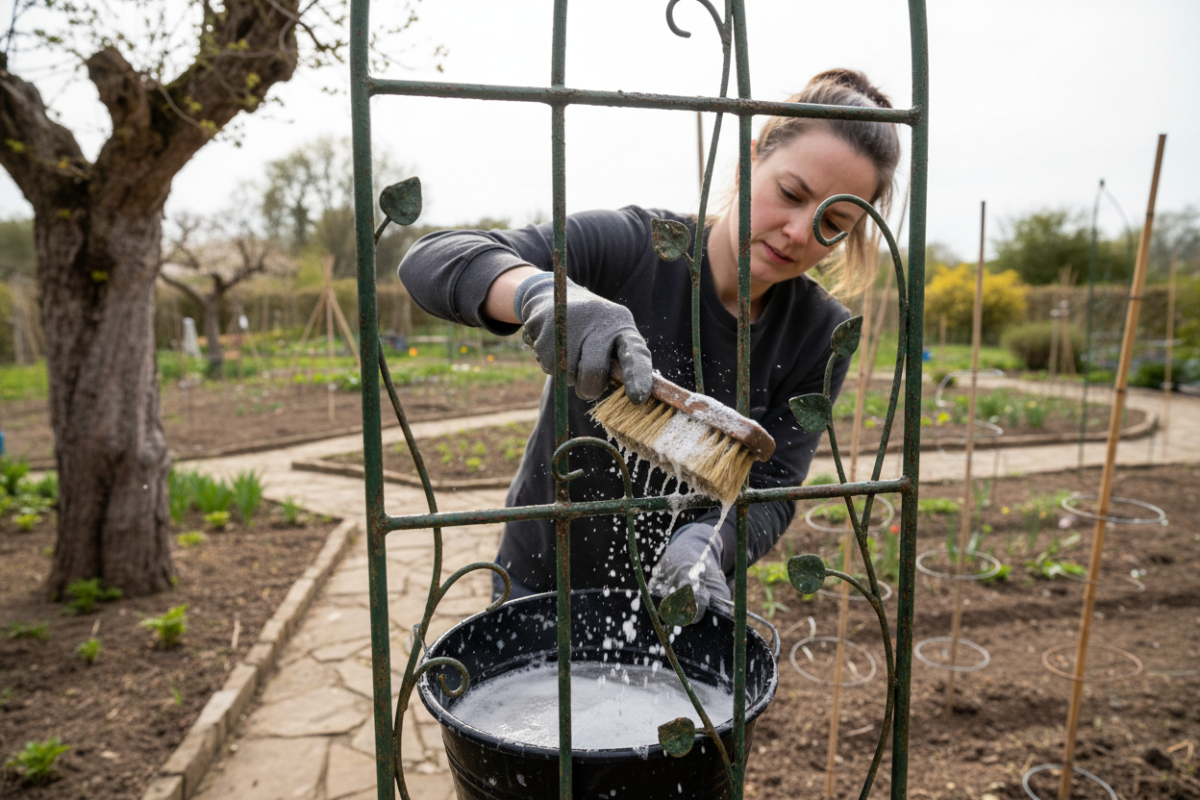
The most overlooked part of this whole process is inspection.
Cleaning is helpful, but inspection is what helps you avoid repeated problems.
When you clean a tool or container, you also get the chance to notice:
- rust
- cracks
- weak joints
- worn surfaces
- clogged parts
- loose handles
Those are the things that cause trouble later.
A lot of gardening frustration comes from not noticing small issues early enough. Spring is the perfect time to catch them.
Why This Makes the Whole Garden Season Better
Clean tools and containers do more than just look nice.
They make the whole season smoother.
You work faster because your tools function properly. You feel more ready because your supplies are organized. You reduce the chance of carrying problems from one plant to another.
And maybe most importantly, you start the season with momentum instead of catch-up work.
That feeling matters.
A garden season that begins with order tends to feel easier all the way through.
Final Thoughts
Cleaning gardening tools and containers before spring is one of those tasks that feels small until you actually do it.
Then you realize how much easier everything becomes.
The tools cut better. The pots drain better. The workspace feels calmer. And the garden starts with a cleaner foundation.
That is what makes the whole thing worth doing.
You are not just preparing supplies.
You are preparing the season.
And when spring finally arrives, that preparation makes the whole process feel smoother, lighter, and much more enjoyable.