Table of Contents
Most of us take our home’s hot water for granted — until it suddenly runs cold. One of the simplest ways to make sure that doesn’t happen is regular maintenance of your tank water heater. And the most important task? Draining and flushing the tank to remove built-up sediment.
Why Draining Your Water Heater Matters
Inside your water heater tank, minerals and debris naturally settle to the bottom over time. This layer of sediment doesn’t just sit there harmlessly — it insulates the water from the heating element or burner, forcing your system to work harder and use more energy to heat water.
Left unchecked, that grit can lead to:
- Reduced heating efficiency
- Higher utility bills
- Strange popping or rumbling noises
- Shortened equipment lifespan
- Rusty or cloudy water
- Premature failure of the tank itself
Think of sediment buildup like cholesterol in an engine — the worse it gets, the less smoothly things run.
So How Often Should You Drain It?
There’s no one-size-fits-all answer, but here’s a practical rule of thumb:
- At least once a year — This is a good baseline for most homes and water heaters. It helps prevent most sediment buildup before it becomes a problem.
- Every 6 months — Recommended if you live in a hard water area (water with lots of dissolved minerals).
- More frequently — If your home uses a lot of hot water, or you already notice noises or reduced efficiency, consider checking more often (even quarterly).
Hard water conditions accelerate mineral buildup, so what works in one home won’t necessarily work in another. Always check your owner’s manual for any manufacturer-specific guidance.
Signs Your Heater Needs Immediate Attention
Even if it hasn’t been a full year, these are clear warning signs that sediment may be clogging your tank:
- Unusual sounds like popping, rumbling, or banging
- Hot water that runs out faster than usual
- Discolored or smelly water
- Lower overall heating performance
If you notice any of these, it’s time to drain and flush — don’t wait for complete failure.
How to Drain Your Water Heater (DIY Basics)
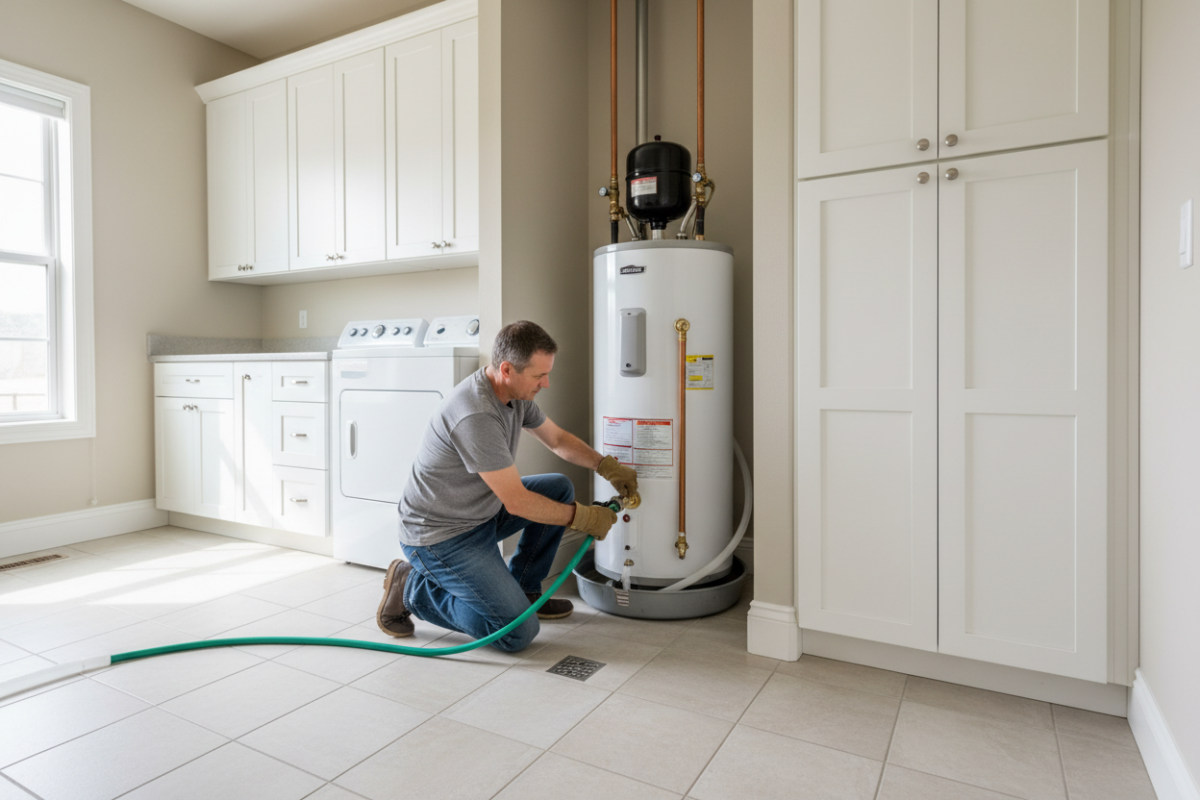
Draining and flushing your water heater is something many DIY-minded homeowners can handle, but here’s the general flow:
- Turn off power or gas to the heater.
- Shut off the cold water supply going into the tank.
- Attach a garden hose to the drain valve at the base of the tank.
- Open a hot water faucet in your home to reduce pressure and help the tank drain smoothly.
- Drain the tank completely, then briefly flush it by letting some water flow in again to stir up any remaining sediment.
- Close the valve, refill, and restore power or gas.
Always consult your unit’s manual — and if you’re unsure, don’t hesitate to call a professional.
Best Times of Year to Maintain Your Heater
While you can drain your heater any time, many homeowners find spring or fall ideal. These seasons usually have moderate hot water use, so maintenance won’t disrupt daily routines as much as during peak winter or summer use.
Final Thoughts
Draining your water heater may not be glamorous, but it’s one of the easiest ways to keep your home running smoothly and avoid messy, costly breakdowns down the road. With a bit of regular care — even just once or twice a year — you can keep your hot water flowing longer and more efficiently.