Table of Contents
A water heater is one of those things most people only think about when something goes wrong.
As long as the hot water comes out when you turn the tap, it is easy to forget the tank is even there. It sits quietly in the background, doing its job day after day, without much attention. No drama. No obvious warning. Just hot water when you need it.
But like a lot of home systems, the water heater works best when it gets a little regular care.
And one of the simplest things you can do is drain it from time to time.
That sounds like a minor task, almost too simple to matter. But inside the tank, sediment slowly settles at the bottom. Minerals, debris, and tiny particles collect over time, and once that layer gets thick enough, the heater has to work harder than it should.
That means more wear, less efficiency, and eventually a bigger problem than the small maintenance task that could have prevented it.
So the real question is not whether you should drain your water heater.
It is how often you should do it so it stays in good shape without turning maintenance into a burden.
Why Draining a Water Heater Matters
A lot of people think of a water heater as a sealed box that simply warms water.
In reality, it is much more active than that.
Water carries minerals. The minerals settle. Debris builds up. Heat has to work around the layer that collects at the bottom of the tank. Over time, that buildup becomes a barrier between the heating element or burner and the water itself.
That is when the heater starts losing efficiency.
The signs usually do not appear all at once. First, the tank may start making strange noises. Then the water may take longer to heat. Then you may notice hot water does not last as long as it used to. In some cases, the water may even look cloudy or slightly rusty.
None of that is ideal.
And all of it becomes more likely when sediment is left sitting in the tank for too long.
That is why draining matters. It clears out the buildup before it becomes a much bigger issue.
So How Often Should You Drain It?
For most homes, once a year is a good baseline.
That schedule works well because it keeps sediment from accumulating too much while still being easy enough to remember. For many households, yearly maintenance is enough to prevent serious buildup and keep the heater running normally.
But not every home is the same.
If your water is hard, meaning it contains more minerals than average, the tank will usually collect sediment faster. In that case, draining it every six months is often a better choice.
If your household uses a lot of hot water every day, or if the water heater is already showing signs of stress, you may need to check it more often. Some homes benefit from a quarterly inspection, especially when the heater is working hard.
So the simple answer is:
- once a year for most homes
- twice a year for hard water
- more often if the heater is under heavy use or already showing signs of buildup
The key is to think of this as maintenance based on conditions, not a rule that fits every home equally.
What Changes the Schedule
The reason the timing varies is that water heaters do not all live the same life.
Some homes have softer water and lower demand. Others have harder water, more people, more showers, more laundry, and more stress on the system.
A few factors make sediment buildup faster:
- hard water
- frequent hot water use
- older tanks
- poor previous maintenance
- long periods between flushes
If those conditions apply, the heater may need attention sooner than the once-a-year rule suggests.
That is why it helps to pay attention to the heater itself instead of relying only on a calendar.
Signs Your Water Heater Needs Attention Sooner
Sometimes the heater will tell you it needs help before the next scheduled cleaning.
The most common warning signs include:
- popping or rumbling noises
- hot water running out faster than usual
- discolored or cloudy water
- water that smells off
- lower heating performance
Those sounds often happen because sediment is heating unevenly at the bottom of the tank. The water gets trapped beneath the layer, and the tank has to work harder to warm it. That is where the rumbling or popping comes from.
If the hot water no longer lasts as long as it used to, that is another clue. The tank may still be functioning, but it is no longer working efficiently.
And if the water looks rusty or cloudy, that is a sign you should not ignore.
Once those signs show up, draining the tank sooner is usually the safer move.
What Happens If You Wait Too Long
The problem with sediment is that it does not stay harmless.
It keeps building. The heater keeps compensating. The system keeps wearing down.
Over time, that can lead to:
- higher utility costs
- more strain on the unit
- shorter equipment lifespan
- reduced heating performance
- potential tank failure
None of those outcomes happen overnight. That is what makes the issue easy to overlook.
But maintenance works best when it happens before the system becomes noisy, weak, or inefficient.
Waiting until the tank is obviously struggling usually means the buildup has already become significant.
A Simple Way to Think About It
The easiest way to handle water heater maintenance is to treat draining like a routine reset.
You are not doing it because the tank is broken. You are doing it because you want it to stay healthy.
That mindset matters.
It is the same reason people change filters, clean drains, or check smoke alarms. Small maintenance tasks are what prevent bigger problems from arriving later.
A water heater usually gives you enough time to stay ahead of the issue if you pay attention.
That is the good news.
What Draining Actually Does
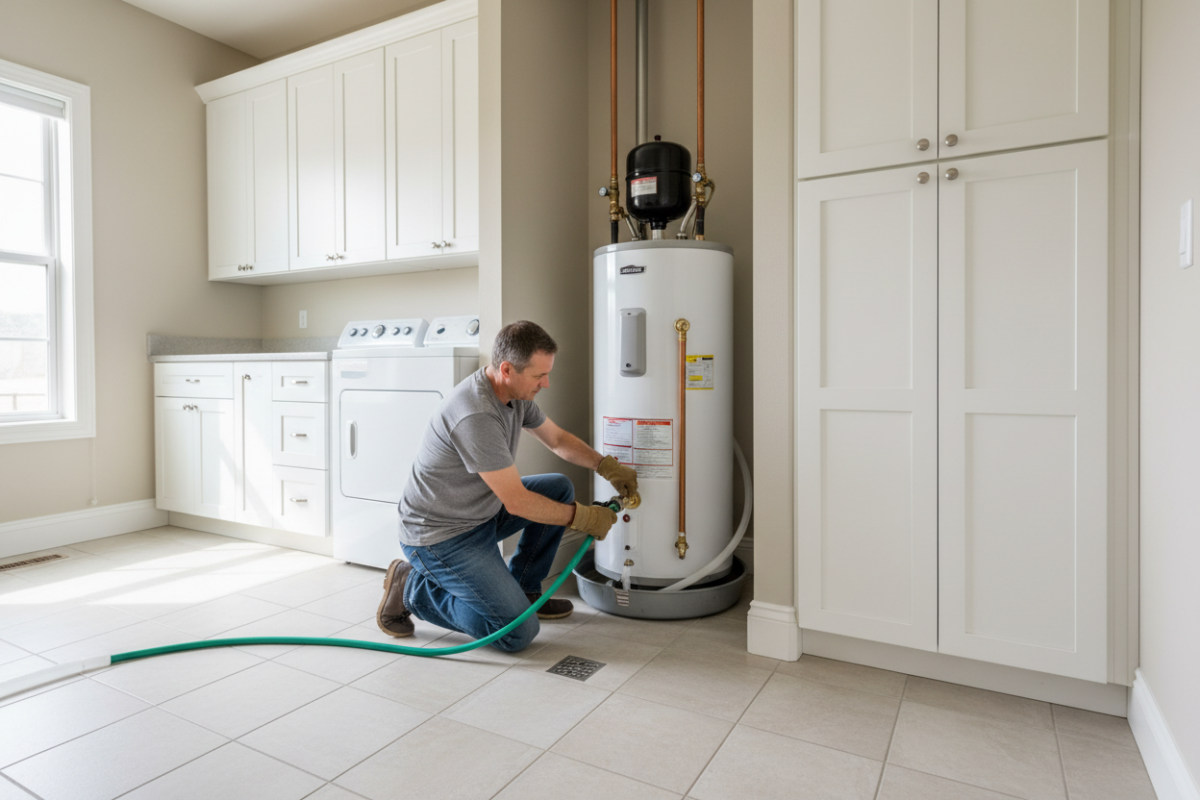
Draining the tank removes sediment that has settled at the bottom.
That does a few important things:
- improves efficiency
- reduces strain on the heater
- helps water heat more evenly
- reduces noisy operation
- keeps the tank cleaner internally
It is not glamorous work, but it is useful work.
The goal is not perfection. The goal is to remove the buildup before it becomes a performance problem.
When I Would Drain Mine
A practical routine is easier to follow than a vague “sometime later” plan.
For most homes, I would treat it like this:
- check the tank once a year at minimum
- drain it if you live with hard water or heavy usage
- move it up if you hear noises or notice weaker hot water
- do not wait until the unit clearly starts failing
That rhythm keeps the heater on a steady maintenance track without making the task feel constant.
Why Water Quality Matters So Much
If you have hard water, the tank will usually need more attention.
That is because hard water carries more dissolved minerals, and those minerals settle more quickly inside the heater. The more minerals that enter the system, the faster sediment collects.
That does not mean you are doing anything wrong. It just means the heater is working in tougher conditions.
In a softer-water home, once a year may be enough. In a harder-water home, waiting that long can allow more buildup than you want.
So the water itself plays a big role in deciding your schedule.
Does Tank Age Matter
Yes, it does.
Older tanks often deserve a closer eye.
That does not mean an older heater is automatically failing. But older equipment tends to be less forgiving when sediment begins to build up. A newer tank may handle the strain better for longer, while an older one may show performance issues sooner.
That is why older systems benefit from being watched a little more carefully.
What a Good Maintenance Schedule Looks Like
A good schedule is not complicated.
For many homes, it looks like this:
- choose a month to check the heater each year
- if you have hard water, check every six months
- if usage is heavy or noises appear, check sooner
- do not let the task disappear for several years
The goal is consistency.
Once it becomes a routine, the tank is much easier to keep in good shape.
Why This Small Task Saves Bigger Trouble
Draining the water heater is one of those things that feels easy to put off.
You do not see the buildup. You do not think about it every day. And the water may still seem fine for quite a while.
That is exactly why it matters.
A small amount of maintenance now can prevent bigger problems later. Less strain on the tank. Better hot water performance. Fewer surprises.
That is a good trade.
A Practical Way to Remember It
If you are trying to keep it simple, use this:
once a year for most homes, twice a year for hard water, and sooner if the heater gives warning signs.
That one line covers most situations without making the process feel complicated.
If the heater starts making noise, if the water runs out too quickly, or if the water looks unusual, that is your cue to check it sooner than planned.
The Mindset That Makes It Easier
A lot of home maintenance becomes less annoying when you stop waiting for a problem to announce itself.
Instead of asking, “Is it bad enough yet?” it helps to ask, “What small task keeps this from becoming a bigger one?”
Draining the water heater fits that idea perfectly.
It is preventive, not reactive.
And preventive tasks are usually the ones that save the most trouble.
What Not to Do
One common mistake is assuming that if the heater is still producing hot water, it must be fine.
That is not always true.
A water heater can still function while slowly becoming less efficient. By the time the problem is obvious, sediment may already be affecting performance.
Another mistake is waiting too long between flushes just because the tank seems quiet.
Sediment buildup does not always announce itself loudly at first. Sometimes the first signs are subtle.
That is why checking on a schedule is so useful.
Final Thoughts
For most homes, draining your water heater once a year is a solid habit.
If you have hard water, use the heater heavily, or start noticing noises and performance changes, move to a more frequent schedule.
The important part is not making the process complicated. It is staying ahead of the buildup before it becomes a real issue.
A water heater that gets regular care usually lasts longer, performs better, and causes fewer surprises.
And that is what makes this one of those small household habits that quietly pays off in a big way.