Table of Contents
A full-house deep clean can feel like one of those jobs that sounds simple until you actually start doing it.
At the beginning, it seems manageable. You tell yourself you will wake up early, put on some music, move room by room, and knock everything out in a day. Then reality hits. There are dishes in the kitchen, dust on every surface, laundry piling up, bathrooms that need more than a quick wipe, and random clutter in every room that slows everything down.
That is usually the point where most people lose momentum.
Not because they are lazy. Not because the house is impossible. But because they start without a clear plan.
And that is the biggest reason a one-day deep clean fails.
It is not the amount of work alone. It is the lack of structure.
Once I stopped treating deep cleaning like a giant, vague project and started breaking it into a clear sequence, the whole process became much more realistic. Not easy exactly, but doable. And that is a huge difference.
The goal is not to make your house perfect. The goal is to make real progress in a single day without burning out halfway through.
That is what this guide is about.
The First Rule: Do Not Start With the Hardest Room
One of the biggest mistakes people make is opening the room that looks the worst and starting there.
That sounds productive, but it usually does the opposite. If you begin with the messiest, most exhausting area, your energy drops too quickly. Then every room after that feels harder than it should.
A better approach is to start with a room that gives you momentum.
That might be:
- the bathroom
- the bedroom
- a smaller living space
- an area that is cluttered but not overwhelming
Why this works is simple. Early wins matter. When you clean a room and it looks noticeably better, your brain gets a little boost. That makes it easier to keep going.
Deep cleaning in one day is as much about pacing as it is about scrubbing.
Before You Clean Anything, Gather Everything You Need
If you are running around looking for supplies halfway through the day, you will waste time and lose focus.
So before you begin, get everything together in one place.
That usually includes:
- microfiber cloths
- a broom
- a vacuum
- a mop
- an all-purpose cleaner
- glass cleaner
- scrub brushes
- sponges
- trash bags
- laundry baskets
- gloves if you want them
- a bucket or caddy
Having supplies ready makes the day move smoothly. You do not want to stop every ten minutes because you need a cleaner, a cloth, or a trash bag.
A deep clean works best when you can stay in motion.
Set a Realistic Mental Order
If you want to finish in one day, you need a plan that moves logically from space to space.
A simple structure is:
- Declutter first
- Clean high surfaces first
- Work downward
- Vacuum or sweep last
- Mop at the end
That top-to-bottom pattern matters more than people realize.
Dust and debris fall. If you clean the floor first and then dust everything above it, you are just making more work for yourself. Clean in the wrong order and you end up repeating tasks.
The best one-day deep cleans always follow the same general logic:
- remove clutter
- dust and wipe surfaces
- clean hidden or overlooked areas
- finish with floors
That is the rhythm.
Start With Decluttering, Not Scrubbing
This is one of the most important parts of the process.
Do not start by spraying everything with cleaner.
Start by clearing surfaces.
Put away:
- loose items on tables
- clothes lying around
- random papers
- toys
- products
- anything that does not belong
Why this matters: you cannot deep clean around clutter very efficiently. Every item you leave out creates a barrier. You will spend more time moving things than actually cleaning.
The fastest way to make a room feel better is not always to scrub it harder. Sometimes it is simply to remove the things that do not belong there.
Once surfaces are clear, the room already feels lighter.
Room 1: The Bathroom
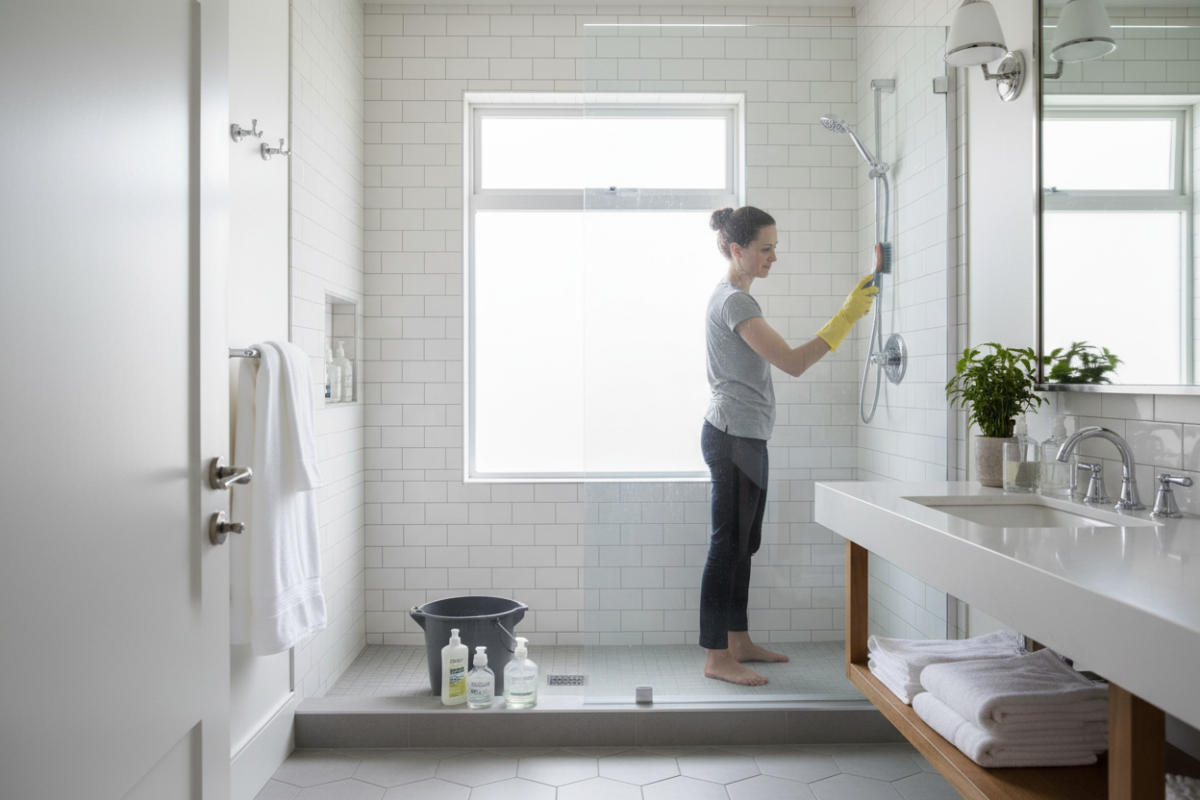
The bathroom is often the best place to begin because it is usually small, contained, and visibly dirty in a way that is easy to improve quickly.
Start by removing items from counters, shower shelves, and the floor. Toss dirty laundry in the hamper. Put bath mats and towels aside to wash if needed.
Then move from top to bottom:
- dust light fixtures
- wipe mirrors
- clean shelves
- spray the sink, toilet, and tub
- scrub grout or corners if needed
- wipe down handles and switches
- clean the floor last
The bathroom has a lot of small surfaces that show dirt fast. So a little effort goes a long way.
A clean bathroom gives you one of the strongest visual rewards in a one-day deep clean because the difference is obvious almost immediately.
Room 2: The Bedroom
The bedroom is easier to deep clean when you treat it like a reset rather than a huge project.
Start by stripping the bed. Put bedding into the laundry right away so it is working while you clean the rest of the room.
Then:
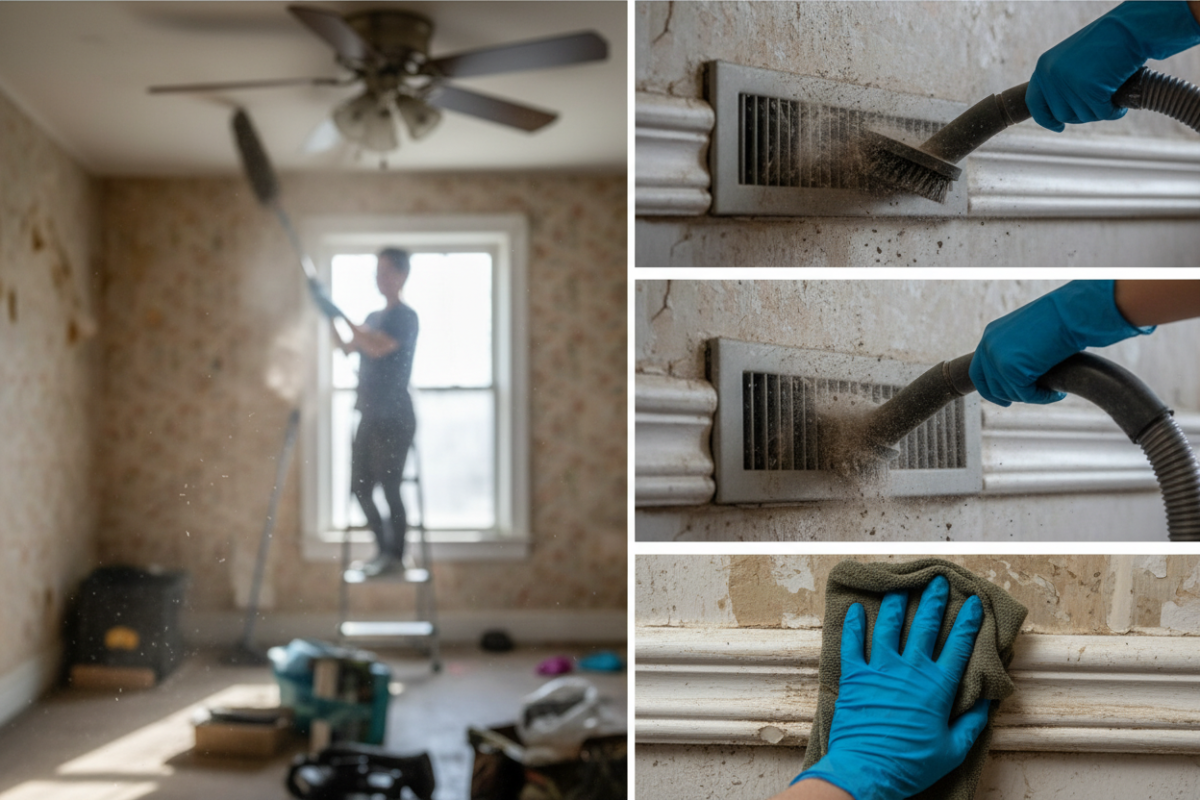
- dust ceiling fans if you have them
- wipe windowsills and ledges
- dust dressers, tables, and shelves
- clean mirrors or glass
- vacuum under and around furniture
- clean the mattress if needed
- make the bed with fresh bedding
If the bedroom has become a dumping ground for clothes, extra items, or random piles, take a moment to clear those out first.
A bedroom deep clean feels more complete when the space is actually restful again, not just cleaner on the surface.
That final step of making the bed neatly matters more than people think. It changes the whole room.
Room 3: The Kitchen
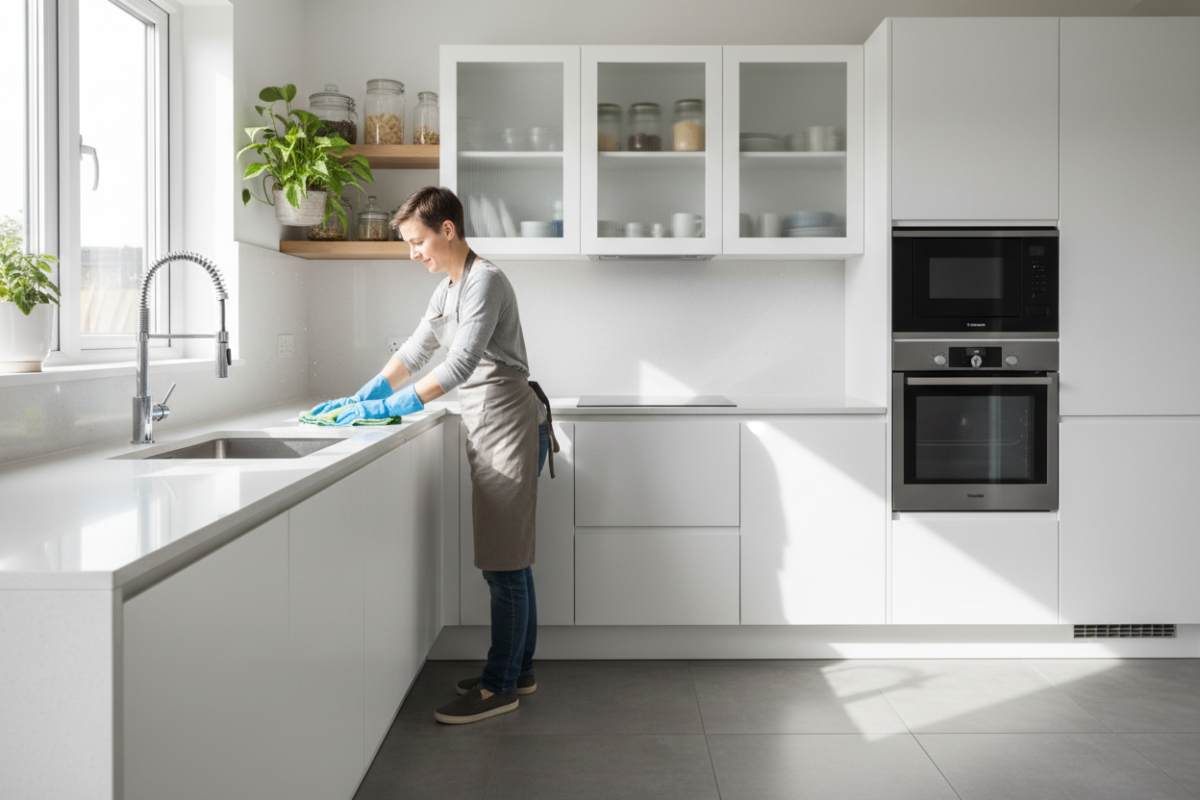
The kitchen usually takes the most time, so it is smart to approach it with a little extra discipline.
Start by removing loose items from counters. Put away dishes. Clear the sink. Gather anything out of place.
Then work in layers:
- wipe the tops of cabinets if needed
- clean cabinet fronts
- clean countertops
- scrub sink and faucet
- wipe appliances
- clean microwave, stovetop, and fridge handles
- empty crumbs from drawers if necessary
- sweep and mop the floor last
The kitchen is where grease and crumbs hide in plain sight. If you do not remove clutter first, you will miss spots and slow yourself down.
One thing that makes a huge difference is focusing on the areas people touch all the time:
- handles
- switches
- appliance fronts
- faucet
- cabinet pulls
These are the spots that quietly make a kitchen feel grimy even when the space looks fairly tidy.
The kitchen does not need to be perfect. It just needs to feel fresh and functional again.
Room 4: The Living Room
The living room is usually where clutter sneaks in the fastest because it is shared space.
Blankets get left on couches. Cups appear on tables. Remotes vanish. Books stack up. Chargers appear on every surface. And suddenly the room feels busy even when nothing major is wrong.
Start by collecting and putting away what does not belong.
Then:
- dust surfaces from higher to lower
- wipe tables and shelves
- clean decor items if needed
- vacuum couch cushions and under furniture
- wipe windows or glass surfaces
- vacuum rugs and floors
The living room often looks much better just from dusting and putting things back where they belong.
It is a very visual room, so small improvements go a long way.
A tidy living room can make the whole house feel more under control.
Room 5: Laundry Area or Utility Space
Laundry rooms get ignored easily because they are not usually front-and-center. But they can collect dust, lint, detergent spills, and clutter faster than you think.
Remove products that are just sitting around. Wipe shelves. Clean counters or folding areas. Empty lint and dust from obvious spots. Wipe the washer and dryer outside. Clean the utility sink if you have one. Sweep and mop the floor.
This room usually does not need a dramatic transformation. It just needs a proper reset.
Once it is cleaned, doing laundry feels easier because the whole area works better.
Keep a Trash Bag With You at All Times
This sounds small, but it saves a lot of time.
As you move through the house, keep one trash bag with you and fill it constantly.
Do not make piles of junk to deal with later. Deal with it as you go.
That includes:
- packaging
- old receipts
- dried-up products
- broken items
- random trash hiding in drawers
- anything you know should leave immediately
A one-day deep clean works better when you stop re-handling the same clutter over and over.
One bag. One pass. Less chaos.
Use the “Touch It Once” Rule
This rule helps a lot.
If you pick something up, try to put it where it belongs right away.
Do not create a “maybe later” pile.
That pile is how deep cleans turn into unfinished projects.
When you touch an item, decide:
- trash
- keep
- relocate
- donate
- put away now
The more decisions you delay, the harder the day gets.
Do Not Try to Make Everything Perfect
This is probably the most important mindset shift.
A one-day deep clean is not about polishing every corner to perfection. It is about making the house feel dramatically better by the end of the day.
Some jobs can wait.
Not everything needs to be done to the maximum level. If you try to perfect every drawer, every shelf, every corner, you will run out of energy before you finish the main spaces.
Instead, focus on:
- visible dirt
- high-traffic areas
- clutter that affects how the room feels
- surfaces that people actually use
That gives you the biggest result for the time you spend.
How to Keep Going When You Start Getting Tired
Around the middle of the day, energy usually drops.
That is normal.
This is where people usually stop too early. The house looks better, but not finished. One room remains half-done. The floor still needs attention. The bathrooms still need a final pass. And the result feels incomplete.
To keep going, work in short bursts.
A simple approach:
- set a timer for one room or one task
- finish that task only
- take a short break
- move to the next one
Even a five-minute break can help reset your focus.
Also, keep water nearby. Eat something before you get too far into the day. If you crash halfway through, the entire plan gets harder.
Deep cleaning is physical work. Treat it like a workday, not a casual tidy-up.
The Best Order for the Whole House
If you want a very simple flow, this is a solid one:
- gather supplies
- declutter every room quickly
- start with bathroom
- move to bedrooms
- clean kitchen
- clean living room
- finish laundry or utility room
- vacuum and mop floors
- do a final walkthrough
This keeps you moving in a way that makes sense.
It also helps prevent the feeling that you are bouncing around randomly and never making progress.
A clear order reduces stress. Stress kills momentum. Momentum is what finishes a one-day clean.
The Final Walkthrough Matters
At the end of the day, do one final walkthrough with a fresh eye.
Look for:
- items that were left out
- surfaces you missed
- crumbs on floors
- towels or laundry still sitting around
- trash that needs to go out
- anything that looks obviously unfinished
You do not need to start new projects at this stage. Just close the loops.
This final pass is what makes the whole house feel done instead of just partially cleaned.
What Actually Makes the Biggest Difference
If I had to reduce the whole process to the most important ideas, they would be these:
- declutter before cleaning
- work top to bottom
- clean one room at a time
- move quickly but not carelessly
- focus on visible impact
- do not chase perfection
That is really the formula.
Most one-day deep cleans fail because people try to do everything in the wrong order, or because they aim too high and burn out before reaching the finish line.
A better approach is steadier, simpler, and more realistic.
The Truth About a One-Day Deep Clean
Can a house really be deep cleaned in one day?
Yes.
But not if you expect luxury-level perfection in every room.
What you can absolutely do is transform the way the house feels.
You can make it look fresher, cleaner, calmer, and much more manageable.
And honestly, that is what matters most.
A successful one-day deep clean is not the one where every single detail is flawless.
It is the one where you finish the day feeling relief instead of frustration.
Final Thoughts
Deep cleaning your house in one day is hard, but it is absolutely possible when you have a system.
Start with a clear plan. Gather your supplies first. Declutter before you clean. Move from top to bottom. Finish with floors. Keep going even when you get tired. And do not let perfection slow you down.
That is how the job gets done.
Not by trying to do everything at once, but by moving through the house in a way that makes sense.
Once you understand that, the whole project feels less overwhelming.
And the best part is that by the time you are done, the house does not just look cleaner.
It feels lighter to live in.