Table of Contents
A clean shower makes everything feel better.
The space looks brighter. It smells fresher. And somehow, the whole bathroom feels more put together even if nothing else changes.
But keeping a shower clean is a different story.
Soap scum builds up faster than expected. Water spots appear even after cleaning. And in some areas, mold starts showing up in corners or along grout lines.
At one point, it felt like no matter how often I cleaned, it never stayed clean for long.
That’s when I started experimenting with DIY shower cleaner recipes.
Not because I wanted something complicated.
But because I wanted something that actually worked without being too harsh, too expensive, or too time-consuming.
Over time, I realized something simple:
the best shower cleaner isn’t the strongest one — it’s the one you’ll actually use consistently.
Why Showers Get Dirty So Quickly
Before finding the right solution, it helps to understand the problem.
A shower deals with constant exposure to:
- water minerals
- soap residue
- body oils
- humidity
All of these combine to create:
- soap scum
- hard water stains
- mildew and mold
And because the environment stays damp, these problems build up quickly if not managed regularly.
That’s why consistency matters more than intensity.
What Makes DIY Cleaners So Effective
At first, I assumed store-bought cleaners would always be better.
But that’s not always true.
Many DIY solutions work just as well because they focus on the basics:
- breaking down grease
- dissolving mineral buildup
- reducing bacteria
And they do it without leaving strong chemical residue.
Another advantage is control.
With DIY cleaners, you know exactly what you’re using.
The Core Ingredients That Actually Work
After trying different combinations, I realized most effective DIY cleaners rely on a few simple ingredients:
- white vinegar
- baking soda
- dish soap
- water
Each one has a specific role.
vinegar helps break down mineral deposits
baking soda adds gentle scrubbing power
dish soap cuts through grease
water helps dilute and spread the mixture
Once you understand this, creating effective cleaners becomes much easier.
Recipe 1: Everyday Shower Cleaner Spray
This is the one I use the most.
It’s simple, fast, and works well for regular maintenance.
What you need:
- 1 cup white vinegar
- 1 cup water
- a few drops of dish soap
How to use:
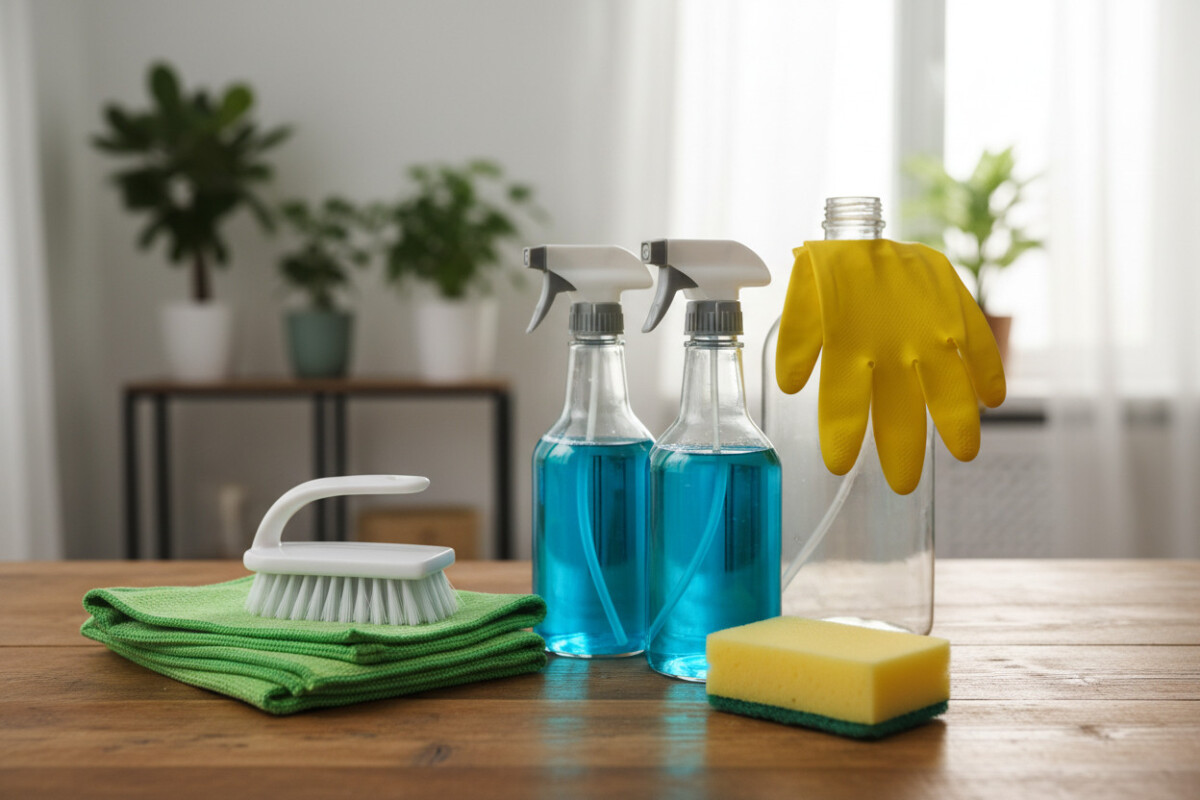
- mix everything in a spray bottle
- spray lightly after each shower
- wipe or let it air dry
This helps prevent buildup before it starts.
And over time, it keeps the shower looking consistently clean.
Recipe 2: Stronger Cleaner for Soap Scum
When buildup is already visible, a stronger mix helps.
What you need:
- white vinegar
- dish soap
How to use:
- mix equal parts
- apply directly to affected areas
- let it sit for several minutes
- wipe gently
This combination is especially effective for:
- shower doors
- tiles
- fixtures
Because it targets both grease and mineral residue.
Recipe 3: Baking Soda Scrub for Tough Spots
For areas that need a bit of scrubbing, this works well.
What you need:
- baking soda
- a small amount of water
How to use:
- create a paste
- apply to problem areas
- scrub gently
- rinse thoroughly
This is useful for:
- grout lines
- corners
- stubborn stains
Because it adds physical cleaning without being too abrasive.
Recipe 4: Mold and Mildew Control Solution
Mold tends to appear in areas that stay damp.
So cleaning alone is not enough.
But a simple solution helps manage it.
What you need:
- white vinegar
- water
How to use:
- spray on affected areas
- let it sit
- wipe clean
Combined with better ventilation, this helps reduce mold growth over time.
How I Actually Use These Recipes in Real Life
At first, I tried to follow strict routines.
Different cleaner for different days.
That didn’t last.
Now I keep it simple:
- daily or frequent spray with the basic cleaner
- occasional deeper cleaning when needed
- spot treatment for problem areas
This approach is much easier to maintain.
The Habit That Keeps My Shower Clean Longer
The biggest change wasn’t the cleaner itself.
It was what I did after each shower.
A quick rinse and light wipe.
That’s it.
Because preventing buildup is easier than removing it later.
Tools That Make Cleaning Easier
Using the right tools helps more than expected.
I keep it simple:
- soft cloths
- sponges
- a squeegee
The squeegee, especially, made a big difference.
It removes excess water quickly, which reduces water spots and buildup.
What I Avoid Completely
Some things seem helpful but actually cause problems.
I avoid:
- overly abrasive scrubbers
- harsh chemical combinations
- using too much product
Because more product doesn’t always mean better results.
Why Consistency Matters More Than Anything
At one point, I would deep clean occasionally and ignore everything in between.
That didn’t work.
Now I focus on small, regular cleaning.
Because light, consistent care prevents heavy buildup.
The Biggest Lesson I Learned
I used to think cleaning required effort and time.
But now I see it differently.
It’s about simple systems.
Once you have:
- the right cleaner
- the right habit
- the right tools
everything becomes easier.
A Simple Routine That Actually Works
This is what I follow now:
- after shower: quick spray or rinse
- every few days: light wipe
- occasionally: deeper clean
That’s it.
No complicated schedule.
The Truth About DIY Cleaning
DIY doesn’t mean less effective.
It just means simpler.
And in many cases, simpler works better.
Because you’re more likely to stick with it.
Final Thoughts
Keeping a shower clean doesn’t require strong chemicals or complicated routines.
It requires:
- consistent habits
- simple solutions
- understanding what causes buildup
Once you focus on those, everything becomes easier.
And instead of constantly cleaning, you’re just maintaining.
Which is exactly what makes the difference.