Table of Contents
A rug can make a room feel finished in a way very few other things can.
It softens the space. It adds warmth. It pulls the furniture together and makes a room feel intentional instead of temporary.
But rugs also have one frustrating habit: they seem to attract mess the second you get comfortable.
A dropped drink. A splash of coffee. A bit of grease from dinner. A pet accident that somehow happened in the exact spot you never wanted it to happen. Suddenly the rug goes from “nice feature” to “problem I have to deal with right now.”
That was the point where I stopped assuming every stain needed a special product or a frantic trip to the store.
Because once I learned how to spot clean rugs using household staples, the whole process became less dramatic and a lot more manageable. The big difference was not strength. It was timing, technique, and using the right simple ingredients before a stain had time to settle in. Household staples like white vinegar, baking soda, liquid dish soap, club soda, and hydrogen peroxide can handle a surprising range of common rug stains when they are used the right way.
And that is really the heart of it.
You do not need a complicated system. You need a calm one.
Why Household Staples Work So Well
At first, it feels almost too simple.
How could things sitting in a pantry or bathroom cabinet really compete with store-bought cleaners?
But the answer is that many common stains are not that mysterious. They are usually made of grease, sugar, moisture, odor, or organic residue. And the staples in your home are already good at breaking those things down.
White vinegar helps dissolve grime and sticky residue. Baking soda is useful for absorbing moisture and reducing odor. Liquid dish soap is excellent for breaking up grease. Club soda can help lift fresh liquid stains. And three percent hydrogen peroxide can be helpful for certain organic stains, especially on lighter rugs when used carefully.
That is why these ingredients work so well together.
They are not trying to overpower the stain. They are working with it in a practical, targeted way.
The First Rule: Act Fast
The biggest difference between an easy cleanup and a stubborn stain is usually time.
Fresh spills are much easier to handle than dry, set-in messes. A stain that sits for even a little while begins working its way deeper into the fibers, which makes the cleanup slower and more frustrating. That is why the moment you notice a spill, the best thing you can do is start blotting and removing excess material right away.
I used to think I had a little time before dealing with a spill.
That was a mistake.
Now I treat rug stains like a small emergency that needs a quick response, not a perfect one. A fast imperfect cleanup is usually better than a delayed careful one.
Blot, Never Rub
This is the rule that changed everything for me.
Rubbing a rug stain feels natural at first. You want to scrub it out. You want to see progress. You want the stain gone immediately.
But rubbing usually does the opposite.
It pushes the stain deeper into the fibers, spreads it outward, and can make the rug look fuzzy or worn in the cleaned area. Blotting is gentler and more effective because it lifts the mess instead of grinding it in. The source guide specifically recommends using a gentle downward blotting motion with a clean white microfiber cloth or paper towel.
That small change makes a huge difference.
Blotting is not as dramatic as scrubbing, but it works better.
Always Patch Test First
This step is easy to skip when you are stressed, but it matters a lot.
Rugs are made from many different materials, including wool, cotton, silk, jute, and synthetic blends. Some dyes are more delicate than others and can bleed when they come into contact with moisture or cleaning solutions. That is why a hidden patch test is important before applying any DIY cleaner to a visible area.
Even if a solution works beautifully on one rug, it may not behave the same way on another.
So before you do anything major, test the cleaner in a quiet corner or underneath the rug if possible. It takes a minute and can save you from creating a bigger problem than the original stain.
Work from the Outside In
Another small detail that matters more than people think.
When you clean a stain, start at the outer edge and move toward the center. That helps contain the mess instead of pushing it outward. If you begin in the middle or scrub too widely, the stain can spread and become larger than it started.
This sounds like a tiny technique tip, but it changes the whole feel of the job.
Instead of chasing the stain around, you are controlling it.
That makes spot cleaning feel much calmer and much more intentional.
The Basic Household Staples I Keep on Hand
You do not need a huge collection of products to deal with most rug stains.
A few basics are enough:
Distilled white vinegar
Useful for breaking down grime, sticky residue, and many water-soluble stains. It also helps with odor, which makes it especially helpful after pet accidents or sour spills.
Baking soda
Great for absorbing moisture and pulling out greasy residue. It is also excellent for neutralizing odor.
Liquid dish soap
A gentle but powerful grease cutter that works well when diluted with water. It helps lift dirt away from the rug fibers so it can be blotted up.
Club soda
Very useful for fresh liquid spills, especially colorful ones like wine or fruit juice. The carbonation can help lift the stain to the surface.
Three percent hydrogen peroxide
A helpful option for some organic stains, but it should be used carefully, especially on darker rugs because it can lighten color. A patch test is important here.
That is the whole toolkit.
Not complicated. Just practical.
My General Spot Cleaning Routine
When a stain happens, I like to keep the process simple.
First, remove as much of the spill as possible. If it is liquid, blot it with a dry cloth or paper towel. If it is something solid or semi-solid like mud or food, lift it gently with a spoon or dull edge instead of dragging it across the rug. The goal is to remove the excess without forcing it deeper into the fibers.
Then I prepare a simple cleaning solution.
A useful all-purpose mix is:
- one teaspoon of clear liquid dish soap
- one cup of warm water
- one-quarter cup of white vinegar
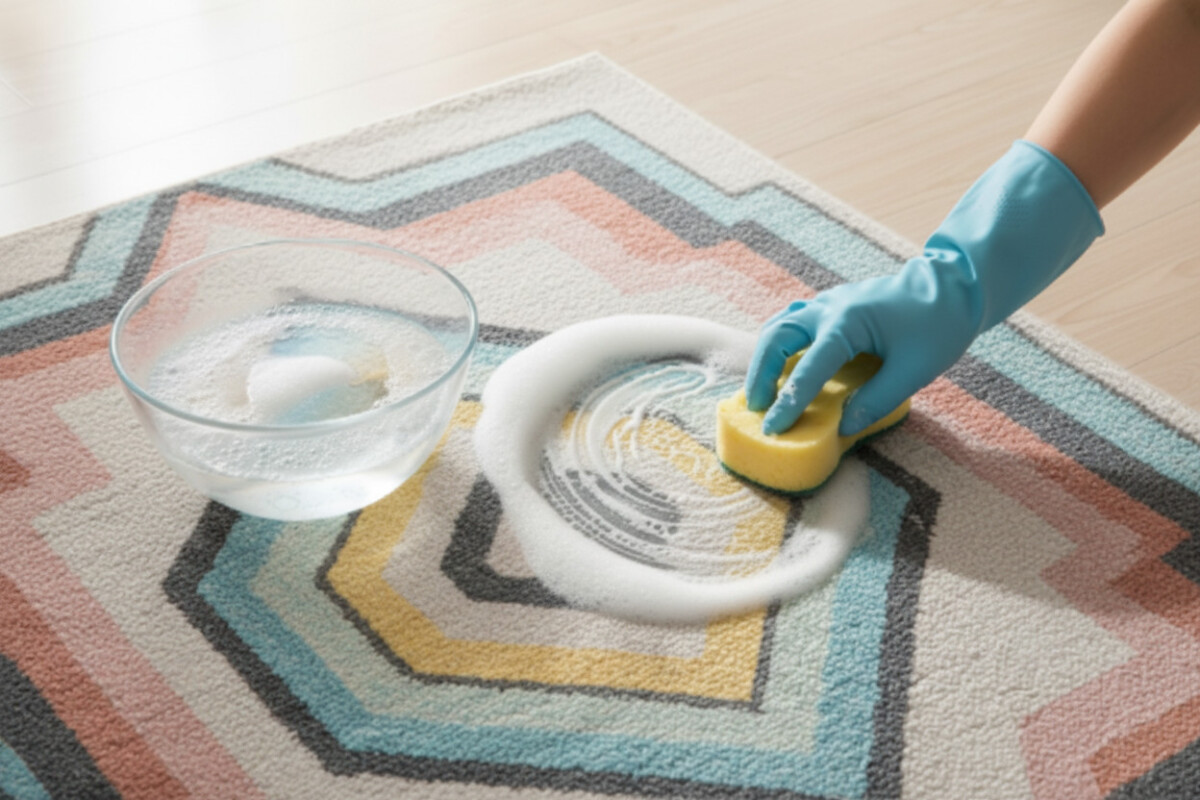
This can go in a spray bottle and be lightly applied to the stained area. The point is not to soak the rug. It is to dampen the stain just enough to loosen it. Overwetting a rug can trap moisture in the backing and lead to mold, mildew, or a musty smell later.
After that, I blot gently with a clean cloth, rotating the cloth frequently so I am always using a clean section. Once the stain lifts, I rinse lightly with plain cool water and blot again to remove leftover soap or vinegar residue. Leaving residue behind can attract dirt later and make the cleaned area darken again.
Finally, I dry the area as thoroughly as possible.
Sometimes I place a stack of dry paper towels or a dry cloth on top and weigh it down with something heavy for a few hours so it can pull moisture out of the fibers. Once it is dry, I let the rug air out completely and fluff the fibers back up with my fingers or a soft brush.
That routine works for a surprisingly large number of spills.
Pet Accidents Need a Different Approach
Pet stains are in a category of their own.
They are not just visual stains. They often carry odor, and they can soak deeper into the rug fibers than a regular spill. The first step is still blotting up as much liquid as possible. Then an equal-parts water and white vinegar solution can help break down the mess and neutralize odor. After blotting that up, baking soda can be added while the area is still slightly damp to help absorb remaining odor overnight, then vacuumed the next morning.
That combination is simple, but it works.
And the biggest mistake here is rushing. Pet accidents are one of those situations where a little patience pays off more than aggressive scrubbing ever will.
Red Wine and Fruit Juice
These spills feel dramatic the moment they happen.
They are colorful, obvious, and often intimidating.
For fresh red wine or fruit juice spills, club soda is a very useful first step. The carbonation helps lift the stain while it is still fresh, which makes blotting more effective. If a stain lingers, baking soda can also be used in paste form. For lighter synthetic rugs, a dish soap and hydrogen peroxide mix can work very well, but only after a patch test because of the peroxide’s mild bleaching effect.
This is one of those situations where quick action really matters.
The sooner you treat a stain like this, the better your chances of keeping the rug looking normal.
Coffee and Tea Spills
Coffee and tea are the kind of stains that can look harmless at first and then turn into a dull brown ring later.
A mix of dish soap, white vinegar, and warm water is a good way to treat these. Apply it with a sponge or cloth, then blot gently until the stain lifts. After that, rinse lightly and dry the area thoroughly.
I like this method because it feels balanced.
It is strong enough to handle the stain, but not so aggressive that it feels like overkill.
Grease, Oil, and Butter
Grease is tricky because water alone will not help much.
For oily stains, the best first step is to absorb the grease with baking soda or cornstarch. Let it sit for a while so it can pull the oils out of the fibers, then vacuum it up. After that, dish soap mixed with warm water can help break down what remains.
This one is important because many people make the mistake of going straight to liquid cleaner.
But with grease, you usually get better results by absorbing first and cleaning second.
A Few Habits That Keep Rugs Looking Better Longer
Spot cleaning is only part of the story.
If you want rugs to stay fresh, they also need regular care. Vacuuming at least twice a week helps prevent loose dirt, dust, and dander from getting ground into the fibers. Rotating rugs every six months helps them wear more evenly and limits uneven sun exposure. And if plain water gets spilled on a rug, it should be dried quickly because even clean water can weaken delicate natural fibers or create a sour smell if left damp.
These are the kinds of habits that do not feel dramatic in the moment.
But they add up.
A rug that gets regular attention stays looking good much longer than one that only gets emergency cleaning.
Why This Approach Feels Better Than Using Harsh Cleaners
There is something reassuring about being able to clean a mess without reaching for a strong chemical spray every time.
It feels less complicated. Less expensive. Less intimidating.
Household staples are usually already in the house, which means you can deal with a spill right away instead of waiting until later. That immediate access matters because timing can make the difference between a quick cleanup and a stubborn stain. It also keeps the process simpler, which makes it much more likely you will actually do it when needed.
That last part is the real secret.
The best rug cleaning method is the one you will use without hesitation.
The Mindset Shift That Helped Me Most
I used to think rug stains were emergencies that required perfect solutions.
Now I see them differently.
Most of the time, they are just small problems that need fast, calm action.
That shift made rug care feel much easier.
Instead of panicking, I look at the stain, identify what kind of mess it is, use the right household staple, blot gently, rinse, and dry. That process is simple enough to remember and reliable enough to trust.
And that is what makes it practical.
Not because it is flashy. Because it works.
Final Thoughts
Learning how to spot clean rugs using household staples changed the way I deal with everyday messes.
It made cleanup feel less expensive, less stressful, and far less dramatic.
The basics are easy to remember:
act quickly, blot instead of rub, patch test first, and use the right household staple for the stain. White vinegar, baking soda, dish soap, club soda, and hydrogen peroxide can handle a lot more than people expect when they are used carefully and in the right situation.
Once you understand that, rug care stops feeling like a big chore.
It becomes just another normal part of keeping a home comfortable and lived-in.
And honestly, that is the best outcome.
A rug should look inviting, not stressful.