Table of Contents
A spotless home does not usually come from one big cleaning day.
It comes from tiny habits, smart shortcuts, and a few tricks that make the whole process feel less exhausting. That is the part most people do not talk about enough. They talk about deep cleaning marathons, giant reset days, and dramatic before-and-after results. But in real life, a clean home usually stays that way because of the small things done regularly.
That is what makes cleaning hacks so useful.
Not the silly, overcomplicated kind. Not the weird internet tricks that sound clever but barely work. The real kind. The kind that actually save time, reduce effort, and make your home feel cleaner for longer without turning every task into a project.
Once you find a few methods that work, cleaning stops feeling like a battle and starts feeling more manageable.
And honestly, that changes everything.
This is the kind of list I wish I had earlier. Not because the individual ideas are complicated, but because they make ordinary cleaning feel lighter. Less frustrating. More realistic. More doable on a regular day when energy is low and the house still needs attention.
So instead of chasing perfection, start with these 15 genius cleaning hacks that actually work and make the entire home easier to maintain.
1. Clean From Top to Bottom So You Do Not Waste Time
This is one of the simplest habits, but it makes a huge difference.
When you clean from the bottom up, dust and debris fall onto surfaces you already handled. That means more work and more repetition. But when you start higher and move lower, each step supports the next one.
The order matters more than people think.
Start with shelves, tops of furniture, window ledges, and higher surfaces. Then move down to tables, counters, and finally floors. That way, anything that falls gets cleaned up at the end instead of becoming a second round of mess.
This is one of those habits that feels small until you stop doing it. Then suddenly everything takes longer than it should.
A simple top-to-bottom routine keeps the whole process moving in the right direction and makes the room feel finished instead of half-done.
2. Let Cleaning Products Sit for a Few Minutes Before Wiping
A lot of people spray a surface and wipe immediately.
That works for light dust, but not for real buildup.
If you are dealing with soap scum, grease, sticky residue, or grime that has been sitting for a while, let the cleaner rest for a bit first. That short wait gives it time to loosen the mess so you do not have to scrub so hard.
This is especially useful in places like:
- kitchen counters
- bathroom sinks
- shower walls
- stove surfaces
The biggest mistake is rushing through the process and then wondering why it still feels dirty.
A little waiting often saves a lot of effort.
This is one of the best cleaning habits because it turns heavy scrubbing into lighter wiping. And that makes cleaning feel far less draining.
3. Use a Microfiber Cloth Instead of Random Paper Towels
Paper towels are convenient, but they are not always the best tool.
A microfiber cloth often cleans better, traps dust more effectively, and leaves fewer streaks. It is also more reusable, which makes it practical for everyday maintenance.
The difference becomes obvious when you use it on:
- mirrors
- counters
- stainless steel
- bathroom surfaces
- dusty furniture
A good cloth grabs particles instead of just pushing them around.
The important part is keeping it clean. A dirty cloth stops being a helpful tool and becomes part of the problem. So having a few on hand and rotating them regularly makes everything easier.
This is one of the smallest upgrades that creates a noticeable improvement right away.
4. Use Baking Soda for Areas That Need Gentle Scrubbing
Some messes need a little friction, but not harsh chemicals.
That is where baking soda works so well.
It is especially useful for places that need a mild abrasive without scratching the surface. Think sinks, tubs, grout, bins, and other areas where buildup sticks more stubbornly than usual.
The reason this trick works is simple. Baking soda gives you a little scrubbing power while still being gentle enough for everyday use in many situations.
It is not magic. It just happens to be one of those practical items that belongs in almost every home because it handles so many small cleaning problems.
When a surface looks dirty but does not need a heavy-duty product, this is often the easiest fix.
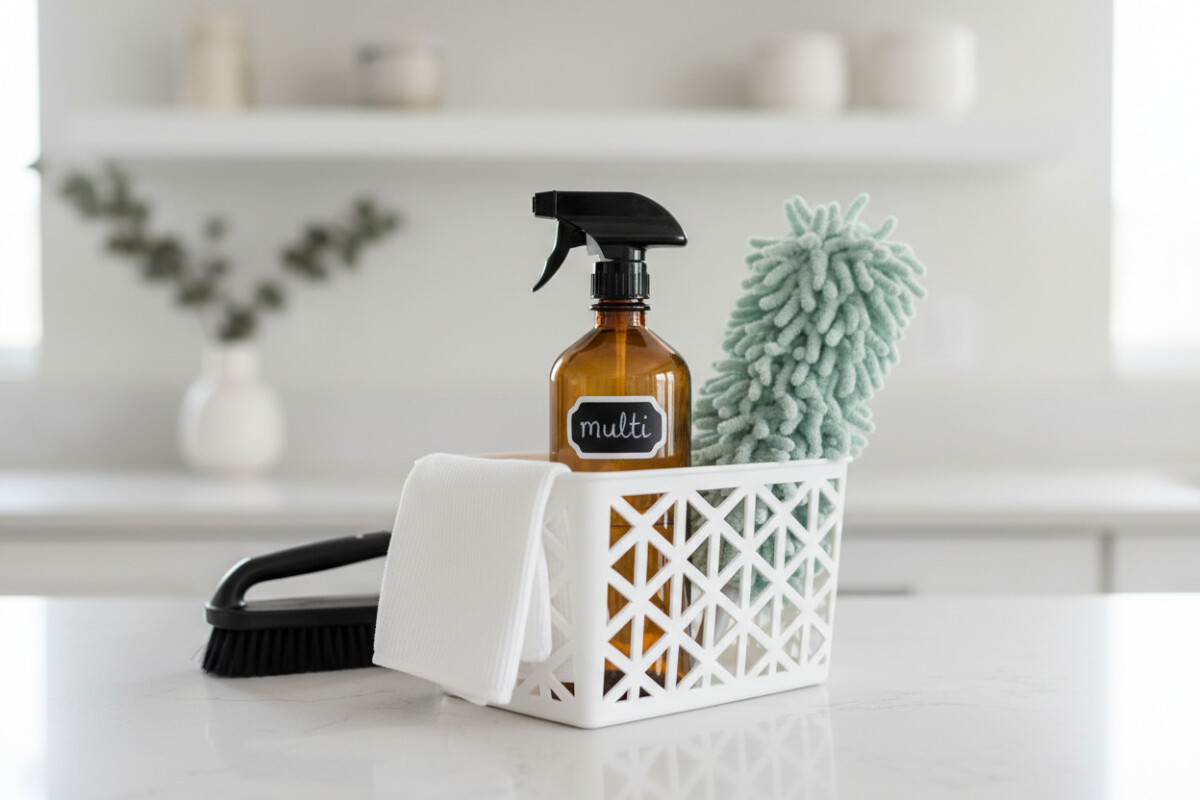
5. Keep a Small Caddy of Daily Cleaning Tools
The harder cleaning supplies are to reach, the less likely you are to use them.
That is why keeping a small cleaning caddy matters more than people expect.
Put the items you use most often in one easy-to-grab place:
- cloths
- spray bottle
- sponge
- trash bags
- gloves
- brush
When your tools are visible and ready, you are much more likely to clean small messes right away instead of putting them off.
This is especially helpful for quick bathroom or kitchen touch-ups.
A caddy turns cleaning from a search mission into a fast routine. And fast routines actually get done.
That alone makes your home easier to keep spotless over time.
6. Tackle Small Messes Immediately
This may be the most effective hack on the whole list.
Do not let tiny messes sit.
A splash on the counter, a drip on the floor, a toothpaste streak in the sink, a spill on the stove, crumbs near the cutting board. These are the things that grow into bigger cleaning jobs when ignored.
The reason is simple.
Fresh mess is easy mess.
Once something dries, hardens, smears, or gets walked on, it takes more effort to remove.
That is why a two-second wipe can save ten minutes later.
It is not about being obsessive. It is about making cleaning less painful by keeping problems small.
That habit changes the entire feel of a home. The mess never has time to become overwhelming.
7. Use the Right Tool for the Right Surface
A lot of cleaning frustration comes from using the wrong thing.
Rough sponge on a delicate surface. Strong product on a surface that only needed water. Too much liquid where a dry dusting would have worked better.
The result is usually more work and sometimes damage.
The better approach is simple: match the tool to the surface.
For example:
- soft cloths for glass and smooth surfaces
- gentle sponges for sinks and counters
- brushes for grout or tight corners
- dry dusters for shelves and furniture
Once you stop using one tool for everything, cleaning becomes much smoother.
It is not about buying a lot of products. It is about using the right ones at the right time.
That is how you make the job faster and better.
8. Clean the Room While You Are Already There
This one sounds obvious, but it saves a surprising amount of time.
If you are already in the kitchen, clean one extra thing. If you are already in the bathroom, wipe one more surface. If you are already dusting the living room, handle the corners or the baseboards while you are there.
The idea is to build on momentum.
Cleaning feels much easier when you are already in motion. What stops people is not usually the work itself. It is the effort of starting and switching tasks.
So once you are already in a room with your supplies, handle a few extra jobs before you leave.
That habit turns random cleaning into efficient cleaning.
And over time, the house stays much cleaner because you are not waiting for the perfect time to deal with every small task.
9. Keep High-Touch Areas on a Faster Cleaning Cycle
Not every area in the home gets dirty at the same speed.
Some places need more frequent attention because they are touched constantly.
These include:
- door handles
- light switches
- faucet handles
- fridge handles
- remote controls
- cabinet pulls
These are easy to miss because they do not always look dirty right away. But they collect grime faster than you think.
By cleaning them more often, you prevent buildup before it starts to show.
This is one of the most useful habits for keeping a home feeling fresh.
It is not about scrubbing every corner every day. It is about knowing which surfaces need more attention than others.
That makes your effort more effective without making your routine longer.
10. Declutter Before You Deep Clean
Cleaning around clutter is exhausting.
It slows everything down and makes surfaces harder to reach. That is why a quick declutter step before cleaning makes such a big difference.
Put away items that do not belong. Clear counters. Remove random objects from tables. Gather loose items before wiping the surfaces underneath them.
It is amazing how much cleaner a space feels just from clearing the visual noise.
And once the clutter is gone, the actual cleaning becomes much easier.
This is especially useful in kitchens, bathrooms, entryways, and bedrooms where surfaces can disappear under everyday items.
A cleared space is easier to clean and easier to keep clean.
That is why decluttering is one of the smartest cleaning hacks there is.
11. Use a Squeegee on Shower Walls and Glass
This one sounds almost too simple to matter, but it helps a lot.
After showering, a quick pass with a squeegee reduces water spots, soap residue, and buildup on glass or tile surfaces.
It does not replace real cleaning, but it slows the mess down in a big way.
The fewer water droplets that stay on the surface, the less buildup you get later.
That means less scrubbing, fewer streaks, and a fresher-looking bathroom for longer.
The key is making it a habit. A squeegee only works if it becomes part of the routine.
Once it does, the shower stays cleaner with almost no extra effort.
12. Let Dust Settle Before Vacuuming or Wiping
When you dust or move objects around, particles float in the air for a bit.
If you vacuum or wipe too fast, you can end up chasing dust around instead of removing it.
A short pause helps.
Let things settle for a moment, then finish the job. That way you are picking up the dust that landed instead of spreading it around again.
This is especially useful for rooms with shelves, blinds, electronics, and decorative items that collect dust easily.
It is one of those small pacing tricks that makes cleaning more efficient and less frustrating.
Sometimes the best cleaning hack is not a stronger product. It is better timing.
13. Give Every Item a Real Place
A spotless home is easier to maintain when things are not floating around without a home.
The less random clutter you have, the less cleaning you need to do around it.
When every item has a real place, surfaces stay clearer and cleaning gets faster. That includes everything from shoes and bags to kitchen items, bathroom products, and everyday essentials.
This is not about making the home look staged. It is about removing the constant little piles that appear when things are left wherever they land.
A clear system makes maintenance easier. That is the whole trick.
The more intentional the storage, the cleaner the home feels without extra effort.
14. Use a Timer When You Do Not Feel Like Cleaning
This is one of the best hacks for low-energy days.
Set a timer for ten or fifteen minutes and clean until it ends.
That small window is enough to make visible progress without making the job feel endless.
A timer changes the mood completely.
Instead of thinking, “I need to clean the whole house,” you think, “I just need to do one short round.” That feels much easier to start.
And once you start, momentum often carries you further than expected.
This works especially well for:
- quick kitchen resets
- bathroom touch-ups
- living room pickup
- hallway clutter
- surface wiping
A short timer keeps the task realistic, which makes you more likely to repeat it.
That is where the real progress happens.
15. Clean a Little Every Day Instead of Waiting for a Big Reset
This is the hack that keeps everything else working.
A few minutes each day does more for a spotless home than a giant cleanup once in a while.
Not because deep cleans are bad. They are not. But because maintenance keeps the mess from becoming intimidating.
Daily effort can look like:
- wiping the counter
- putting things away
- cleaning a spill
- vacuuming a small area
- doing a quick bathroom check
None of this has to take long.
But when it happens regularly, the house stays at a much easier baseline. And that baseline matters.
It means less stress, less buildup, and fewer weekends lost to damage control.
That is how a home stays clean in real life.
Not by chasing perfection. By keeping up with the small stuff before it turns into a big job.
Why These Hacks Work So Well
The reason these hacks matter is because they reduce friction.
That is the real secret.
Cleaning feels difficult when it requires too much energy, too many products, or too much time. But when a task is simple, clear, and repeatable, it stops feeling impossible.
These hacks are effective because they do three things:
- save time
- reduce effort
- prevent buildup
That is what makes a home easier to maintain.
Not a perfect system. A practical one.
Final Thoughts
A spotless home is not the result of one perfect routine. It is the result of lots of small decisions that make cleaning easier to repeat.
That is why these 15 genius cleaning hacks matter.
They are not dramatic. They are not complicated. They are just real, useful, and easy to apply in a normal home without turning cleaning into a full-time job.
Start with one or two. Keep the ones that fit your life. Drop the ones that do not.
Because the best cleaning system is the one you can actually stick to.
And once that happens, the whole house starts to feel lighter, fresher, and much easier to live in.