Table of Contents
Have you ever pulled your favorite sweater out of the closet, only to find it covered in tiny, unsightly fuzz balls? These little knots of fabric are known as pilling. They can make even the most expensive garments look old, worn out, and unkempt.
Fortunately, you do not have to throw away your favorite outfits just yet. Learning how to remove pilling from clothes is easier than you think. With a few simple tools and techniques, you can restore your wardrobe to its original glory.
In this comprehensive guide, we will walk you through the most effective methods to eliminate those annoying fuzz balls. We will also share expert tips on how to prevent them from coming back in the future. Keep reading to rescue your wardrobe!
What Exactly Causes Fabric Pilling?
Before we dive into the solutions, it helps to understand why clothes pill in the first place. Pilling occurs when loose fibers in a fabric push to the surface. As these fibers rub together, they twist and tangle into microscopic knots.
Friction is the primary culprit behind fabric pilling. This friction happens naturally as you wear your clothes throughout the day. Areas like the underarms, the sides of your torso, and the inner thighs experience the most rubbing.
Washing and drying your clothes also generate a massive amount of friction. Agitation in the washing machine causes fabrics to rub against each other relentlessly. The tumbling action of a hot dryer only worsens the problem, accelerating the formation of fuzz balls.
The Best Tools to Remove Pilling From Clothes
When it comes to fabric care, having the right tools makes all the difference. You might already have some of these items lying around your house. If not, they are incredibly cheap and easy to find at your local store.
Electric Fabric Shavers
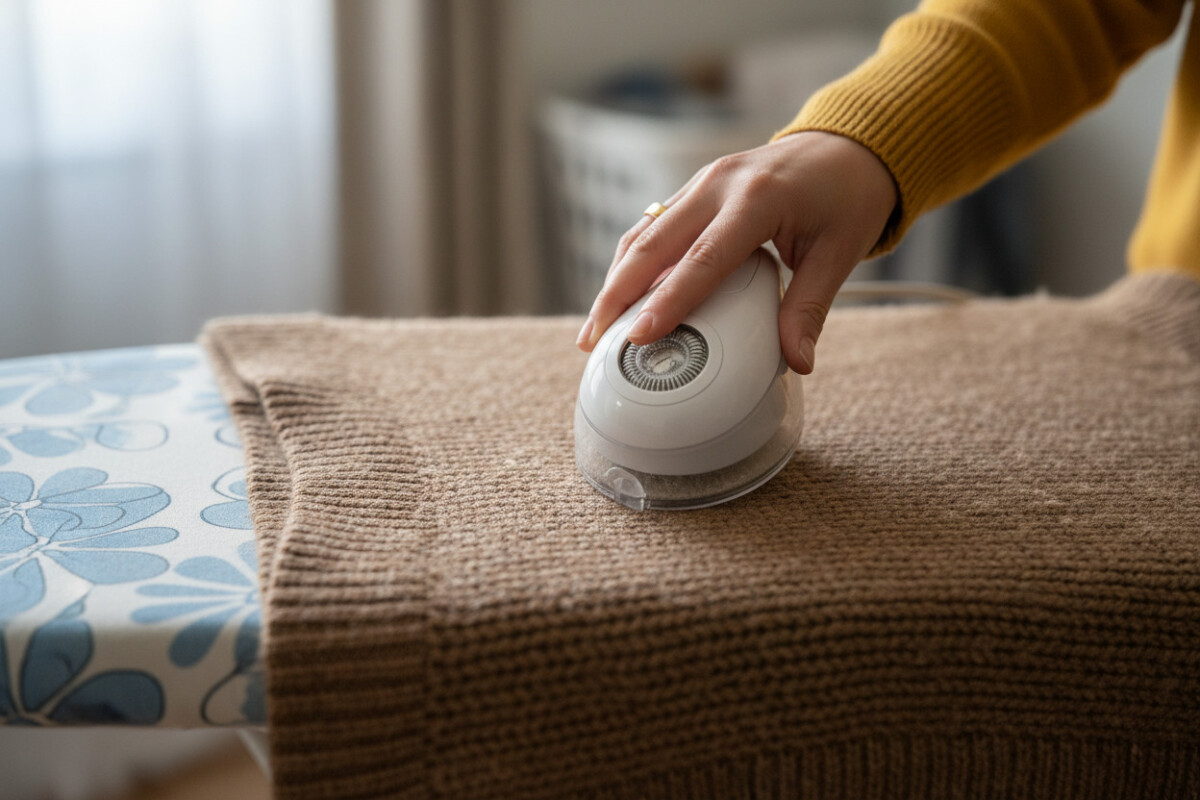
An electric fabric shaver is arguably the most efficient tool for this job. These handy devices feature a rotating blade hidden behind a protective metal guard. They quickly slice off fabric pills without damaging the underlying threads.
Using a fabric shaver is incredibly satisfying and requires very little effort. Simply lay your garment flat and run the device over the affected areas in small, circular motions. It will easily remove pilling from clothes made of heavy knits and durable synthetics.
Sweater Combs
A sweater comb is a manual tool designed specifically for delicate fabrics. Unlike a plastic hair comb, this tool features a fine, mesh-like wire screen. This mesh catches and lifts away fuzz without snagging the actual yarn.
Sweater combs are perfect for fine-gauge knits, cashmere, and soft wools. They give you total control over the pressure applied to the fabric. Gently pull the comb across the garment in one direction to strip away the pills smoothly.
Pumice Stones
A standard pumice stone from your bathroom can do wonders for your wardrobe. The rough texture of the stone acts like gentle sandpaper for your fabric. It effortlessly catches the tangled balls of thread and pulls them away from the surface.
To use a pumice stone, pull the fabric taut to avoid stretching it. Gently rub the stone over the pilled areas in quick, downward strokes. This method is highly effective for thicker fabrics like heavy wool coats and thick sweaters.
Disposable Razors
If you are in a pinch, a standard disposable shaving razor is an excellent DIY solution. A fresh, sharp blade can carefully shave off fuzz balls with precision. However, you must exercise extreme caution to avoid accidentally slicing a hole in your clothing.
Always use a plain razor without moisture strips or soap bars attached. Lay the garment completely flat on a hard surface. Pull the fabric as tight as possible, and lightly drag the razor over the pills at a shallow angle.
Velcro Strips
Velcro strips or hair rollers can also be used to remove pilling from clothes. The hook-and-loop texture easily grabs onto loose fuzz and pulls it away. This method is best for very sturdy fabrics that will not easily snag.
Simply press the rough side of the Velcro onto the pilled area. Gently peel it back to lift the fuzz away. Be careful not to use this on delicate fabrics like silk or thin knits, as it can cause significant damage.
Sticky Lint Rollers
While a lint roller alone will not cut away stubborn pills, it is essential for cleanup. After using a razor, pumice stone, or comb, a layer of loose fuzz will remain on the fabric. A lint roller easily sweeps away this debris.
Keep a high-quality sticky roller nearby during your fabric restoration process. Once you have shaved or combed the garment, run the roller over the surface. This final step reveals the smooth, restored fabric beneath the mess.
Step-by-Step Guide: How to Remove Pilling From Clothes Safely
Now that you know your tool options, let’s discuss the proper technique. Removing pills requires a delicate touch to avoid destroying the garment. Follow these steps to ensure you remove pilling from clothes safely and effectively.
Step 1: Prep Your Workspace
Never attempt to de-pill a piece of clothing while you are wearing it. You need a hard, flat surface like a table or ironing board. Working on a flat surface prevents the fabric from bunching up and getting caught in your tools.
Step 2: Smooth the Fabric
Spread the garment out completely flat. Use your hands to smooth out any wrinkles, folds, or bumps. If the fabric is wrinkled, you risk accidentally cutting into a fold and ruining the item permanently.
Step 3: Pull the Garment Taut
With your non-dominant hand, hold the fabric tightly in place. The surface must be completely taut. This tension allows the razor, comb, or shaver to glide smoothly over the surface, slicing only the raised pills.
Step 4: Work in Small Sections
Do not try to rush the process by covering large areas at once. Focus on small, manageable patches of fabric. Use short, gentle strokes, frequently pausing to assess your progress and clear away the removed fuzz.
Step 5: Clean the Surface
After you finish a section, you will likely see a lot of loose fuzz resting on the fabric. Use a lint brush, sticky roller, or a piece of wide packing tape to lift this debris away. This allows you to see if you missed any spots.
Which Fabrics Are Most Prone to Pilling?
Not all fabrics are created equal when it comes to durability. Some materials naturally pill more aggressively than others. Knowing which fabrics to watch out for can help you make better purchasing decisions in the future.
Synthetic fabrics and blends are notorious for severe pilling. Materials like acrylic, nylon, and polyester have very strong fibers. When they loosen and tangle, the strong threads hold tight to the garment, creating stubborn knots that refuse to break off naturally.
Natural fibers like cotton, linen, and pure wool also experience pilling. However, these natural fibers are generally weaker than synthetics. Because the threads are weak, the fuzz balls tend to break off and fall away on their own in the wash.
Clothing made from multi-fiber blends usually experiences the worst pilling. When strong synthetic fibers mix with weaker natural fibers, the weak threads break and tangle around the strong ones. This creates a permanent, secure fuzz ball on the surface of your favorite shirt.
How to Prevent Pilling Before It Starts
The best way to deal with fabric fuzz is to prevent it from forming in the first place. Changing your laundry habits is the most effective defense. Here are several expert strategies to keep your clothes looking fresh.
Wash Your Clothes Inside Out
Friction during the wash cycle is the leading cause of garment wear and tear. By turning your clothes inside out before washing, you protect the visible outer surface. Any pilling that does occur will be hidden inside the garment.
Sort Your Laundry Properly
Never wash delicate fabrics with heavy, abrasive items. Washing a soft knit sweater alongside heavy denim jeans or towels is a recipe for disaster. The rough textures will violently rub against the delicate fibers, causing massive amounts of friction and fuzz.
Always sort your laundry by fabric weight and texture. Keep your soft items separate from clothing with zippers, buttons, and thick seams. This simple sorting step drastically reduces unnecessary abrasion in the washing machine.
Choose the Gentle Wash Cycle
The standard wash cycle is too aggressive for many garments. The heavy agitation twists and pulls fabrics unnecessarily. Whenever possible, choose the delicate or gentle cycle on your washing machine. This setting uses slower spin speeds and less agitation.
Avoid Overloading the Washer
Cramming too many clothes into the washing machine forces the garments to rub tightly against one another. They cannot move freely through the water. This intense friction accelerates fiber damage. Always leave plenty of room in the drum for clothes to circulate safely.
Skip the Tumble Dryer
The intense heat and constant tumbling of a dryer are terrible for fabrics prone to pilling. The extreme friction forces loose fibers to tangle quickly. To preserve your clothes, skip the dryer entirely and opt for air-drying instead.
Lay your sweaters and delicate knits flat on a drying rack. Hanging heavy, wet sweaters can cause them to stretch out of shape. Air drying is gentler on the fibers, prevents shrinkage, and drastically reduces the chances of fuzz formation.
Use a Liquid Laundry Detergent
Powdered detergents can sometimes leave an abrasive residue on your clothing. As the clothes agitate in the water, these undissolved powder particles grind against the fibers like tiny rocks. Switching to a high-quality liquid detergent eliminates this abrasive risk entirely.
Utilize Fabric Softeners Sparingly
While fabric softeners coat fibers to make them feel smooth, they can sometimes weaken fabrics over time. However, a light conditioning treatment can help lubricate the fibers in the wash, reducing friction. Use it sparingly to balance fabric health and friction reduction.
Can You Save a Severely Pilled Garment?
If you have a severely damaged sweater, you might wonder if it is even worth saving. The answer is usually yes! It just takes a bit of time and patience. A heavy-duty electric fabric shaver is your best bet for extreme cases.
Set aside twenty minutes, lay the garment flat, and systematically work through the fuzz. You will be amazed at the transformation. Even garments that look completely ruined can often be restored to a near-new condition with careful shaving and a lint roller.
Conclusion
Dealing with fuzzy, worn-looking clothing is a frustrating experience for anyone who loves their wardrobe. However, a few tiny knots of fabric should not signal the end of your favorite sweater’s lifespan. You now have all the knowledge needed to handle the problem.
By understanding what causes these fuzz balls, you can take proactive steps in your laundry routine to minimize friction. Taking the time to sort properly, use gentle cycles, and air dry will extend the life of your garments significantly.
When fuzz inevitably appears, you are prepared to fight back. Whether you choose an electric shaver, a pumice stone, or a simple razor, you can successfully remove pilling from clothes. Take care of your wardrobe, and it will keep you looking sharp for years to come.