Table of Contents
There is a moment that makes you stop and look twice at a piece of clothing.
It is not a stain. It is not a tear. It is something smaller, quieter, and somehow more frustrating.
Tiny fuzz balls start showing up on the surface. The fabric looks a little tired. A sweater that used to feel soft now looks worn out. Your favorite shirt does not seem as sharp as it did before, even though nothing is actually wrong with it.
That is pilling.
And once you notice it, you start seeing it everywhere.
On the inside of thighs. On sleeves. Around the underarms. On sweaters, leggings, t-shirts, coats, blankets, and even bedding. It shows up on the clothes you wear the most, which is part of why it feels so annoying. The more you like something, the faster you seem to notice the fuzz.
At first glance, pilling can make perfectly good clothes feel old before their time. But the good news is that it is usually fixable. And more importantly, it is often preventable.
That is what changed the way I think about clothing care.
Because removing pilling is only half the job. The bigger win is learning how to keep it from coming back so quickly in the first place.
What Pilling Actually Is
Pilling happens when short fibers in a fabric loosen and tangle together on the surface. Over time, those tiny fibers form little balls or clumps that sit on top of the material.
It happens more often on fabrics that experience:
- friction
- frequent washing
- daily wear
- rubbing against other surfaces
That is why pilling tends to appear in the same places over and over again. Wherever there is movement, contact, or repeated stress, the fibers start breaking free.
Some fabrics are much more prone to it than others. Soft knits, blends, and heavily used everyday clothes usually show it first.
The important thing to understand is that pilling does not always mean the fabric is bad. It often just means the item has been worn a lot.
That does not make it any less irritating, though.
Why Clothes Pill So Easily
The reason pilling feels so common is because it is tied to normal life.
Clothes rub against:
- other clothes in the wash
- bags and straps
- chairs and couches
- skin and movement
- laundry cycles
- daily activity
Even the most careful wardrobe will eventually show some wear if certain fabrics are used often enough.
And once pills begin forming, they can make the item look older than it really is.
That is what makes pilling different from a stain or a loose thread. It affects the entire feel of the fabric. A sweater can still be warm, a shirt can still fit beautifully, and a dress can still be in good condition, but the pilling changes how polished it looks.
That visual shift is the real annoyance.
The First Mistake Most People Make
A lot of people assume they need to throw a pilled item away.
That is usually not true.
Another common mistake is pulling the pills off by hand. It feels satisfying for about five seconds, then usually makes the surface look worse or creates more fuzz.
Some people also use rough tools that are too aggressive, which can damage the fabric instead of fixing it.
The better approach is to remove pills gently and consistently.
That means using the right method for the fabric and not rushing it.
Because if you treat pilling like a surface problem instead of a fabric problem, you usually get a better result.
The Best Ways to Remove Pilling
There are several ways to remove pills, and the right one depends on the type of clothing and how delicate the fabric is.
The most common methods include:
- fabric shavers
- sweaters combs
- lint removers
- manual de-pilling tools
- careful razor use on sturdy fabrics
Each one has a place. The goal is not to use the strongest method. The goal is to use the safest one that still gets the job done.
Fabric Shavers: The Easiest Option for Most Clothes
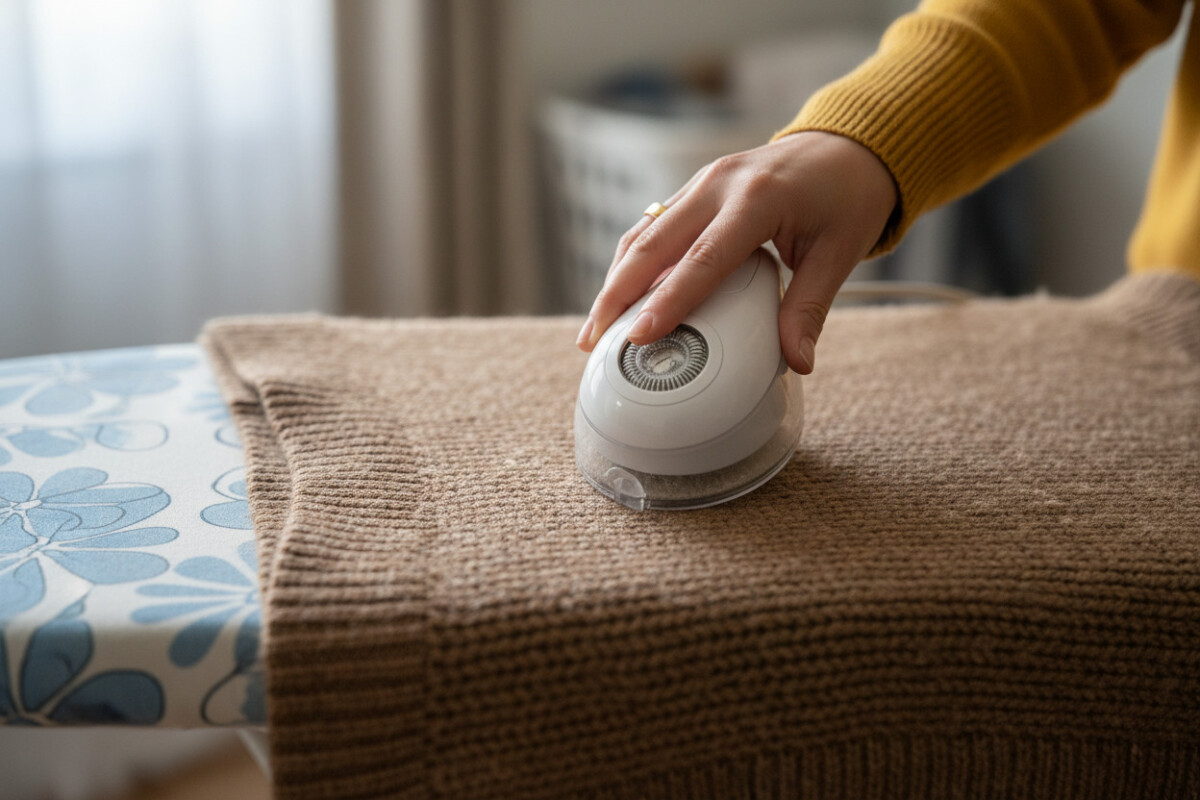
A fabric shaver is one of the simplest and most effective tools for removing pilling.
It works by gently shaving away the tiny fuzz balls from the surface without cutting into the fabric too deeply when used properly.
This tool works especially well on:
- sweaters
- knit tops
- blankets
- upholstery
- casual clothing with visible fuzz
The trick is to move slowly and lightly. There is no need to press hard. Let the tool do the work.
If the fabric is thin or delicate, test a small hidden area first. That way you can see how the material reacts before working on the whole piece.
A fabric shaver can make an old-looking garment feel noticeably fresher in a few minutes.
Sweater Combs for Delicate Knits
A sweater comb is a good option if you want something a little gentler.
This tool is often better for knitwear that needs a softer touch. It removes pilling without feeling overly mechanical, and it can be especially useful on natural fiber garments.
Sweater combs work best when you:
- hold the fabric taut
- use light strokes
- move in one direction
- take your time
This method takes more patience than a shaver, but it can be a safer choice for certain fabrics.
It is a good middle ground when you want control without being too aggressive.
Lint Removers and Roller Tools
Not all fuzz is pill formation, but sometimes the two look similar from a distance.
Lint removers can help clean up the surface and make clothing look neater overall. They are especially useful for:
- pet hair
- surface fuzz
- light debris
- small fibers after shaving
They are not always enough on their own for deep pilling, but they are helpful as a finishing step.
Think of them as part of the cleanup, not always the main solution.
Manual Removal for Small Spots
Sometimes you only have a few visible pills in one area.
In that case, you do not need a full process.
You can use a small, careful tool and work only where needed. This is useful for spot treatment on:
- sleeves
- collars
- underarms
- inner thighs
- small fabric patches
This kind of targeted cleanup saves time and reduces unnecessary wear.
The key is restraint. If the problem is small, do not overwork the entire garment.
What Not to Use on Every Fabric
This is where people get into trouble.
Some fabrics can handle more aggressive treatment, but others cannot.
Avoid using harsh methods on:
- very thin knits
- silk-like materials
- loose weaves
- fragile blends
- anything that snags easily
A method that works on one sweater can ruin another.
That is why the material matters as much as the pill itself.
If you are unsure, start with the gentlest tool and move up only if necessary.
How to Keep Clothes Looking New Longer
Removal helps, but prevention matters even more.
If the same clothes keep pilling again and again, the real issue is usually friction, washing habits, or fabric choice.
The good news is that a few small changes can make a big difference.
Wash Clothes Less Roughly
This is one of the biggest causes of pilling.
When clothes rub against each other too aggressively in the wash, fibers loosen faster. That means more fuzz later.
A few simple habits help:
- turn garments inside out
- use a gentler cycle
- avoid overloading the washer
- wash similar fabrics together
The less unnecessary friction, the better.
That alone can extend the life of a lot of clothing.
Separate Delicate and Heavy Fabrics
Not all laundry should be treated the same.
A chunky sweater does not behave like a smooth cotton shirt. Athletic leggings do not react the same way as a wool blend. When you mix fabrics that behave differently, pilling usually gets worse.
Try grouping clothes by texture and weight.
That way:
- delicate items get less abrasion
- heavier items do not rub against soft knits
- clothes stay in better shape over time
It is a small adjustment, but it helps a lot.
Choose Gentle Drying Methods
Dryers can be tough on clothing.
The heat, tumbling, and friction all contribute to wear. That does not mean you can never use a dryer. It just means you should be thoughtful about what goes in.
If an item pills easily, air drying may help preserve it.
If you do use the dryer:
- use lower heat
- avoid over-drying
- remove items while they are still in good shape
Over time, that can reduce how quickly surfaces break down.
Be Careful With Everyday Friction
A lot of pilling happens outside the laundry room.
Think about where your clothes rub during the day.
- sweater sleeves against bag straps
- thighs rubbing together in pants or skirts
- cuffs brushing against desks
- shirts rubbing under jackets
- blankets rubbing against furniture
These tiny repeated movements add up.
Sometimes the best prevention is simply being aware of which items naturally wear down faster because of how you use them.
Fabric Choice Makes a Big Difference
Some clothes pill because of the fabric itself.
Synthetic blends often pill more visibly than tightly woven natural fabrics. Soft knits and brushed materials are also more likely to show fuzz quickly.
That does not mean those fabrics are bad. It just means they need more care.
If you want clothes that stay neat-looking longer, pay attention to:
- tight weaves
- higher-quality knits
- durable fabric blends
- construction and finishing
A better-made item often resists pilling longer even if you wear it regularly.
Storage Also Matters
How you store clothes can affect how they age.
Stuffed drawers, rough closet surfaces, overloaded shelves, and crowded bins can all create extra friction.
To help reduce wear:
- fold items smoothly
- avoid cramming knits into tight spaces
- keep delicate items separate
- store sweaters carefully instead of hanging them if they stretch easily
Storage does not get much attention, but it absolutely affects how fabric holds up.
When Pilling Is Normal and When It Is a Problem
A little pilling is normal on heavily worn items.
That does not automatically mean the clothes are low quality or ruined.
But if an item pills extremely fast, that may point to:
- fabric quality issues
- too much friction
- washing habits that are too rough
- a garment that is wearing out faster than expected
That is useful information, not failure.
It tells you how to care for the item better next time.
The Habit That Changed the Way I Handle Clothes
The biggest shift was not buying more tools.
It was paying attention earlier.
Instead of waiting until clothes looked visibly worn, I started checking items before the damage got bad. That made it easier to maintain the pieces I already liked.
Now when I notice fuzz beginning to form, I deal with it right away.
That keeps the problem small.
And small problems are always easier to fix than big ones.
How to Make Clothes Look Fresh Again
If a garment has already started pilling, do not assume it is beyond saving.
In many cases, a careful pass with the right tool can make it look much better almost immediately.
A sweater that looked old can suddenly look polished again. A pair of leggings can feel neat instead of tired. A blanket can look cleaner without needing replacement.
That visual reset is surprisingly satisfying.
It is one of those small home-care tasks that makes a bigger difference than people expect.
Why This Is Worth Doing
Removing pilling is not just about vanity.
It is about getting more life out of the clothes you already own.
That means:
- less waste
- fewer replacements
- better-looking outfits
- more wear from favorite pieces
When clothing starts to look worn, people often replace it too quickly. But in many cases, the fabric is still perfectly usable.
It just needs a little care.
Final Thoughts
Pilling is annoying, but it is not the end of a garment.
Once you know how to remove it properly, you can bring a lot of clothes back to life.
The real secret is not just removing the fuzz. It is understanding why it forms, choosing the right method for the fabric, and taking a few simple steps to slow it down in the future.
That is what keeps clothes looking new longer.
Not perfection.
Just regular attention.
And that, in most closets, makes all the difference.