Table of Contents
A kitchen can look beautiful and still be frustrating to cook in.
That is the part people do not always expect. A space can have nice cabinets, pretty countertops, and a clean layout, yet somehow still feel awkward the moment you try to make breakfast, prep dinner, or clean up after a meal.
The problem is usually not the style itself.
It is the design choices hiding underneath it.
Some kitchens are built to look good in photos, but not to support real life. They make simple tasks feel more tiring than they should. They create extra steps. They force you to walk farther, bend more, reach more, and clean more often. And after living with that for a while, the kitchen starts to feel like a place that works against you instead of with you.
That was the biggest lesson for me.
A kitchen should make cooking easier. When the layout does the opposite, every meal becomes a little more annoying than necessary.
When a Kitchen Looks Good but Feels Wrong
There is a special kind of frustration that comes from a kitchen that seems fine at first glance.
Everything might look polished. The finishes may match. The colors may be on trend. The surfaces may even photograph beautifully. But once you actually start using the space, the problems show up fast.
Maybe the trash is too far from the prep area. Maybe the sink is awkwardly placed. Maybe there is no counter space near the stove. Maybe the drawers are too shallow for the things you use most. Little by little, the room starts forcing extra movement into every task.
That is what makes poor kitchen design so exhausting.
It is not one major problem. It is a collection of small ones.
And cooking is already full of steps. Chopping, washing, seasoning, stirring, moving, cleaning, storing, repeating. When the kitchen itself adds friction, the whole experience feels heavier.
The Problem with Style Over Function
A lot of kitchen design decisions come from the desire to make the room look impressive.
That is understandable. A kitchen is one of the most visible spaces in a home. People want it to feel modern, elegant, and put together.
But some design choices prioritize appearance so heavily that they make everyday cooking harder.
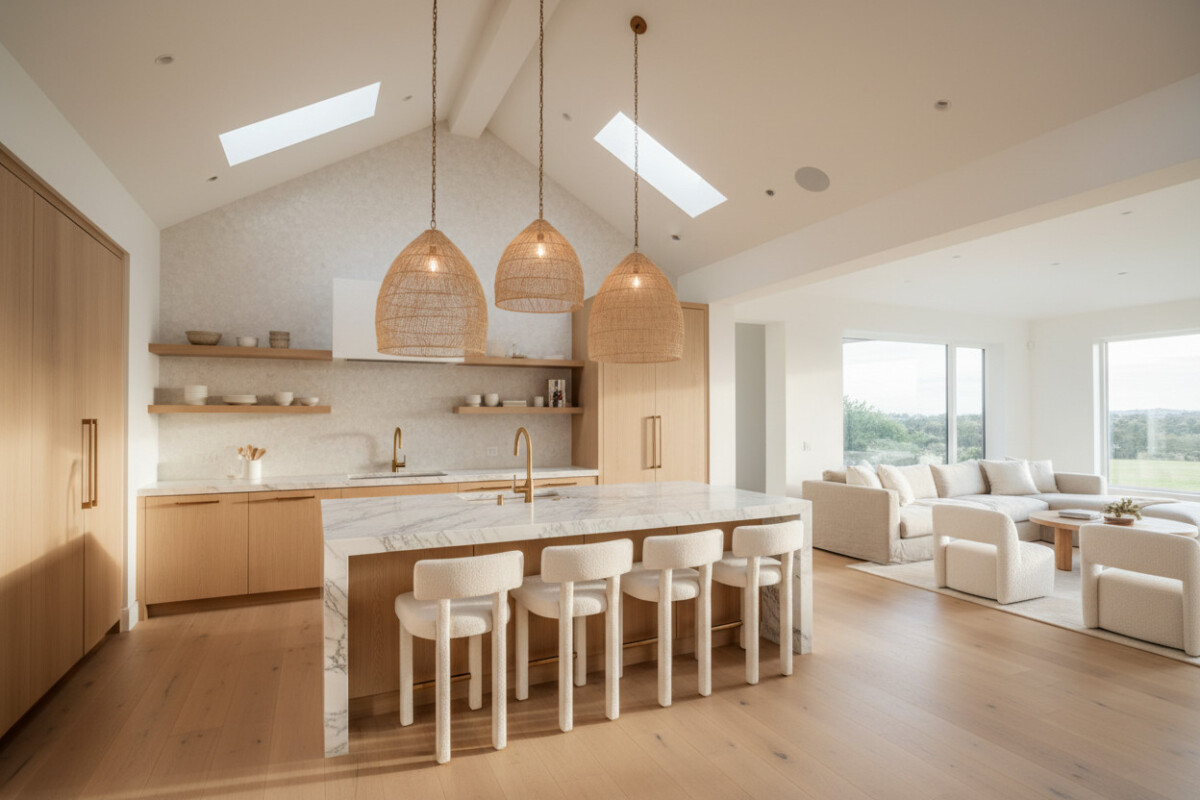
Glossy surfaces may look sleek but show every fingerprint and splash. Open shelving may look airy but collect dust and grease. Huge islands may look dramatic but block movement if the room is not large enough. Deep cabinets may look spacious but become hard to organize.
None of those things are automatically bad.
The issue is when they are chosen without thinking about how real people actually cook.
Cooking is not a staged moment. It is messy, repetitive, and practical. A kitchen that ignores that reality often ends up feeling like a showroom instead of a working space.
1. Too Little Counter Space
This is one of the biggest mistakes.
Counter space sounds obvious, but it is one of those things people do not fully appreciate until they do not have enough of it.
You need room for:
- chopping vegetables
- setting down groceries
- placing hot pans
- holding mixing bowls
- assembling dishes
- keeping ingredients within reach
When the counter is too small, every task becomes a shuffle. You move one thing to make space for another. You start using random surfaces that were never meant for prep. The kitchen quickly feels cluttered even when it is technically clean.
A beautiful kitchen with barely any usable counter space is one of the most frustrating design choices there is.
It forces you to work in fragments instead of flow.
And cooking flows better when the surfaces support the process instead of interrupting it.
2. The Sink Is in the Wrong Place
The sink is one of the main centers of activity in a kitchen. It is where you wash produce, rinse tools, fill pots, clean hands, and deal with messes.
When the sink is poorly placed, the entire kitchen feels off.
If it is too far from the prep area, you keep walking back and forth. If it is too isolated, washing and chopping become separate zones that do not work together. If it is boxed into a corner with no room around it, even basic cleanup becomes awkward.
A sink should support movement, not interrupt it.
It needs enough surrounding space to dry dishes, rinse ingredients, and manage mess without turning every small task into a balancing act.
When the sink is badly placed, the whole kitchen starts to feel less intuitive. And intuition matters in cooking more than people realize.
3. The Stove Has No Landing Space
A stove without nearby counter space is one of the most frustrating design choices in any kitchen.
You pull a pan off the heat and suddenly have nowhere safe to place it. You are juggling hot dishes, lids, utensils, and ingredients while trying not to make a mess. Even serving food becomes harder because there is no smooth transition between cooking and plating.
This makes the kitchen feel chaotic.
A small landing zone beside the stove changes everything. It gives you room to set down ingredients before they go in the pan, place a hot pot once it is done, or rest tools while you work.
Without that space, cooking feels cramped and reactive.
And no one wants to cook in a kitchen that makes every hot pan feel like an emergency.
4. The Refrigerator Is Too Far Away
A refrigerator should be easy to access from the prep and cooking zones. When it is not, every recipe becomes more inconvenient.
You chop something, then walk away to get an ingredient. You need butter, sauces, eggs, or herbs, and each trip adds more movement. Over time, the back-and-forth gets tiring.
It sounds small, but it makes a huge difference in how smooth the kitchen feels.
A well-designed kitchen keeps cold storage close enough to matter, but not so close that it blocks workflow. The goal is to reduce unnecessary movement.
When that balance is off, even simple meal prep starts feeling more difficult than it should.
5. Open Shelving in the Wrong Places
Open shelving can look lovely in photos. It can make a kitchen feel airy, styled, and personal.
But in the wrong place, it becomes a magnet for dust, grease, and visual clutter.
Anything near the stove or sink tends to collect residue faster than people expect. Plates, mugs, and decor pieces need constant wiping. Items that are supposed to look decorative start becoming maintenance.
That does not mean open shelving is always bad.
It just works best when used carefully and sparingly.
If it is placed where cooking splatter is unavoidable, it becomes another chore instead of a design feature. And the more effort it takes to keep things looking nice, the less enjoyable the kitchen becomes.
6. Drawers and Cabinets That Do Not Match What You Store
Storage is only useful if it fits the things you actually own.
A kitchen can have plenty of storage and still feel inefficient if the storage is badly designed.
Deep cabinets may look large but bury small items in the back. Shallow drawers may look neat but fail to hold the pots, pans, and tools you use most. Narrow compartments might be perfect for one category of item and useless for another.
Good storage is not about quantity alone.
It is about accessibility.
If you have to bend, kneel, or dig through layers of items every time you want a pan, the kitchen is making your life harder than necessary.
A good kitchen keeps the most-used items easy to reach. That alone can change how the whole room feels.
7. The Trash Is Too Far from the Prep Area
This is one of the most underrated design problems.
When the trash can is far from where you chop, peel, and prep, every little cleanup step becomes annoying.
You peel onions, walk across the room to toss the scraps. You open packaging, then carry it somewhere else. You are constantly interrupting your own rhythm.
A trash bin should be easy to reach without thinking about it.
That does not mean it has to be visible in a bad way. It just needs to be placed where it fits into the natural flow of cooking.
When it is not, the kitchen becomes slower and messier than it should be.
8. Narrow Walkways and Tight Corners
A kitchen needs breathing room.
If the walkways are too narrow, people bump into each other. Cabinets get in the way. Appliance doors become obstacles. Pulling out drawers turns into a physical puzzle.
This is especially frustrating in kitchens where more than one person cooks, cleans, or moves through the space at the same time.
A cramped kitchen can still be functional, but only if the layout is carefully thought out. Otherwise, it becomes a constant source of friction.
Good flow matters.
A kitchen should let you move naturally from one task to the next without feeling boxed in.
9. Too Many Decorative Features
Decor is nice. Personality is nice. Style matters.
But when the kitchen gets overloaded with decor, it starts stealing attention from function.
Decorative items take up counter space. They collect dust. They get moved around when you need the surface. They can make the kitchen look pretty while making it less practical.
The same goes for highly stylized finishes or details that look impressive but are annoying to maintain. A kitchen should not require extra effort just to remain usable.
A little decoration can make the room feel warm. Too much of it can make the room feel crowded.
10. Appliances That Interrupt the Workflow
Appliances should support the way you cook, not disrupt it.
If the microwave is in a strange spot, if the dishwasher door blocks a walkway, if the oven is positioned awkwardly, or if the fridge opens into a tight area, the whole room becomes harder to use.
Good kitchen design is about movement.
You want a natural path between prep, cooking, cleaning, and storage. When appliances are placed without thinking through that path, every task feels a little more awkward.
It is one of those things that seems minor until you are living with it every day.
Then it becomes impossible to ignore.
11. Surfaces That Are Hard to Maintain
Some kitchen finishes look great until you have to clean them every day.
High-shine cabinets, textured surfaces, delicate stone, and fingerprint-prone hardware can all look beautiful while quietly adding to your workload.
If the kitchen requires constant wiping just to stay presentable, that affects how it feels to use.
A practical kitchen does not need to be plain. It just needs materials that support real life.
When every splash, smudge, or crumb becomes visible immediately, the room can start to feel demanding instead of inviting.
Why These Mistakes Matter So Much
Individually, each of these choices may not seem terrible.
A small counter issue. A slightly awkward cabinet. A pretty but impractical shelf. Nothing dramatic.
But together, they shape how the kitchen feels every single day.
That is the real point.
A kitchen does not fail because of one huge mistake. It usually fails because of many small design choices that make cooking, cleaning, and storing things slightly harder than necessary.
And over time, slight irritation becomes real frustration.
What a Better Kitchen Actually Does
A good kitchen does not just look nice.
It makes you feel calm while using it.
It gives you:
- enough counter space
- easy movement
- clear storage
- accessible tools
- a natural cooking flow
That is what makes cooking feel lighter.
Not luxury. Not trendiness. Not perfection.
Just a space that supports the way people actually live.
Final Thoughts
Kitchen design should make cooking easier, not harder.
That sounds obvious, but a surprising number of kitchens miss that simple point. They focus on style, symmetry, trend, or visual impact and forget the daily rhythm of real use.
And the truth is, the best kitchens are rarely the most dramatic ones.
They are the ones that quietly work.
The ones that let you move, prep, cook, clean, and store things without friction. The ones that make the room feel intuitive instead of exhausting. The ones that look good, yes, but more importantly, feel good to use.
Because in the end, a kitchen is not meant to sit there and be admired all day.
It is meant to be lived in.
And when the design gets that part right, everything becomes easier.