Table of Contents
A bathroom can look clean at first glance and still feel strangely cluttered.
That is the part that gets overlooked so often.
The sink is wiped. The mirror is decent. The floor is mostly clear. But somehow the room still feels busy, cramped, and a little chaotic. Not dirty exactly. Just crowded. Like there are too many little things competing for attention in too little space.
That is usually when the hidden clutter starts to reveal itself.
Not in the obvious places. Not in the big cabinet under the sink or the towel rack you pass every day. It is the smaller, ignored spots that slowly collect the things we stop noticing. Half-used products. Extra bottles. Old backups. Tiny items that seem harmless until they pile up and start stealing space.
And in a bathroom, space matters more than people think.
A small room becomes overwhelming fast when every surface has something on it. That is why the most effective decluttering wins are often not the dramatic ones. They are the quiet ones. The corners. The drawers. The shelf behind the toilet. The tiny containers nobody opens anymore.
Once those spots are cleared, the room immediately feels lighter.
That is what this is really about.
Not perfection. Not turning the bathroom into a magazine photo. Just creating a space that feels easier to use, easier to clean, and easier to live with.
So if the bathroom has been feeling a little too full lately, start here. These are the overlooked bathroom spots that deserve a second look, and the clutter that usually hides inside them.
1. The Top of the Toilet
The top of the toilet is one of the most common catch-all spots in the bathroom.
It starts innocently enough. Maybe a tissue box gets placed there. Then a candle. Then a spare roll of toilet paper. Then a few items that do not have a proper home anywhere else. Before long, the toilet top becomes a shelf nobody really planned for.
That is where the problem begins.
A space that should be simple starts collecting visual noise. And because it is such a small area, even three or four items can make it feel crowded.
This is one of the easiest places to declutter because the rule is simple:
if it is not used every day, it probably does not need to live there.
Keep only the essentials. A spare roll or two, perhaps a small item you use frequently. Everything else can be moved to a proper cabinet or drawer.
Once the top of the toilet is clear, the whole bathroom often feels more open immediately.
2. The Back of the Sink Counter
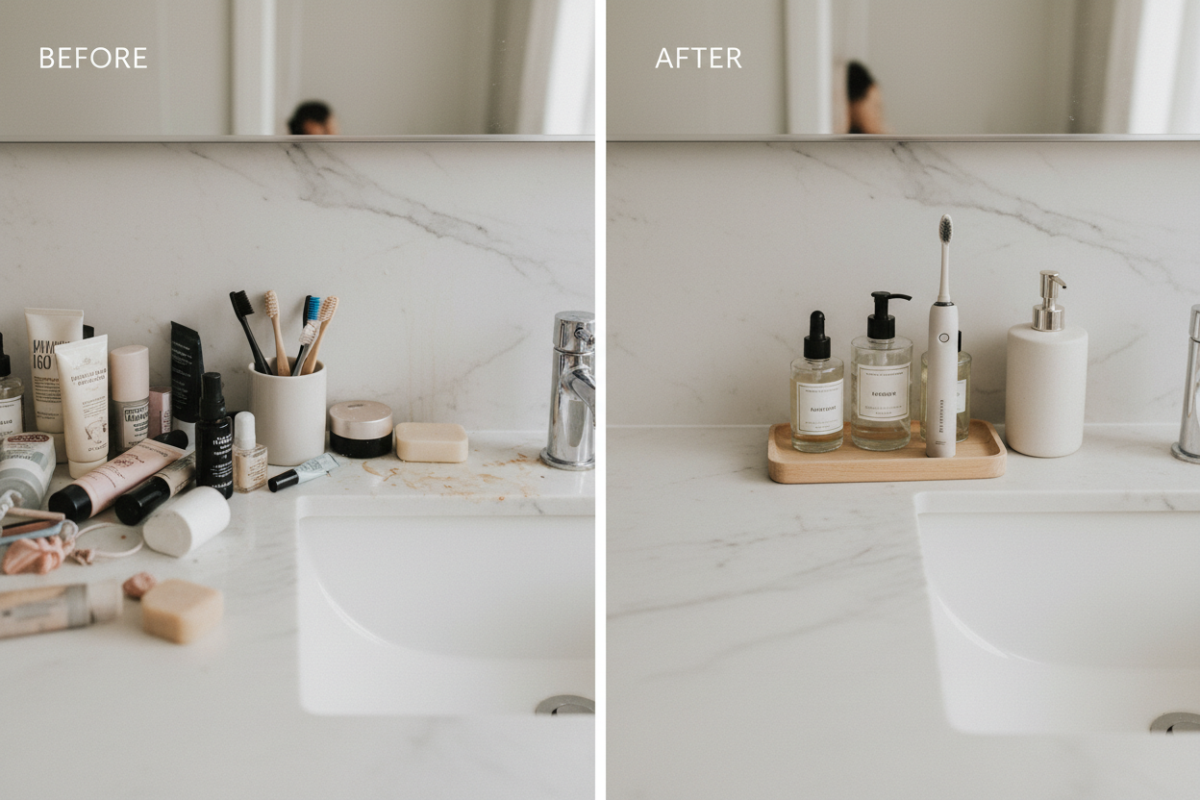
Sink counters become clutter magnets without much effort.
Toothbrushes. Hand soap. Skincare. Hair tools. Cotton pads. A small dish for jewelry. A few tubes and bottles that get used in rotation. It adds up quickly, especially in a small bathroom where there is very little counter space to begin with.
What makes this area tricky is that the clutter is often functional. It is not garbage. It is just too much of the same kind of thing spread across too small a surface.
The fix is not to remove everything. It is to group like with like and cut down on duplicates.
For example:
- keep one hand soap, not three
- keep one skincare routine, not five open products
- keep daily items visible, but move backups elsewhere
If something is used every morning and helps the space function, it earns its place. If it only sits there because there is nowhere else to put it, that is usually a sign that it belongs in storage instead.
Clear counters make a bathroom feel cleaner even before any scrubbing happens.
3. Under the Sink
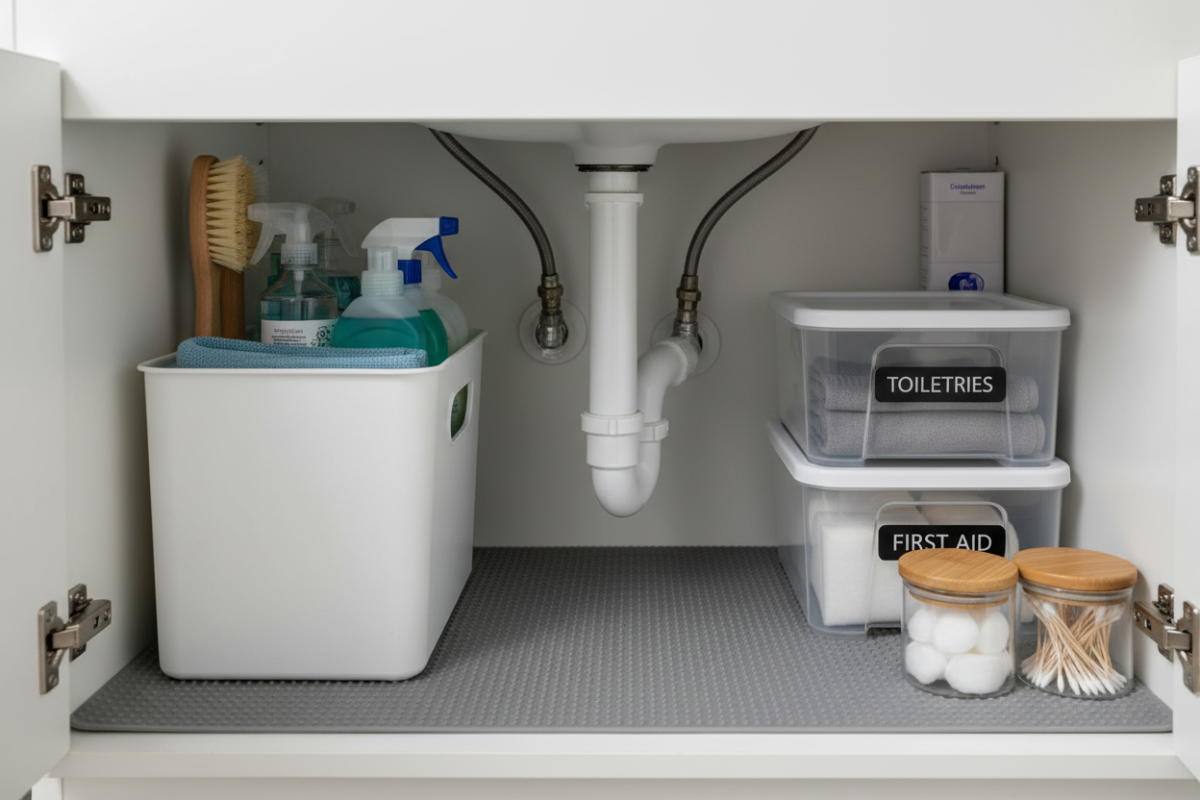
This is where bathroom clutter likes to hide in plain sight.
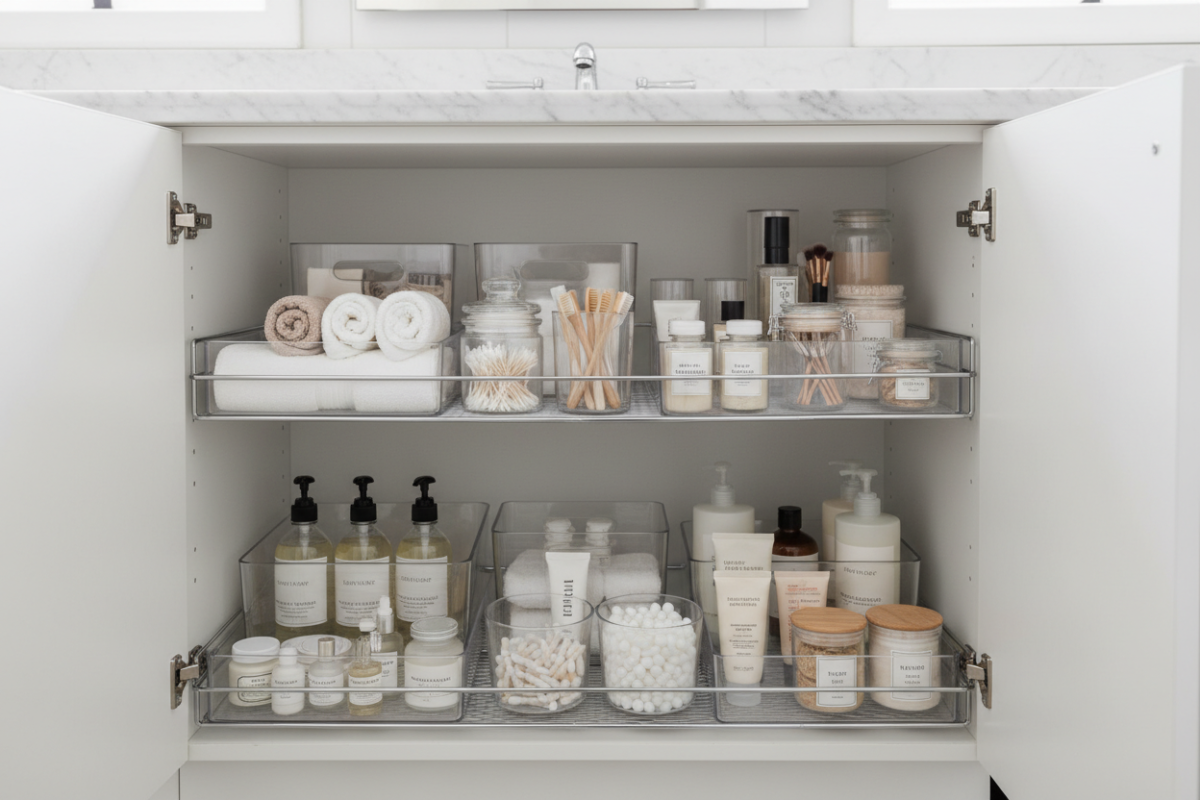
Under-sink storage is often treated like a dumping ground for everything that does not fit anywhere else. Cleaning products, extra toilet paper, hair tools, old containers, backup toiletries, and items you forgot you even owned.
The trouble with this area is not just volume. It is visibility. Once things get stacked loosely under the sink, it becomes hard to tell what is still useful and what is just taking up room.
That is why this spot needs a serious reset every now and then.
Start by pulling everything out. Not just rearranging it. Actually remove it all. That is the only way to see what is there. Then group the items into simple categories:
- cleaning supplies
- paper products
- hair or grooming tools
- backup toiletries
- things to throw away
As soon as you do that, the duplicates become obvious. So do the empty bottles, the almost-finished products nobody uses, and the random items that somehow migrated into the cabinet without a reason.
This one space can either work hard for you or work against you. There is rarely an in-between.
4. The Shower Caddy or Shower Corner
The shower itself can become a clutter trap faster than almost anywhere else in the bathroom.
Shampoo bottles. Conditioner. Body wash. Razors. Scrub brushes. Face cleansers. Backup bottles waiting in line. It all tends to gather inside the shower because that is where the products are used.
But when there are too many items in the shower, the space starts to feel smaller and less calm. Bottles topple over. Old products linger long after they are empty. And the caddy becomes a crowded little tower of things that are supposed to make life easier.
This is the perfect place to be ruthless.
Remove anything that is:
- empty
- nearly empty but forgotten
- duplicated
- unused for months
- expired or separated
A shower should hold only what is actively used. If a product is not part of your real routine, it does not need to take up space there.
The fewer bottles in the shower, the easier it is to clean and the more relaxed it feels to use.
5. The Medicine Cabinet
The medicine cabinet is a classic “out of sight, out of mind” zone.
That is exactly why it gets cluttered.
Old toothpaste. Half-used lotions. Dried-out makeup. Travel-size products you forgot about. Medications that are expired. Samples. Backup razors. Tiny bottles with no clear purpose. It looks organized until you actually go through it.
This spot deserves careful decluttering because it often contains items that are old, ineffective, or simply forgotten.
The goal is not to fill the cabinet perfectly. The goal is to make it useful.
Keep only what is current and relevant. Anything expired, dried out, or duplicated can go. If you have three nearly identical lotions and only use one, the other two are not helping.
The medicine cabinet works best when it feels calm and intentional. Not stuffed. Not overfull. Just simple and easy to navigate.
6. The Drawer Full of Random Bathroom Items
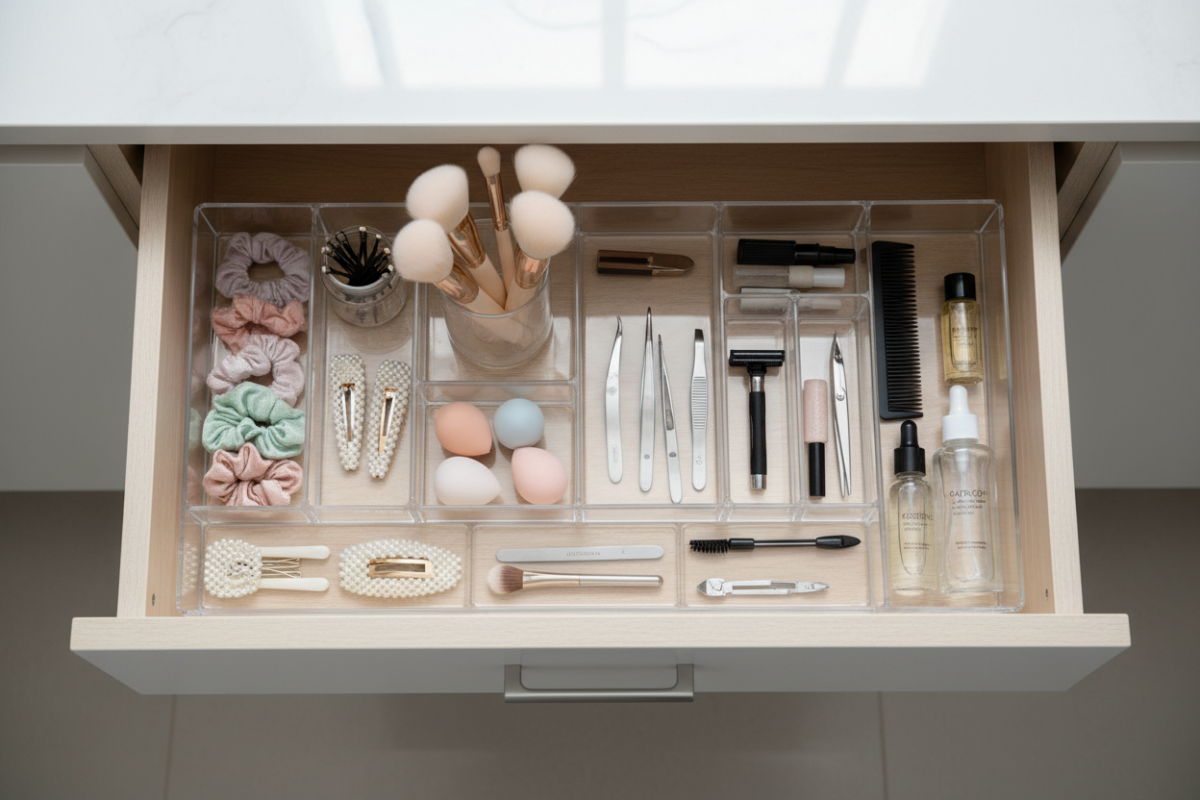
Every bathroom seems to have one drawer that becomes a little bit of everything.
Hair ties. Nail clippers. Tweezers. Cotton swabs. Spare makeup. Small tubes. Random samples. A couple of old pens for some reason. Maybe a razor package that was never opened. Maybe a broken clip. Maybe five things that do not belong there at all.
The drawer becomes a catch-all because it is easy to ignore. You close it and move on. That is why the mess grows quietly.
A cluttered drawer creates more friction than people realize. Every time you open it, you have to dig. Every time you need something small, you have to search. That tiny frustration adds up.
This is a great place to sort by category.
Keep:
- grooming tools together
- hair accessories together
- small personal care items together
Throw away:
- duplicates
- broken pieces
- dried-out products
- things you never use
A well-organized drawer can make a bathroom feel much more manageable, even if the room itself is small.
7. The Shelf Above the Toilet or Beside the Mirror
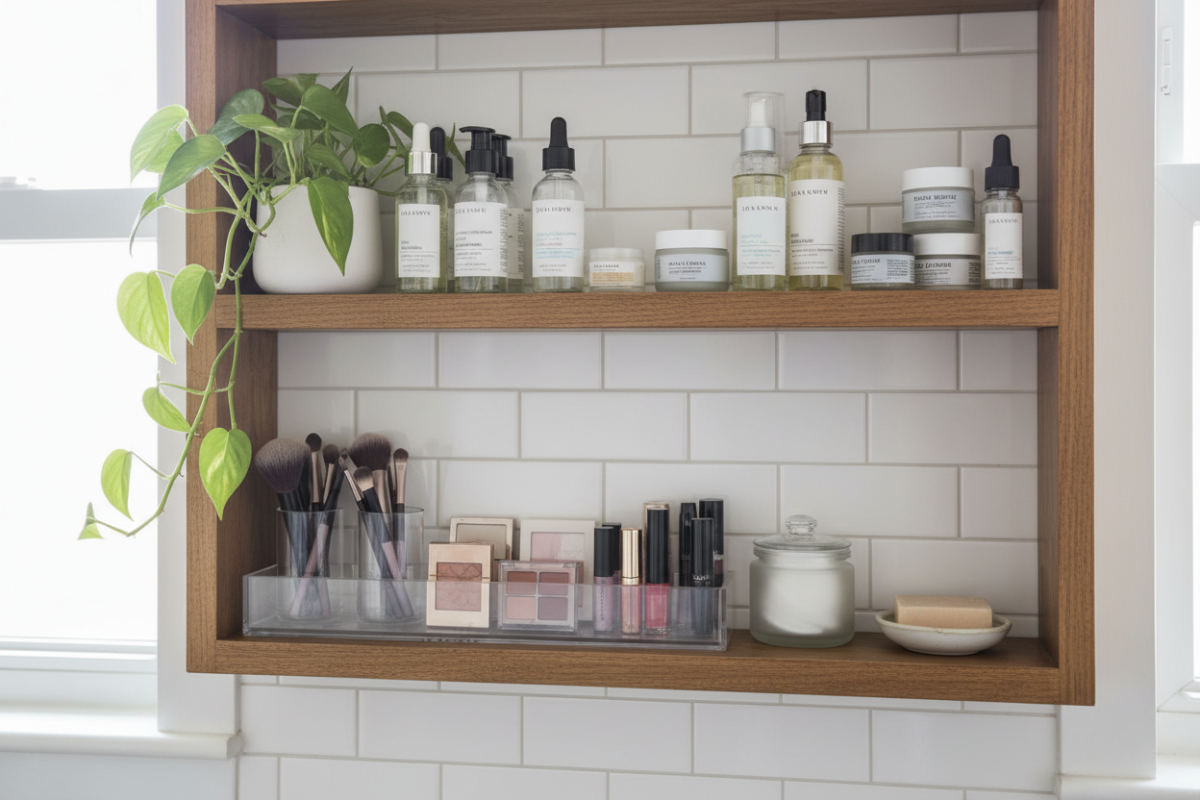
Open shelving can look beautiful, but it is also a very easy place for clutter to sneak in.
If the shelf is visible all the time, it tends to attract decorative clutter. If it is useful storage, it can quickly become crowded with containers, jars, and bottles that slowly take over the whole look of the room.
The challenge here is to remember that visible storage should stay intentional.
That means not everything deserves shelf space. It is easy to fill a shelf just because it exists, but every item up there is also part of the visual landscape of the room.
This is the place to keep only items that are either useful or genuinely attractive. A few neatly stored essentials are enough. Too many items, even if they are small, can make the room feel busier than it really is.
If the shelf is mostly holding things because there is no better place for them, it may be time to move those items somewhere less visible.
8. The Bathroom Floor Corners
Bathroom floors are often clean in the middle and cluttered at the edges.
The corners collect things that do not have a home: a storage bin, a step stool, a hamper, a basket, a roll of paper towels, a backup cleaning product, maybe even a bag you meant to carry upstairs and never did.
This kind of clutter gets ignored because it stays out of the way. But it still affects how the room feels.
The more objects sitting on the floor, the harder the bathroom is to clean. And the smaller the space, the more crowded it seems.
The solution is simple: anything that does not need to sit on the floor should be moved off the floor.
Floor space is precious in a bathroom. Even one clear corner can make the room feel much less cramped.
9. The Area Around the Trash Can
The trash can area often becomes a mini storage zone without anyone planning it.
Extra bags. Spare tissues. Items waiting to be thrown away. Small products set down temporarily and forgotten. It is one of those spots that quietly collects clutter because it feels like a “not quite yet” zone.
But if things are sitting there permanently, they are not temporary anymore.
This is a good place to remove anything that is clearly waiting for action. If it belongs in the trash, toss it. If it is a product you meant to keep, put it in its actual home. If it is just there because you do not know where else to put it, that is usually a clue that it does not belong there at all.
The space around the trash can should stay clean and functional, not become an extra storage shelf.
10. The Spot Behind the Door
Behind the bathroom door is one of the most forgotten spaces in the room.
It may hold hooks, storage, a robe, a towel, or a hanging organizer. But it can also become an easy hiding place for things that are not really needed.
Because the area is narrow and easy to overlook, items tend to stay there long past their usefulness.
This is the kind of space that benefits from one question:
Is this actually helping the bathroom function better?
If the answer is no, the item probably needs to move on.
Behind-the-door space is valuable because it can be functional without being obvious. But once too many things start hanging there, it turns into another source of visual clutter.
11. The Backup Product Zone
A lot of bathrooms have a secret backup product stash.
Extra shampoo. Extra soap. Extra toothpaste. Extra cotton pads. Extra toilet paper. Extra skincare. Extra everything.
Some backups are useful. Too many backups are not.
The problem happens when backups become a second full inventory of products you are already using. Instead of helping, they start taking up space and making it harder to see what is actually needed.
A good rule is to keep only what feels reasonable. One backup of something you use often is practical. Five backups of the same item is probably excess.
The bathroom should support your routine, not store a mini warehouse of duplicates.
12. The Corner Basket That Became a Catch-All
Baskets feel harmless.
They are neat. They are soft. They seem like the perfect answer to little bathroom items. But baskets can also become silent clutter containers.
A basket can easily fill up with random things: lotions, hair products, unused samples, extra towels, items you do not know where to put. At first it looks tidy because everything is contained. Then one day you realize the basket itself is the problem.
A full basket is still clutter.
The difference is that it is now packaged more attractively.
That is why baskets need regular review. A good basket should have a clear purpose. Not just “miscellaneous bathroom stuff.” If the contents are random, the basket is hiding clutter rather than solving it.
13. The Vanity Top
The vanity top is one of the first places to feel crowded.
This is where small things spread out and multiply. Hairbrushes. Makeup. Bottles. Jewelry trays. Skincare. Tools. Hair clips. A little bit of everything.
When the vanity top gets too full, the whole bathroom feels smaller. Even if the items are useful, too many visible objects make the room feel busy.
This is a great place to reduce the amount of “daily display” items to the bare minimum.
Keep:
- what you use every day
- what you reach for without thinking
- what needs to be accessible
Move:
- backups
- rarely used items
- things that can go in a drawer
A bathroom vanity feels far more peaceful when it is not overloaded with objects.
14. Old Towels and Washcloths
Textiles are easy to keep too long.
A faded towel. A rough washcloth. A stack of mismatched extras. Towels that are technically still usable but no longer pleasant to use. They sit in drawers or baskets because they are “still fine.”
But bathrooms do not need endless textile backup.
If towels are worn out, thin, stained, or no longer soft, they should be replaced or removed. Keeping too many old ones around adds bulk without real value.
The same goes for washcloths that are past their prime. A smaller set of clean, good-quality towels is usually better than a crowded pile of mediocre ones.
15. Anything You Keep Because You Feel Guilty Throwing It Out
This is the hardest category of all.
It is not about a specific item. It is about the emotional habit of keeping things that no longer belong.
Maybe the product was expensive. Maybe it was a gift. Maybe it still has a little bit left. Maybe you feel bad throwing away something that seems “too good” to toss.
But guilt is not a storage strategy.
If an item is taking up space and no longer serves a real purpose, it is clutter no matter how nice it once was.
Bathrooms are small. Every item inside them needs to earn its place. Anything living there out of guilt is usually making the room harder to use.
Once you start clearing these emotionally sticky items, the whole bathroom becomes easier to maintain.
Why These Hidden Spots Matter So Much
The biggest clutter problems in a bathroom are not always the most obvious ones.
It is the tiny, ignored places that slowly create the feeling of mess. A shelf here. A drawer there. The top of the toilet. The corner basket. The backup product stash. Each one seems small. Together, they create that crowded feeling that makes the room harder to enjoy.
That is why decluttering a bathroom works best when you focus on the spaces you keep overlooking.
You do not need to empty the whole room in one dramatic session. You just need to stop pretending the little hidden spots do not matter.
Because they do.
A Simple Way to Start
If the bathroom feels overwhelming, do not start with the whole room.
Start with one overlooked spot:
- the top of the toilet
- the drawer full of random items
- the shelf above the sink
- the shower caddy
- the under-sink cabinet
Just one.
Pull everything out. Keep what is useful. Toss what is expired, broken, duplicated, or unnecessary. Put back only what truly belongs.
That one small win creates momentum fast.
And once the first area is clear, the rest feels much easier.
Final Thoughts
Decluttering a bathroom is not about removing every single item. It is about making the room feel easier to use, easier to clean, and easier to breathe in.
The overlooked spots are usually the ones doing the most silent damage. They are where clutter hides when no one is paying attention. They are also where the fastest wins usually live.
Clear those places, and the bathroom changes almost immediately.
It looks lighter. It feels calmer. It becomes easier to maintain.
And in a small space, that is a big deal.
Sometimes the best bathroom refresh is not new decor or a full remodel.
It is simply letting go of the things you stopped noticing a long time ago.