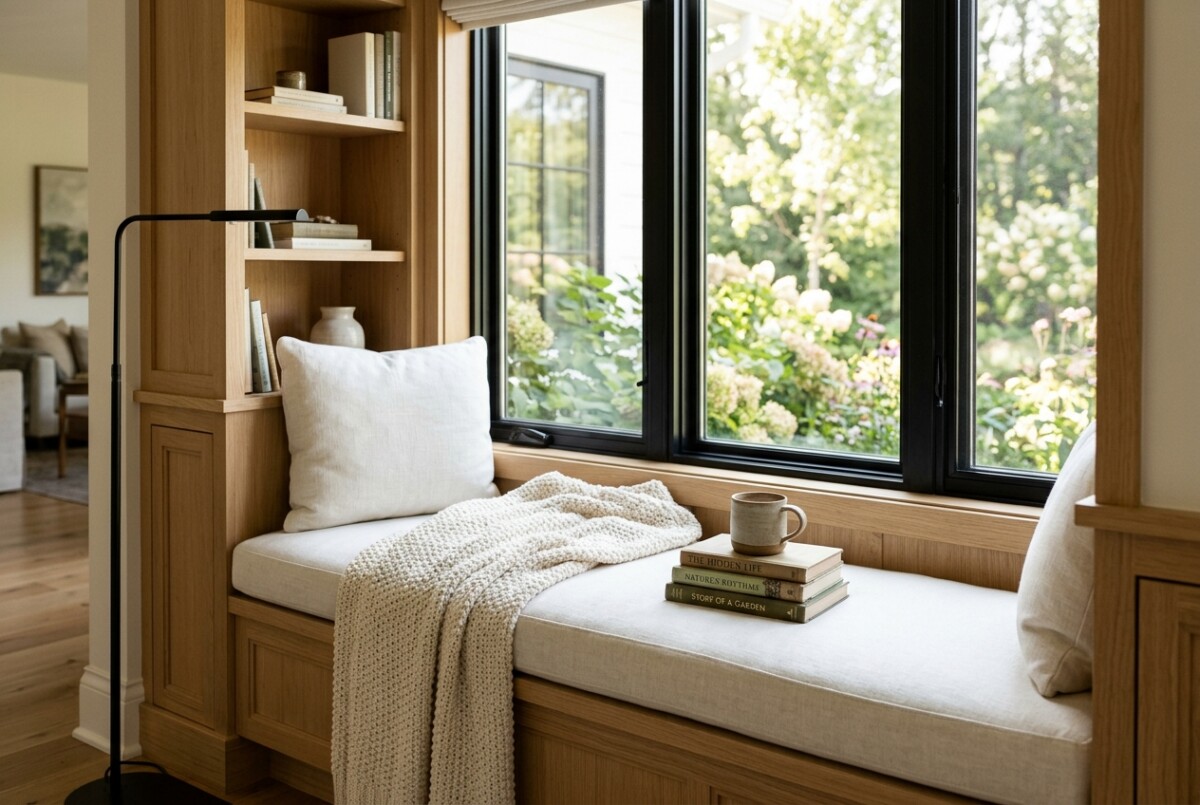
Table of Contents
A reading nook can be as simple as a comfortable chair, a good light, and somewhere to put your book. It might sit beside a bedroom window, take up an unused corner of the living room, or fit into a small alcove that has been gathering clutter. The best spot is one that feels comfortable enough to use regularly and suits the way you like to read.
You do not need a separate room or a large renovation to make one work. Think about the space available, the kind of seat you prefer, and how much light you will need. These reading nook ideas cover a range of styles and layouts, from built-in window seats to flexible floor cushions and compact corners.
1. Farmhouse Reading Nook With Sliding Barn Doors
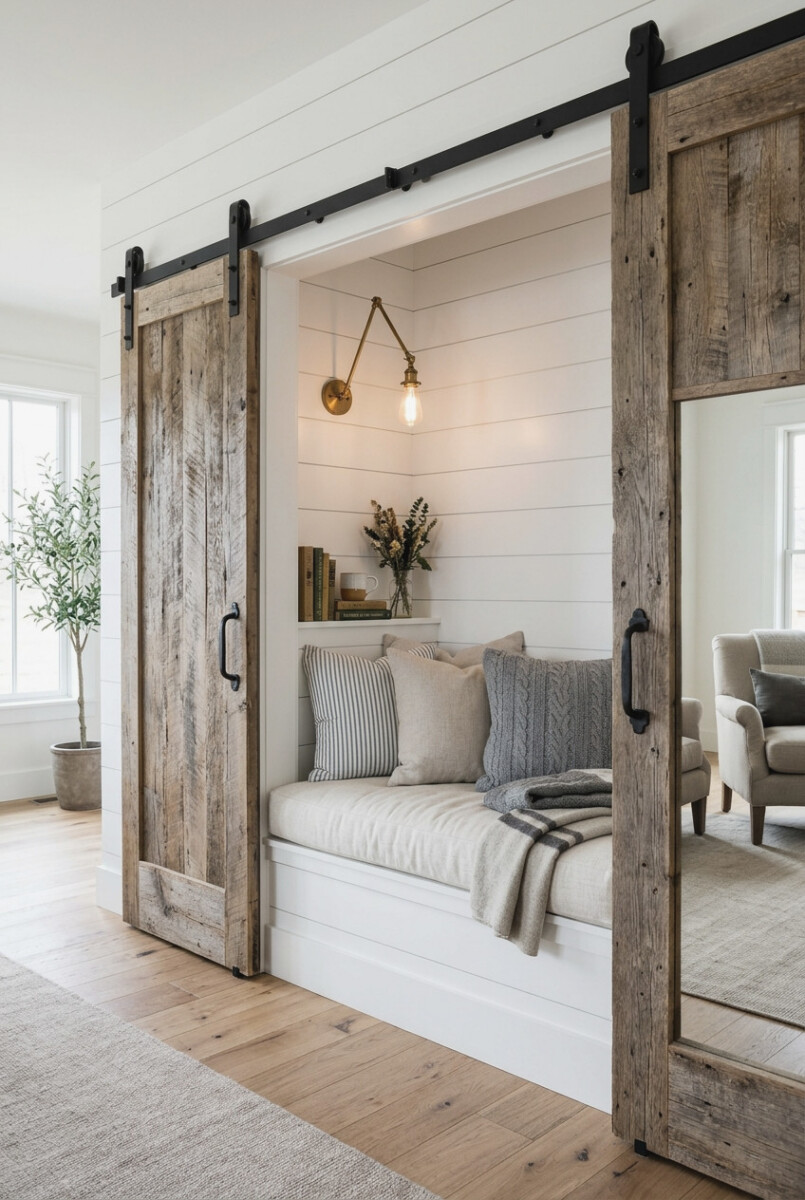
Sliding barn doors can give a shallow alcove or converted pantry the feel of a small room of its own. Inside, use simple shiplap, pale paint, and a built-in bench to create a relaxed farmhouse look. The doors are especially useful when the nook opens onto a busy living area and you would like the option of closing it off.
Add a firm bench cushion, a few washable pillows, and a small reading light. Before installing the doors, check that the track has enough wall space and that the open panels will not block a hallway or doorway.
2. Coastal-Inspired Reading Nook With Natural Textures
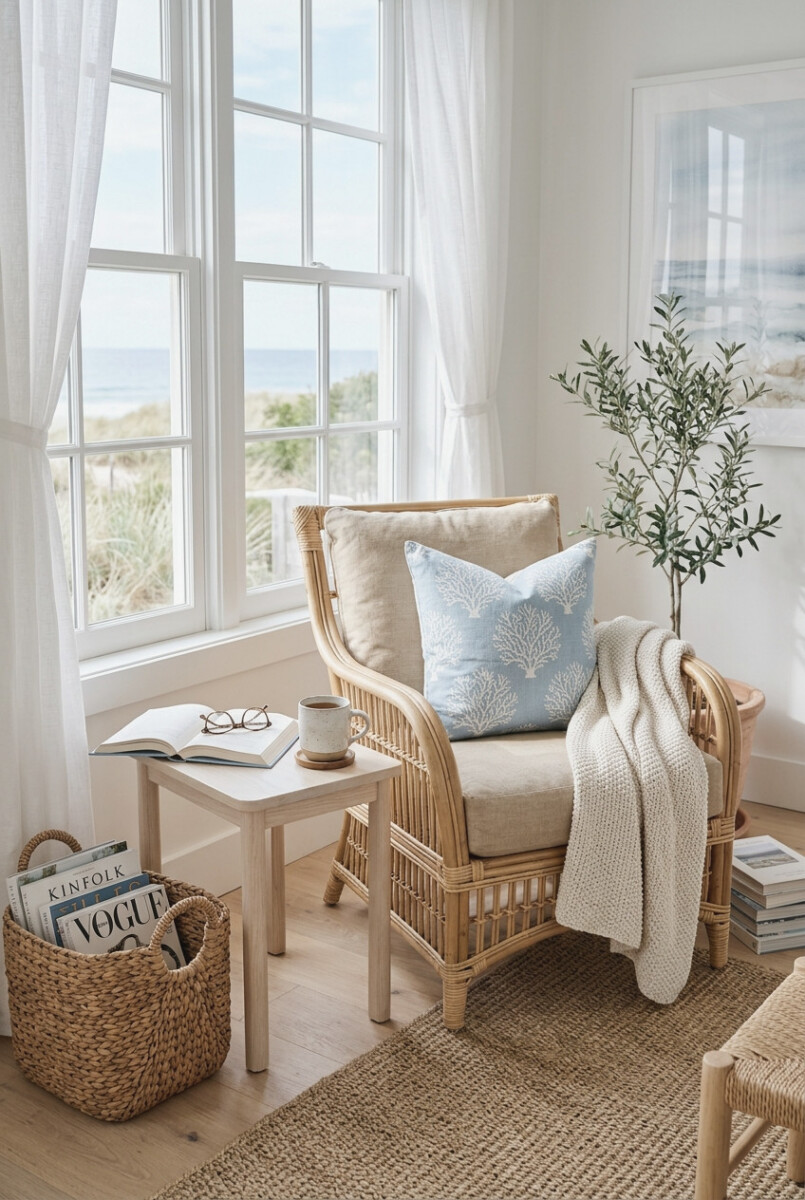
A coastal reading nook feels light and relaxed when it uses natural textures rather than obvious beach-themed decorations. Try a rattan armchair, a seagrass rug, woven baskets, and pale wood. Soft shades of white, sandy beige, and muted blue create a calm palette without making the corner look like a themed room.
Place the chair near a window when possible, and add a lightweight throw for cooler evenings. A small side table gives you somewhere to set a book or drink, while one or two patterned cushions provide enough color without competing with the natural materials.
3. Minimalist Window Seat With Built-In Shelving
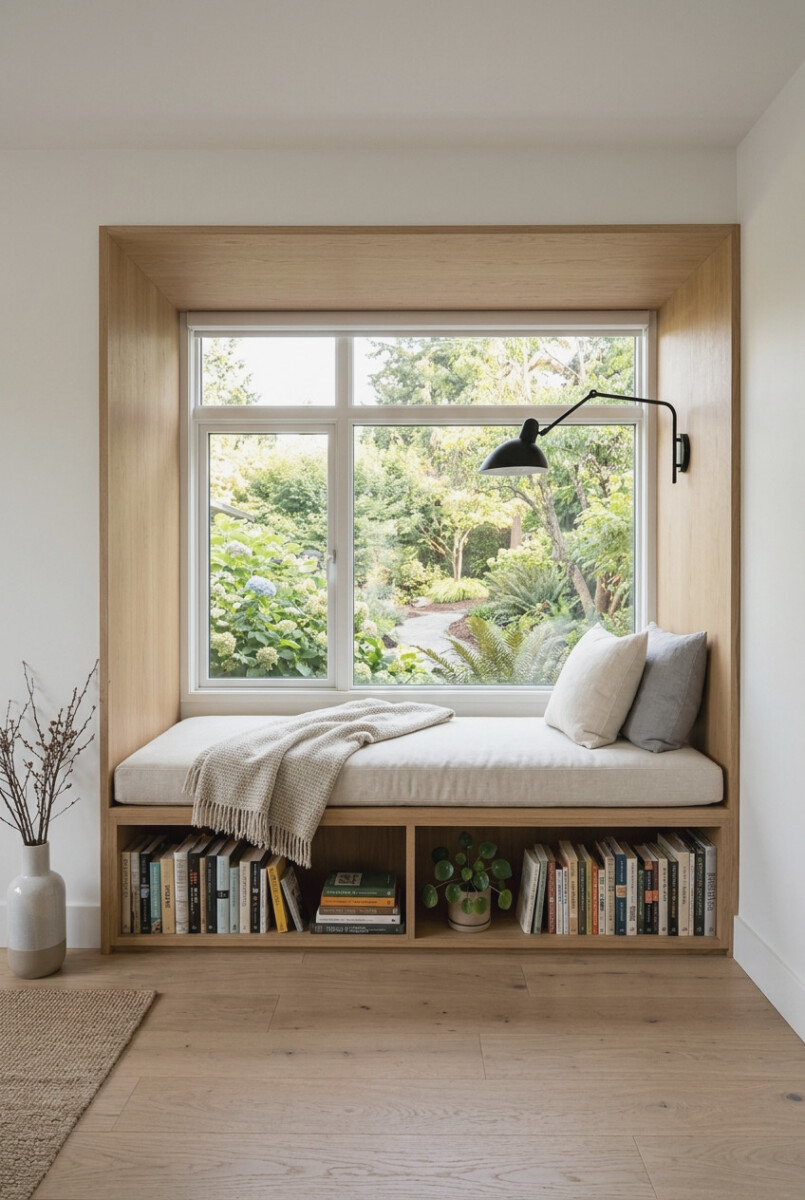
A built-in window seat makes good use of the area beneath a wide window and can combine seating with book storage. Keep the lines simple with a plain wood finish, a tailored cushion, and shelves or drawers below the seat. This works well in a bedroom, home office, or quiet corner of a living room.
Choose a seat depth that allows you to sit comfortably with your back supported, and include cushions if you plan to curl up there. Check the position of radiators and window vents before building around them, and add a wall light or reading lamp for evenings.
4. Under-Stairs Reading Nook With Soft Lighting

The space beneath a staircase can make a useful reading nook, especially when the area is too small for standard furniture. Fit shallow shelves along the back wall and add a custom bench or a compact armchair, depending on the available headroom. A light wall color can help the enclosed space feel less dark.
Use a wall-mounted sconce or a recessed light that provides enough illumination for reading. Keep the entrance clear and make sure the seat does not extend into the stair route; a fitted cushion with storage drawers underneath can help make the most of the remaining space.
5. Bohemian Floor Cushion Corner With Macramé Accents

For a relaxed, low-level reading spot, layer a rug with oversized floor cushions and a few smaller pillows in warm, mixed colors. A macramé wall hanging, woven basket, or handmade side table can add texture without requiring permanent changes. This setup is easy to rearrange and suits bedrooms, studios, and rental homes.
Choose cushions with enough filling to support your back, and keep a firm floor pillow nearby if you prefer to sit upright. A low table or tray makes it easier to keep books, glasses, and a drink within reach without crowding the floor.
6. Victorian-Style Reading Nook With Dark Wood Paneling

A Victorian-inspired nook can take its cues from traditional libraries: dark wood, rich colors, patterned textiles, and a substantial armchair. A wingback chair in leather or velvet makes a strong focal point, while walnut-toned shelves and framed botanical prints help establish the period character.
You do not need original paneling to get the look. Deep green, burgundy, or navy paint can create a similar backdrop, and a brass floor lamp adds practical reading light. Keep the chair comfortable and leave enough space for a small table beside it.
7. Modern Industrial Loft Nook With Exposed Brick

An industrial-style nook pairs raw finishes with comfortable furniture. If you have an exposed brick wall, place a metal-framed bookcase and a leather or canvas chair nearby. A dark wood side table and a simple floor lamp can complete the look without adding too many decorative pieces.
Brick, metal, and concrete can make a room feel hard, so soften the seating area with a wool rug and a textured throw. Choose a lamp that directs light onto the page rather than relying on a decorative bare bulb as the only source of illumination.
8. Scandi-Chic Corner With Faux Fur and Light Wood
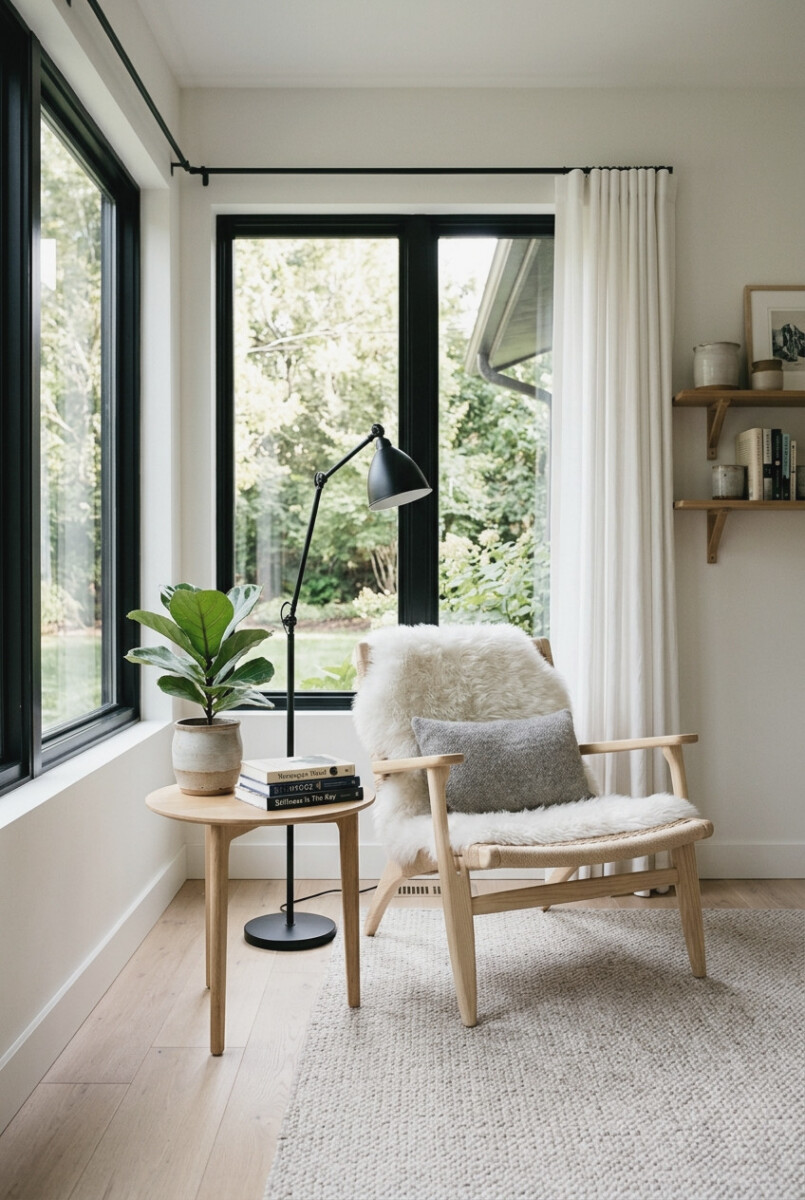
A Scandinavian-inspired reading corner works well with pale wood, simple shapes, and a restrained color palette. Choose a chair with a supportive back, add a light-colored rug, and use a small table with clean lines. A faux-fur or wool throw brings softness without making the arrangement feel overly decorated.
Keep the surrounding area uncluttered and use a floor lamp or adjustable wall light for reading. White, soft gray, oatmeal, and natural wood tones are easy to combine, while a single plant or muted cushion can add a little contrast.
9. Attic Skylight Nook for Daytime Reading and Stargazing
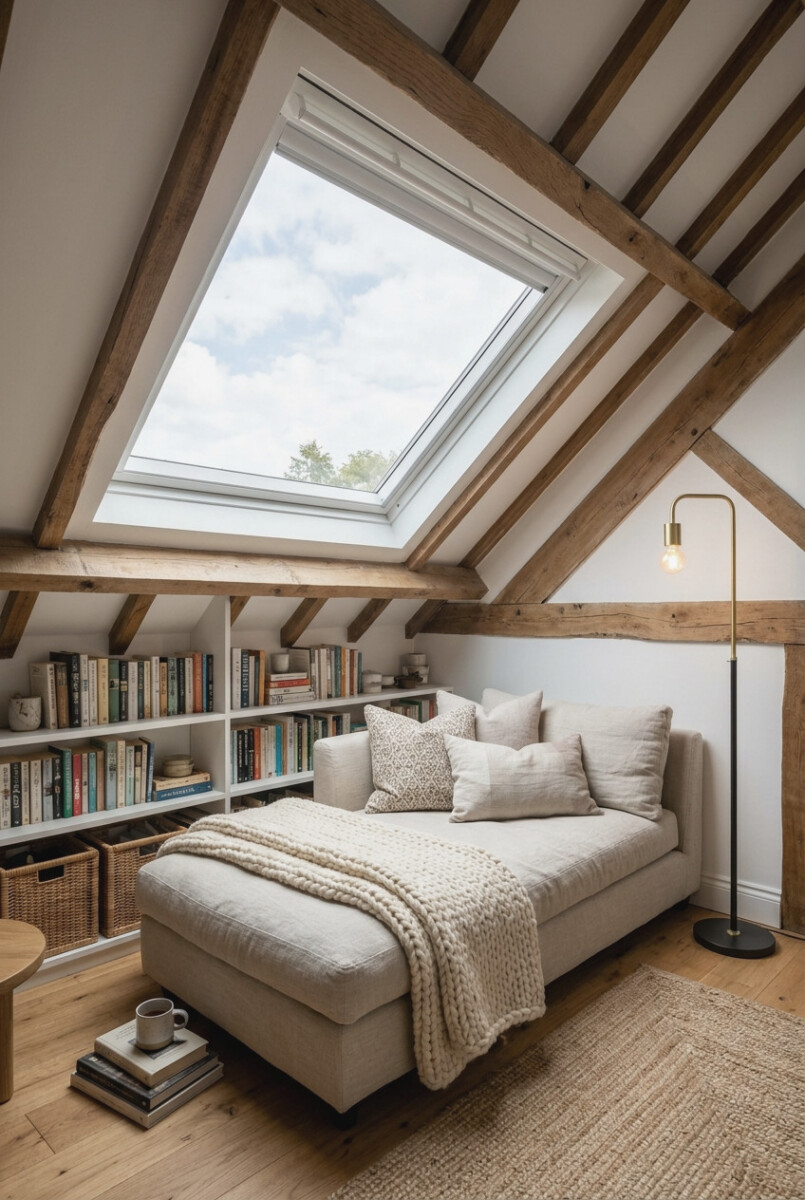
An attic with a skylight can become a quiet reading spot, particularly if the sloped ceiling leaves room for a low bench or daybed. Position the seat where you can enjoy daylight without sitting directly in the path of strong afternoon sun. Built-in drawers or low shelves can make use of the short walls beneath the roofline.
Add a reading lamp for cloudy days and evenings, and use blinds if the skylight brings in too much heat or glare. Check that the furniture leaves clear access to the window and that the nook remains comfortable through seasonal temperature changes.
10. Sunroom Reading Nook With Wicker Chairs
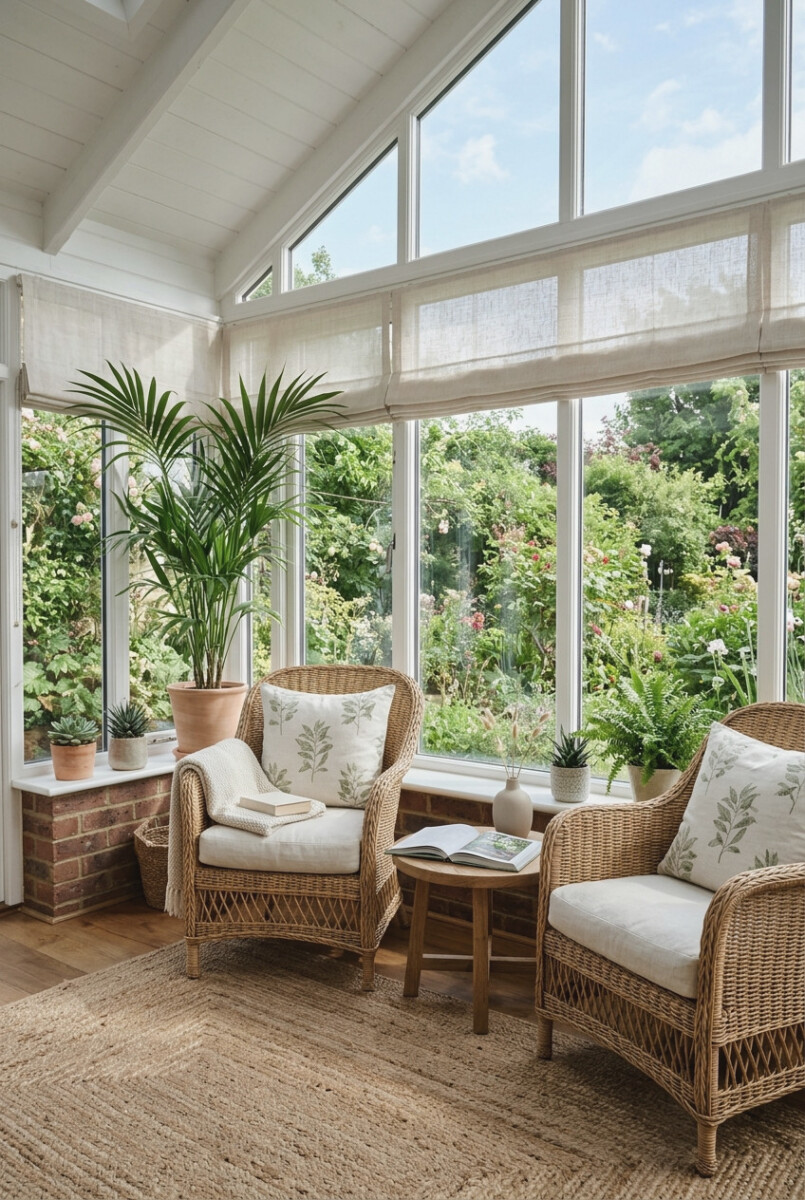
A sunroom is a natural place for a reading nook because it offers daylight and views of the garden. A wicker or rattan chair, botanical cushions, and a small side table create an easy, relaxed arrangement. Choose furniture that suits the room’s temperature changes and the amount of direct sun it receives.
Indoor plants can soften the space, but select varieties that suit the available light and are safe around children or pets in your home. Use fade-resistant fabrics where the sun hits the chair, and add a shade or blind so the nook remains comfortable on bright afternoons.
11. Mid-Century Modern Nook With a Velvet Wingback Chair
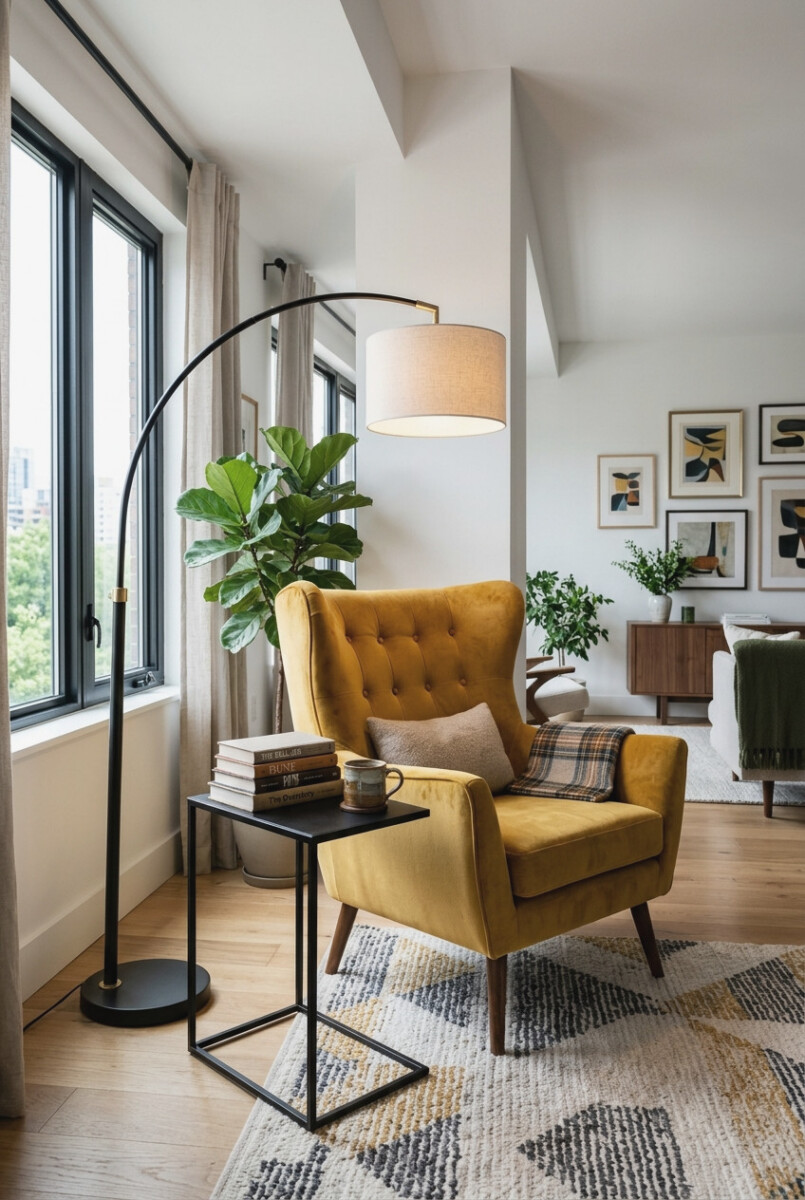
A mid-century reading nook can center on a chair with tapered wooden legs, a high back, and a compact profile. Velvet in mustard, rust, or deep green adds color, while a slim side table keeps the arrangement from feeling bulky. This style fits neatly into an open-plan living room or a bedroom corner.
Look for a chair that supports your back and neck rather than choosing one on appearance alone. An arched floor lamp or an adjustable reading light completes the setup, and a small rug can define the nook without separating it from the rest of the room.
12. Nursery Reading Nook With a Rocking Chair and Floating Bookshelves
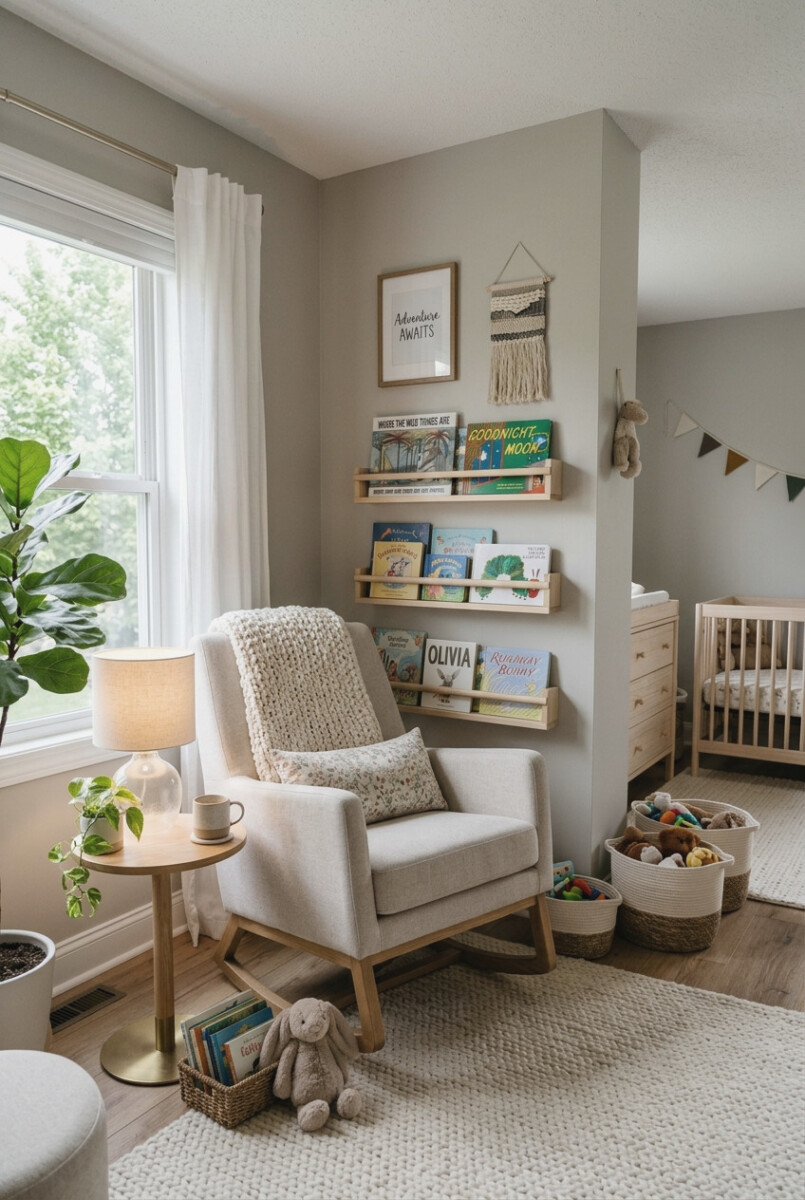
A nursery reading nook gives parents a comfortable place for bedtime stories and quiet time with a child. Start with a rocking chair or glider that has good back support, then add a small table for books and essentials. Low book ledges can display covers at a child’s eye level as they grow.
Secure shelves firmly to the wall and keep cords, lamps, and small decorative objects out of reach. Choose upholstery that is easy to clean, and use a dimmable light that can be adjusted for story time without making the room too bright before sleep.
13. Maximalist Reading Nook With a Gallery Wall

A maximalist nook suits readers who enjoy being surrounded by art, objects, and color. Place a favorite chair against a wall of framed prints, photographs, and collected pieces, then bring in patterned cushions and a layered rug. A vintage trunk or small bookcase can hold the books you are currently reading.
The mix does not need to be perfectly matched, but give the arrangement a little structure by repeating a few colors or frame finishes. Keep the seat and its immediate surroundings clear enough to use comfortably; the display should add personality rather than make the corner difficult to settle into.
14. Monochrome Moody Nook With Deep Charcoal Walls
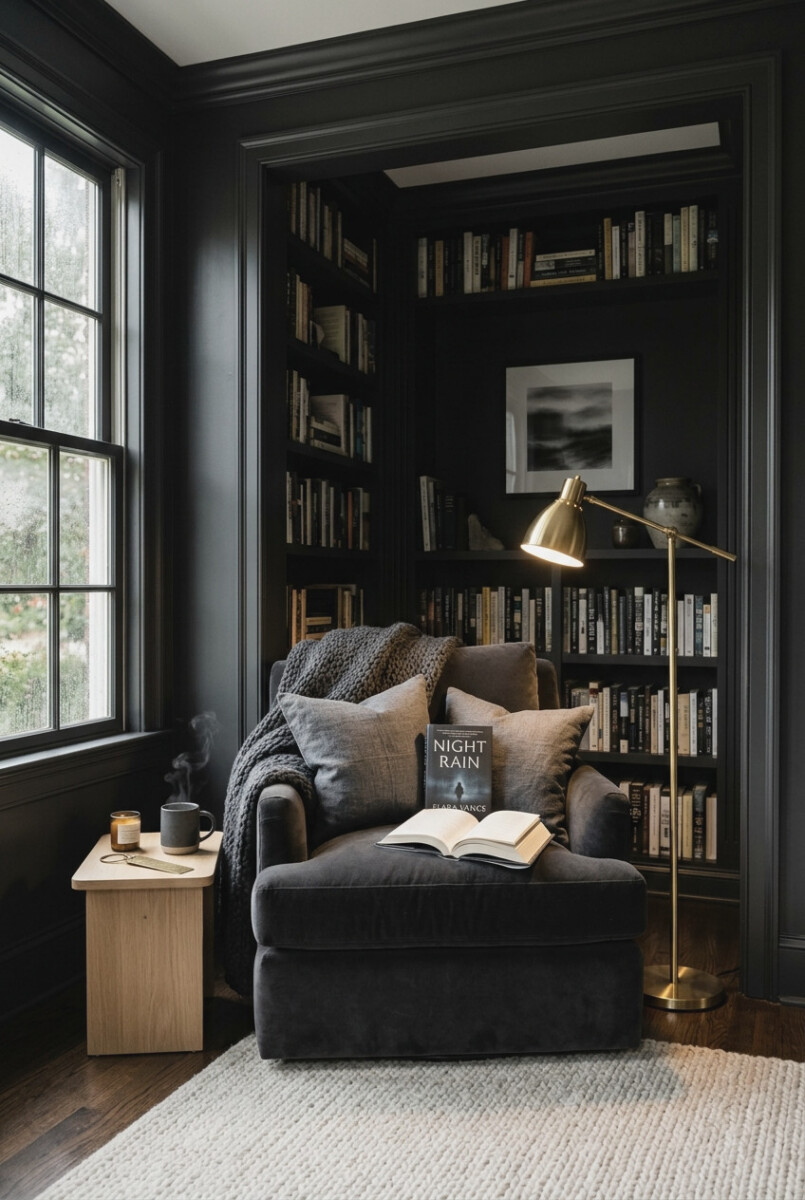
Painting the walls, trim, and shelves in a deep charcoal or midnight blue can give a reading nook a close, intimate feel. Choose a chair in a similar shade for a blended look, or use a contrasting fabric to make the seat stand out. This approach works particularly well in a small alcove or a room with a clear lighting plan.
Dark colors absorb more light, so include a dedicated reading lamp and consider a lighter rug or side table for balance. A brass, copper, or warm-toned fixture adds contrast, while keeping the rest of the palette simple helps the nook feel considered rather than crowded.
15. Porch Swing Reading Nook With Outdoor Textiles
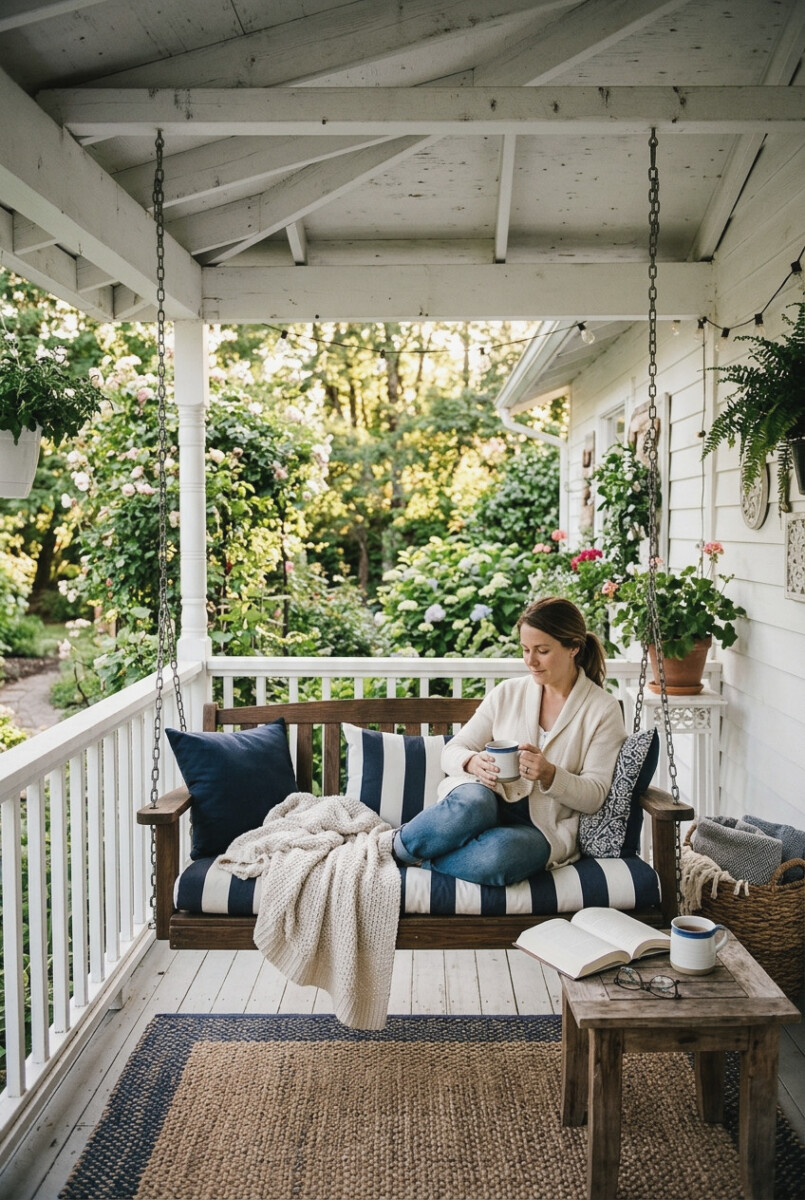
A porch swing can turn a covered outdoor area into a pleasant place to read on mild days. Add weather-resistant cushions, a washable throw, and a small table that can hold a book or drink. A simple outdoor rug helps define the seating area and makes it feel connected to the rest of the porch.
The swing must be attached to a beam or support designed to carry its weight, using the hardware recommended for the installation. Leave enough clearance for it to move safely, and bring cushions indoors or use covered storage when the weather turns wet.
16. Closet Conversion Nook With Wallpapered Backing

An unused closet can become a compact reading nook when its doors are removed or replaced with a suitable opening. Add a fitted bench or a deep cushion, then use the back wall for wallpaper or a contrasting paint color. Because the space is already enclosed, it can feel separate from the rest of the room without taking up additional floor area.
Measure the depth carefully before choosing a seat, and make sure there is enough room to get in and out easily. A wall light, a small shelf, and drawers or baskets under the bench provide the practical details that make the nook comfortable to use.
17. High-Ceiling Reading Nook With a Rolling Library Ladder
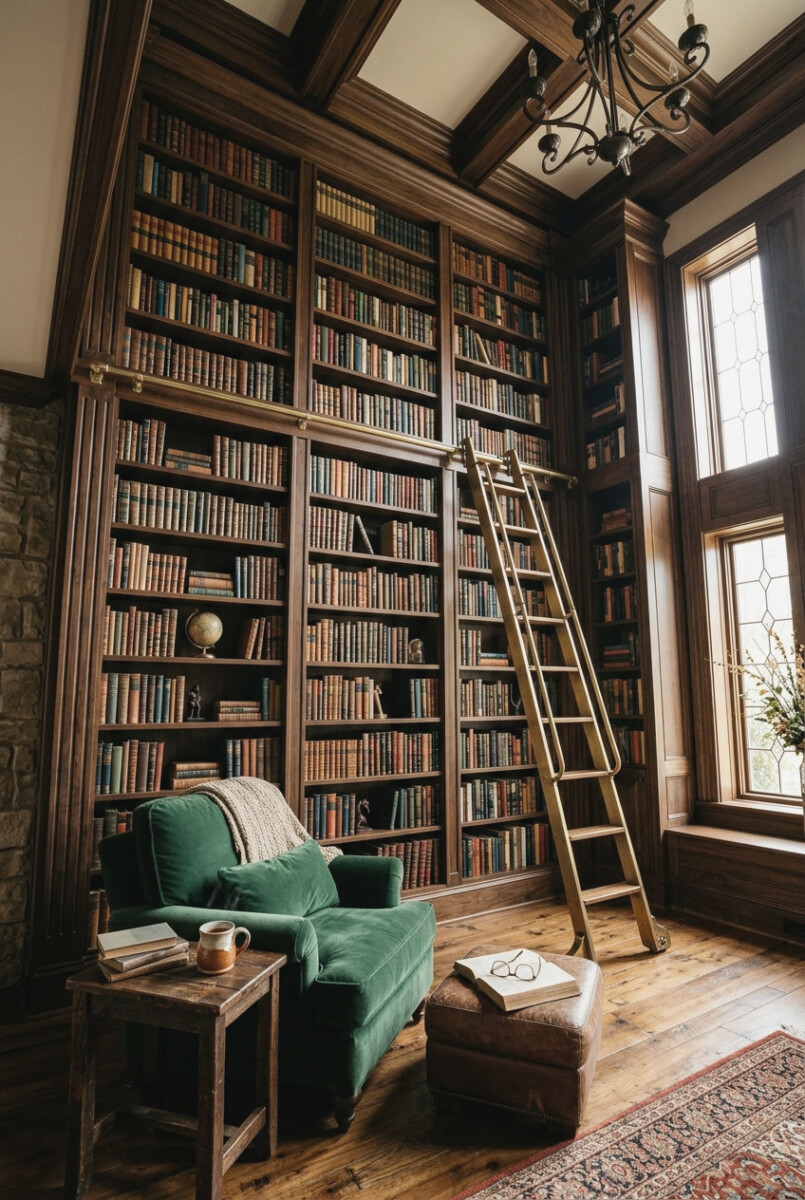
In a room with tall shelves, a rolling library ladder can make upper storage easier to reach and become a distinctive part of the room. Place a comfortable chair or small bench at the base of the bookcase so the area functions as a reading spot as well as a library wall. Keep the ladder and its track in a finish that suits the surrounding furniture.
The rail and fixings need to be properly installed for the ladder system, and the floor should be clear when it is in use. Store frequently read books at an easy height so you do not need to climb for everyday reading, and treat the ladder as access equipment rather than a decorative prop.
18. Retro Sun-Drenched Nook With a Papasan Chair

A papasan chair brings a relaxed, retro feel to a sunny corner. Its rounded shape is ideal for curling up with a book, and a deep cushion in neutral linen or corduroy keeps the look easy to mix with other furniture. Place it beside a leafy plant or a low bookcase to make the area feel like a separate reading spot.
Papasan chairs vary in support, so try one before buying if you plan to read for long periods. Add a small side table and a lamp for evening use, and leave enough room around the wide base so the chair does not obstruct a walkway.
19. Zen-Inspired Nook With Tatami Mats and a Low Table
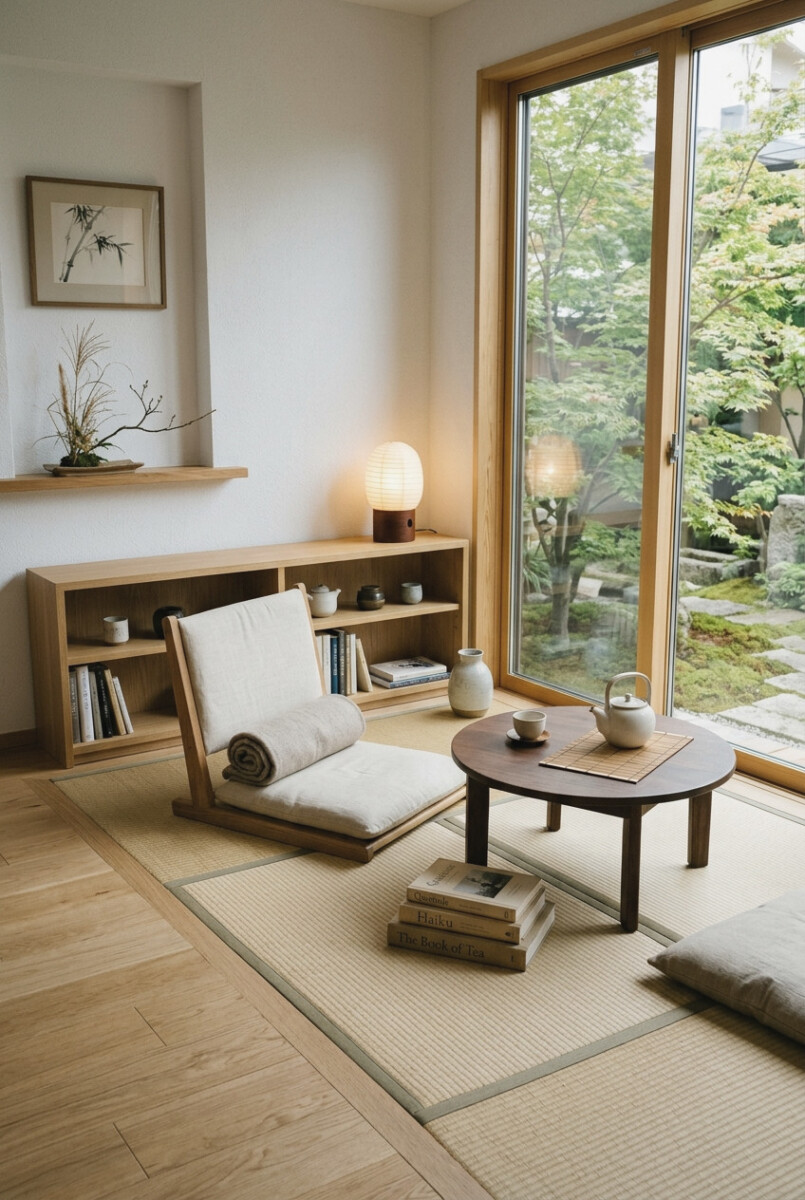
A Japanese-inspired reading nook can use a low seat, a simple table, and natural materials to create a calm, uncluttered setting. Tatami-style mats or a woven floor covering define the area, while a legless floor chair provides back support. Keep the palette restrained with wood, linen, and a few carefully chosen objects.
Choose a floor seat that suits your knees and back, especially if you are not used to sitting close to the floor. A small lamp and a low shelf are often all the extra furniture you need; leaving open space around the nook helps preserve its simple appearance.
20. Botanical Reading Nook Surrounded by Potted Plants
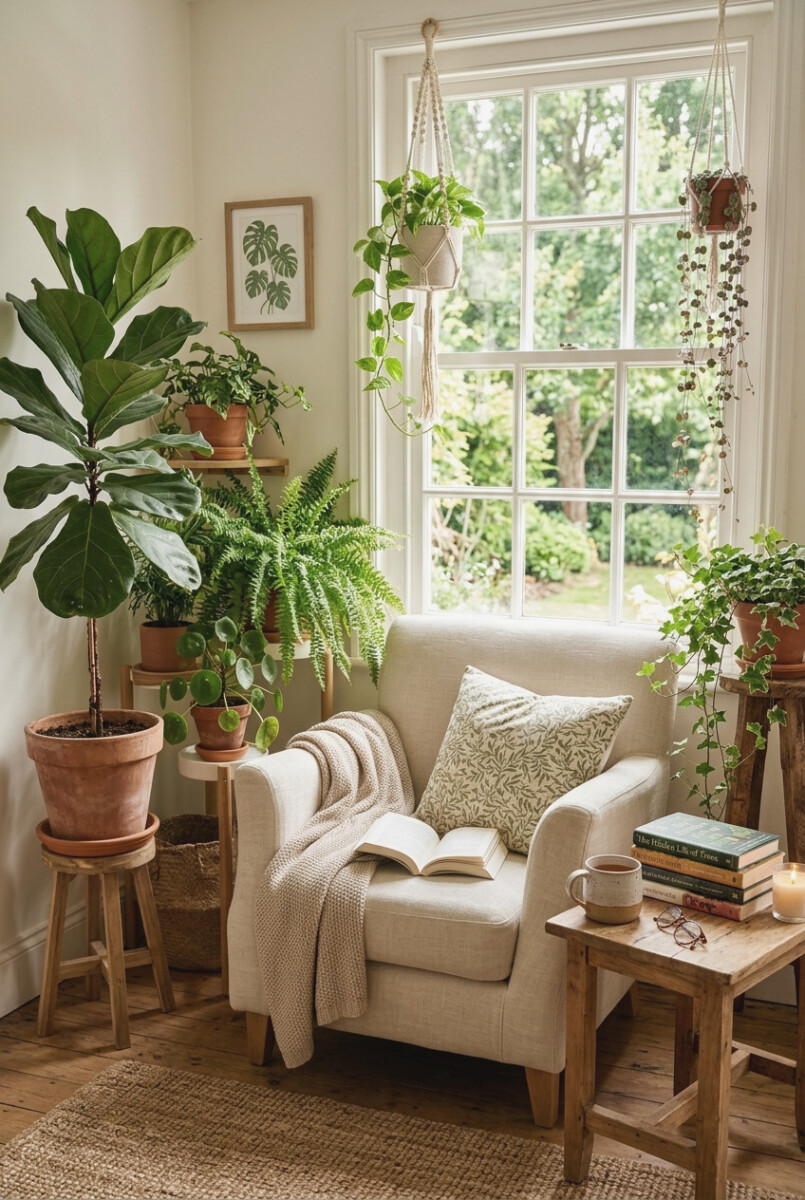
If you enjoy being around greenery, arrange a reading chair beside a large window and group plants at different heights around it. Plant stands and hanging planters can add layers without taking up all the floor space, while terracotta pots and natural wood furniture keep the look relaxed. This works well in a bright corner or enclosed porch.
Choose plants according to the light, temperature, and humidity in the room rather than grouping together varieties with different needs. Leave enough space to water them easily, and check that any plants within reach are suitable for your household, especially if children or pets may be nearby.
21. Parisian Café-Style Nook With a Marble Table and Café Curtains
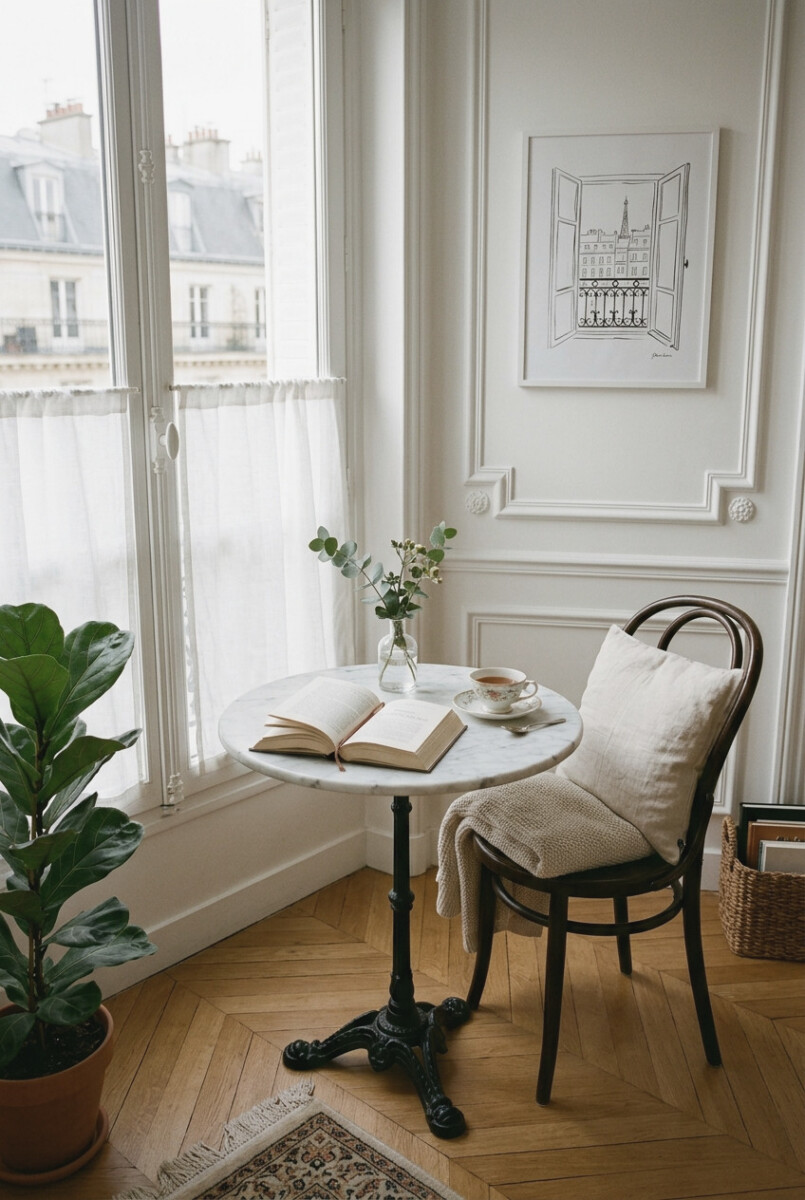
For a small reading spot with a café feel, pair a marble-topped pedestal table with a bentwood chair or compact upholstered seat. Place the table beside a window and add café curtains that cover the lower portion of the glass while allowing daylight through the top. A framed print or a small vase can finish the arrangement.
A marble table can feel cool and formal, so balance it with a comfortable cushion or a soft seat. Make sure the chair is suitable for longer reading sessions, and keep the tabletop mostly clear so there is room for a book, a drink, and a notebook.
22. Art Deco Reading Nook With Gold Accents and Geometric Patterns
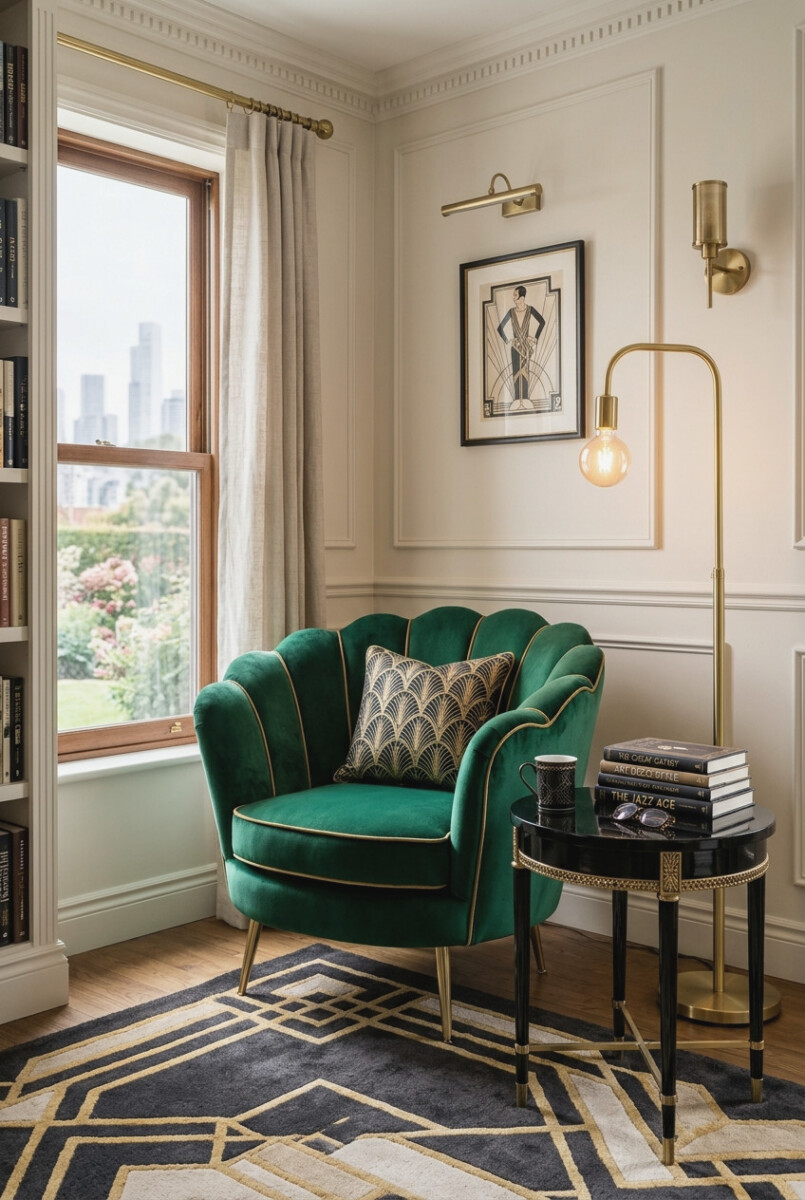
An Art Deco nook brings a little glamour through bold shapes, rich color, and polished finishes. Choose a rounded or scalloped chair in emerald, sapphire, or another jewel tone, then add a brass floor lamp and a small glass or lacquered side table. A geometric rug helps bring the different elements together.
Keep the pattern and metallic details balanced so the corner remains comfortable rather than overly formal. A plain wall or simple curtains can give the stronger shapes room to stand out, while a focused reading light makes the seat practical after dark.
23. Cozy Fireplace Nook With an Oversized Ottoman
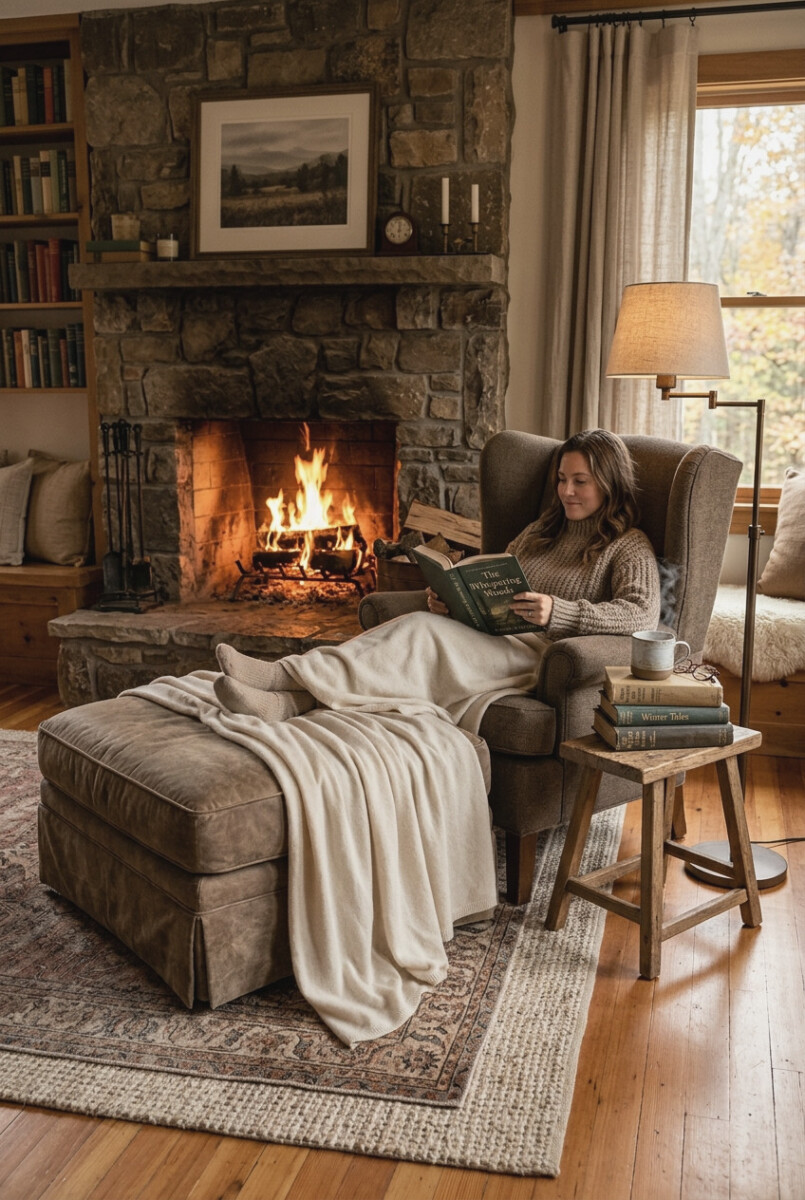
A chair beside a fireplace makes a natural reading spot, especially when paired with an oversized ottoman. The ottoman can support your feet, hold a tray, or provide an extra seat when needed. Choose upholstery that complements the room and a chair with enough back support for longer reading sessions.
Keep the furniture, rugs, and throws at the clearances required for your particular fireplace or heater. A side table and adjustable lamp make the nook useful when the fire is not in use, so the arrangement works throughout the year.
24. Entryway Reading Perch With a Bench and Baskets
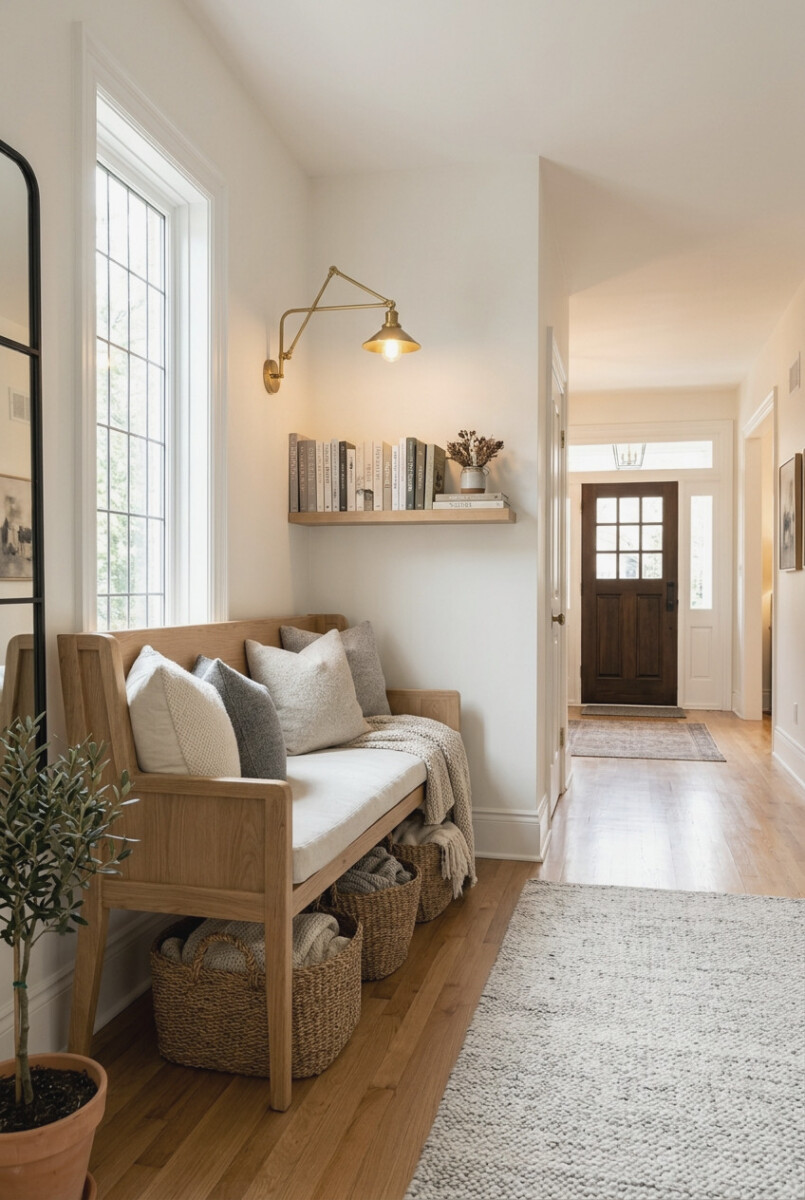
A wide entryway can accommodate a small reading perch if it sits away from the main route through the house. Choose a bench with a back or raised sides, add a cushion, and use baskets underneath for slippers or throws. A narrow shelf can hold a small selection of books without making the entrance feel crowded.
This works best as a short-stop spot rather than a private retreat, since entryways often have people moving through them. Keep the walkway clear and use a wall light or nearby lamp so the bench is comfortable to use in the evening.
25. Nautical Navy Reading Nook With Brass Sconce Lighting
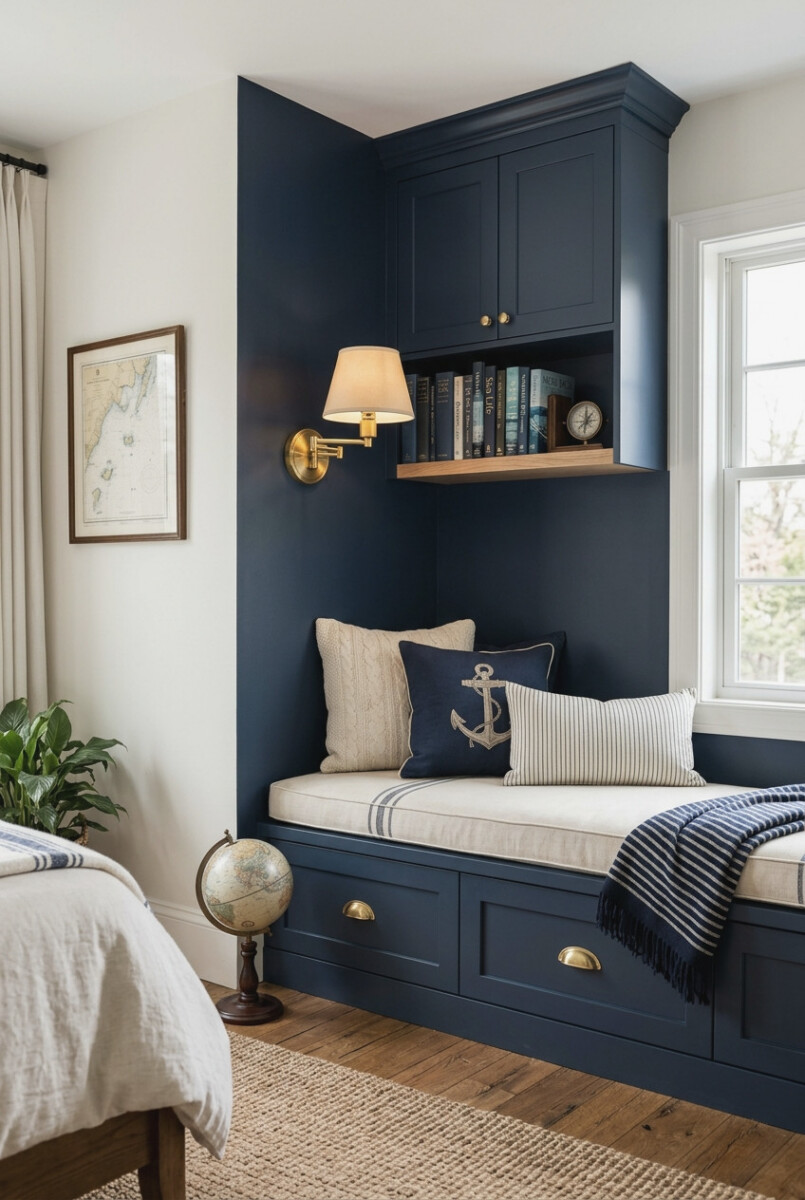
A nautical-inspired nook can look polished when it relies on a restrained palette of navy, cream, and brass rather than obvious seaside decorations. A built-in bench with drawers underneath is useful in a small guest room or bedroom, while striped cushions add a subtle reference to classic maritime interiors.
Fit a brass swing-arm sconce beside the seat so the light can be directed onto the page. Add a small shelf for books and keep the surrounding decor simple; a few well-chosen details are usually more effective than anchors, ropes, and other themed accessories used all at once.
26. Whimsical Canopy Nook With Flowing Sheer Fabric
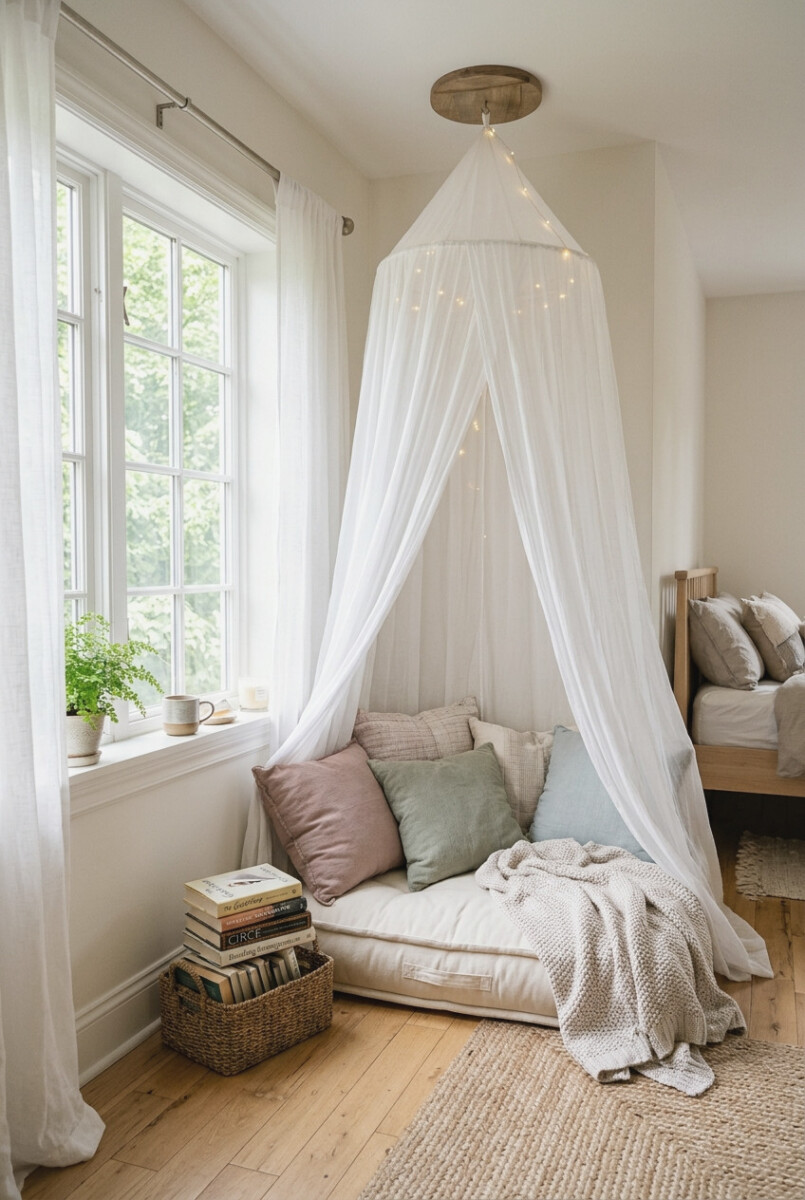
A fabric canopy can give a reading corner a tent-like feel without requiring a full bed frame. Suspend a hoop or ceiling-mounted frame above a floor cushion or small armchair, then drape it with lightweight cotton or sheer fabric. This look works especially well in a child’s room or a relaxed bedroom corner.
Use secure ceiling fixings suited to the weight of the frame and fabric, and keep the material away from heaters, candles, and light bulbs. A washable rug, a few cushions, and a small basket for books make the nook easier to maintain and use every day.
27. Rustic Log Cabin Nook With Plaid Throws and Stone Details
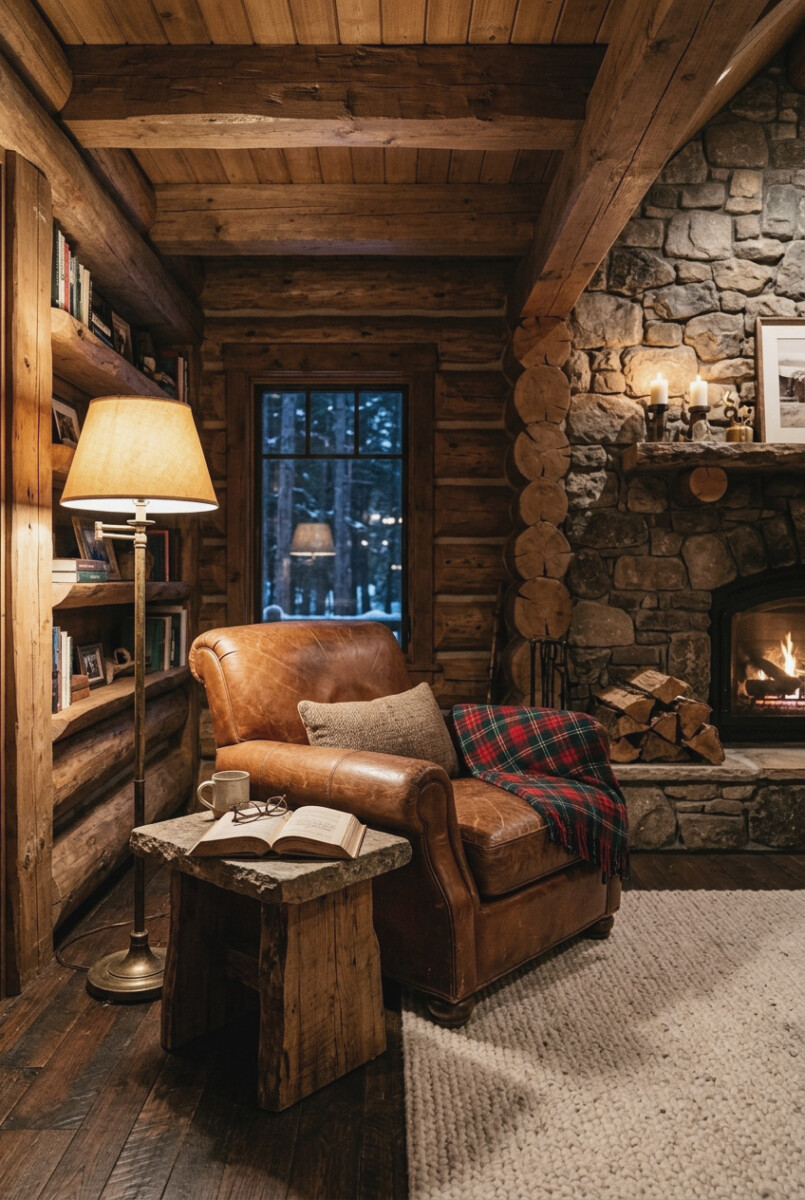
A cabin-inspired reading nook uses warm, sturdy materials such as leather, wool, timber, and stone. A worn leather chair, a plaid throw, and a small wooden or stone-topped table create a comfortable setting without needing a full rustic renovation. The style works particularly well in a room with exposed beams, a timber floor, or a fireplace.
Choose a rug to soften the floor and help define the seat, and add a lamp with a warm-toned shade for evening reading. If the room already has a lot of wood and stone, keep the accessories simple so the nook does not feel too heavy.
28. Contemporary Glass-Corner Nook With Floor-to-Ceiling Windows
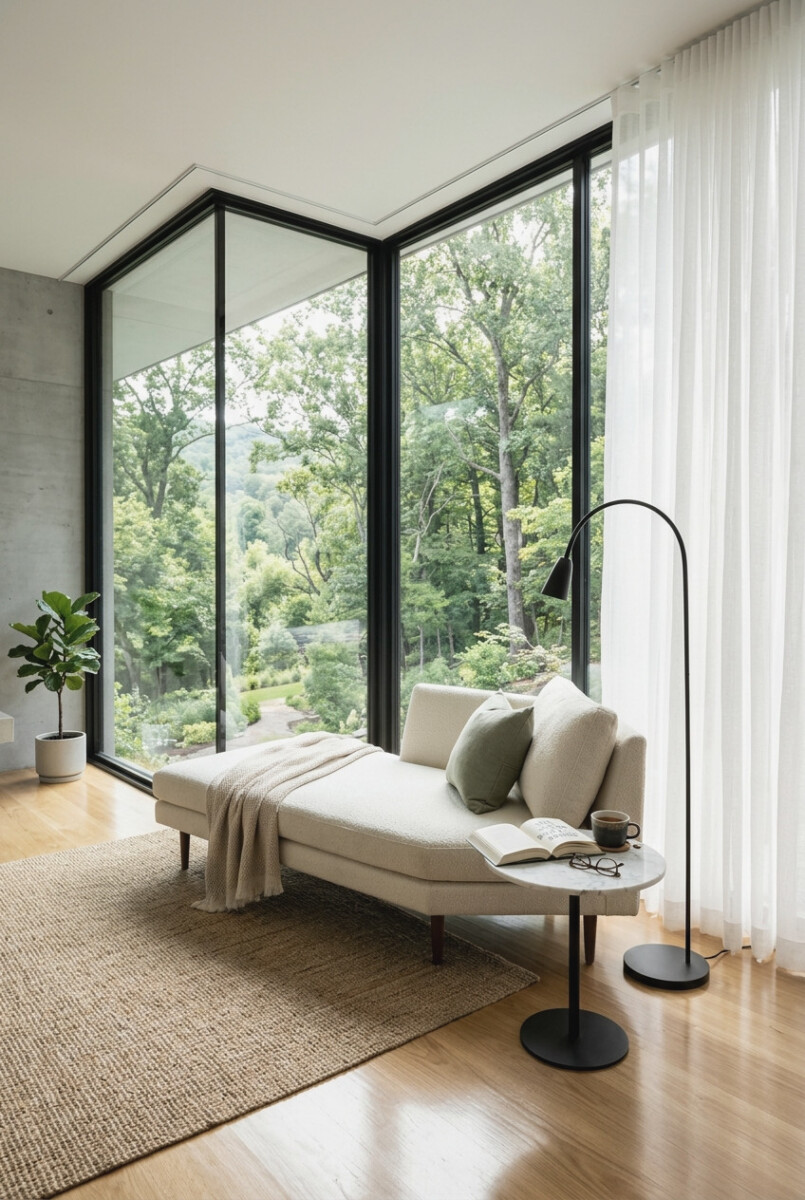
In a room with large windows, keep the reading nook low and simple so the view remains part of the setting. A compact chaise, low lounge chair, or streamlined armchair can sit beside the glass without blocking too much of the landscape. Neutral upholstery and a small side table help the arrangement feel connected to a contemporary interior.
Think about glare and temperature before placing the seat directly in front of the windows. Sheer curtains or adjustable blinds can soften strong sunlight, while a movable reading lamp provides light after dark without competing with the view.
29. Eclectic Global Nook With Kilim Rugs and Travel Finds
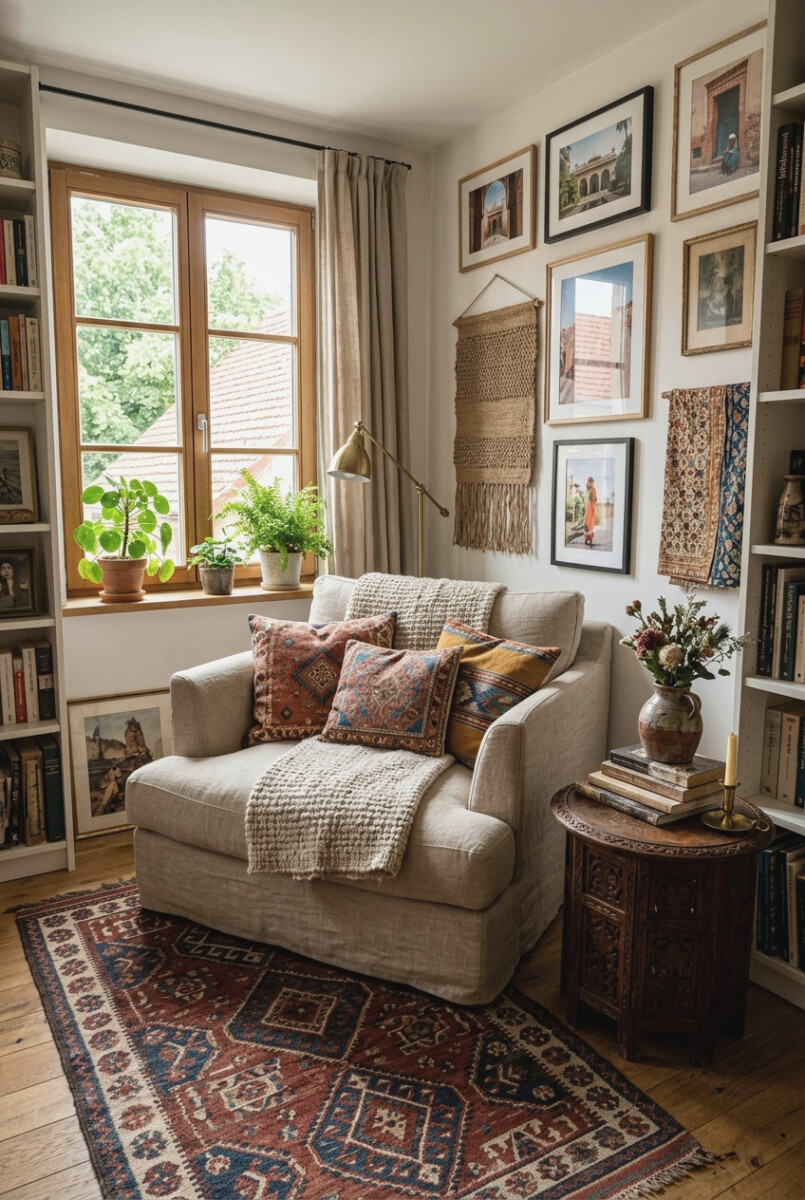
An eclectic reading nook can reflect the places and interests that matter to you. Start with a patterned rug, then add cushions, throws, or a carved side table collected over time. Personal souvenirs, ceramics, and framed prints give the corner character and make it feel different from a showroom arrangement.
Choose a few colors or materials that repeat across the textiles and objects to keep the mix cohesive. Leave enough room around the chair and avoid crowding every surface; a small number of meaningful pieces often tells a better story than a large collection of unrelated accessories.
30. Traditional English Study Nook With a Leather Armchair
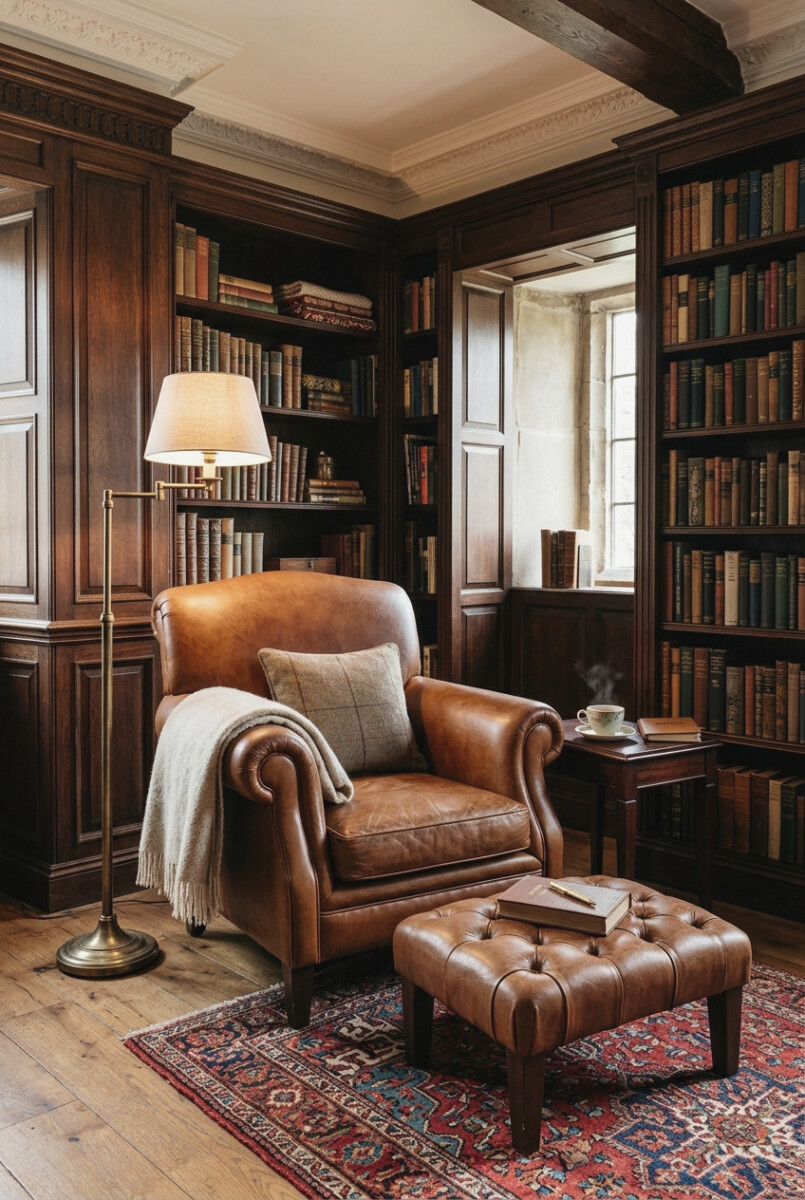
A traditional English study nook is built around comfortable seating, useful lighting, and classic materials. A leather armchair, a dark wood side table, and a bookcase filled with hardcovers create a familiar, lived-in look. A small footstool or wool throw adds comfort without making the arrangement overly decorative.
This idea differs from a heavily Victorian nook by keeping the furniture more restrained and practical. Choose a chair with good support, position a floor or desk lamp close enough to illuminate the page, and keep a small space free for a cup of tea or a notebook.
31. Built-In Reading Nook Within a Living Room Bookshelf
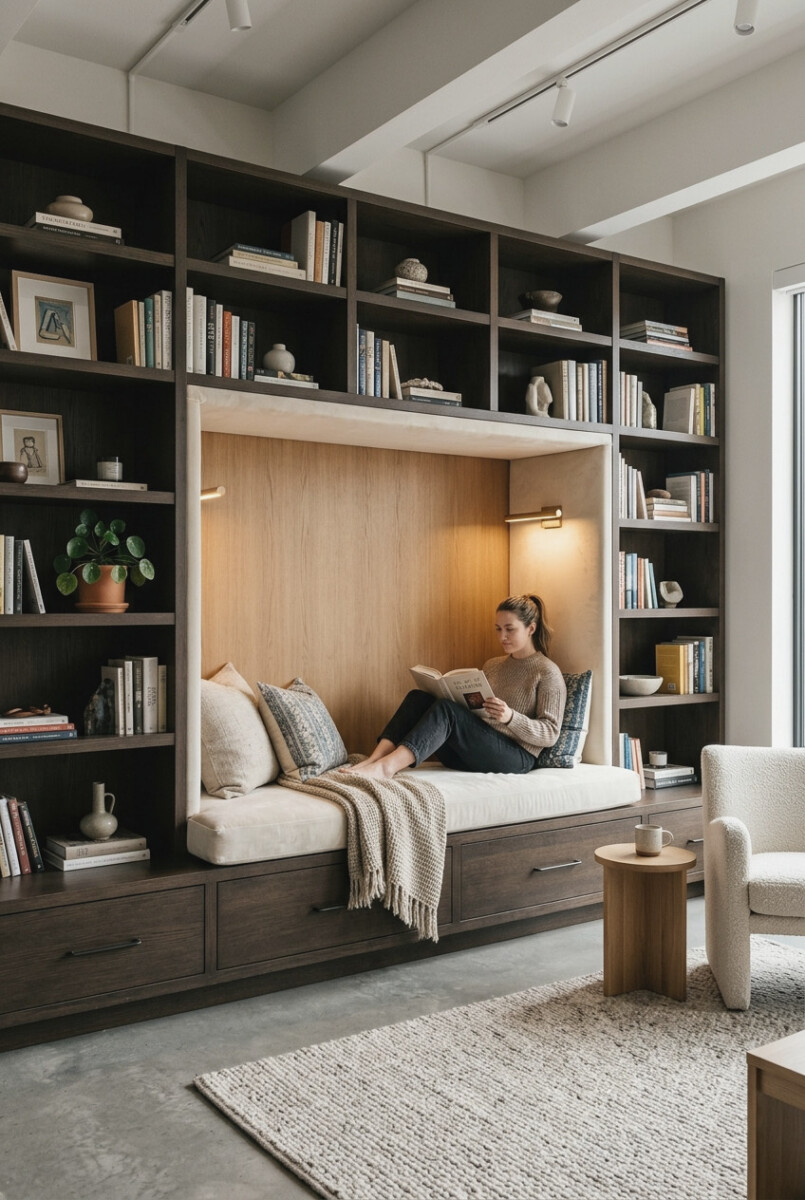
If you are planning custom shelving, consider leaving an opening in the middle of the bookcase for a built-in seat. The shelves frame the nook and keep books close at hand, while a contrasting back panel or cushion helps the seating area stand out. This works especially well along a large living room wall where a separate chair might take up too much space.
Plan the seat depth, back support, and lighting before the cabinetry is built. Include storage drawers below if useful, and make sure the opening is wide enough to sit down and stand up comfortably rather than treating it as a display niche.
32. Colorful Pop-Art Nook With Bold Primary Hues
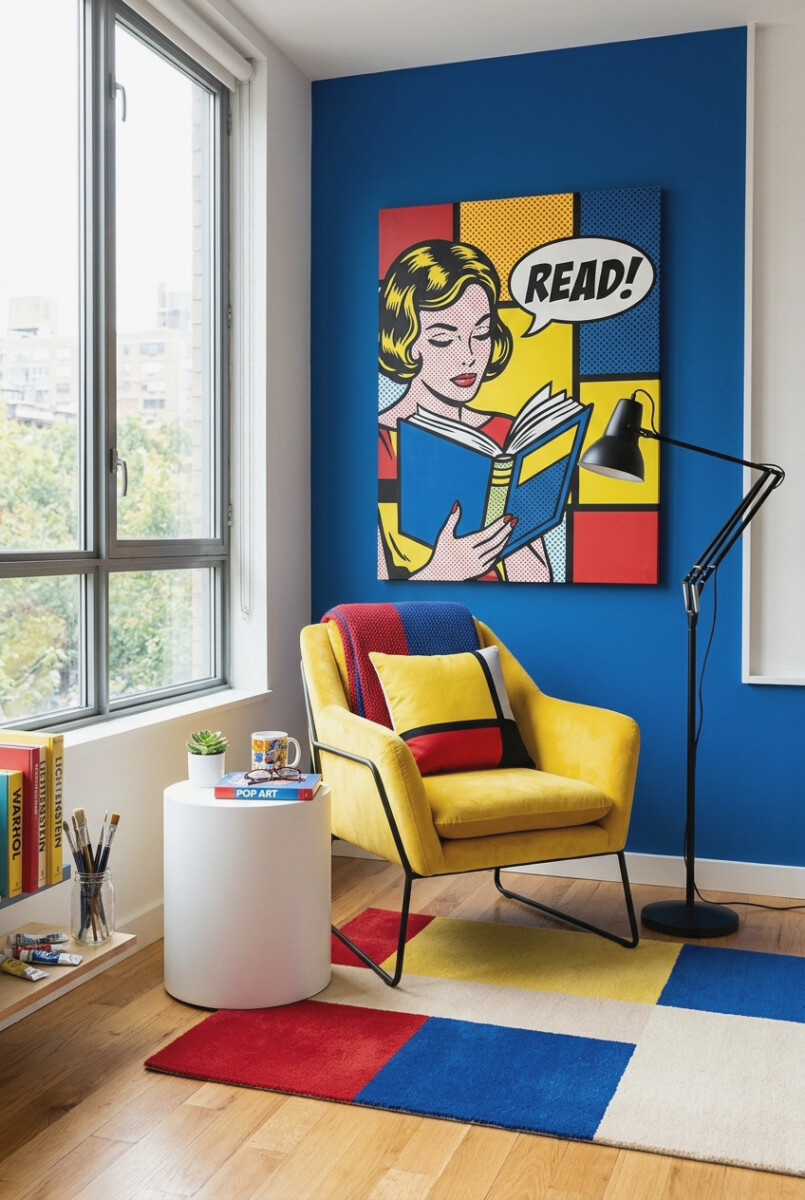
A pop-art reading nook uses strong color and graphic shapes to create an energetic corner. Try a bright chair against a contrasting wall, then repeat one or two of those colors in the rug, cushions, or artwork. This style suits a creative studio, playroom, or modern apartment where a more playful look feels at home.
Keep the furniture comfortable and let the color do most of the work. A simple side table and an adjustable lamp provide what you need for reading, while limiting the number of competing patterns helps the nook feel lively rather than chaotic.
33. Wabi-Sabi Nook With Reclaimed Wood and Handmade Ceramics
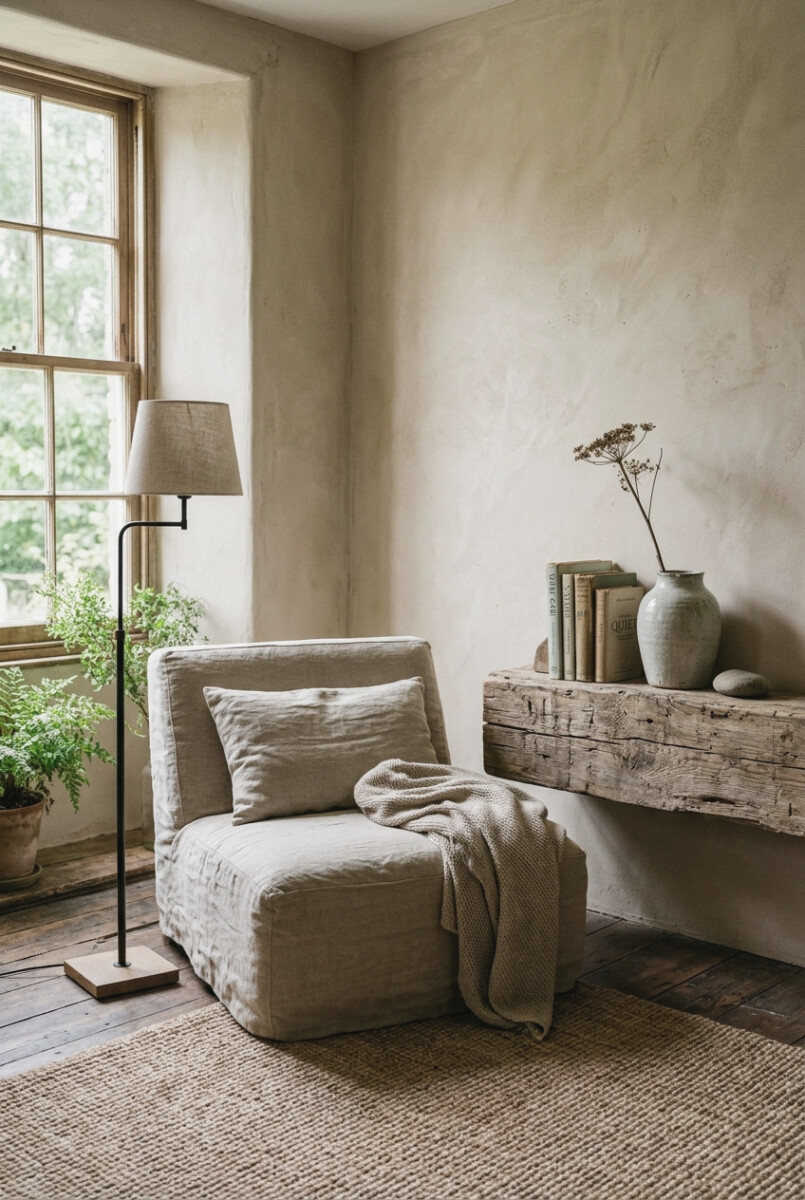
A wabi-sabi-inspired nook uses natural materials and simple forms, allowing texture and signs of age to remain visible. A reclaimed wood shelf, linen chair, handmade ceramic vase, or unevenly glazed bowl can give the corner a calm, personal feel. Keep the palette close to natural wood, stone, and muted fabric tones.
You do not need to reproduce a particular style perfectly. Choose a few useful pieces that you enjoy living with, and leave some open space around them. A comfortable seat and a good lamp matter more than filling the nook with decorative objects.
34. Kids’ Adventure Nook With Map Wallpaper and a Teepee
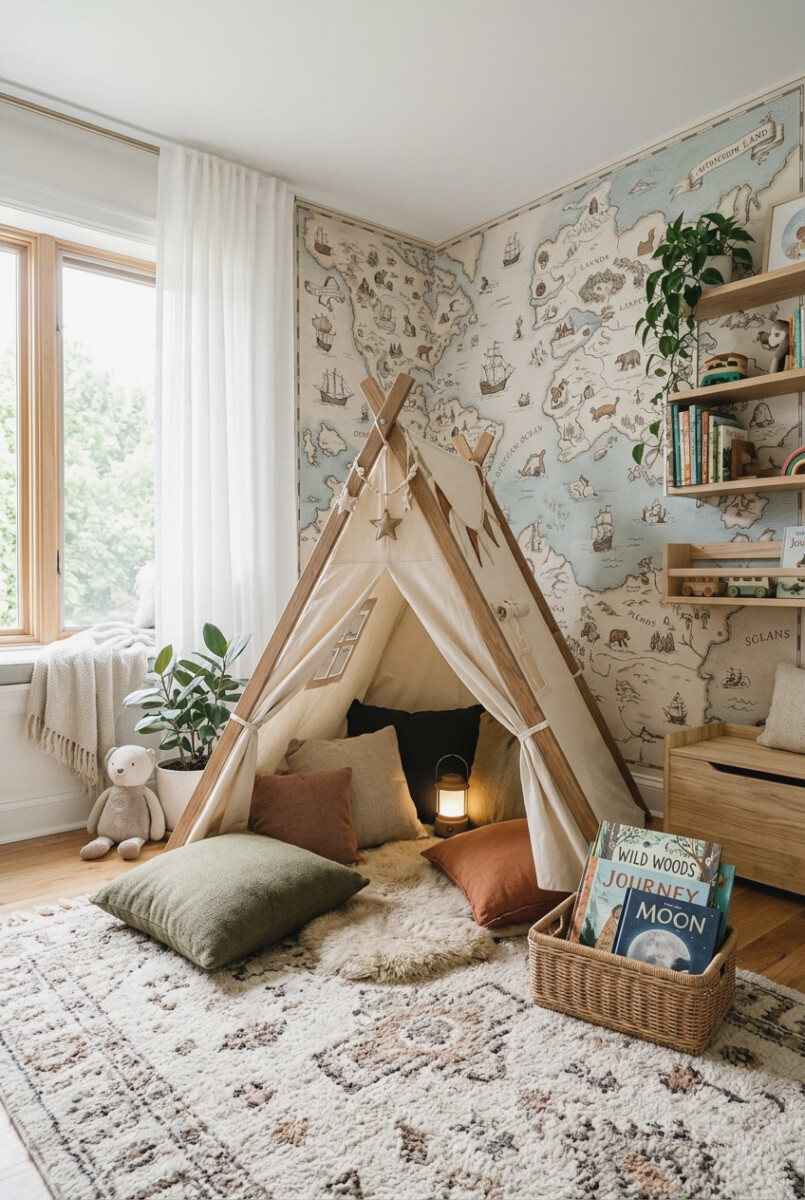
A teepee or small fabric tent can make a child’s reading corner feel like a place for stories and imaginative play. Add a washable rug, soft floor cushions, and a low basket of picture books so children can choose what they want to read. A map print or illustrated wallpaper can add a sense of adventure without needing to decorate the entire room.
Use a stable tent frame and avoid heavy items that could fall onto the seating area. Choose a battery-operated light made for children’s spaces rather than an open flame, and keep the books and cushions easy for children to reach and put away.
35. Sleek Floating Nook Attached to a Bedroom Wall
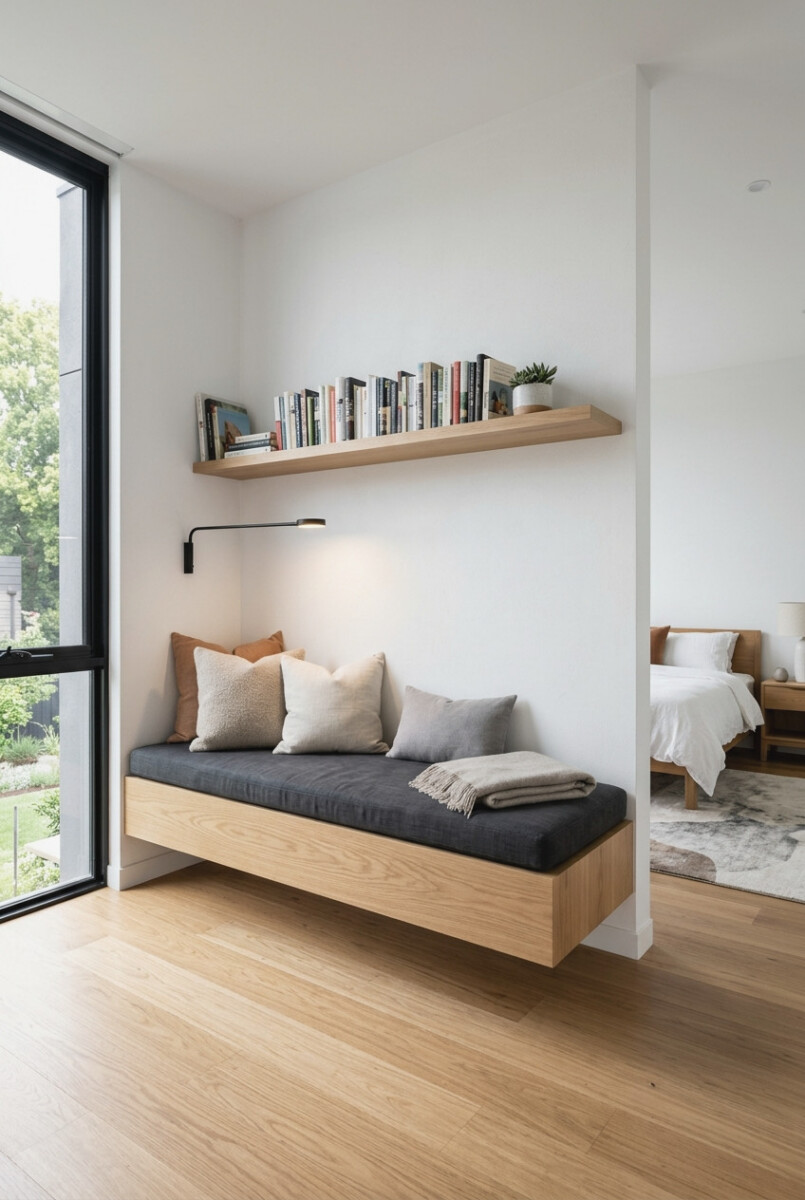
A wall-mounted bench can create a reading spot in a small bedroom without the visual weight of a chair with legs. Keep the shape simple, add a fitted cushion and a few back pillows, and mount a compact shelf nearby for books. Leaving the floor visible beneath the bench can help the room feel more open.
The bench and its fixings must be suitable for the wall construction and the weight they will carry, so use proper supports rather than relying on decorative brackets alone. Add a wall-mounted reading light and check that the seat is deep enough to use comfortably.
36. Tonal Beige Nook With Textured Bouclé Upholstery
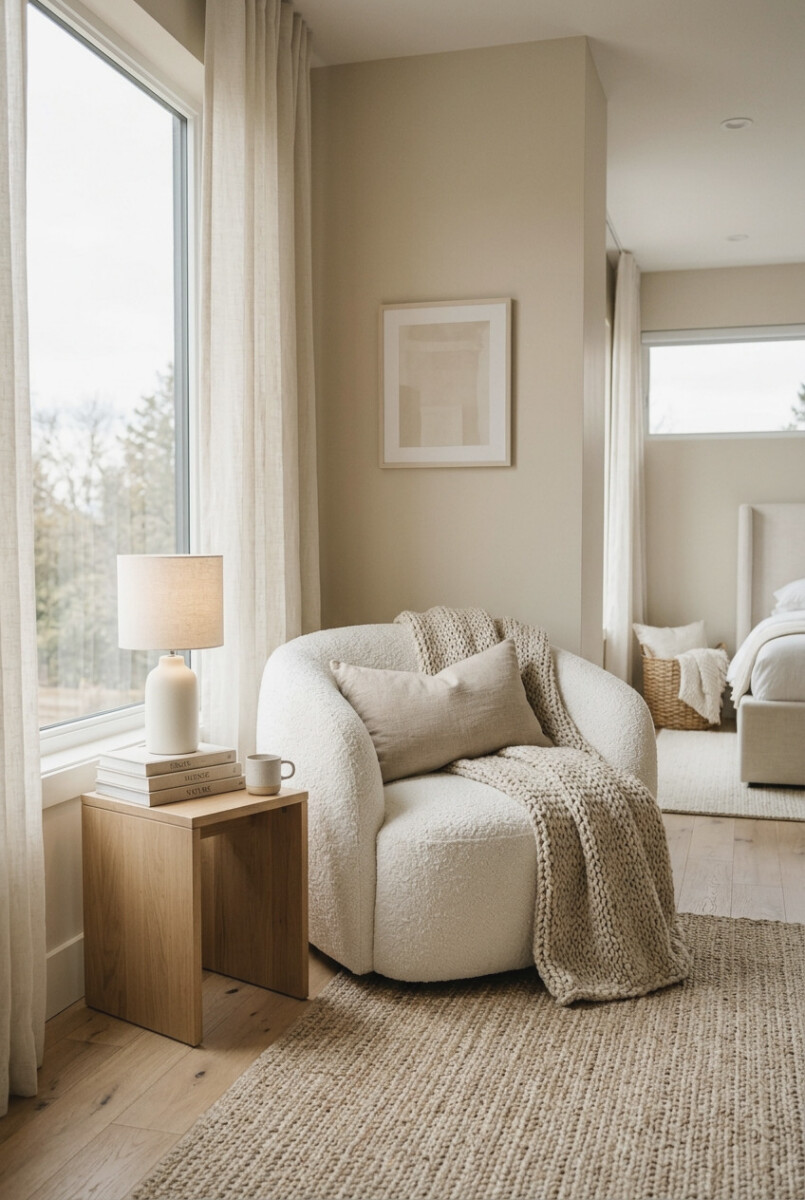
A tonal beige nook combines cream, oatmeal, sand, and warm off-white to create interest without relying on strong contrast. A bouclé chair adds a nubby texture, while a woven rug and a soft throw bring in different finishes. The result can feel calm and coordinated in a bedroom or living room.
Mix smooth and textured materials so the palette does not become flat. Bouclé can be harder to clean than some tightly woven fabrics, so check the care instructions and consider a performance upholstery if the chair will be used every day.
37. Romantic Alcove Nook With Velvet Drapes
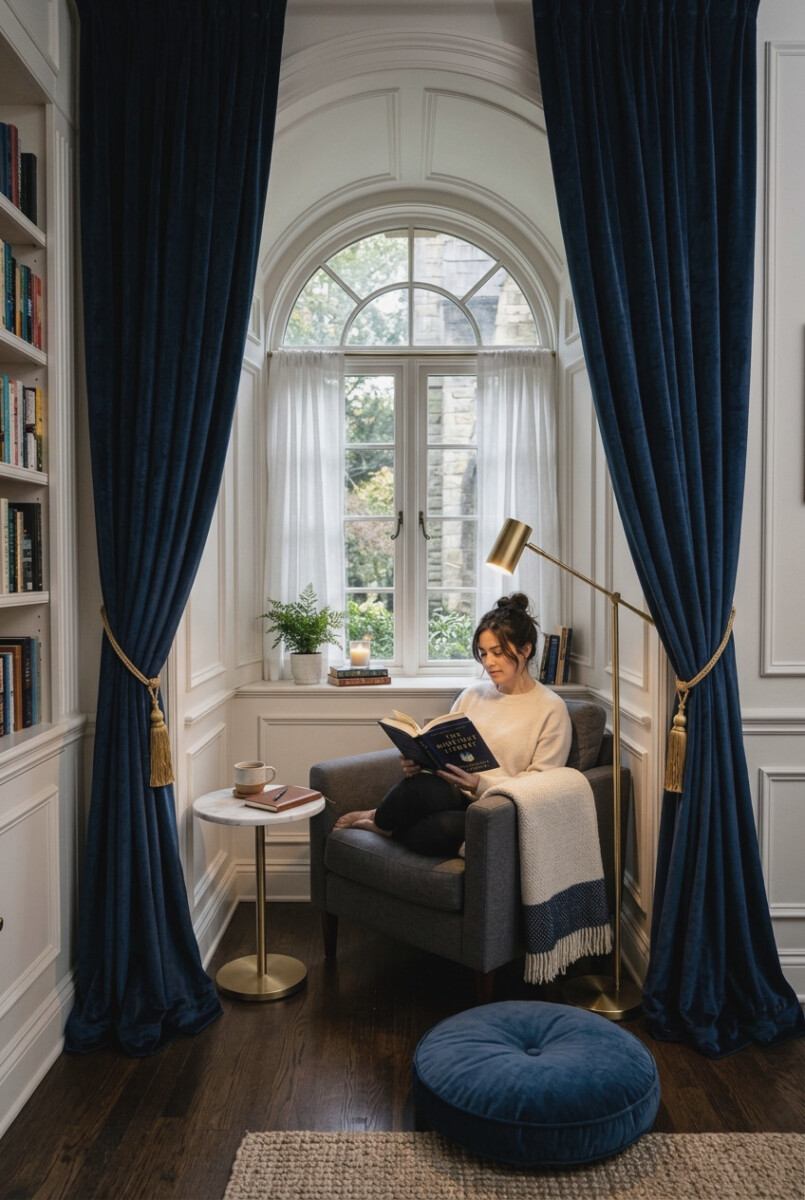
Velvet curtains can frame a window alcove and make a reading spot feel more private. Choose a deep color for a dramatic look or a softer neutral if the room already has a lot of pattern. A compact chair, a small table, and a floor cushion can turn the alcove into a comfortable place to read.
The fabric can soften light and absorb some room noise, but it will not soundproof the space. Use a reading lamp rather than relying on candles; if you do use a candle nearby, keep it well away from curtains, books, and other flammable materials and never leave it unattended.
38. High-Tech Reading Nook With Charging and Smart Lighting
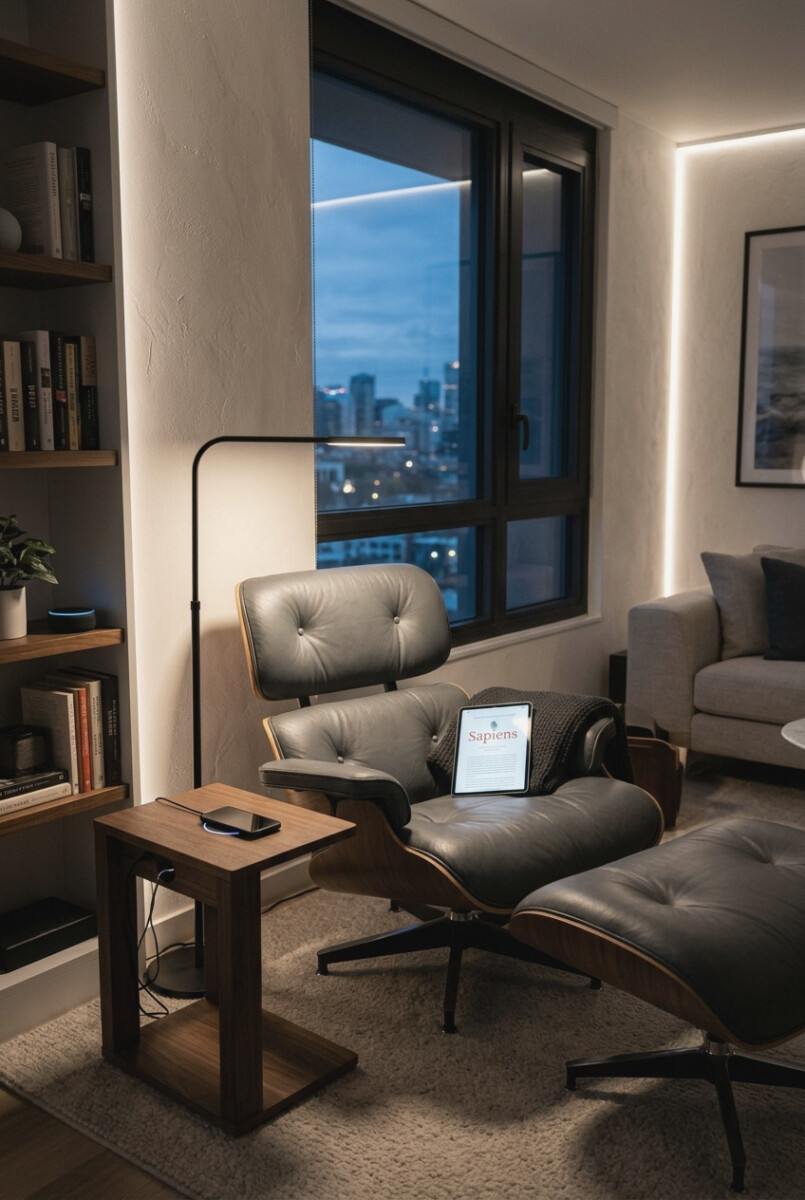
A modern reading nook can keep e-readers, tablets, and other devices close at hand without letting cables take over the space. Choose a side table with a drawer for a charging hub, or use a discreet outlet near the chair. Smart bulbs or dimmable lamps make it easy to adjust the light for different times of day.
Prioritize a comfortable seat and a lamp that illuminates the page or screen without glare. Keep charging equipment ventilated and cords neatly secured, especially if the nook is in a shared room or a space used by children.
39. Vintage Schoolhouse Nook With an Old Desk and Globe
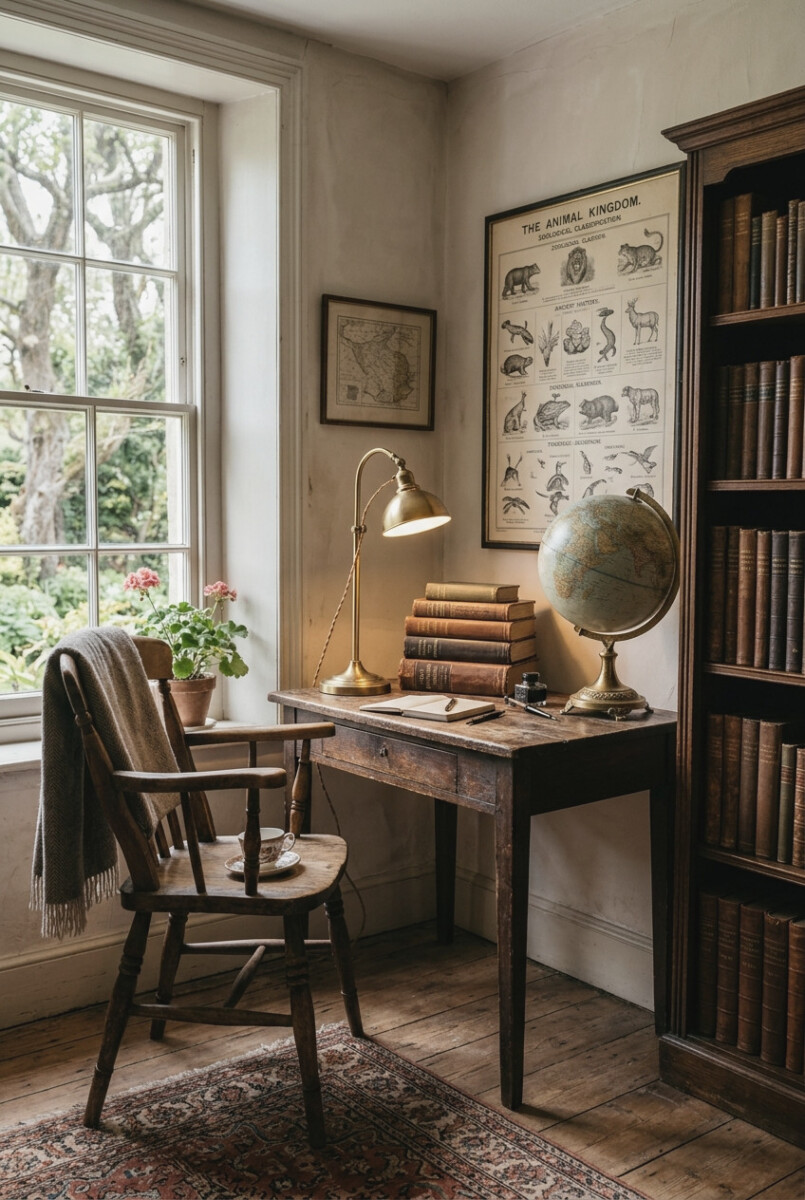
A schoolhouse-inspired nook suits readers who enjoy history, reference books, or a more desk-based reading setup. Use a small wooden desk as the main surface, pair it with a sturdy chair, and add a globe or framed educational print. A bookcase nearby keeps reading material within reach while giving the corner a collected, vintage look.
Make sure the desk is large enough for the books you use, but not so large that it overwhelms the room. A task lamp and a comfortable chair make the area practical for reading or note-taking, while a few carefully chosen accessories provide the nostalgic detail.
40. Curated Gallery Nook Between Large-Scale Art Pieces
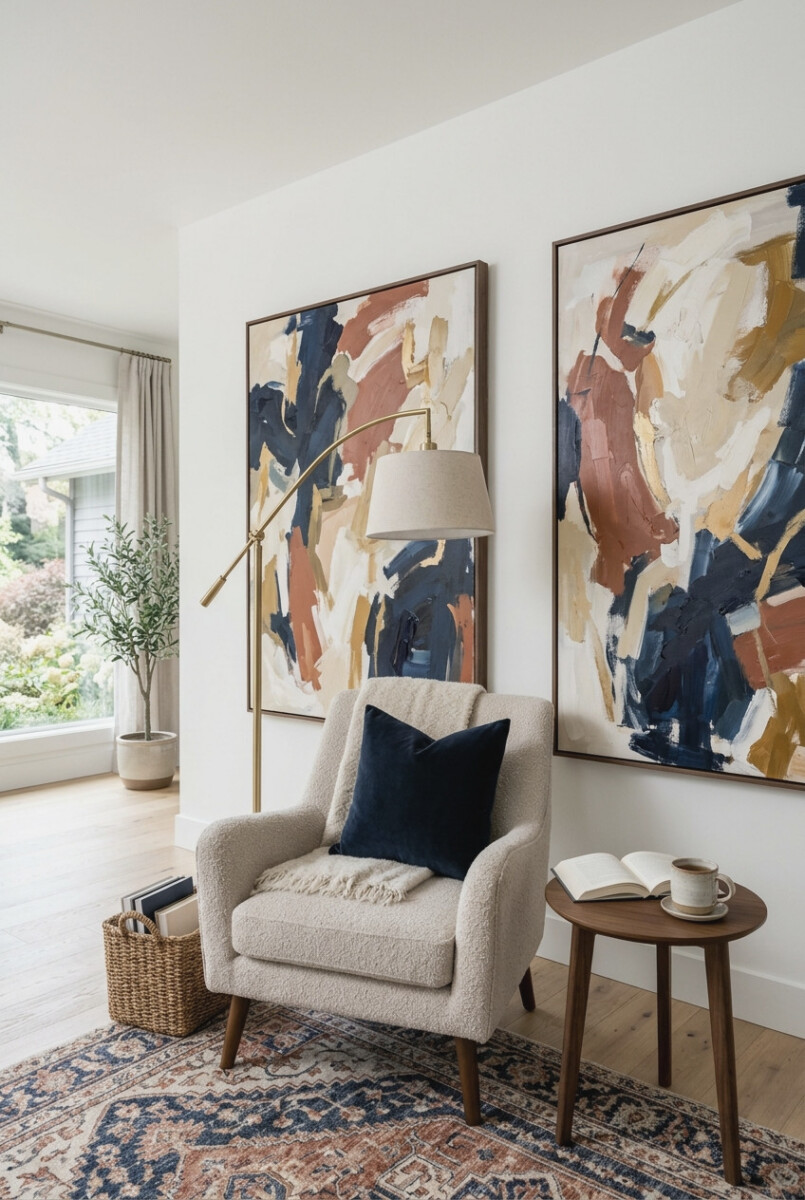
If you have a large painting or a pair of prints, use them to give a reading chair a clear place in the room. Position a simple armchair between the artworks, add a small side table, and choose a rug that connects the colors. The art helps define the corner without the need for a separate screen or built-in structure.
Keep the chair and artwork in proportion to the wall, and hang the pieces securely at a comfortable viewing height. A focused floor lamp completes the arrangement, while keeping the surrounding furniture minimal allows the art and reading seat to work together.
Finding Your Personal Reading Spot
A good reading nook starts with a place where you can sit comfortably and get enough light. It may be a built-in bench, a chair beside a window, or a few cushions in a quiet corner. The style can come later; the most useful setup is the one that fits your home and your reading habits.
Before buying anything, try moving a chair or lamp from another room and see how the space feels. Add shelves, cushions, or decor as you discover what you actually need. A small, well-used corner is often more valuable than an elaborate nook that looks good but rarely gets used.
