Table of Contents
A sunroom makes it easier to enjoy daylight and garden views without leaving the house. Depending on its size and layout, it can become a sitting room, breakfast spot, plant-filled retreat, or quiet place to read. The best arrangement is one that suits the light the room receives and the way you plan to use it.
Before choosing furniture, consider glare, temperature changes, ventilation, and fading from direct sunlight. Materials that work well in a shaded living room may need more protection beside large windows. These sunroom decorating ideas focus on practical choices that make the space comfortable as well as attractive.
1. Embrace the Timeless Texture of Rattan and Wicker

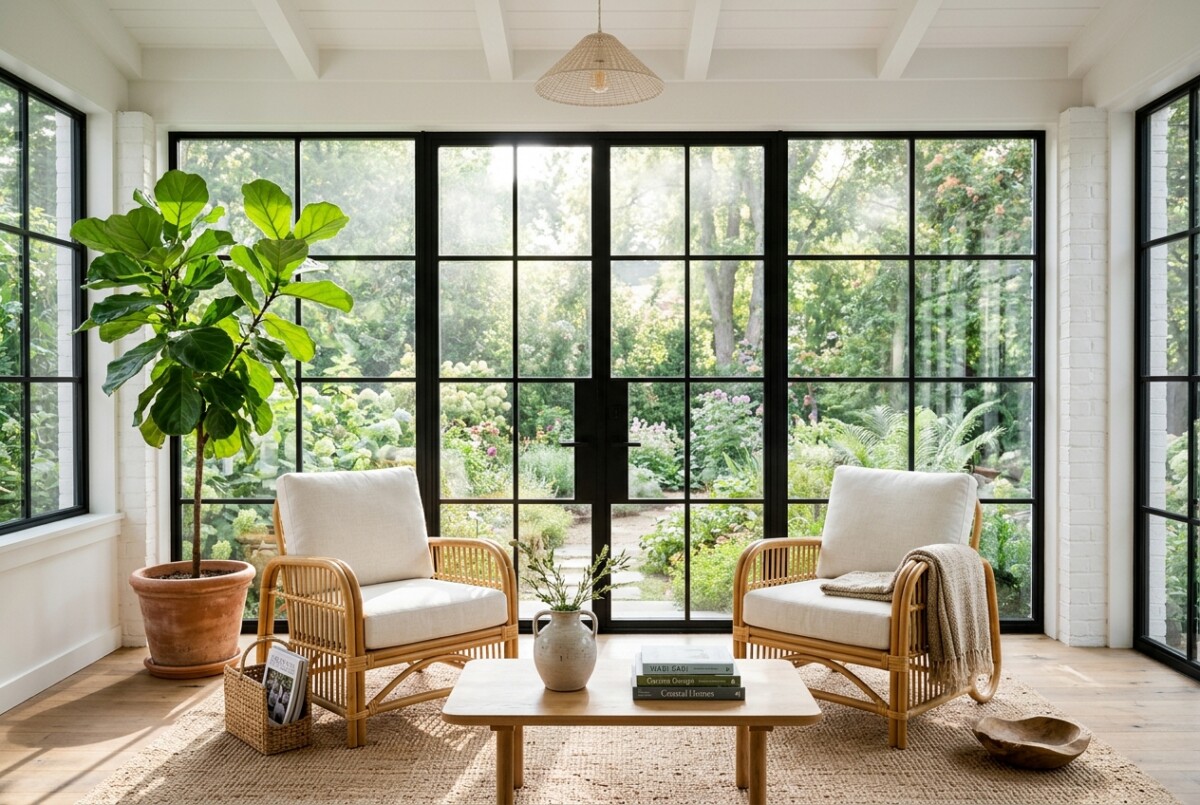
Rattan and wicker furniture bring an airy, natural texture to a sunroom. Their open weaves look lighter than bulky upholstered pieces, which helps preserve the feeling of space around large windows. A woven armchair or small side table can be enough to establish the look.
Choose honey-colored finishes for warmth or darker wicker for contrast. Add supportive cushions and pair the woven furniture with a simple table or upholstered ottoman so the room feels comfortable rather than overly themed.
2. Prioritize High-Performance Fabrics
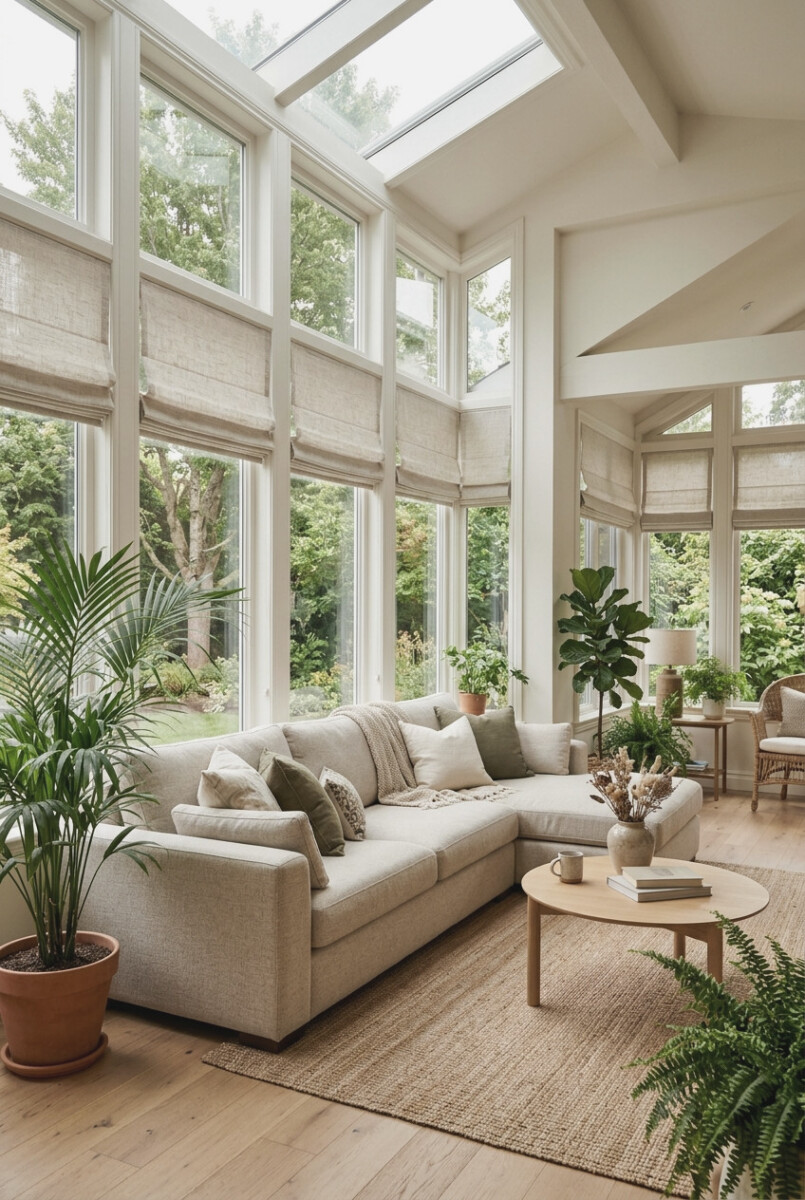
Strong sunlight can gradually fade upholstery, particularly on chairs and sofas placed directly beside windows. Performance fabrics designed to resist fading and everyday wear are a sensible choice for sunrooms that receive several hours of direct sun.
Solution-dyed acrylic is one option, but compare fabric specifications rather than relying on a general performance label. Removable, washable covers make maintenance easier, and window shades provide an additional layer of protection.
3. Create an Indoor Forest with Large-Scale Trees
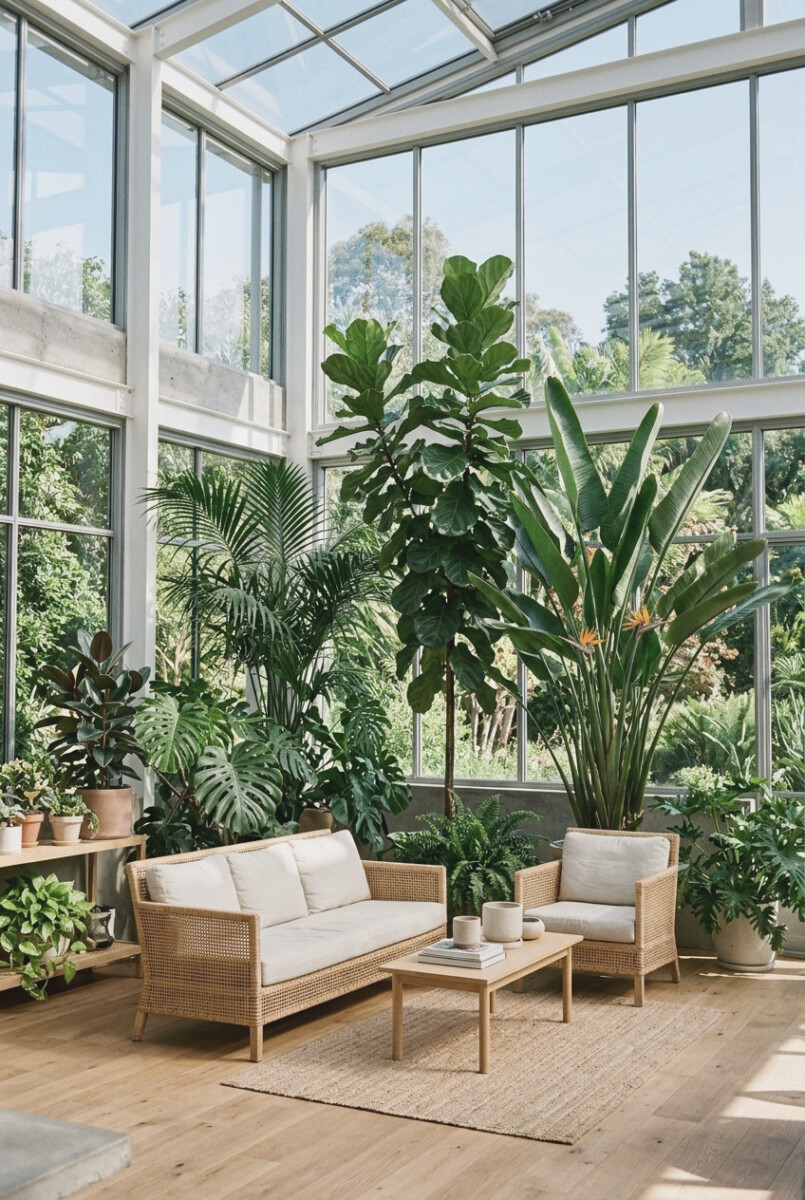
A tall indoor tree can soften the edges of a glass-walled room and create a natural connection with the garden outside. Depending on your conditions, a bird of paradise, fiddle-leaf fig, or potted citrus tree may make an attractive focal point.
Check each plant’s needs before choosing it. A sunroom may be bright but can also become very hot or cold, and direct sunlight through glass may scorch leaves. Leave room for growth without blocking windows or walkways.
4. Layer Jute and Sisal Rugs for Organic Warmth
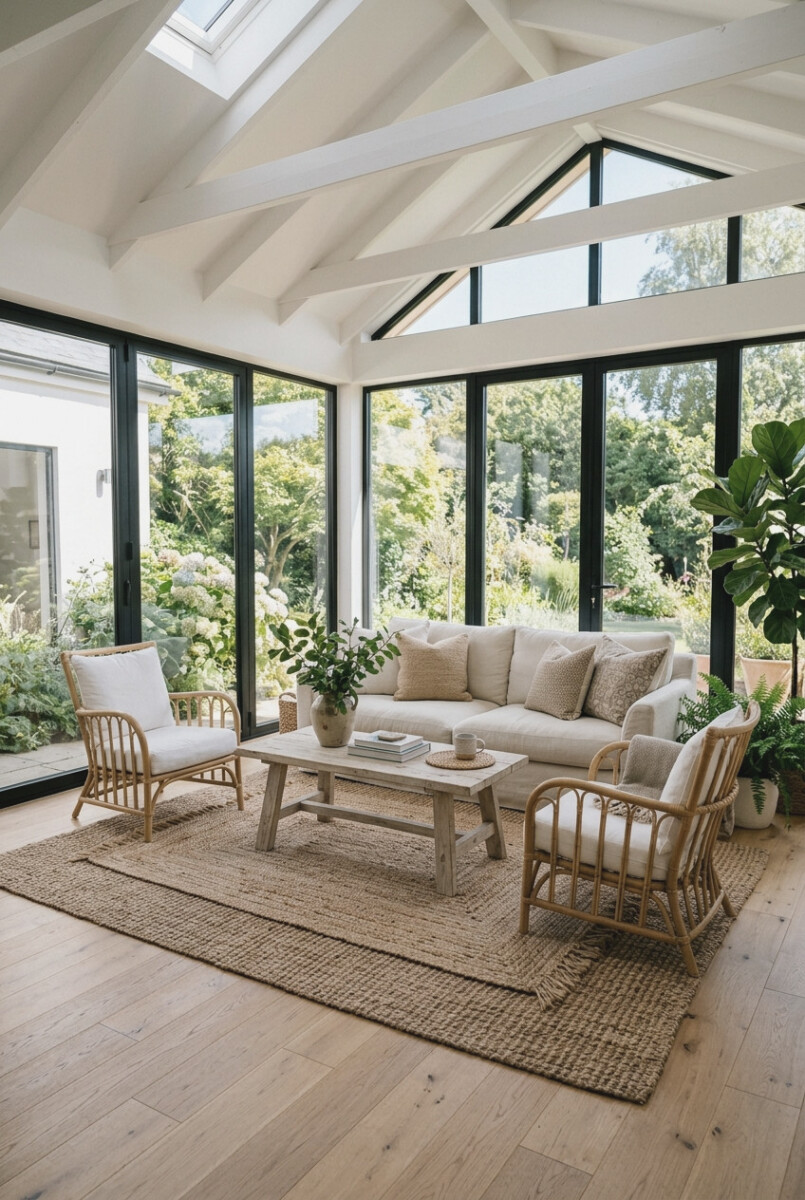
A natural-fiber rug can soften the look of tile, stone, or wood flooring and help define a sunroom seating area. Jute and sisal work especially well with rattan chairs, pale timber, and neutral upholstery.
These fibers are less suitable for damp areas and can be difficult to clean after spills. In a room used as a garden entrance, consider a washable indoor-outdoor rug instead, or layer a smaller washable rug over a natural-fiber base in a dry spot.
5. Install a Hanging Swing or Daybed
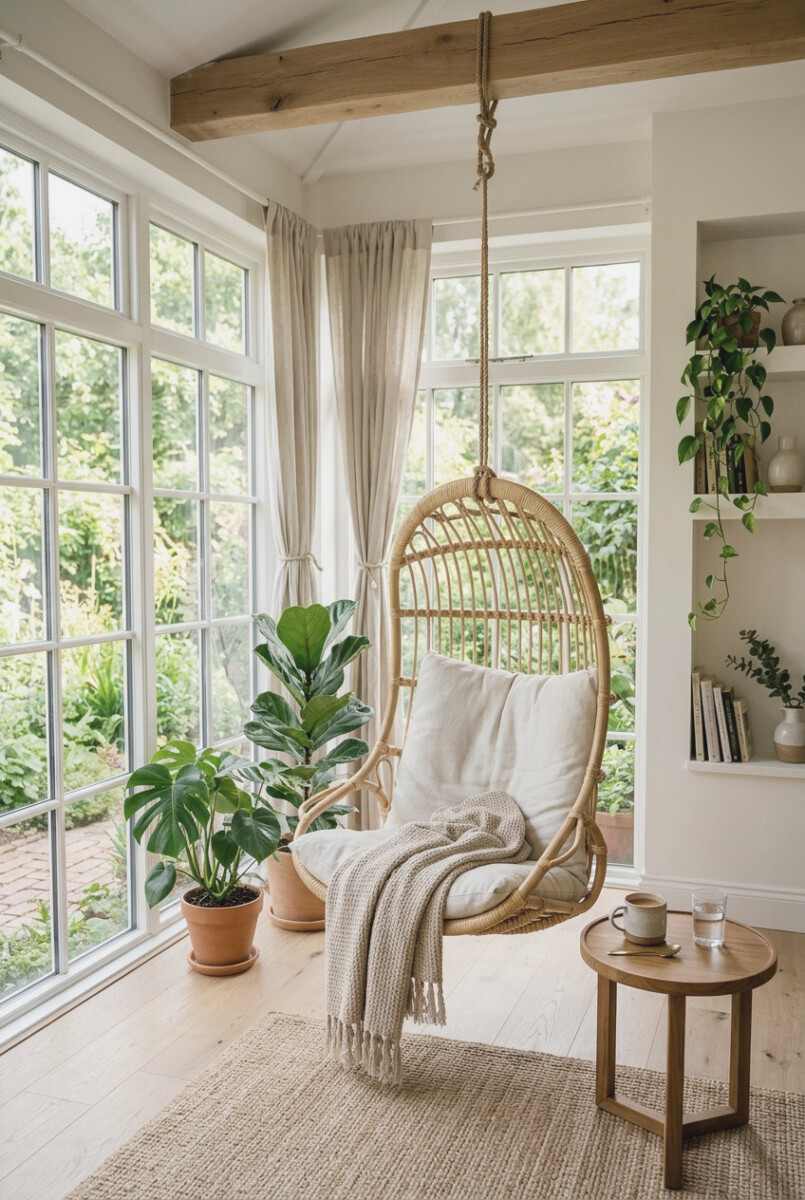
A hanging chair or swing creates a relaxed place to read while enjoying the view. Rattan styles suit casual rooms, while a simple wood design works with more traditional decor. A thick cushion and nearby table make the seat more useful.
Only hang seating from a structure confirmed to support the load, using appropriately rated hardware. If ceiling mounting is impractical, a freestanding swing chair or low daybed offers a similar lounging spot without altering the building.
6. Filter the Light with Bamboo or Woven Wood Shades

Bamboo and woven wood shades soften bright sunlight without covering the windows with heavy fabric. They also add texture to a room dominated by glass and can make a sunny afternoon more comfortable.
Many woven shades still allow some light and visibility through the material. If you need stronger glare control or privacy, look for a suitable lining or pair them with another window treatment. Check samples against the actual windows before ordering.
7. Design a Dedicated Breakfast Nook
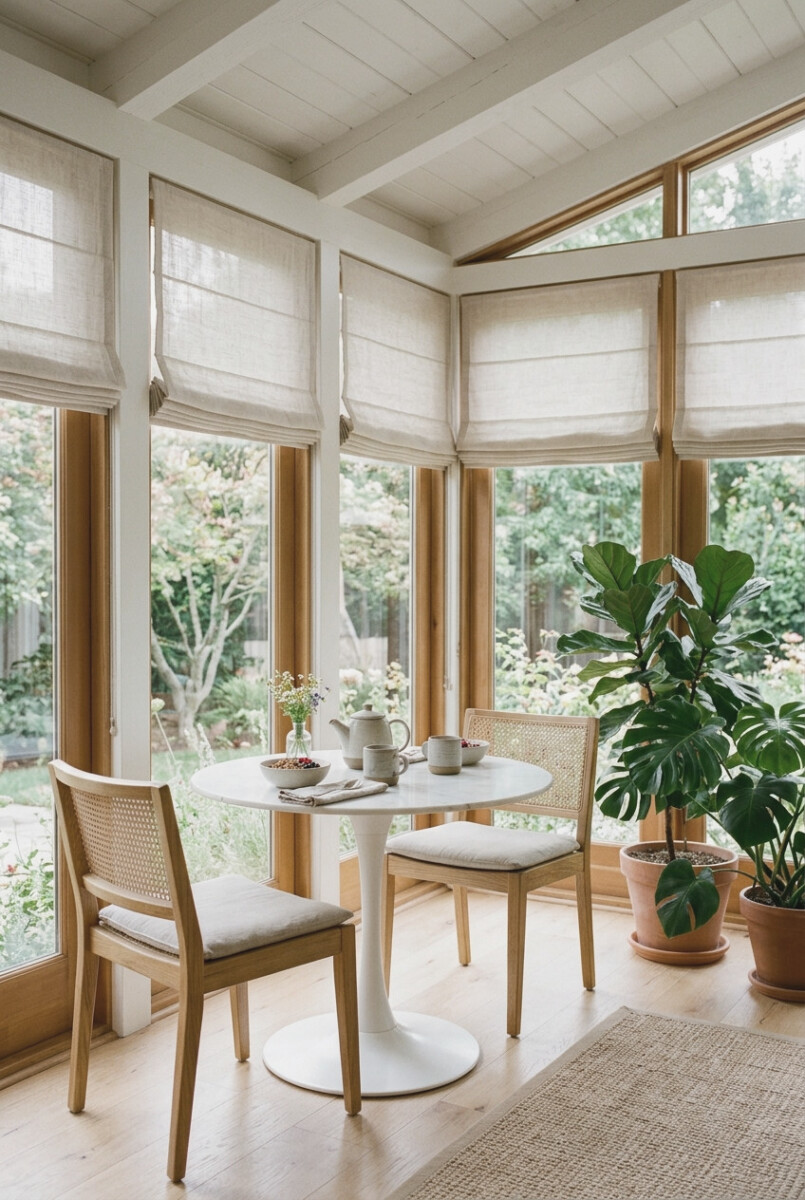
A small bistro table and two chairs can turn a sunroom near the kitchen into a practical breakfast spot. A round table is especially useful in a compact layout because it is easy to move around.
Choose comfortable chairs and a wipe-clean surface rather than selecting furniture for appearance alone. If morning glare makes the table difficult to use, add adjustable shades so the nook remains pleasant throughout the day.
8. Paint the Ceiling a Soft “Haint” Blue
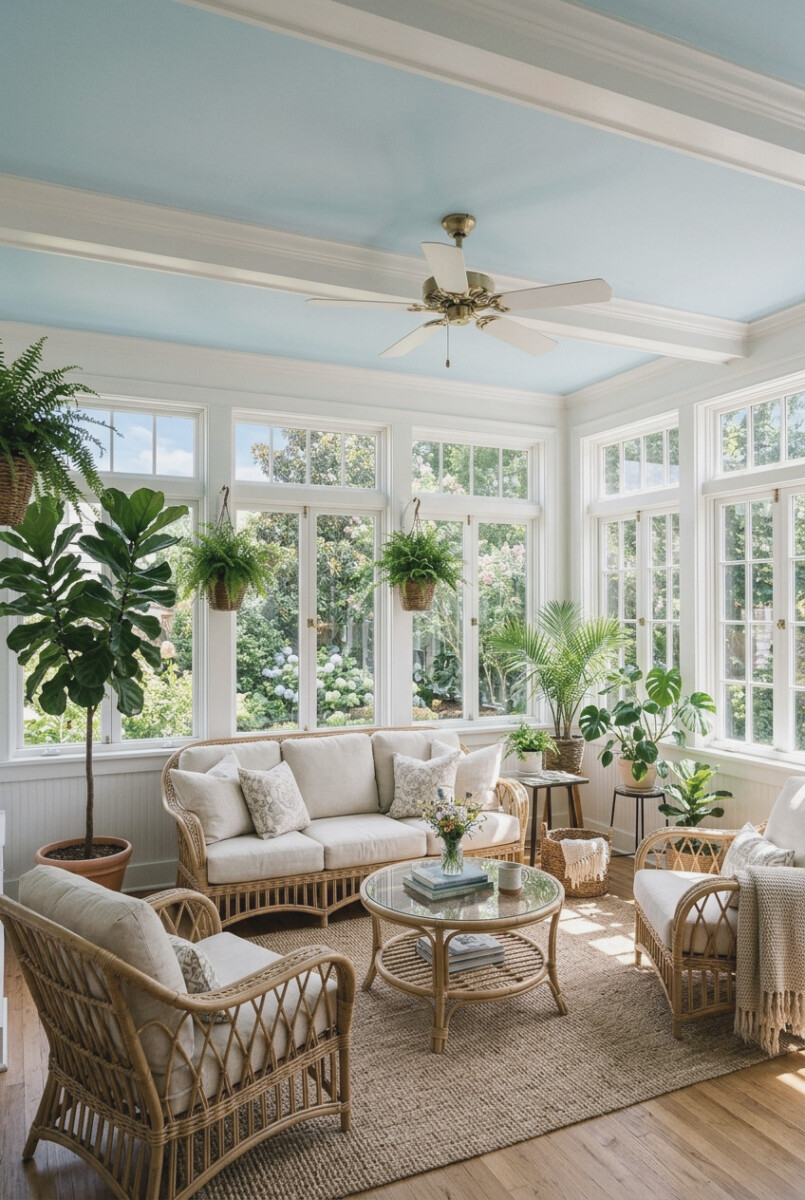
A pale blue ceiling introduces gentle color while keeping the sunroom bright. Against white trim, wicker furniture, and greenery, the shade can suggest an open-sky feeling without competing with the outdoor view.
The name haint blue comes from a Southern porch-painting tradition. For a sunroom, focus on choosing a tone that works with the daylight: test samples at different hours, since cool blues can change noticeably as the sun moves.
9. Use Statement Oversized Woven Pendants
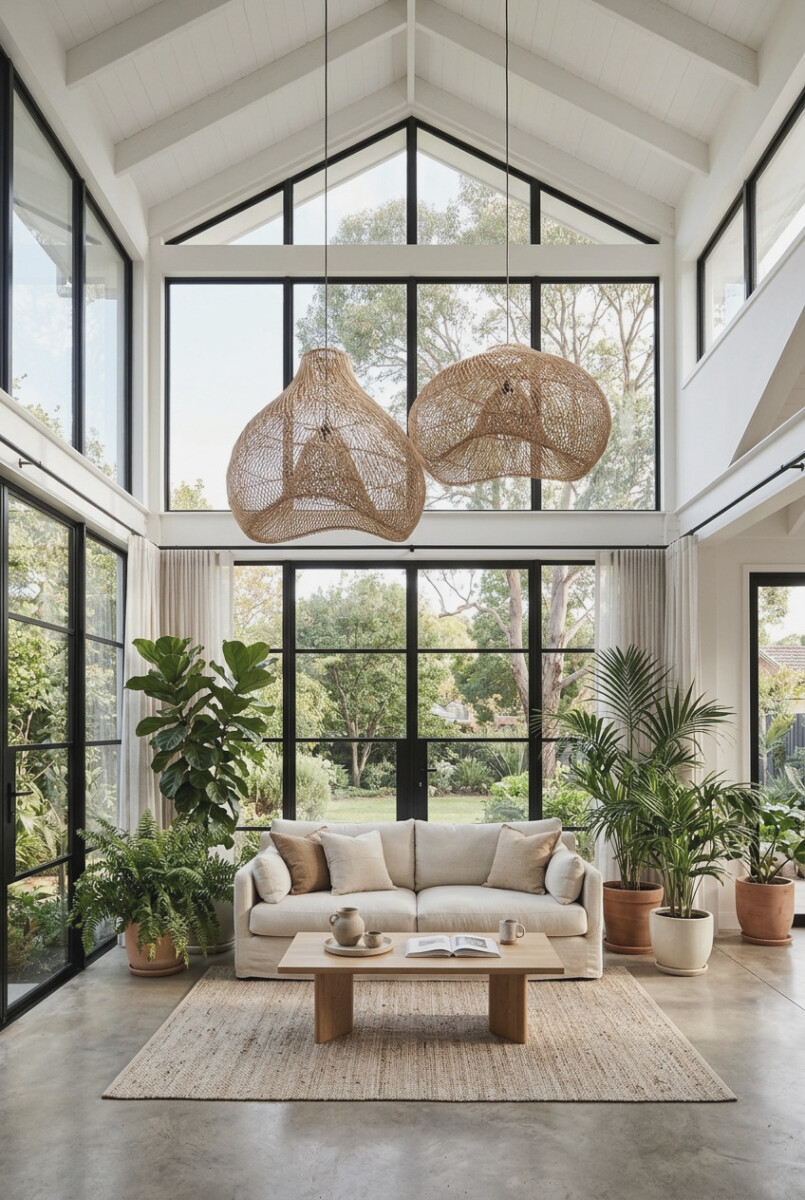
An oversized woven pendant can give a high-ceilinged sunroom a clear focal point. Rattan or bamboo shades introduce natural texture and help visually connect a seating group beneath them.
Choose the fixture’s scale and hanging height carefully so it does not interfere with movement or views. The fitting must suit the room’s conditions, and electrical installation should be completed with appropriate support and wiring.
10. Curate a Botanical Gallery Wall

Botanical prints reinforce the connection between a sunroom and the garden. Fern studies, flower illustrations, or herb drawings work well on the solid wall beside a window, especially when displayed in a consistent set of frames.
Sunlight can fade prints and damage original artwork. Use reproductions for exposed locations, avoid direct sun where possible, and consider UV-filtering glazing for pieces you want to protect.
11. Incorporate Built-In Window Seats with Storage
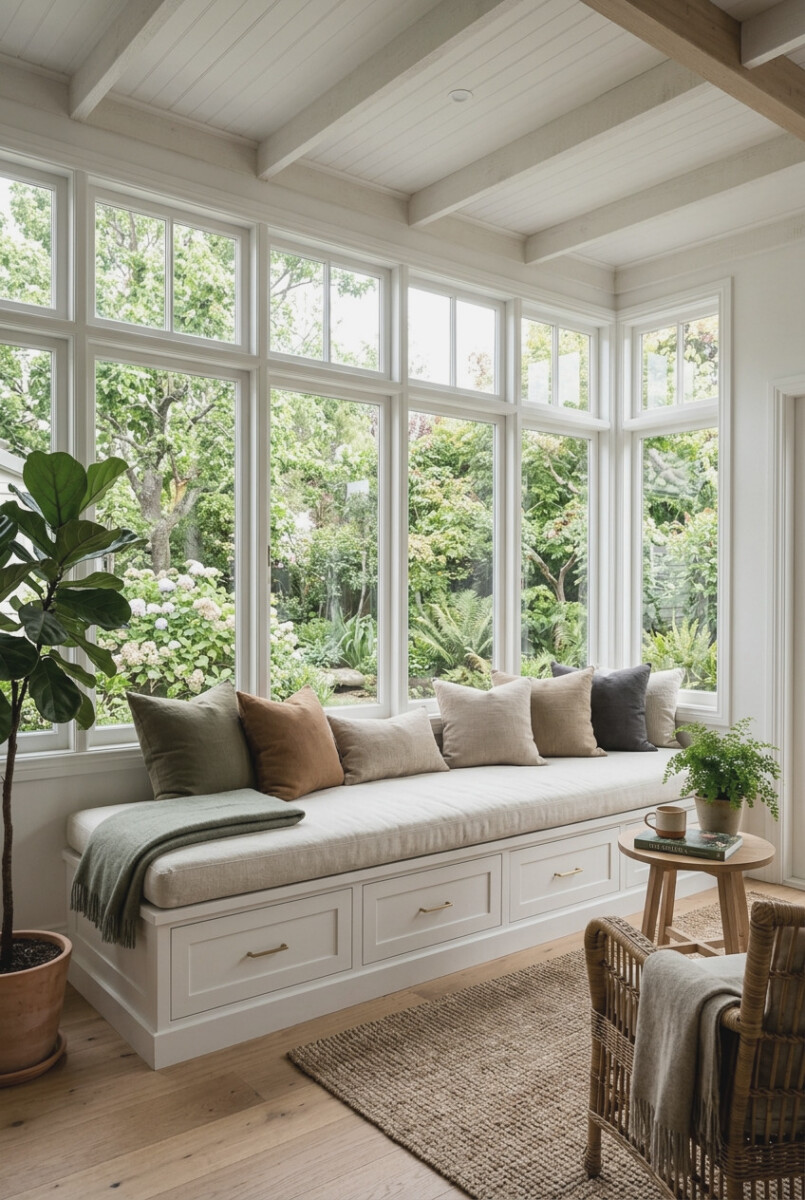
A built-in window seat provides a comfortable place to enjoy the view without filling the room with extra furniture. Drawers or lift-up storage beneath the bench can hold throws, games, and other everyday items.
Plan the seat depth and back support before building, and use a removable cushion cover suited to strong light. Keep access to window hardware and ventilation openings clear, and avoid storing heat-sensitive items in compartments that become hot.
12. Choose Terracotta Tiles for Natural Character
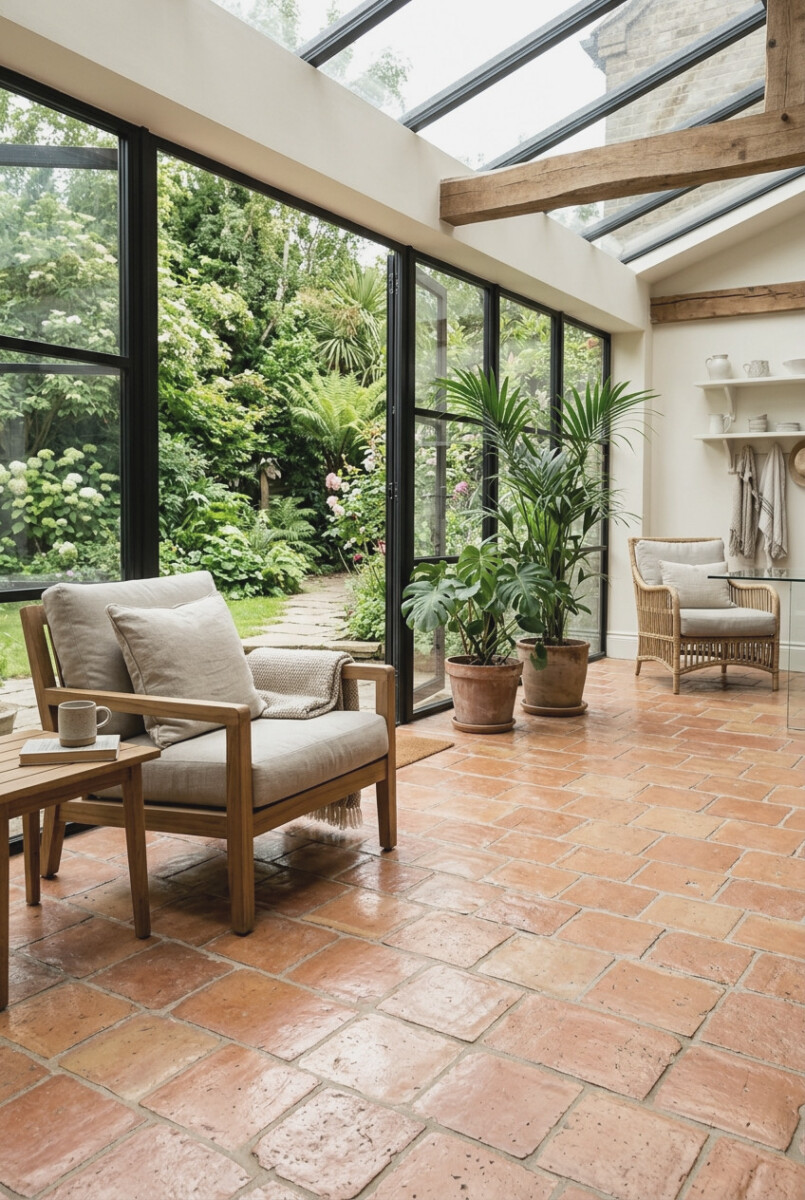
Terracotta tiles bring earthy color and a handmade appearance to a sunroom. Their warm tones work well with cream walls, timber furniture, and leafy plants, while the hard surface suits a room connected to the garden.
Terracotta can store and release some heat, but its effect on room comfort depends on the glazing, insulation, and climate. Natural terracotta is porous, so use an appropriate sealer and choose a slip-resistant finish.
13. Frame the View with Black Window Mullions
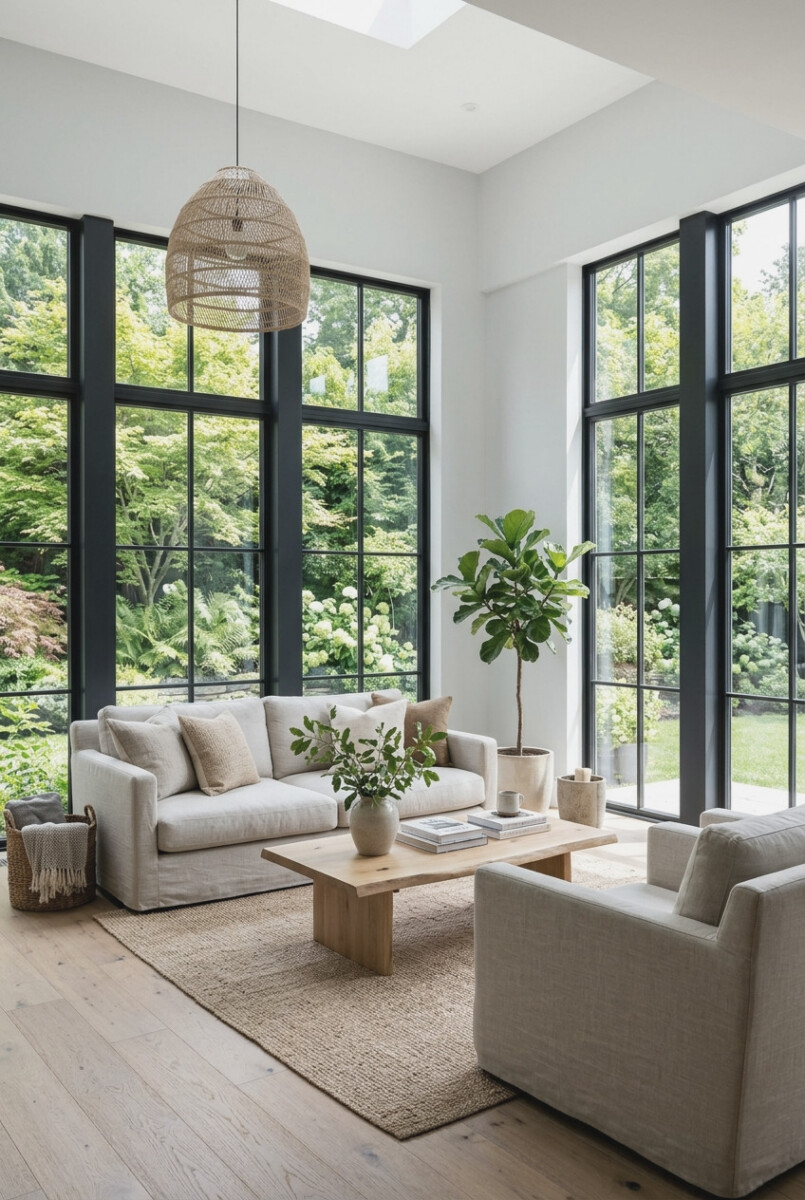
Black or charcoal window frames create crisp lines around the landscape and give a sunroom a more contemporary appearance. The contrast works particularly well with pale walls and simple furnishings.
If you are updating existing frames, check which coatings are compatible with the material and finish. For new windows, consider the frame proportions, insulation performance, and overall architecture rather than choosing color alone.
14. Build a Solarium Library
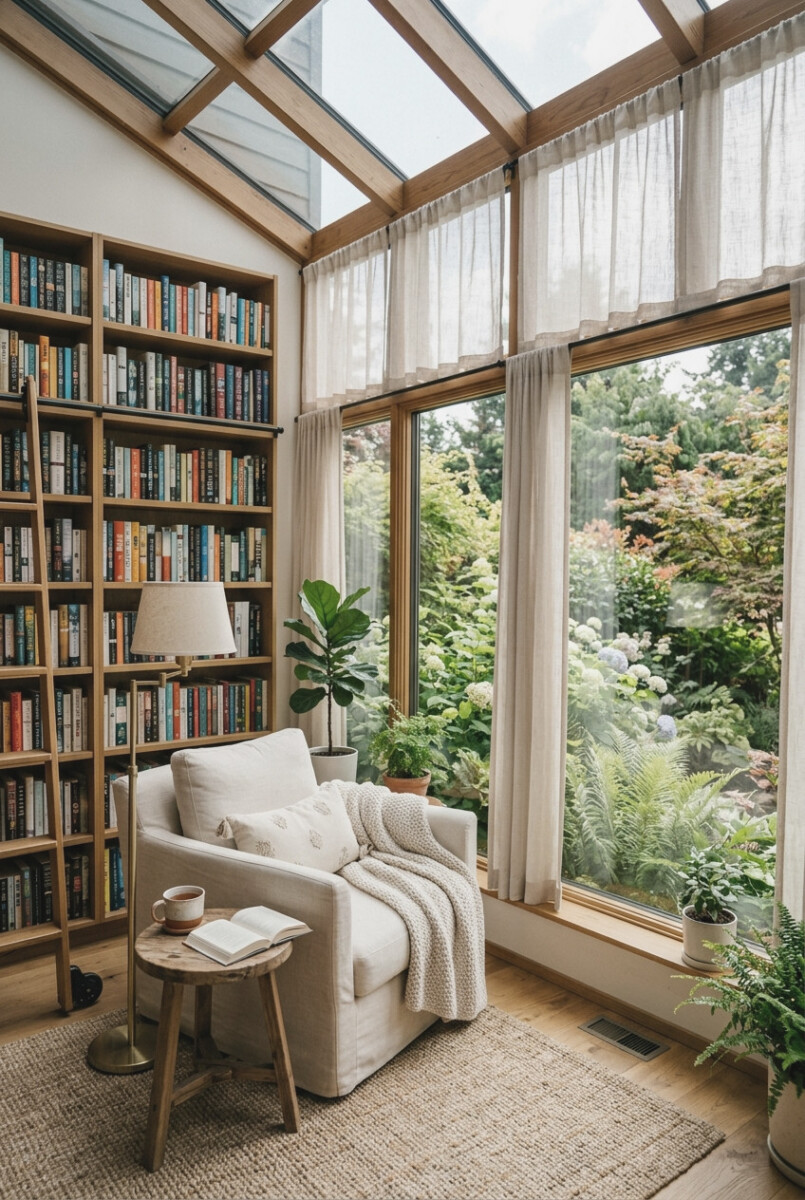
A bookcase along a solid interior wall can make a sunroom feel like a proper reading room. Add a comfortable chair, a task lamp, and a side table to create a place for everyday reading.
Books do not benefit from prolonged direct sunlight or large temperature and humidity changes. Keep valuable editions elsewhere, position shelves in a shaded area, and use blinds when needed to protect the collection.
15. Introduce a Vintage Rolling Bar Cart
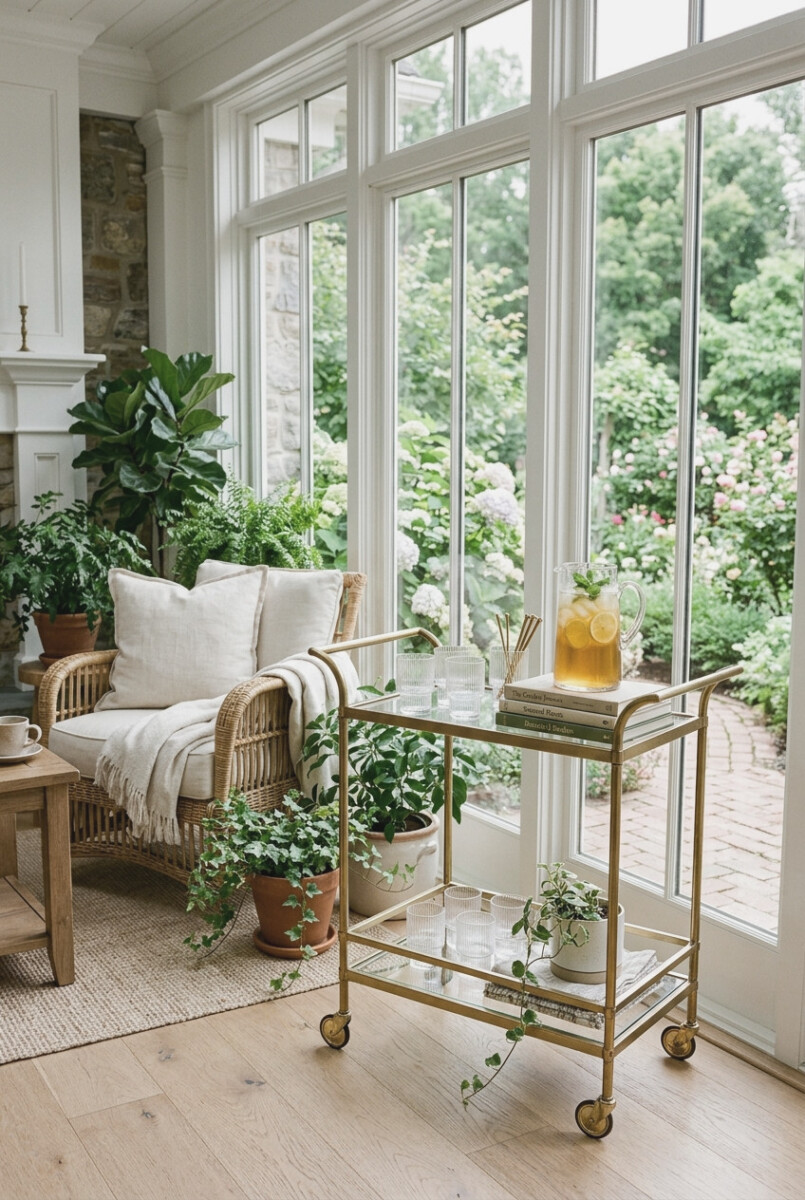
A rolling cart makes a flexible drinks station for a sunroom used for entertaining. Brass or painted metal finishes add a little shine, while a tray and glassware keep refreshments organized.
Use the cart for iced tea, water, or other drinks and lock its wheels when stationary. Between gatherings, it can display a few small plants or gardening books, provided the shelves are protected from water.
16. Soften the Edges with Sheer Linen Curtains

Sheer linen curtains soften the hard lines of a glass-heavy room and gently diffuse daylight. Hanging the rod above the window can add a sense of height while leaving the view mostly open.
Sheer fabric offers limited nighttime privacy and does not replace proper UV or heat-control shades. Pair it with a more protective window treatment where needed, and choose a fabric that can handle regular sunlight.
17. Grow an Indoor Herb Garden
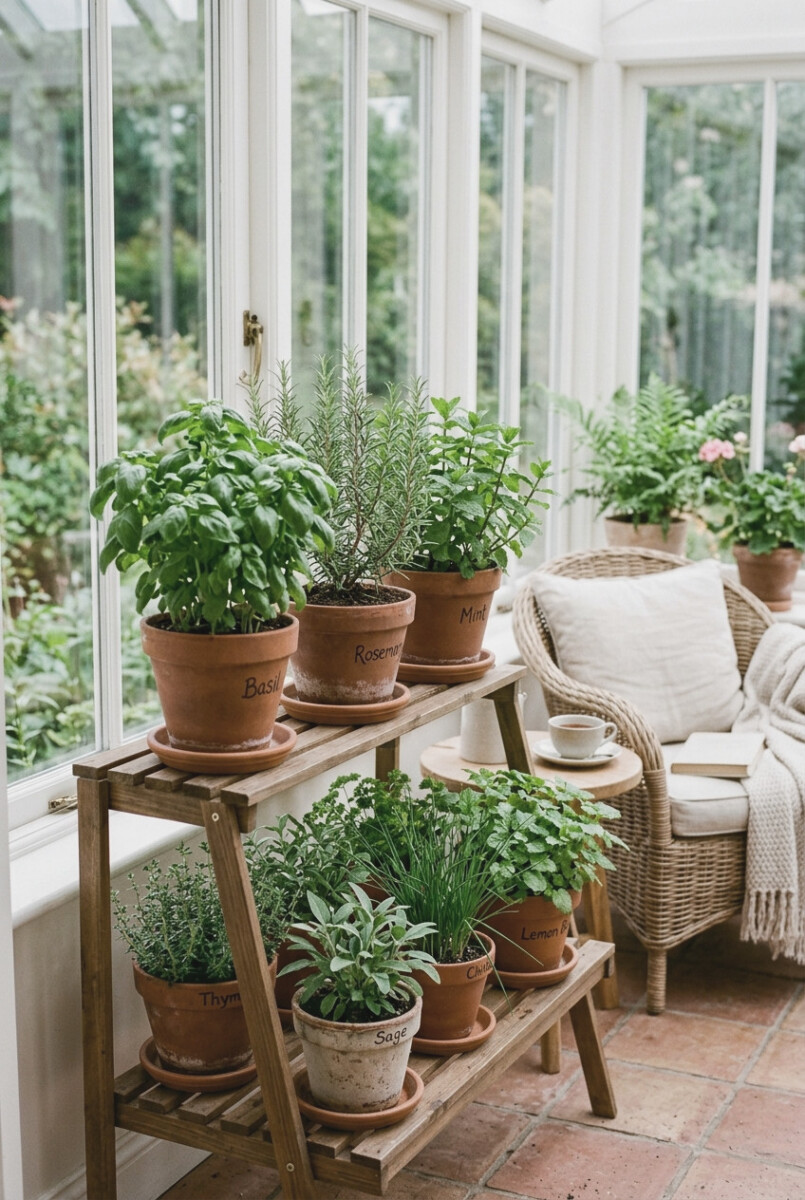
A sunny windowsill or compact plant stand can hold a useful collection of herbs. Rosemary, thyme, basil, and mint introduce fresh greenery and make the sunroom feel connected to everyday gardening.
Herbs have different water and light requirements, so group them by their needs rather than appearance alone. Use pots with drainage and saucers, and move sensitive varieties if temperatures rise sharply behind the glass.
18. Use Driftwood and Found Objects for Coastal Vibes

Driftwood, smooth stones, and a few shells can give a sunroom a relaxed coastal character. A single sculptural piece of wood on a coffee table often makes a stronger impression than a collection of themed decorations.
Keep the display restrained and leave room for books and drinks on usable surfaces. Clean and dry found objects before bringing them indoors, and avoid placing unstable pieces where they could fall.
19. Strategically Place Mirrors to Bounce Light

A mirror on a solid wall can reflect greenery and help brighten a darker part of the sunroom. A simple wooden frame complements natural textures, while a narrow framed mirror suits a smaller wall.
Check the reflection at different times of day before fixing the mirror in place. Reflected sunlight can create uncomfortable glare, so avoid aiming it toward seating or areas where people regularly read.
20. Add a Small Electric Stove for Cooler Months

A compact electric stove can make a sunroom more inviting during chilly weather. A cast-iron-style design adds a traditional focal point without the installation requirements of a wood-burning appliance.
Check the heater’s capacity, electrical requirements, and clearances before purchasing. A real wood stove requires professional assessment of venting, hearth construction, and local safety rules, especially in a glass-heavy room.
21. Layer Mismatched Throws and Pillows
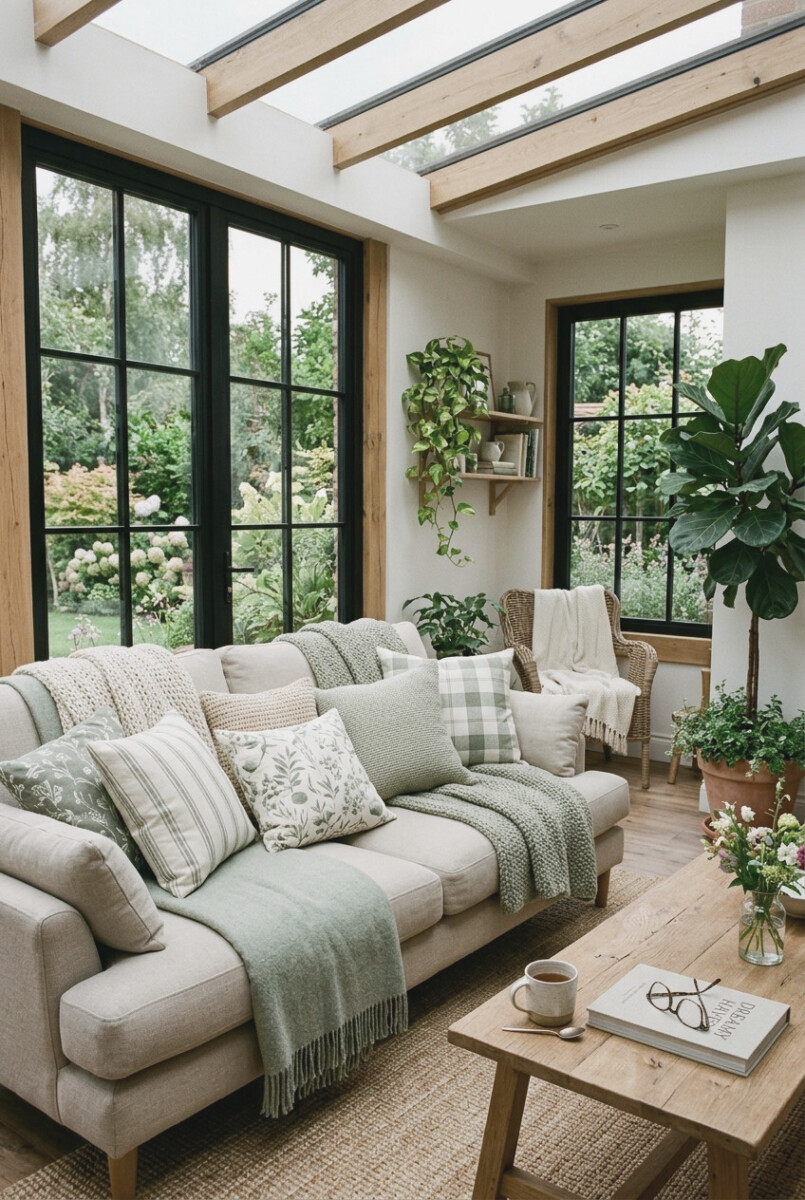
Mixing cushions and throws gives sunroom furniture a relaxed, lived-in appearance. Combine cotton, woven covers, and soft knits while repeating a few colors to keep the different textures connected.
Choose covers that can be washed and fabrics suited to the room’s sunlight. Rotate cushions if one side receives more exposure, and store delicate throws out of direct sun when they are not being used.
22. Opt for Classic Checkerboard Floors

A checkerboard floor introduces pattern without adding more furniture. Cream and warm gray, or sand and off-white, create a softer look than stark black and white and pair well with plants and woven textures.
Tile or stone can be practical in a sunroom, but choose a finish with appropriate slip resistance. This matters especially near garden doors, where damp shoes may bring water onto the floor.
23. Incorporate Sturdy Metal Garden Furniture

Metal bistro chairs or a wrought-iron plant stand can give a sunroom the feel of a traditional conservatory. These pieces work well alongside wicker, timber, and terracotta, adding contrast without making the room too formal.
Metal furniture can become hot in direct sunlight and may feel uncomfortable without cushions. Select corrosion-resistant finishes and add washable seat pads if the chairs will be used for longer periods.
24. Create a Napping Nook with an Oversized Daybed

A deep daybed turns one wall of the sunroom into a comfortable place to stretch out or read. It works particularly well in a long, narrow room where a conventional sofa arrangement would crowd the floor.
Choose washable covers and supportive cushions, and keep enough space around the daybed for easy movement. Unlike the suspended seat in idea five, this is a fixed lounging area intended for longer rest.
25. Use Sculptural Stone Pedestals

A stone pedestal or stone-look side table adds a solid counterpoint to woven furniture, plants, and glass. It can display a favorite ceramic piece or lift a plant to a more noticeable height.
Check the weight and stability of the pedestal, particularly on raised floors or where children may be present. A lightweight stone-look alternative can provide a similar effect when solid stone is impractical.
26. Install a High-Quality Ceiling Fan
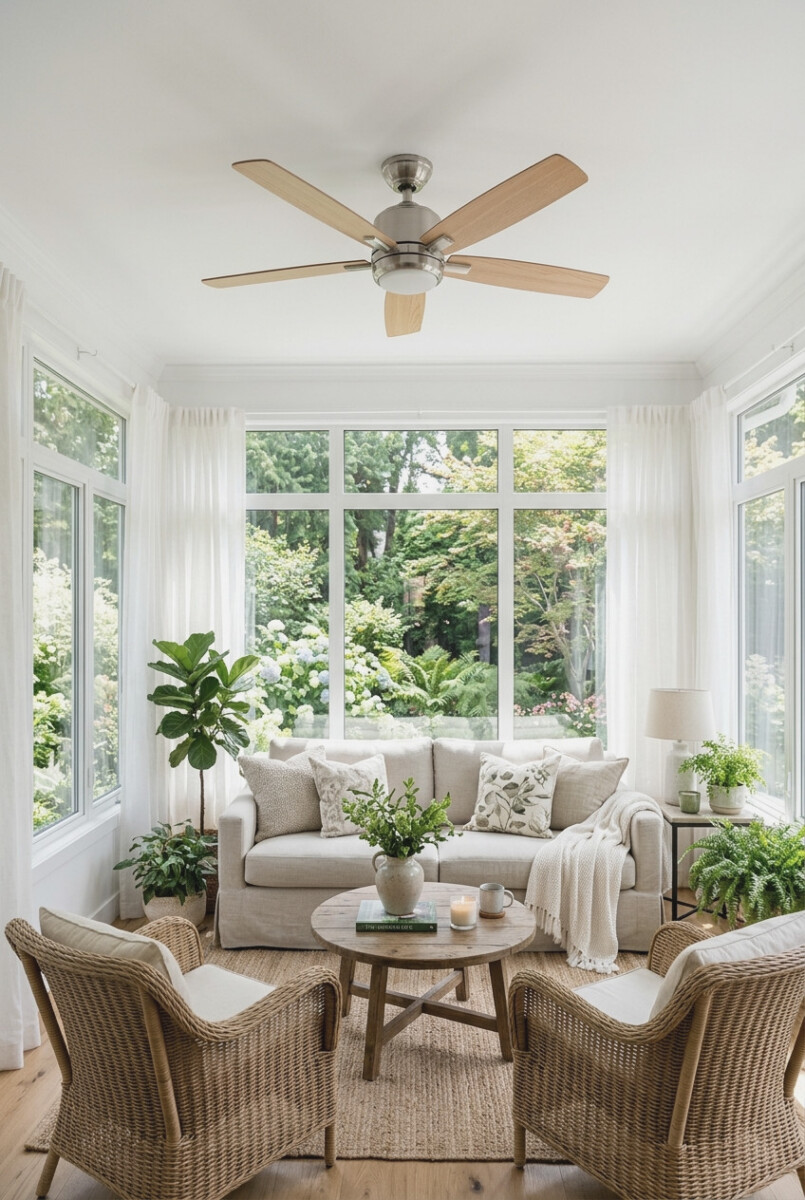
A ceiling fan can make a warm sunroom feel more comfortable by moving air across the seating area. Simple wood blades suit natural decor, while a streamlined fan works with contemporary window frames.
A fan does not lower the room’s actual air temperature, so it should complement shading and ventilation rather than replace them. Choose a model suited to the room’s moisture conditions and install it with proper support.
27. Display a Collection of Colored Glassware

Colored glass vases and bottles catch the light and add small accents of blue, amber, or green. Arrange a few pieces on a shelf or stable ledge where the colors can be appreciated without crowding the windows.
Keep fragile glass away from busy walkways and secure it against accidental knocks. A limited palette and a small number of pieces usually look more intentional than filling every windowsill.
28. Set Up a Dedicated Potting Station
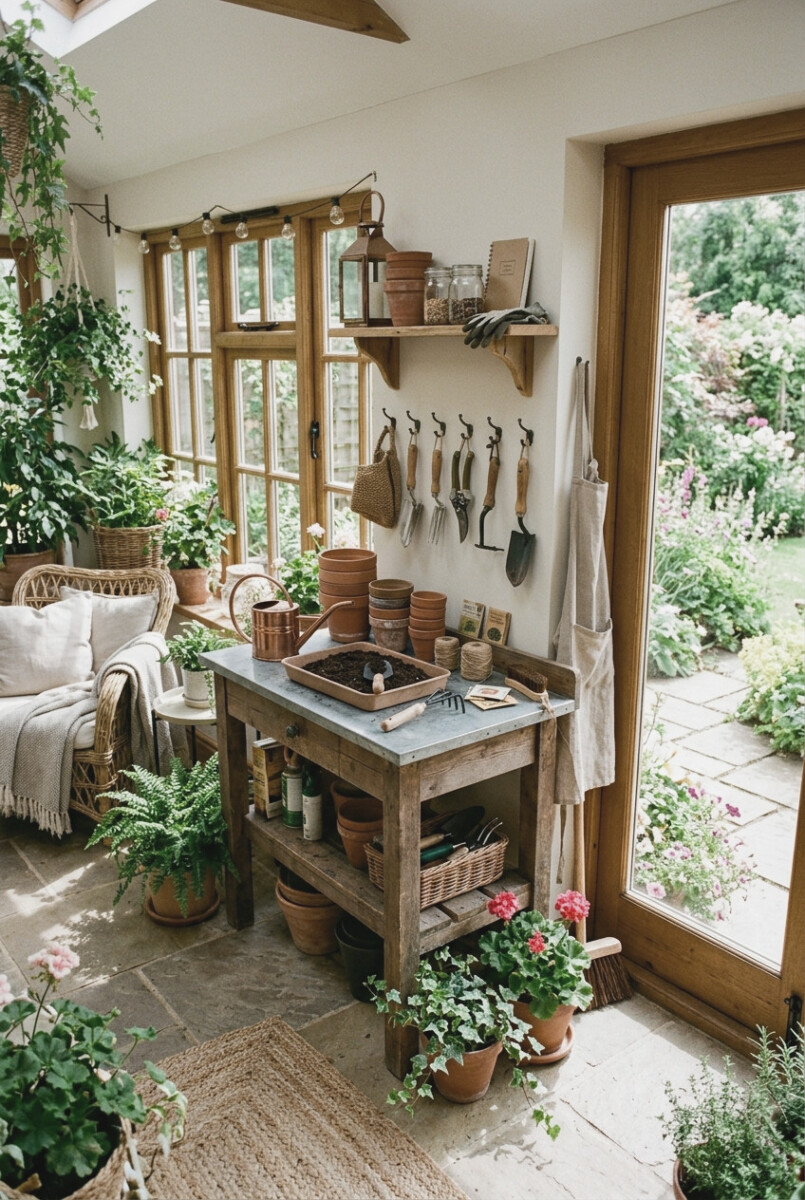
A sturdy potting bench makes a sunroom useful for gardeners. A wipe-clean worktop, small shelf, and hooks for tools create a practical corner for repotting and caring for plants.
Use trays to catch soil and water, and store compost in closed containers. Position the station away from upholstered seating and keep the route to the garden door clear.
29. Scatter Oversized Floor Cushions

Oversized floor cushions provide casual extra seating for reading, games, or time with children. They are easy to move when you want to change the room’s layout, and their low height keeps window views open.
Choose washable covers and fillings that provide adequate support. Keep cushions off damp floors and include conventional chairs for anyone who finds it uncomfortable to sit close to the ground.
30. Hang String Lights or Use Lanterns for Evening Glow

Soft evening lighting helps a sunroom feel welcoming after the daylight fades. String lights along a beam and lantern-style lamps can add a gentle glow, while a shaded reading lamp provides more focused illumination.
Use fittings rated for the room’s conditions and keep cables away from walkways. Flameless candles are a practical alternative to open flames near curtains, cushions, and other soft furnishings.
31. Showcase Whitewashed Brick Walls
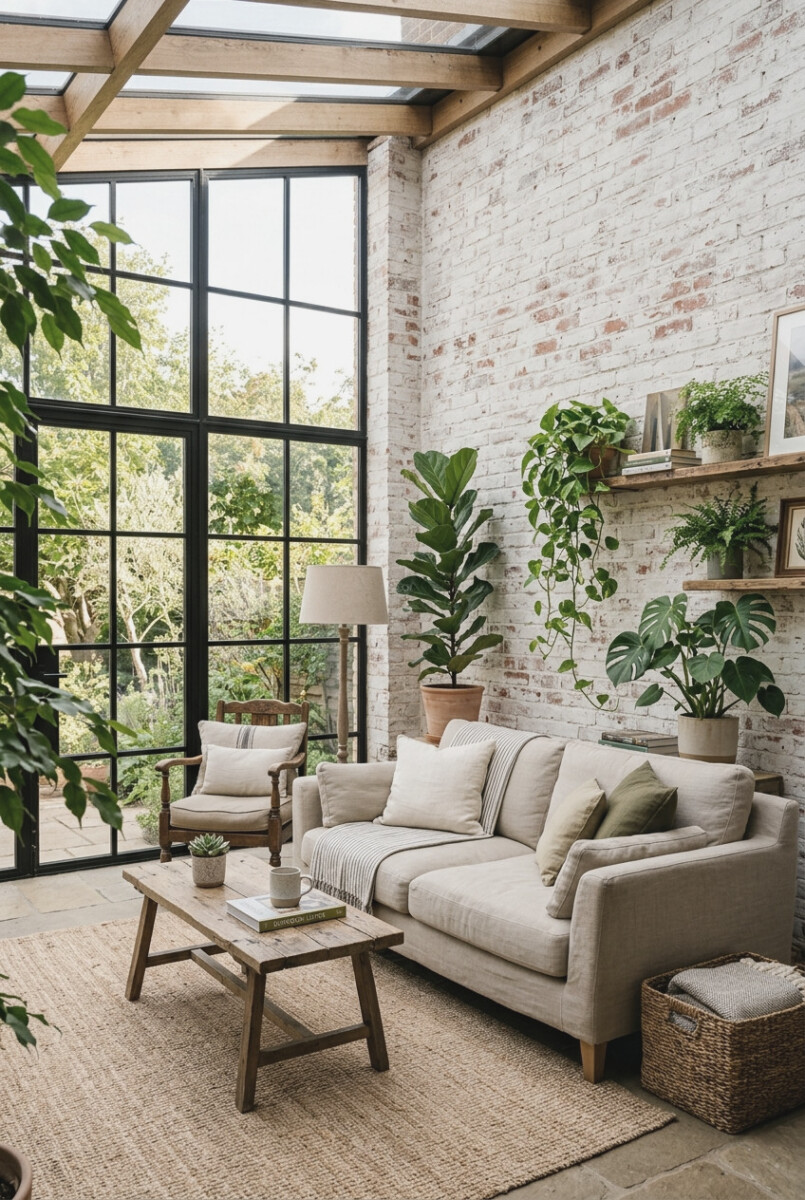
An exposed brick wall can add texture to a sunroom, especially when it is part of the original house. A light whitewash brightens the surface while allowing some of the brick’s natural variation to show through.
Whitewash and German smear are different finishes: the latter typically uses a thicker mortar treatment. Test the intended finish on a small area and check that it is compatible with the brick and any moisture conditions.
32. Design a Minimalist Zen or Meditation Zone

A quiet corner with a floor mat and a few simple accessories can make a sunroom useful for stretching or meditation. Keeping the area free of bulky furniture preserves the view and creates space to move.
Choose a comfortable, non-slip surface and avoid leaving objects where they could be stepped on. A shade is helpful if the sun becomes too bright or hot during the hours you plan to use the space.
33. Use a Folding Screen to Zone the Space
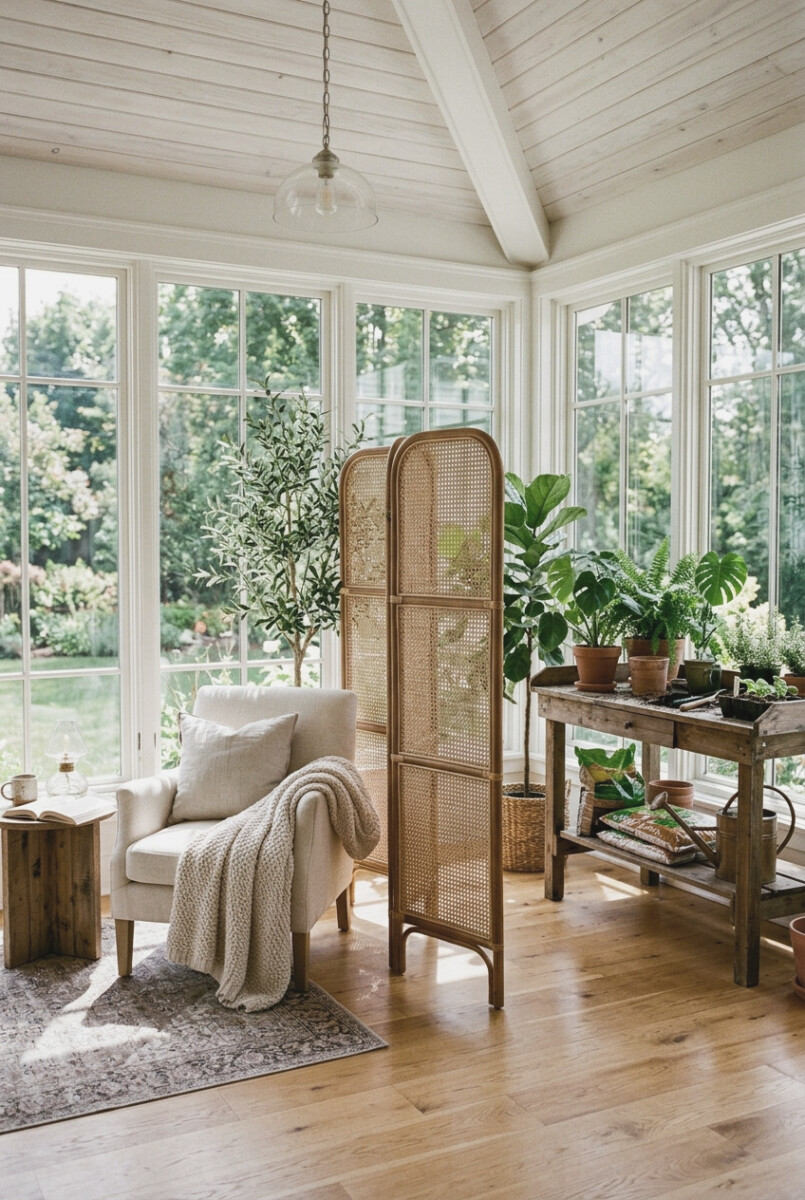
A folding screen can separate a reading chair from a potting area or add privacy to a large sunroom. Cane panels, painted wood, and simple fabric screens offer different looks without requiring a permanent wall.
Choose a stable screen and place it away from door swings and main walkways. Because it can be moved, the screen is useful when the room changes purpose between seasons.
Designing a Sunroom That Works Throughout the Day
A successful sunroom balances natural light with everyday comfort. Durable upholstery, useful shading, ventilation, and seating that suits your routine will make the space easier to enjoy than decorative details alone. Plants, natural materials, and thoughtful lighting can then give it personality.
Start by noticing where the sun falls and how the room feels in different weather. Move a chair, test a shade, or add a small rug before committing to larger changes. The most inviting sunroom is one that looks good but also remains comfortable and useful as the seasons change.
