Table of Contents
I used to think mulch was just something people added on top of soil to make their garden look neat.
That was it. Purely decorative.
I’d see those clean garden beds with dark bark or wood chips and assume it was all about appearance. Nothing more.
Then one summer, my plants started struggling. The soil dried out way too fast, weeds kept coming back no matter how often I pulled them, and everything just felt harder than it should have been.
That’s when I finally understood something simple but powerful:
mulch isn’t decoration — it’s protection.
And once I started using it the right way, gardening became noticeably easier.
What Mulch Actually Is
At its core, mulch is any material you spread on top of soil.
That’s it. No complicated definition.
But what surprised me was how many different forms it can take.
Some of the most common types include:
- wood chips
- bark
- straw
- dried leaves
- grass clippings
- compost
- even stones or gravel
When I first started, I thought mulch had to be something you buy in bags from a store.
But in reality, some of the best mulch is already around you.
Now I reuse fallen leaves and garden waste all the time, and it works just as well.
Why Mulch Made Such a Big Difference for Me
I didn’t expect mulch to change much.
But after using it consistently, I noticed three big improvements almost immediately.
1. The soil stayed moist longer
Before mulch, I had to water constantly.
The top layer of soil would dry out within a day, especially in hot weather.
After adding mulch, something changed:
the soil underneath stayed cool and damp much longer.
I could literally dig a little under the mulch and feel the difference.
This meant:
- less watering
- less stress on plants
- more stable growing conditions
2. Weeds became much easier to control
Weeds used to be one of the most frustrating parts of gardening for me.
No matter how often I removed them, they kept coming back.
Mulch changed that.
By covering the soil, it blocks sunlight from reaching weed seeds.
And without light, most weeds simply don’t grow.
It didn’t eliminate weeds completely, but it reduced them enough that maintenance became manageable.
3. The garden looked more finished
This was the part I originally cared about.
And yes, mulch does make everything look better.
But now I see that as a bonus, not the main reason.
Because once you understand what mulch actually does, the visual improvement is just extra.
The Two Main Types of Mulch
One thing that confused me early on was the different categories of mulch.
Everything falls into two main types:
Organic mulch
This includes materials that break down over time, such as:
- wood chips
- bark
- leaves
- compost
- straw
These are my go-to now.
Why?
Because as they decompose, they feed the soil.
It’s like improving your garden slowly, without extra effort.
Inorganic mulch
This includes:
- gravel
- stones
- landscape fabric
These don’t break down.
They’re useful in certain situations, especially for pathways or decorative areas.
But for plant health, I personally prefer organic options.
When I Actually Use Mulch
I used to think mulch was only for certain types of gardens.
Now I use it almost everywhere.
It works for:
- garden beds
- potted plants
- around trees
- vegetable gardens
Basically, if there’s exposed soil, mulch can help.
How Much Mulch You Really Need
This is where I made one of my biggest mistakes.
At first, I added a very thin layer.
It looked nice, but it didn’t do much.
Then I learned:
mulch needs to be thick enough to work.
The sweet spot for me has been:
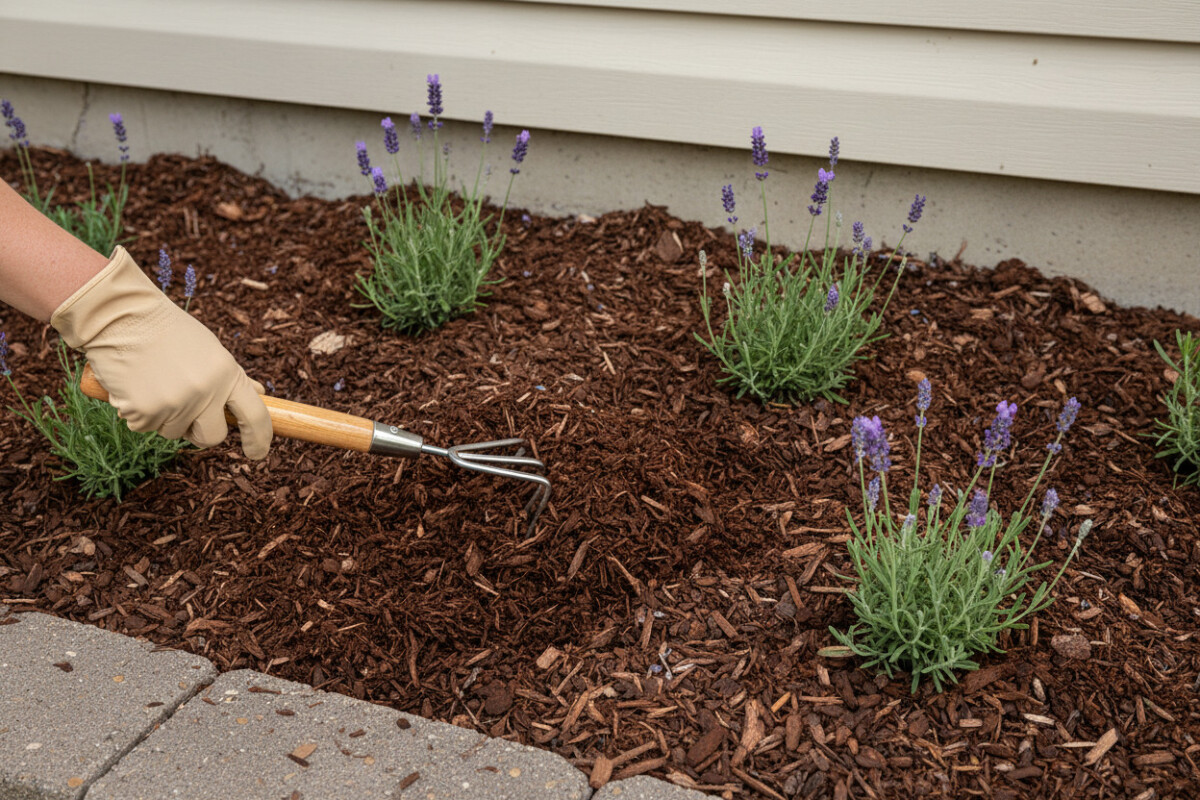
around 5 to 7 centimeters thick
Anything less, and weeds can still push through and moisture evaporates too quickly.
Anything too thick, and you risk blocking airflow to the soil.
A Mistake I Made With Mulch Around Plants
At one point, I piled mulch right up against the stems of my plants.
It seemed logical at the time.
More coverage, better protection.
But this actually caused problems.
The base of the plant stayed too damp, and that can lead to rot.
Now I always leave a small gap around the stem.
It’s a small detail, but it makes a big difference.
The Best Mulch I’ve Personally Used
After trying different types, here’s what worked best for me:
Wood chips and bark
- long-lasting
- great for moisture retention
- good for garden beds
Dried leaves
- free and easy to find
- break down quickly
- improve soil over time
Compost
- adds nutrients
- works as both mulch and soil improvement
I’ve also tried grass clippings, but I learned to use them carefully.
If applied too thick, they can become compacted and block airflow.
Seasonal Changes: When to Apply Mulch
Timing matters more than I expected.
In hot weather
Mulch helps keep soil cool and reduces water loss.
This is when I rely on it the most.
In colder seasons
Mulch acts like insulation.
It helps protect roots from temperature fluctuations.
This is especially useful for plants that stay outside year-round.
Does Mulch Replace Watering or Fertilizing
This is something I misunderstood at first.
Mulch does not replace watering.
It simply makes watering more efficient.
You still need to water your plants, just not as often.
As for fertilizing:
Organic mulch can slowly add nutrients, but it’s not always enough on its own.
I still fertilize when needed, just less frequently.
The Biggest Lesson I Learned About Mulch
For a long time, I focused on visible results.
Green leaves. Fast growth. Perfect-looking plants.
But mulch taught me to think differently.
Healthy plants start with healthy soil.
And mulch protects that foundation.
Once I started focusing on soil conditions instead of just the plant itself, everything improved.
A Simple Way to Start Using Mulch
If you’re new to this, don’t overcomplicate it.
Start small.
Pick one area of your garden and try:
- clear the soil surface
- water lightly
- add a layer of mulch
Then observe.
Check how the soil feels after a few days.
Notice how often you need to water.
You’ll start to see the difference quickly.
Final Thoughts
If I could go back and give myself one piece of advice when I first started gardening, it would be this:
don’t ignore mulch.
It seems simple, almost too simple to matter.
But it changes how your soil behaves, how your plants grow, and how much effort you need to maintain everything.
Once you understand that, gardening becomes less about constant fixing and more about creating the right conditions from the start.
And honestly, that’s what made the biggest difference for me.