Table of Contents
Concrete can give a bathroom clean lines and a subtle, tactile finish without making it feel cold or unfinished. It works with simple modern fittings, but it also looks at home beside oak cabinetry, handmade tile, brass, and soft textiles. The key is deciding how much concrete you want to see and which materials will balance it.
You don’t have to build an entire bathroom out of poured concrete to get the look. Concrete-effect porcelain tile, sealed cast-concrete sinks, and professionally installed microcement offer different ways to introduce the finish. Before choosing a surface for a shower or floor, check its waterproofing, slip resistance, and cleaning requirements. These ideas cover everything from a single accent to a complete bathroom redesign.
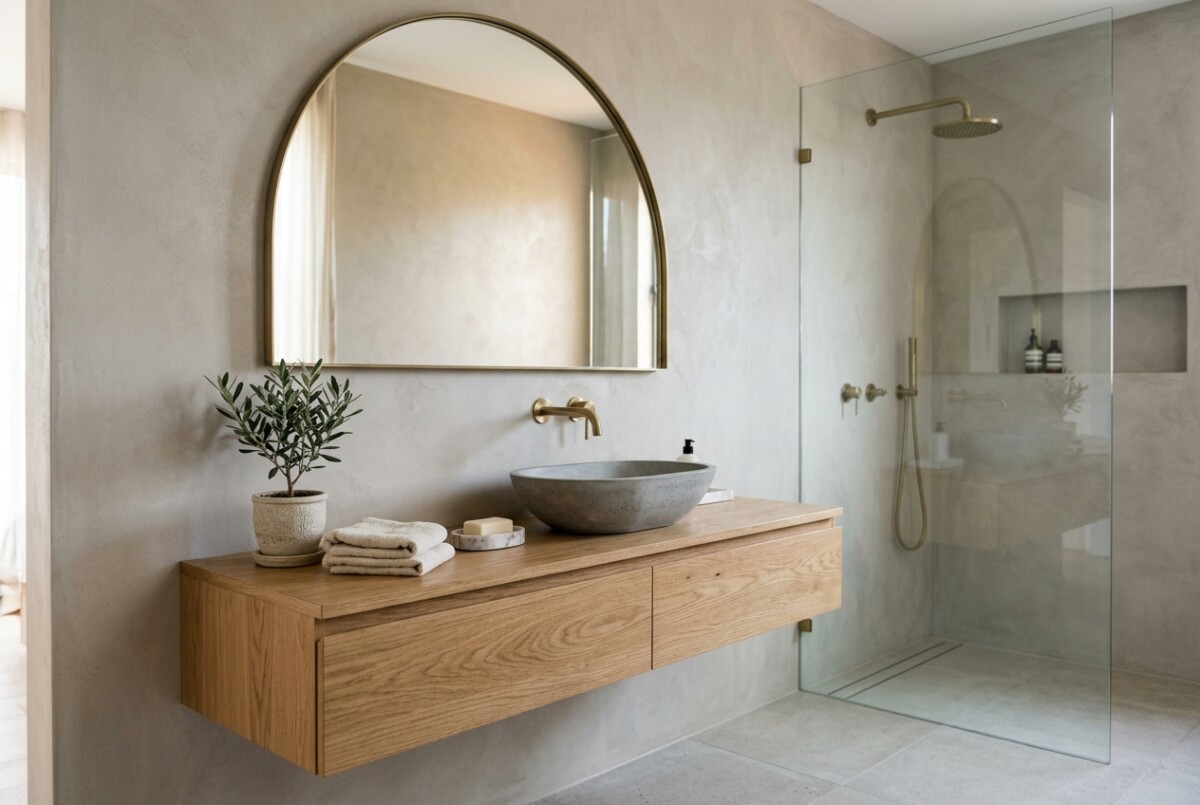
1. Give the Walls a Soft Gray Microcement Finish
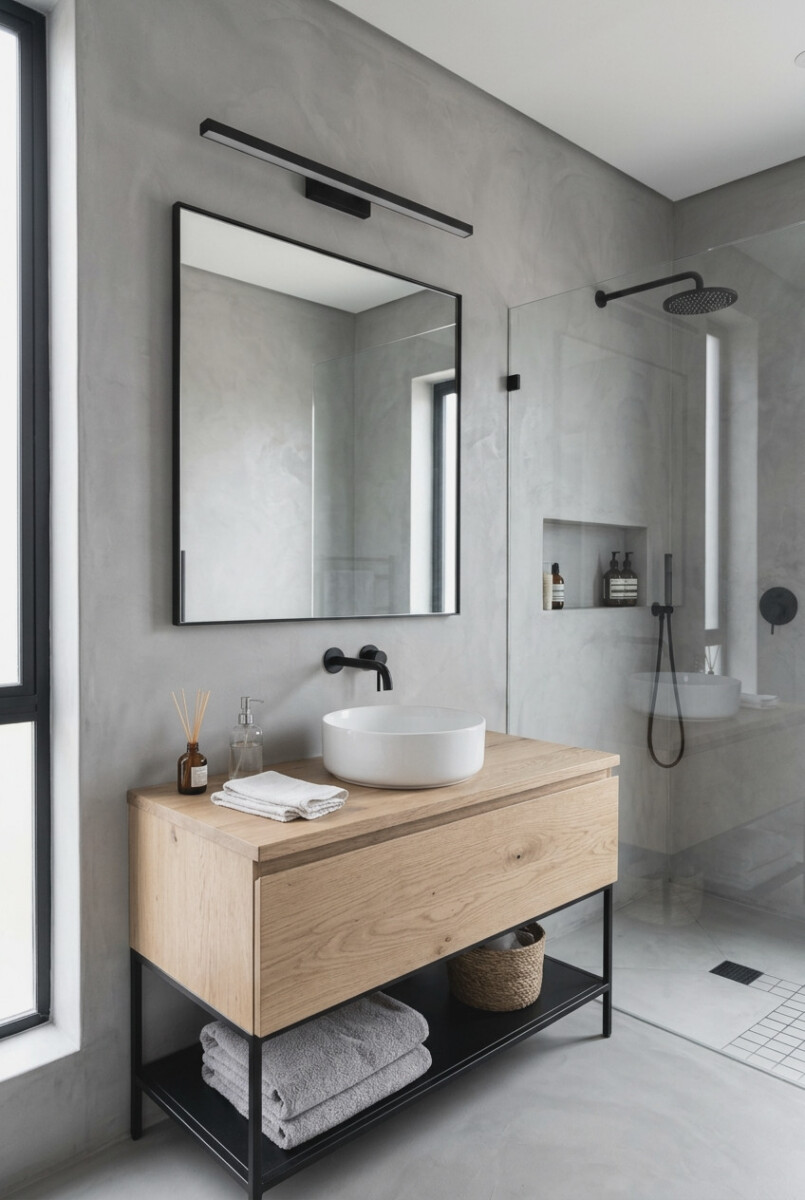
Soft gray microcement can give bathroom walls a continuous, gently textured appearance. The subtle trowel marks add interest without the busy pattern of small tiles, making it a good backdrop for simple fixtures and a large mirror.
Try it on the walls outside the shower first if you want a less involved update. For wet zones, hire an experienced installer who can specify a compatible waterproofing and sealing system rather than relying on the decorative finish alone.
2. Choose Warm Greige Instead of Cool Cement Gray
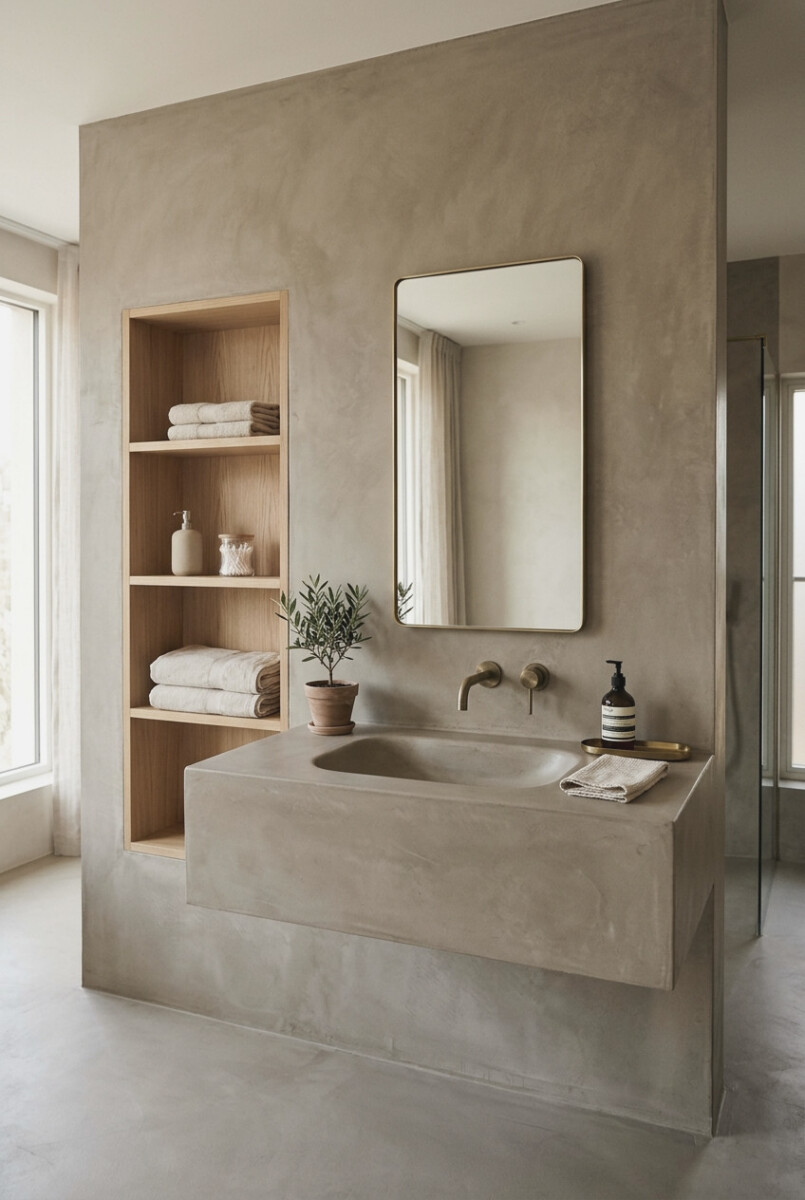
Not every concrete bathroom has to be steel gray. A warm greige finish combines the understated look of cement with beige undertones that feel comfortable beside wood, cream towels, and warm lighting.
Compare samples in morning and evening light before committing. Gray finishes can look much cooler under bright white bulbs, so choose lighting and neighboring materials at the same time as the concrete color.
3. Use Large-Format Concrete-Look Porcelain Tiles

Large-format porcelain tiles offer the appearance of concrete with a familiar tiled construction. Their broad surfaces and limited grout lines make the bathroom feel calm and uncluttered, particularly when the same finish runs across several walls.
Choose tiles approved for their intended location, and use a grout color close to the tile for a quieter look. Large pieces need a well-prepared substrate and careful installation, so don’t assume fewer grout lines mean an easier DIY project.
4. Make an Existing Concrete Wall the Feature
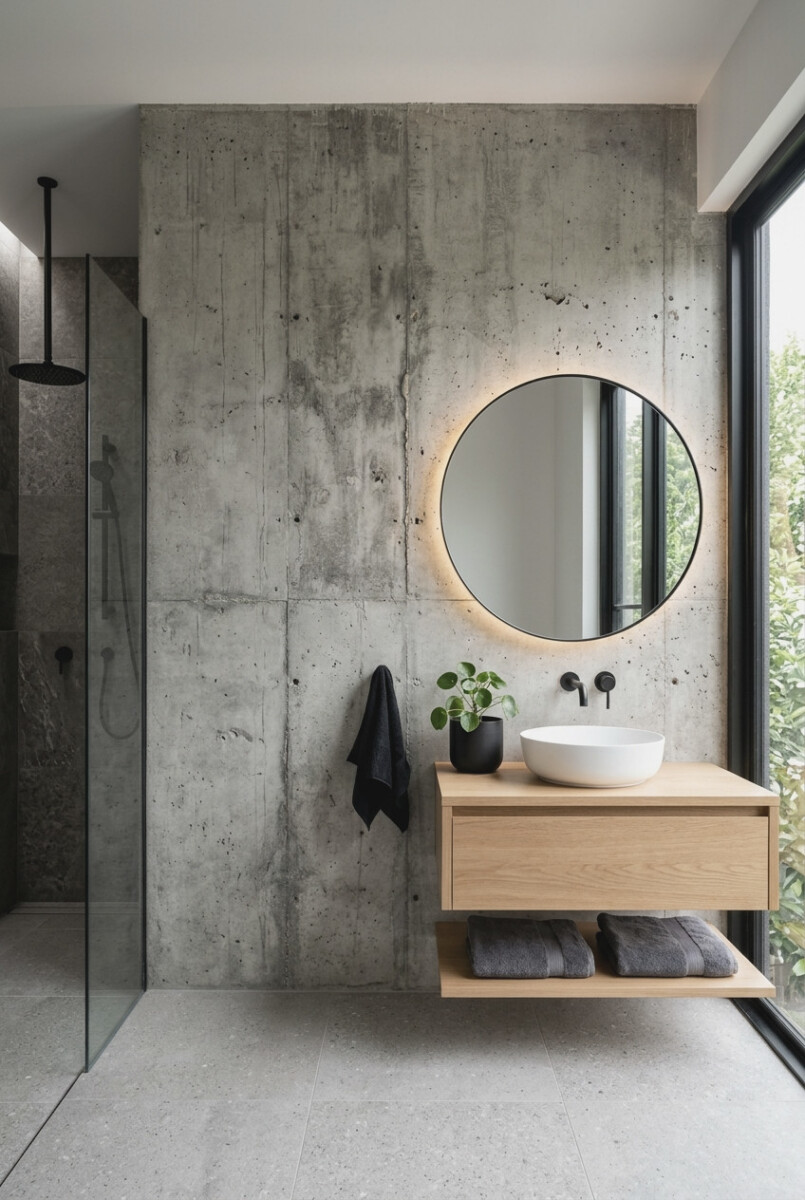
If your home already has an exposed structural concrete wall, it can become the most interesting surface in the bathroom. Formwork lines, slight color changes, and natural imperfections give the room character that a printed finish cannot quite repeat.
Have the wall assessed before leaving it exposed in a humid space. It may need cleaning, repairs, or a suitable protective treatment, and any leaks or movement should be addressed before decorating around it.
5. Warm Up Concrete with a Light Oak Vanity
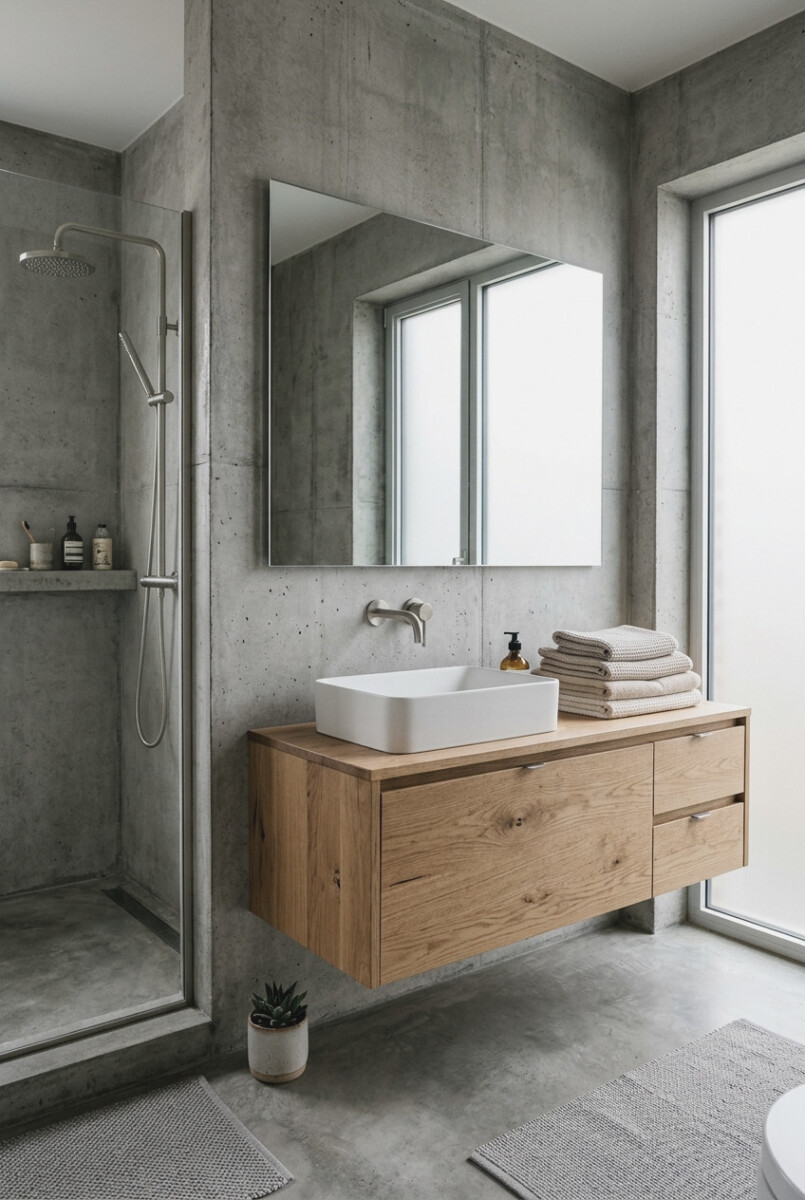
Light oak cabinetry brings warmth to a bathroom with concrete walls or floors. Its visible grain breaks up the smooth mineral surface, while a floating vanity keeps the composition light and leaves more flooring visible.
Choose a bathroom-rated cabinet and keep standing water away from the wood. A white basin, simple chrome or brushed-nickel tap, and a few neutral towels are enough to complete the look without overdecorating it.
6. Install a Cast-Concrete Vanity Countertop
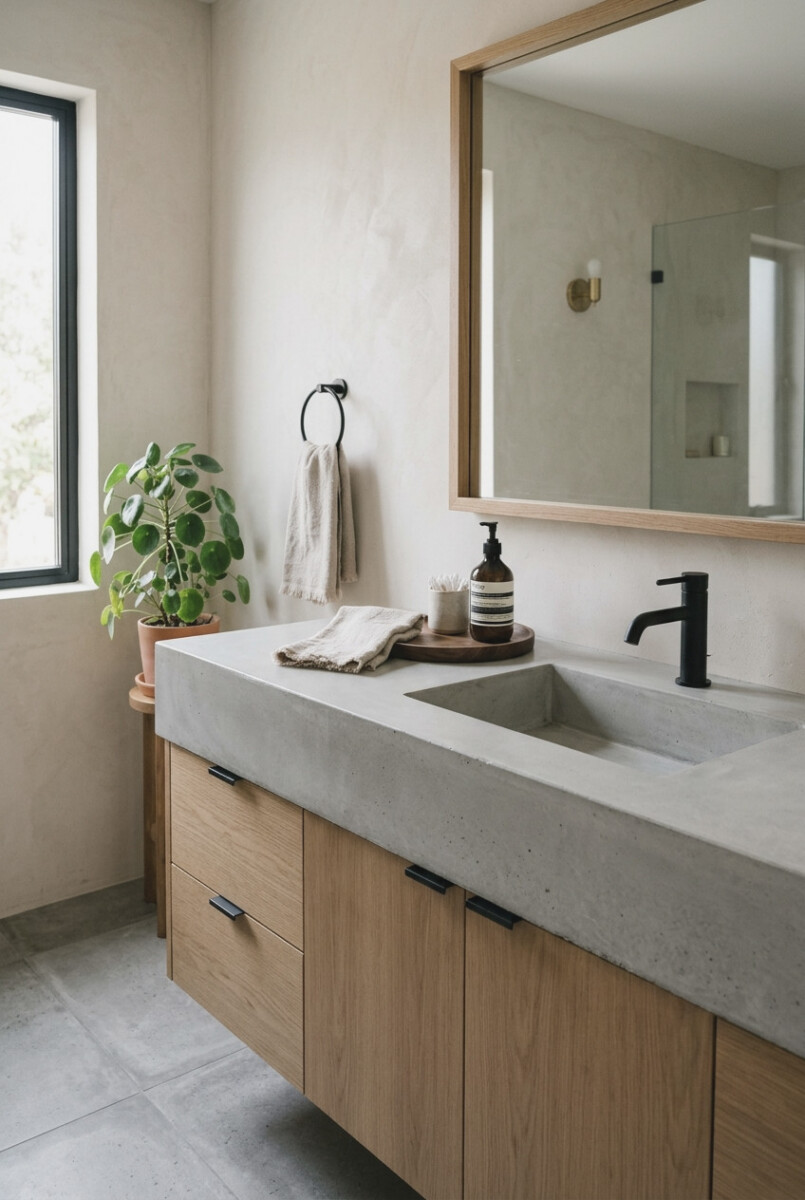
A cast-concrete countertop makes the vanity feel more architectural than a standard laminate or stone top. It can be formed in a clean rectangular profile, with enough surface area for everyday toiletries and a small tray.
Concrete is porous, so the surface needs a sealer intended for bathroom counter use. Confirm the counter’s weight, support, and sink cutouts with the fabricator, and clean it with products recommended for the chosen sealer.
7. Choose a Sculptural Concrete Vessel Sink
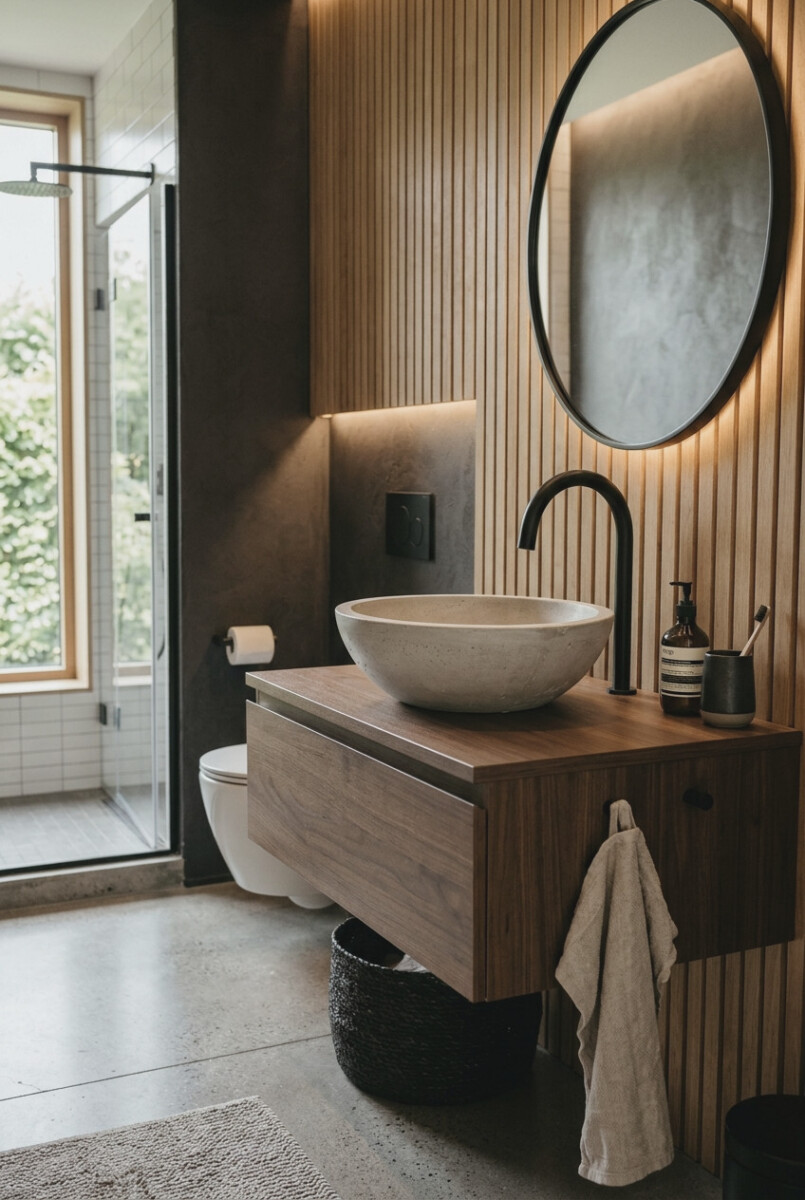
A concrete vessel sink can be the focal point of a simple bathroom. Rounded bowls, shallow oval forms, and softly angled basins all show off the material while keeping the surrounding counter relatively restrained.
Check the basin’s interior finish, drainage, and compatible tap height before buying. A properly sealed surface is important around soap and toothpaste, and prompt wiping helps prevent mineral deposits from building up.
8. Try a Long Integrated Concrete Trough Sink
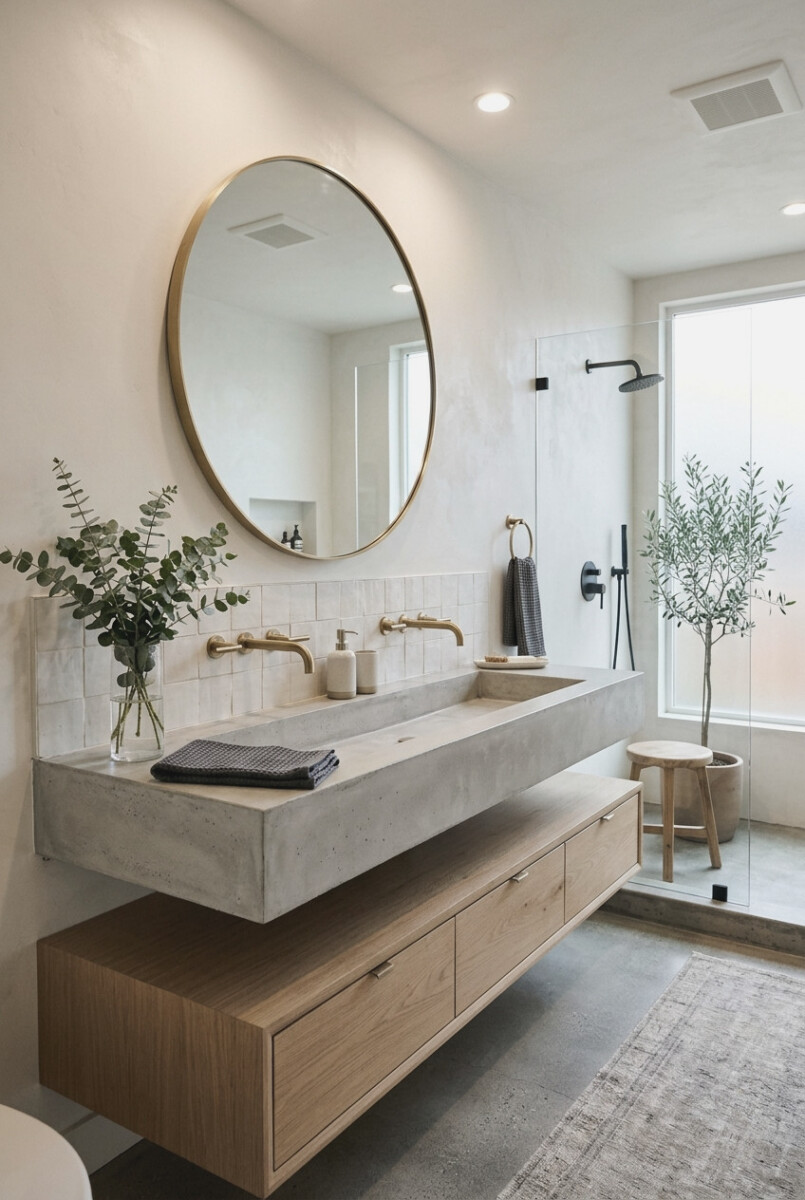
An integrated trough sink creates a clean, continuous look across a wide vanity. It is especially useful in a shared bathroom where two people need access to a single broad basin rather than separate countertop bowls.
Ask a specialist to plan the slope, drain placement, reinforcement, and sealing. An attractive shallow basin still needs to drain properly, and the finished unit may be considerably heavier than a typical vanity top.
9. Wrap the Shower Walls in Concrete-Effect Tile
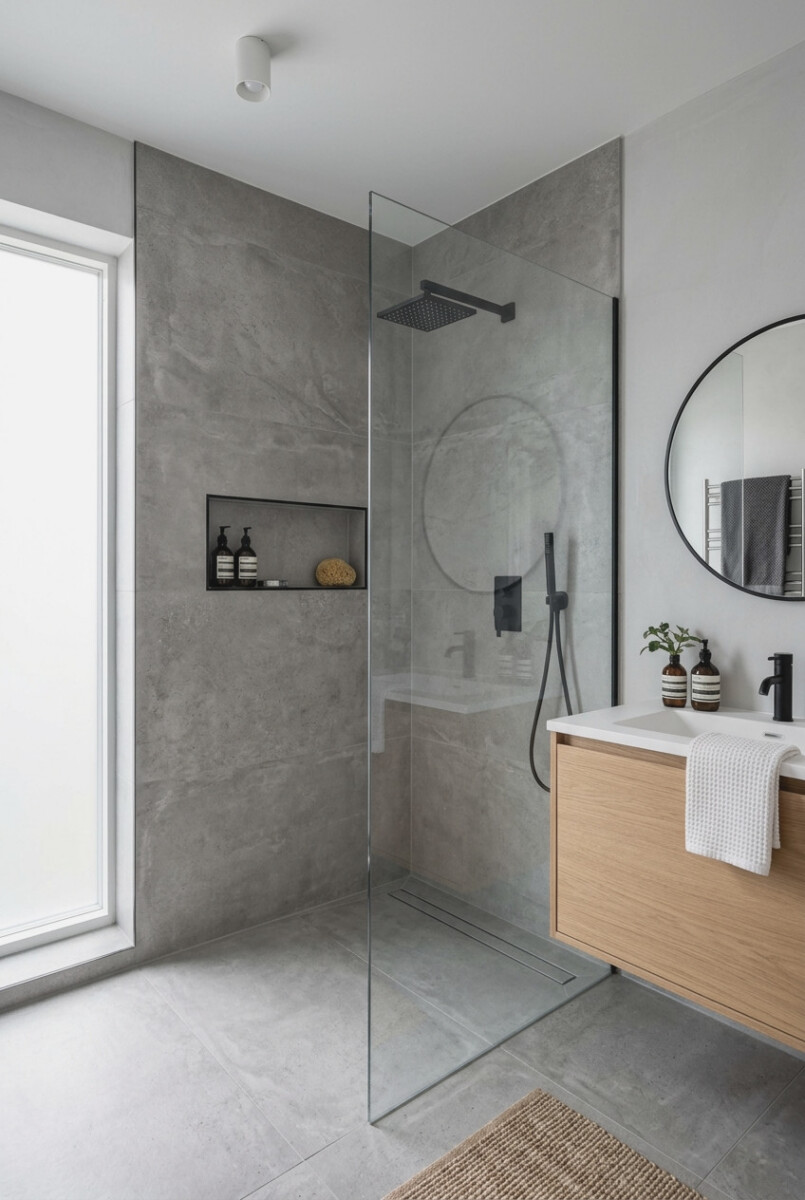
Concrete-look tiles can give a shower an understated, spa-like appearance without using an exposed cement surface. A medium gray finish works with both chrome and black shower fittings, while lighter tones suit compact rooms.
Use tile, grout, and waterproofing products specified for showers. The tile is the visible finish, not the entire water barrier, so proper treatment behind the walls and around penetrations remains essential.
10. Create a Seamless-Look Microcement Shower
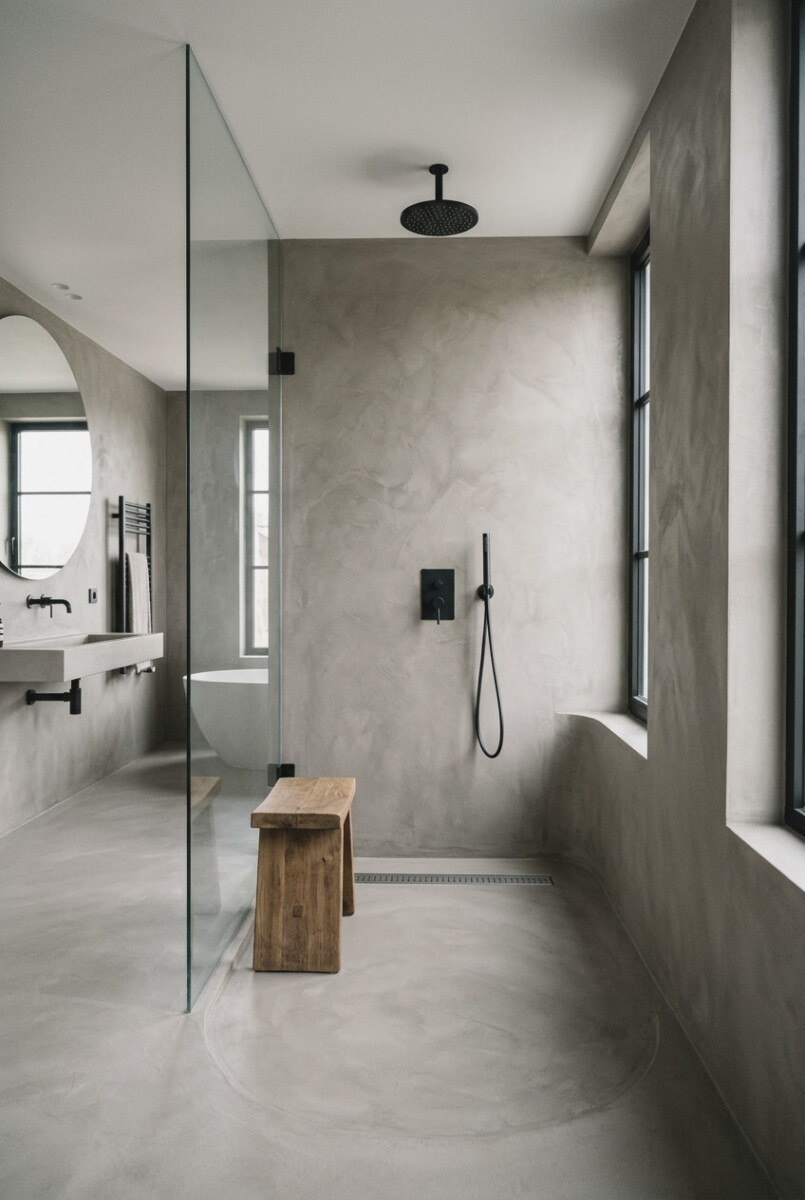
A carefully finished microcement shower can have a soft, continuous surface from wall to wall. The minimal appearance is particularly effective with a frameless glass screen and a discreet drain.
This is a professional wet-room project, not a simple coating job. The substrate, waterproofing membrane, floor falls, junctions, and compatible sealer all need to form a complete system that is suitable for continuous water exposure.
11. Pair Concrete with Handmade White Tiles
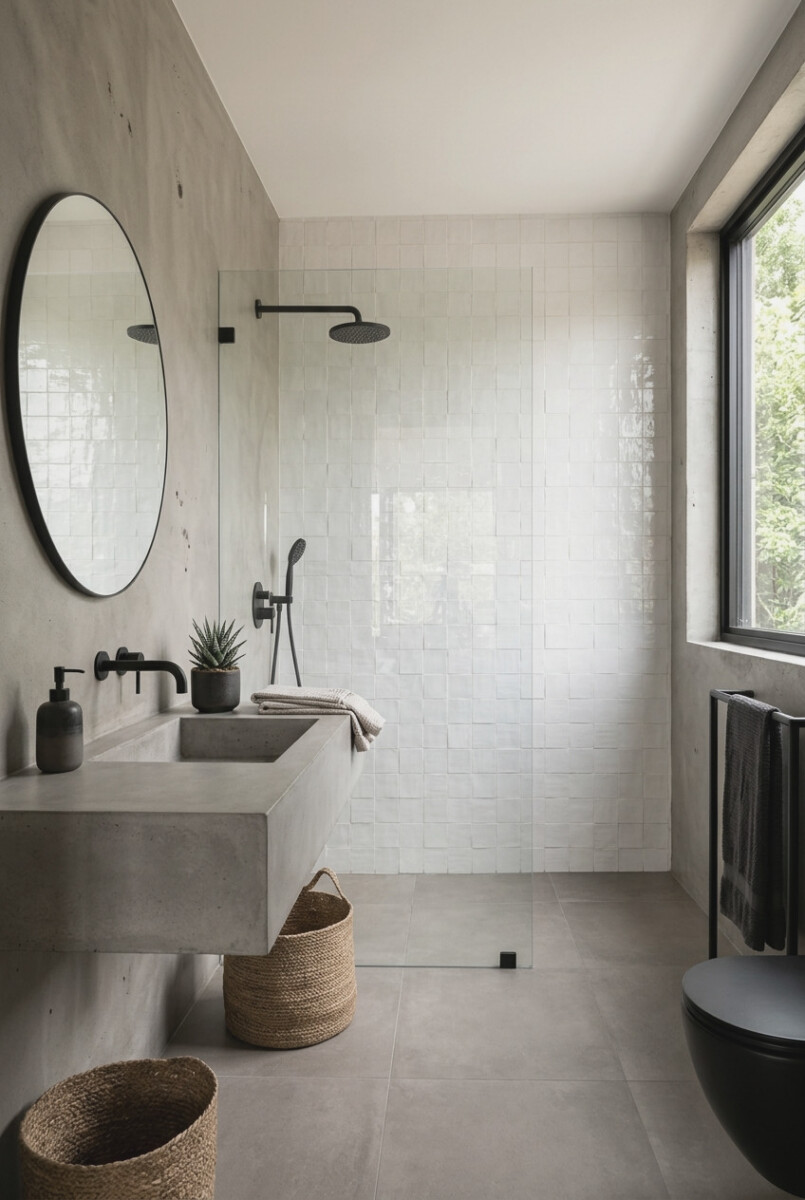
Concrete and handmade-look white tiles are a useful pairing when an all-gray bathroom feels too severe. The slight variation in glazed tile adds brightness, while the quieter concrete finish keeps the mix from becoming too busy.
Try white tiles inside the shower and concrete-effect walls around the vanity, or reverse the placement. Use a restrained grout color and keep the tile proportions consistent with the size of the room.
12. Add Matte Black Fixtures for Strong Contrast
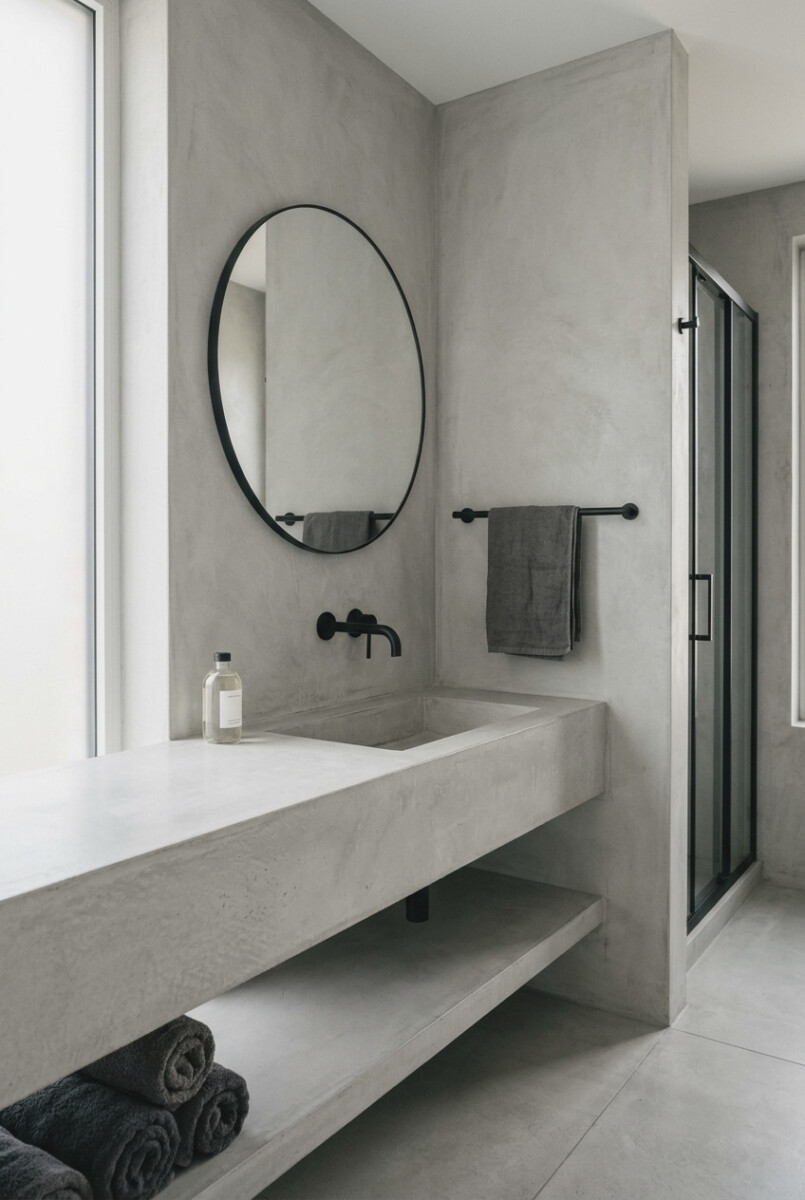
Matte black taps, towel bars, and shower fittings give pale concrete a sharper, more graphic edge. This combination works well in modern bathrooms where the architecture is simple and decorative objects are kept to a minimum.
Repeat the black finish in two or three places rather than on every accessory. Check how the fittings should be cleaned, as mineral deposits can be particularly visible on dark surfaces in hard-water areas.
13. Soften Gray Concrete with Brushed Brass
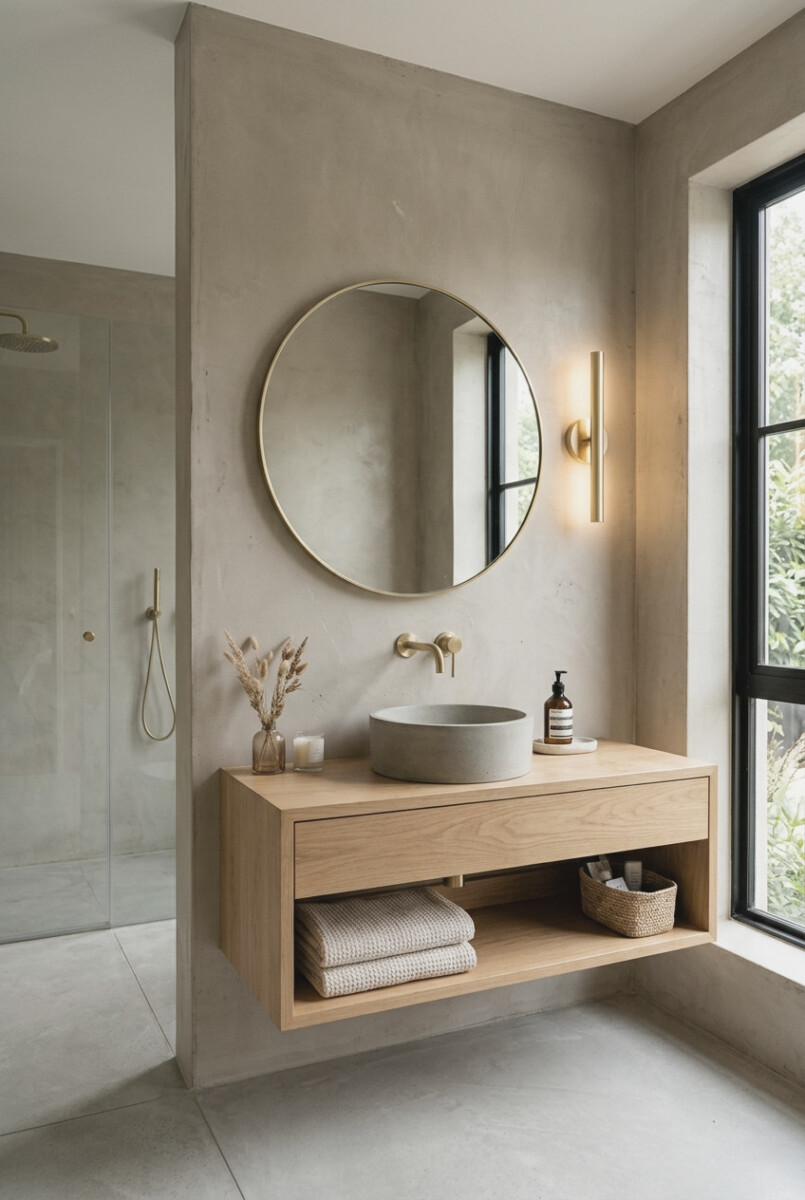
Brushed brass brings a warmer note to concrete, especially when the walls have a beige or greige undertone. A brass tap, mirror frame, or wall light can add enough contrast to keep the room from feeling monotonous.
Choose a consistent brass tone for the main fittings, but don’t worry about matching every small detail. Pair it with cream towels and a simple wood cabinet for a finish that feels polished without being overly formal.
14. Introduce a Slim Natural-Stone Accent
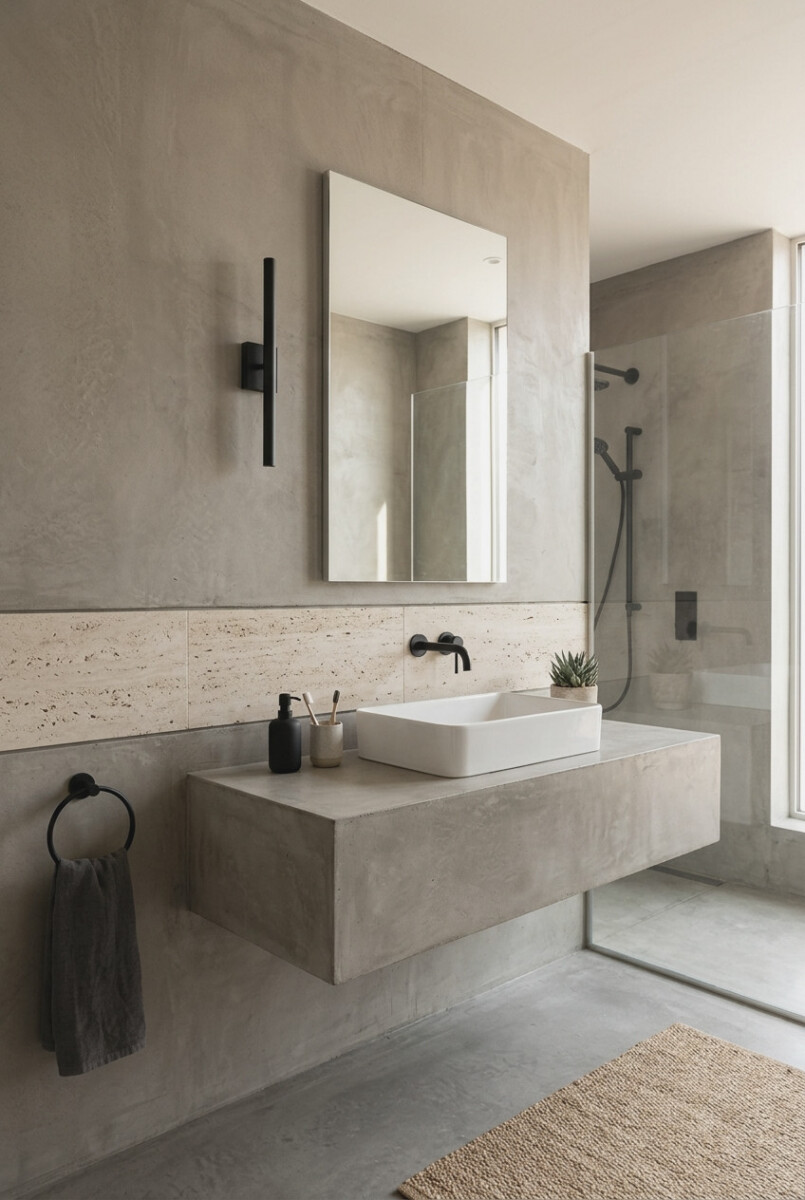
A strip of travertine or limestone can break up a large concrete surface and introduce a second natural texture. Stone looks particularly attractive as a vanity splashback, a shower ledge, or a carefully detailed trim around a niche.
Check that the selected stone and finish are appropriate for the location. Some natural stones need additional sealing and gentle cleaners, so test the care requirements before placing them in an area that gets regular splashes.
15. Pick Sand-Colored Concrete-Effect Flooring
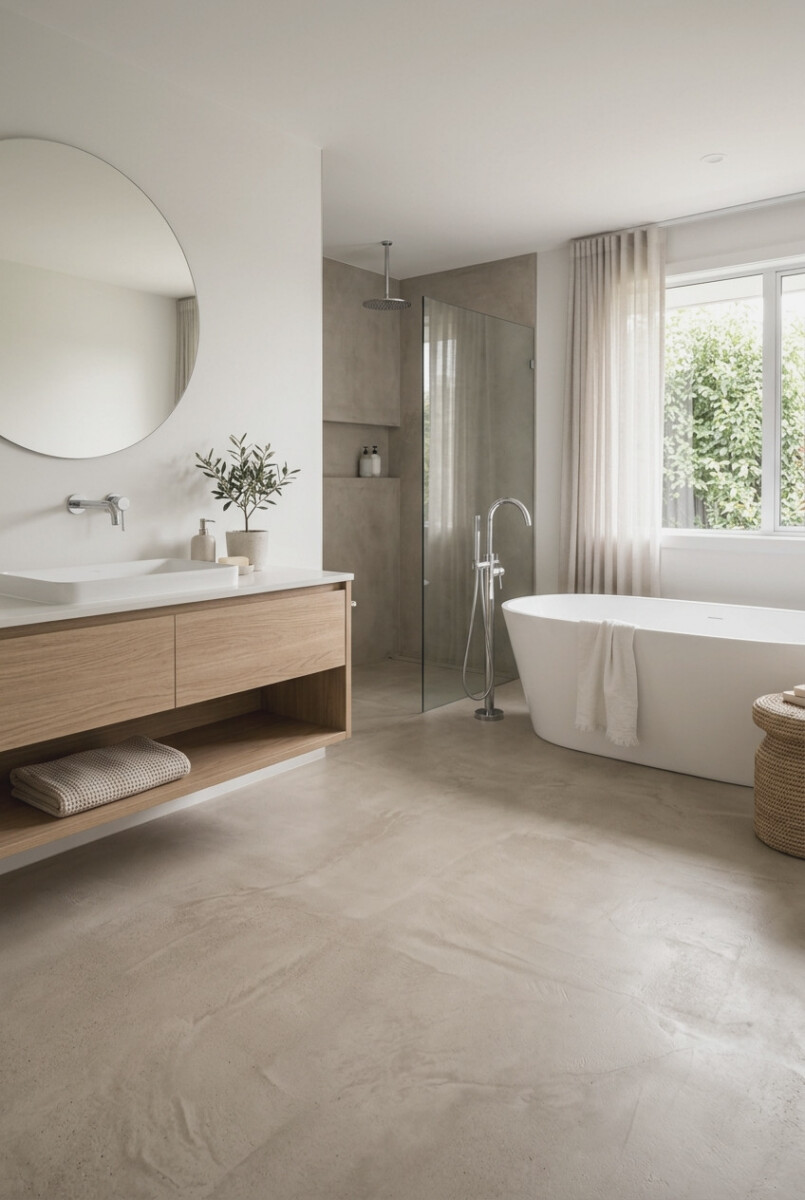
Sand and oatmeal tones give concrete-look flooring a lighter, softer character. They work well with white fixtures and light timber, creating a bathroom that feels relaxed rather than industrial.
Choose floor-rated material with a suitable slip-resistant surface for bathrooms. Bring a sample home to compare with wall colors, since a warm beige tile can look very different under cool artificial lighting.
16. Use Charcoal Concrete for One Dramatic Wall
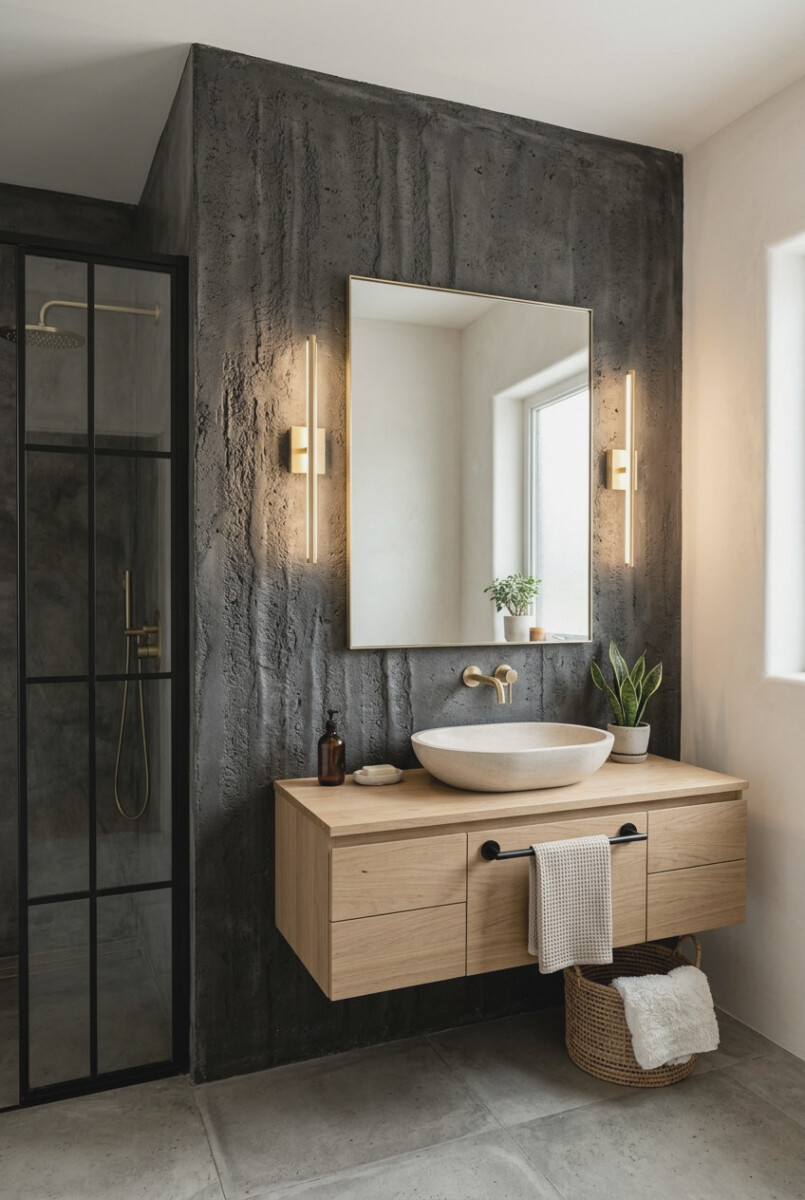
A charcoal concrete-effect feature wall gives a bathroom depth without requiring every surface to be dark. Behind a floating vanity, the finish can make a pale sink and mirror stand out in a simple, deliberate way.
Keep the remaining walls lighter and make sure the vanity area is well lit. In a small bathroom, using charcoal on one wall usually creates a stronger result than carrying it across every surface.
17. Mix Concrete with Fine Terrazzo Details
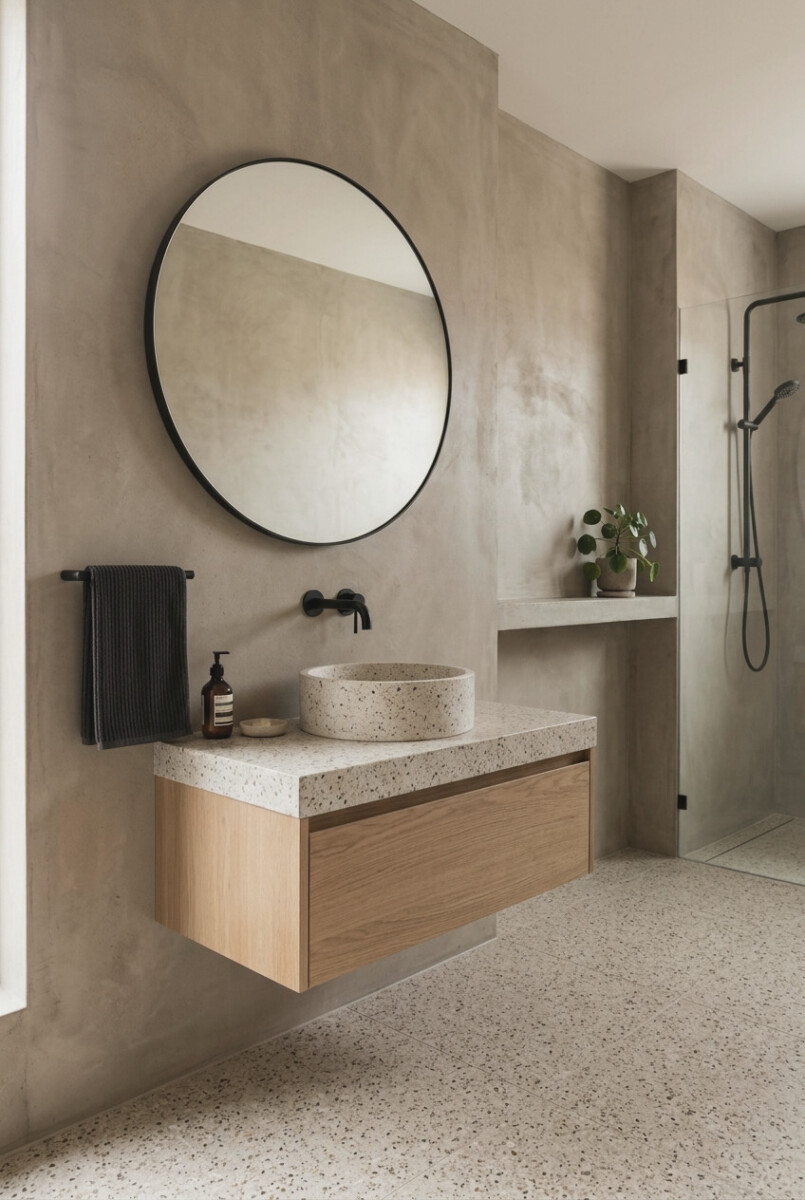
Concrete and terrazzo share a mineral quality but offer different visual textures. A plain concrete-effect wall beside a terrazzo floor or basin can look lively without relying on strong colors or patterns.
Choose terrazzo with small, understated chips if you want a subtle combination. Use it as a clearly defined second material rather than adding terrazzo, stone, and patterned tile all in the same compact room.
18. Add a Concrete Splashback Behind the Sink
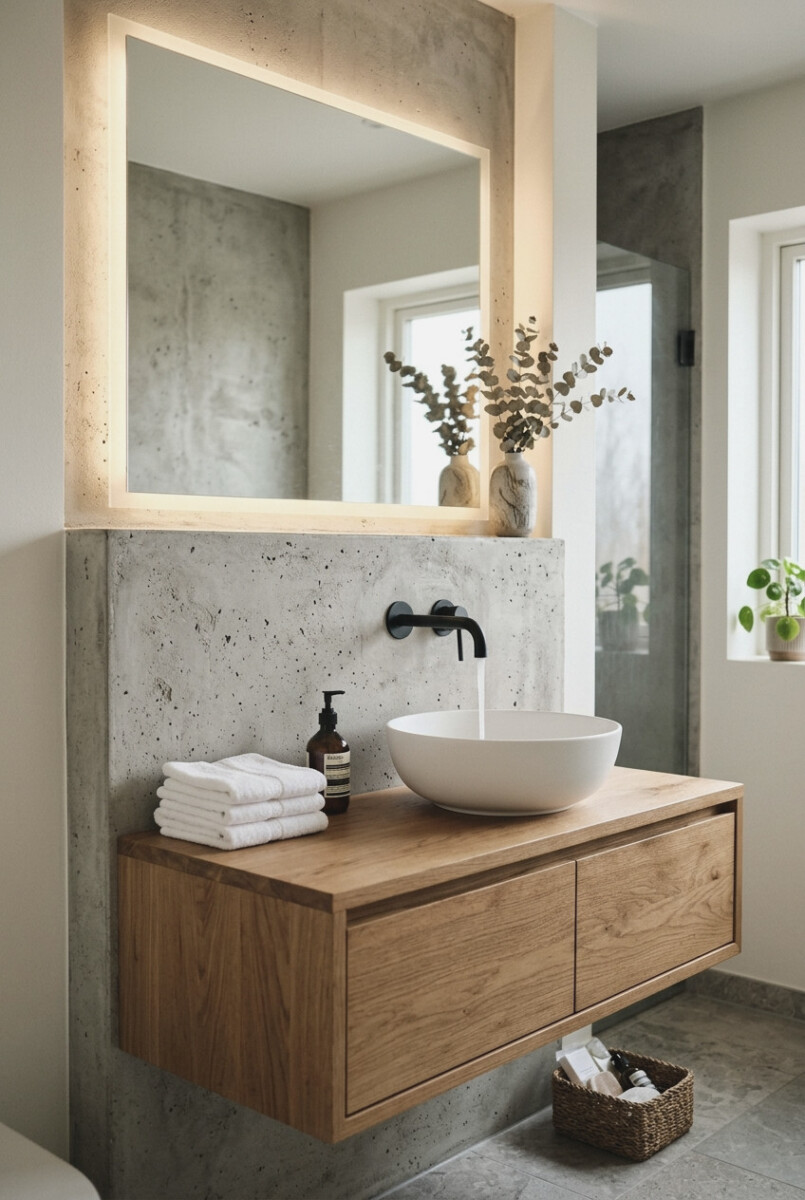
A small concrete or concrete-effect splashback can introduce the look without changing the whole bathroom. A raised panel behind a wall-mounted tap adds texture and helps the vanity area feel more finished.
Make sure the chosen panel is suitable for splashes, with properly sealed edges and joints. If you use cast concrete, ask about weight and mounting; a lighter porcelain panel may be easier for a small renovation.
19. Finish a Recessed Shower Niche in Concrete Tones
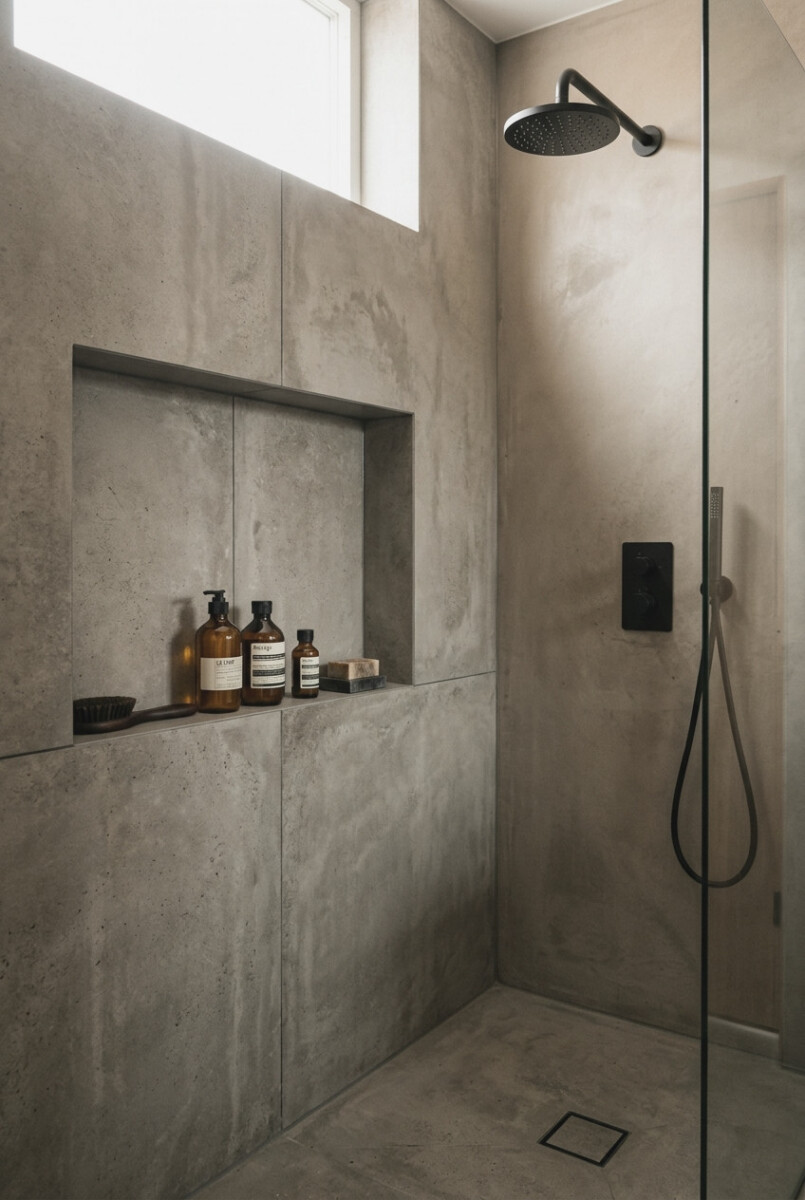
A recessed niche lined in concrete-effect tile can hold shampoo bottles without a bulky hanging organizer. Keeping it the same tone as the surrounding wall creates a neat, almost built-in appearance.
Plan the niche before waterproofing the shower so its corners, shelf, and backing are correctly detailed. A slight slope on the bottom surface helps water drain rather than collect around bottles.
20. Shape a Curved Microcement Partition
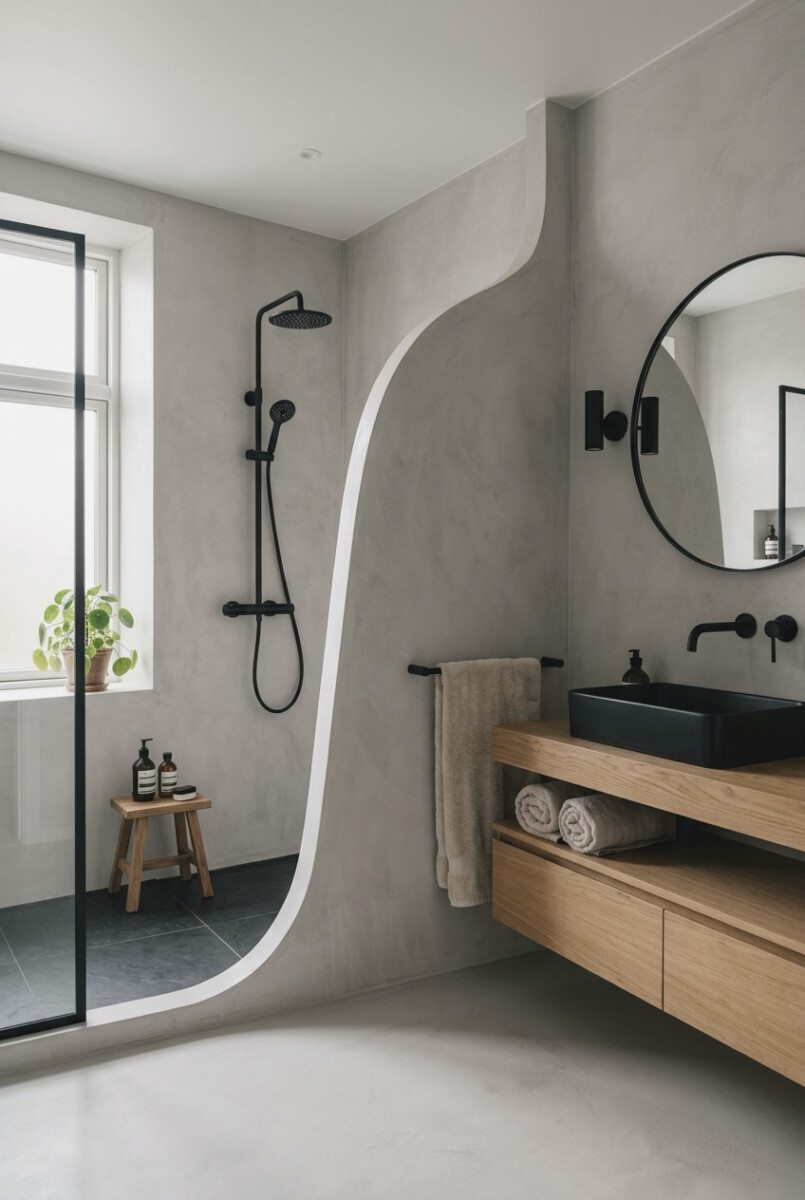
A gently curved partition introduces a softer line to a bathroom with angular fittings. Finished in a suitable microcement system, it can divide a shower from a vanity while keeping the overall palette simple.
The curve needs a stable, correctly prepared substrate and a finish approved for its location. Work with a contractor on the height, access width, and waterproofing details rather than adding a curved wall purely for appearance.
21. Frame a Bathtub with a Concrete-Look Surround
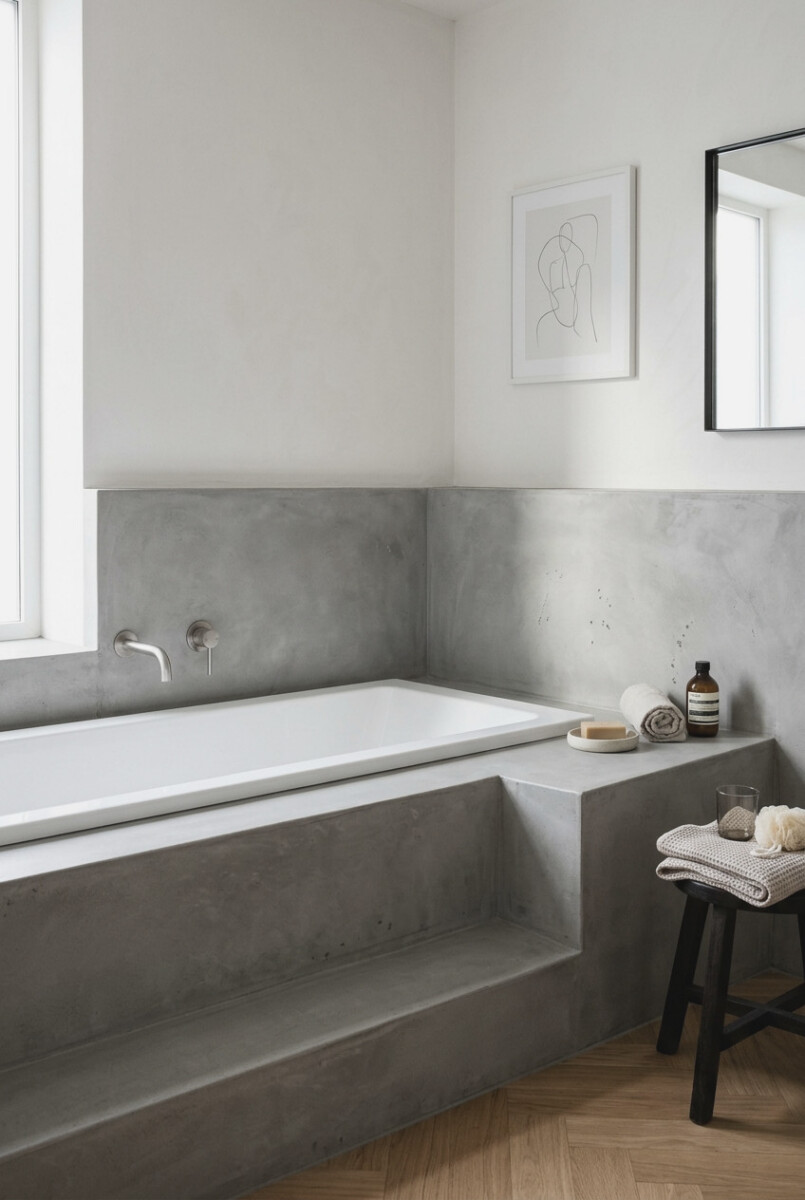
A tiled bathtub surround in a concrete finish gives a built-in tub a clean, solid appearance. It works particularly well with a white bath and pale walls, allowing the surround to define the bathing area without introducing a strong pattern.
Use bathroom-rated boards and an appropriate waterproofing system beneath the surface finish. Leave access to plumbing where required, and make sure horizontal ledges are detailed so water cannot sit against vulnerable joints.
22. Choose Slim Concrete-Effect Floating Shelves
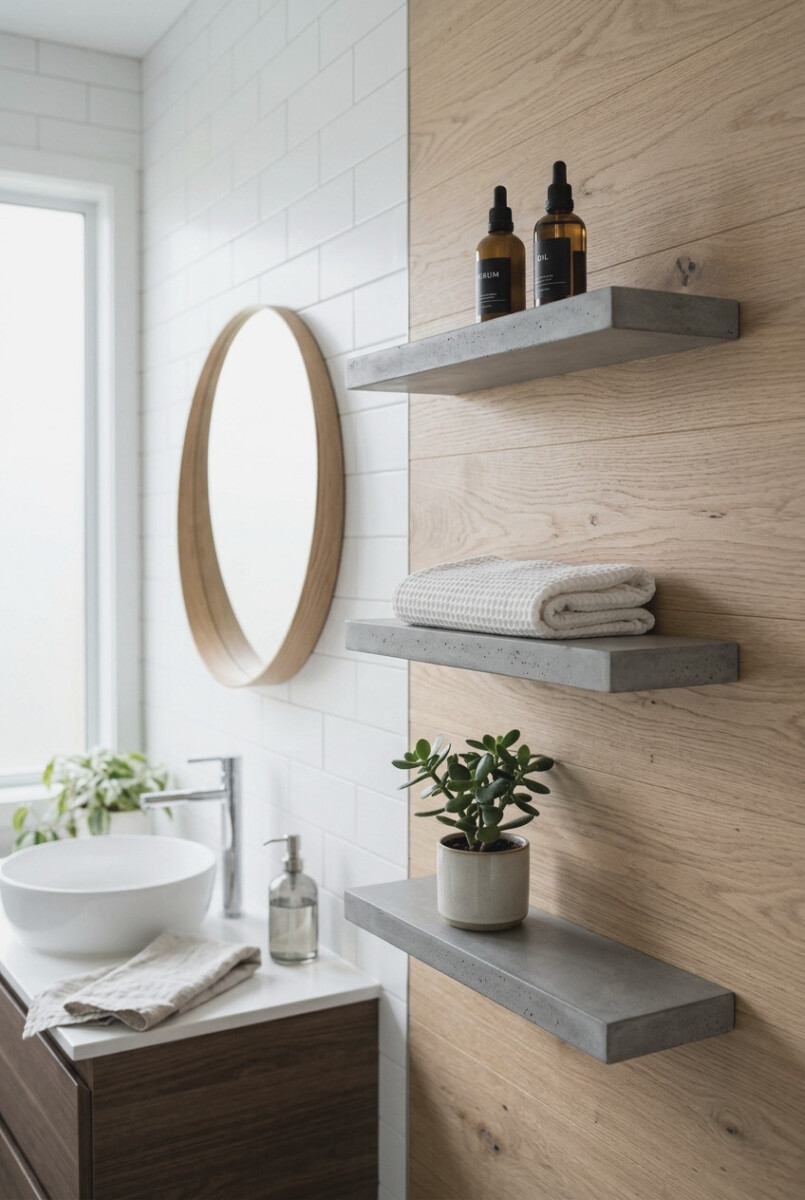
A floating shelf with a concrete appearance can hold towels, a small plant, or a few everyday products. It adds the visual weight of stone without needing a full built-in cabinet and works well against white or timber-lined walls.
Look for a lightweight shelf made for humid rooms rather than assuming a thick cast slab is necessary. Use suitable wall fixings and keep the shelf away from direct shower spray unless it has been designed for that position.
23. Combine Concrete Walls with Reeded Wood Cabinets
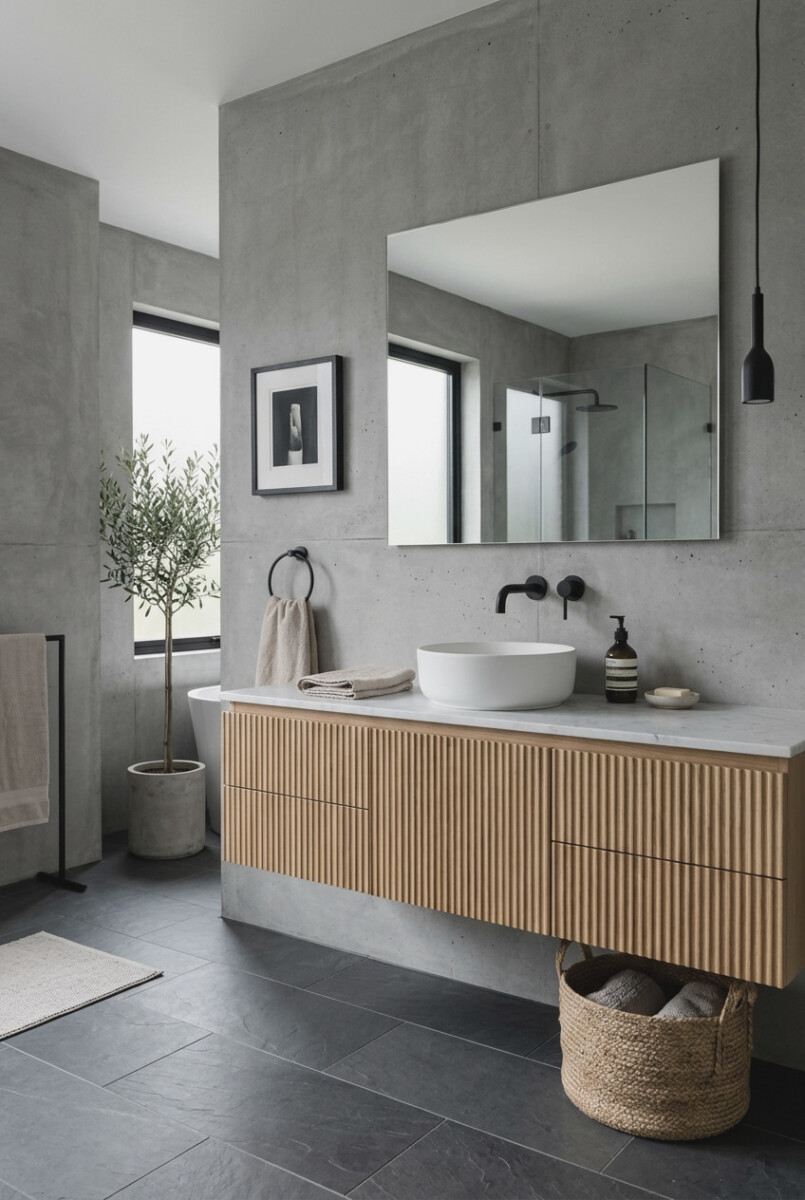
Reeded or fluted wood cabinet fronts add rhythm and warmth beside smooth concrete walls. The vertical lines make a simple vanity more interesting, especially in a bathroom with otherwise minimal decoration.
Choose moisture-resistant cabinet construction and a finish suitable for a bathroom. To keep the look balanced, let the cabinet texture stand out and use straightforward mirrors, taps, and lighting around it.
24. Make a Fluted Concrete Basin the Statement
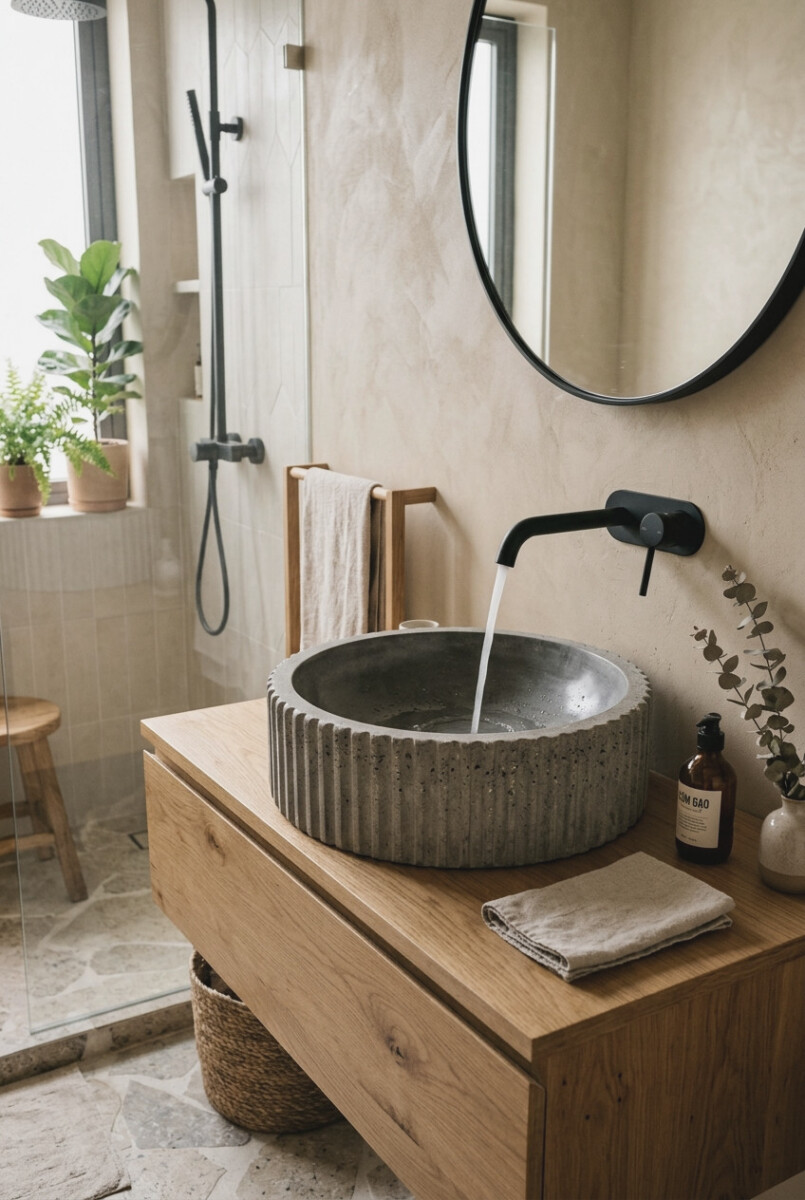
A basin with a ribbed concrete exterior offers an interesting contrast between a smooth interior bowl and a textured outer surface. It can give a small powder room a distinctive focal point without introducing colorful tile.
Choose a professionally made, sealed basin rather than a decorative container adapted for plumbing. Check that the grooves are accessible for cleaning and that the support beneath the sink is appropriate for its weight.
25. Use a Rounded Concrete Vanity Counter
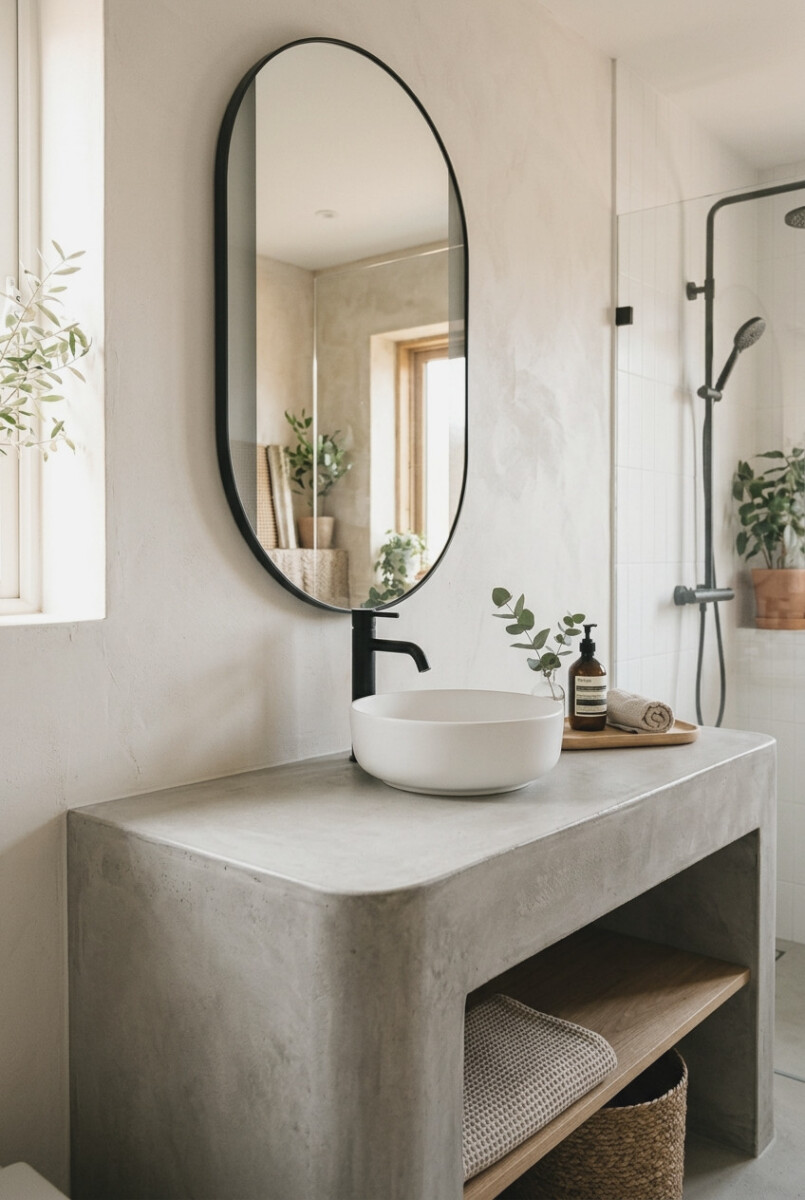
Softly rounded corners make a concrete vanity counter feel less severe than a straight-edged slab. A gentle curve can look particularly good in a small bathroom with an oval mirror or a vessel basin.
Ask the fabricator about edge profiles and how the counter will be reinforced and sealed. Rounded corners should be planned into the design rather than improvised after casting, especially near sink openings.
26. Run One Concrete Counter Across a Double Vanity
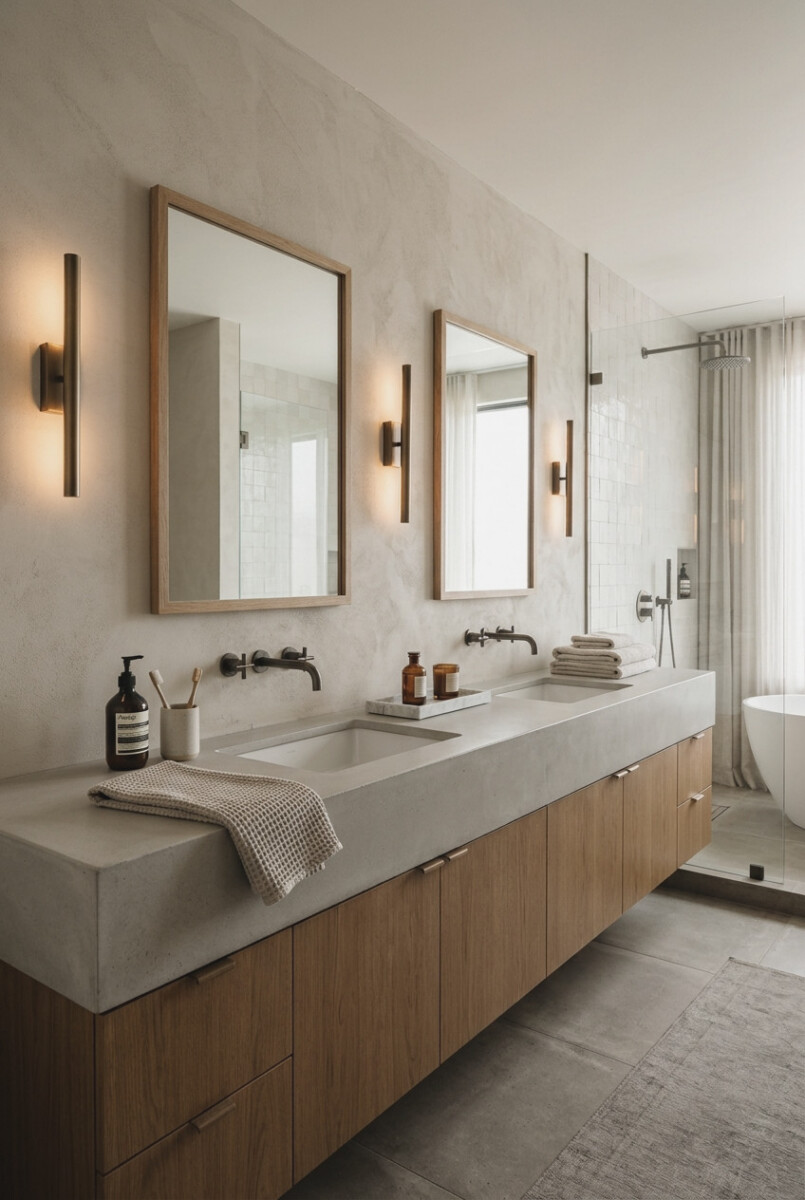
A long concrete countertop can visually connect two basins in a shared bathroom. The uninterrupted finish brings order to a busy space and pairs well with individual mirrors or two simple wall lights.
Plan sufficient space between sinks and choose storage underneath that suits two users. A long cast-concrete slab may need special support, so have its dimensions and weight assessed before ordering.
27. Keep the Shower Screen Frameless and Simple
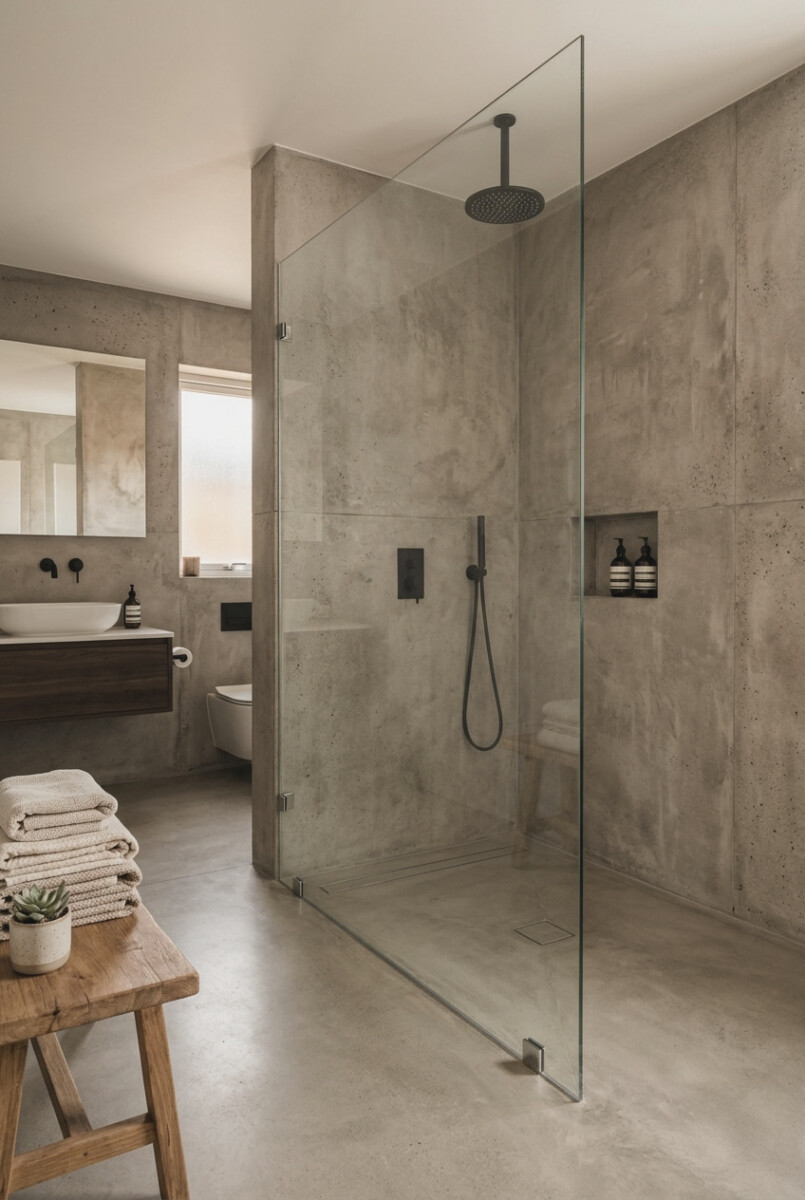
A frameless glass screen allows a concrete-effect shower wall to remain visible from the rest of the bathroom. It suits a restrained layout and lets the surface texture carry the design instead of a heavy metal enclosure.
Select tempered safety glass and hardware appropriate for the shower. The screen’s size and position should control splashing, while the floor still needs correct falls and waterproofing regardless of how open the enclosure looks.
28. Balance Concrete with Layered Warm Lighting
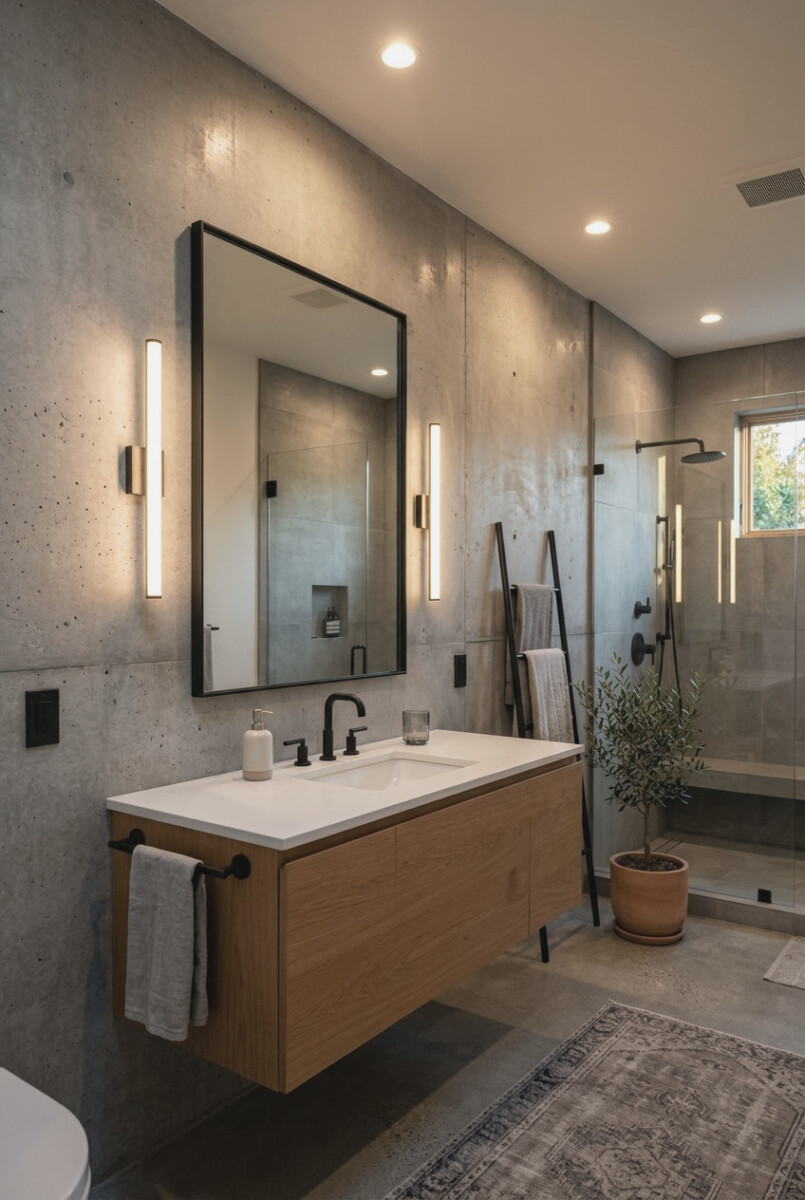
Concrete can look flat under a single bright ceiling fixture. Combining overhead lighting with mirror-side lights and a softer ambient source helps bring out subtle surface variations and makes the room more comfortable to use.
Choose warm or neutral bulbs that render skin tones accurately, and use bathroom-rated fittings where required. Position task lights so they illuminate the face evenly rather than casting deep shadows under the eyes.
29. Hang an Arched Mirror Against a Concrete Wall
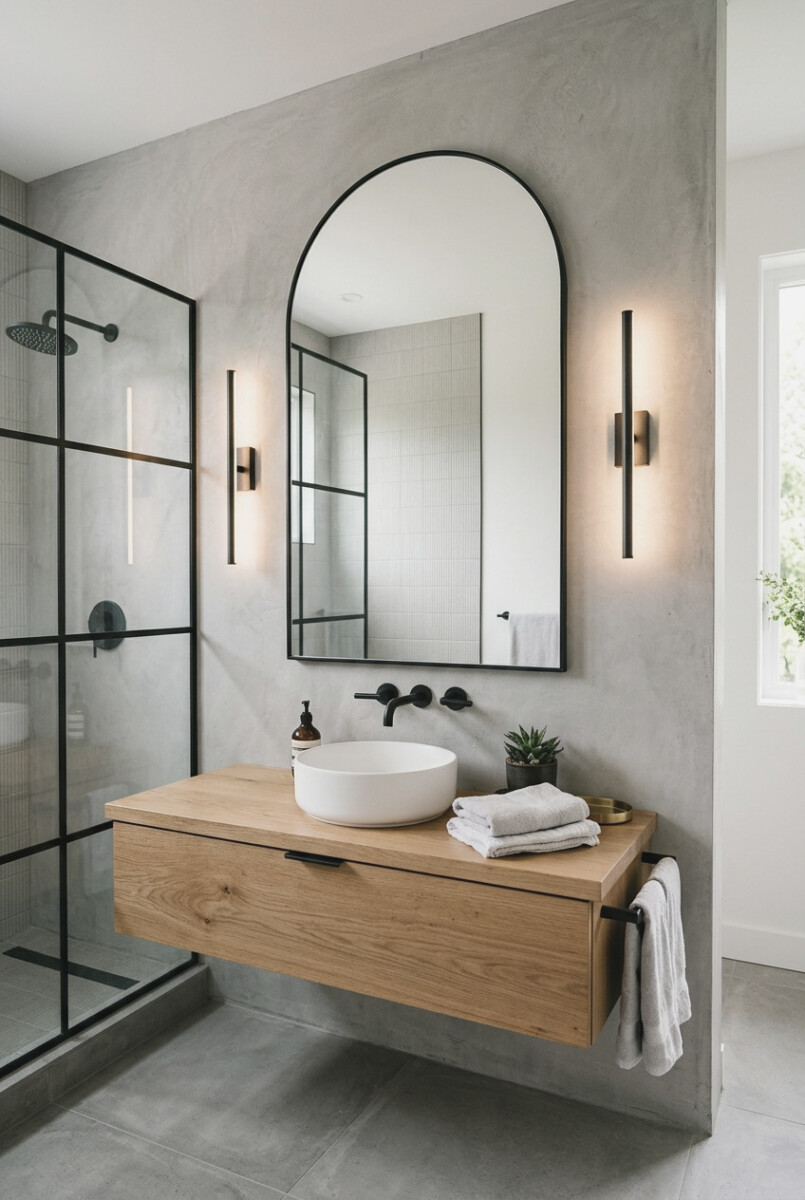
An arched mirror introduces a curve that offsets the straight lines of a concrete wall or vanity. A thin metal frame suits a contemporary bathroom, while a simple wooden frame creates a warmer, softer impression.
Choose a size that fits comfortably above the basin and leaves room for lighting. Secure the mirror with fixings appropriate for the wall and its weight, particularly if the finish has been applied over a separate backing system.
30. Bring in Greenery for a Softer Contrast
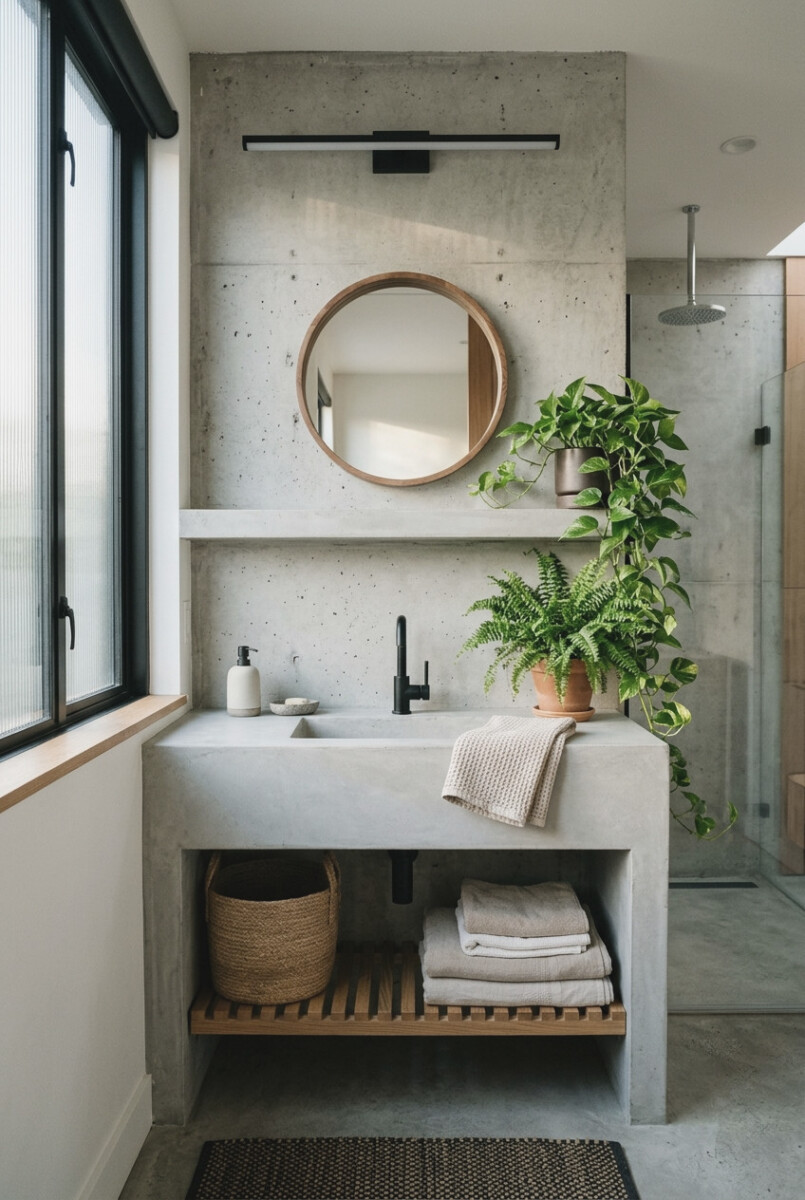
Leafy plants can make a concrete bathroom feel more welcoming by adding color and a different texture. A compact fern, pothos, or other suitable plant can work on a shelf or vanity away from the busiest surfaces.
Match the plant to the actual light and humidity conditions rather than assuming all bathrooms are suitable for tropical greenery. Use a waterproof saucer and avoid placing pots where water could stain or damage an unfinished surface.
31. Layer Cotton and Linen Against Hard Surfaces
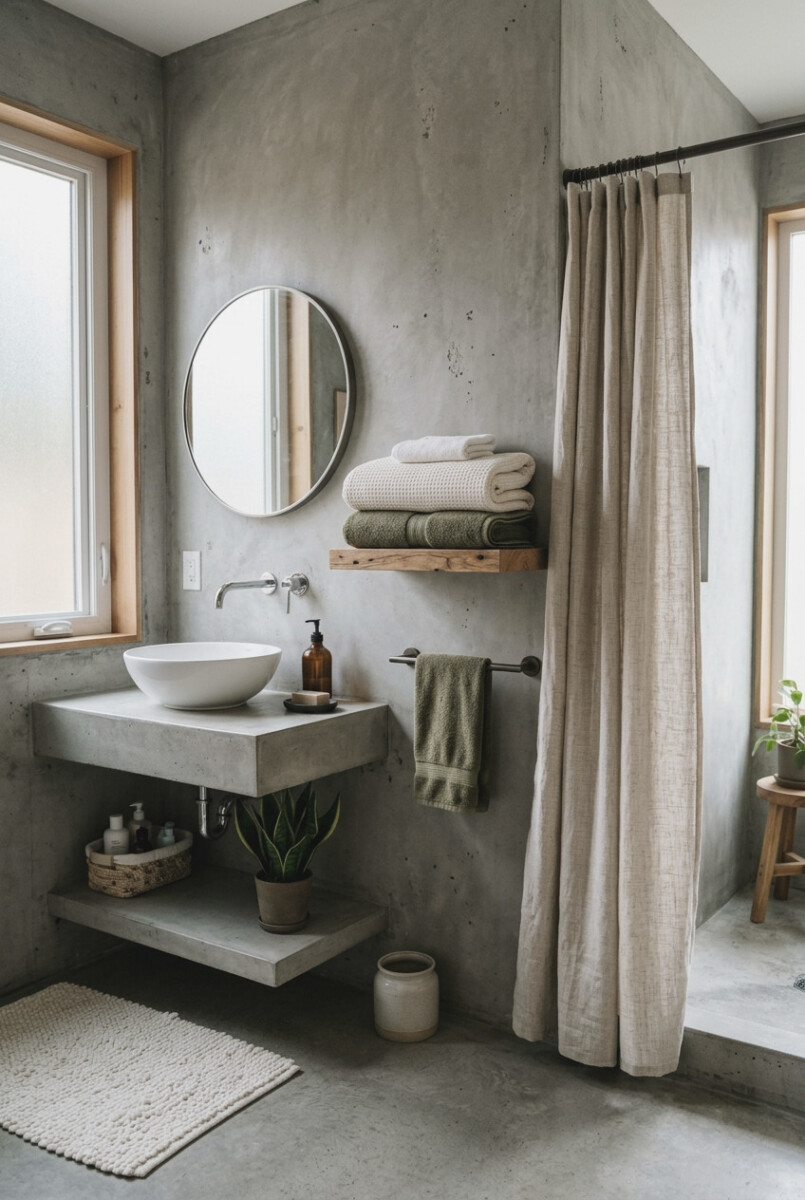
Soft towels, a cotton bath mat, and a linen-look shower curtain give concrete an inviting contrast. The fabrics add comfort without changing the simple architecture, which is especially useful in a bathroom with large areas of gray tile.
Choose washable materials that dry reasonably quickly, and hang them where air can circulate. Warm white, oatmeal, and muted olive work well with many concrete tones without making the room feel overly coordinated.
32. Try a Concrete Feature Wall in a Small Powder Room
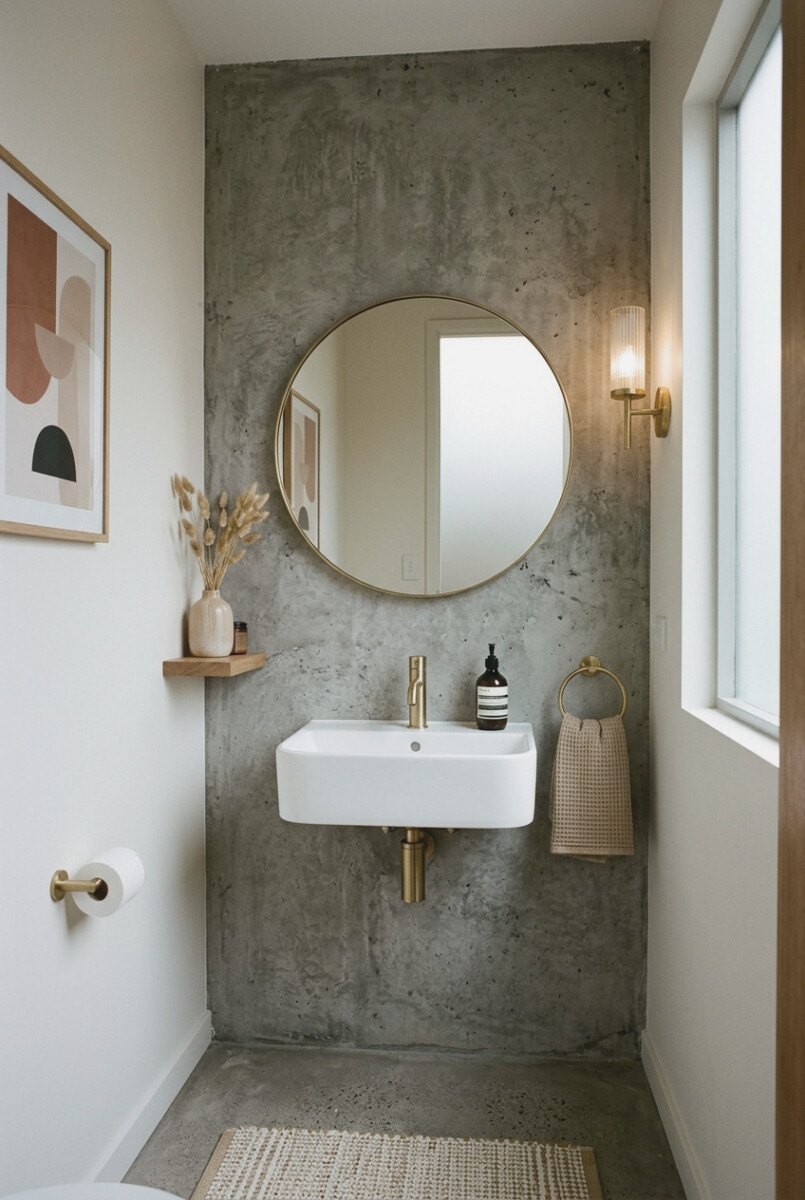
A powder room is a good place to try a concrete effect on a limited scale. A single textured wall behind the sink can make the room feel thoughtfully designed, even when there is space for little more than a basin and mirror.
Keep the remaining walls light or choose a slim wall-mounted sink to preserve room around the fixtures. Since the wall is usually outside a shower, there may be more finish options, but still check the product’s suitability for a humid space.
33. Choose Slip-Resistant Concrete-Look Shower Tiles
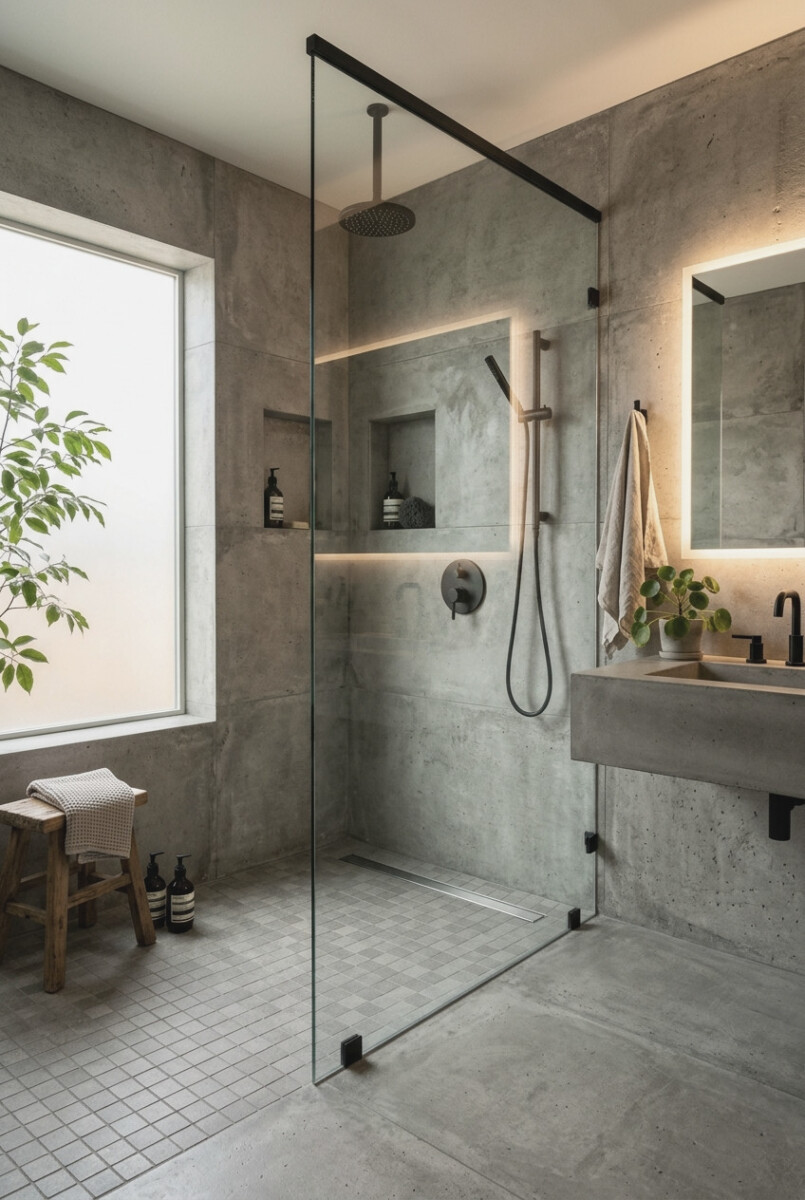
Concrete-look porcelain floor tiles can continue the bathroom’s color scheme into the shower while offering a surface selected for wet barefoot use. Smaller tiles can also help accommodate the slopes around a central drain.
Check the manufacturer’s suitability and slip-resistance information for shower floors; a matte appearance alone does not prove a tile is safe when wet. Use the correct waterproofing assembly and avoid substituting polished wall tiles on the shower floor.
34. Pair Concrete-Effect Tile with Underfloor Heating
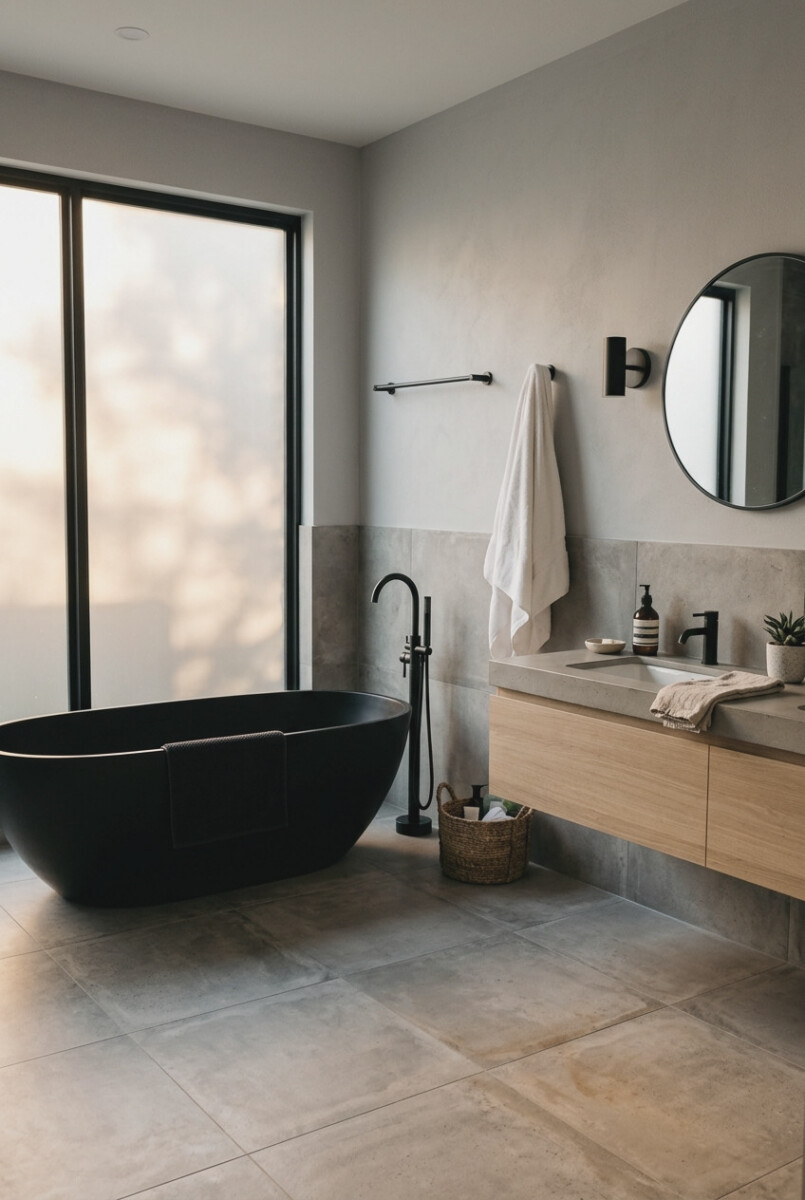
A concrete-effect tiled floor can feel more comfortable in cooler weather when paired with a properly designed underfloor heating system. The combination keeps the understated look while addressing the cold sensation people sometimes associate with hard bathroom floors.
Use a heating system approved for the floor assembly and wet-room conditions, with the necessary electrical protection. A qualified installer should confirm compatibility with the tile, waterproofing, and insulation before the floor is finished.
35. Contrast Concrete with Dark Walnut Tones
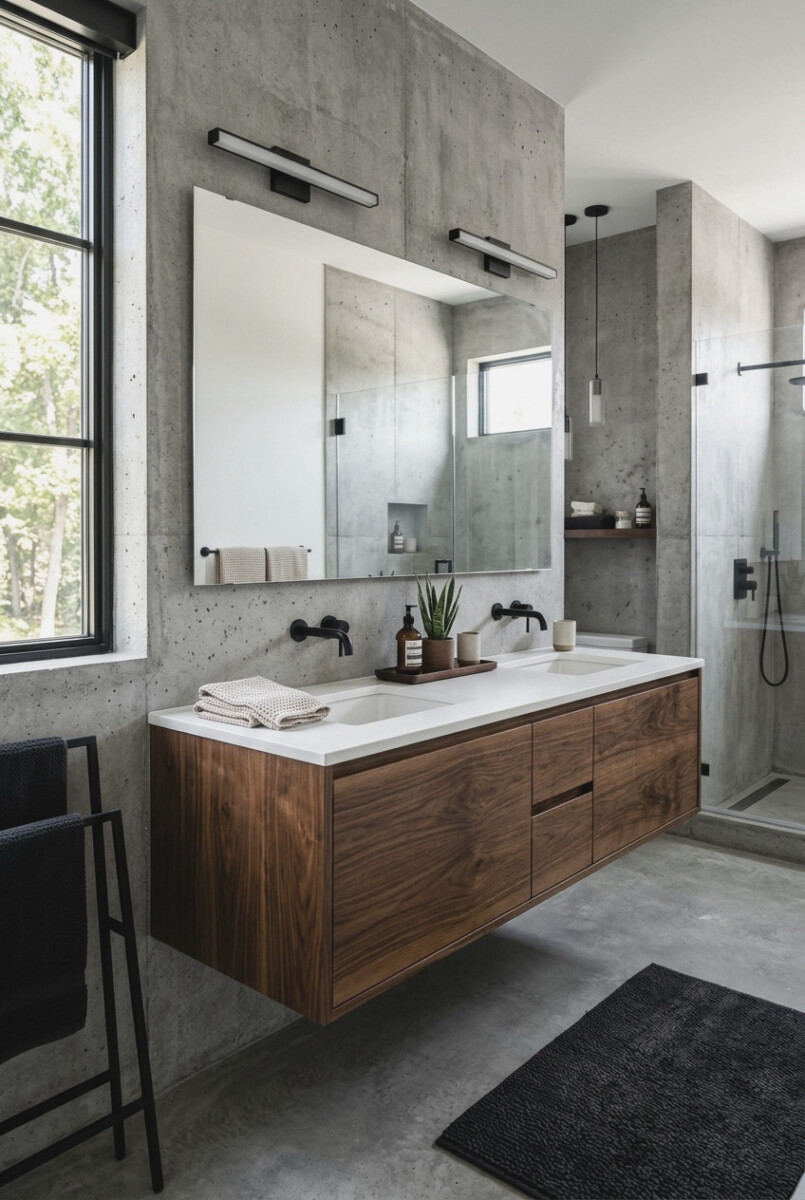
Walnut-colored cabinetry gives gray concrete a richer, more dramatic contrast than pale oak. It works well in a bathroom with strong natural light, where the dark grain adds warmth without making the room feel heavy.
Use the dark wood on one substantial element, such as the vanity, and keep the surrounding surfaces simpler. Bathroom-rated finishes and good ventilation matter, particularly around doors and drawer fronts near the sink.
36. Build a Concrete-Look Shower Bench
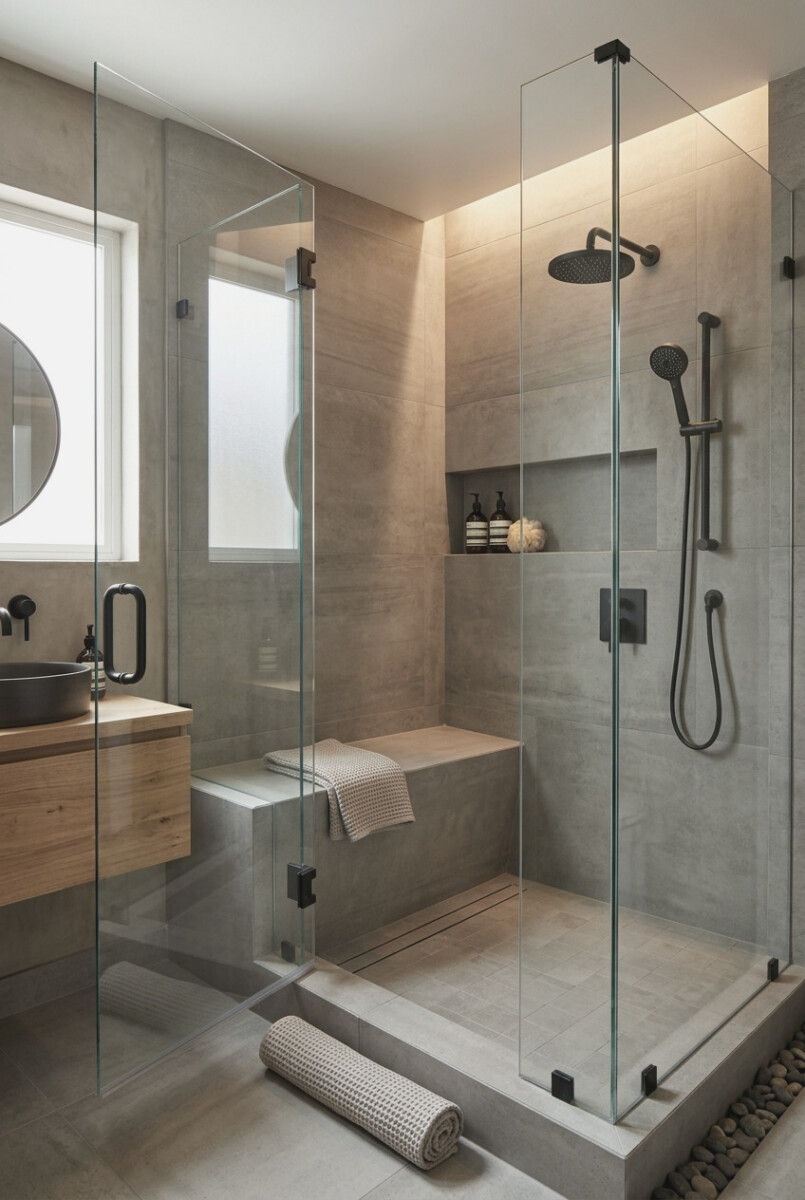
A built-in shower bench finished in matching concrete-effect tile can make a large walk-in shower more comfortable. It provides a place to sit or rest a foot while maintaining the simple look of the surrounding walls.
Plan the bench as part of the shower’s waterproofed construction. Its top must shed water, the support must be appropriate, and the height and available floor space should suit the people who will use it.
37. Break Up Gray with a Small Colorful Tile Accent

Concrete makes a useful neutral background for a limited area of color. A strip of muted green tile behind a basin or a warm terracotta niche can bring personality to the bathroom without overpowering the calm surface finish.
Choose one accent color and repeat it lightly through towels or accessories. Keep the decorative tile in a defined area so it feels intentional, and use materials and waterproofing appropriate to any wet zones.
38. Start Small with Concrete Bathroom Accessories
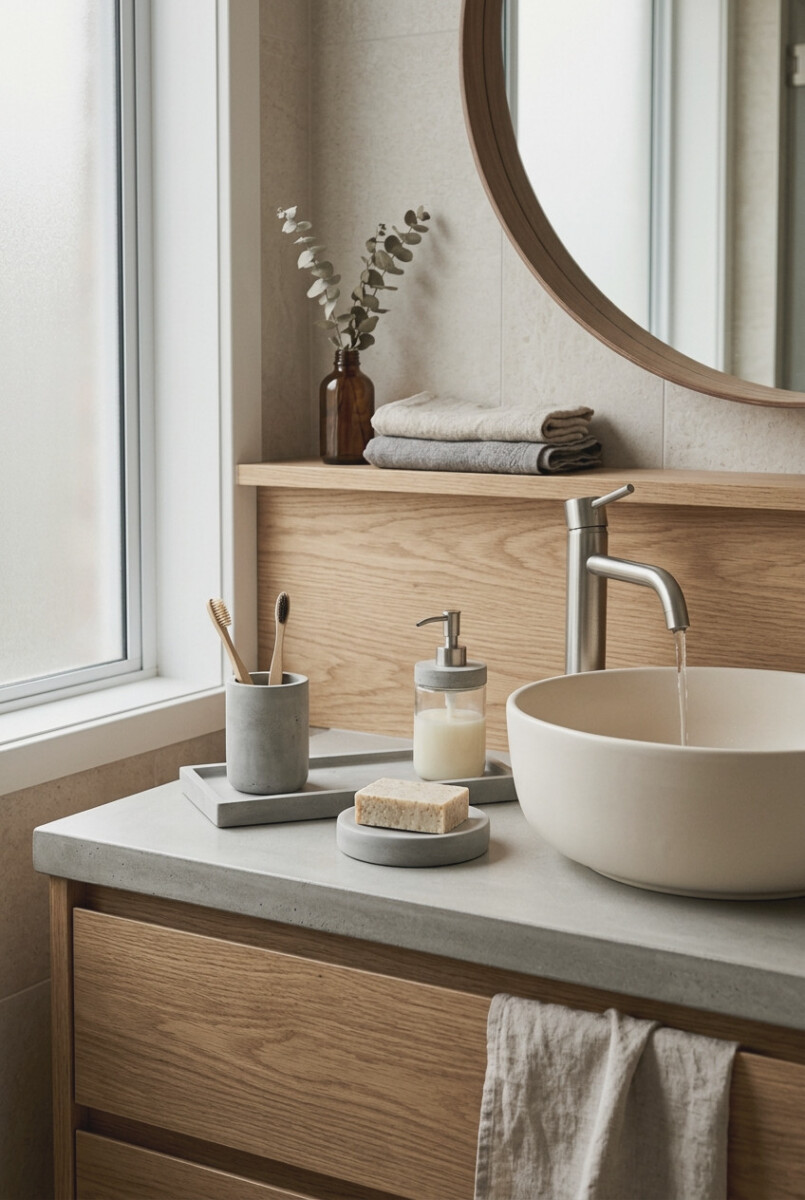
A soap dish, toothbrush holder, or small tray with a concrete finish can introduce the material without a renovation. These accessories look especially good beside wood, cream ceramic, and simple metal fittings.
Choose pieces with smooth bases that will not scratch the counter and finishes designed to tolerate water. Keep regularly wet items on an easy-to-clean surface, and replace damaged accessories rather than allowing rough edges to mark the vanity.
Creating a Concrete Bathroom That Feels Comfortable
The most appealing concrete bathrooms use the material with a clear purpose. A single textured wall can make a small powder room interesting, while a larger renovation might combine a concrete-effect floor, a sealed vanity counter, and a simple shower enclosure. Wood, stone, greenery, and soft towels keep the finish from dominating the space.
Start by deciding whether you want real cast concrete, a decorative microcement system, or porcelain tile that looks like concrete. Each has different installation and maintenance needs, particularly in wet areas. Once those practical details are handled, the decorating becomes much simpler: choose a restrained palette, add useful lighting, and let the material’s texture do the work.
