Table of Contents
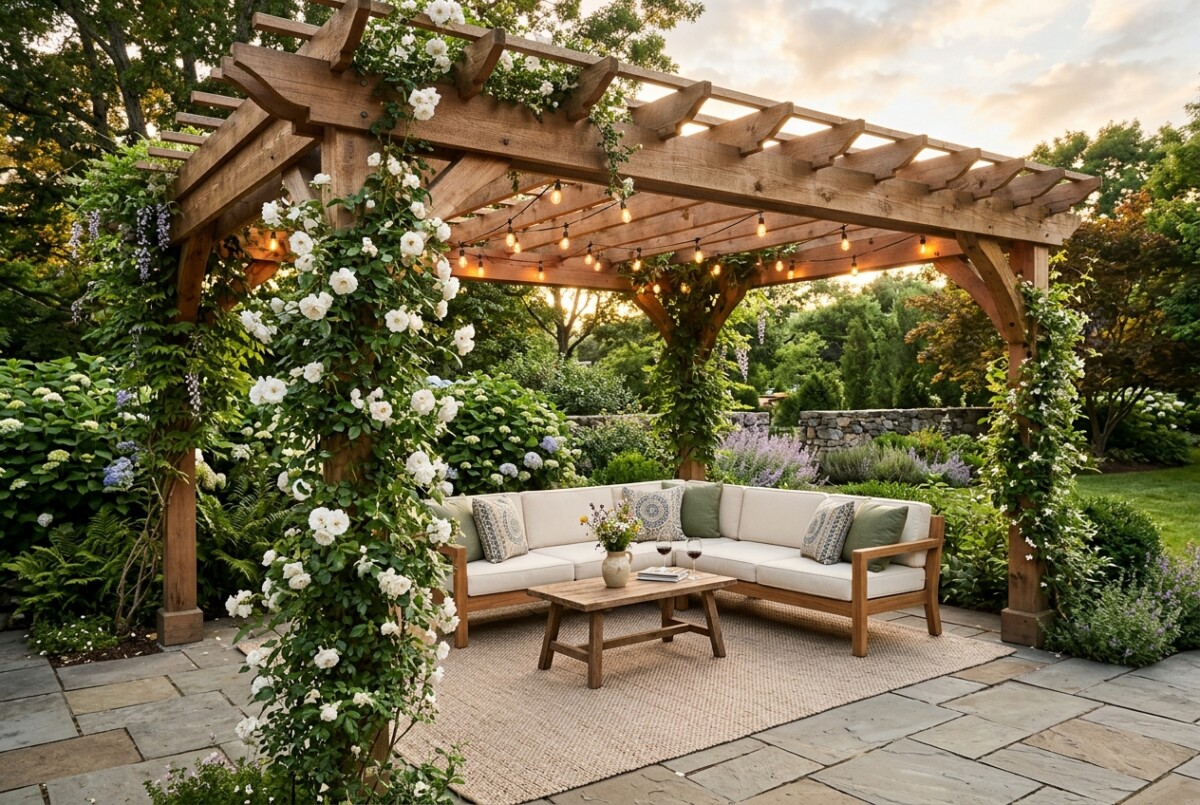
A pergola can give a patio or garden the structure it needs without closing it off from the outdoors. Its posts and overhead beams define a space for dining, relaxing, or growing climbing plants, while still allowing air and daylight through. The right design can make a small corner feel useful or give a large yard a clear focal point.
Before choosing a style, think about where the sun falls, how much shade you actually need, and what will happen beneath the pergola. The structure must also suit the site, especially if it will support heavy vines, hanging furniture, or extra roof panels. These pergola ideas offer different approaches to materials, layouts, planting, and finishing details, with practical ways to make each one work.
1. Build a Classic Cedar Pergola
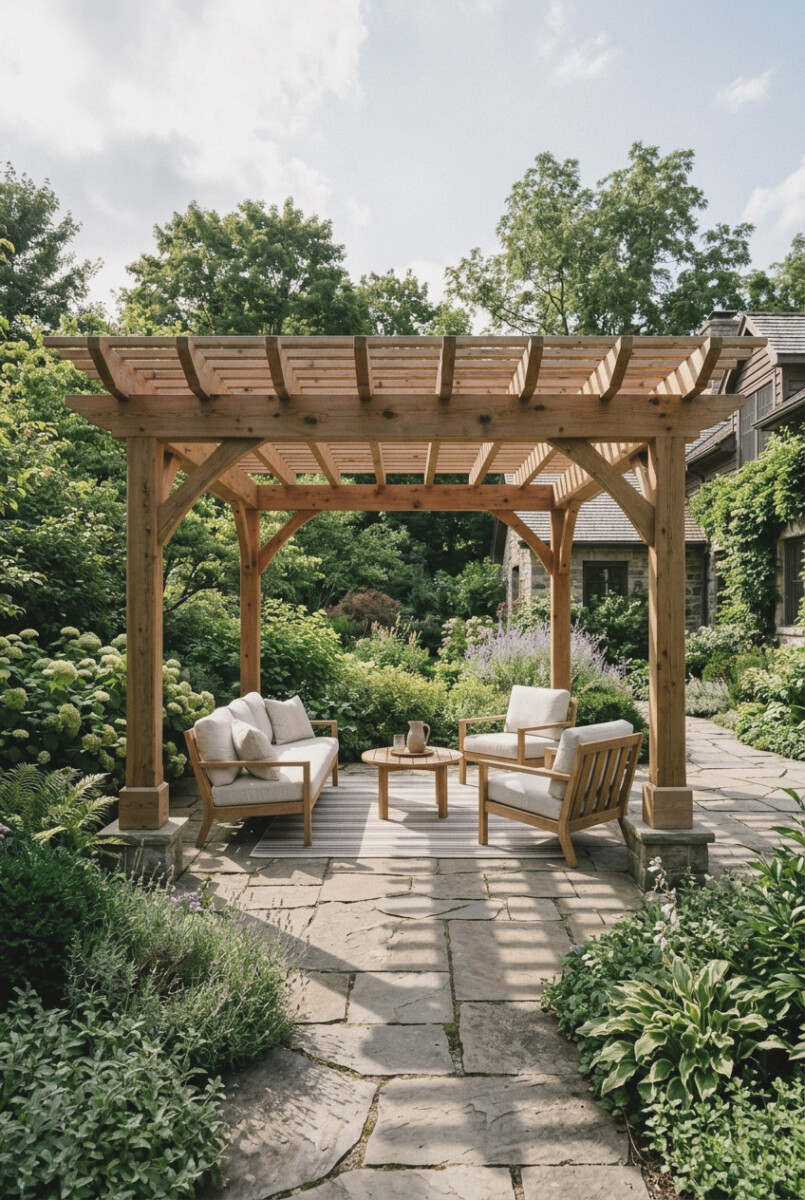
A cedar pergola is a straightforward choice for a garden with natural planting and warm outdoor furniture. Its visible grain and simple timber beams give the space a relaxed character, while the open roof keeps the structure from feeling too enclosed.
Keep the posts and rafters in proportion to the patio rather than making everything oversized. Choose exterior-grade fixings and a suitable protective finish, and plan for periodic cleaning and maintenance as the wood weathers.
2. Choose a Slim Black Aluminum Frame
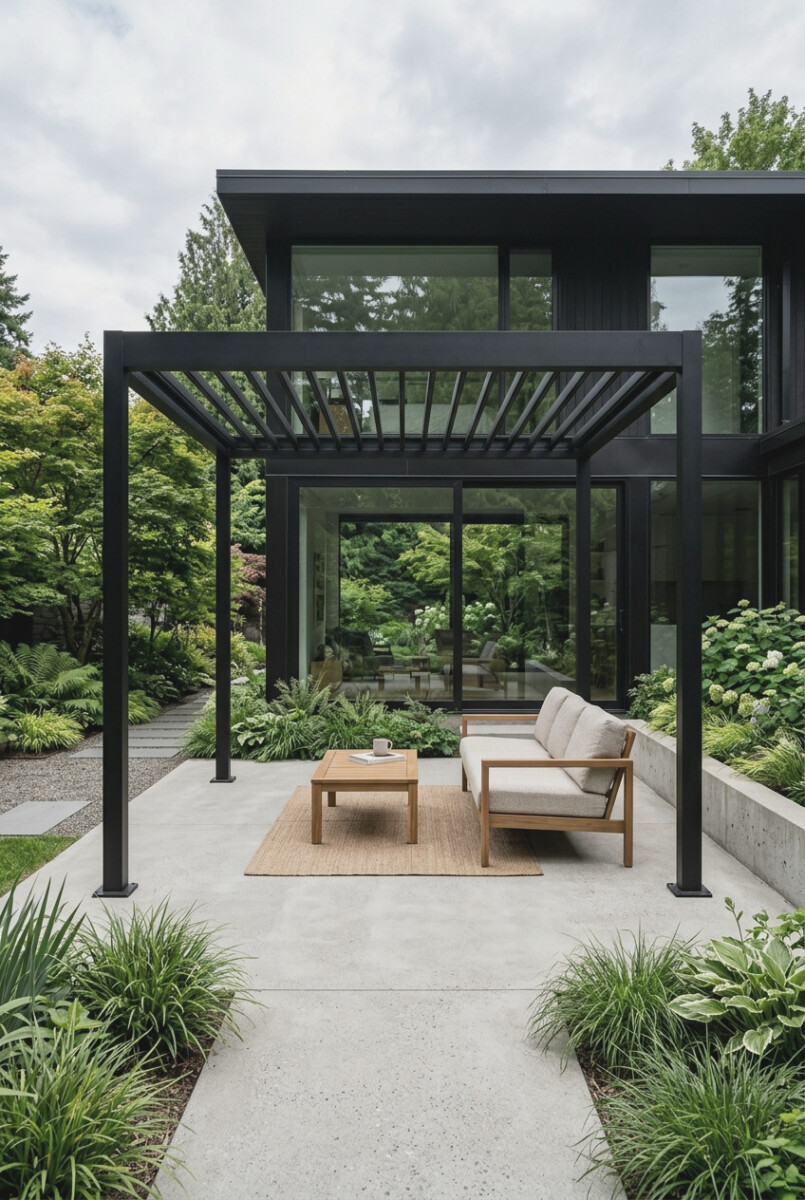
A black aluminum pergola suits contemporary patios, especially those with large windows, concrete paving, or simple outdoor sofas. The narrow lines create a defined seating area without competing with the view across the garden.
Look for a powder-coated system designed for outdoor installation, and check its wind-load and anchoring requirements. A freestanding kit still needs a properly designed base; its light appearance does not mean it can simply be placed on loose paving.
3. Paint a Pergola Soft White
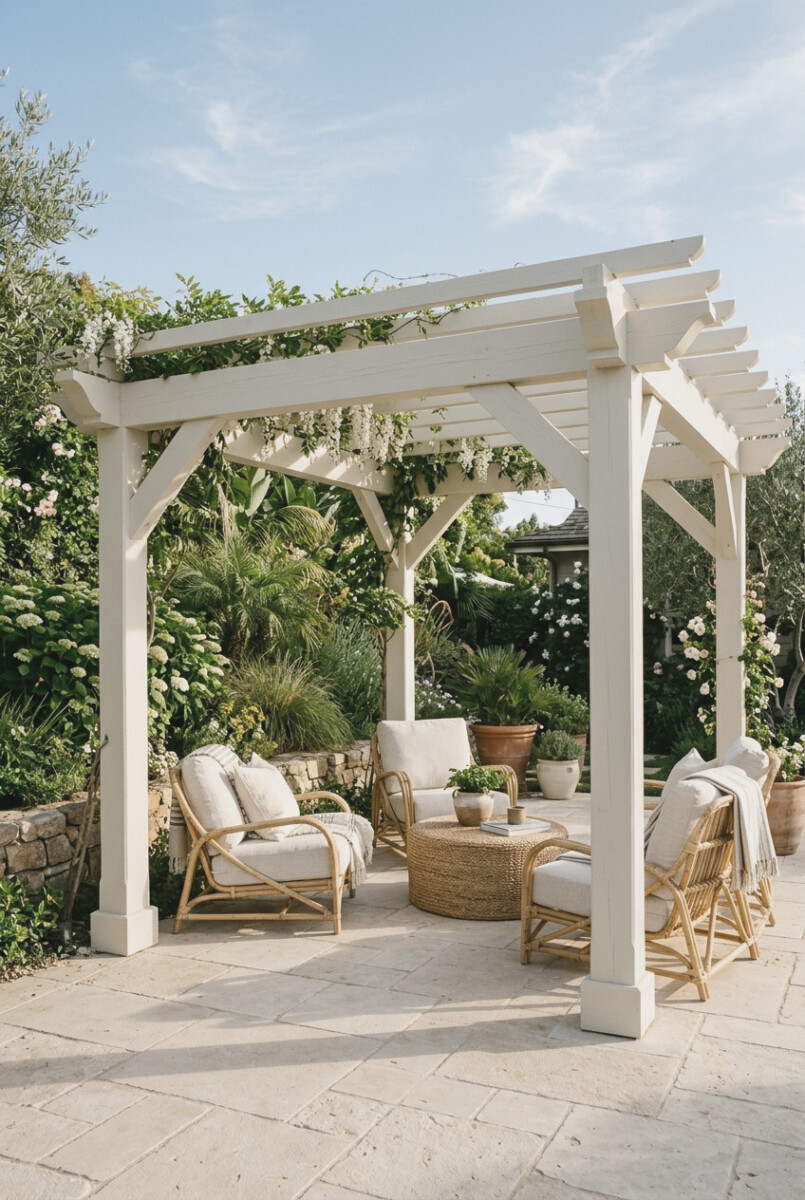
A white pergola gives a sunny patio a fresh, coastal-inspired look. It works well against greenery, pale stone, and natural-fiber furniture, and can make a smaller garden feel less visually crowded than a dark, heavy frame.
Use paint or stain formulated for the actual material, and prepare the surface according to the manufacturer’s directions. Off-white or warm ivory often feels softer than bright white, particularly beside cream-colored walls or weathered timber.
4. Use Rustic Reclaimed Timber
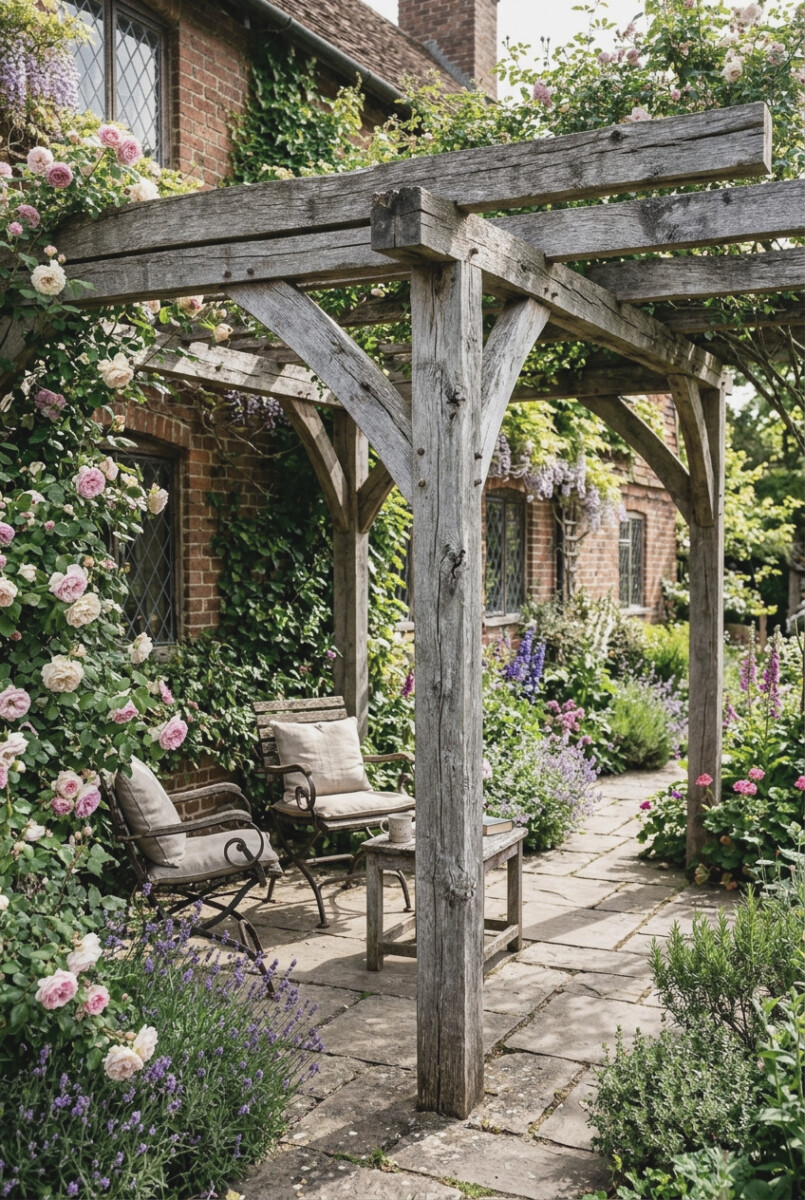
Reclaimed beams bring weathered texture to a pergola and look especially good in cottage gardens or alongside an older brick house. The irregular grain and natural marks help the structure sit comfortably among informal planting.
Have reclaimed wood assessed for soundness before using it for posts or beams. Decorative weathering is appealing, but rot, hidden splits, and unknown treatments can make salvaged timber unsuitable for structural use.
5. Extend a Patio with an Attached Pergola
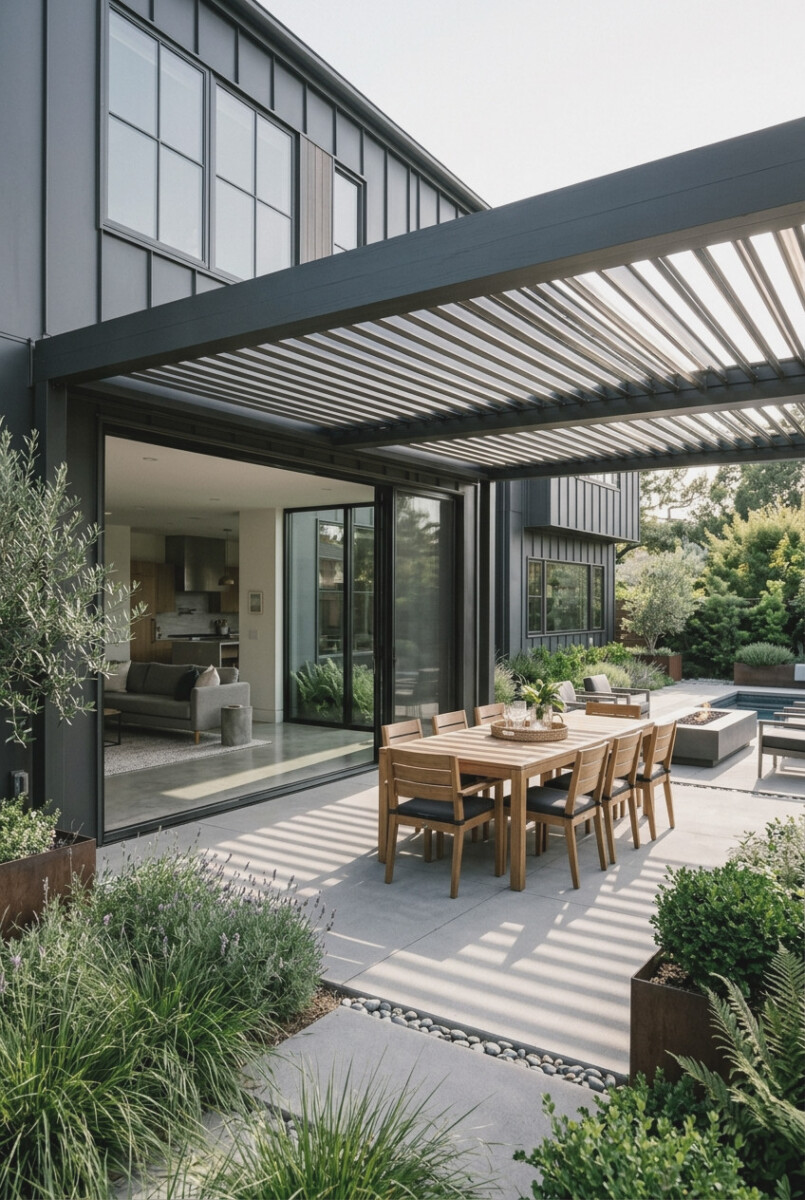
An attached pergola can connect the back door to an outdoor dining or seating area, making the patio feel like a natural extension of the house. Matching the frame color to the doors or window trim helps the two spaces look connected.
Attachment details matter because water and structural loads meet at the wall. Ask a qualified installer about suitable connections, flashing, and local permit requirements rather than fastening beams directly to siding or masonry without a proper design.
6. Create a Freestanding Garden Retreat
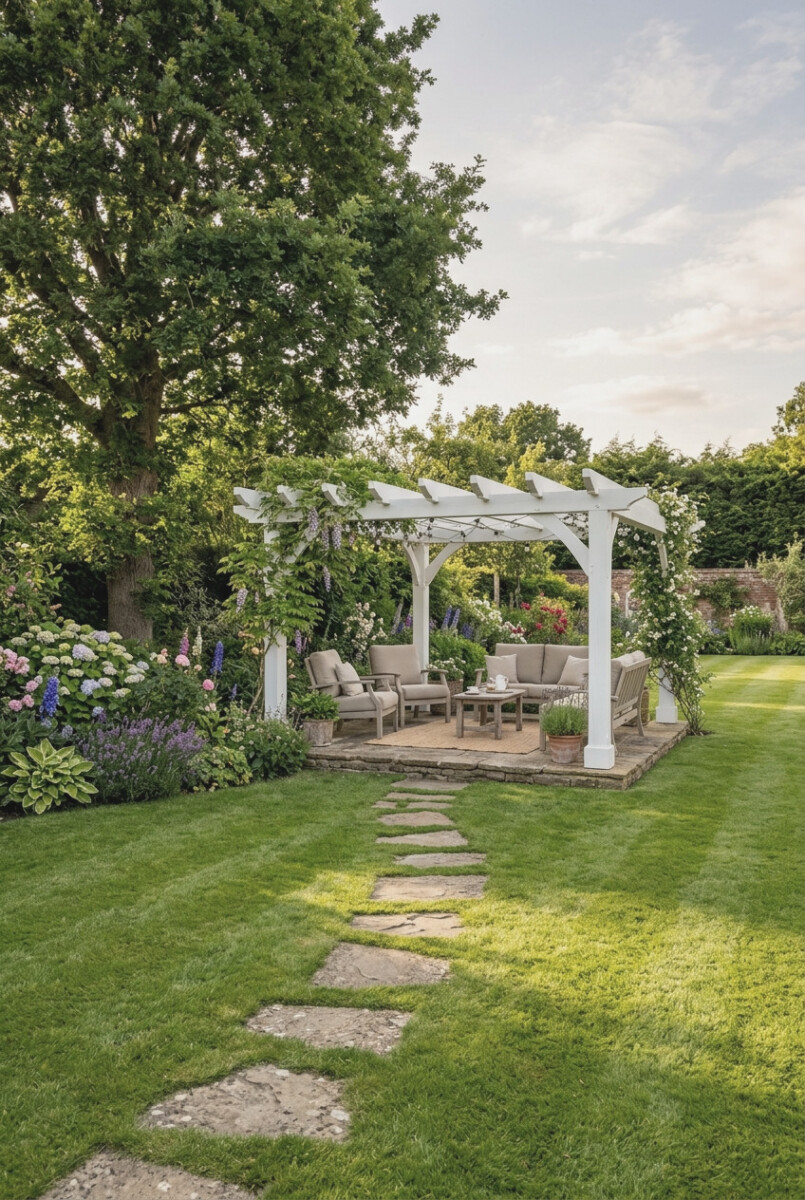
A pergola placed away from the house gives a large yard a destination of its own. Set it near a favorite tree, at the end of a lawn, or beside a planted border, then furnish it as a separate place to sit.
Plan the route from the house before settling on the location. A firm, level surface and properly anchored posts are essential, while a simple path makes the retreat easier to use after rain.
7. Fit a Pergola into a Small Corner
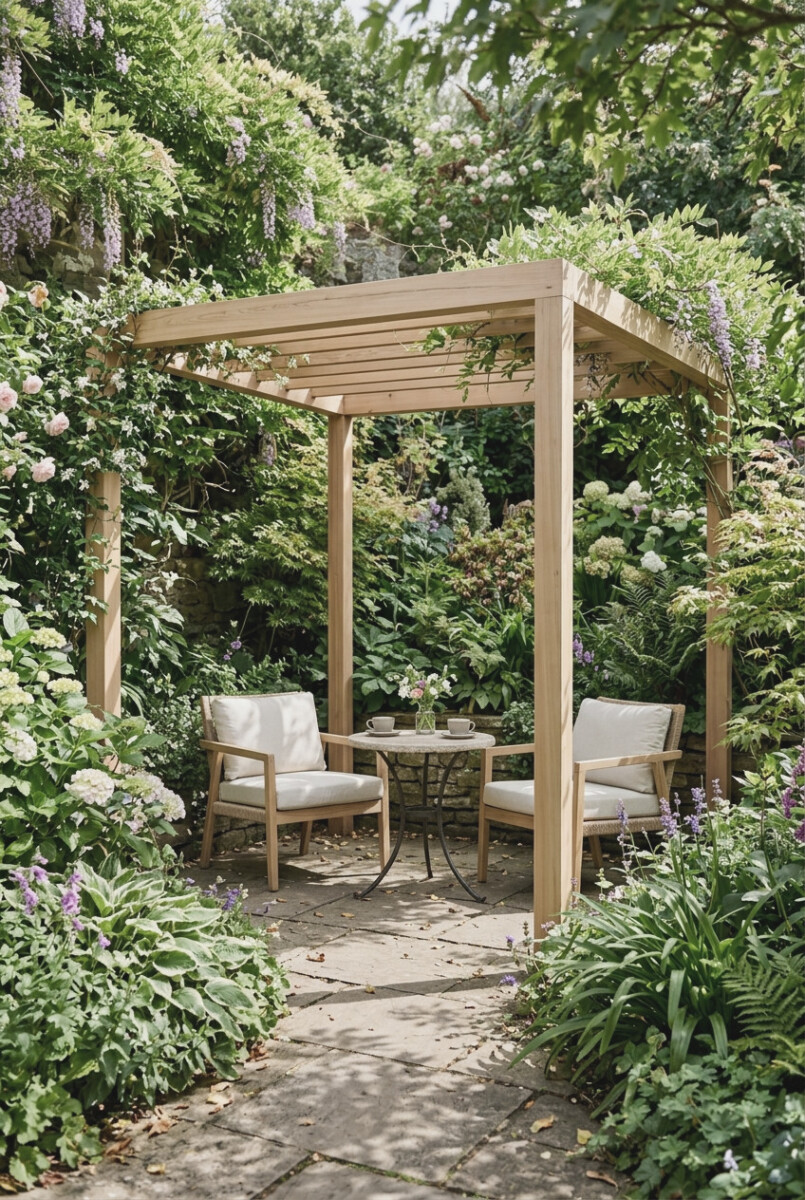
A compact pergola can make an overlooked garden corner useful without taking up the entire yard. A simple square frame over two chairs and a small table creates a clear spot for coffee, reading, or an evening conversation.
Measure the furniture and circulation space first, including room to pull chairs out. A lighter frame and open sides help a tight corner feel comfortable instead of boxed in.
8. Make the Most of a Narrow Side Yard

A long, narrow pergola can turn an unused strip beside the house into a pleasant passage or sitting area. Repeated overhead beams add rhythm and draw the eye toward the garden beyond.
Keep the route wide enough for its everyday purpose, including access for bins or garden equipment if needed. Check boundary setbacks, drainage, and any windows or vents before positioning the posts.
9. Cover Part of a Raised Deck
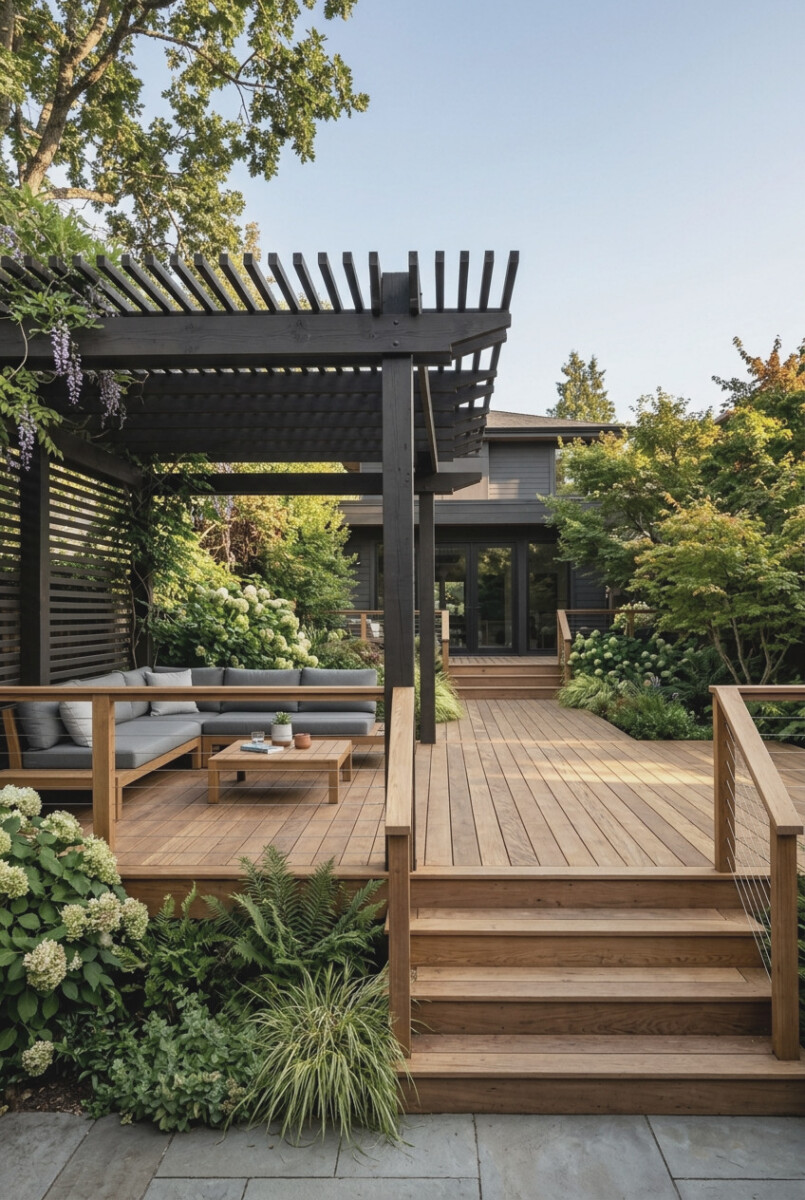
A pergola above a deck can define an outdoor living area while leaving the rest of the platform open to the sky. Timber tones create a unified look, while a contrasting metal frame makes the covered section stand out.
A deck needs to be designed to carry the pergola’s additional loads and resist uplift from wind. Do not assume surface deck boards can support the posts; have the framing, connections, and footings assessed first.
10. Add a Poolside Shade Spot
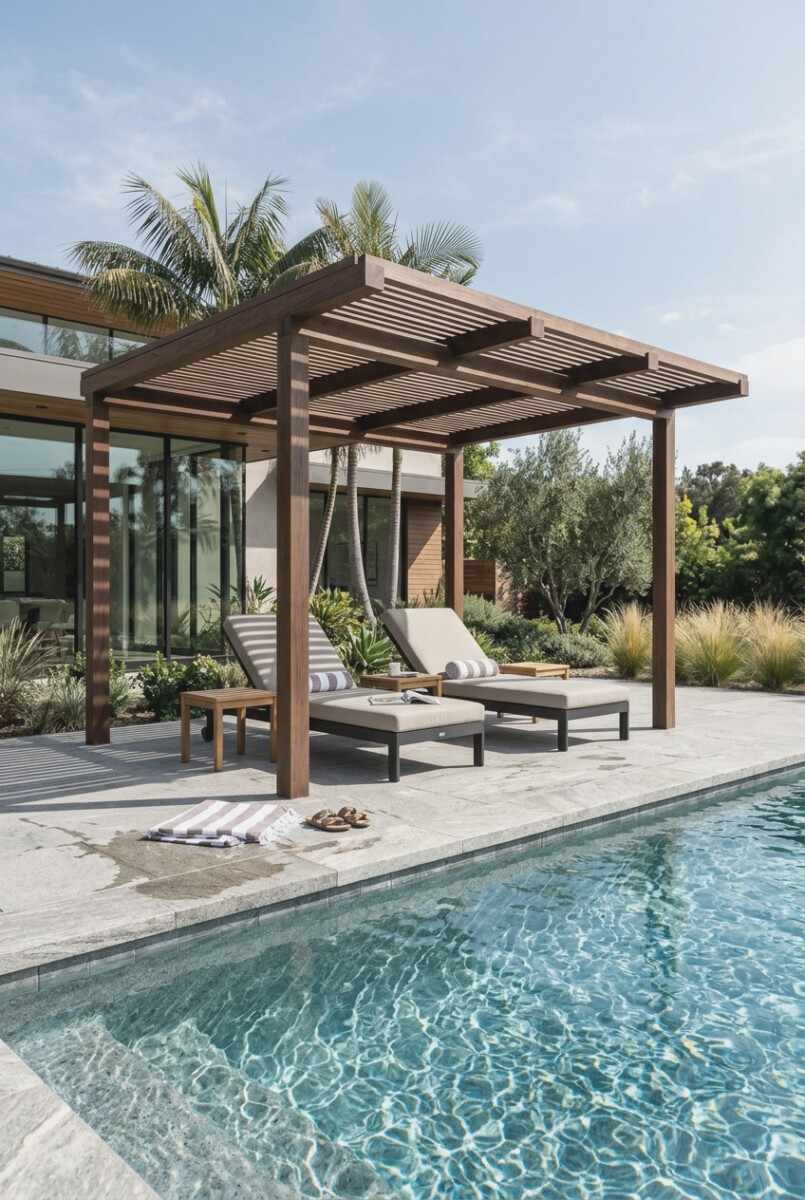
A pergola near a pool offers a place to sit between swims without blocking the open feel of the pool deck. A low-profile frame with loungers or a small seating group can make good use of an area that gets intense afternoon sun.
Use moisture-tolerant materials and furniture with quick-drying cushions. Leave required access clear around the pool, and check local pool-barrier and electrical rules before installing the structure or adding lights.
11. Create a Pergola Walkway Through the Garden
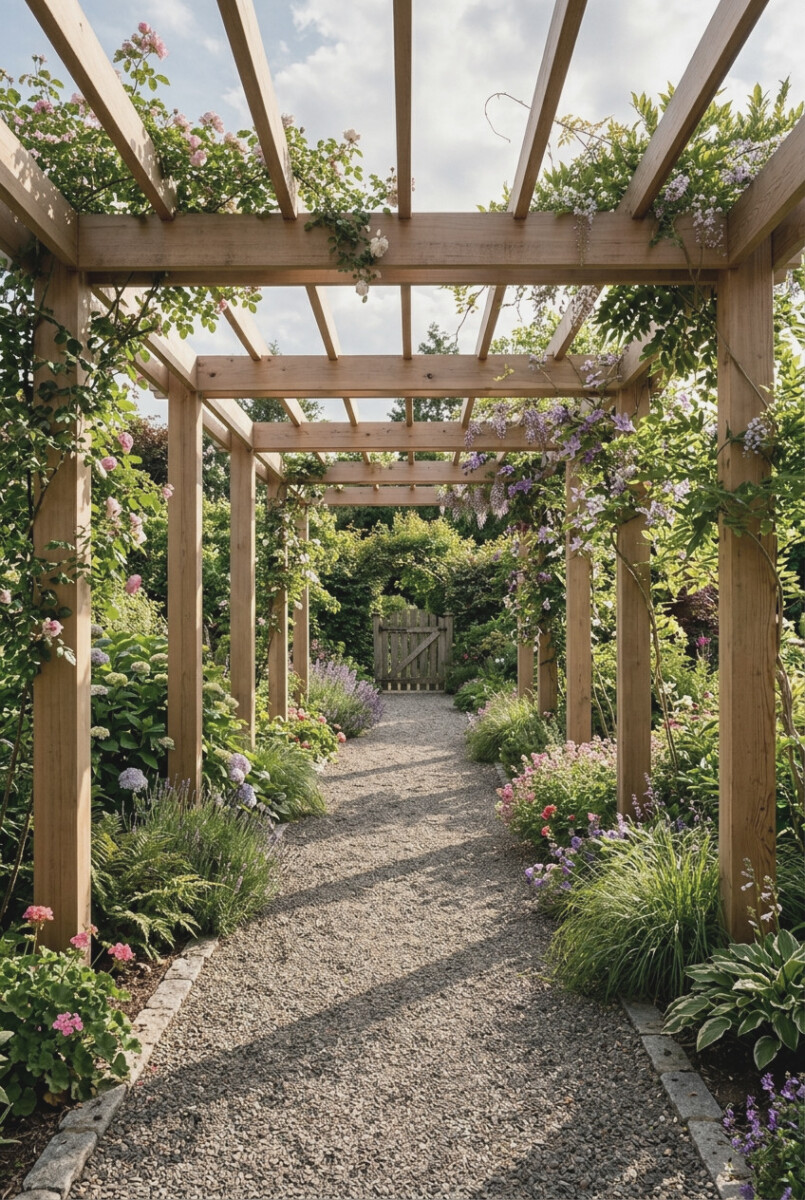
A sequence of posts and crossbeams can turn a simple path into a garden feature. The structure is especially attractive where it leads from a patio to a vegetable garden, bench, or gate, with planting softening the edges.
Keep the path level and wide enough for comfortable walking. If you plan to cover the overhead beams with vines, choose a frame that can carry the mature plant weight and allows room for seasonal pruning.
12. Frame a Favorite Garden View
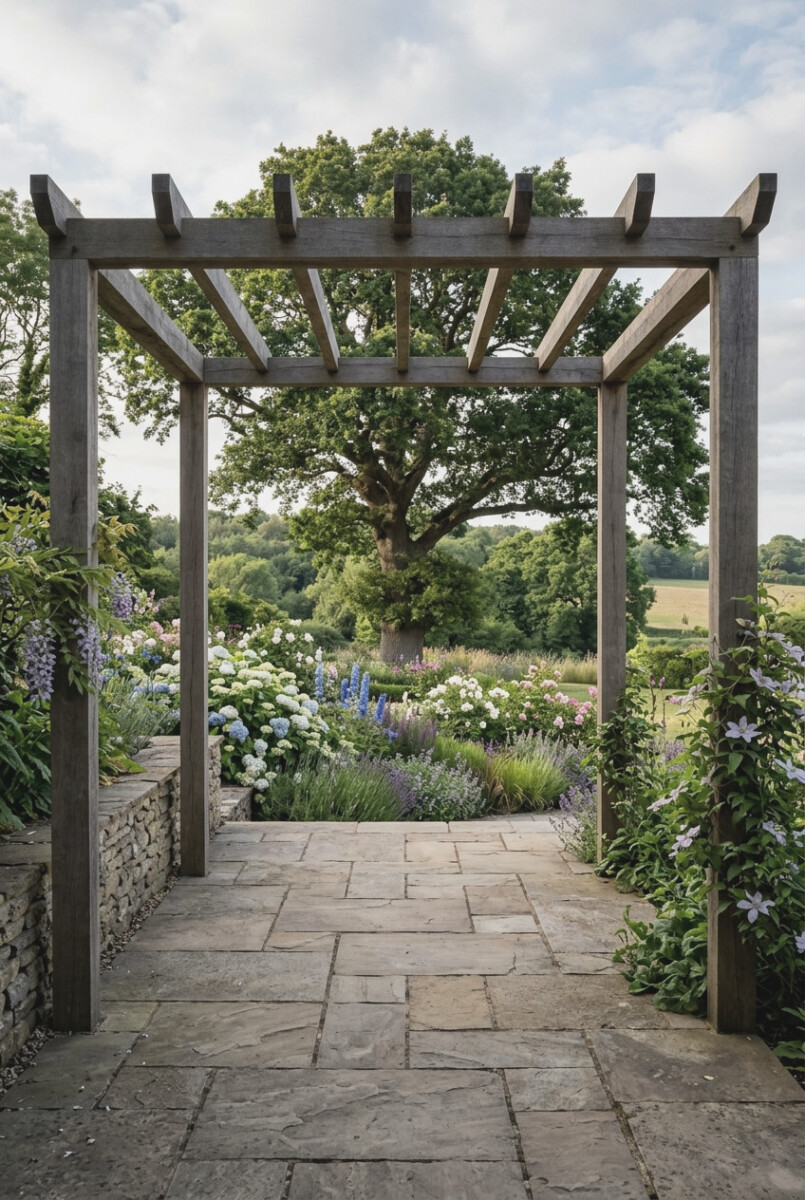
A pergola does not always need a full set of furniture beneath it. Placed at the edge of a terrace or in line with a path, its open frame can draw attention to a mature tree, flowering border, or distant view.
Stand where you will most often see the pergola before marking out the posts. Small changes in position can make a big difference to the view, and a restrained design will let the landscape remain the main feature.
13. Set an Outdoor Dining Table Beneath the Beams
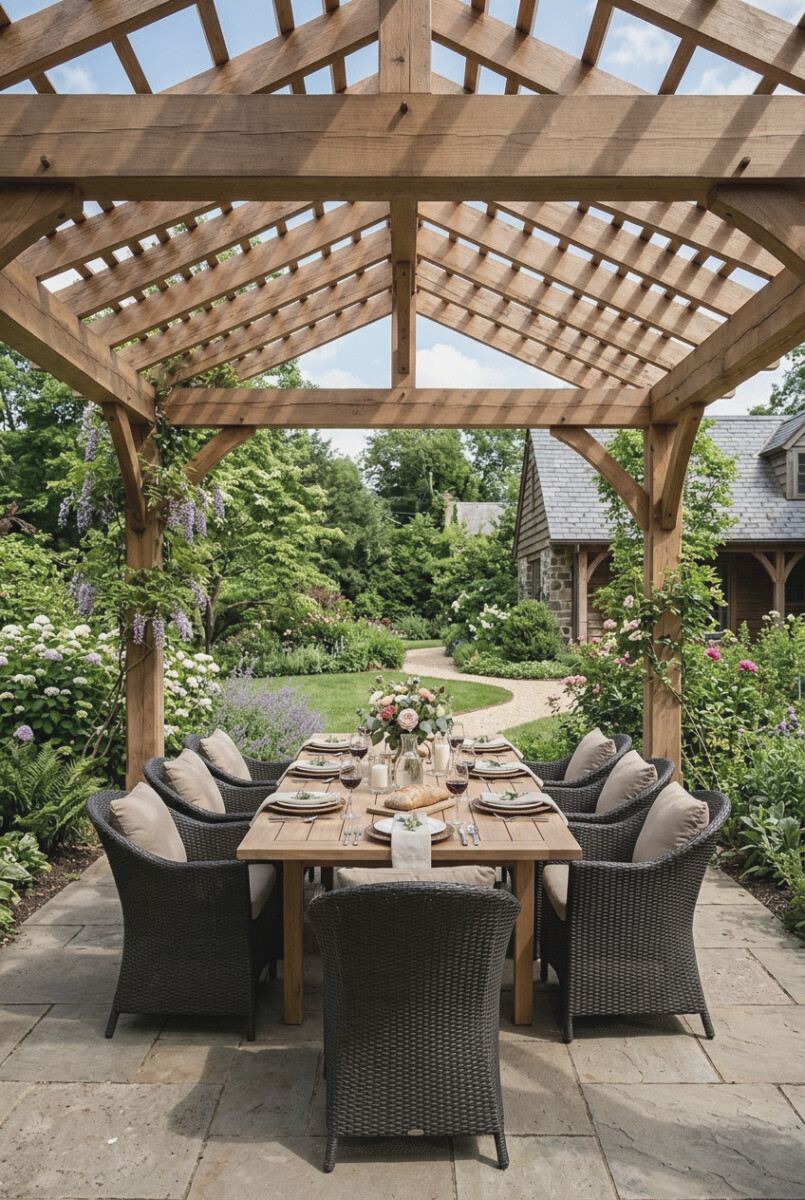
A dining table is one of the most useful things to place beneath a pergola. Overhead beams give the table its own area, making meals outdoors feel more settled without requiring a fully enclosed dining room.
Allow room to pull chairs back and move around the table, even when every seat is occupied. Consider the sun’s position at your usual mealtime; a pergola with wide-spaced rafters may need an additional shade layer.
14. Arrange a Comfortable Conversation Lounge
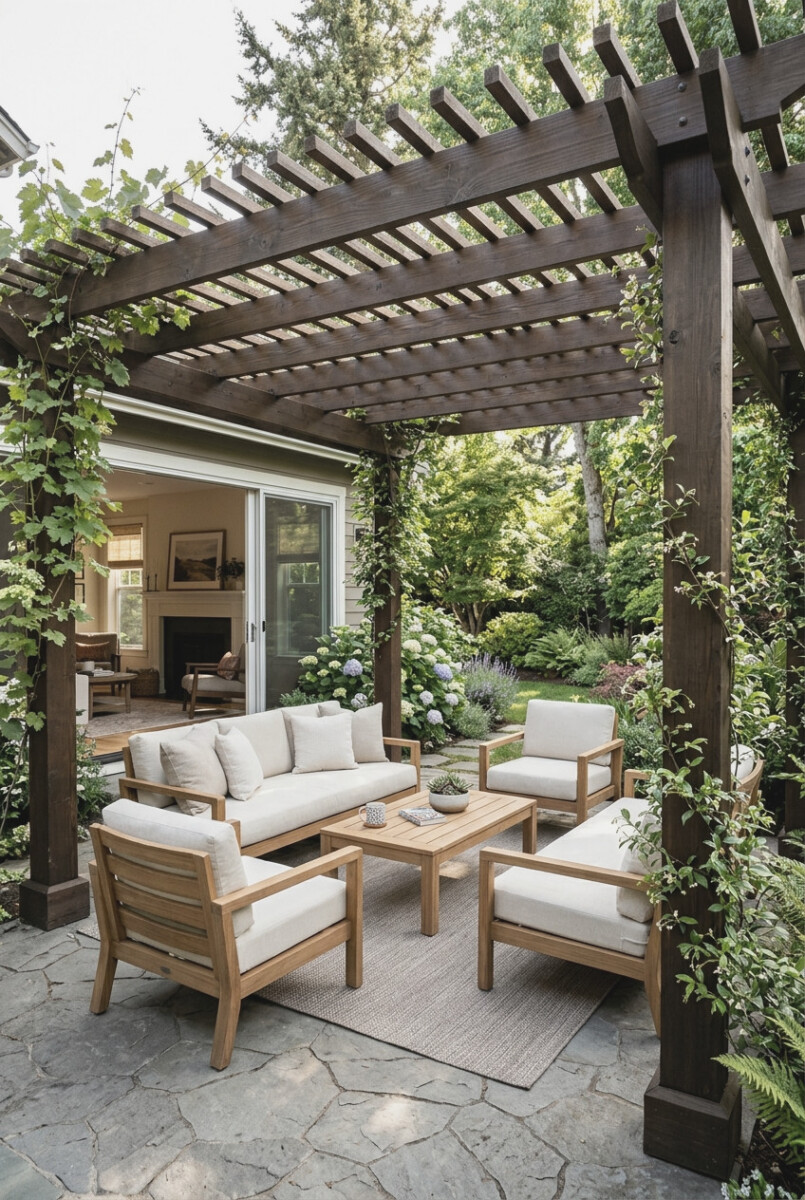
A sofa and a pair of outdoor armchairs can make a pergola feel like a proper extension of the living room. Arrange the seats around a low table rather than pushing everything against the posts, leaving space for easy conversation.
Choose weather-resistant upholstery and furniture that fits the available shade. A small outdoor rug can help define the seating group, but it should dry quickly and not trap moisture against decking or paving.
15. Tuck in a Two-Person Bistro Set
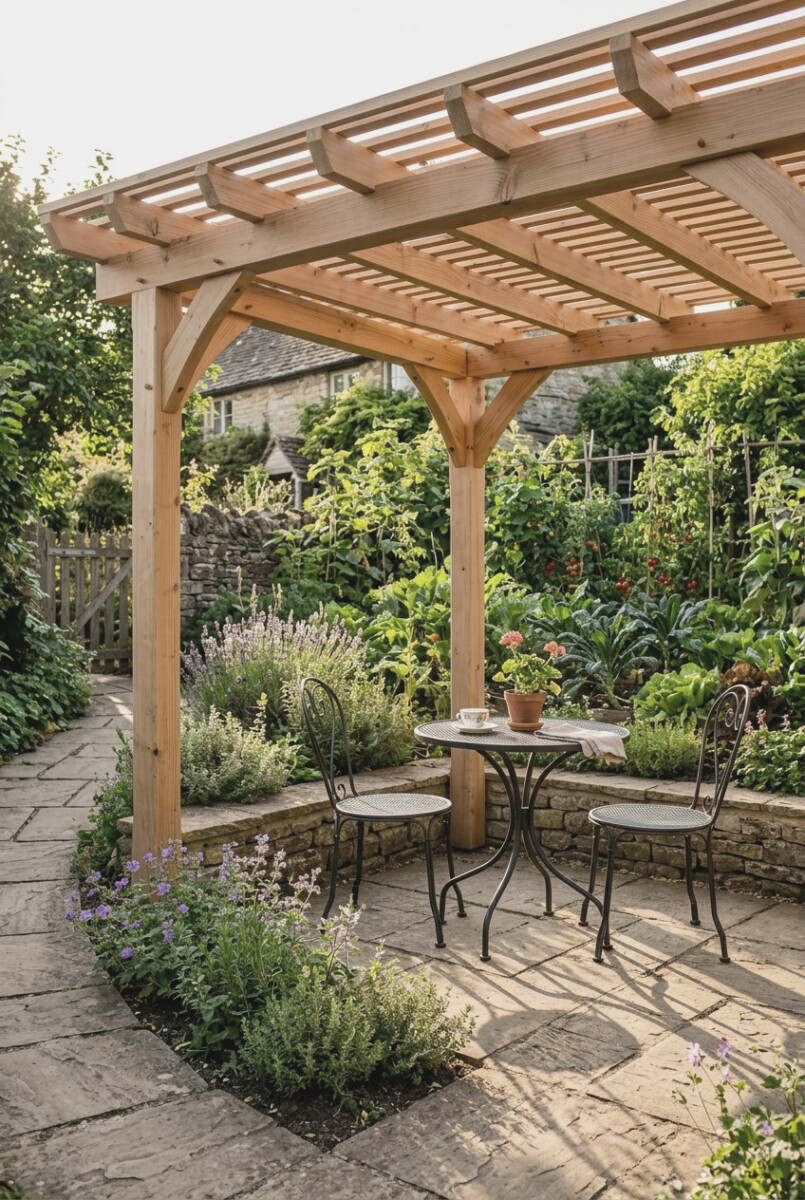
Not every pergola needs a full dining arrangement. A small round table with two chairs works well beneath a compact frame, especially in a courtyard or at the edge of a kitchen garden.
Place the table where it gets the most comfortable morning or late-afternoon light. Lightweight chairs are easy to move as the shade shifts, and a narrow planting bed can soften the base of the posts without crowding the area.
16. Add Built-In Seating Along One Side
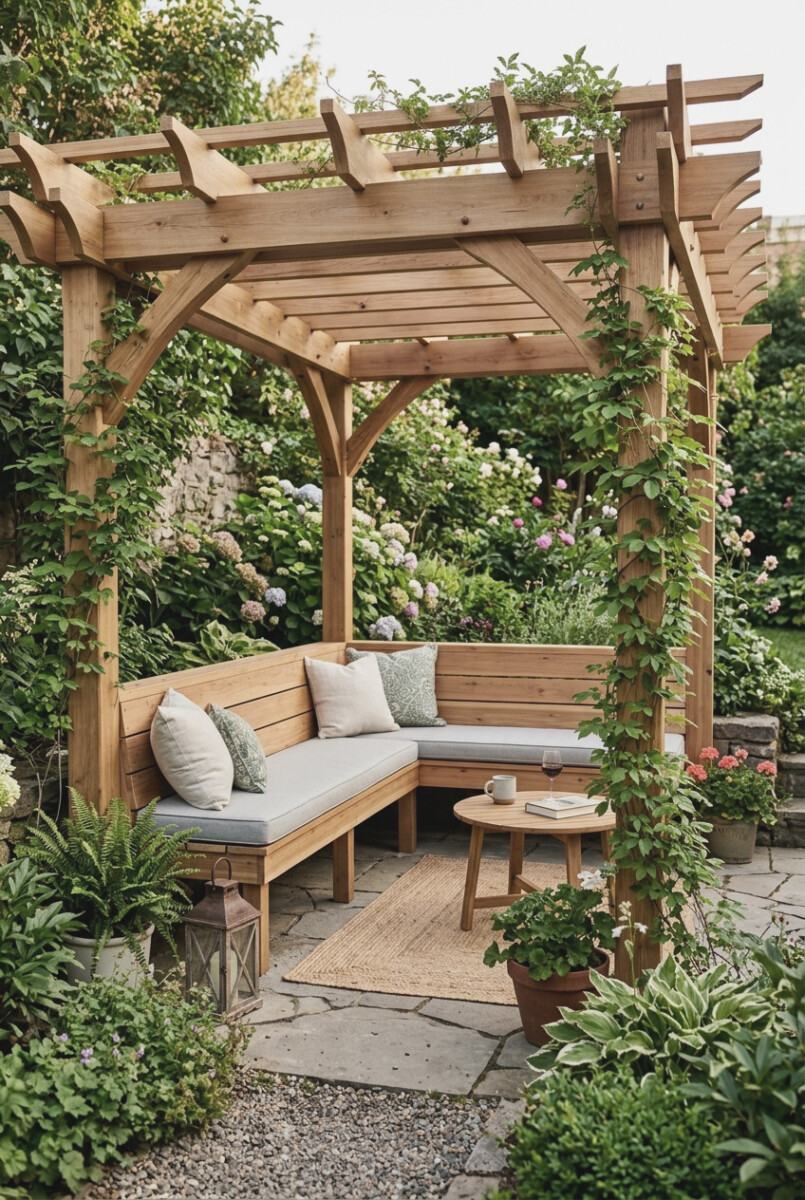
A built-in bench can make a pergola work harder in a small garden. Set along one side or into an L shape, it provides generous seating while preserving more floor space than a collection of separate chairs.
Build the seat at a comfortable height and include back support or outdoor cushions if people will sit there for long periods. Allow drainage and ventilation beneath the bench, particularly when it sits against a timber frame.
17. Make Room for an Outdoor Daybed
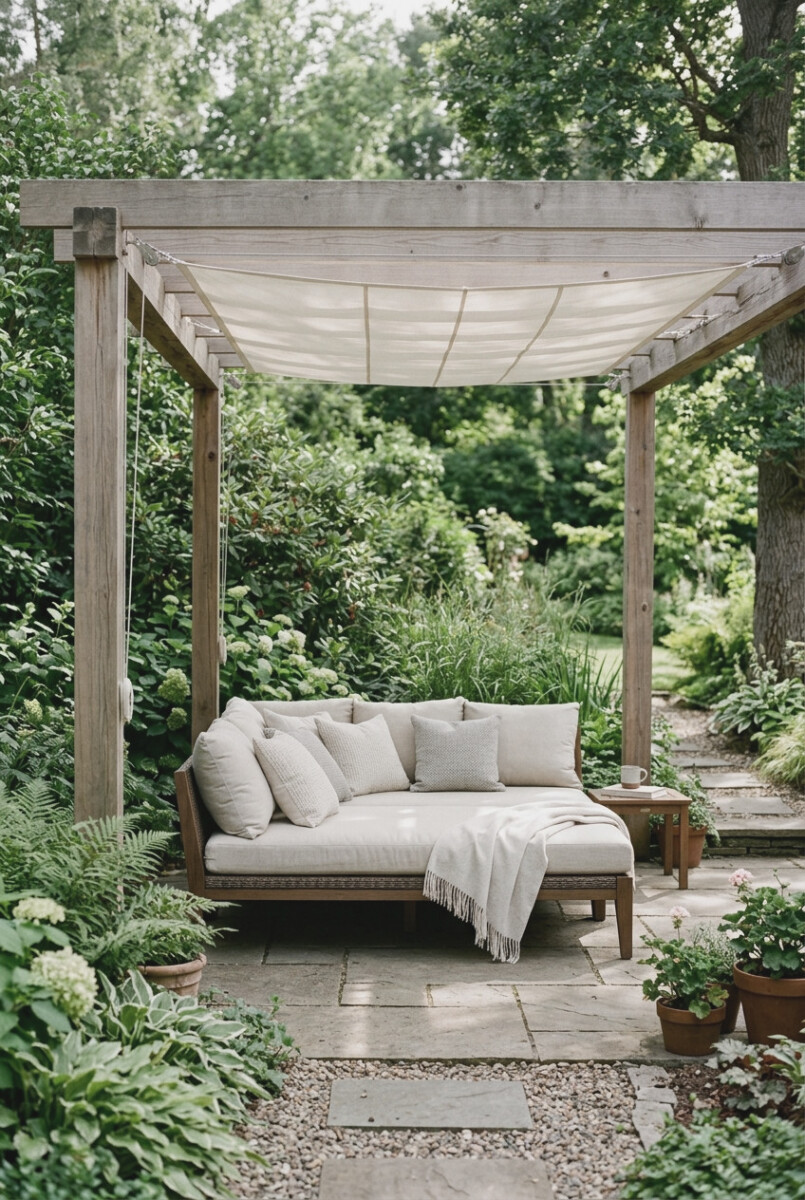
A daybed beneath a pergola creates a relaxed place for reading or an afternoon rest. This arrangement works particularly well in a quiet corner, where the structure gives the bed some definition without enclosing it.
Use cushions and covers designed for outdoor conditions, and plan for storage during wet weather. If the pergola provides only partial shade, add an adjustable canopy so the bed does not sit in harsh midday sun.
18. Design a Pergola for a Hanging Seat
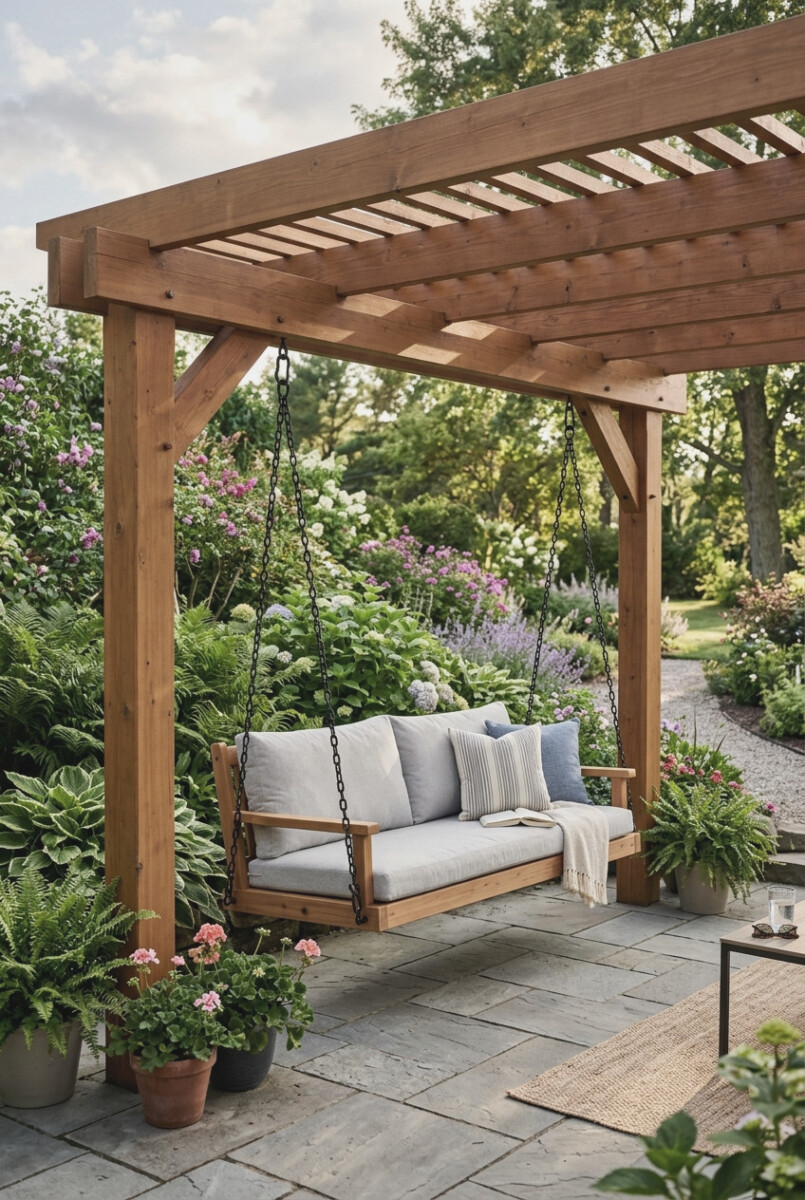
A properly designed pergola can support a hanging bench or chair, creating a gentle swinging seat in the garden. The open frame gives the seat a clear location and can leave the surrounding planting visible.
Hanging furniture produces moving loads that ordinary decorative pergolas may not be built to carry. Have the structure and fixing points specifically designed for the seat, or choose a freestanding swing that does not rely on the pergola beams.
19. Add a Retractable Fabric Canopy
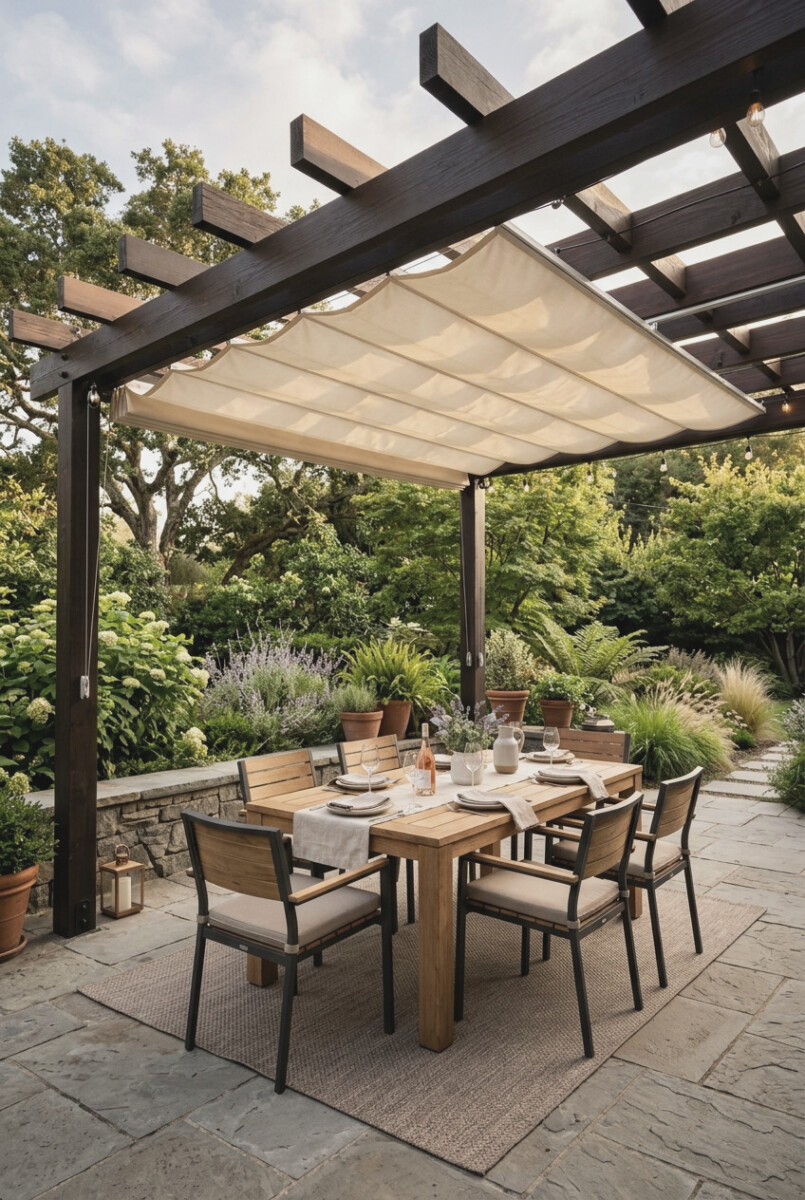
A retractable canopy lets you choose between full daylight and extra shade as the weather changes. It is useful above a dining table or seating area where the overhead beams alone do not block enough sun.
Select a system compatible with your pergola and rated for local wind conditions. Many fabric covers should be retracted during storms or heavy rain, so follow the manufacturer’s instructions rather than treating them as permanent roofing.
20. Choose an Adjustable Louvered Roof

A pergola with adjustable louvers offers more control over the amount of light reaching the patio. Rotating the slats can create shade at midday while allowing more sun through when the weather is cooler.
Check whether the model is designed to shed rain and how its drainage system works. Motorized versions also need suitable outdoor electrical installation, and the overall structure must be anchored for the site’s wind exposure.
21. Space Roof Slats for Dappled Shade
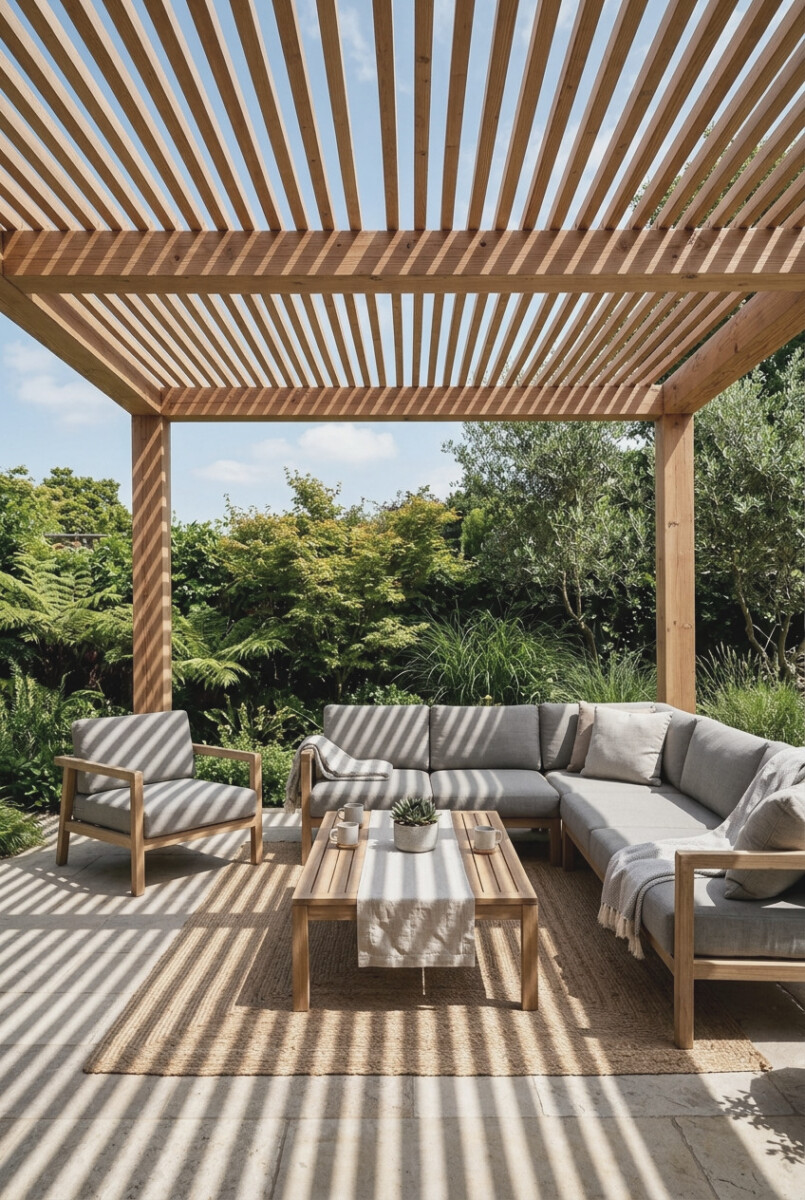
Closer-spaced slats create a distinctive pattern of sunlight on the ground and furniture below. This is a simple way to make a timber pergola feel more finished while retaining the open-roof look.
Plan the direction of the slats around the sun’s path rather than appearance alone. Narrow gaps can improve shade at certain times, but they do not turn an open pergola into a waterproof roof.
22. Try a Woven Reed Shade Layer

A reed or bamboo shade panel laid across the top of a pergola can bring a relaxed, natural look to a courtyard. It is an attractive option for a Mediterranean-inspired garden with terracotta pots and light-colored walls.
Choose an exterior-rated product and secure it according to the manufacturer’s guidance. Natural woven materials weather over time and may need replacing; remove or protect panels when strong winds are expected.
23. Install Vertical Timber Privacy Slats
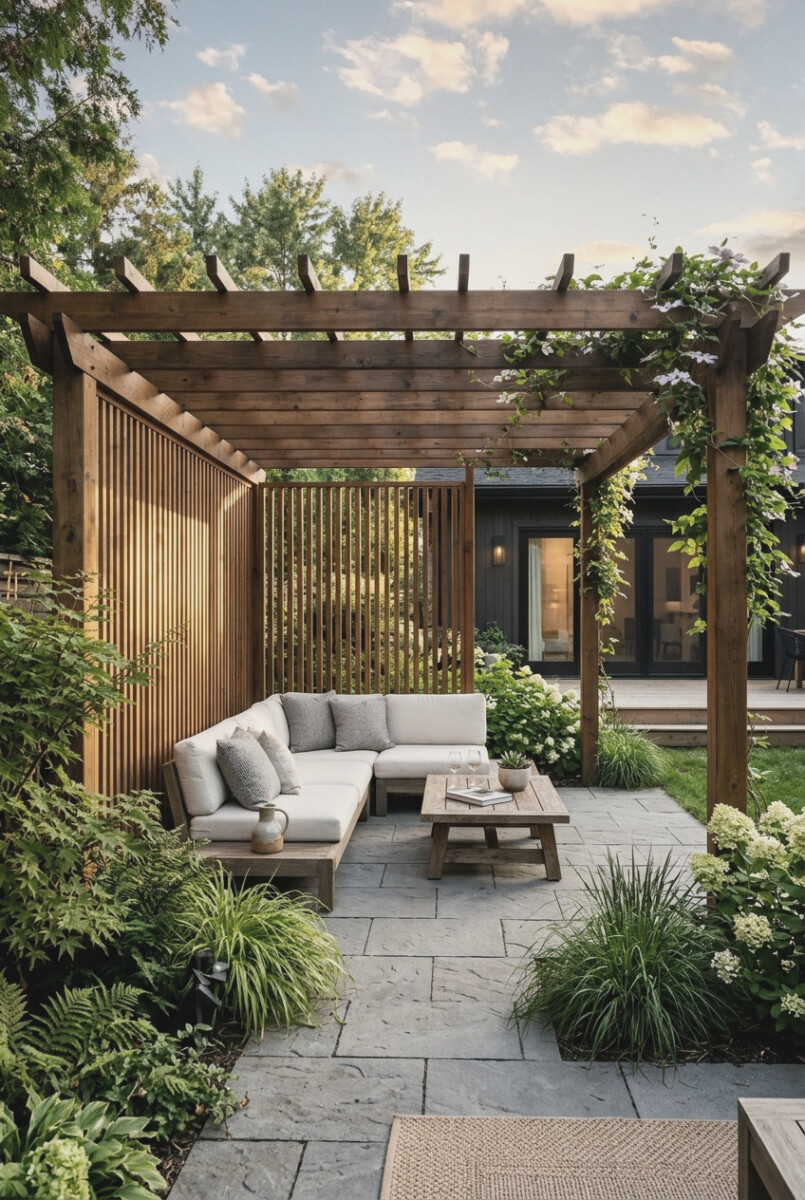
Vertical slats along one side of a pergola can screen a neighboring view without building a solid wall. A little spacing between the boards keeps the area open while adding a contemporary architectural detail.
Position the screen where privacy is actually needed, such as behind the sofa or beside a dining table. Check local height restrictions and wind loads, especially if the slatted panel adds a large surface to an existing frame.
24. Hang Outdoor Curtains for a Softer Look

Curtains can make a pergola seating area feel more private and relaxed. Light neutral panels suit coastal and traditional gardens, while darker fabric gives a modern structure a stronger edge.
Use outdoor-rated fabric and a secure track or rod, and tie the panels back when not needed. Curtains should not drag on wet paving or flap into heaters and other hot equipment, and they may need to be removed in severe weather.
25. Add Lattice Panels at the Ends
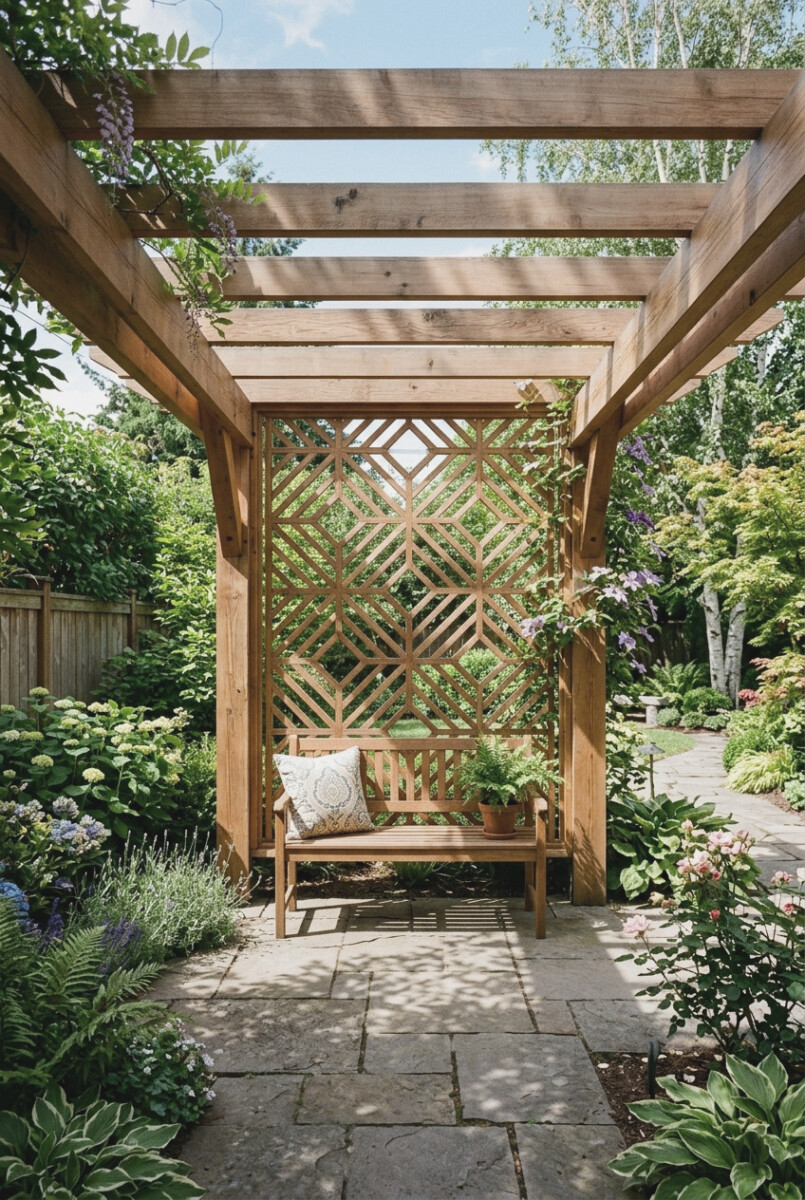
A lattice panel between two pergola posts brings pattern to the structure without fully closing it off. It can soften a plain rectangular frame, add privacy at one end, or provide a subtle backdrop behind a bench.
Choose timber or metal lattice that suits the main frame, with openings that still allow air to move through. If you later grow vines on the panel, account for the extra weight and keep the plants away from moving shade mechanisms.
26. Train Climbing Roses over the Pergola
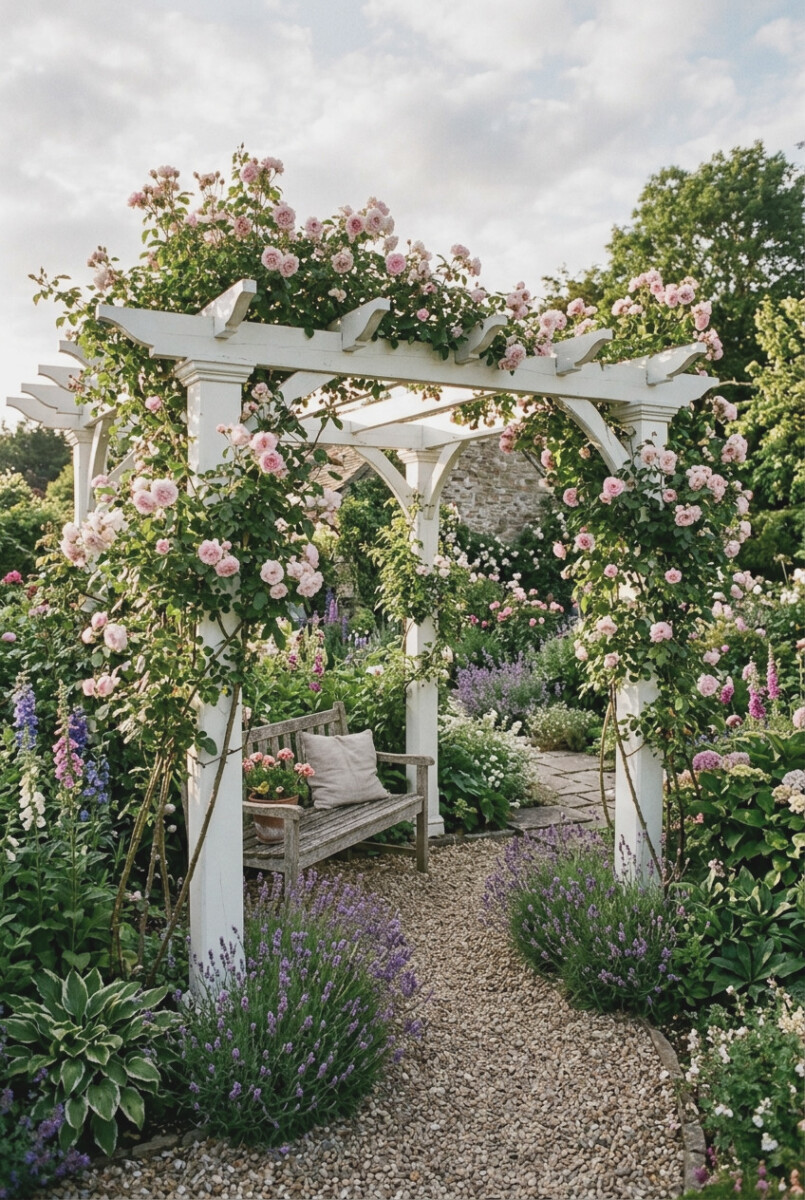
Climbing and rambling roses can make a pergola a highlight of the garden during flowering season. Their stems soften the beams and create a classic cottage-garden look, particularly along a path or around a quiet seating area.
Choose a variety suited to your climate and the structure’s size. Roses often need tying in and regular pruning; guide the growth away from seating and walking areas so thorns and long shoots do not become a nuisance.
27. Grow Fragrant Honeysuckle Nearby

Honeysuckle is a good choice when you want flowering vines to make a pergola feel part of the garden. Some varieties have fragrant blooms that are particularly pleasant near a sitting area used in the evening.
Check the mature spread, flowering season, and local suitability before planting. Give the young shoots a trellis or wires to follow, and prune as needed so the vines do not overwhelm nearby shrubs or block the structure’s open sides.
28. Create a Wisteria-Covered Canopy

Mature wisteria can produce dramatic hanging flower clusters across a pergola. It suits a substantial structure in a garden with enough space for its vigorous growth, where the flowers can be enjoyed without brushing against furniture.
Wisteria becomes woody and heavy, so this is not a suitable plant for a lightweight decorative kit. Use strong, professionally assessed supports, choose a species appropriate to the region, and commit to regular training and pruning.
29. Let Clematis Climb a Side Trellis

Clematis adds flowers to a pergola without always requiring the broad overhead coverage of a large vine. A flowering variety climbing a side trellis can brighten a post or frame a seating nook with seasonal color.
Match the variety to your climate, sunlight, and pruning preferences. Provide suitable supports while stems are young, keep the root zone appropriately cared for, and leave enough access for maintenance once the plant fills out.
30. Grow Grapevines for a Leafy Roof
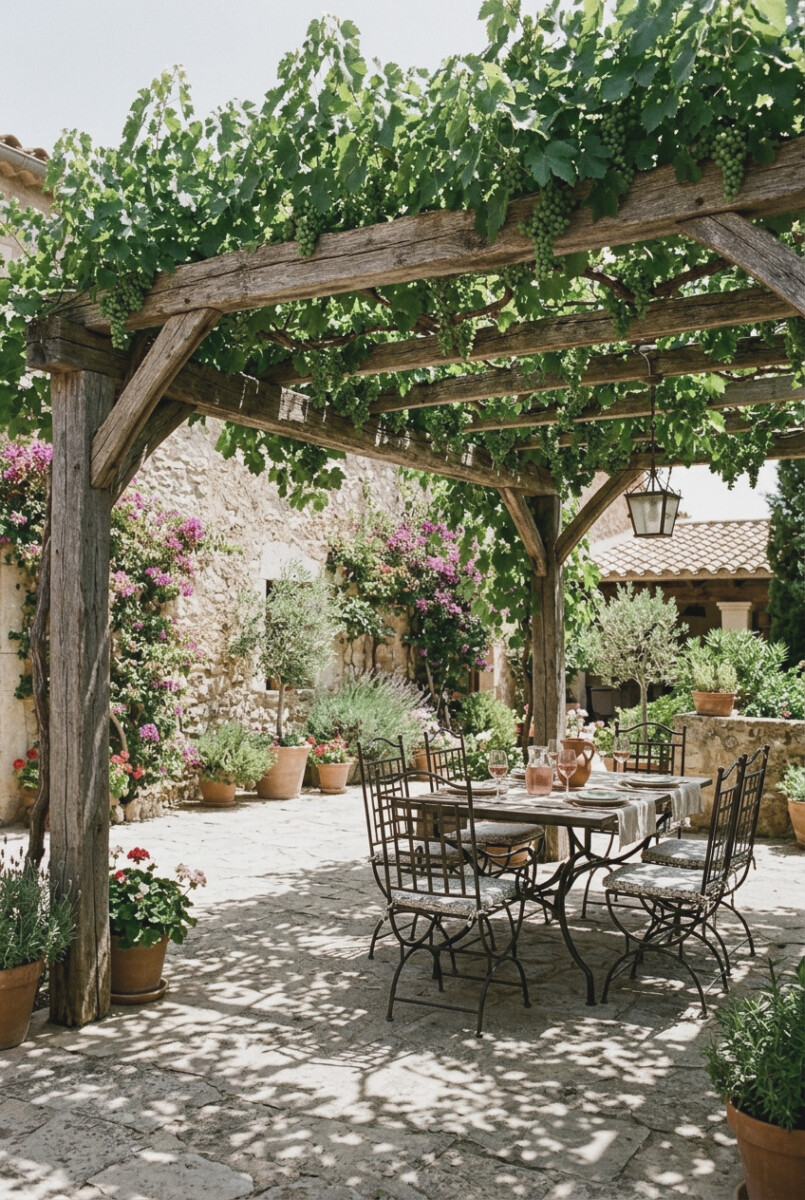
A grapevine-covered pergola has a traditional courtyard feel, with broad leaves providing summer shade. In suitable climates, the vines may also produce fruit, giving the garden a practical connection to the outdoor dining area.
Choose a variety adapted to local growing conditions and provide a strong framework for mature growth. Grapevines need routine pruning and may attract insects or drop fruit, so consider that before positioning a dining table directly beneath them.
31. Soften the Posts with Large Planters
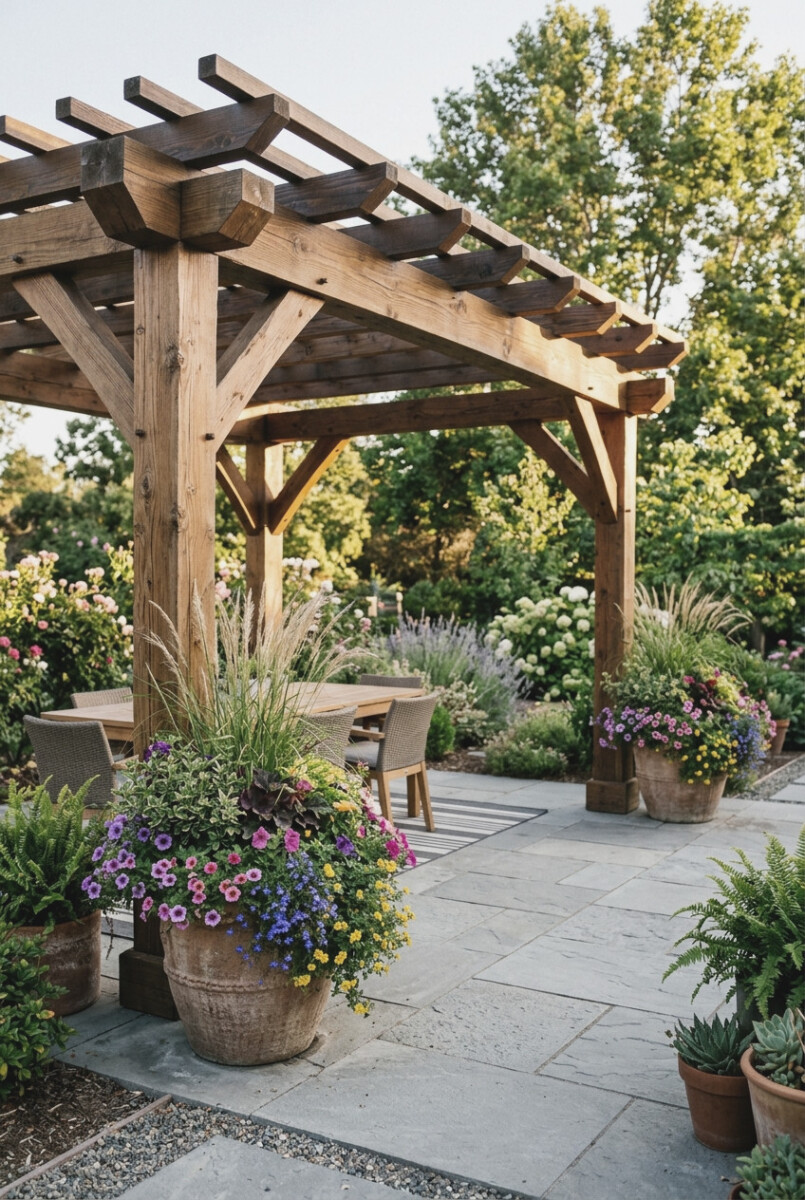
Large containers around the base of a pergola can bring greenery to a paved patio without requiring a planting bed. Mix upright grasses, trailing flowers, and compact shrubs for a layered look that does not depend on overhead vines.
Use planters with drainage and select plants suited to the available light. Leave the posts and connections accessible for inspection, and avoid letting wet soil sit continuously against timber surfaces.
32. Ground the Structure with Stone Pavers
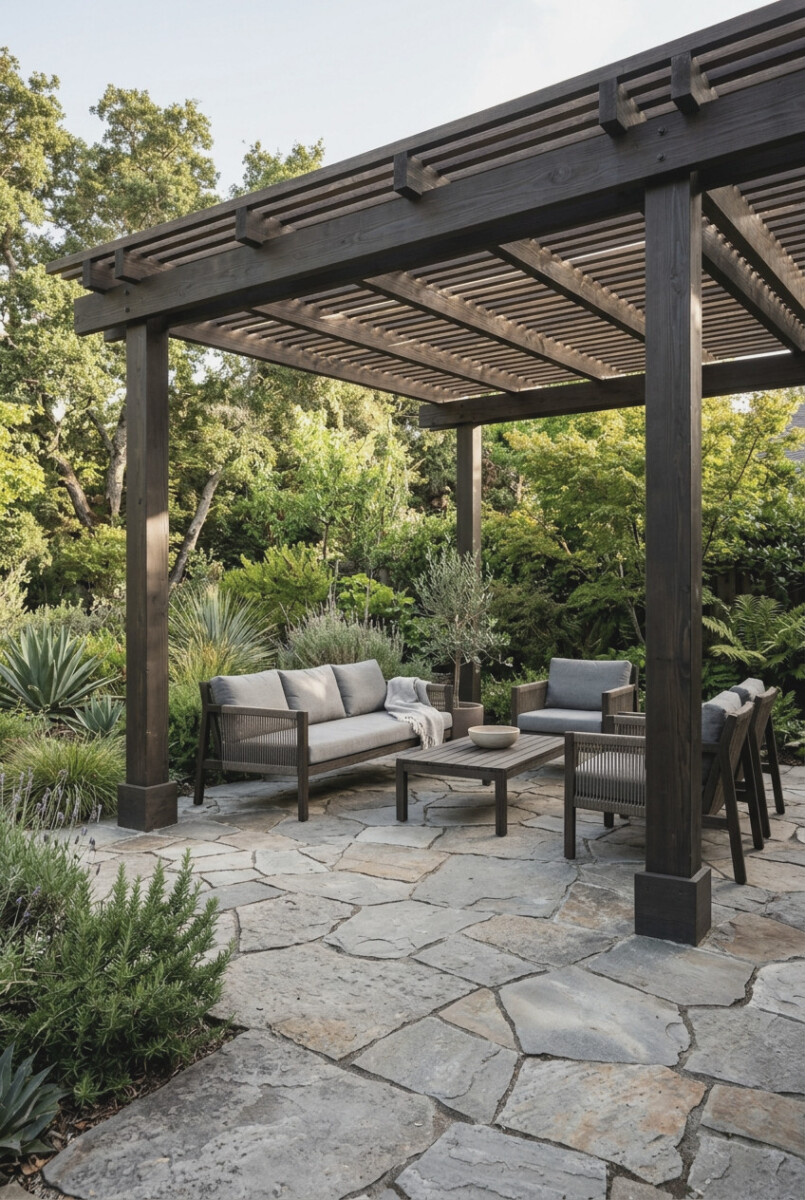
A stone-paved patio gives a pergola a solid, permanent-looking base. Natural flagstones suit rustic gardens, while evenly sized concrete or porcelain pavers work well with cleaner contemporary frames.
Choose an exterior surface with appropriate slip resistance and arrange the paving to drain away from the house. Pergola posts still require proper structural support; decorative patio pavers alone are not a substitute for footings.
33. Use Gravel for a Relaxed Courtyard Floor

A gravel surface can make a freestanding pergola feel at home among garden beds and informal planting. Its natural texture suits timber frames, terracotta pots, and simple outdoor benches, creating a less formal alternative to a paved patio.
Provide a stable, well-prepared base and suitable edging so the gravel stays in place. If chairs will be moved frequently or accessibility is important, use compacted gravel or a firm paved zone under the seating area.
34. Define the Seating Area with an Outdoor Rug
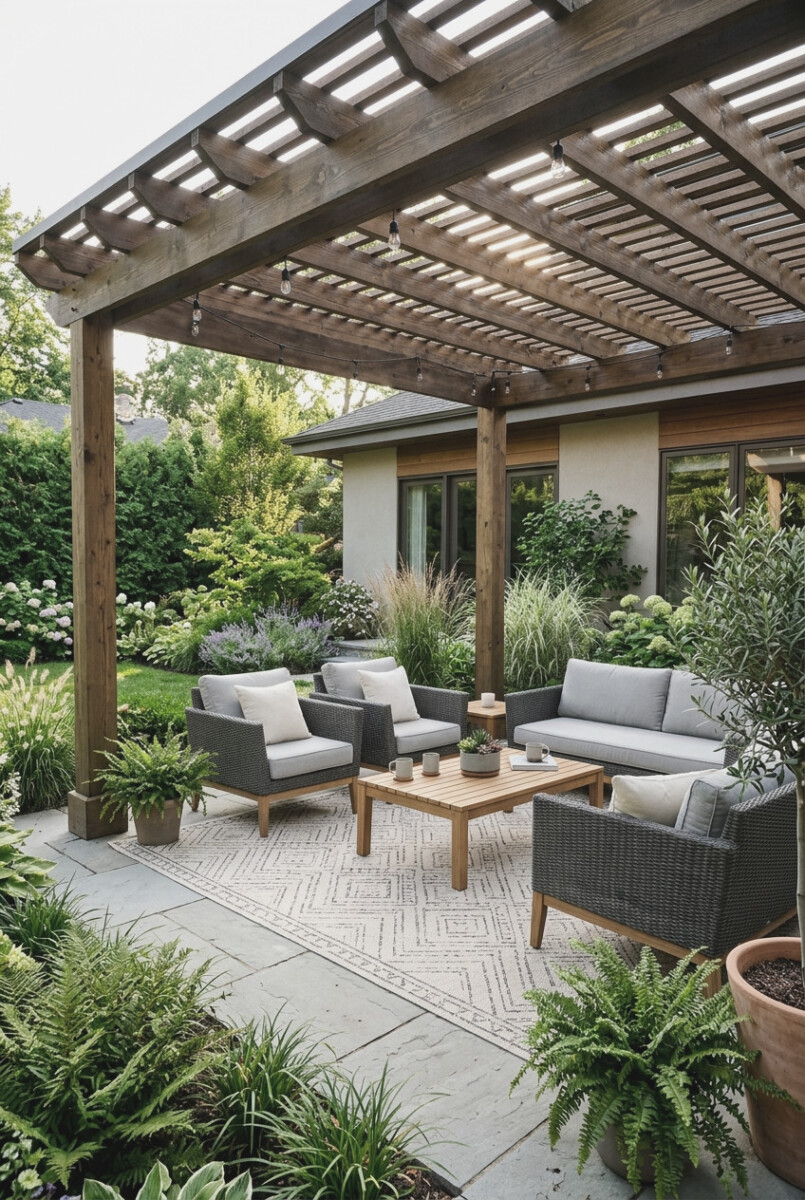
An outdoor rug helps bring together a sofa, chairs, and coffee table beneath a pergola. Stripes or a subtle geometric pattern can add color without competing with plants and surrounding garden textures.
Select a rug made for outdoor use and sized so the front legs of the furniture sit comfortably on it. Lift and dry it periodically, especially over wood decking, to avoid trapping moisture beneath the fabric.
35. String Warm Lights Across the Beams

String lights make a pergola inviting after sunset and draw attention to its overhead structure. A loose line of warm bulbs works well above a dining table, while a neat perimeter arrangement suits a more modern space.
Use lights and connections rated for outdoor exposure, with electrical protection appropriate to the location. Secure the cables so they cannot rub against sharp edges or hang low enough to catch on people walking beneath them.
36. Hang a Few Outdoor Lanterns
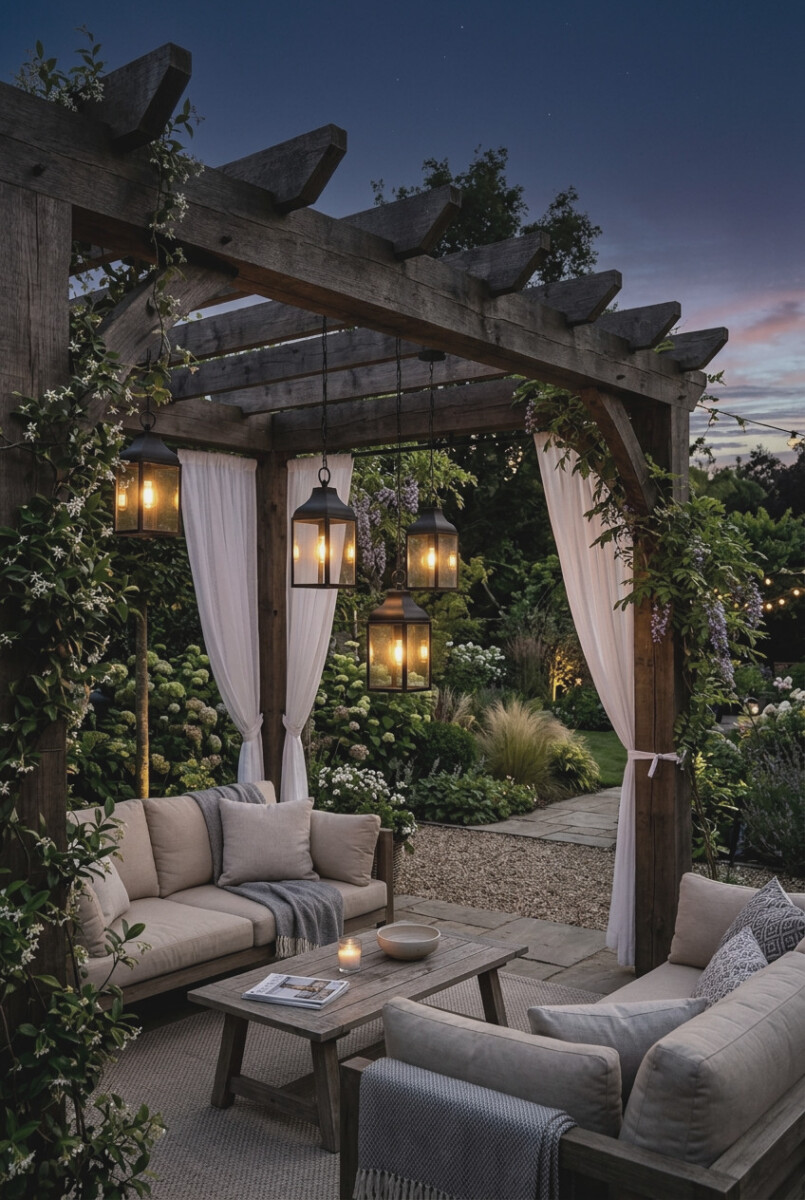
Lantern-style fixtures can give a pergola a softer evening atmosphere than a single bright floodlight. Two or three lanterns at different heights add interest around a seating area without overwhelming the frame.
Choose battery-operated or properly wired fixtures designed for outdoor use. Flameless candles are a sensible choice near curtains, climbing plants, and timber beams, where open flames can create unnecessary risk.
37. Add Focused Lighting for Dining and Reading
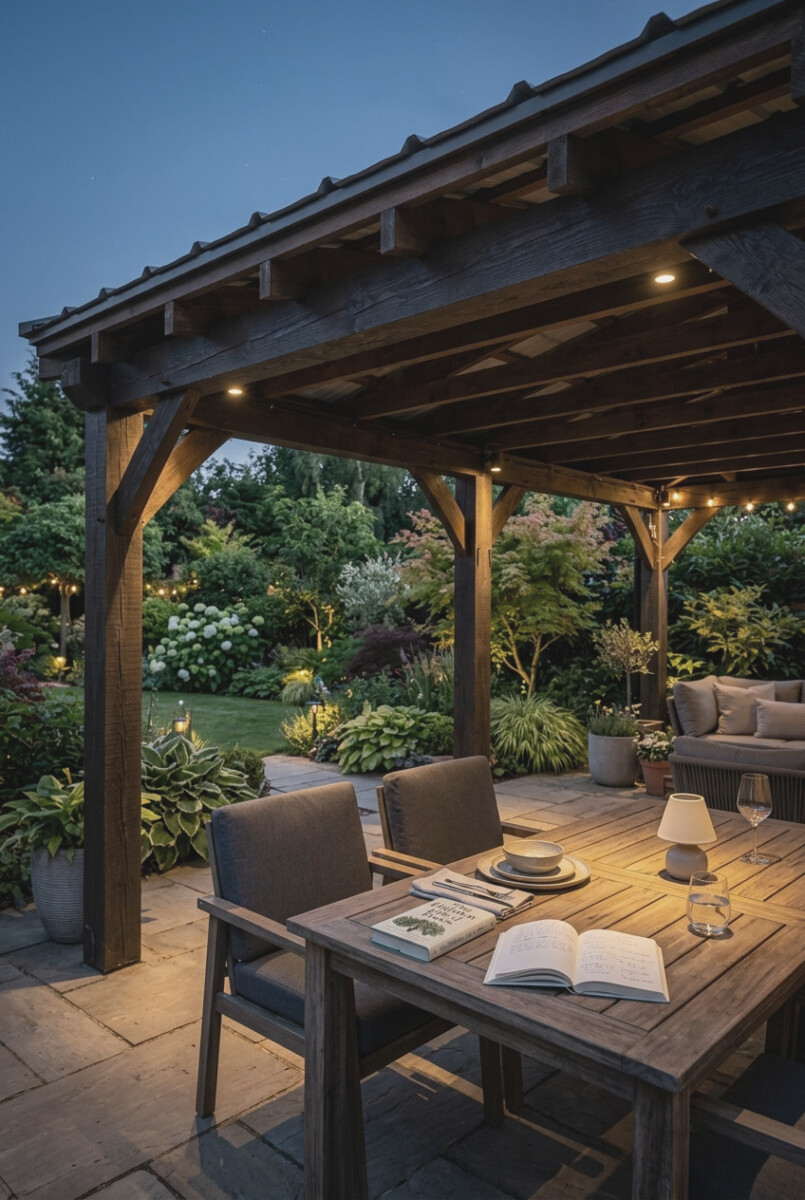
Decorative lighting sets the mood, but a pergola also benefits from practical illumination. Small downward-facing fixtures or a weather-rated wall light can make it easier to read, serve food, and use the area after dark.
Plan wiring before the pergola is finished so cables can be routed neatly. Choose outdoor-rated fittings and have mains electrical work completed by a qualified installer, especially near water or other exposed areas.
38. Include an Outdoor-Rated Ceiling Fan
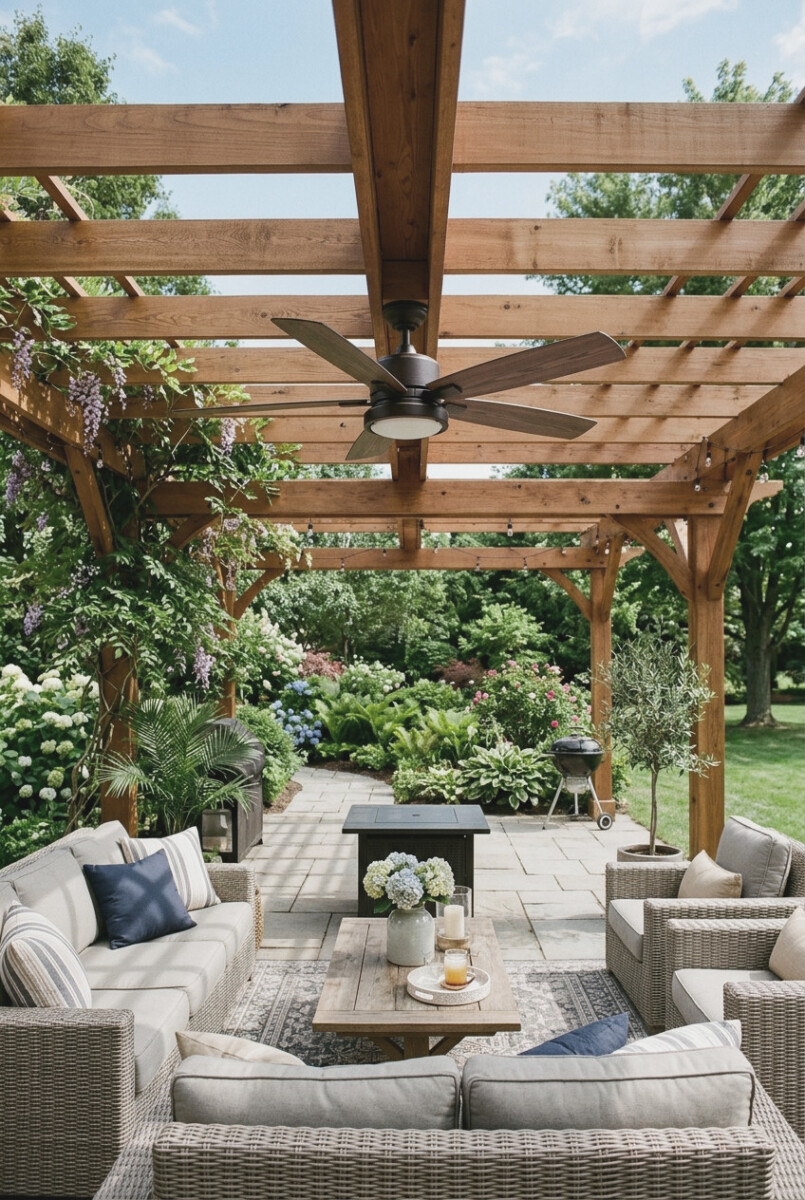
An outdoor ceiling fan can help people feel more comfortable beneath a large pergola during warm weather. A simple fan with wood-look blades suits a relaxed patio, while a slim dark model pairs naturally with aluminum framing.
Only use a fan if the structure and overhead clearance are appropriate, and choose a model rated for the exposure it will receive. A fan moves air rather than lowering the actual outdoor temperature, so shade remains important.
39. Give the Pergola a Mediterranean Feel
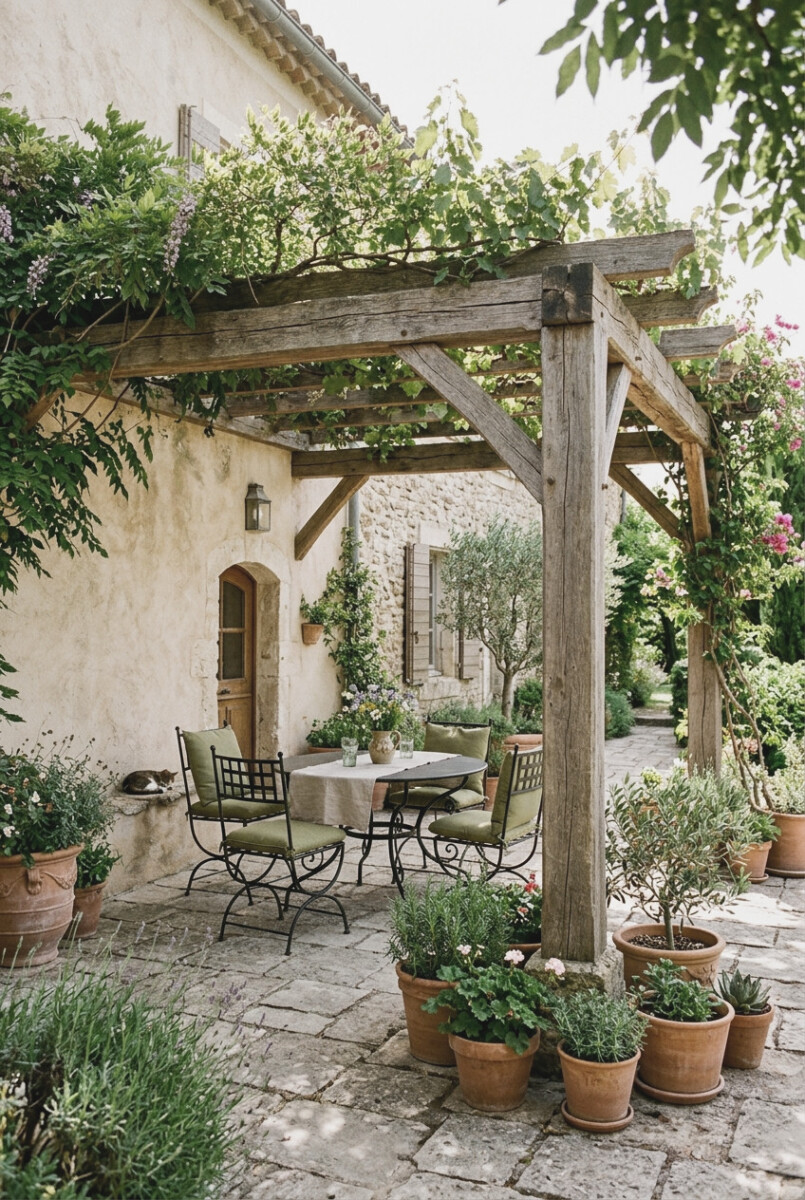
A pergola with warm timber, pale walls, and terracotta pots can bring a Mediterranean-inspired look to a sunny courtyard. Simple iron furniture, olive-toned cushions, and trailing greenery complete the scheme without requiring elaborate decoration.
Keep materials suited to the local climate rather than copying every detail of a dry-weather courtyard. Choose plants that can tolerate your growing conditions, and use washable textiles in areas exposed to dust or rain.
40. Keep a Japanese-Inspired Design Simple
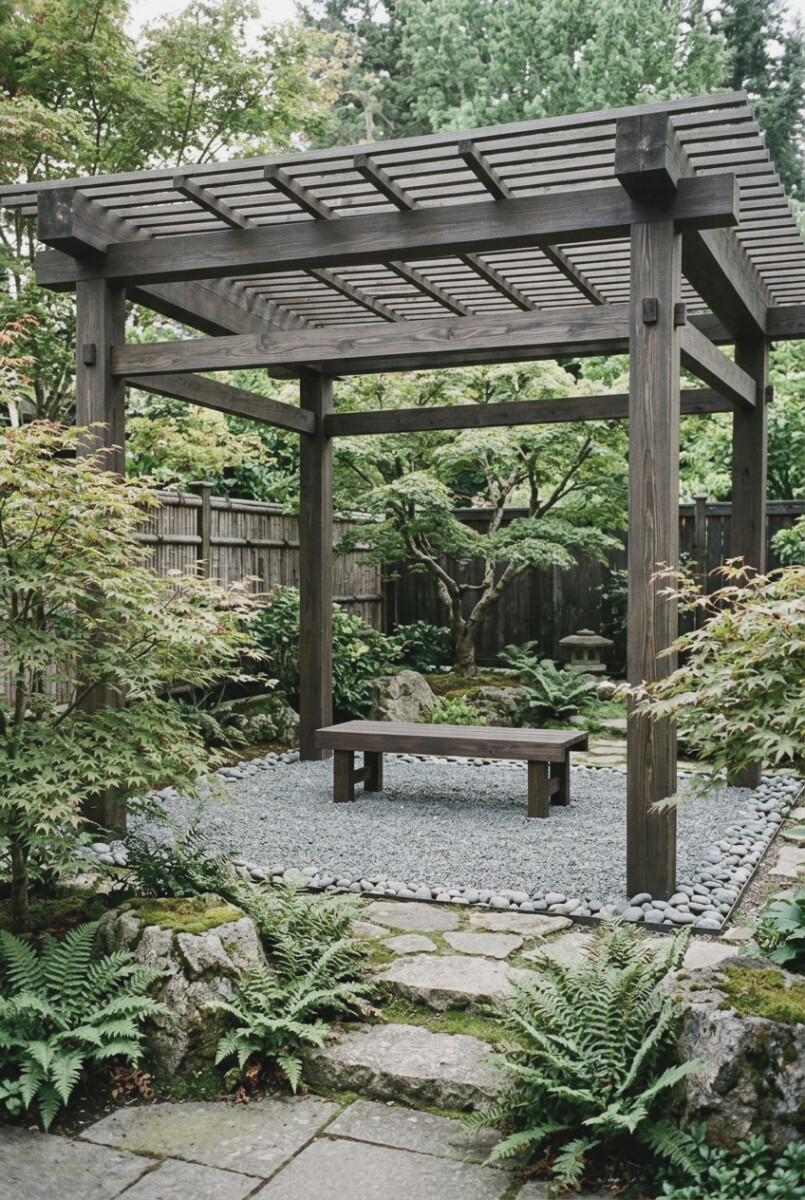
A pergola with clean timber lines and a restrained palette can suit a quiet, Japanese-inspired garden. Pair the open structure with gravel, carefully chosen plants, and a single bench, allowing the surrounding landscape to remain prominent.
Avoid filling the space with themed ornaments. The most convincing result comes from thoughtful proportions, natural materials, and views through the frame; any planting or screening should fit the site’s actual maintenance needs.
41. Add a Small Serving Ledge

A narrow shelf or serving ledge attached to a pergola post can make outdoor meals easier. It provides a place for glasses, snacks, or a plant without occupying the floor space needed for a larger side table.
Keep the ledge at a practical height and make sure its brackets and fixings can support the intended weight. If you cook outdoors, position the grill beyond the pergola and follow the equipment manufacturer’s clearances rather than placing a flame beneath the overhead structure.
42. Create a Private Hot Tub Retreat
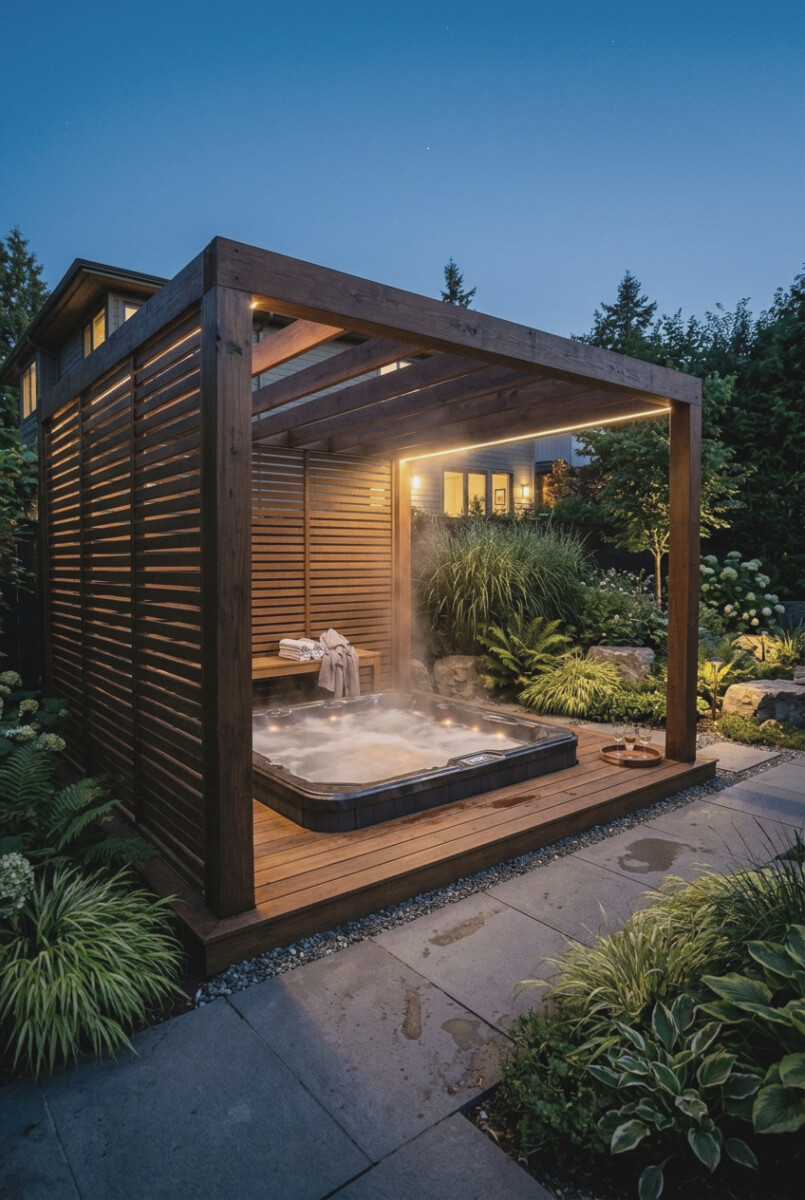
A pergola beside a hot tub can define a relaxing corner and provide some screening from nearby properties. A simple timber or aluminum frame with side slats works well, giving the space an outdoor-room feel while retaining ventilation.
Plan the design around required service access, drainage, safe walking surfaces, and local electrical rules. Keep the area open enough for ventilation, and confirm that any roof or screen arrangement meets the hot tub manufacturer’s installation requirements.
Making a Pergola Work for Your Outdoor Space
A good pergola starts with the purpose it will serve. A dining area needs clear circulation and comfortable shade, while a garden walkway may be more about framing plants and views. Materials, roofing options, and furniture should follow from those decisions rather than being added at random.
You do not need to use every detail in one design. A well-proportioned frame, a few durable furnishings, and planting suited to your climate can be plenty. Check the structure’s anchoring and local requirements before building, then add shade, lighting, or privacy features as you discover how you use the space.
