Table of Contents
Vinegar is the unsung hero of the cleaning cupboard: cheap, non-toxic, and shockingly effective on baked-on grease. This guide breaks the oven-cleaning job into bite-sized steps so you get a sparkling interior without harsh chemicals.
What you need: distilled white vinegar, baking soda, a spray bottle, a few microfiber cloths, a sponge, rubber gloves, and a heatproof bowl or dish. Short on time? The steam-and-wipe method is fast. Want a deep scrub for charred spills? We’ll use a baking-soda paste for that.
Why vinegar works (and why it’s safer than many store-bought cleaners)
Vinegar is acidic enough to break down grease bonds but mild compared with many commercial oven cleaners, which can contain lye or strong oxidizers. That means less respiratory irritation and no toxic residues to worry about when you cook afterward.
Pairing vinegar with baking soda gives you a two-part approach: the vinegar helps loosen and dissolve grease, while baking soda acts as a gentle abrasive to lift stubborn, baked-on gunk without scratching surfaces.
How to clean oven with vinegar — step-by-step (steam method)
This steam method is the backbone of an easy, low-fuss oven clean. It softens grime so you can wipe it away with minimal scrubbing.
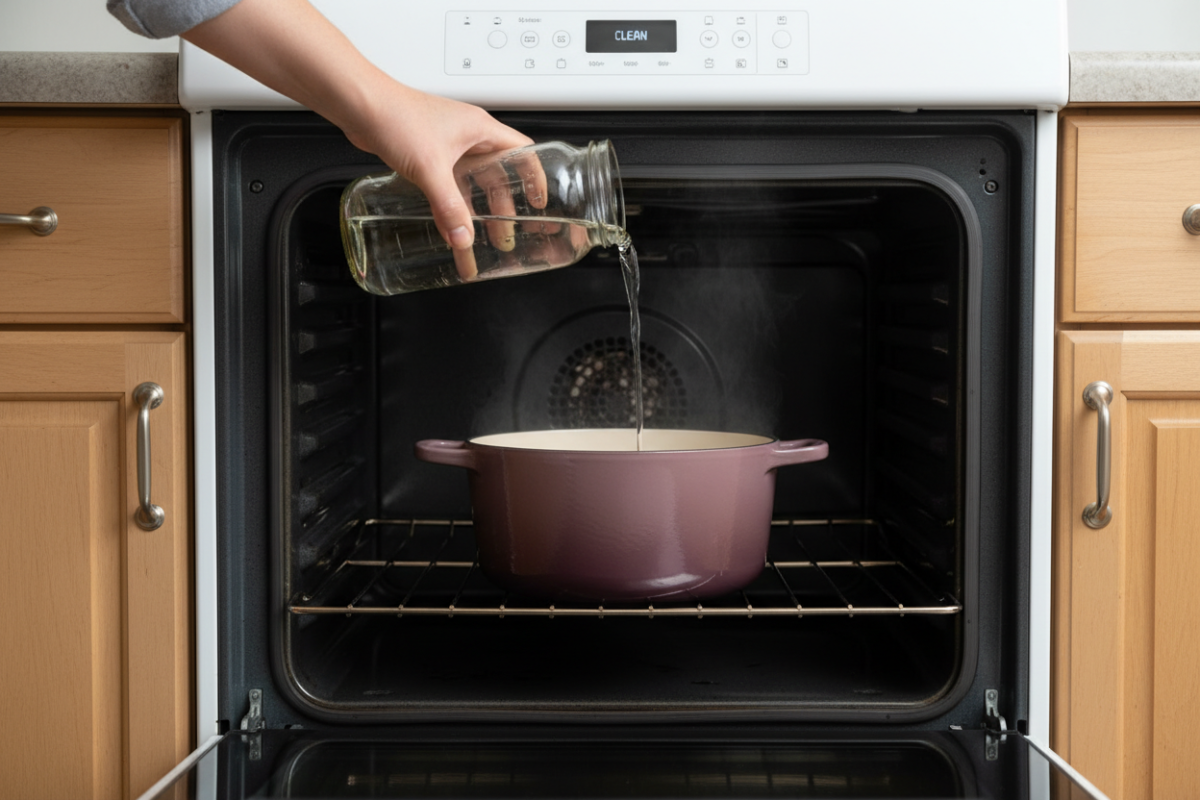
- Put 1–2 cups of distilled white vinegar into a heatproof bowl or baking dish and add about 2 cups of water. Place the bowl on a middle rack. Set the oven to about 450°F (230°C) and let it heat for 30 minutes (up to 60 minutes if the oven is especially greasy). Turn off the oven and let it cool a bit before opening.
- Carefully remove the bowl and any loose debris, then spray the interior with a 50/50 vinegar–water mix. Wipe with a sponge or microfiber cloth; rinse and repeat until surfaces look clean. Rinse cloths often and replace the solution if it gets too soiled.
Tackling stubborn, baked-on grime with a baking-soda paste
When steam alone won’t budge charred spots, this paste does most of the heavy lifting.
Mix about 1 cup baking soda with 2 tablespoons water to form a spreadable paste. Smear it over the problem areas (avoiding exposed heating elements), close the door, and let the paste sit for at least an hour—overnight for very stubborn spots. Use a damp sponge or cloth to wipe away the loosened grime, finishing with a vinegar-water spray to dissolve residual baking soda and cut any grease film.
Cleaning oven racks — soak, scrub, and shine
Racks often need the most elbow grease, but you can make them easy: pack them into a heavy-duty trash bag or a bathtub, spray with undiluted vinegar, sprinkle baking soda, then add hot water and let them soak for an hour or overnight. The fizzing action helps lift grime; follow with a scrub (an old toothbrush or non-abrasive pad works well), rinse, dry, and reinsert.
Glass door, fragile parts, and safe scrubbing tools
Glass can look grimy but is sensitive to scratching—avoid metal scouring pads. Use a damp dishwasher tablet (not a pod) as a gentle scrubber; wet it just enough to soften and scrub carefully, then wipe clean. For seals and gaskets, stick to microfiber and diluted vinegar to avoid degrading rubber over time.
Kitchen-friendly alternatives and spot cleaners you already have
If you don’t have baking soda or prefer other pantry options, a few household items also do great work: dish soap with grease-fighting surfactants (a spoonful inside the baking-soda paste improves degreasing), lemon halves dipped in salt for light abrasion, or citric acid powder mixed with hot water as a spray to break grease bonds. Each of these can complement the vinegar method depending on how messy your oven is.
Safety tips — ventilation, gloves, and oven types
Open windows or run the kitchen hood when you steam-clean; even vinegar’s smell can be strong in a closed space. Always wear rubber gloves when scrubbing to protect skin from abrasive action and hot water. For self-cleaning ovens, follow the manufacturer’s instructions—many manual cleaning methods are unnecessary or even discouraged for those models.
A maintenance plan: keep the oven clean with small habits
A little upkeep prevents massive scrubbing sessions. Wipe spills within 24 hours when possible; line the bottom drawer or place a removable tray under dishes to catch drips (don’t line the actual oven floor unless your model supports liners). Steam-cleaning once every couple of months and spot-treating spills right away will make regular deep cleans much shorter.
FAQ — quick answers to common oven-cleaning questions
Q: Can I use vinegar on enamel interiors?
A: Yes. Vinegar and baking soda are safe for most metal and enamel surfaces; avoid abrasive scrubbing that could scratch enamel.
Q: Will vinegar remove smoke odors?
A: Vinegar helps cut grease smells that hold smoke odor, but for heavy smoke you may also need to clean filters, vents, and run the oven on low with a bowl of vinegar to air-steam the space again.
Q: Is it safe to use a steam setting or “self-clean” and then add vinegar?
A: Don’t mix methods that the oven manual warns against. Use the steam/vinegar method as described for conventional cleaning; for self-clean cycles, follow manufacturer guidance.
Troubleshooting sticky, waxy, or burnt deposits
If residue resists baking-soda and vinegar, repeat the paste application and let it sit longer, or use a plastic scraper (safe for oven surfaces) to lift heavy crusts after they’ve softened. For glass with a particularly dulled film, a damp dishwasher tablet scrub is a targeted solution—finish with a vinegar wipe to remove streaks.
Final thoughts — quick, green, and effective
Cleaning your oven with vinegar is a low-cost, low-toxicity strategy that works for regular maintenance and serious grime when paired with baking soda. The approach saves money and reduces exposure to harsh chemicals while delivering kitchen-ready results. Treat the oven to a steam session, reach for the baking-soda paste for stubborn spots, and your next roast will cook in a cleaner space.