Table of Contents
You want a quick, low-cost reset for a tired-looking toilet? This guide will show you how to clean toilet bowl with vinegar the smart way — no harsh fumes, no expensive specialty products, just common kitchen staples and a little elbow grease.
You’ll get step-by-step soak-and-scrub methods for light maintenance and stubborn scale, what supplies to keep on hand, plus safe alternatives for heavy-duty disinfecting and tips to protect seals and finishes. Read on for easy routines you can use weekly, plus deeper tactics for those rings that won’t quit.
Why vinegar is a smart choice for toilet cleaning
Vinegar is acetic acid in water — that mild acidity breaks down mineral deposits, loosens limescale, and neutralizes odors without the aggressive chemicals found in many commercial cleaners. It’s cheap, easy to keep on hand, and safe for most household plumbing when used properly.
Which vinegar should you use?
Two practical choices:
- Distilled white vinegar — the everyday option for routine cleaning and light stains.
- 5% “cleaning vinegar” — a stronger version recommended when mineral deposits and heavy scale need extra muscle.
If in doubt, start with distilled white vinegar for general maintenance and reserve cleaning vinegar for the worst spots.
Supplies you’ll want on hand
- 2 cups distilled white vinegar or cleaning vinegar
- Toilet brush (firm bristles)
- Baking soda (optional, for stubborn stains)
- Rubber gloves (optional, but nice)
- Old toothbrush or small scrub brush (for under-rim grime)
- Paper towel or cloth for quick wipe of the exterior
Step-by-step: the basic vinegar method
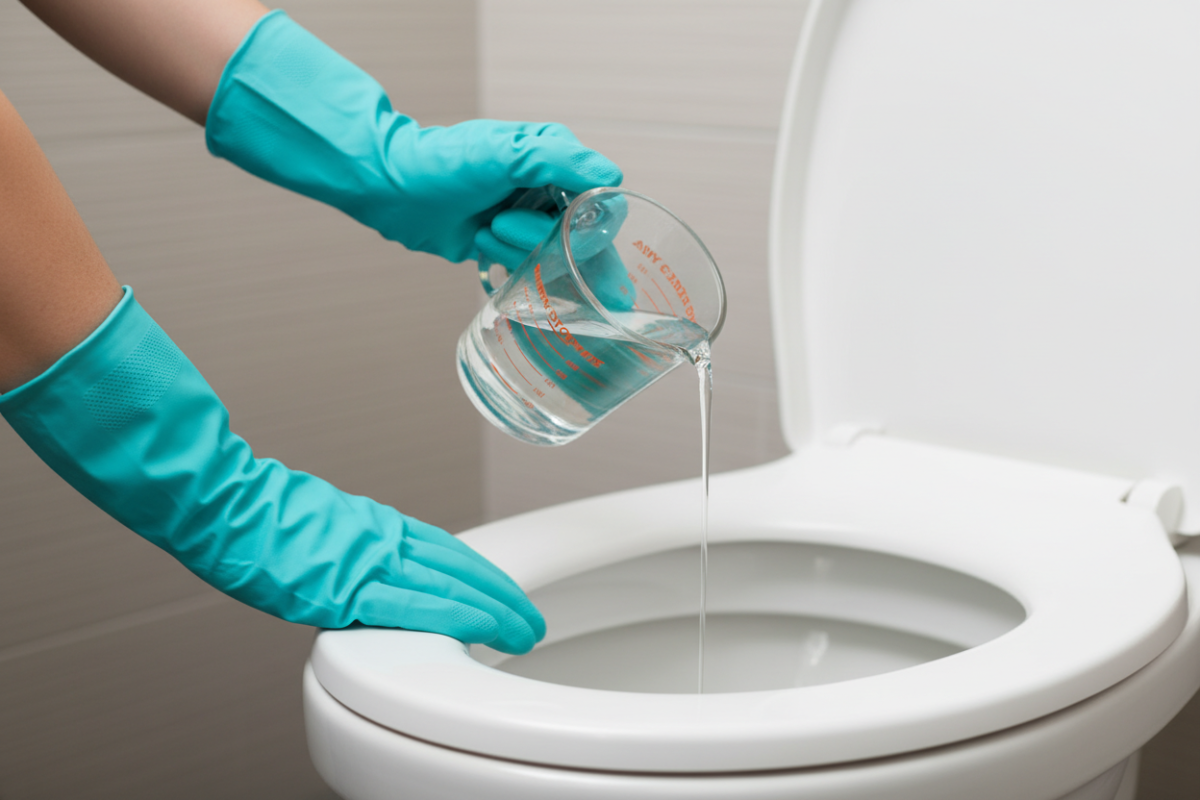
- Pour about two cups of vinegar directly into the bowl (aim for the water line).
- Let it sit. Give it at least 10 minutes for distilled vinegar, or 30–60 minutes for cleaning vinegar or heavy buildup — longer soaks help the acid work through mineral deposits.
- Scrub the bowl thoroughly with your toilet brush, paying special attention under the rim and the waterline.
- For stubborn spots, sprinkle baking soda into the bowl after soaking; the fizzing action adds gentle abrasion — then scrub again.
- Flush to rinse and admire the results.
Heavy-duty stains: three tactics that work
- Vinegar + baking soda: soak vinegar, then add baking soda and let the fizz loosen stains. Scrub and flush.
- Long soak with cleaning vinegar: for limescale or hard-water rings, use 5% cleaning vinegar and allow a 30–60 minute soak, then scrub.
- Alternative disinfecting: for mold or a deep disinfect, hydrogen peroxide is an effective alternative (pour, wait ~30 minutes, scrub, flush). Use bleach only when you need powerful disinfection, and never mix bleach with vinegar or other cleaners.
Safety notes — what not to mix
Never mix vinegar with bleach or ammonia. Mixing household acids and chlorine-containing products releases toxic gases. If you use bleach for tough disinfecting, treat it as a separate step — rinse thoroughly first, and keep separate from vinegar treatments.
Quick routine: keep your toilet happy with minimal effort
Once a week: pour a cup of vinegar into the bowl, let sit 10–30 minutes while you do other bathroom tidy-up, give a quick scrub, and flush. That little habit keeps mineral scale from building up and keeps odors at bay.
Deep-clean checklist (when you need it)
- Turn off fancy toilet features (bidet seats, electric seats) per manufacturer instructions or avoid getting cleaners on electronics.
- Use cleaning vinegar for scale; distilled white vinegar for routine cleaning.
- Scrub under rim and inside siphon jets with an old toothbrush.
- Wipe seat hinges and the exterior with a vinegar solution (half vinegar + half water) or store-bought cleaner if you prefer.
- Consider running a pumice stone gently on porcelain for very stubborn rings — only when appropriate and with care.
Eco and plumbing considerations
Vinegar is more environmentally friendly than many commercial cleaners and safe for septic systems in normal household quantities. However, concentrated cleaning vinegar is stronger — use responsibly and avoid prolonged, repeated exposure to rubber seals and certain finishes that could degrade over time.
FAQs
Q: Will vinegar disinfect my toilet?
A: Vinegar has some natural odor-neutralizing and mild antimicrobial action, but if you need full disinfection (e.g., after someone was sick), use a disinfectant labeled to kill viruses and bacteria, or follow up with hydrogen peroxide or diluted bleach (used safely and separately).
Q: Can I leave vinegar in the tank?
A: You can add a small amount of vinegar to the tank to help reduce mineral buildup, but avoid overuse and follow manufacturer guidance for toilet components — prolonged, frequent use of strong acids may affect rubber parts.
Q: How often should I deep-soak?
A: For typical households, deep-soaking (longer vinegar soak with scrubbing) every 1–2 months keeps scale manageable; weekly light vinegar treatments prevent buildup.
Final pitch: simple, effective, and wallet-friendly
Cleaning your toilet doesn’t need to be dramatic. With two cups of vinegar, a brush, and a little patience, you can remove stains, neutralize odors, and protect your plumbing — all without harsh chemicals. Try a soak tonight and see how much grime lifts with minimal effort.