Table of Contents
When we step into the shower, our primary goal is to wash away the sweat, dirt, and grime of the day. We rely on the continuous flow of warm, soothing water to leave us feeling refreshed and hygienic. But have you ever stopped to look up and inspect the source of that water? The irony of the shower is that the very fixture responsible for getting you clean can harbor an alarming amount of hidden filth. Mineral deposits, hard water stains, mold, and even potentially harmful bacteria can accumulate quietly on and inside the nozzles.
If you are looking up at your bathroom fixture right now and wondering how often to clean a showerhead, you are not alone. It is one of the most frequently overlooked chores in standard household cleaning routines. This comprehensive guide will break down exactly how frequently you need to tackle this task, why it matters so much for your health and plumbing, the warning signs that an immediate deep clean is overdue, and the most effective, safest methods to restore your fixture to pristine condition.
Why You Need to Clean Your Showerhead Regularly
Before determining the ideal cleaning schedule, it is vital to understand what exactly you are battling when you clean your shower components. The accumulation on your fixture is not just an aesthetic issue; it can impact your home’s plumbing performance and even your respiratory health.
Hard Water and Mineral Buildup (Limescale)
If you live in an area with hard water, your supply contains high levels of dissolved minerals, primarily calcium and magnesium. As water flows out of your showerhead and dries on the nozzles, it leaves these microscopic mineral deposits behind. Over weeks and months, these deposits crystallize into a tough, chalky white or yellowish crust known as limescale. Limescale is notoriously stubborn and can quickly clog the tiny rubber or silicone nozzles, forcing water to shoot out in rogue directions or drastically reducing your overall water pressure.
Bacteria and Mold Growth
Showers provide the perfect dark, damp, and warm environment that biological contaminants crave. Between uses, the interior of the showerhead remains wet. Studies have shown that uncleaned showerheads can harbor biofilms—slimy layers of bacteria. One of the most common is Mycobacterium avium, a pathogen linked to respiratory issues, particularly in individuals with compromised immune systems. When you turn on a dirty shower, the force of the water can aerosolize these bacteria, allowing you to inhale them directly into your lungs. Fungal growth, such as mold and mildew, can also thrive on the exterior faceplate, causing black or pink stains that are unsightly and unhygienic.
Reduced Water Pressure and Plumbing Strain
When the nozzles become partially or completely blocked by limescale and debris, your showerhead cannot perform at its intended flow rate. Instead of a powerful, relaxing stream, you might be left with a weak, sputtering trickle. Furthermore, the back pressure created by blocked nozzles can put unnecessary strain on the internal seals and washers of the showerhead, potentially leading to leaks or premature failure of the fixture.
So, How Often to Clean a Showerhead Exactly?
The short answer to the question of how often to clean a showerhead is that you should perform a thorough deep cleaning once a month. However, the optimal frequency can vary depending on a few specific environmental factors and your household’s daily habits.
Monthly Deep Cleaning
For the average household, taking the time to descale and disinfect the showerhead every 30 days is the perfect sweet spot. This monthly routine prevents mineral deposits from calcifying into rock-hard blockages and stops bacterial biofilms from reaching dangerous levels. By sticking to a monthly schedule, the cleaning process itself remains quick and largely effortless, as you are simply maintaining the fixture rather than trying to reverse years of neglect.
Weekly Maintenance Routine
While a deep clean is only necessary monthly, you should incorporate a brief wipe-down into your weekly bathroom cleaning routine. Using a damp microfiber cloth or a multi-purpose bathroom spray, simply wipe across the faceplate of the showerhead. If your showerhead has flexible silicone nozzles, rub your thumb across them gently to dislodge any loose, freshly formed mineral flakes before they have a chance to harden.
Exceptions: When to Clean More Frequently
You may need to increase your deep cleaning frequency to every two weeks if:
- You Have Extremely Hard Water: If you notice white scale building up on your glass shower doors or faucets within days, your showerhead will clog much faster.
- You Have a Large Household: A shower that is used three or four times a day will remain continuously damp, accelerating the growth of mold, mildew, and bacteria.
- You Are Immunocompromised: For those with asthma, allergies, or weakened immune systems, keeping the showerhead sanitized bi-weekly can minimize exposure to aerosolized pathogens.
Signs It’s Time to Clean Your Showerhead Immediately
Even if you are trying to stick to a monthly schedule, your plumbing might tell you that an intervention is needed sooner. Watch out for these undeniable signs that your fixture is crying out for a deep clean:
- Sputtering or Uneven Water Streams: If water is shooting sideways, spraying over the shower curtain, or failing to come out of certain nozzles entirely, limescale has blocked the pathways.
- A Drop in Water Pressure: A sudden or gradual loss of water pressure that is isolated only to the shower usually points to a clogged internal filter screen or severely blocked nozzles.
- Visible Chalky Buildup: If you look up and see crusty white, yellow, or green deposits clinging to the metal or plastic faceplate.
- Black Spots or Pink Slime: Dark spots indicate black mold, while a pinkish hue is usually Serratia marcescens, an airborne bacterium that thrives in wet conditions. Both require immediate sanitization.
How to Deep Clean a Showerhead: The Best Methods
The absolute best cleaner for dissolving mineral buildup naturally is distilled white vinegar. Its high acidity effortlessly breaks down calcium and magnesium deposits without the need for harsh, toxic chemicals. Here are the two most effective methods based on the type of fixture you have.
Method 1: The Vinegar Bag Method (For Fixed Showerheads)
If your showerhead is firmly attached to the wall pipe and cannot be easily unscrewed, the plastic bag method is your best course of action. It brings the soak directly to the fixture.
What You Will Need:
- Distilled white vinegar
- A sturdy plastic zip-top bag (quart or gallon size, depending on your fixture)
- A strong rubber band, zip tie, or hair tie
- An old, soft-bristled toothbrush
- A clean microfiber cloth
Step-by-Step Instructions:
- Prep the Bag: Partially fill the plastic bag with distilled white vinegar. You need enough to completely submerge the showerhead face, but not so much that it overflows when displaced by the fixture.
- Attach the Bag: Carefully lift the bag up and around the showerhead until the entire faceplate and nozzles are submerged in the vinegar.
- Secure It: Wrap the rubber band or zip tie tightly around the top of the bag and the shower pipe to hold it securely in place. Give it a gentle tug to ensure it will not slip off under the weight of the liquid.
- Let it Soak: Leave the bag in place for at least a few hours. For heavy limescale, leaving it overnight is highly recommended. (Note: If your showerhead is made of brass, gold, or nickel, do not soak it for more than 30 minutes to prevent damage to the delicate finish.)
- Scrub and Flush: Remove the bag and dump the vinegar down the drain. Turn on the shower to flush out the loosened mineral deposits from the inside out. Let the hot water run for a full minute.
- Detailing: Turn the water off. Take your old toothbrush and gently scrub the faceplate and individual nozzles to remove any lingering, softened scale.
- Final Polish: Wipe the entire fixture dry with a clean microfiber cloth to prevent immediate water spots and restore its shine.
Method 2: The Submersion Method (For Removable or Handheld Showerheads)
If you have a handheld showerhead or one that easily unscrews from the shower arm, taking it down allows for a much more thorough cleaning of the internal components.
What You Will Need:
- Distilled white vinegar
- A large bowl or bucket
- An old toothbrush
- A wrench or pliers (optional, and only if needed with a rag to prevent scratching)
- Teflon tape (plumber’s tape)
Step-by-Step Instructions:
- Remove the Showerhead: Carefully unscrew the showerhead from the hose or wall mount. If it is too tight to do by hand, wrap a cloth around the nut and gently loosen it with a wrench to avoid scratching the finish.
- Inspect the Filter Screen: Look inside the connection point of the showerhead. You will likely see a small rubber washer with a mesh filter screen. Remove this screen and rinse it under the sink tap to clear out trapped sediment, sand, or pipe debris.
- Soak the Fixture: Place the entire showerhead into a large bowl or bucket. Pour enough white vinegar into the bowl to completely submerge the fixture.
- Wait Patiently: Allow the fixture to soak for several hours or overnight (again, observing the 30-minute rule for delicate metallic finishes).
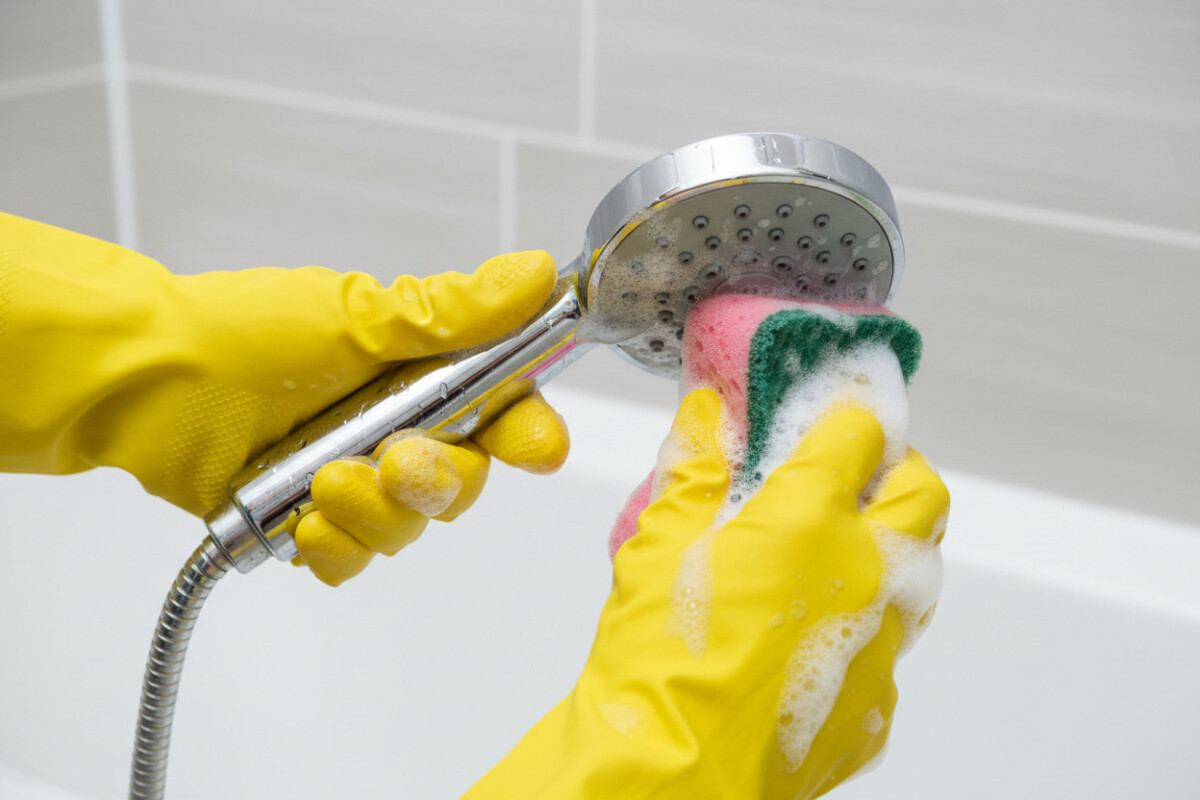
- Scrub and Rinse: Remove the fixture from the vinegar. Scrub the faceplate and nozzles with a toothbrush. Rinse the showerhead thoroughly under clean, running tap water.
- Reassemble: Place the clean filter screen and washer back into the base. Apply a fresh layer of Teflon tape to the threads of the shower pipe or hose to ensure a watertight seal, then screw the showerhead back into place.
- Flush: Run the shower for a minute or two to clear out any remaining vinegar and debris.
What to Avoid When Cleaning Your Showerhead
While keeping your showerhead clean is important, using the wrong products can cause irreversible damage to your fixture or create hazardous situations.
- Avoid Bleach: Chlorine bleach may seem like a good idea for killing bacteria, but it is highly counterproductive for showerheads. Bleach cannot dissolve limescale. Furthermore, studies have shown that using bleach on showerheads can actually cause the surviving bacteria to increase their resistance, leading to stronger biofilm growth. Bleach can also permanently ruin metal finishes.
- Avoid Hard-Bristled Brushes: Stiff scrubbing brushes, steel wool, or abrasive scouring pads will scratch chrome, stainless steel, and brushed nickel finishes. Always stick to soft-bristled toothbrushes or microfiber cloths.
- Avoid Boiling Water: Never submerge your showerhead in boiling water. Most modern showerheads contain internal plastic components, seals, and flexible silicone nozzles that will warp, melt, or degrade under extreme heat.
Tips to Keep Your Showerhead Cleaner for Longer
Once you have established how often to clean a showerhead and performed a deep clean, you can implement a few daily habits to stretch the time between deep cleaning sessions.
First, improve the ventilation in your bathroom. Always run an exhaust fan during your shower and leave it running for at least 30 minutes afterward to draw out the moisture. Reducing ambient humidity drastically slows down the growth of mold and mildew on the showerhead’s exterior.
Second, consider investing in a daily shower spray. Giving the showerhead a quick spritz after you turn off the water can prevent hard water stains from setting in. Finally, if limescale is a constant, unbeatable battle in your home, it might be time to look into installing a whole-house water softening system or a dedicated shower filter. By removing the minerals from the water before they ever reach the showerhead, you eliminate the source of the limescale entirely.
By following this guide, you guarantee a more sanitary, powerful, and relaxing shower experience every single day.