Table of Contents
If you have ever reached into the back of your kitchen cabinet only to discover that your favorite skillet has developed a dull, orange-brown crust, you might have felt a sinking sense of panic. Cast iron cookware is cherished for its unparalleled heat retention, incredible durability, and naturally non-stick surface when properly maintained. However, it has one major enemy: moisture. When moisture meets bare iron, oxidation occurs, and rust is born. But before you throw your beloved skillet into the trash, take a deep breath. Learning how to clean rust off cast iron is not only simple, but it is also a rite of passage for any home chef.
In this comprehensive guide, we will walk you through everything you need to know to clean rust off cast iron, re-season it to perfection, and keep it looking and cooking like brand new for generations to come.
Why Does Cast Iron Rust?
Understanding why your cookware rusts is the first step in preventing it. Cast iron is a porous material. Unlike stainless steel or aluminum, it does not have an inherent protective layer against the elements. The black, glossy coating you see on a well-used cast iron skillet is called “seasoning,” which is actually a layer of polymerized cooking oil baked into the iron.
When this layer of seasoning wears thin, chips away, or gets stripped off by acidic foods (like tomatoes) or harsh soaps, the raw iron is exposed. If this exposed iron comes into contact with even the slightest bit of water—whether from soaking in the sink, being put away slightly damp, or simply sitting in a humid environment—it undergoes a chemical reaction called oxidation. The result is iron oxide, commonly known as rust.
Fortunately, because cast iron is effectively one solid piece of heavy-duty metal, surface rust rarely ruins the pan permanently. Unless the rust has eaten completely through the bottom of the pan (which takes years of severe neglect), you can almost always save it.
What You Need to Restore Your Skillet
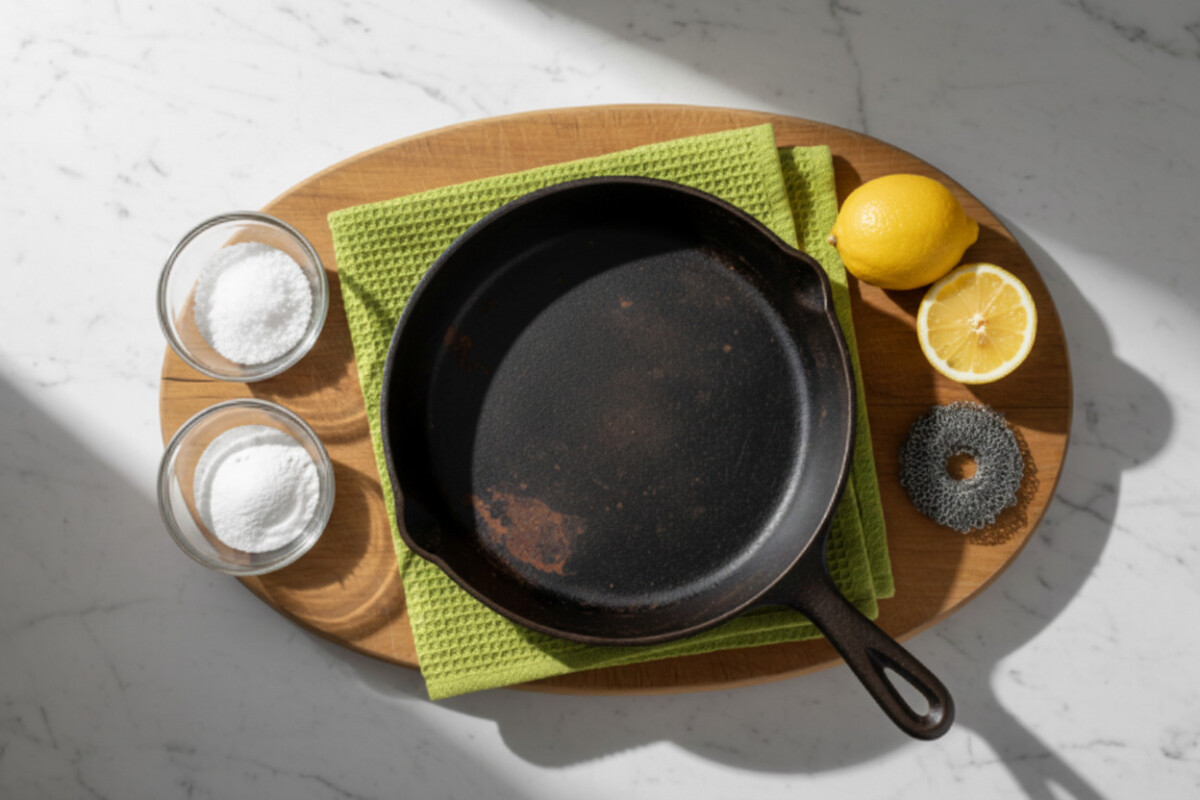
Before you begin the restoration process, gather your supplies. Having everything on hand will make the process smooth and efficient. You will need:
- Steel wool (Fine grade): The ultimate abrasive for scraping away the tough, oxidized layers.
- Coarse salt (Kosher or sea salt): A gentle abrasive perfect for lighter rust spots.
- White vinegar: A mild acid that breaks down severe rust effectively.
- Baking soda: Used to neutralize the vinegar so it doesn’t damage the iron.
- Mild dish soap: To wash away the loosened rust particles.
- Stiff-bristled brush or scouring pad: For scrubbing.
- Lint-free towels or paper towels: For thoroughly drying the pan.
- Cooking oil: For re-seasoning. Canola, grapeseed, or flaxseed oil work beautifully due to their high smoke points.
Method 1: How to Clean Light Rust Off Cast Iron
If your pan only has a few small, superficial spots of rust, you do not need to strip the entire seasoning layer. You can use a gentler approach to target the problem areas.
Step 1: The Salt and Potato Scrub
Pour a generous amount of coarse kosher salt into the dry cast iron skillet. Cut a raw potato in half. Using the flat, cut side of the potato, scrub the salt into the rusted areas in a firm, circular motion. The moisture from the potato helps the salt form an abrasive paste, which gently lifts the light rust without completely destroying the surrounding seasoning.
Step 2: Wash and Dry
Once the rust has been lifted, rinse the pan under warm water. You can use a tiny drop of mild dish soap and a sponge to ensure all the rusty residue is gone. Immediately dry the skillet with a lint-free towel. Never let it air dry, as this will invite the rust right back.
Step 3: Quick Stovetop Seasoning
Place the dry pan on the stove over medium-low heat for about five minutes to evaporate any microscopic moisture. Carefully rub a very thin layer of cooking oil over the entire surface using a paper towel. Let it heat until it just begins to smoke, then turn off the heat and let it cool.
Method 2: Tackling Moderate to Severe Rust
If your skillet looks like it was salvaged from a shipwreck, the gentle salt scrub won’t cut it. You will need to break down the heavy oxidation chemically before scrubbing. Here is the best method to clean rust off cast iron when the situation is severe.
Step 1: Create a Vinegar Soak
White vinegar contains acetic acid, which dissolves rust. Find a container large enough to submerge your cast iron piece (a large bucket, a plastic storage bin, or your kitchen sink). Mix a solution of equal parts white vinegar and water.
Step 2: Submerge the Pan
Place the rusty cast iron into the vinegar-water solution, ensuring the rusted areas are completely submerged. Do not leave it soaking for too long. Check the pan every 30 to 60 minutes. Leaving cast iron in vinegar for extended periods can cause the acid to eat away at the good, unrusted iron, resulting in irreversible pitting. Usually, one to three hours is more than enough for the acid to loosen the rust.
Step 3: Scrub the Rust Away
Once the rust easily flakes off, remove the pan from the soak. Take your fine-grade steel wool and scrub the entire surface of the skillet vigorously. You will notice the rusty water and sludge washing away, revealing the raw, silver-gray iron underneath. Keep scrubbing until every last spot of rust is gone.
Step 4: Neutralize the Acid
This is a crucial step that many people miss. Once the rust is gone, sprinkle a generous amount of baking soda all over the wet pan and scrub it in gently. Baking soda is highly alkaline and will immediately neutralize any remaining vinegar. If you skip this step, the residual acid can cause “flash rusting”—a phenomenon where the raw iron rusts immediately upon contact with the air. Rinse the pan thoroughly with warm water.
Step 5: Dry Immediately
Towel-dry the pan as thoroughly as humanly possible. To ensure it is bone dry, place it on the stovetop over medium heat or in a 200°F (93°C) oven for 10 minutes.
The Most Important Step: Re-seasoning Your Cast Iron
When you clean rust off cast iron using vinegar and steel wool, you strip the pan down to its bare, vulnerable metal. If you stop here, your pan will rust again by tomorrow. You must rebuild the protective seasoning layer immediately.
Step 1: Oil the Bare Iron
While the pan is still slightly warm (but safe to handle), pour a small amount of your chosen cooking oil (like canola or grapeseed) into the pan. Use a paper towel to rub the oil over the entire surface—inside, outside, the handle, and the bottom.
Step 2: Wipe It Off
This is the secret to a perfect seasoning: wipe the oil off. Use a clean paper towel to buff the pan until it looks completely dry. It might seem counterintuitive, but a microscopically thin layer of oil is all that remains, and that is exactly what you want. If you leave too much oil, your pan will turn out sticky and gummy instead of hard and non-stick.
Step 3: Bake the Skillet
Preheat your oven to 400°F (200°C) or 450°F (230°C), depending on the smoke point of your oil. Place a sheet of aluminum foil on the bottom rack to catch any potential drips. Place your oiled cast iron skillet upside down on the middle rack. Baking it upside down prevents oil from pooling in the cooking surface. Leave it in the oven for exactly one hour.
Step 4: Cool and Repeat
After an hour, turn the oven off and let the skillet cool completely inside the oven. For a pan that has been fully stripped of rust, you should repeat this oiling and baking process at least two to three more times. This builds up a durable, glossy, non-stick patina that protects the metal.
How to Prevent Rust in the Future
Once you have put in the hard work to clean rust off cast iron, you will want to make sure it never happens again. Prevention is much easier than restoration.
- Never Use the Dishwasher: The harsh detergents, prolonged water exposure, and intense heat of a dishwasher will strip your seasoning and rust your pan in a single cycle. Always wash by hand.
- Dry on the Stove: Towel drying is good, but stovetop drying is better. After washing your pan, place it on the stove over medium-low heat for a few minutes to evaporate all moisture.
- Oil After Every Use: While the pan is drying on the stove, rub a tiny drop of oil over the interior cooking surface with a paper towel. This reinforces the seasoning layer and acts as a moisture barrier.
- Avoid Long Soaks: Never leave your skillet soaking in a sink full of soapy water. If you have stuck-on food, use a plastic scraper or simmer a little water in the pan on the stove for a few minutes to loosen the debris, then wash immediately.
- Store in a Dry Place: Store your cookware in a dry, well-ventilated cabinet. If you stack your cast iron pans, place a paper towel or a coffee filter between them to absorb ambient moisture and prevent scratches.
Conclusion
A rusted cast iron skillet is not a lost cause; it is simply a project waiting to happen. Cast iron is incredibly resilient, forgiving, and designed to last for generations. By understanding how to properly clean rust off cast iron using basic household supplies like coarse salt, steel wool, and vinegar, you can rescue even the most neglected cookware. Remember that the key to a lifetime of flawless cooking lies not just in removing the rust, but in meticulously rebuilding the seasoning layer and practicing proper daily maintenance.