Table of Contents
Kitchen upgrades look amazing when they are new.
That is the trap.
A feature can feel brilliant in the showroom, inspiring in a mood board, and completely perfect in a Pinterest save. Then real life moves in. Cooking starts happening. Grease appears. Dust settles. Kids, pets, guests, and everyday habits get involved. Suddenly that “dream” detail becomes the thing that steals time, causes frustration, or quietly makes the kitchen harder to live with.
That is why this topic matters so much.
A kitchen is not supposed to be beautiful for a day. It is supposed to work for years. It needs to survive mess, humidity, repeated use, and all the ordinary little routines that make a house feel like home.
And once you see kitchens through that lens, a lot of popular features start to look less exciting.
Some of them are genuinely lovely. Some are fine in the right home. But some sound better than they function. Some are expensive to maintain. Some are inconvenient. Some look elegant on day one and become annoying by month six.
So instead of thinking only about what looks good, it helps to think about what will still feel good after thousands of meals, cleanups, and busy mornings.
That is where regrets usually begin.
Below are the kitchen features homeowners often wish they had reconsidered before installing. Not because they are always bad in every home, but because they are easy to romanticize and harder to live with.
1. Open Shelving
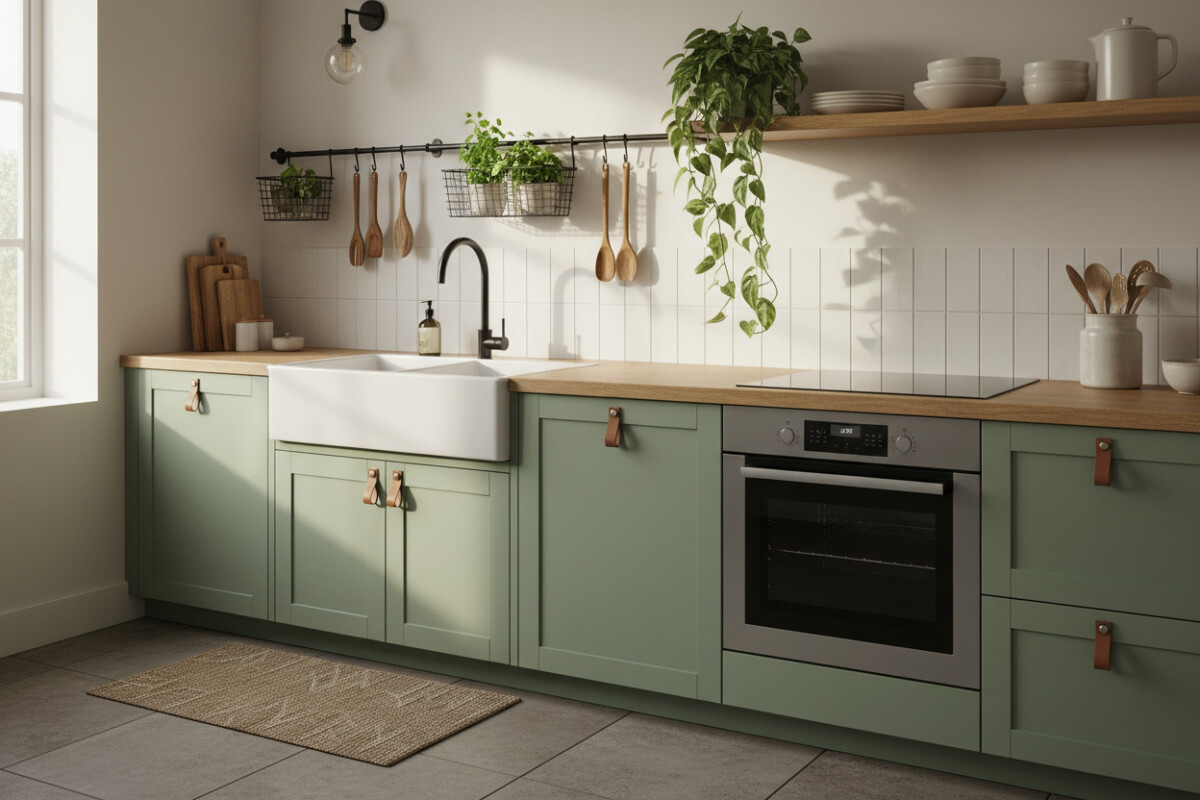
Open shelving is one of those features that looks effortless when it is styled well.
A few ceramic bowls. A stack of matching mugs. Some neutral kitchenware. Everything looks airy, warm, and editorial.
The problem is that real kitchens do not stay styled.
They collect dust. They collect grease. They collect visual clutter. Every plate, mug, and jar becomes part of the room whether you want it to or not.
What starts as a charming design feature can slowly become a maintenance chore. You end up cleaning the objects on the shelf more often than the objects in the cabinet. And if you are someone who actually cooks a lot, open shelving can start to feel less like a design choice and more like a daily reminder to tidy up.
It is beautiful when done carefully, but it is rarely low-maintenance.
2. A Pot Filler That Never Gets Used
Pot fillers are one of the most tempting luxury additions.
They look impressive. They make the kitchen feel upscale. They give the impression of chef-level convenience.
But many homeowners discover that the reality is far less dramatic.
If the pot filler is only placed over one area, it may not actually save much effort. If the pot is heavy, you still need to carry it. If you rarely cook large pots of pasta or soup, the feature gets used so infrequently that it barely feels worth the cost.
And there is another issue people do not always think about: more plumbing means more complexity. More things to install. More things to maintain. More things that can potentially become annoying later.
A pot filler can be lovely in the right setup, but for many homes, it becomes one of those “sounds great in theory” features.
3. Extremely Trendy Cabinet Colors
Cabinet color is one of the most personal decisions in a kitchen.
And that is exactly why regret happens so often.
A color may look fresh, unique, and stylish right now. But bold trends age quickly. The same shade that feels exciting today can feel dated far sooner than expected.
This is especially true when the color is tied to a specific design moment. What looked edgy in the first year can start to feel limiting once your style changes or your surrounding decor shifts.
There is nothing wrong with personality in a kitchen. In fact, kitchens need personality. But if the cabinets are too trend-specific, they can box you in later.
Many homeowners eventually wish they had chosen something a little more timeless, a little more flexible, and easier to live with long-term.
4. Glass Cabinet Doors
Glass cabinet doors can look elegant and light.
They can also reveal every mismatch, every stack of random plates, and every item you did not mean to put on display.
That is the thing about glass fronts: they demand order. They are not forgiving. They are not good at hiding the real-life version of a kitchen.
If the inside of the cabinet is neat, they can be lovely. But if you are the type of person who stores everyday things wherever they fit, glass fronts can quickly become stressful.
They also mean more cleaning. Fingerprints show up easily. Dust shows up easily. The contents inside become part of the visual design whether you like it or not.
A lot of people love the look in theory and then get tired of maintaining the illusion in practice.
5. High-Maintenance Countertops
Some countertop materials are gorgeous.
That is the best and most frustrating thing about them.
They might be sensitive to stains, scratches, heat, or etching. They may require sealing or special care. They may look luxurious while quietly demanding far more attention than a busy household wants to give.
And the regret often does not happen immediately. It shows up after months of actual use. A spill leaves a mark. A cutting mistake leaves a scratch. A hot pan becomes a problem. A cleaner that seemed harmless suddenly was not.
A countertop should support the kitchen, not turn every meal into a risk calculation.
That is why so many homeowners later wish they had chosen something more practical, even if it felt a little less glamorous at first.
6. Too Much White
White kitchens can look bright, calm, and beautiful.
But too much white can also be unforgiving.
It shows every speck. Every drip. Every fingerprint. Every bit of sauce that landed in the wrong place. And if the room does not have enough warmth or contrast, it can start to feel sterile instead of fresh.
The idea of a crisp white kitchen is appealing because it feels clean in a visual sense. In actual daily use, it can become exhausting to keep looking pristine.
A little white goes a long way. But an all-white kitchen often asks for more maintenance than people expect, especially in a home that gets used heavily.
7. Under-Cabinet Lighting That Is Too Bright or Too Cool
Good lighting matters. Bad lighting can ruin a kitchen.
But under-cabinet lighting can go wrong in subtle ways.
Too bright, and the kitchen feels harsh. Too cool, and the room loses warmth. Too dim, and the whole point of the feature disappears. It is one of those details that sounds easy until you live with it every day.
Some homeowners regret installing lighting that looked amazing at night but felt annoying during real use. Others find that the glow creates an atmosphere they liked in a showroom but not in an actual family kitchen.
Lighting should make the kitchen easier to use, not just more dramatic.
8. Oversized Islands
A large island can be wonderful.
Until it becomes too large.
Then it blocks movement, dominates the room, and creates a kind of awkwardness that is hard to ignore. A kitchen island should support cooking, seating, and traffic flow. If it takes over the entire room, it stops feeling useful and starts feeling bulky.
This is a common regret in open-plan homes, where bigger seems automatically better. But a giant island can make the space harder to navigate, especially if more than one person uses the kitchen at once.
It can also create the wrong proportions. Instead of looking like a smart central feature, it ends up feeling like a piece of furniture that was scaled up too far.
9. Deep, Open Drawers for Everything
Deep drawers are useful.
Too many deep drawers, though, can become chaos with a lid.
It is easy to imagine them as the perfect storage solution. Put everything in a big drawer. Roll it out. Done.
But if the drawer has no internal structure, things quickly become a jumble. Pots stack badly. Lids hide. Small items disappear at the bottom. You end up digging through a deep, crowded drawer just to find one useful thing.
The idea is excellent. The execution often depends on whether the drawer is actually organized in a way that supports daily life.
Without that, it can become a large, expensive mess drawer.
10. Fancy Faucets With Too Many Features
A kitchen faucet should be easy to use.
That sounds obvious until you meet one with too many functions.
Pull-down sprayers, touch controls, extra modes, unusual handles, complicated switches, sensors that react unpredictably. The more features a faucet has, the more there is to go wrong or feel annoying.
Many homeowners realize too late that what they wanted was not a futuristic faucet. They wanted a reliable one.
One that turns on easily. One that rinses well. One that does not require a learning curve every time someone wants to wash a dish.
A beautiful faucet is great. An overcomplicated faucet can become one more thing to think about.
11. Too Many Upper Cabinets
Storage is important, but upper cabinets are not automatically the answer to every storage problem.
Too many of them can make the kitchen feel heavy, closed in, and visually crowded. They can also create awkward reach zones, especially if the cabinets are tall or placed too high.
What seems like “more storage” can actually become “more upper clutter.” Items get pushed into hard-to-reach corners. Useful things disappear. And the kitchen starts feeling less open than it should.
Sometimes homeowners later wish they had used a lighter layout with a better balance between closed storage and breathing room.
12. Decorative Tile That Is Hard to Clean
A backsplash can be one of the most beautiful parts of a kitchen.
It can also be one of the easiest places to regret a design choice.
Highly textured tile, tiny grout lines, unusual shapes, or finishes that trap grease can look amazing on day one and become annoying very quickly. Kitchens are messy. Backsplashes live right in the splash zone.
So if a tile is difficult to wipe down, it may not matter how pretty it looked in the showroom. You will notice the cleanup every single week.
Many homeowners end up wishing they had chosen a simpler surface that still looked good but did not ask for so much maintenance.
13. Appliance Garages
The idea is clever.
Hide the toaster. Hide the blender. Hide the coffee maker. Keep the counters clean.
In practice, appliance garages often become awkward little catchall zones. They can be hard to access. They may not fit appliances as well as expected. They can feel bulky inside the cabinetry. And if the door or lift mechanism is annoying, the whole feature loses its appeal.
What was supposed to create convenience sometimes becomes one more place where things get shoved out of sight.
And anything that hides clutter without solving it usually ends up feeling less useful over time.
14. Tiny Sinks
Small sinks can look sleek, compact, and tidy.
But kitchen life is not always tiny.
A sink needs to handle dishes, rinsing, prep cleanup, and sometimes bigger pots and pans. When the sink is too small, every task becomes more awkward than it should be.
Water splashes more easily. Washing large items feels cramped. Soaking pans becomes annoying. And when the sink is too shallow as well as too small, the whole experience becomes messy fast.
A lot of homeowners do not realize how much they rely on the sink until they have one that makes every task harder.
15. A Layout That Looks Better Than It Works
This is the biggest regret of all, and the hardest one to identify before installation.
Sometimes the whole kitchen is beautiful. Every finish is right. The materials are expensive. The colors work. The photos look fantastic.
And yet the room does not function well.
Maybe the prep space is awkward. Maybe the refrigerator opens into a bad path. Maybe the stove is too far from the sink. Maybe there is not enough landing space where it matters. Maybe the layout was chosen because it looked polished, not because it supported real cooking.
That is the regret people feel most deeply.
Because unlike a single feature, a bad layout affects every day. It changes how the kitchen feels, how you move, how you cook, and how much effort everything requires.
It is the difference between a kitchen that looks stunning and a kitchen that actually supports life.
What These Regrets Have in Common
The interesting thing about all these features is that most of them were not bad ideas in a vacuum.
They were bad ideas for the way a real household actually lives.
That is the key.
A kitchen is not just a design project. It is a working room. It has to survive breakfast rushes, late-night snacks, spills, hot pans, grocery unloading, homework sessions, coffee refills, and all the small chaos that happens in between.
If a feature makes the kitchen harder to clean, harder to use, harder to navigate, or harder to maintain, it will eventually feel like regret.
The Better Question to Ask Before Installing Anything
Instead of asking, “Will this look good?”
Try asking:
Will this still feel good after a year of everyday use?
That question changes everything.
It forces you to think about maintenance, traffic flow, cleaning, storage, and convenience. It pushes you toward choices that age well instead of choices that only shine in the first few weeks.
And that is usually where the smartest kitchen decisions come from.
Final Thoughts
Kitchen regrets do not usually happen because homeowners made one huge mistake.
They happen because a series of small, exciting choices were made without enough attention to daily life.
That is why the most beautiful kitchens are not always the most loved ones. The best kitchens are the ones that make routine life easier. The ones that still feel good after the novelty wears off. The ones that do not fight back when real cooking starts happening.
Trendy features come and go.
Practicality lasts.
And when you are deciding what belongs in your kitchen, that is the difference that matters most.