Table of Contents
If you are an avid gardener or a dedicated houseplant parent, you are probably always on the lookout for safe, affordable, and effective ways to keep your plants thriving. Walk through any garden center, and you will be met with shelves upon shelves of expensive chemical fertilizers, harsh pesticides, and synthetic weed killers. While these products may promise quick results, they can often harm the delicate ecosystem of your garden, introduce toxins to your home, and cost a small fortune over time. But what if the secret to a healthier, more vibrant garden was already sitting in your kitchen pantry?
Using baking soda for plants is one of the best-kept secrets in organic gardening. Known scientifically as sodium bicarbonate, this humble, inexpensive white powder has a wide array of uses that can transform how you care for your indoor and outdoor greenery. From preventing devastating fungal diseases to tackling stubborn garden pests, baking soda is a versatile, eco-friendly tool every gardener should have in their arsenal.
In this comprehensive guide, we will explore exactly how and why using baking soda for plants works, step-by-step recipes for DIY garden sprays, and crucial safety tips to ensure you don’t accidentally harm your beloved foliage.
Why You Should Be Using Baking Soda for Plants
Sodium bicarbonate is a naturally occurring alkaline compound. Its chemical properties make it mildly abrasive, an excellent odor neutralizer, and a powerful disruptor of fungal growth. When introduced to the garden environment, these properties translate into incredibly useful applications.
One of the main reasons experts advocate for using baking soda for plants is its non-toxic nature. When used correctly and in the right dilutions, it poses very little threat to humans, pets, or beneficial pollinators like bees and butterflies. Furthermore, it is completely biodegradable, meaning it won’t leave long-lasting, harmful residues in your soil or local waterways.
8 Brilliant Ways to Use Baking Soda in the Garden
Whether you are battling a fungal outbreak on your prize-winning roses or looking for a way to naturally boost your tomato harvest, baking soda can help. Here are eight highly effective ways to incorporate it into your gardening routine.
1. Prevent and Treat Powdery Mildew and Black Spot
Fungal diseases like powdery mildew—which looks like a dusting of white flour on your plant’s leaves—and black spot can quickly devastate zinnias, cucumbers, roses, and squash. Fungi thrive in acidic environments, and because baking soda is highly alkaline, it alters the pH on the surface of the leaf, creating a hostile environment where fungal spores cannot survive or germinate.
How to make a baking soda fungicide spray:
- Mix 1 tablespoon of baking soda with 1 gallon of water.
- Add 1 teaspoon of liquid dish soap or horticultural oil (this acts as a “sticker” to help the solution adhere to the leaves).
- Mix well and pour into a spray bottle.
- Spray the upper and lower surfaces of the affected leaves. Apply every 7 to 14 days as a preventative measure or immediately after noticing fungal growth.
2. Create a Non-Toxic Weed Killer for Walkways
Weeds popping up through the cracks in your driveway, patio, or garden pathways can be a frustrating eyesore. Instead of reaching for a chemical herbicide that could run off into your lawn, reach for the baking soda. The high sodium concentration will draw water out of the weed’s plant cells, causing it to dehydrate, shrivel, and die.
How to apply: Simply moisten the weeds with a hose, and then sprinkle a thick layer of dry baking soda directly onto the weed and into the crack. Note: Only use this method in isolated areas like walkways, as the sodium can kill surrounding desirable plants and grass if applied indiscriminately.
3. Control Cabbage Worms and Other Garden Pests
If you are growing members of the Brassica family—like cabbage, kale, broccoli, or cauliflower—you are likely familiar with the destructive nature of cabbage worms. These voracious eaters can quickly turn your beautiful leafy greens into Swiss cheese.
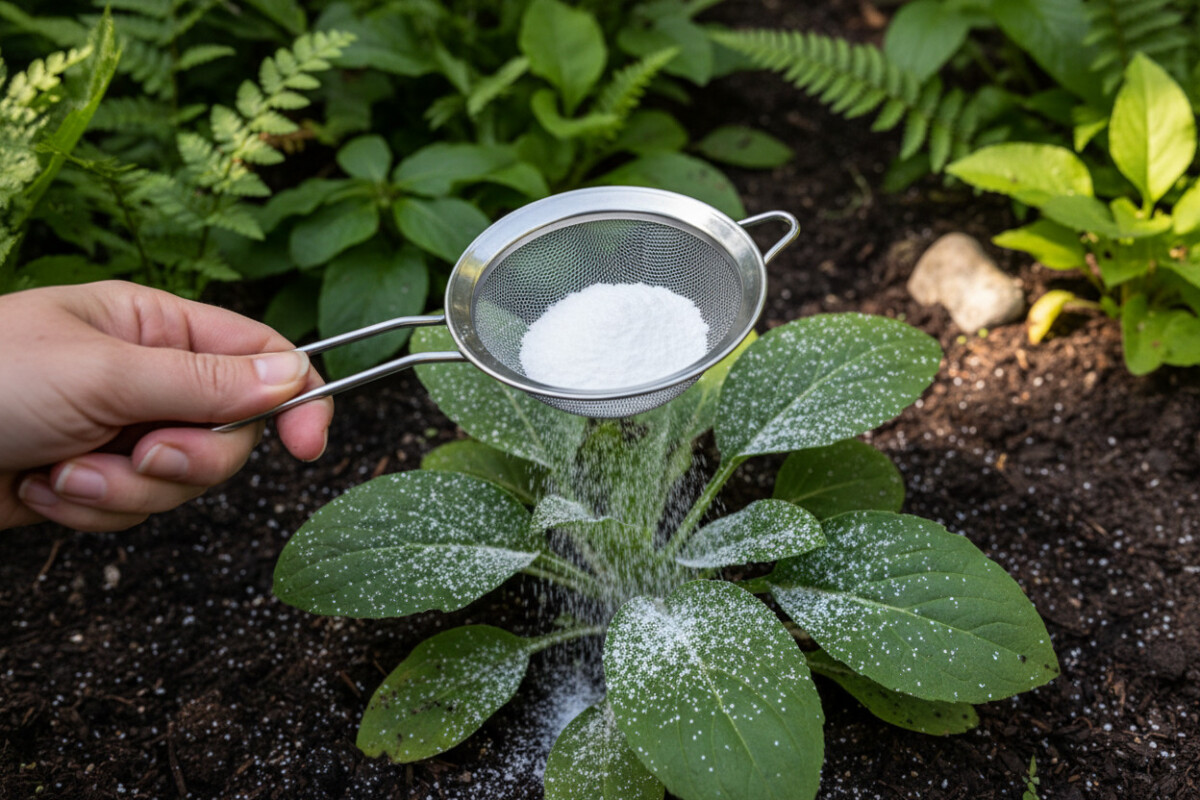
How to make a pest deterrent dust: Mix equal parts baking soda and white flour. Using a shaker or a fine sieve, lightly dust the mixture over the leaves of your susceptible plants. When the caterpillars ingest the mixture, the baking soda reacts in their digestive tracts, effectively eliminating the pests without the need for toxic insecticides.
4. Perform a DIY Soil pH Test
Understanding your soil’s pH is critical for plant health, as different plants require different acidity levels to properly absorb nutrients. While you can buy a testing kit from the store, you can also perform a quick, DIY test at home to see if your soil is highly acidic.
How to test your soil: Scoop a small amount of soil from your garden into a cup and add a little distilled water to create a muddy paste. Sprinkle a generous amount of baking soda on top of the mud. If the mixture bubbles and fizzes, your soil is highly acidic (below a pH of 5.0).
5. Clean Houseplant Leaves to Boost Photosynthesis
Indoor plants naturally accumulate dust over time. A thick layer of dust not only looks unsightly but also blocks sunlight, inhibiting the plant’s ability to photosynthesize effectively.
How to clean leaves: Mix half a teaspoon of baking soda into a quart of warm water. Dip a soft, microfiber cloth into the solution, wring it out well, and gently wipe down the leaves of your houseplants. The mild alkalinity helps to effortlessly cut through grime, leaving the leaves clean, glossy, and ready to soak up the sun.
6. Grow Sweeter, Tastier Tomatoes
While the science is somewhat debated among horticulturists, many veteran gardeners swear by using baking soda for plants to yield sweeter tomatoes. Tomatoes grown in highly acidic soil tend to be more tart. By lowering the acidity of the soil immediately surrounding the roots, you may encourage a sweeter, less acidic fruit.
How to apply: Lightly sprinkle a small amount of dry baking soda directly onto the soil around the base of your tomato plants once they begin to flower. Be careful not to let the powder touch the stems or leaves of the plant.
7. Deodorize Smelly Compost Bins
Composting is an excellent way to recycle kitchen scraps and build nutrient-dense soil, but sometimes compost bins can develop a sour, unpleasant odor—especially during the hot summer months. Because baking soda is a renowned odor neutralizer, it can help tame the stench.
How to apply: Simply sprinkle a handful of baking soda over the top of your compost pile to help absorb and neutralize foul smells. However, use it sparingly so you do not drastically alter the pH of your entire compost pile.
8. Prolong the Life of Cut Flowers
There is nothing quite like a fresh bouquet of cut flowers to brighten up a room, but they often wilt far too quickly. You can extend their lifespan with a simple pantry trick.
How to apply: Add a teaspoon of baking soda to the water in your flower vase. The baking soda helps to keep the water clean and free of the bacteria that commonly cause stems to rot and flowers to prematurely wilt.
Important Do’s and Don’ts When Using Baking Soda for Plants
While using baking soda for plants is generally safe and highly effective, it is not without its risks. Because baking soda contains sodium, overusing it can lead to sodium toxicity in your soil, which prevents plants from absorbing vital nutrients like calcium and magnesium. To ensure you do not inadvertently damage your garden, follow these crucial guidelines:
- DO test on a small area first: Before dousing an entire plant in a baking soda spray, test it on one or two leaves. Wait 48 hours to ensure there is no adverse reaction or leaf burn.
- DO measure carefully: Always adhere to recommended dilution rates. A stronger mixture is not better; a concentration of baking soda that is too high can easily scorch plant foliage.
- DO apply at the right time of day: Never spray baking soda solutions onto your plants during the heat of the day or when they are in direct, intense sunlight. The combination of the spray and the harsh sun can cause severe sunscald. Aim to spray in the early morning or late evening.
- DON’T overuse it: Use baking soda treatments sparingly and only when necessary. Repeated, heavy applications can cause a buildup of salts in the soil, which will ultimately stunt plant growth and burn root systems.
- DON’T apply to drought-stressed plants: If your plants are severely dehydrated, hold off on applying any foliar sprays, as stressed plants are much more susceptible to chemical and salt burn. Water them deeply and wait until they recover before treating them.
Frequently Asked Questions About Baking Soda and Plant Care
Can baking soda kill my plants?
Yes, if used incorrectly. If you apply baking soda in a high concentration or allow it to heavily build up in the soil, the excess sodium can dehydrate the plant cells, burn the leaves, and destroy the root system. Always stick to highly diluted recipes and use it sparingly.
Can I mix baking soda with vinegar for my plants?
While mixing baking soda and vinegar creates a fun, fizzy chemical reaction (thanks to the release of carbon dioxide), it is not recommended for foliar sprays. The acidic vinegar and alkaline baking soda neutralize each other, leaving behind mostly water and a small amount of sodium acetate, rendering the fungicidal properties of the baking soda completely useless.
Is baking soda safe for all plants?
Most plants tolerate diluted baking soda sprays well, but some thin-leaved or highly sensitive plants (like certain ferns or orchids) might react poorly. This is why conducting a patch test on a single leaf is a non-negotiable step before full application.
Conclusion
A thriving, beautiful garden doesn’t always require a trip to the expensive garden center. By harnessing the power of simple, household ingredients, you can protect your foliage from diseases, deter hungry pests, and keep your indoor and outdoor greenery looking its absolute best. When you follow the proper dilutions and safety tips, using baking soda for plants is a brilliant, budget-friendly, and environmentally conscious strategy that will elevate your gardening game for years to come.