Table of Contents
As the crisp autumn air gives way to the freezing temperatures of winter, homeowners everywhere face a familiar seasonal dilemma. You want to keep your living space comfortably warm and cozy, but you also dread the skyrocketing utility bills that inevitably arrive in the mail. Striking the perfect balance between comfort and energy efficiency can feel like walking a tightrope. If you crank the heat up too high, your furnace works overtime and drains your wallet. If you keep it too low, you might find yourself shivering under blankets in your own living room.
So, what is the golden rule for winter heating? Finding the best thermostat setting for winter is the key to maintaining a comfortable home environment while keeping your energy costs strictly under control. In this comprehensive guide, we will explore the optimal temperatures for different times of the day, share expert tips on how to stay warm without relying solely on your furnace, and debunk some common heating myths. By the end of this article, you will be equipped with all the knowledge you need to optimize your home’s heating strategy this winter.
What Is the Best Thermostat Setting for Winter?
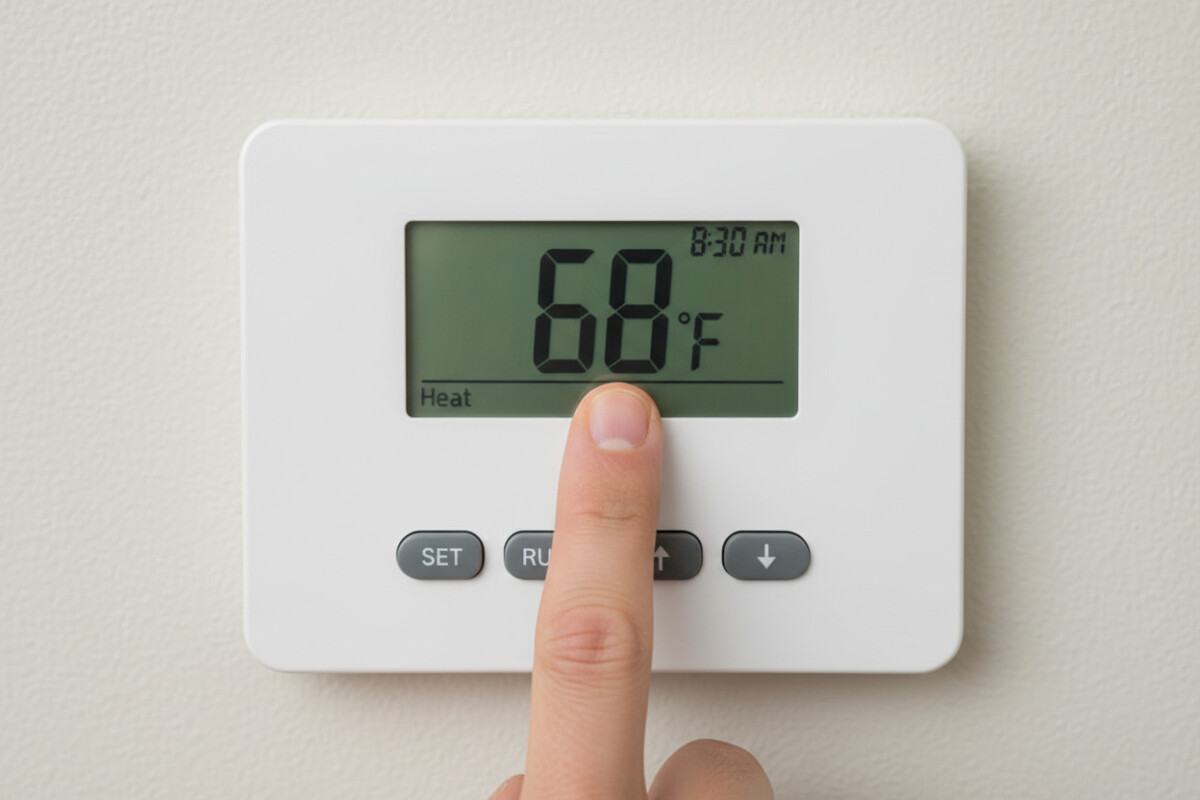
When it comes to the ideal indoor temperature during the colder months, energy experts and the U.S. Department of Energy (DOE) are largely in agreement. The best thermostat setting for winter when you are at home and awake is 68 degrees Fahrenheit (20 degrees Celsius).
While 68°F might initially sound a bit chilly to those who are used to keeping their homes in the low-to-mid 70s, it is widely considered the sweet spot for maximizing energy efficiency without sacrificing basic comfort. The science behind this recommendation is based on the laws of thermodynamics. In winter, your home naturally loses heat to the colder outdoor environment through windows, doors, walls, and the roof. The rate at which this heat loss occurs depends heavily on the temperature difference between the inside and the outside of your home.
By keeping your indoor temperature at a moderate 68°F rather than a toasty 72°F or higher, you reduce the temperature differential. A smaller difference means your home loses heat more slowly, which in turn means your heating system doesn’t have to cycle on as frequently or work as hard to maintain the target temperature. Ultimately, this reduces unnecessary strain on your HVAC system, extends its lifespan, and most importantly, keeps your monthly energy bills manageable.
Ideal Thermostat Settings for Different Times of the Day
While 68°F is the standard recommendation for daytime hours when you are active around the house, keeping your thermostat locked at one single temperature 24/7 is not the most efficient way to heat your home. To truly maximize your savings, you should adopt a dynamic heating schedule that aligns with your daily routine.
When You Are Asleep
There is no need to keep your home fully heated while everyone is tucked under thick blankets and comforters. In fact, medical professionals and sleep experts suggest that a cooler room actually promotes deeper, more restorative sleep. For nighttime, the recommended thermostat setting is between 60°F and 65°F (15°C to 18°C). Lowering the temperature while you sleep can help you slash your heating bills significantly over the course of a long winter, and you will likely wake up feeling more refreshed.
When You Are Away at Work or School
Why pay to heat an empty house? If your home is going to be unoccupied for eight hours or more during the day, you should dial the thermostat back. Turning the temperature down by 7 to 10 degrees from your usual 68°F setting—bringing it down to about 58°F to 61°F—can prevent massive energy waste. You can simply turn the heat back up to your preferred comfort level when you return home.
When You Are on Vacation
If you are escaping the winter cold for a tropical getaway or visiting family for the holidays, you will want to lower your thermostat even further. However, you must be careful not to turn the heat off completely. To prevent your internal plumbing from freezing and bursting, which can cause catastrophic water damage to your property, never set your thermostat lower than 50°F to 55°F (10°C to 13°C) when you are away on winter vacation.
How Much Money Can You Save by Adjusting Your Thermostat?
You might be wondering if constantly adjusting the temperature is truly worth the effort. The short answer is yes. According to the U.S. Department of Energy, you can save as much as 1% on your annual heating bill for every single degree you lower your thermostat, provided that the setback lasts for at least eight hours a day.
If you drop your thermostat by 7 to 10 degrees while you sleep and while you are at work, you could realistically slash your overall winter heating costs by up to 10%. Over the span of a few months, those savings easily add up to hundreds of dollars—money that could be better spent on holiday gifts, a winter vacation, or simply saved for a rainy day. Furthermore, using less energy reduces your household’s carbon footprint, making it a win for both your wallet and the environment.
Tips to Stay Warm Without Blasting the Heat
Transitioning to the best thermostat setting for winter might require a brief adjustment period. If 68°F feels a little too brisk at first, there are plenty of practical, cost-effective ways to warm yourself up without inching the thermostat dial higher.
Dress for the Season
The easiest way to tolerate a cooler home is to dress appropriately. Swap out your lightweight summer loungewear for thick, cozy sweaters, thermal leggings, and wool socks. Wearing comfortable layers traps your body heat close to your skin. Don’t forget a good pair of insulated slippers—keeping your feet warm goes a long way in making your entire body feel comfortable.
Utilize Window Treatments Strategically
The sun is a powerful, entirely free source of thermal energy. During the daytime, throw open your curtains, blinds, and drapes on any south-facing windows to allow natural sunlight to stream in and heat your rooms. As soon as the sun begins to set and the temperature drops, close all your window coverings tightly. Heavy, insulated thermal curtains can act as an extra barrier against drafts and prevent the accumulated heat from escaping through the cold glass.
Reverse Your Ceiling Fans
Ceiling fans aren’t just for cooling you down in July. Most ceiling fans have a small toggle switch on the base of the motor that allows you to reverse the direction of the blades. In the winter, set your fan to rotate clockwise at a low speed. Because hot air naturally rises, it tends to get trapped near your ceiling. A clockwise rotation creates a gentle updraft that forces the trapped warm air down along the walls and back into your living space, making the room feel noticeably warmer.
Seal Leaks and Drafts
Your heating system will fight a losing battle if the warm air it produces is constantly seeping out through gaps and cracks. Take a weekend to inspect your home for drafts, paying special attention to window frames, exterior doors, attics, and basements. Apply weatherstripping to the moving parts of doors and windows, and use caulk to seal any stationary gaps. You can also place draft stoppers (or rolled-up towels) at the bottom of exterior doors to keep the freezing wind out.
Maintain Your HVAC System
A neglected furnace has to work much harder to push heated air through a clogged filter. To ensure your system is running at peak efficiency, check your HVAC air filters once a month and replace them when they are dirty. Additionally, it is highly recommended to schedule an annual professional tune-up for your heating system before the heavy winter weather hits. A technician can clean the internal components, check for safety hazards, and ensure your furnace is capable of maintaining the optimal temperature effortlessly.
The Magic of Programmable and Smart Thermostats
Manually adjusting your thermostat several times a day can be tedious, and it is incredibly easy to forget to turn the heat down before rushing out the door. This is where modern technology comes to the rescue. Upgrading your manual thermostat is one of the smartest investments you can make for your home’s energy efficiency.
A standard programmable thermostat allows you to pre-set a weekly schedule. You can program it to automatically drop the temperature at 10:00 PM when you go to bed, and have it start warming the house back up at 6:00 AM so you don’t have to wake up to freezing floors.
Smart thermostats take this convenience to the next level. These intuitive devices connect to your home’s Wi-Fi network and can be controlled remotely via a smartphone app. Many smart thermostats feature geofencing technology, meaning they use your phone’s location to detect when you leave the house and automatically lower the heat. They also learn your schedule and preferences over time, generating customized energy reports and fine-tuning your home’s climate control without you having to lift a finger.
Special Considerations for Your Winter Heating Strategy
While the 68-degree rule is an excellent baseline, the best thermostat setting for winter can vary depending on the unique circumstances of your household.
Homes with Pets
Dogs and cats generally have higher natural body temperatures than humans and are equipped with fur coats, meaning they handle cooler indoor temperatures quite well. Most healthy pets are perfectly comfortable in a house set between 60°F and 68°F. However, if you have a hairless breed, a very young puppy, or an elderly pet with arthritis, you may need to provide them with heated pet beds or slightly raise the ambient temperature.
Vulnerable Individuals
If your home includes infants, elderly family members, or individuals with compromised immune systems or circulatory issues, 68°F might be too cold to maintain their health and comfort safely. For these vulnerable groups, a steady temperature of 70°F to 72°F is often recommended.
Houseplants
If you are an avid indoor gardener with a collection of tropical houseplants, beware of dropping your temperature too low. Most common houseplants thrive in temperatures between 65°F and 75°F. Dropping your home’s temperature into the 50s while you are away can cause tropical plants to drop their leaves, stunt their growth, or even die.
Common Myths About Winter Heating
To truly master your winter energy usage, it is important to separate fact from fiction. Let’s debunk a couple of the most pervasive heating myths.
Myth: It takes more energy to reheat a cold house than to maintain a constant warm temperature. This is entirely false. As mentioned earlier, homes lose heat faster when the temperature difference between inside and outside is drastic. By keeping your home constantly warm while you are away, you are losing heat at a rapid rate and forcing your furnace to continuously replace it. Letting your home cool down means it loses heat much slower. The energy required to warm the house back up is significantly less than the energy wasted by keeping it heated all day.
Myth: Space heaters are a cheaper alternative to central heating. While a small electric space heater can be useful for warming up a single drafty room (like a home office while you work), using multiple space heaters to warm your entire house is highly inefficient. Electricity is generally much more expensive than natural gas, and space heaters consume a massive amount of wattage. Relying heavily on them will almost certainly result in an inflated electricity bill.
Conclusion
Winter does not have to be synonymous with astronomical utility bills and constant thermostat wars with your family members. By adhering to the Department of Energy’s guidelines and making a few strategic adjustments to your daily routine, you can create a warm, inviting living space that doesn’t break the bank.
Remember, the best thermostat setting for winter is 68°F when you are home and awake, with strategic setbacks of 7 to 10 degrees when you are asleep or away. By combining these smart temperature settings with simple weatherization tactics, cozy clothing, and the power of a programmable or smart thermostat, you will be well on your way to mastering winter comfort and maximizing your energy savings all season long.