Table of Contents
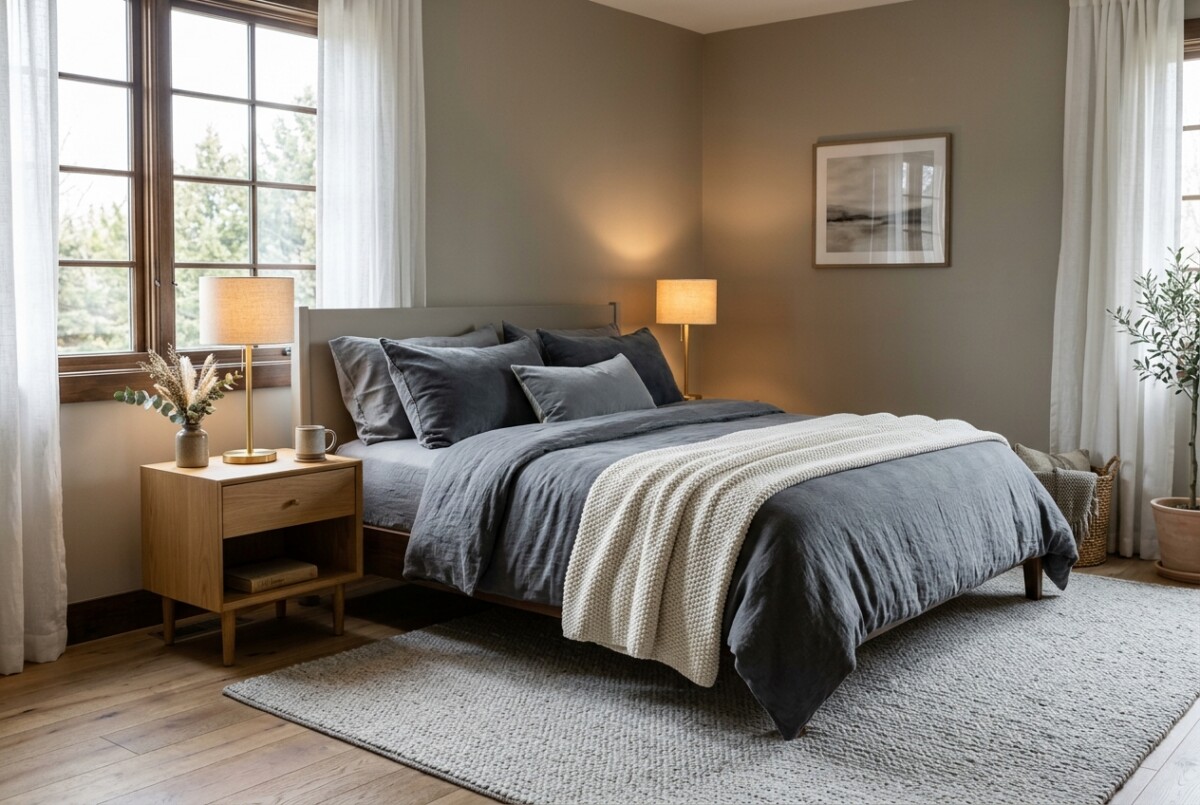
Gray is one of the most flexible colors for a bedroom, but the details around it matter. A pale, warm gray can feel light and relaxed, while charcoal gives the room a more dramatic look. Wood furniture, soft bedding, thoughtful lighting, and accent colors all change how the same wall color feels.
If you’re looking for gray bedroom ideas, start by deciding whether you want a bright neutral space or a deeper, moodier one. Then look at the room’s daylight, flooring, and furniture before choosing paint or fabric. The ideas below cover small updates and larger design choices, with practical ways to keep gray comfortable rather than cold.
1. Choose a Warm Greige for the Walls
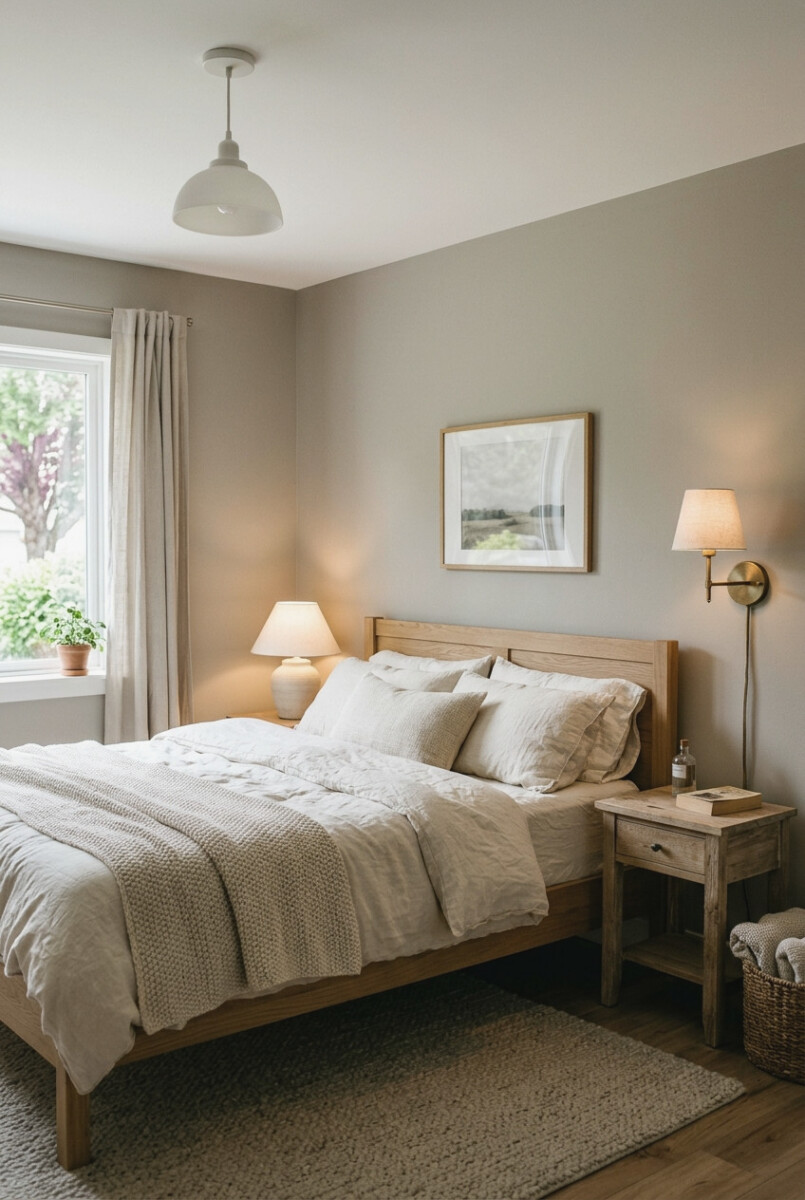
Warm greige sits between gray and beige, making it a useful starting point for a bedroom that needs to feel inviting. It brings the calm appearance of gray without the sharper effect some blue-based shades can have. The color works with oak, linen, cream bedding, and aged brass.
Paint large samples on two walls before choosing a shade. Check them in morning light and again after the lamps are on, since a gray that looks balanced in a store may appear cooler or darker at home. Keep the ceiling a soft white for a gentle contrast.
2. Keep It Airy with Pale Dove Gray
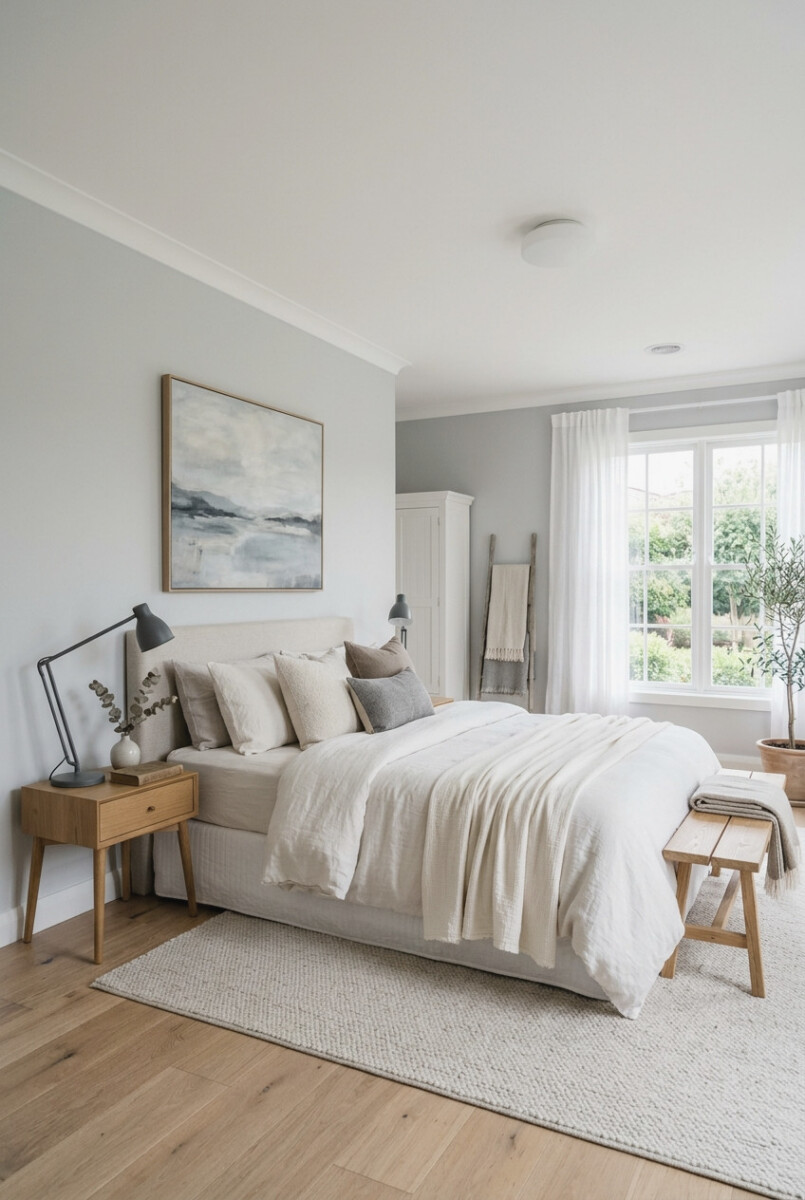
Pale dove gray is a good option when you want a neutral bedroom without an all-white scheme. Its soft color gives the walls definition while leaving room for furniture, artwork, and bedding to stand out. It works particularly well in bedrooms with plenty of natural light.
Pair dove gray walls with off-white bedding and a light-colored rug. Add one darker piece, such as a charcoal bedside lamp or framed print, to keep the room from looking washed out. Choose a paint finish that can be wiped clean without creating too much sheen.
3. Paint a Charcoal Accent Wall Behind the Bed
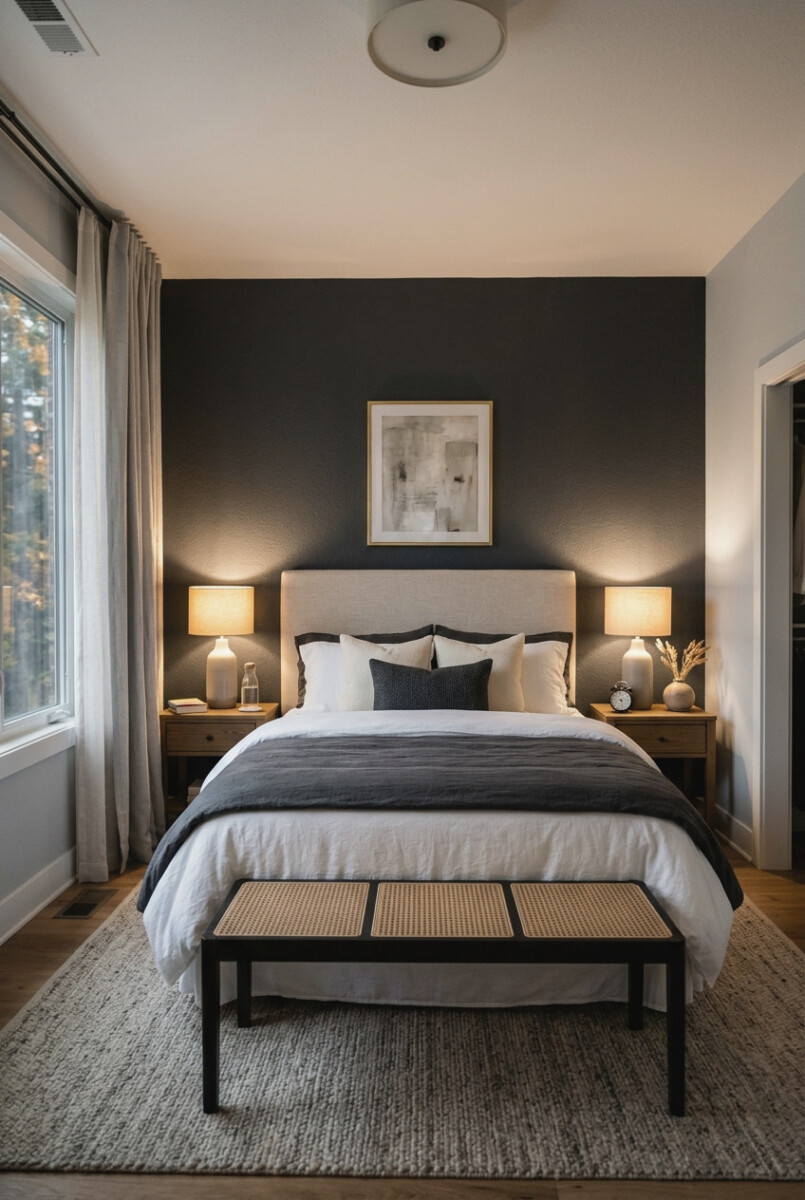
A charcoal accent wall makes the bed the focal point of a gray bedroom. The deeper shade adds contrast, especially when the other walls are pale gray or warm white. This approach gives you a dramatic look without having to paint every wall a dark color.
Keep the headboard and bedding lighter so the furniture remains easy to distinguish against the wall. Test the charcoal shade in the evening, when it may look nearly black, and use bedside lighting to keep the sleeping area comfortable for reading.
4. Layer Several Shades of Gray
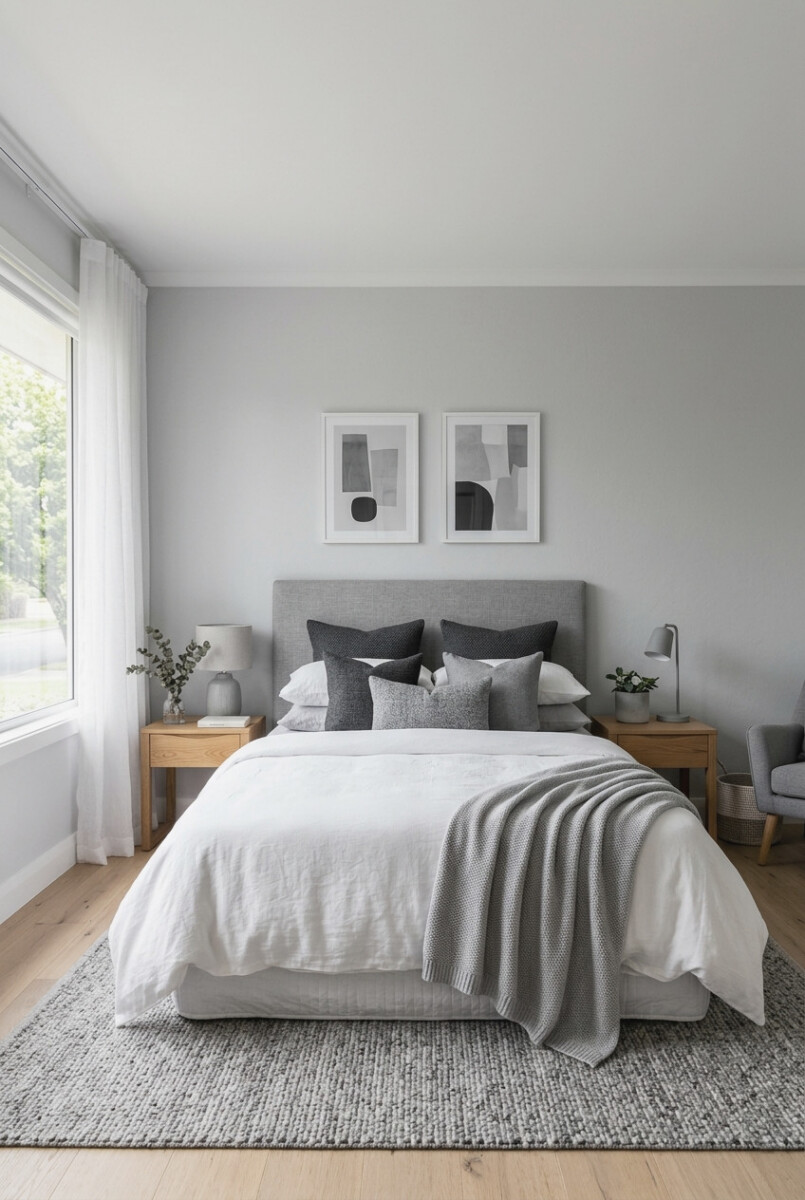
A tonal gray bedroom can look rich and relaxed when the shades vary in both depth and texture. Combine pale gray walls with a mid-gray upholstered bed, darker cushions, and a soft silver-gray throw. The differences should be noticeable without creating a patchwork effect.
Limit the main palette to three or four related grays, then include warm white or wood to break it up. Compare fabric swatches beside the wall paint, because two grays that seem similar in photographs can reveal different blue, green, or brown undertones in person.
5. Break Up Gray with Creamy White
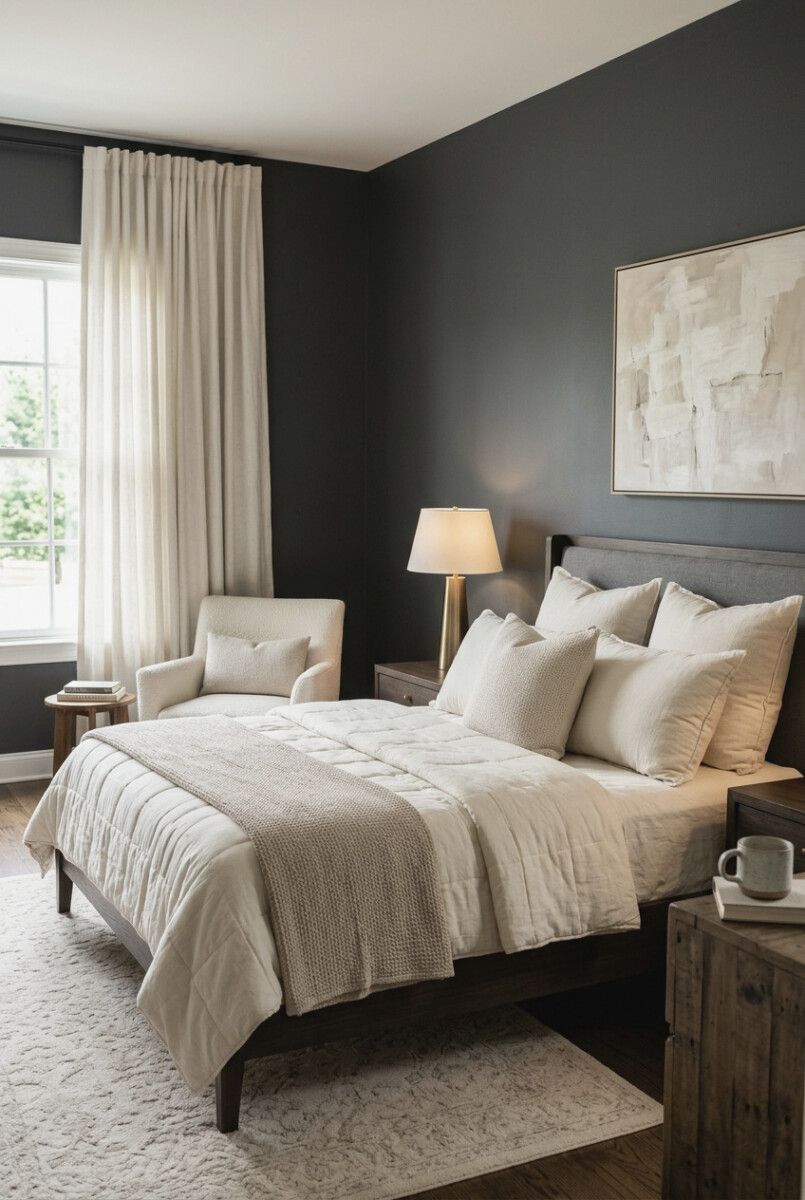
Creamy white bedding and trim keep a gray bedroom from feeling overly cool. Unlike crisp optical white, an ivory or warm off-white adds a softer contrast to charcoal walls, slate bedding, or gray furniture. This pairing works in traditional and modern bedrooms alike.
Use warm white on the duvet cover, curtains, or an upholstered chair, then repeat it in a lamp shade or picture mat. If the gray paint has a pronounced blue undertone, test the cream beside it first to make sure the combination feels balanced.
6. Soften the Scheme with Linen Bedding
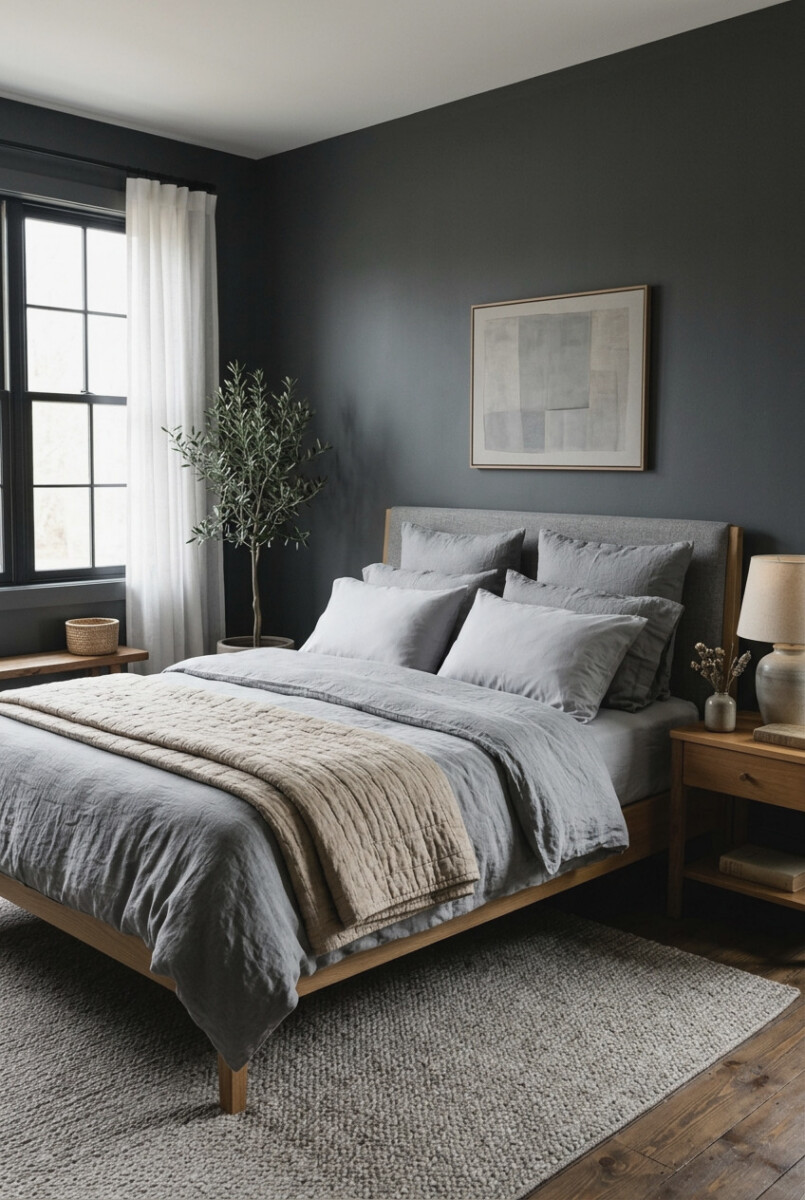
Linen bedding gives a gray bedroom an easy, comfortable finish. Its natural wrinkles and slightly uneven texture keep a neutral palette from looking too polished, while shades such as oatmeal, flax, and mist gray work with many wall colors.
Start with a linen duvet cover and mix it with smooth cotton pillowcases for contrast. Choose bedding according to your preferred feel and care requirements rather than assuming every linen fabric is the same. A quilt at the foot of the bed adds an extra layer without requiring more decorative pillows.
7. Build Texture with a Bouclé Headboard
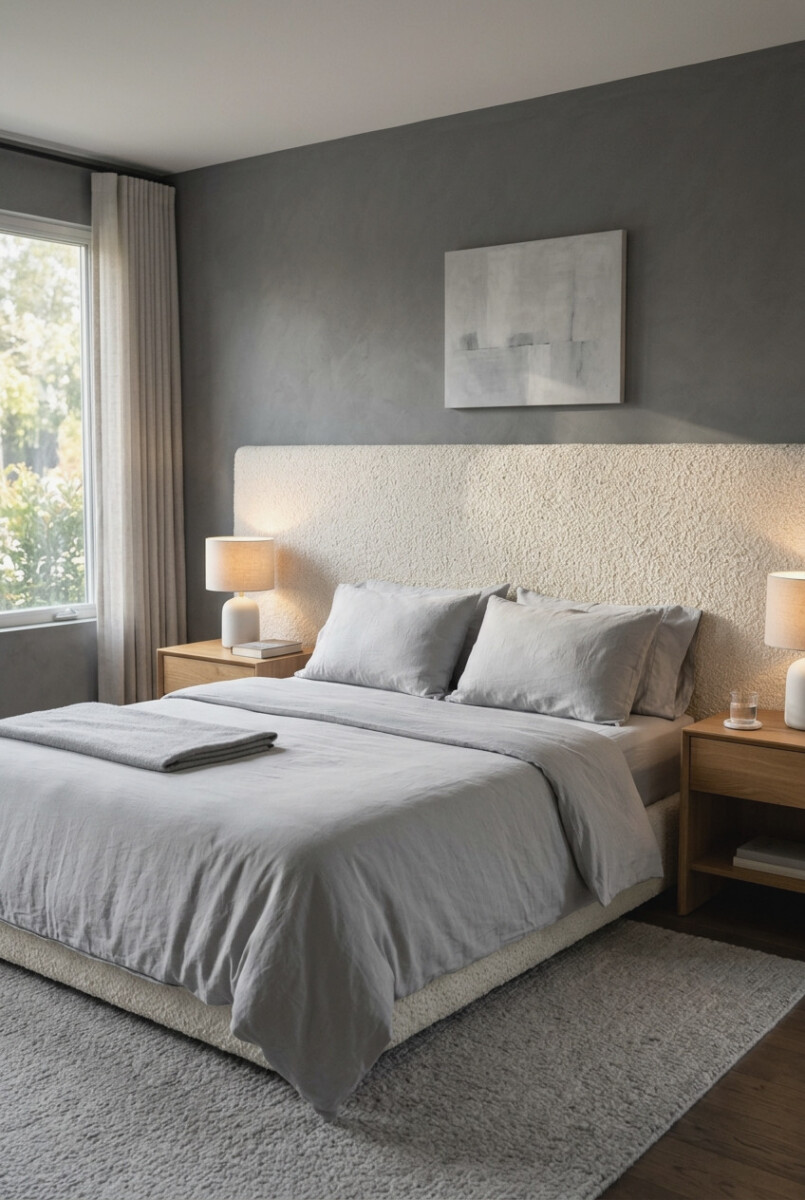
A bouclé headboard brings softness to a room with gray walls and simple furniture. The looped fabric has enough texture to stand out even when it is ivory, stone, or pale gray, making it useful in a restrained modern bedroom.
Choose a headboard that is wide enough to balance the mattress but does not crowd the nightstands. Bouclé can catch lint and pet hair, so check cleaning instructions before buying. Pair it with smooth bedding and a plain rug to keep the fabric from competing with too many other textures.
8. Add a Gray Velvet Bench at the Foot of the Bed
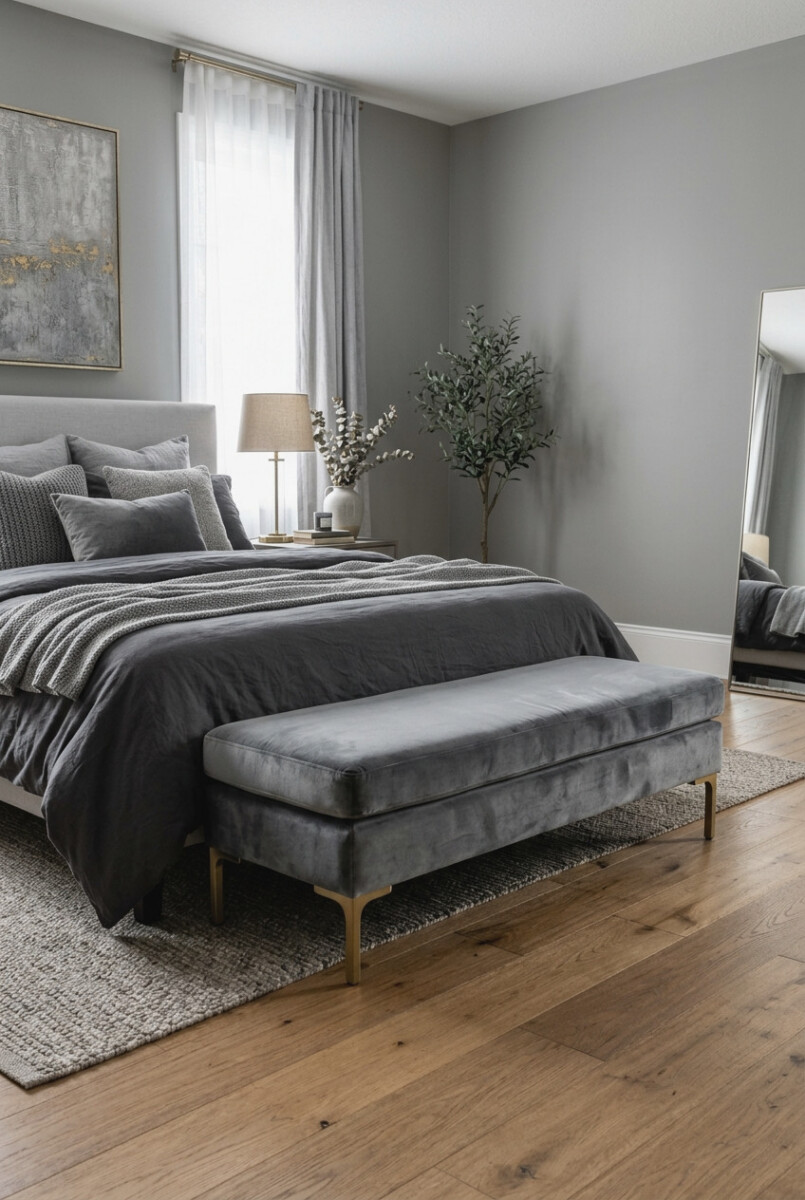
A gray velvet bench introduces a little richness without changing the wall color. Its soft sheen contrasts with cotton bedding, painted furniture, and matte walls, while the seat offers a place to put on shoes or lay out clothes.
Select a bench with a sturdy frame and leave enough clearance to walk around it. In a small room, look for a narrow upholstered stool instead. Deep slate velvet pairs especially well with warm wood and brushed brass finishes.
9. Bring in Light Oak Furniture
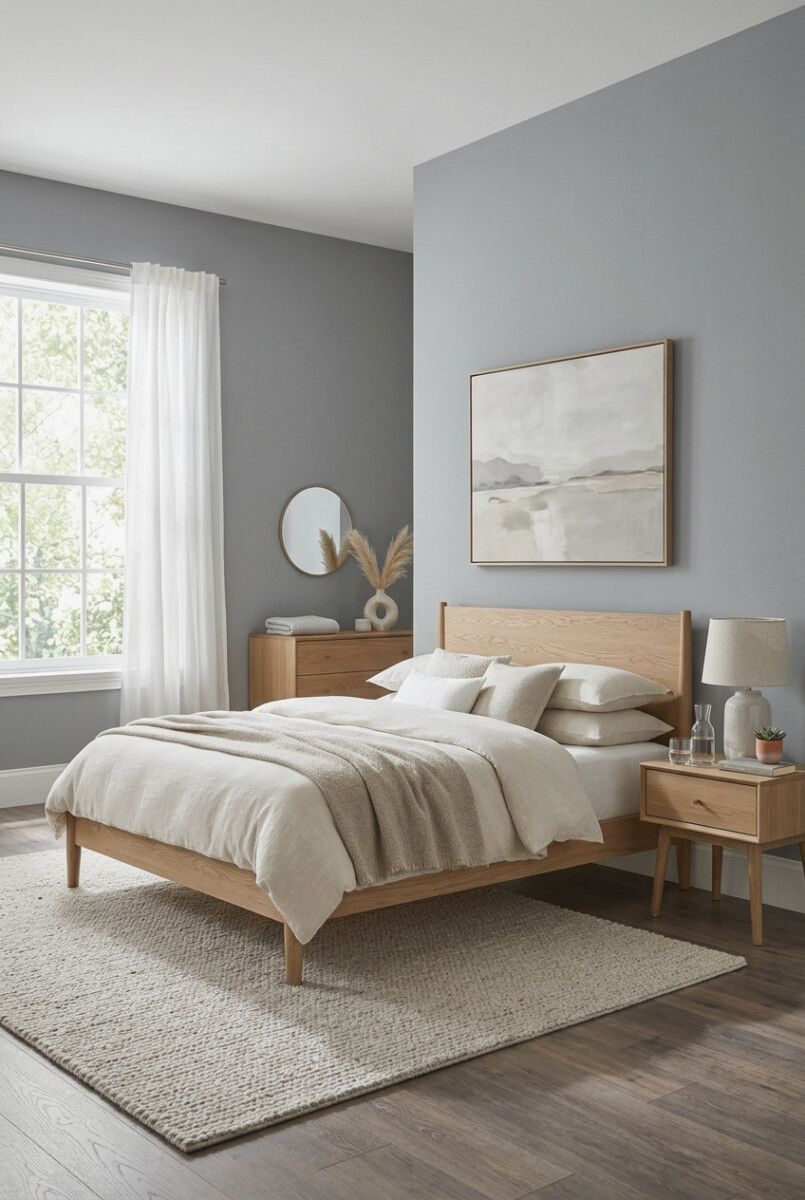
Light oak furniture adds warmth to a gray bedroom while keeping the overall look bright. An oak bed frame, nightstand, or chest of drawers can soften cool gray walls without introducing a bold accent color. The visible grain gives a simple room more character.
Pick one or two substantial oak pieces rather than matching every item. Keep the wood tones reasonably consistent, then add cream bedding or a woven rug to connect the materials. Avoid blocking narrow walkways with oversized storage furniture.
10. Contrast Gray with Dark Walnut

Dark walnut creates a more dramatic partnership with gray than pale woods do. Its deep brown tones work well with medium gray walls, mushroom-colored upholstery, and warm white linens. The result feels tailored without relying on a black-and-white palette.
Try a walnut dresser or pair of nightstands before replacing the bed frame. Repeat the brown in a smaller detail, such as a picture frame, so the furniture looks connected to the rest of the scheme. Use a light rug if the room already has dark flooring.
11. Pair Gray with Sage Green Accents
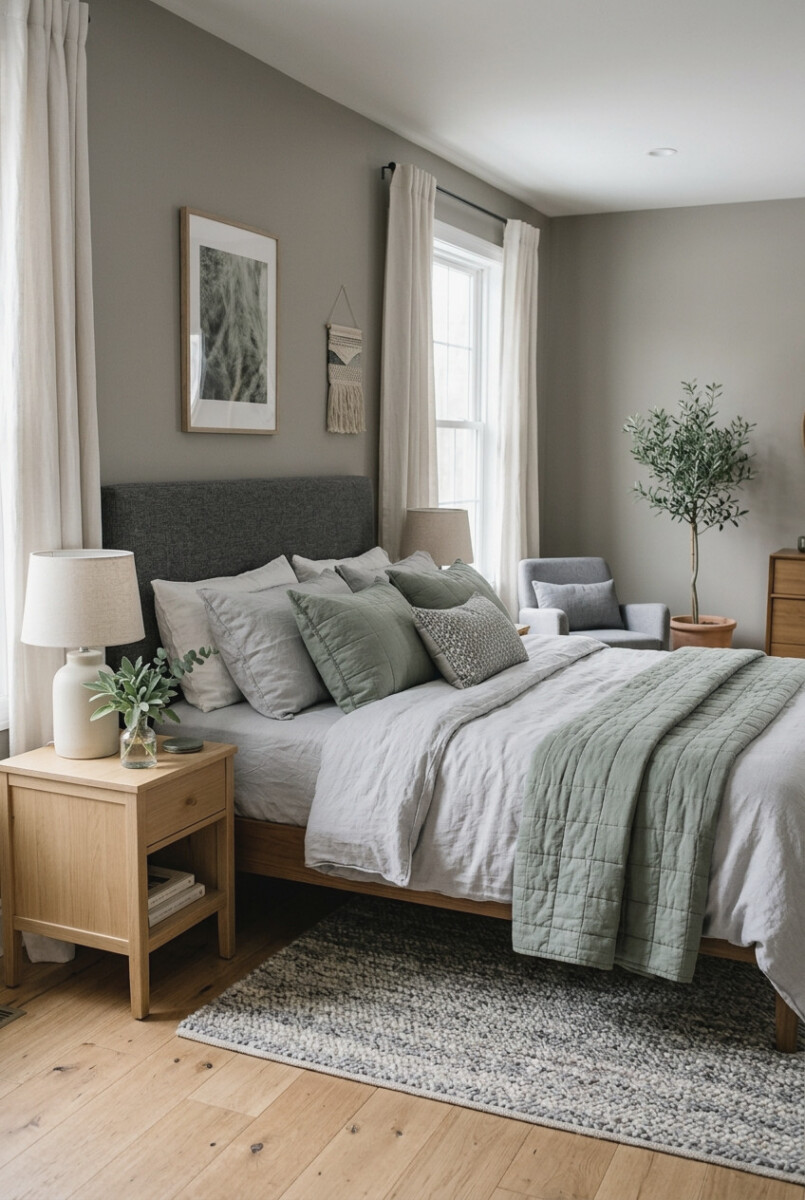
Sage green adds gentle color to a gray bedroom without disrupting the quiet palette. The slightly muted green pairs well with warm gray, natural wood, and off-white fabrics. It can make a neutral room feel fresher while remaining easy to live with.
Bring sage in through a quilt, cushion covers, or a single upholstered chair. Keep the gray as the main color and repeat the green once or twice rather than covering every surface. Check fabric samples in daylight, as some sage shades look surprisingly blue beside cool grays.
12. Add Dusty Blue for a Calm Color Pairing
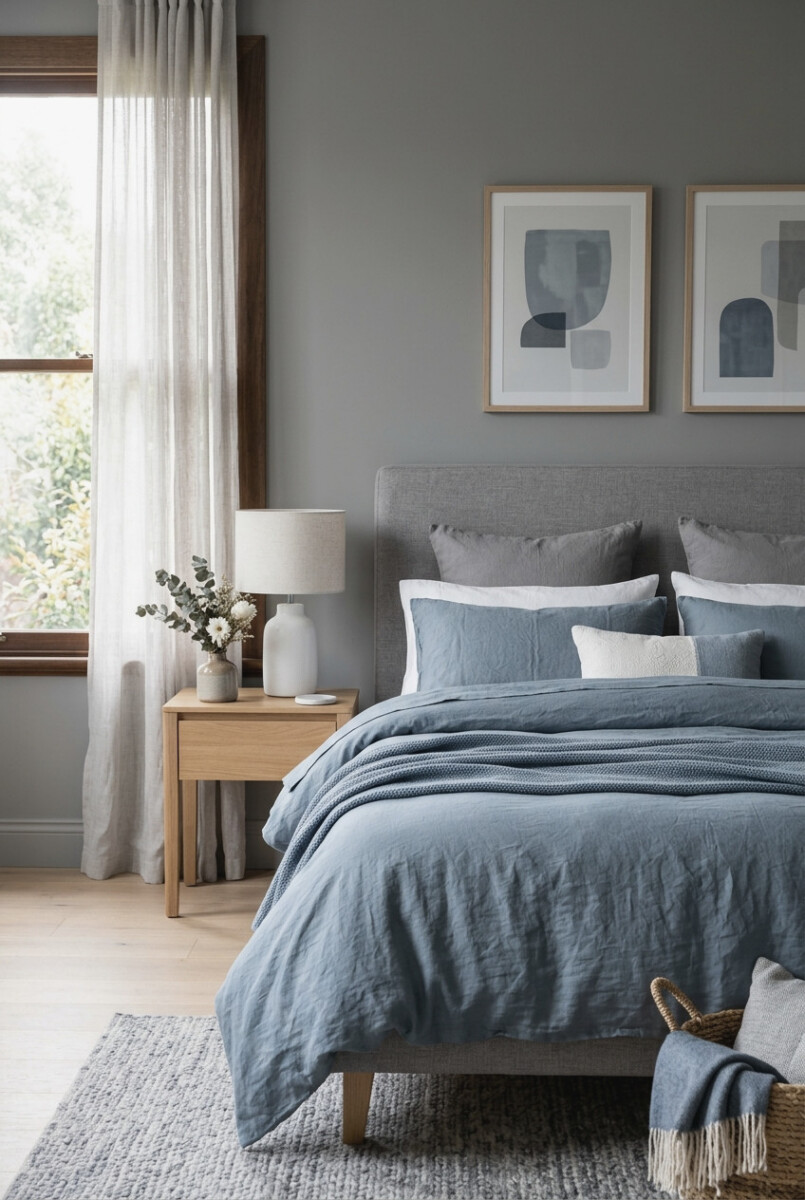
Gray and dusty blue make a natural bedroom combination when you prefer cooler colors. Blue can appear in the bedding, curtains, or artwork while gray provides a quiet background. Choosing softened, slightly muted blues helps the room feel comfortable rather than stark.
Pair blue accents with warm white or light wood so the whole scheme does not become too cool. If your walls are blue-gray already, choose a clearly different blue for the textiles; otherwise the pieces can look accidentally mismatched.
13. Warm Gray with Muted Blush Pink

Blush pink can take the edge off dark or medium gray, particularly when the pink has a dusty, earthy undertone. A muted rose throw or upholstered chair adds color while keeping the room soft and grown-up. The pairing suits contemporary and gently traditional bedrooms.
Use pink in smaller areas first, such as cushions or a patterned rug, and repeat it in artwork if you like the result. Avoid piling on several unrelated pink shades. Warm metal finishes or a light wood nightstand can help connect the colors.
14. Mix in Terracotta and Rust Tones
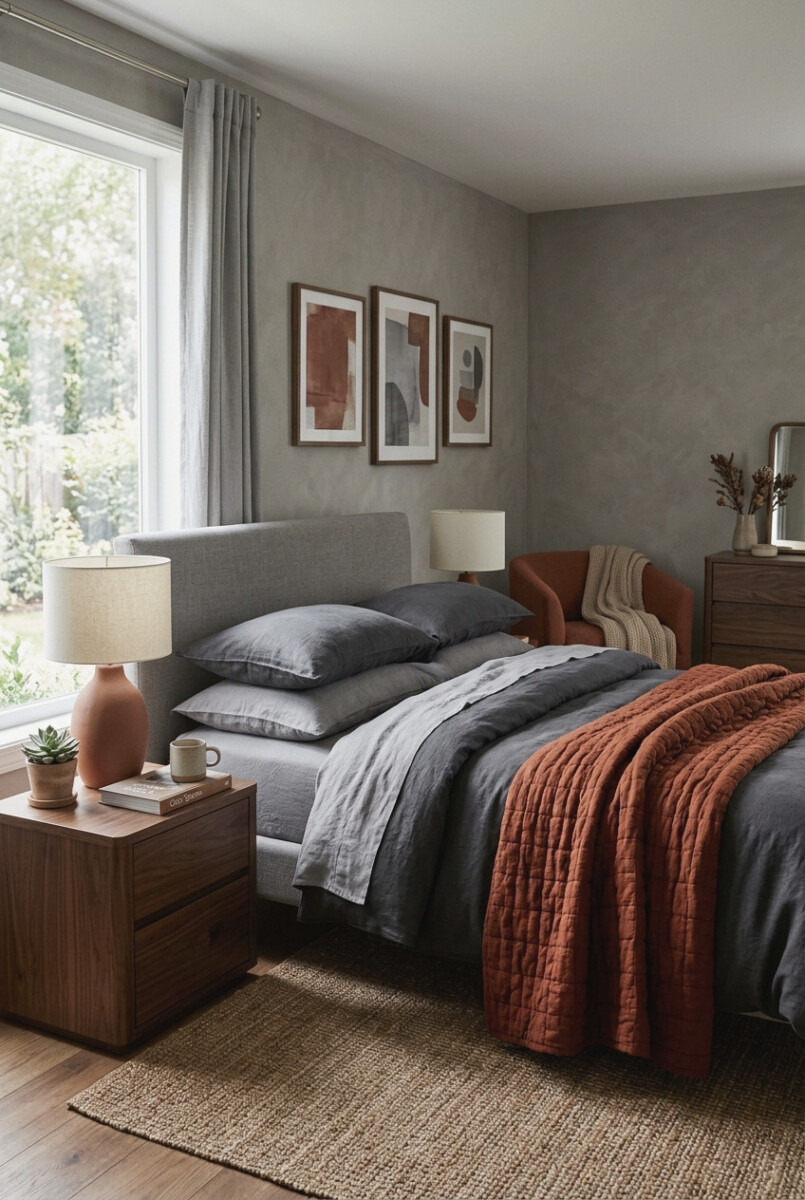
Terracotta and rust make a gray bedroom feel warmer through color rather than extra furniture. These earthy accents work especially well with warm grays, linen bedding, and walnut or oak. Even a single rust-colored quilt can change the mood of a mostly neutral room.
Use terracotta on a throw, a ceramic lamp, or a framed print, not necessarily on the walls. Keep larger surfaces neutral so the accent remains deliberate. Compare orange-brown textiles with your gray paint; very cool blue-gray can make rust look more intense.
15. Try Mustard or Ochre in Small Doses
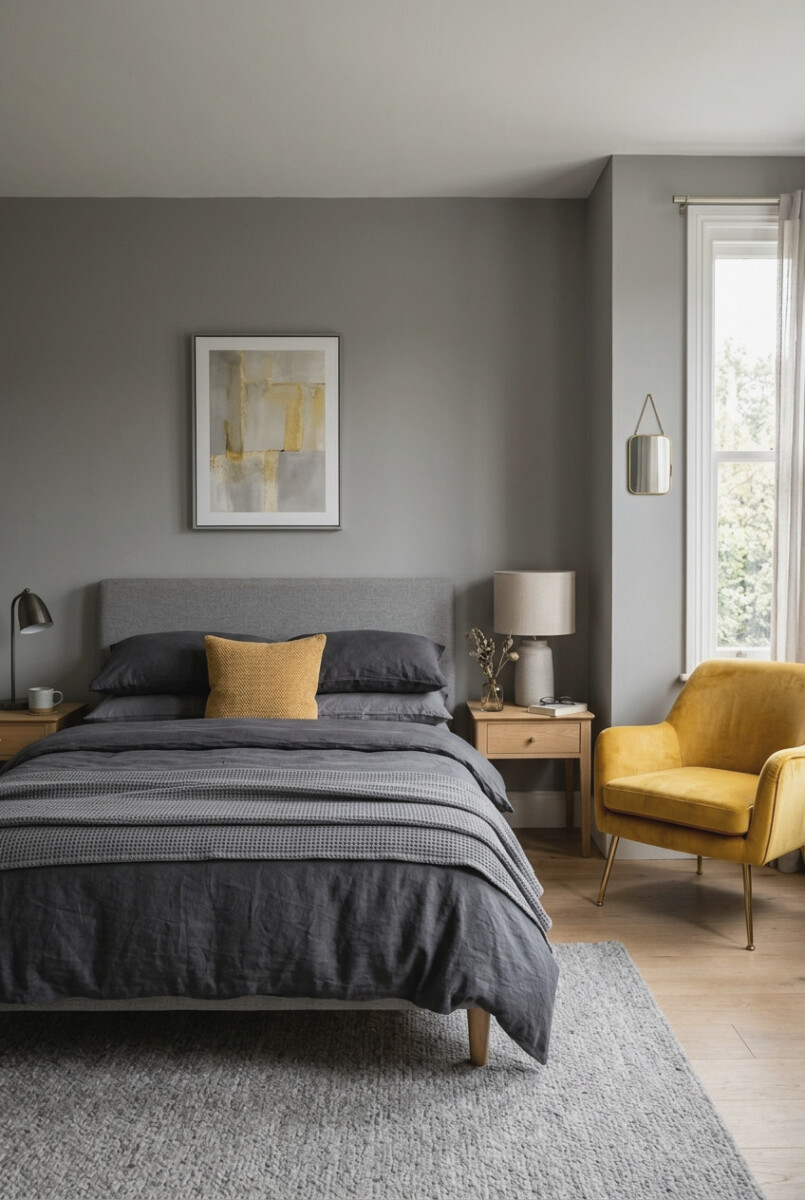
Mustard yellow and ochre offer a lively contrast to gray without requiring a bright, saturated color scheme. A mustard cushion, reading chair, or piece of abstract art can bring energy to a charcoal or mid-gray room.
Choose one main yellow accent and let it stand out against simpler bedding. Ochre generally sits more comfortably with warm gray and wood than with icy silver-gray. If the bedroom is small, a patterned cushion or throw is enough to try the color before making a larger change.
16. Introduce Burgundy for a Richer Palette
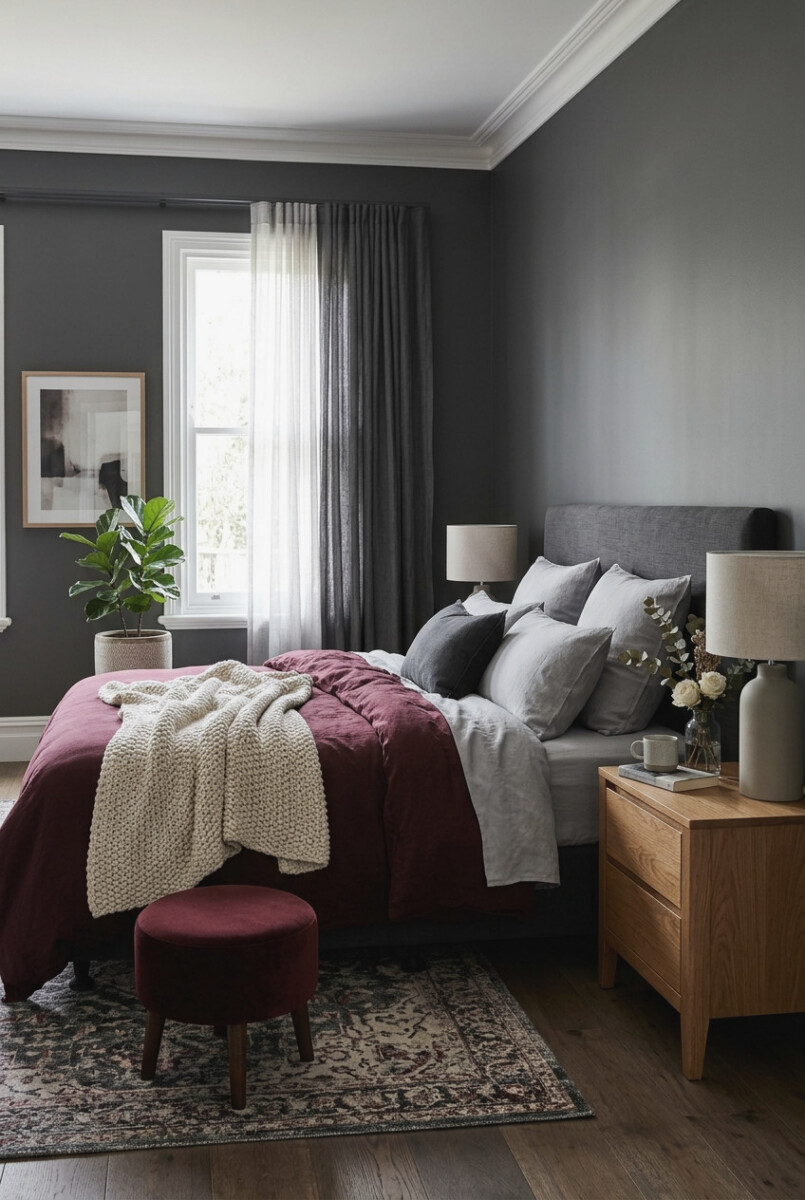
Burgundy brings depth to gray bedrooms that lean elegant or moody. Wine-colored bedding, a small upholstered stool, or a patterned rug can complement charcoal and graphite tones without making the room feel excessively dark.
Use burgundy alongside pale gray, cream, or warm wood so the contrast remains visible. In rooms with limited daylight, keep the darkest colors on smaller textiles instead of combining deep walls, deep bedding, and dark curtains all at once.
17. Choose Gray Grasscloth Wallpaper for Texture
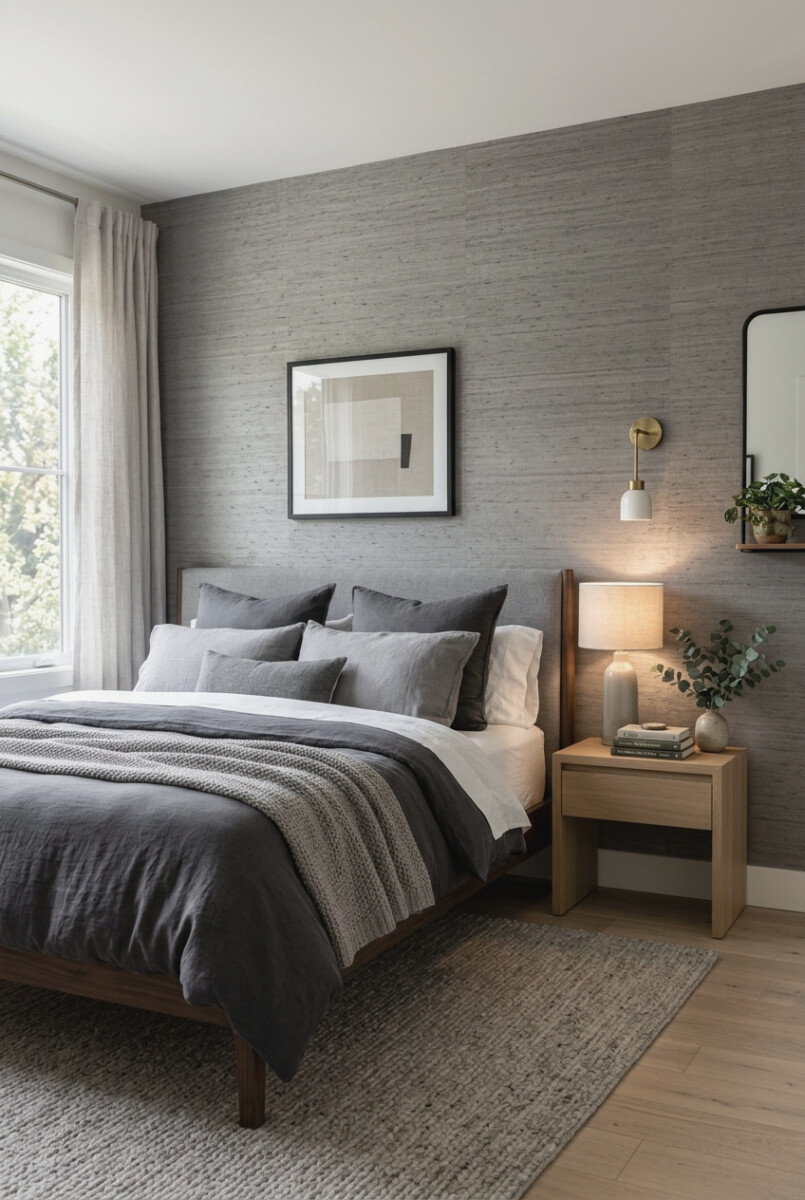
Gray grasscloth wallpaper adds subtle movement to a wall without introducing a strong pattern. The woven surface can make a plain room feel more layered, especially behind a simple bed frame and alongside neutral bedding.
Grasscloth and other natural wallcoverings can be delicate and may show seams or stains. Consider using it on one dry, low-traffic wall and check whether the product suits your home’s humidity. If easy cleaning matters more, look for a textured vinyl or printed alternative.
18. Use a Small-Scale Gray Patterned Wallpaper
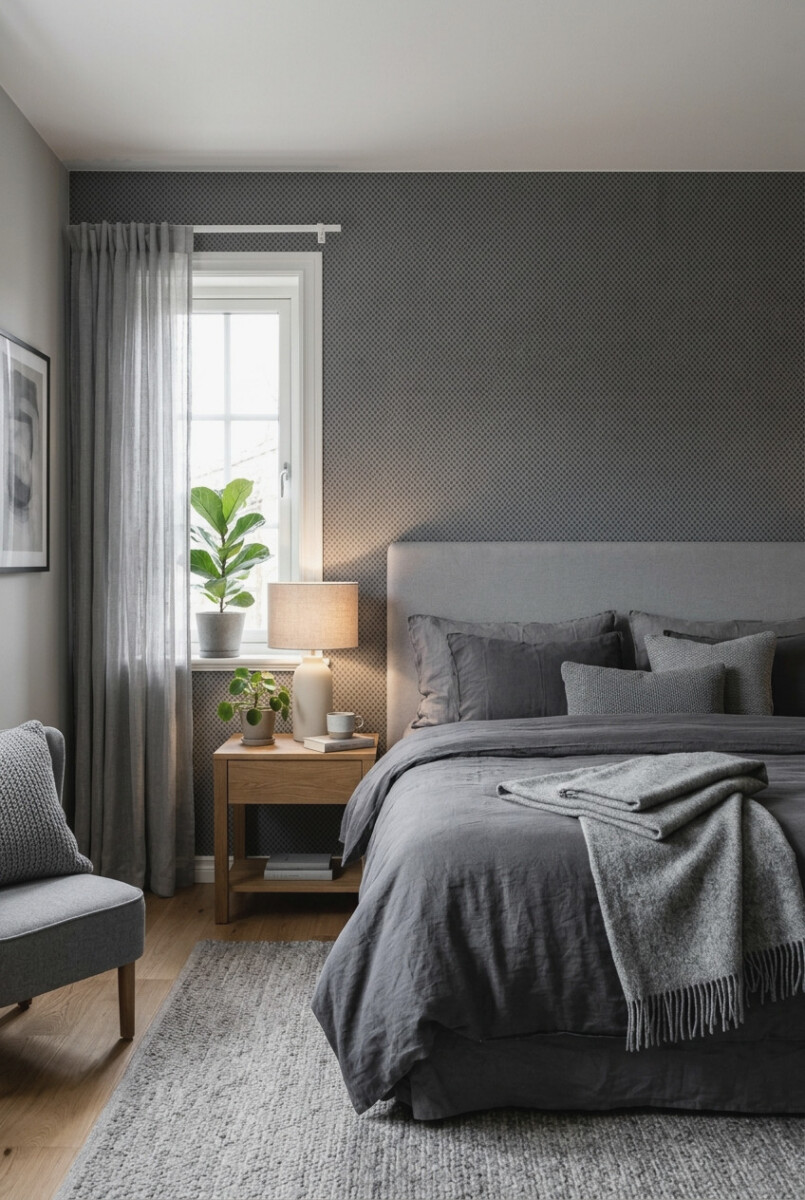
A restrained wallpaper pattern prevents a gray bedroom from feeling flat. Thin stripes, a subtle floral, or a soft geometric print can add interest while staying close to the overall color palette. This works particularly well behind a headboard or in a compact guest bedroom.
Order a sample large enough to see the repeat rather than judging from a tiny swatch. Pair patterned walls with plain bedding and a simple headboard. If the room already contains a busy rug, choose a quieter wallcovering to avoid too much competing detail.
19. Try a Soft Plaster-Effect Wall Finish

A plaster-effect finish can give gray walls gentle variation that changes with the daylight. The result suits modern, Mediterranean-inspired, and minimal bedrooms where texture matters more than ornament. Pale stone gray and warm putty shades are particularly versatile.
Test the product on a sample board before treating the full wall. Limewash, Roman clay, and decorative plaster are different materials with different preparation and maintenance requirements, so follow the manufacturer’s directions rather than treating them as interchangeable.
20. Install Painted Gray Wall Paneling

Gray wall paneling introduces architectural detail without adding more items to the room. Simple board-and-batten or rectangular molding can make a bed wall feel finished, whether the design is traditional or contemporary. A soft mid-gray keeps the lines visible without heavy contrast.
Plan the panel spacing around the bed and nightstands before installing it. Use materials suitable for the wall and finish the joints neatly. Painting the paneling and wall the same color creates a subtle look, while a slightly darker shade makes the detail more noticeable.
21. Make a Gray Upholstered Bed the Focal Point
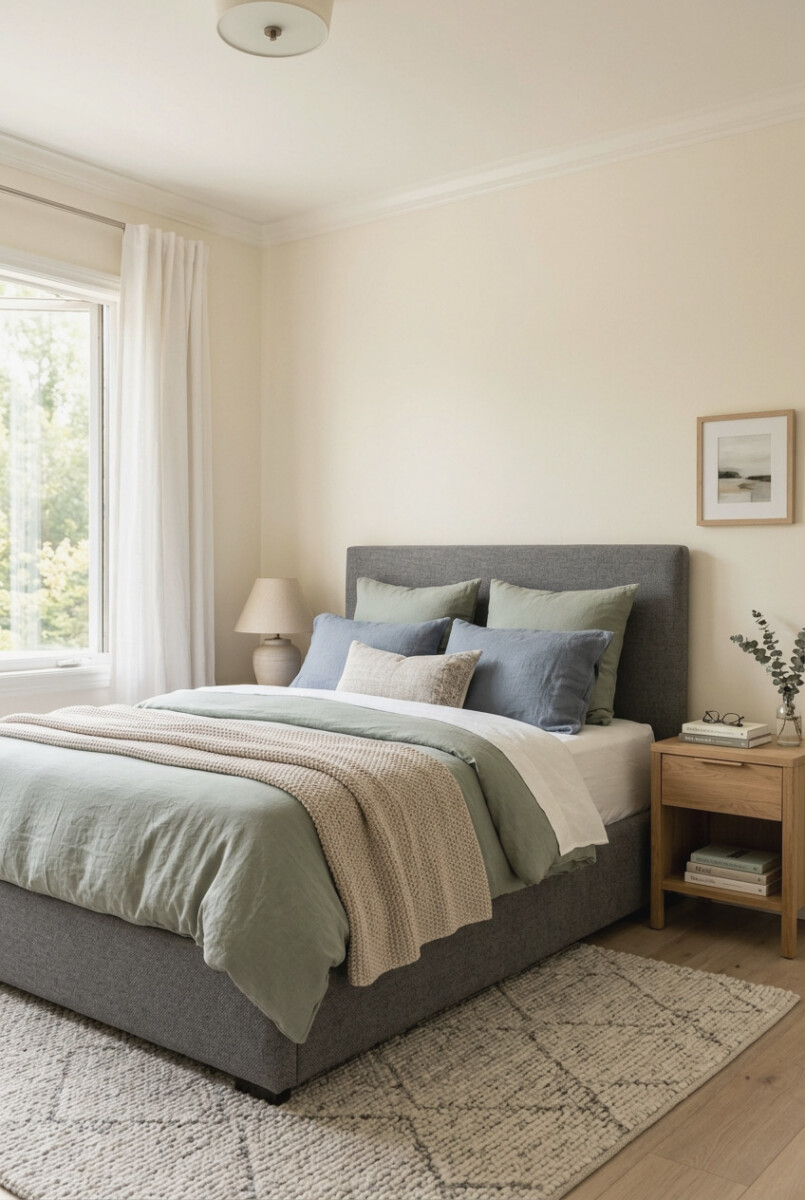
A gray upholstered bed is useful when you want the color in the room without committing to gray paint. A simple fabric frame can work with cream walls, wooden furniture, and almost any bedding accent, from sage green to dusty blue.
Choose the fabric tone after considering the floor and wall colors. A headboard with a clean outline suits a modern bedroom, while a softly curved shape feels more traditional. Measure the full frame dimensions, since upholstered beds can extend farther than the mattress.
22. Pair a Gray Bed with Black Nightstands
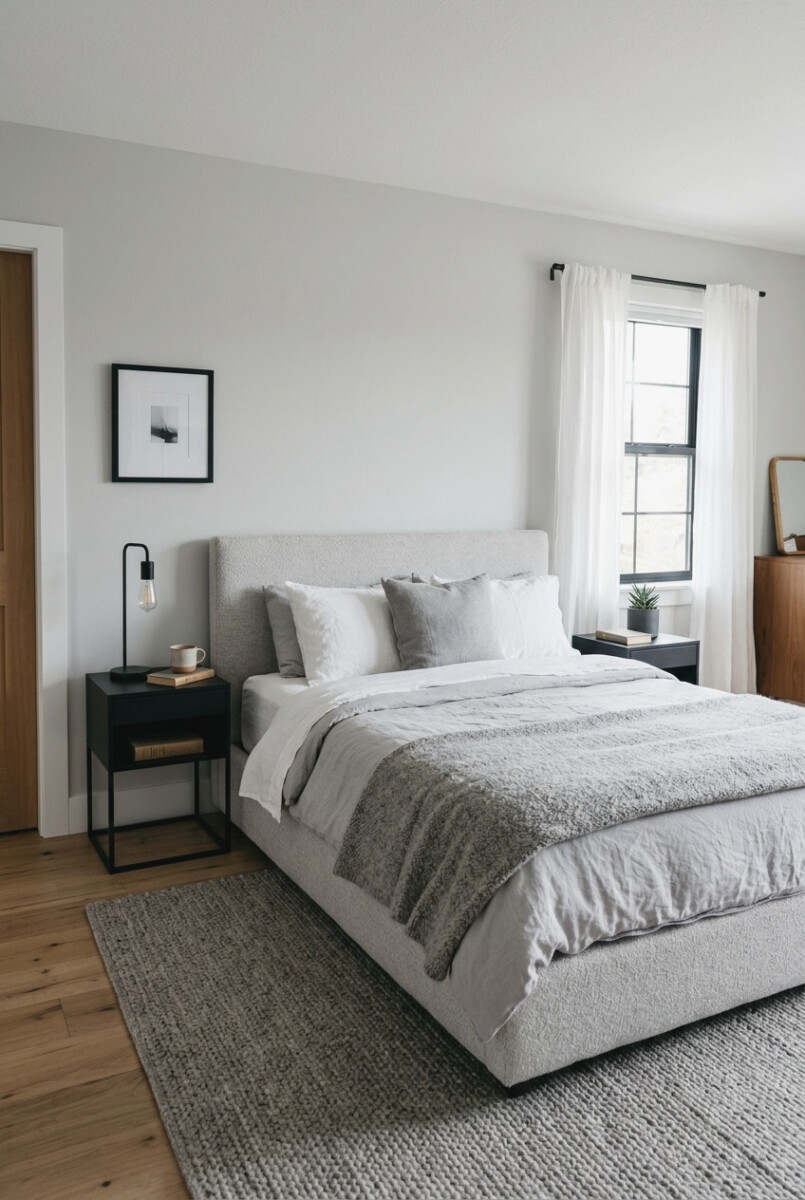
Black nightstands give a gray bed a sharper, more contemporary edge. The contrast is especially effective in rooms with pale gray walls and light bedding, where a pair of dark bedside pieces creates a clear outline.
Pick nightstands that suit the bed height and provide enough storage for everyday use. Repeat black in a lamp base or picture frame, but keep most textiles lighter. A matte finish usually feels quieter than glossy black in a sleeping space.
23. Anchor the Room with a Tonal Wool Rug

A wool rug in gray, taupe, or cream can bring warmth to the floor and help tie together mixed furniture finishes. A low-contrast pattern adds depth without becoming the first thing you notice when you enter the bedroom.
Choose a rug large enough for the front portion of the bed and some floor on either side. Check the pile height against doors and furniture legs, and use a suitable underlay on slippery floors. A patterned rug can also be easier to live with than a very pale solid one.
24. Hang Full-Length Charcoal Curtains

Charcoal curtains frame a window and introduce a darker tone to an otherwise light gray bedroom. Their vertical lines can give the space a more finished appearance, while lined drapes help with privacy and light control.
Hang the rod a little above the frame where possible and allow the panels to fall cleanly to the floor. Choose the lining according to how much light you want to block. If the walls are dark already, medium-gray curtains may provide enough contrast without making the window feel heavy.
25. Layer Sheer White Curtains Behind Drapes

Sheer white curtains soften daylight and can make a gray bedroom feel lighter during the day. Paired with heavier gray drapes, they offer flexibility without introducing another strong color. This is especially useful when a bedroom faces neighboring windows.
Install a double rod or track so the sheers and drapes move independently. Keep the fabric lengths consistent and choose a simple heading style. Remember that sheers alone may offer limited privacy after dark, so use the lined layer when needed.
26. Warm the Palette with Brass Bedside Lights
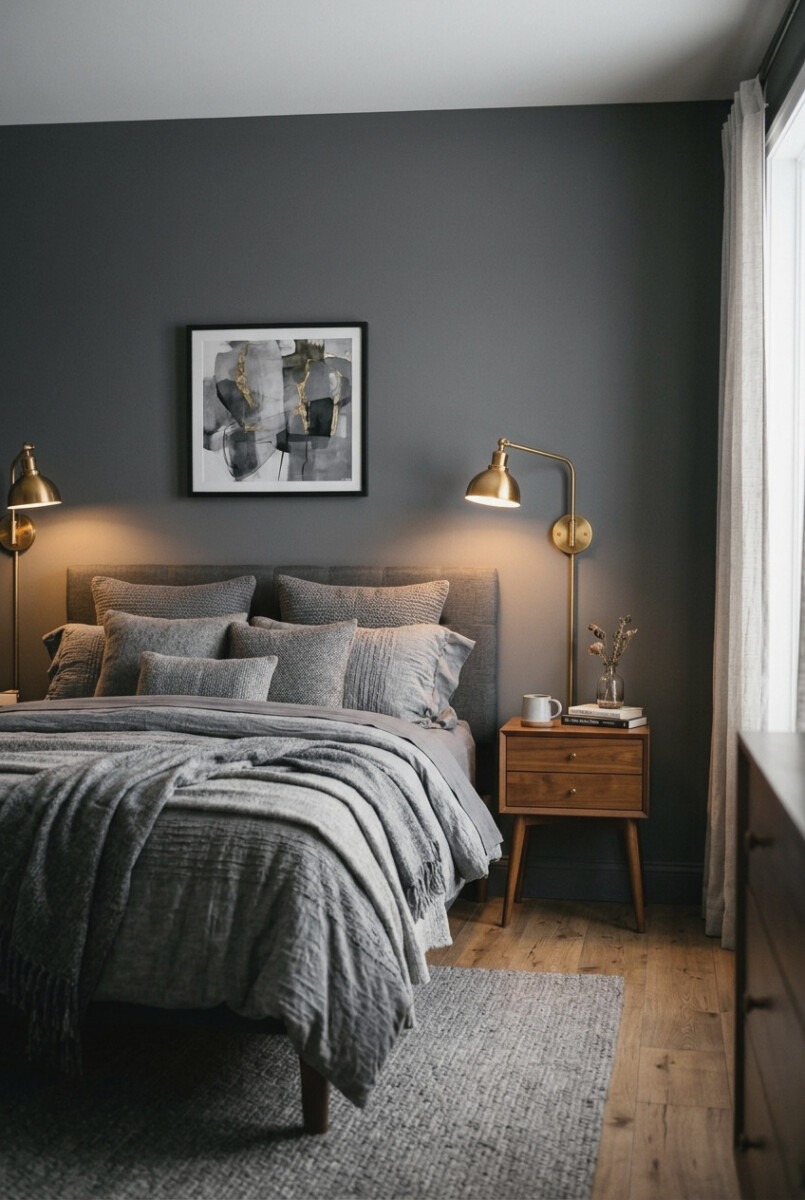
Brass or antique-gold lighting brings warmth to gray walls and furniture. A pair of simple metal sconces can add a gentle accent without taking up bedside table space, while small lamps suit rooms where wiring changes are not practical.
Choose warm, comfortable bulbs and lamp shades that control glare. If installing wall sconces, check the mounting height against your headboard and sleeping position. Keep the finish consistent with any drawer pulls or mirror frames nearby.
27. Plan Lighting at Three Levels

Gray changes noticeably under different kinds of light, which makes a layered lighting plan useful. Combine an overhead fixture with bedside reading lights and one softer accent source, such as a small table lamp on a dresser.
Use the overhead light for general tasks and the bedside lights for reading. Dimmer controls can help adjust the room after sunset, provided the bulbs and switches are compatible. Check paint samples under the lighting you actually intend to use before selecting a final shade.
28. Display Oversized Artwork on Gray Walls
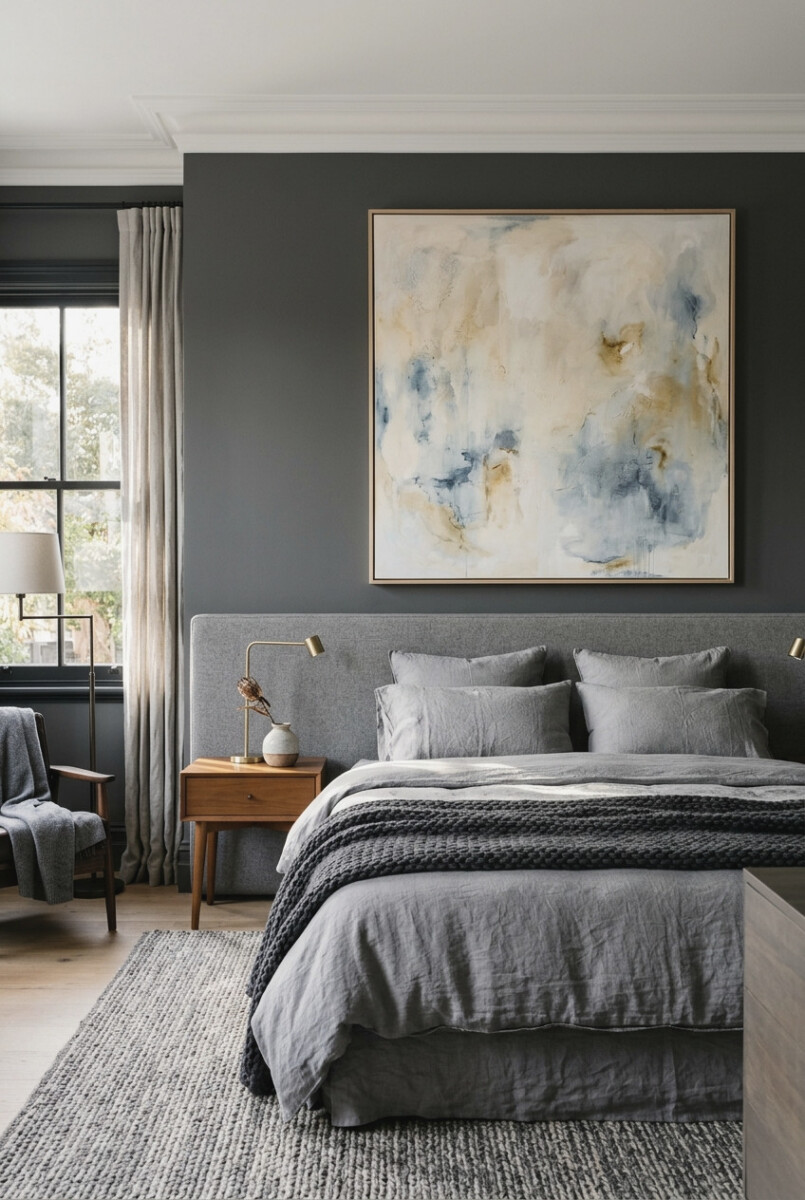
One large artwork can give a gray bedroom a clear focal point without covering every wall. Abstract paintings, landscapes, and simple graphic pieces work well, particularly when they introduce a few colors already used in the bedding or furniture.
Hang the artwork in proportion to the bed or dresser below it. Secure heavy frames with appropriate hardware and avoid placing an inadequately fixed piece above the headboard. A light wood or antique brass frame can soften a cool gray background.
29. Decorate with Black-and-White Photography
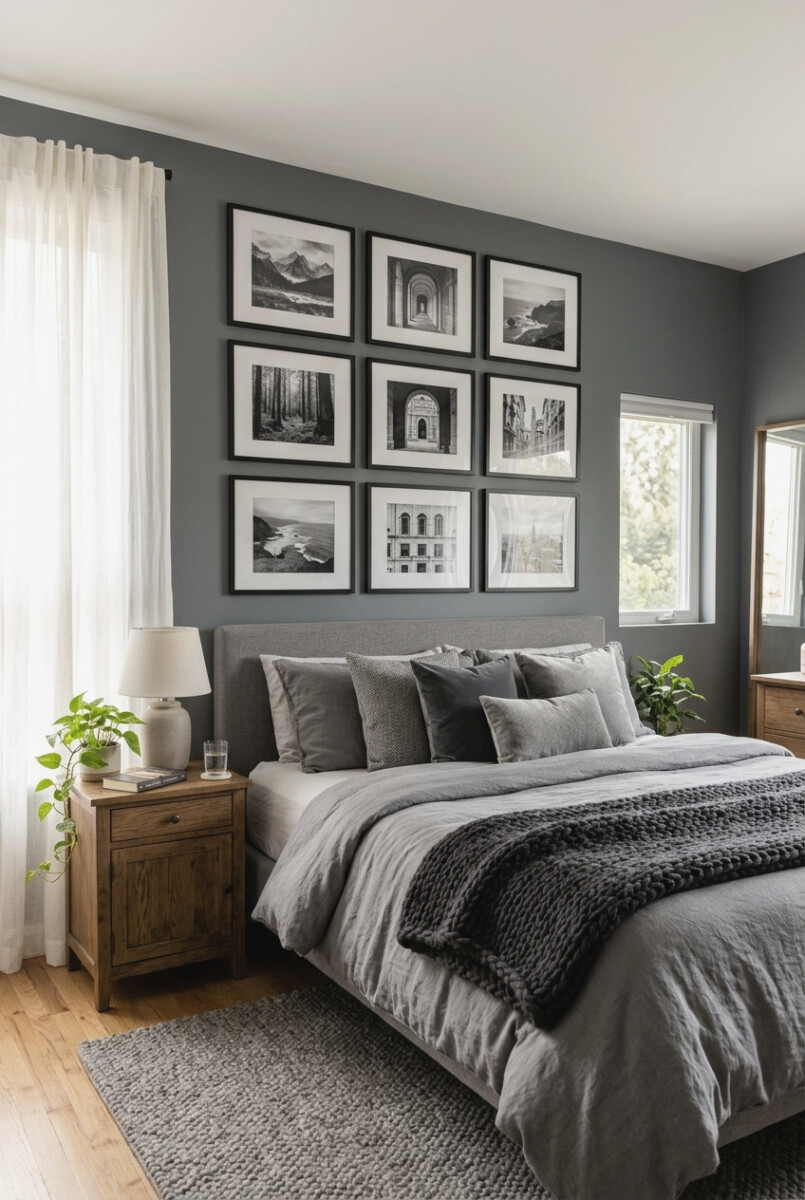
Black-and-white photography suits a gray bedroom because it adds interest through composition rather than additional color. A small series of architectural images or landscapes can make a quiet wall feel personal and considered.
Use consistent frame sizes for a neat arrangement, or mix a few formats if you prefer a collected look. Leave enough space between frames to see each image clearly. Choose photographs you enjoy rather than filling the wall with generic prints simply to match the palette.
30. Choose a Mirror with a Warm Wood Frame
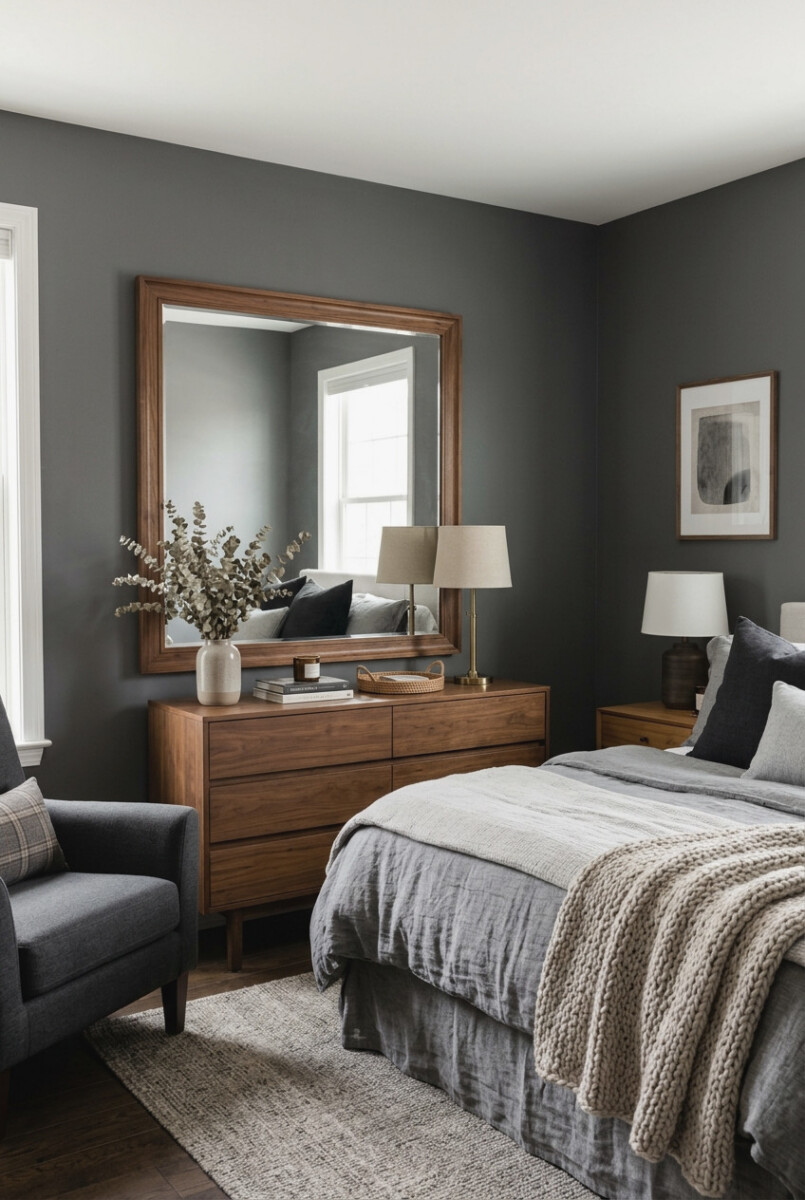
A wood-framed mirror helps balance gray walls, especially in a bedroom with cool undertones or pale flooring. It also gives a dresser area a useful finishing touch without adding another colored accessory.
Place the mirror where it reflects daylight or a pleasing part of the room rather than clutter. Secure large mirrors properly and avoid hanging heavy pieces over places where people sleep. Oak suits light schemes, while walnut works well with deeper grays.
31. Keep a Small Gray Bedroom Low Contrast

In a small bedroom, too many sharp changes between light and dark can make the furniture arrangement feel busy. A pale gray wall color paired with similar-toned bedding and streamlined furniture offers a more continuous look while still providing definition.
Choose a bed frame with a modest footprint and use wall-mounted lights if the nightstands are small. Add contrast through one darker cushion or picture frame rather than multiple large dark pieces. Storage and a clear walkway matter as much as the paint color.
32. Brighten a North-Facing Gray Bedroom
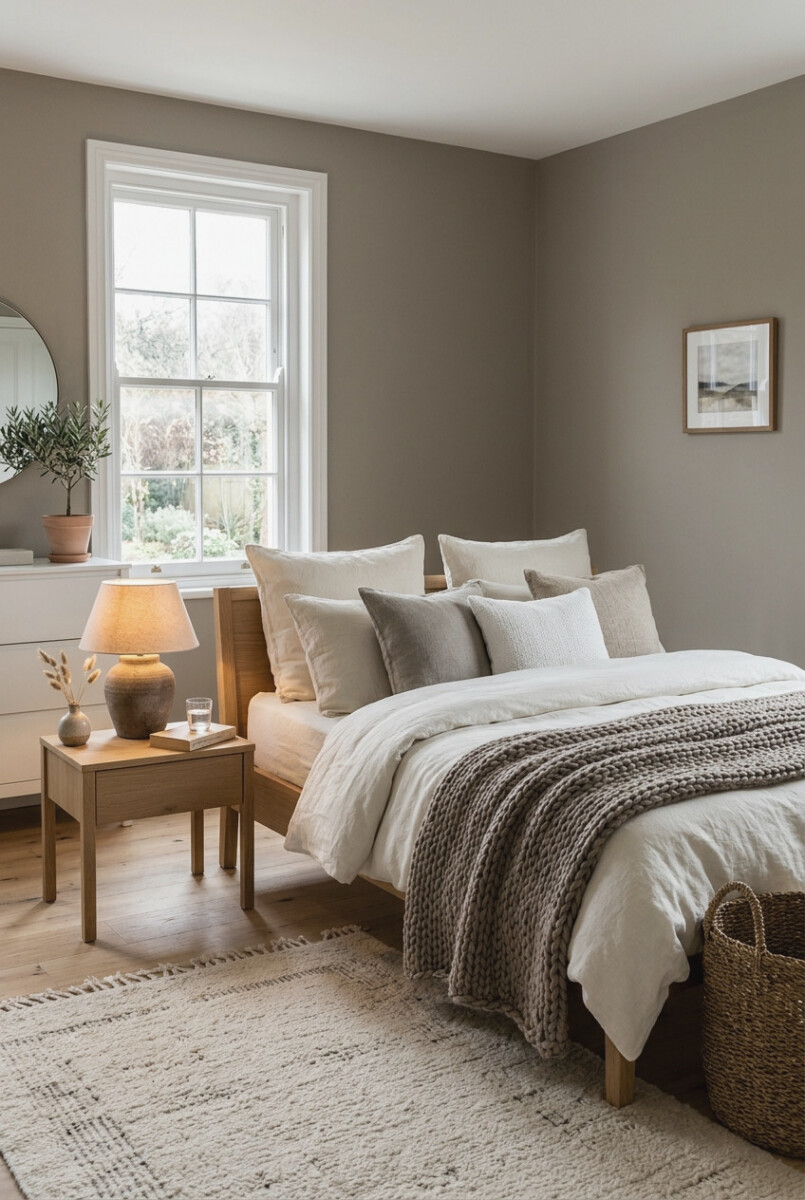
Rooms that receive mostly cool, indirect daylight can make certain grays appear bluer than expected. Warm gray, greige, and soft mushroom shades are useful alternatives when you want a cozy result without painting the bedroom beige.
Test samples on more than one wall and observe them throughout the day. Pair the chosen paint with warm white textiles and balanced lighting rather than relying on wall color alone. Avoid assuming that a shade recommended online will behave the same way in your room.
33. Try a Scandinavian-Inspired Gray Bedroom
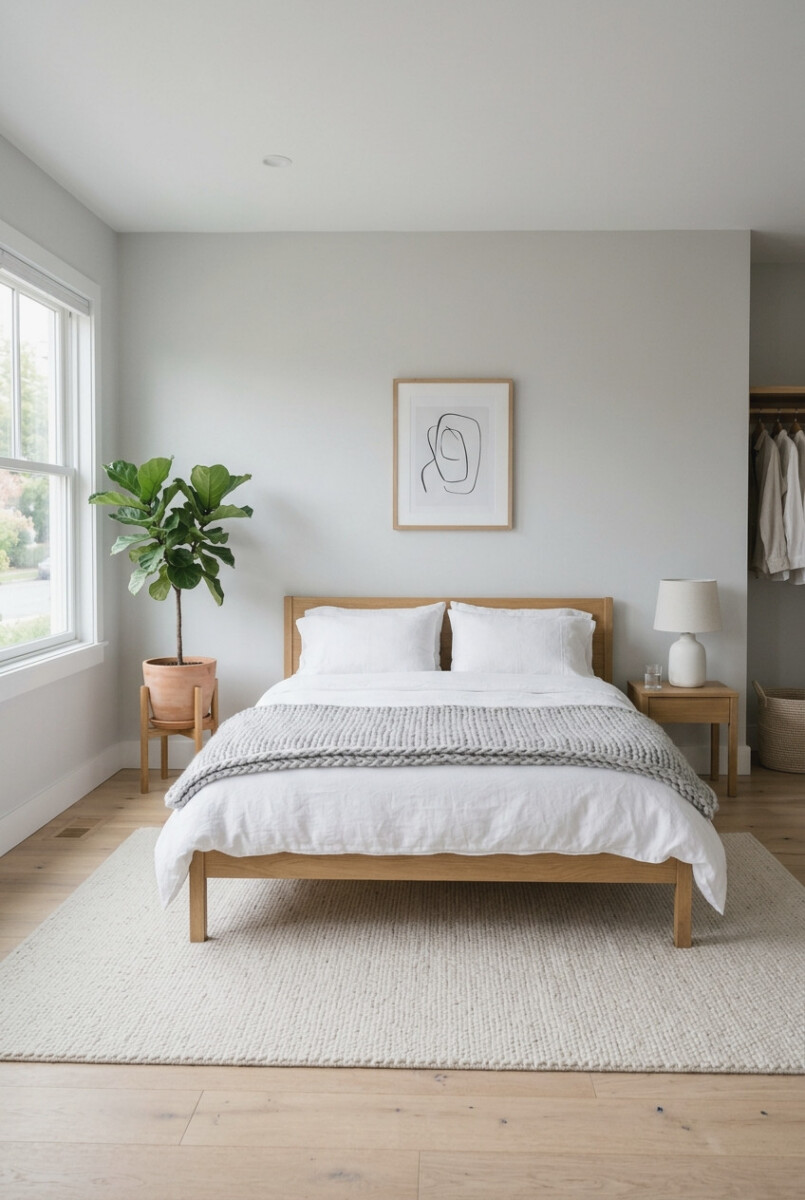
Scandinavian-inspired rooms often combine restrained colors with useful furniture and natural materials. Pale gray walls, a simple oak bed, crisp cotton bedding, and one textured rug create a clean bedroom that does not feel bare.
Keep storage practical and allow some empty space around the bed. Choose a few items with different textures, such as a wool throw and ceramic lamp, rather than filling the shelves. A single plant or framed print can provide enough color.
34. Mix Gray with Vintage Furniture
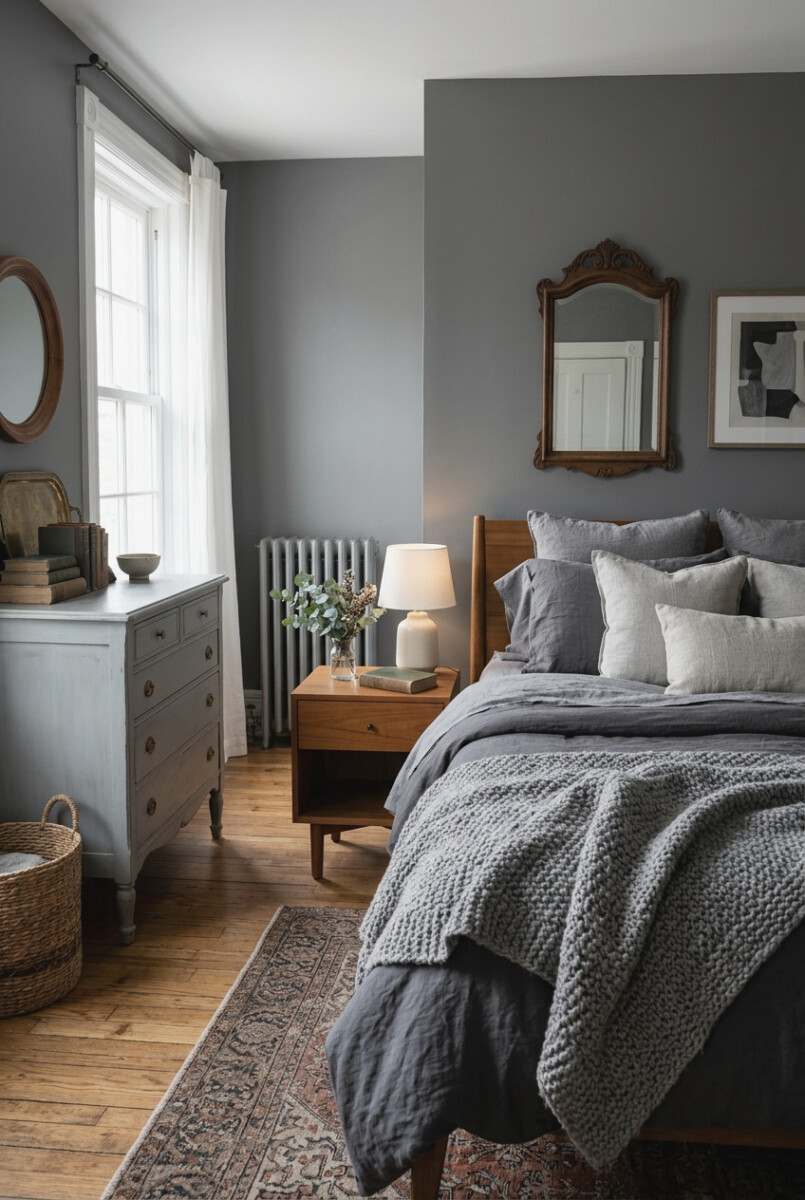
Vintage furniture adds personality to a gray bedroom that might otherwise feel too uniform. A painted antique dresser, midcentury nightstand, or old timber chair can sit comfortably against gray walls, particularly when the rest of the furniture is simple.
Choose pieces for their proportions and condition rather than matching a particular period. Repair unstable drawers or legs before use, and secure tall storage furniture to the wall. Repeat one finish or color in smaller details so the room feels assembled rather than random.
35. Finish a Gray Bedroom with Greenery
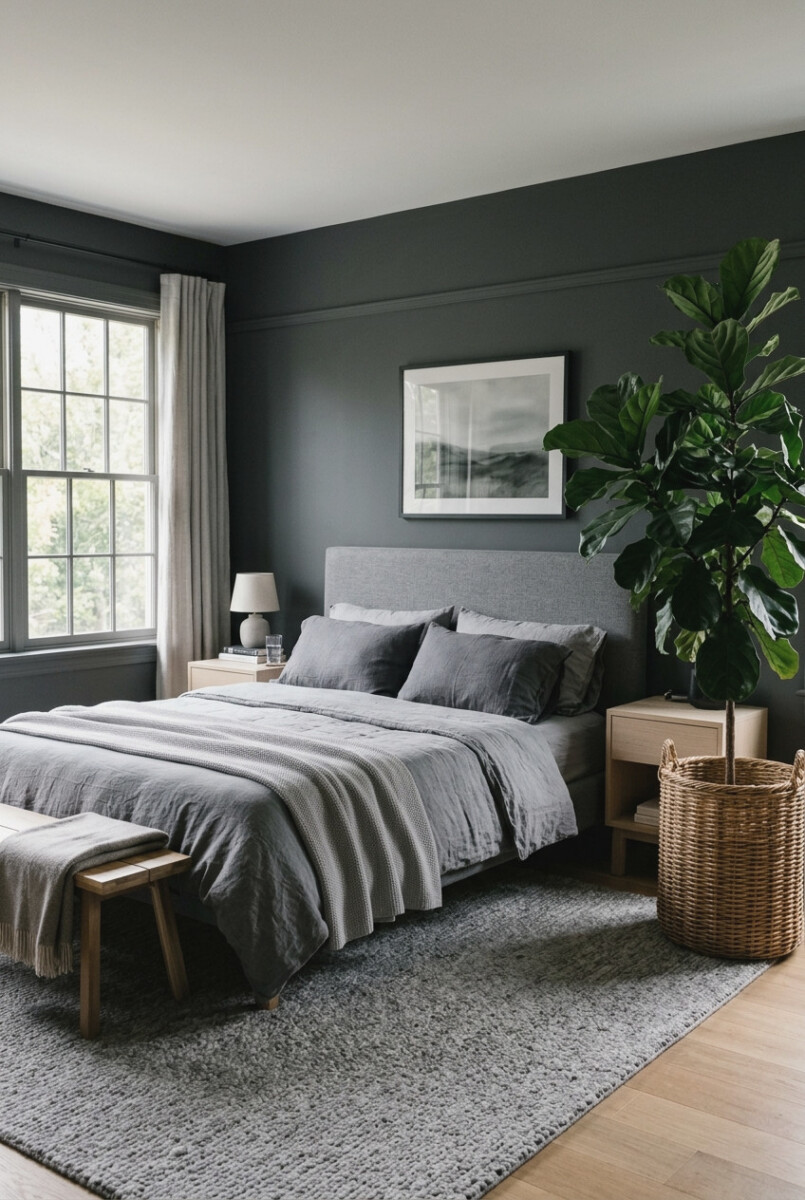
A few green plants can provide a fresh contrast to gray walls, bedding, and furniture. The color works with both warm and cool grays, while ceramic or woven planters add another material to the room. One larger plant often looks more deliberate than a crowded row of small pots.
Choose plants that suit the available light and your household, including any pets. Use trays to protect furniture from water and avoid placing pots directly above upholstered surfaces. If natural light is limited, artwork with botanical tones can serve a similar decorative purpose.
Creating a Gray Bedroom That Feels Like Home
A good gray bedroom is rarely about finding one perfect shade and using it everywhere. The most comfortable rooms balance gray with texture, suitable lighting, and a few well-chosen materials or accent colors. Warm white bedding, natural wood, and layered textiles can help even a darker scheme feel inviting.
Start with the elements you already have, such as the flooring, bed frame, and window light. Test paint and fabrics together, then add changes gradually. A thoughtful combination of color, proportion, and everyday comfort will make a gray bedroom feel personal rather than overly coordinated.
