Table of Contents
Blue works in a kitchen in more ways than you might expect. A soft, chalky shade can sit comfortably alongside cream walls and oak floors, while navy adds definition to fitted cabinets. You can introduce the color through a single island or use it across the entire room. The best approach depends on the light, the existing finishes, and how much color you want to live with.
These blue kitchen ideas cover both major renovations and smaller updates, including cabinetry, backsplashes, countertops, flooring, and decorative details. You’ll find options for compact kitchens as well as open-plan spaces, with practical tips for balancing color, choosing materials, and keeping everyday work areas easy to use.
1. Balance Navy Lower Cabinets with White Uppers
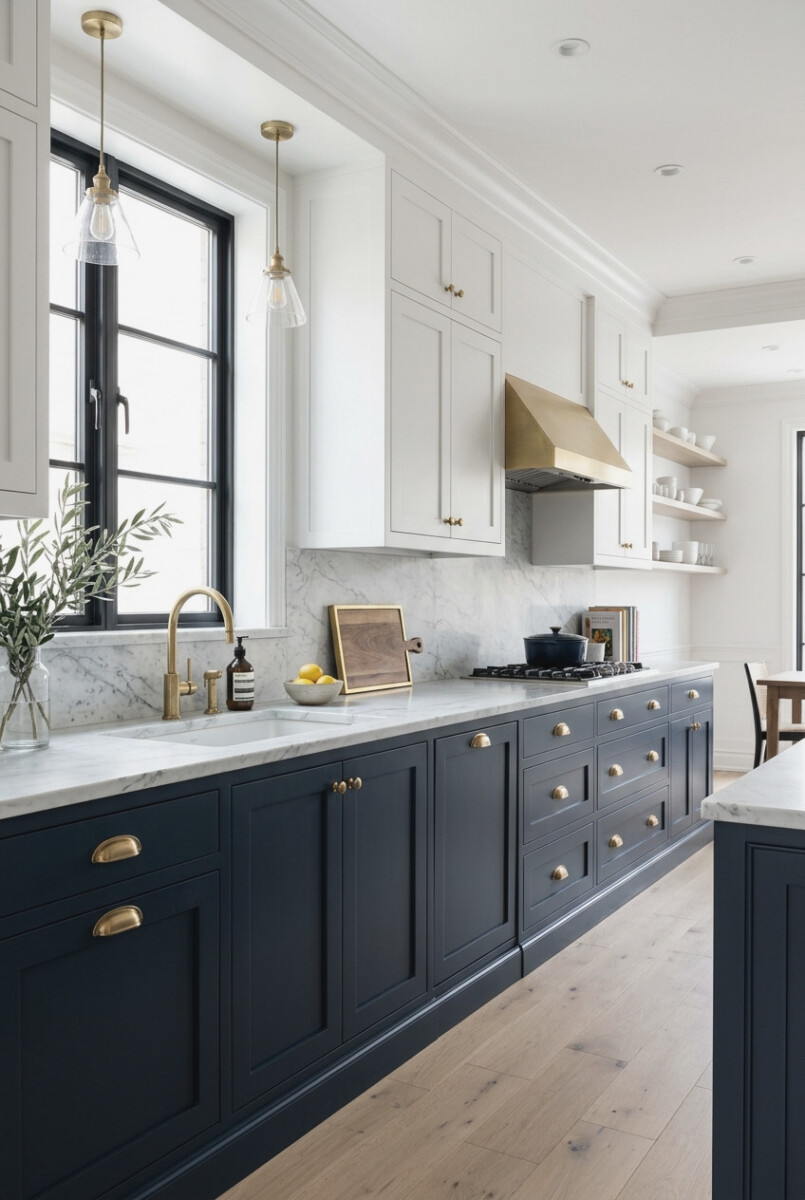
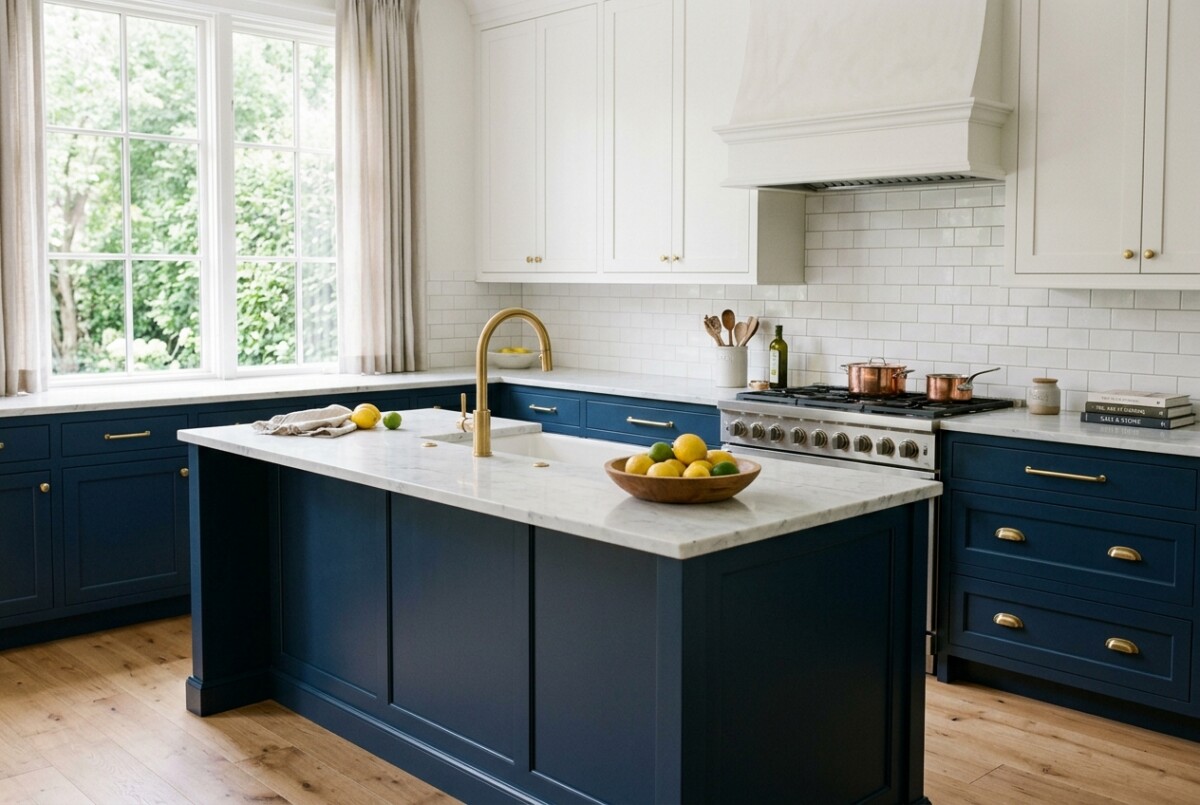
Navy base cabinets and white upper cabinets create a clean two-tone kitchen without leaving the room looking completely dark. The deeper color grounds the lower half, while the white cabinetry keeps the upper walls visually lighter. This combination works with both traditional Shaker doors and simple modern fronts.
Keep the countertop and backsplash fairly light to connect the two cabinet colors. Brushed brass handles bring warmth, while nickel or chrome gives the pairing a sharper finish. Test navy samples beside the floor before committing, because some shades lean noticeably purple or green under different lighting.
2. Choose Powder Blue Cabinets for a Soft Look
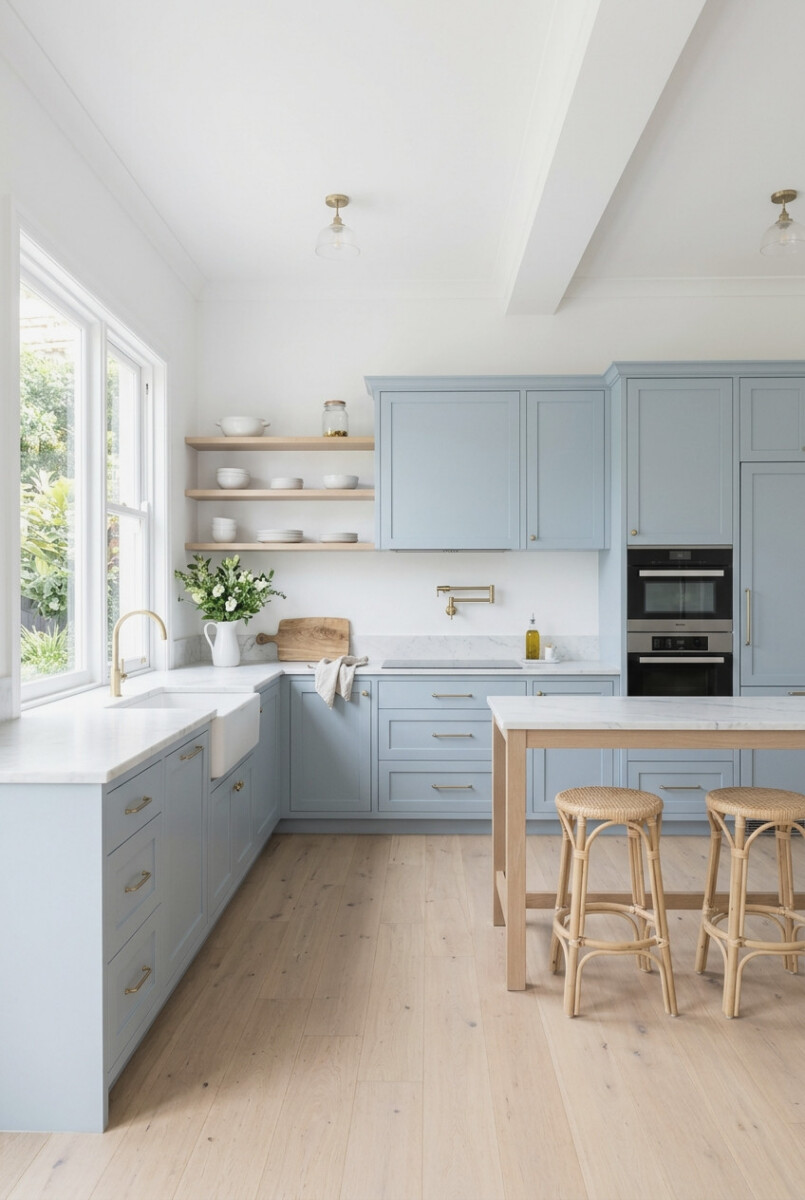
Powder blue cabinetry can give a kitchen a gentle wash of color without the strong contrast of navy or cobalt. It works particularly well with white walls, pale wood flooring, and simple countertops, creating an airy scheme that still has more personality than an all-white kitchen.
Choose a blue with a little gray in it if you prefer an understated finish. Look at paint samples in morning and evening light, and check them against the actual countertop rather than a white paint card. Small differences in undertone become more obvious across a full run of cabinets.
3. Paint Only the Kitchen Island Blue
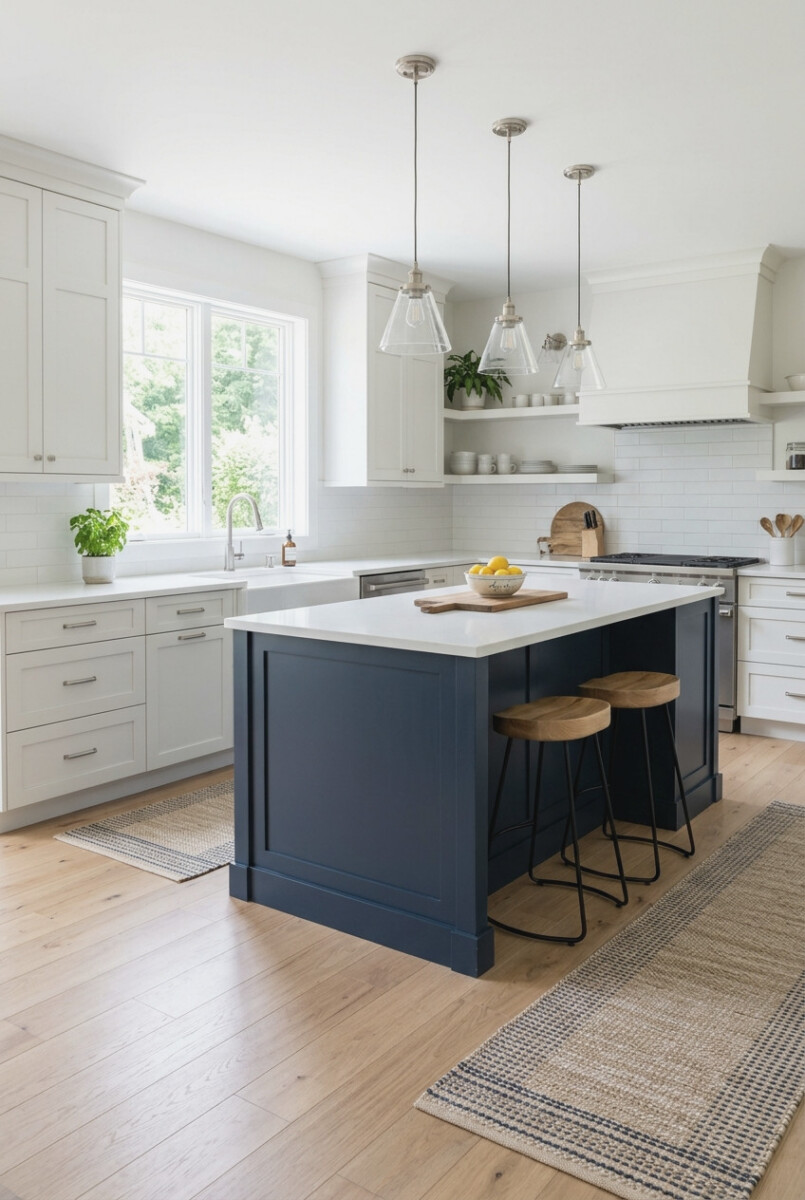
A blue kitchen island gives a mostly neutral kitchen one clear focal point. It is a practical option when the perimeter cabinets are in good condition and you want more color without repainting every door. Navy, denim blue, or muted teal can all look striking against white or natural wood cabinets.
Repeat the island color in one small detail, such as a patterned runner or a piece of artwork, so it feels connected to the space. Make sure the painted finish is appropriate for cabinets, especially around drawers and stools that get regular knocks.
4. Try Dusty Blue Shaker Cabinets
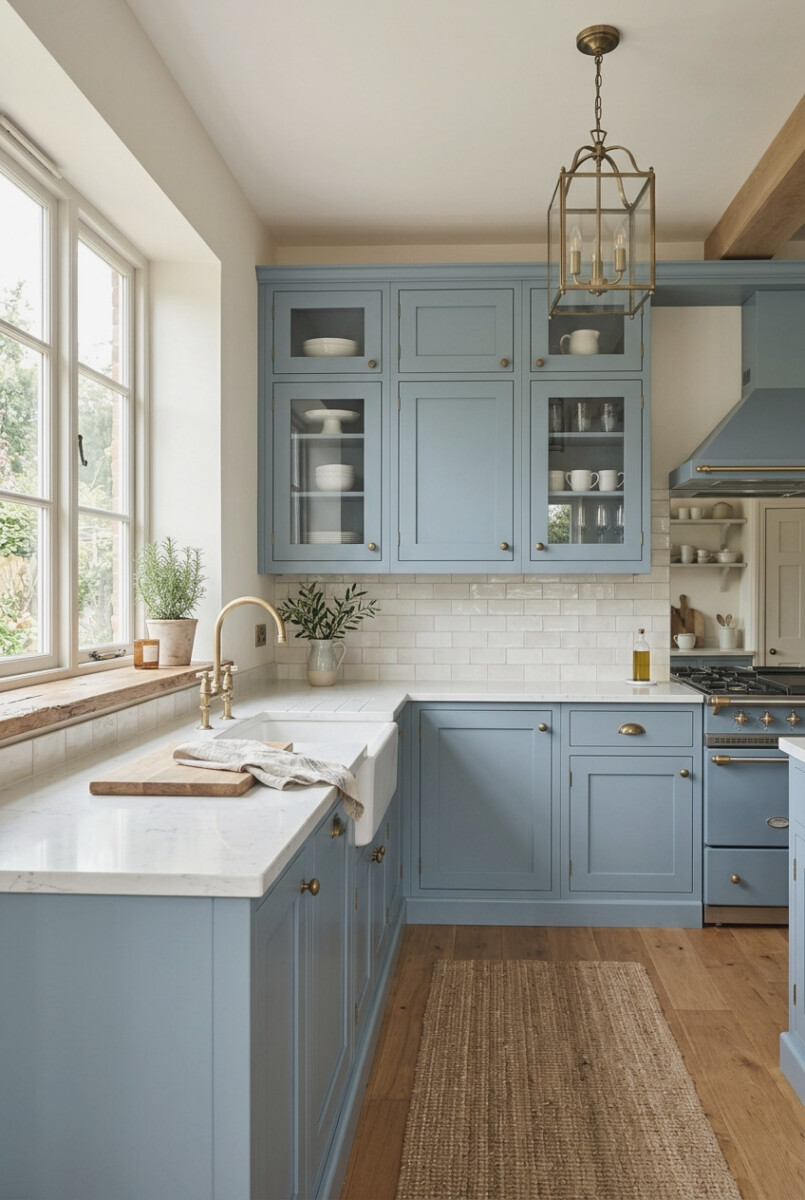
Dusty blue suits Shaker cabinet doors because the simple framed profile gives the color a traditional foundation without feeling overly decorative. The muted finish pairs easily with off-white walls, stone-look counters, and aged metal hardware. It can feel equally at home in a cottage kitchen or a relaxed contemporary one.
If you’re updating existing doors, use a cabinet-rated primer and paint system suited to their material. Clean and prepare the surfaces properly before painting; a good-looking color will not compensate for a finish that starts peeling around handles and edges.
5. Go Bold with Cobalt Blue Flat-Front Cabinets
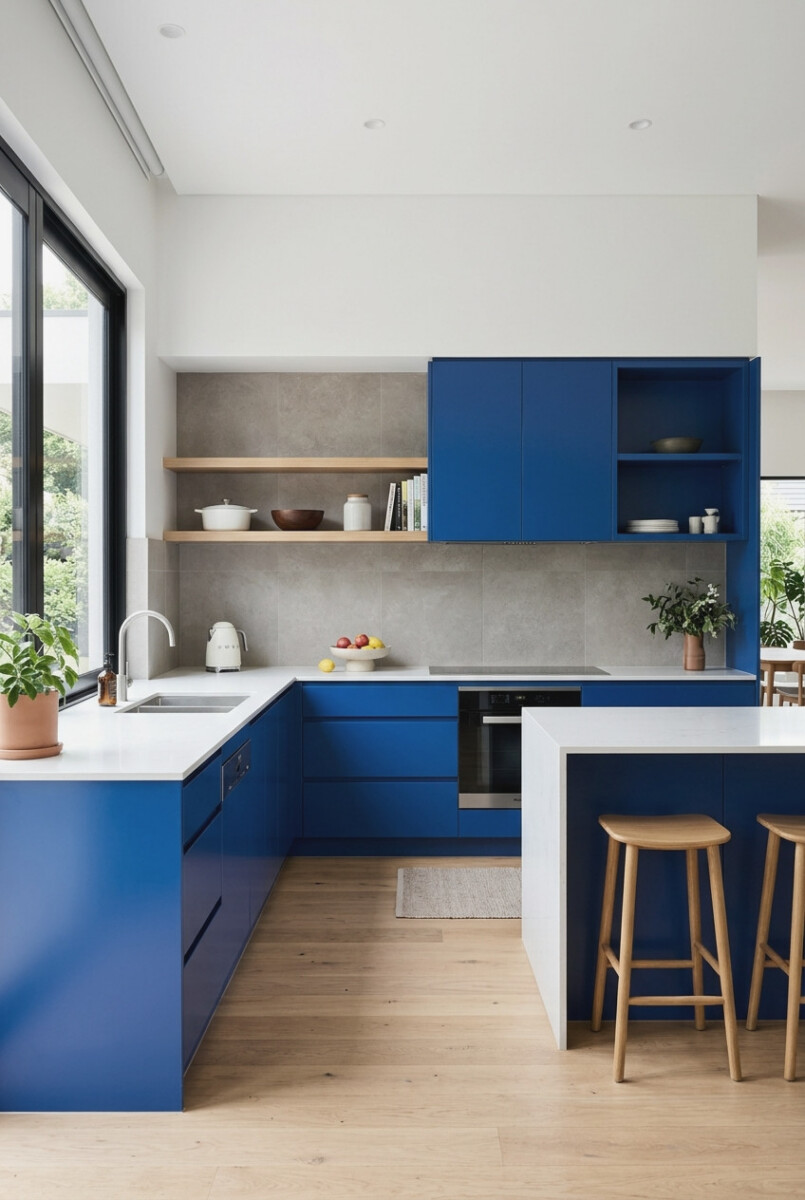
Cobalt blue works best when the kitchen design gives it room to stand out. Flat-front cabinets, uncluttered counters, and straightforward lighting keep the saturated color from feeling too busy. This is a good direction for someone who prefers a modern kitchen with a stronger visual identity.
Balance the intensity with a restrained palette of white, warm gray, or light timber. Matte and satin finishes will look different in the same room, so view samples beside the windows and under artificial lighting before deciding which one suits the space.
6. Warm Up Duck Egg Blue with Cream
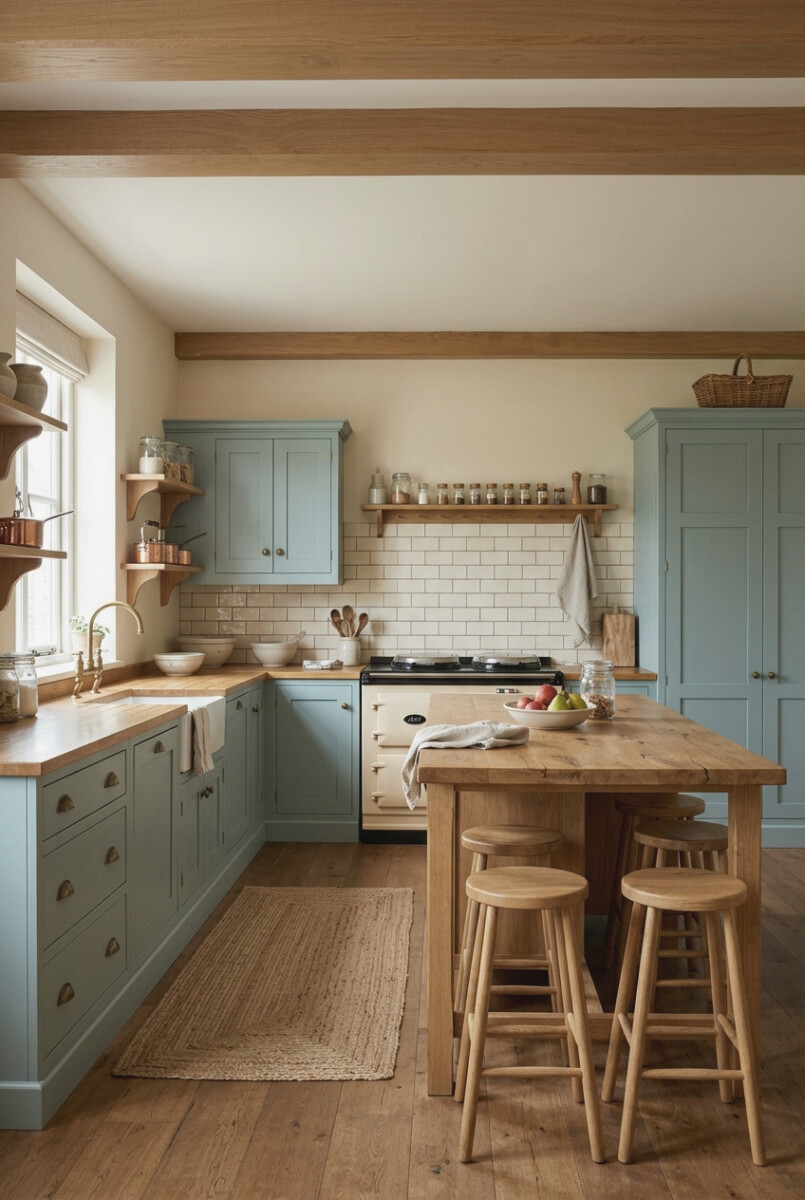
Duck egg blue has a gentle green-gray undertone that pairs comfortably with cream-colored cabinetry, warm white walls, and natural wood. It can make a traditional kitchen feel fresh without losing the softness of a country-inspired scheme. The color also works well on paneled doors and tall pantry cupboards.
Avoid pairing every pale blue with a stark, cool white, which may make the room look colder than intended. Cream tile, warm grout, and oak accents can bring the palette together while allowing the blue to remain the main feature.
7. Use Slate Blue for a Contemporary Kitchen
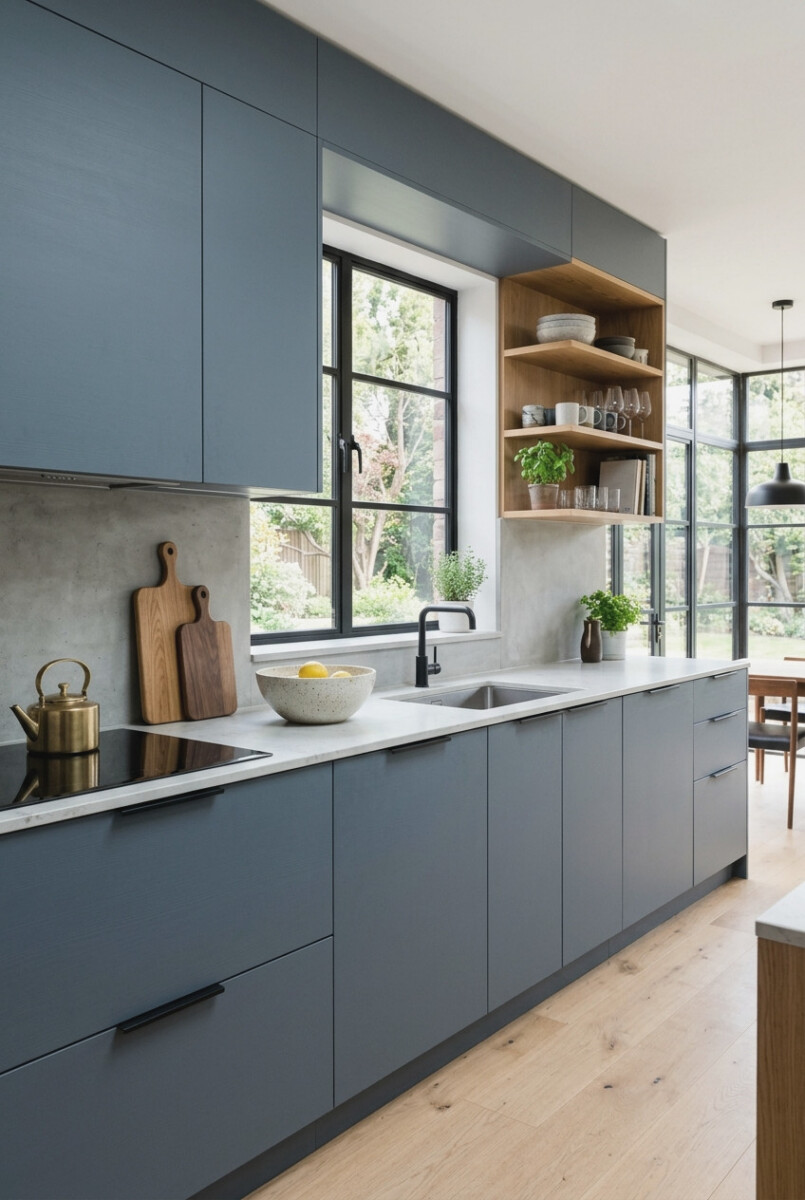
Slate blue is a useful middle ground between classic navy and very pale blue. Its gray undertone makes it easy to combine with concrete-look surfaces, light stone, and black-framed windows. The result can feel modern without relying on a completely monochrome gray kitchen.
Use a warm wood element, such as a cutting-board display or oak shelving, to soften the cooler finishes. In a room with limited daylight, sample slate blue carefully; darker versions can look almost charcoal when the overhead lights are off.
8. Pair Deep Teal-Blue with Natural Oak
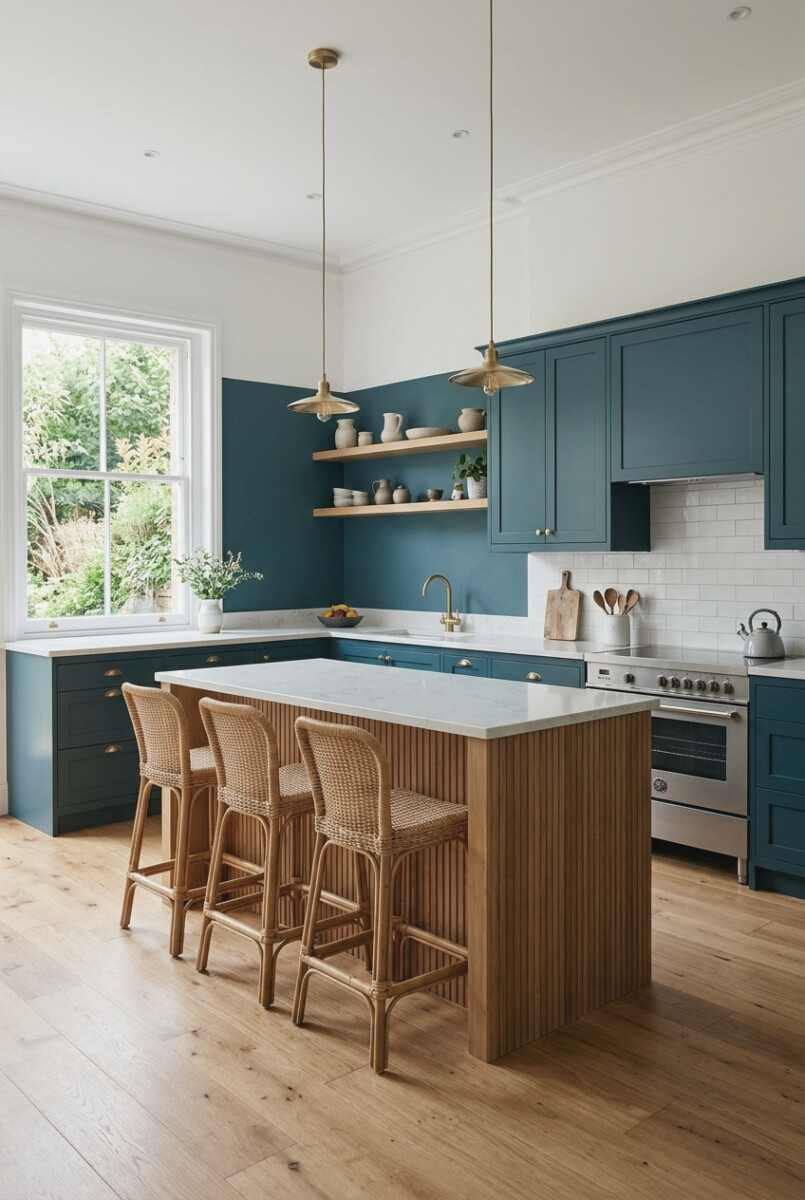
Deep teal-blue cabinetry brings richer color to a kitchen that has oak shelves, timber flooring, or wood-paneled details. The green undertone connects well with warmer wood shades and can give a clean-lined kitchen a more relaxed appearance.
Keep the wood finish consistent across major surfaces, then vary the texture through ceramics or woven seating. If you’re using teal on most of the cabinets, a light worktop and good task lighting can help keep the cooking areas bright.
9. Introduce Blue Through the Kitchen Walls
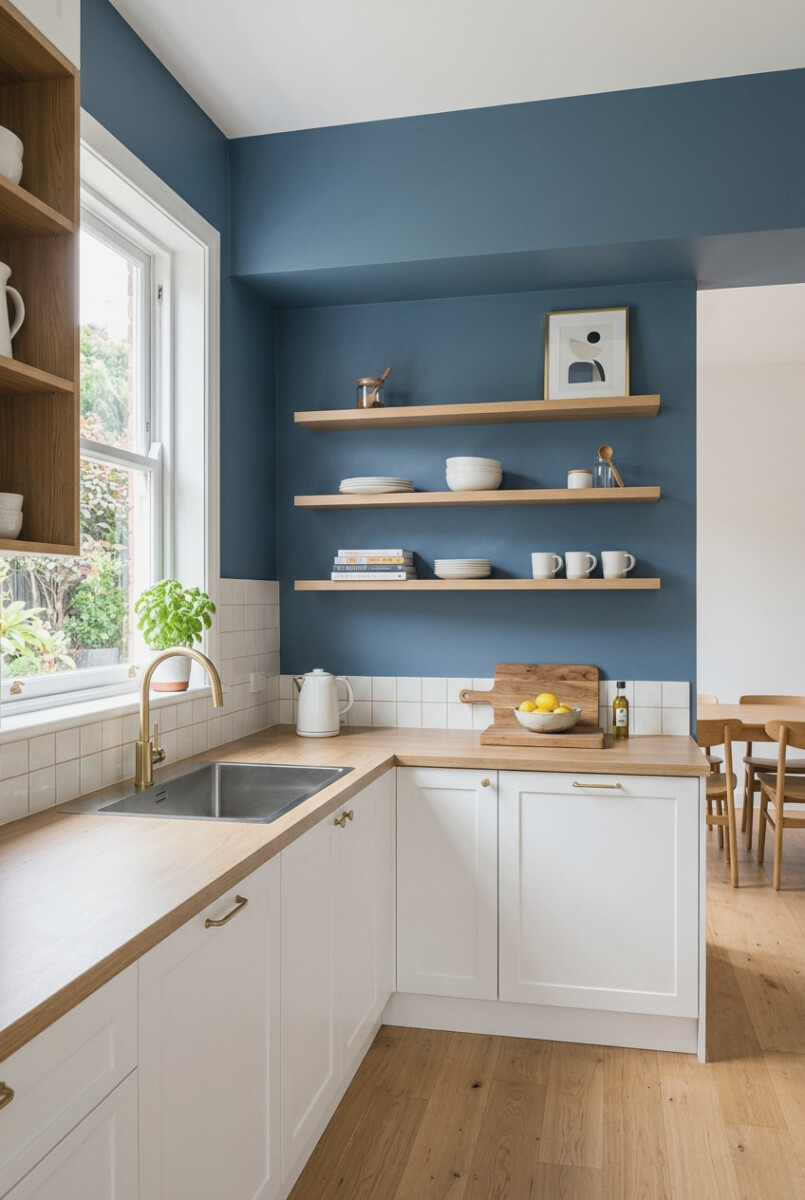
Painting kitchen walls blue is an alternative to replacing or repainting cabinets. A medium blue can give white or pale timber cabinets more definition, while a soft blue-gray provides a quiet background for artwork, open shelves, and everyday kitchen accessories.
Choose washable paint intended for busy interior spaces, especially near food preparation areas. Keep the backsplash easy to clean and use the wall color on surfaces away from repeated splashes rather than relying on ordinary paint behind the sink or hob.
10. Install a Classic Blue Subway Tile Backsplash
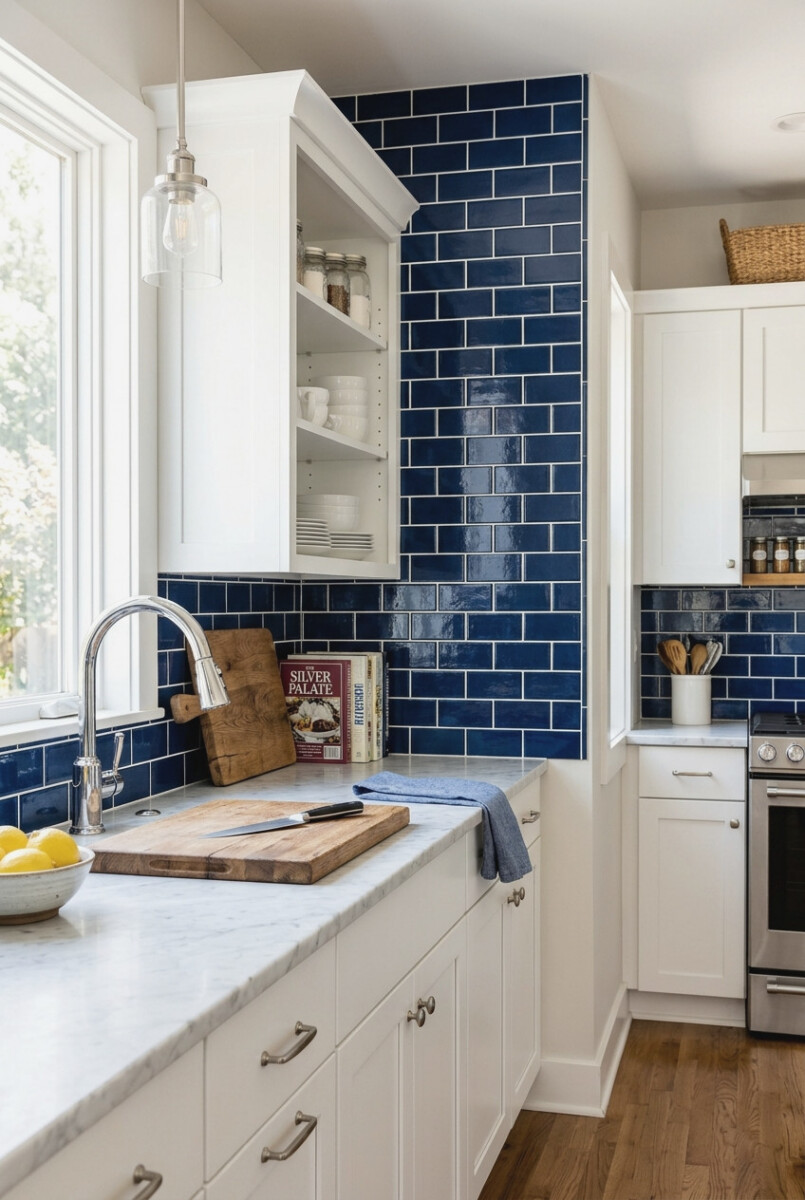
A blue subway tile backsplash brings color into the kitchen without committing to blue cabinetry. Glossy navy tiles add contrast to white cabinets, while pale blue tiles create a softer look with natural wood or cream-painted doors. The familiar rectangular shape makes the color easier to work into different styles.
Decide on the grout color before installation, since it can change the pattern considerably. Dark grout emphasizes the outlines of pale tiles, while a closer color match gives a more continuous appearance. Select tile and grout suited to kitchen splash areas.
11. Add Texture with Handmade-Look Blue Tiles
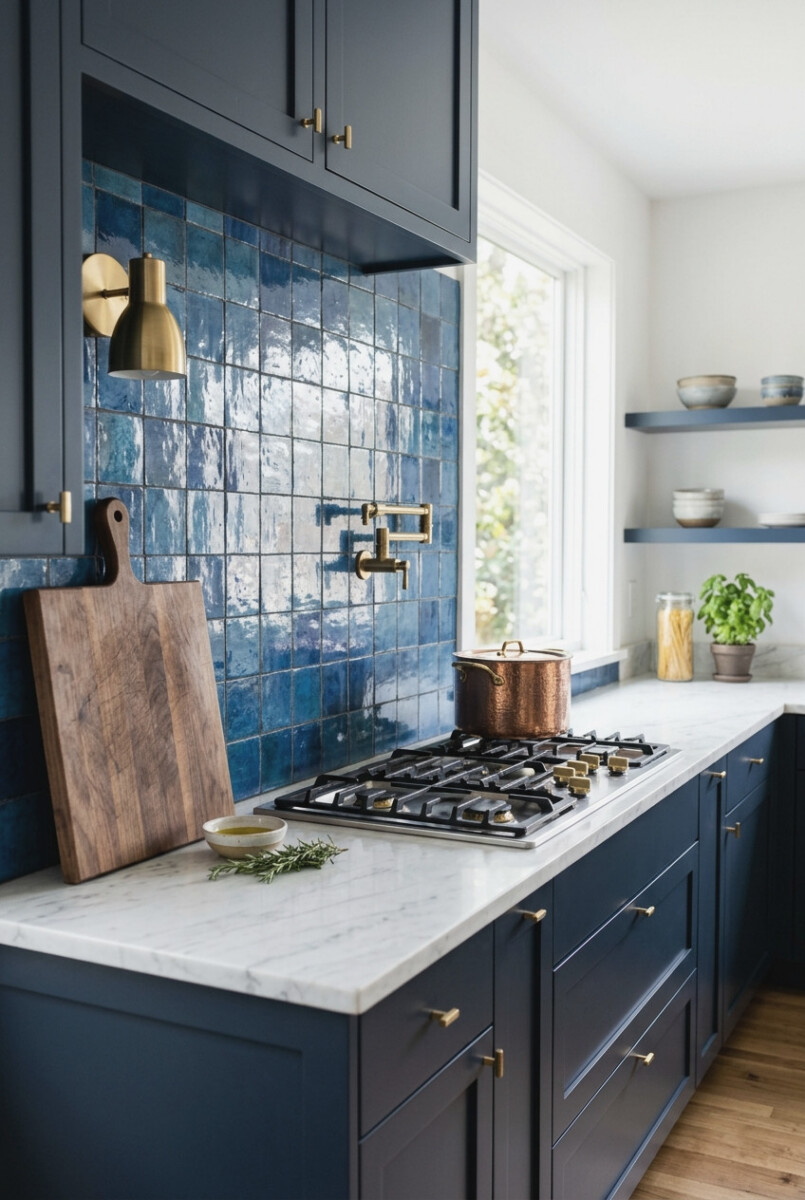
Blue handmade-look tiles add subtle variation to a kitchen wall, especially when the glaze shifts from one piece to the next. Their uneven appearance looks appealing beside smooth stone countertops and simple cabinetry. A short run behind the sink or along a cooking wall can provide plenty of interest.
Check whether the particular tile is recommended for a kitchen backsplash and what sealing or cleaning it requires. Some artisan tiles have irregular edges or more absorbent surfaces, which can affect grout joints and maintenance near the hob.
12. Make Patterned Blue Tiles the Focal Point
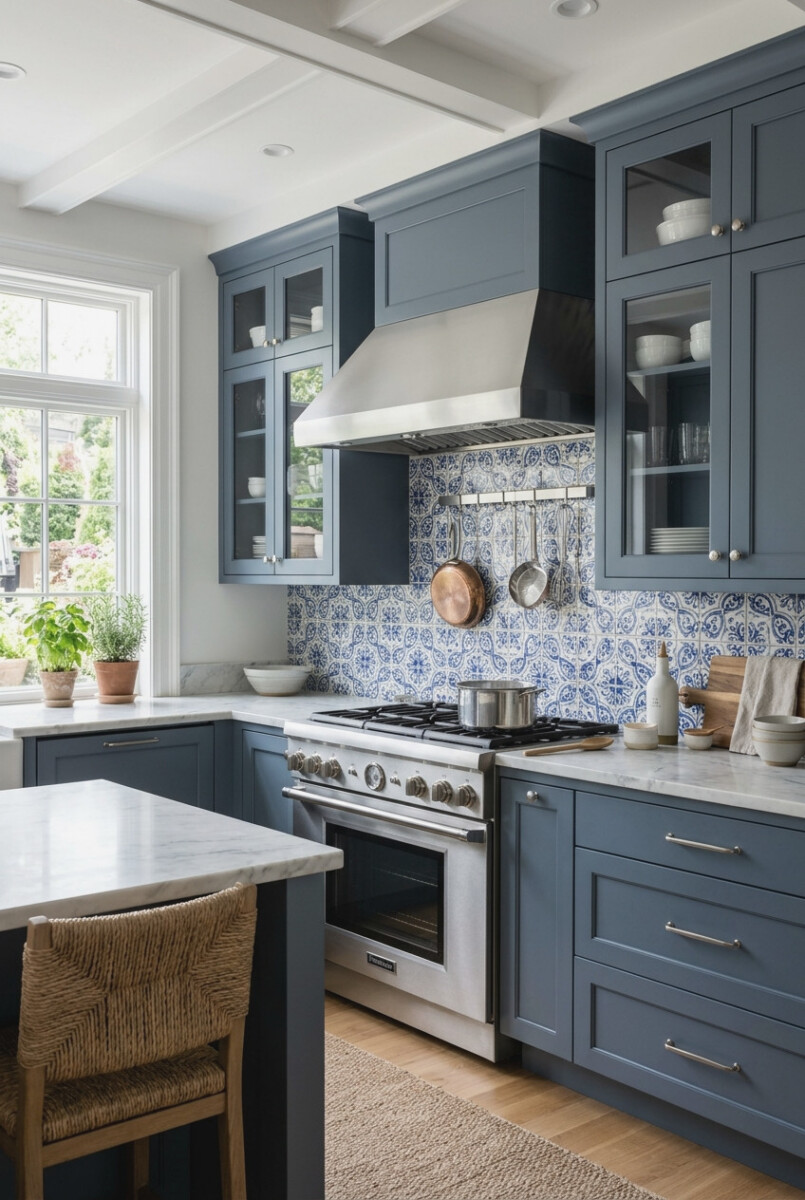
A blue-and-white patterned backsplash can give plain cabinets a more personal look. Small geometric motifs suit contemporary kitchens, while floral or Mediterranean-inspired patterns bring a more traditional feel. The pattern works especially well when the cabinets and countertops are kept simple.
Use patterned tile in one defined area, such as the space behind the range, rather than automatically covering every wall. This keeps the design balanced and makes it easier to update other colors in the future without competing patterns.
13. Pair Blue Cabinets with White Quartz Countertops
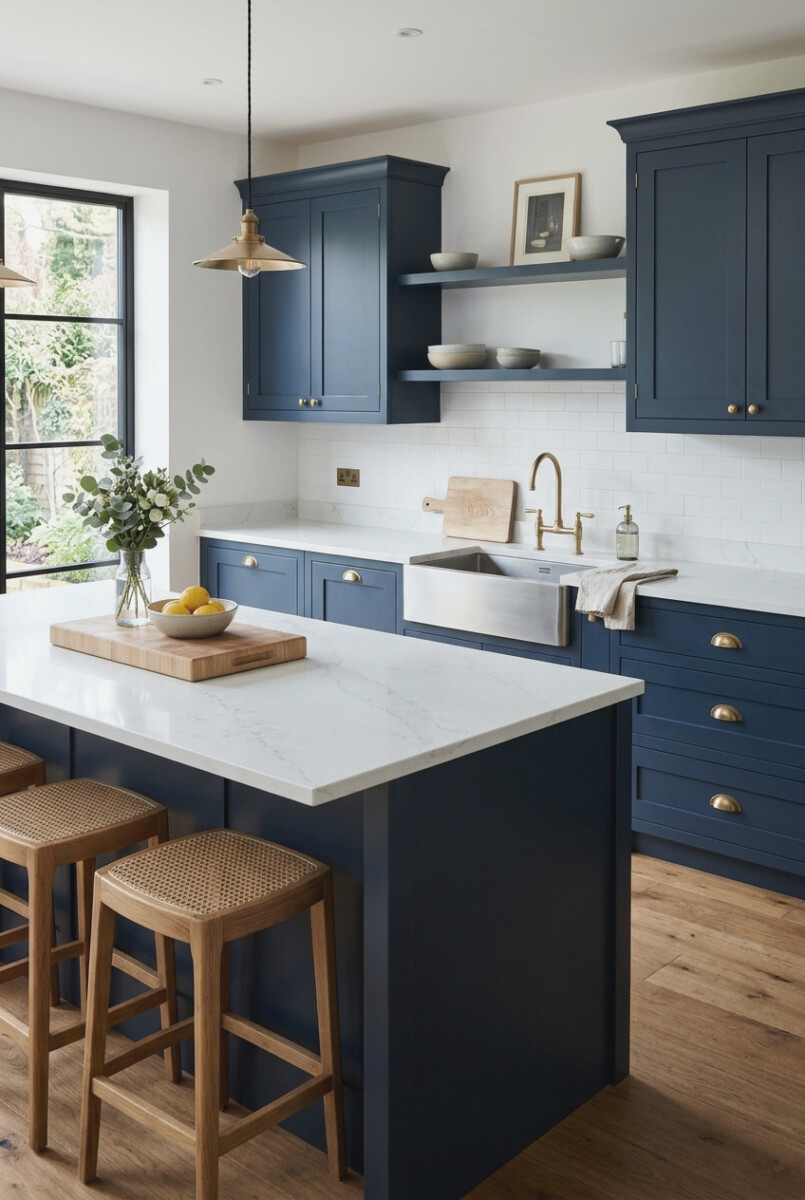
White quartz countertops give blue cabinets a crisp, practical companion. The contrast looks clean against navy or medium blue, while pale blue cabinets and warm white quartz create a gentler effect. This is a versatile combination for kitchens that need plenty of usable counter space.
Compare solid and lightly veined quartz samples with the cabinet finish before ordering. Follow the manufacturer’s guidance on hot cookware and cleaning products; quartz is low-maintenance, but that does not make it completely heatproof or damage-resistant.
14. Add Elegance with Marble or Marble-Look Surfaces
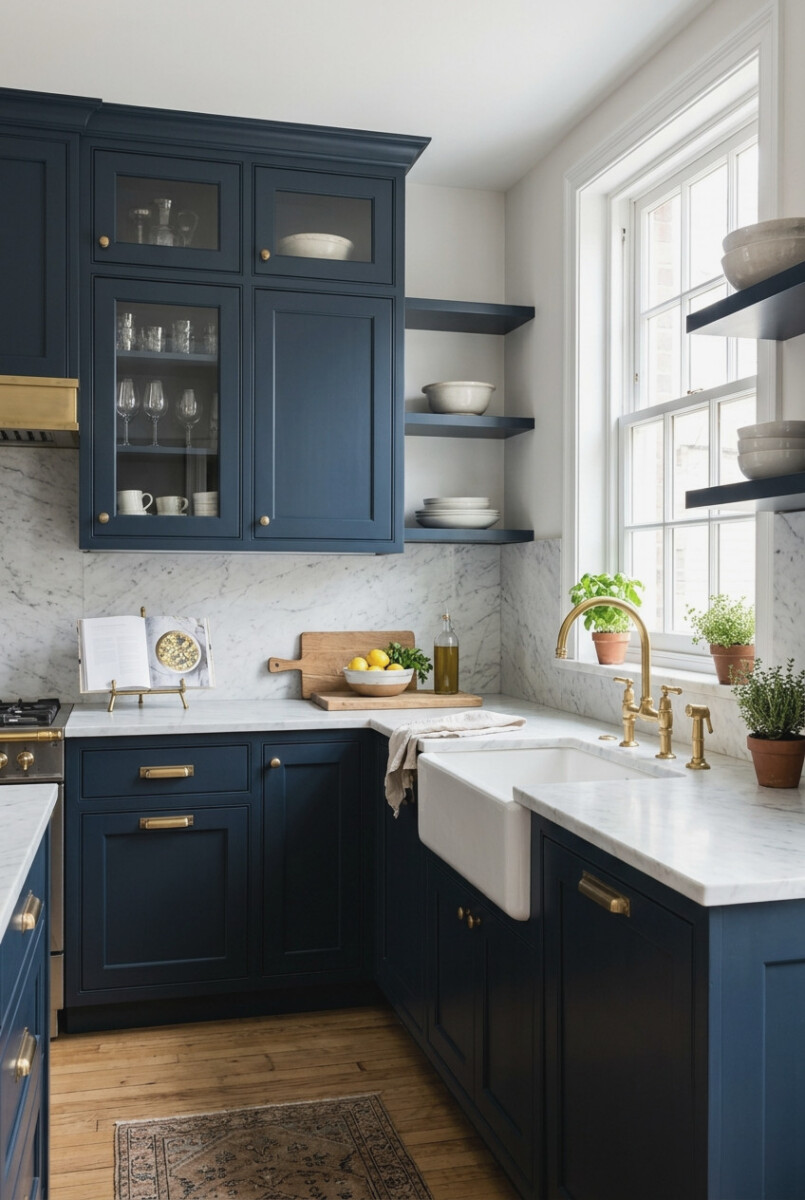
A marble or marble-look worktop can soften the strong blocks of color created by dark blue cabinetry. Gentle gray veining helps connect navy doors with stainless steel appliances, while warmer veining pairs nicely with brass and oak details. You can carry the same surface up the wall for a coordinated backsplash.
Natural marble needs more care than many engineered alternatives and may stain or etch from acidic ingredients. Choose the material according to how your household cooks, and compare samples in person because veining and background color vary widely.
15. Top Blue Cabinets with Butcher Block
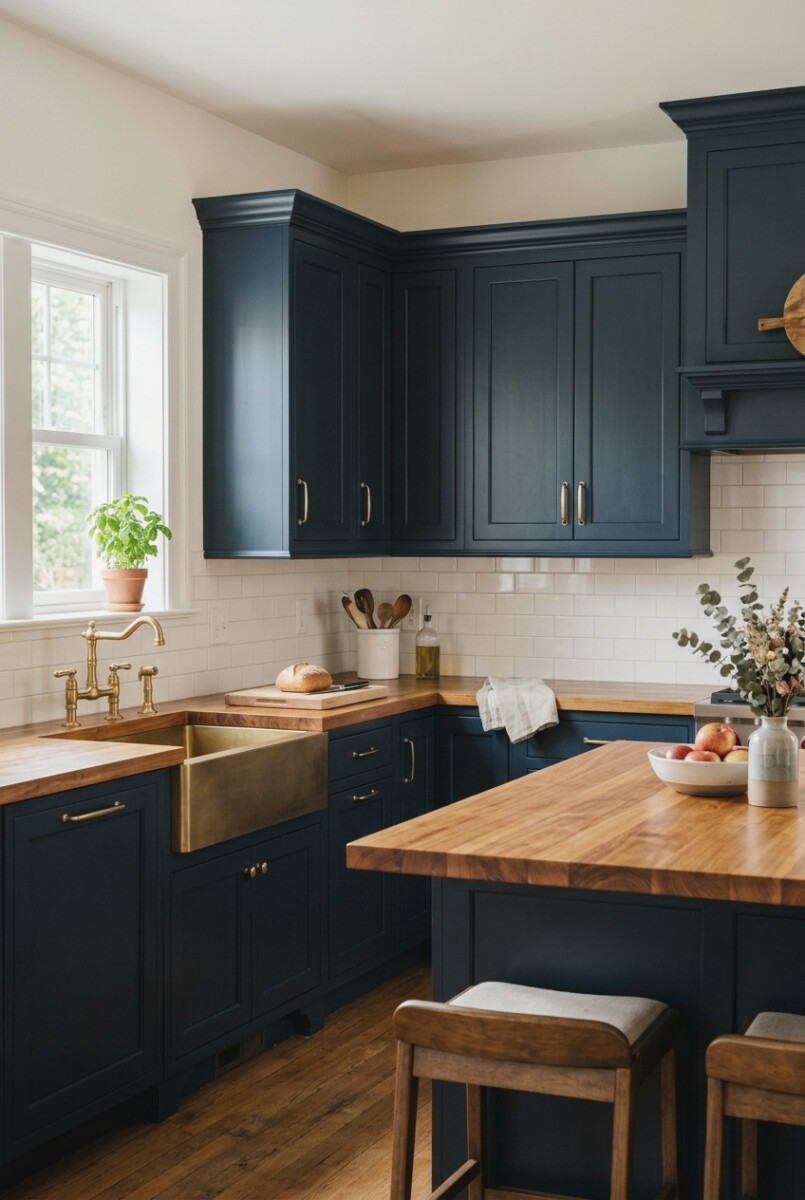
Wood countertops bring warmth to blue cabinetry, particularly in farmhouse, coastal, and relaxed contemporary kitchens. Honey-toned wood complements powder blue, while darker wood can give navy cabinets a richer, more grounded appearance. Even a small butcher-block section can make a useful preparation area.
Choose a finish designed for kitchen countertops and maintain it according to the manufacturer’s instructions. Wipe up standing water promptly, especially around sinks and seams. If you prefer easier upkeep, keep wood to an island or breakfast counter away from the wettest areas.
16. Keep Natural Wood Cabinets and Add Blue Accents
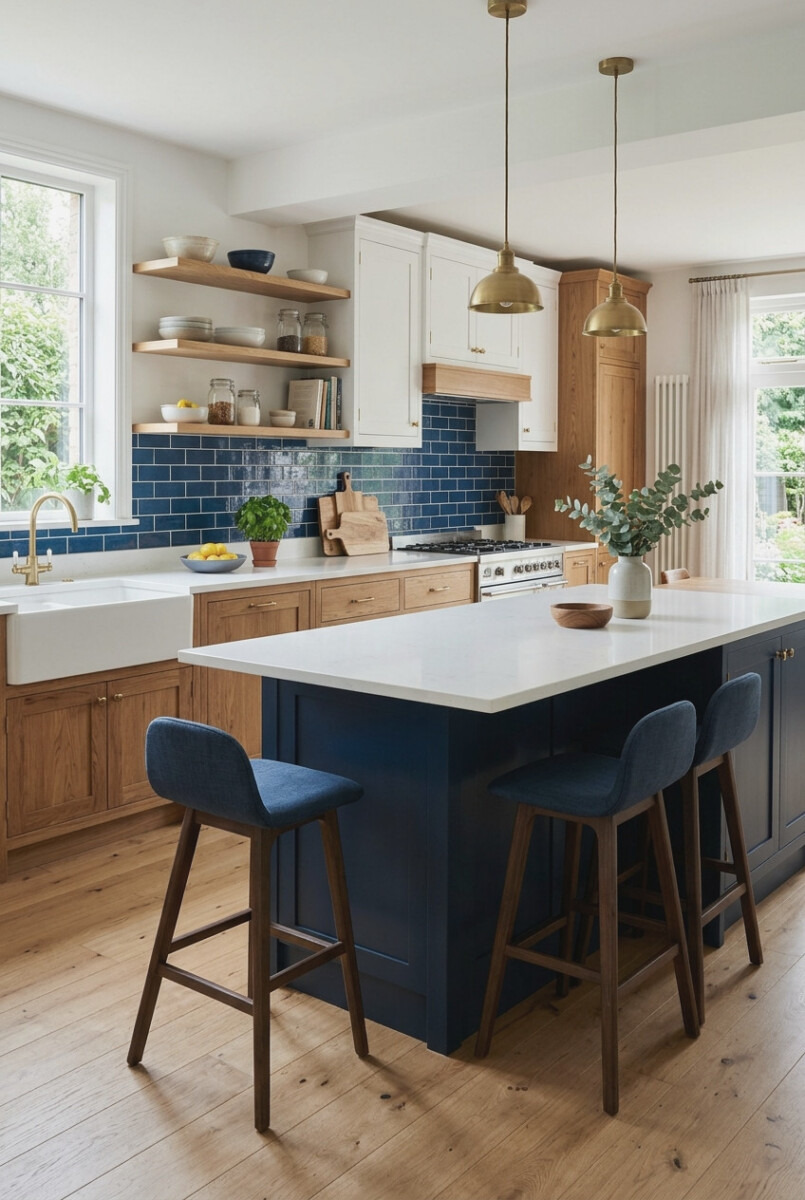
You don’t need painted cabinets to create a blue kitchen. Natural oak or walnut cabinetry can provide a warm base for blue bar stools, a tiled backsplash, or a colored peninsula. This approach suits kitchens where the existing wood is attractive and worth keeping.
Start with one substantial blue element rather than scattering small blue accessories around the room. A blue tile wall or a painted peninsula establishes a clearer design direction, while a neutral countertop ties the wood and color together.
17. Combine Blue Cabinetry with Brass Hardware
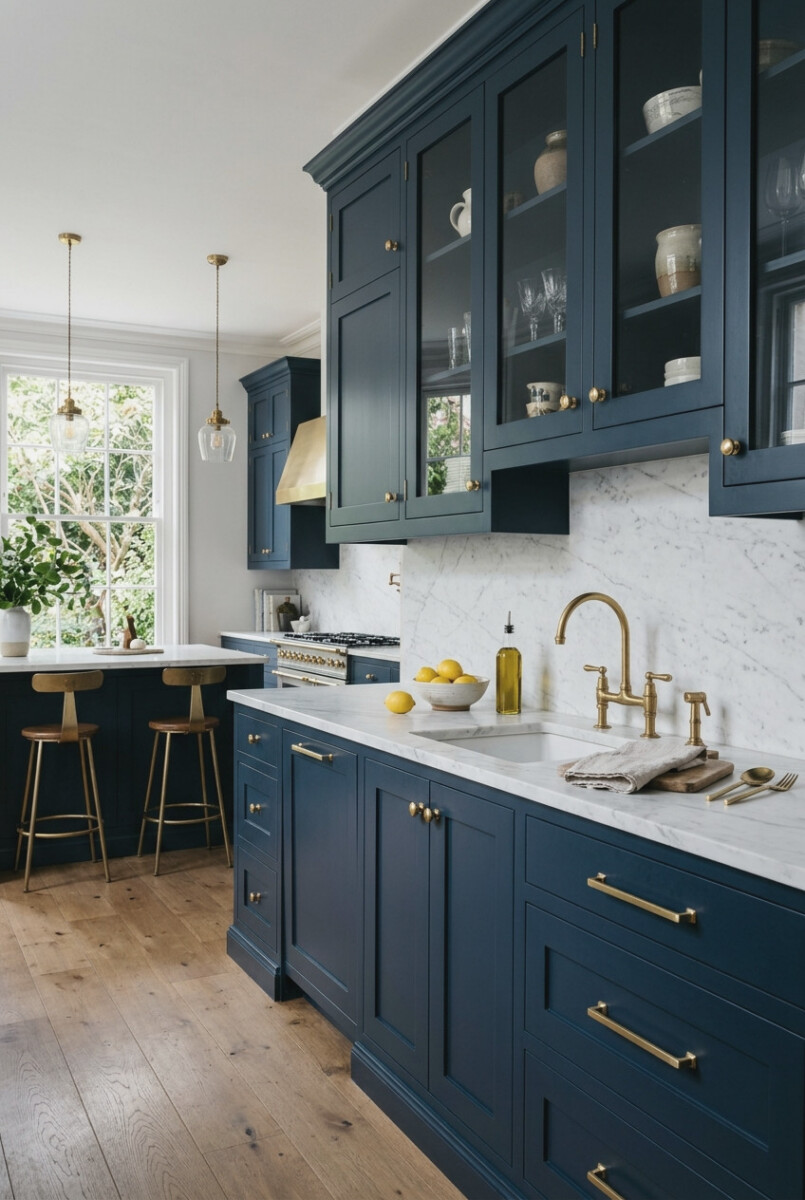
Brass handles and knobs add warmth to blue cabinetry, whether the shade is a pale gray-blue or a deep midnight tone. They work particularly well with traditional paneled doors and white stone surfaces, bringing a little contrast without taking attention away from the cabinet color.
Choose one consistent brass finish for the main cabinet hardware, then decide whether the tap and lighting should match or subtly differ. Warm metal finishes can vary from yellow gold to muted champagne, so compare actual samples rather than relying on photographs alone.
18. Keep It Crisp with Chrome and Stainless Steel
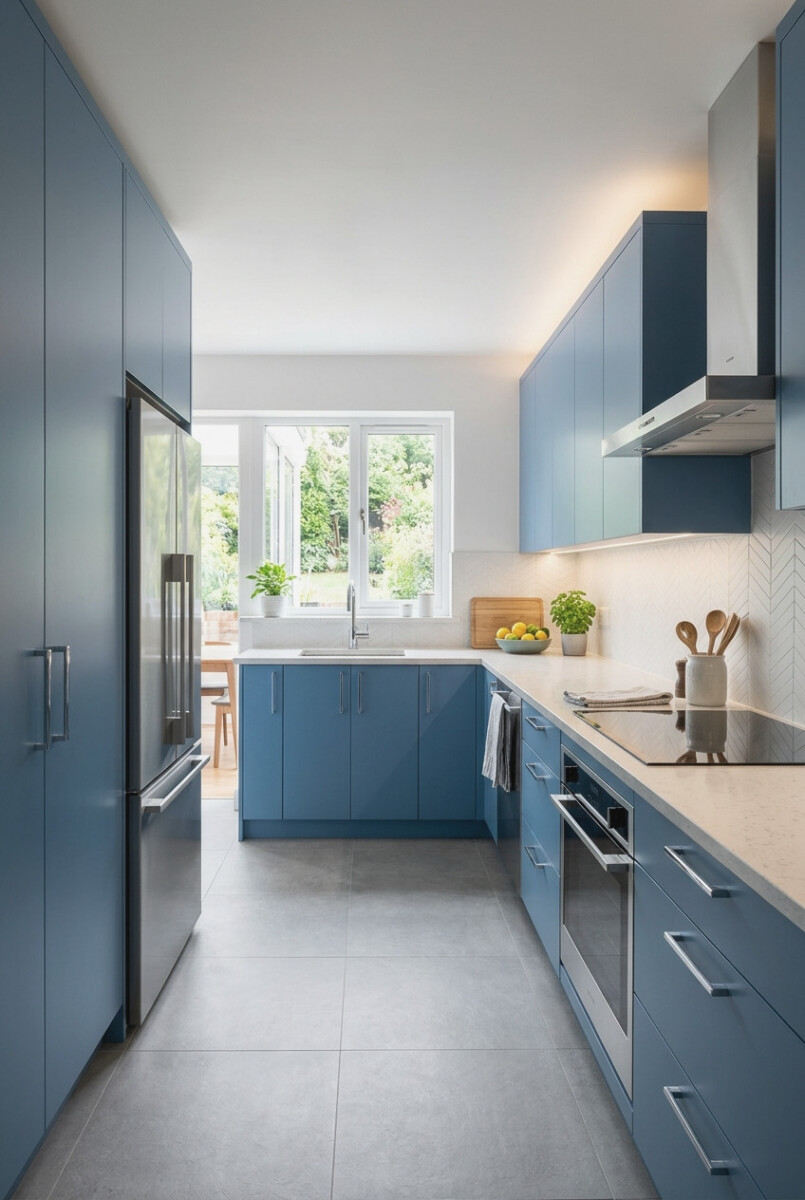
Blue kitchens don’t always need warm brass accents. Chrome handles, stainless steel appliances, and a pale stone worktop can give medium blue cabinets a clean contemporary look. The cooler palette feels particularly natural in rooms with simple doors and minimal detailing.
Avoid making every surface highly reflective. A satin cabinet finish, matte floor, or textured backsplash can balance polished metal and glass. Under-cabinet lighting also helps keep work areas useful after dark.
19. Try Matte Black Hardware with Blue-Gray Cabinets
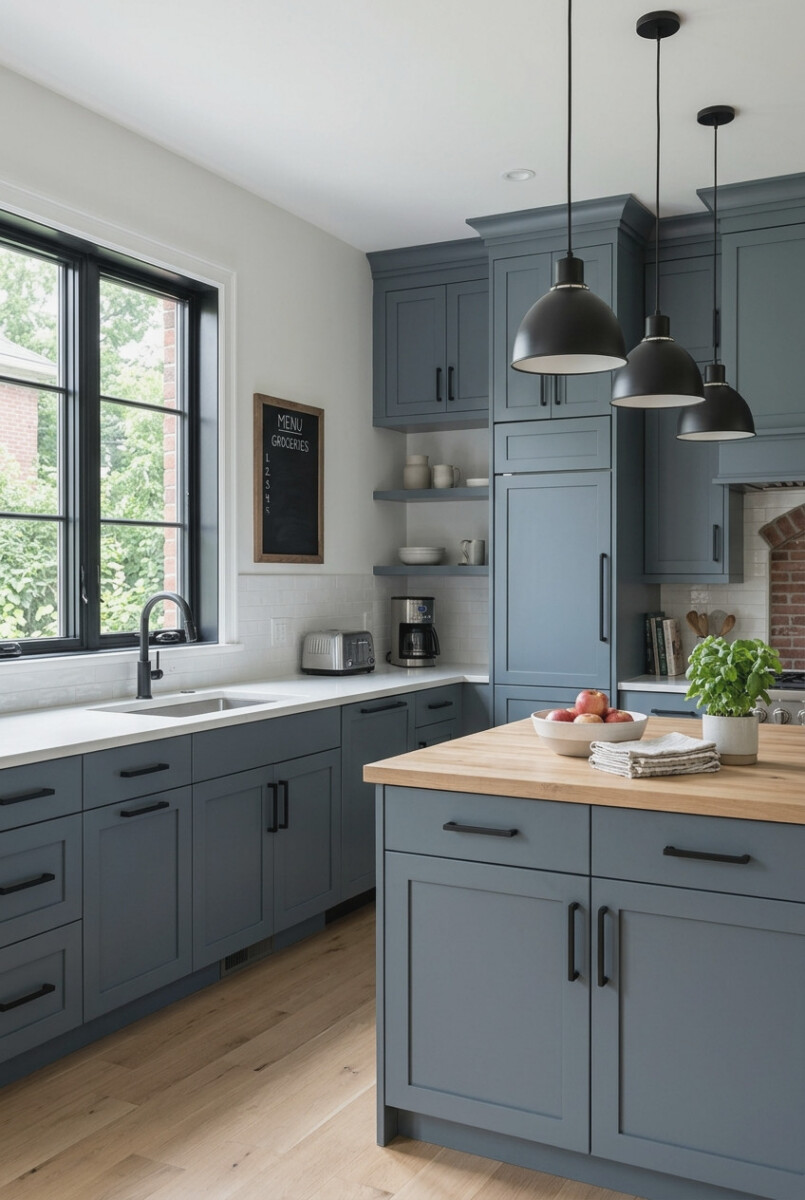
Matte black hardware creates a defined outline against blue-gray cabinet doors without the brightness of chrome. It works well in modern kitchens that already have black-framed windows, dark stools, or simple metal pendant lights.
Keep the black details selective so they support the blue rather than dominating it. Check handle shapes for comfort and ease of cleaning, especially on cabinets opened frequently with wet or flour-covered hands.
20. Warm Up Dark Blue with Copper Details
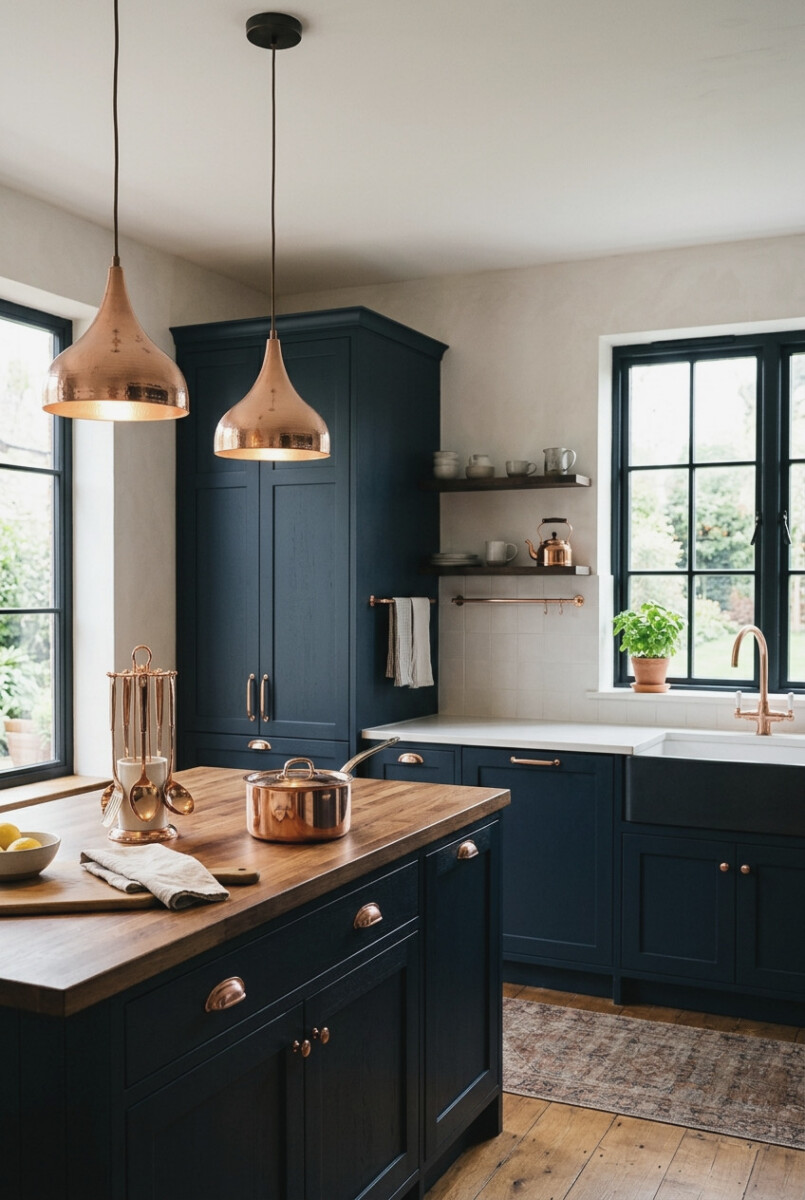
Copper accents introduce a softer, warmer metal finish to dark blue kitchens. A copper-toned pendant, decorative pot, or small set of utensils can look appealing against navy cabinets and warm white walls, creating a less formal mood than polished brass.
Use copper as an accent rather than repeating it across every fixture. Some copper finishes develop a patina, while coated pieces keep a more consistent appearance. Consider how much maintenance you’re comfortable with before choosing frequently handled surfaces.
21. Show Off Dishes in Blue Glass-Front Cabinets
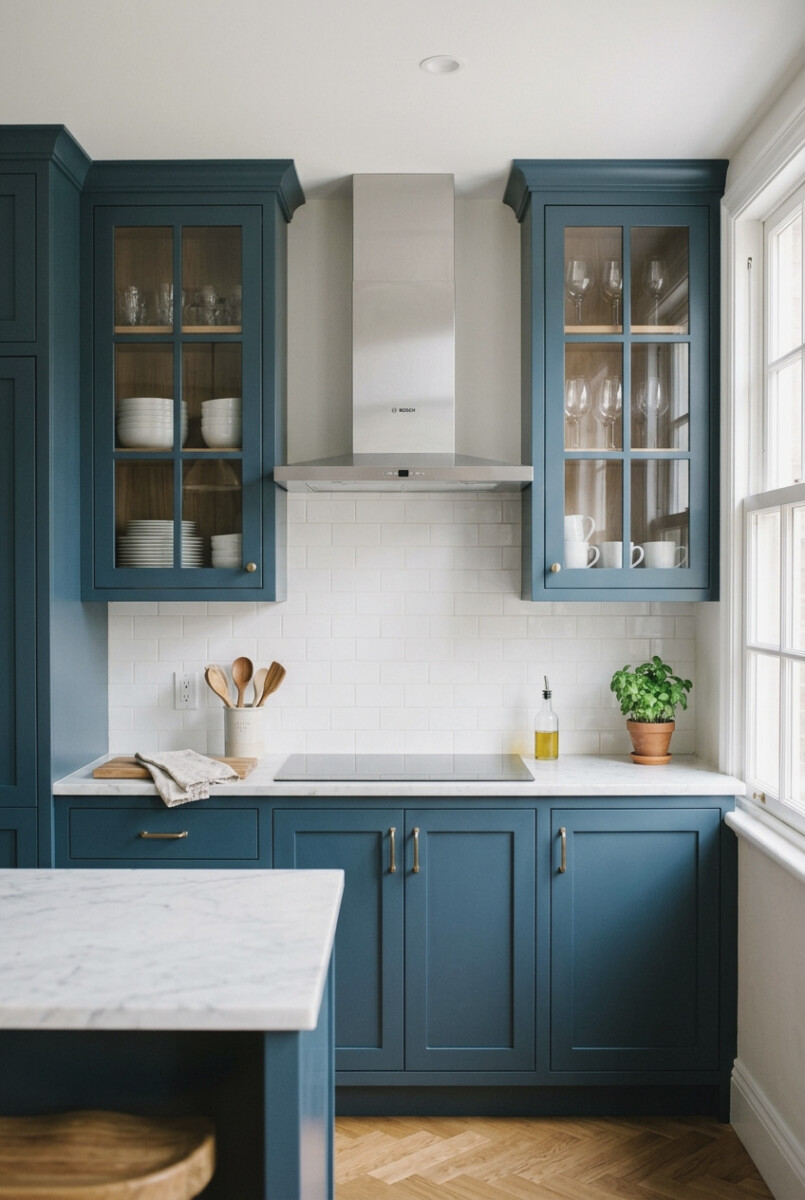
Glass-front upper cabinets can make a blue kitchen feel less visually solid. Blue frames give the display a defined border, while the glass reveals stacks of white plates, colored glassware, or everyday ceramics. This works particularly well on one cabinet run or a pair of cabinets beside a range hood.
Keep the contents relatively organized because they will remain visible. If you prefer a quieter look, choose lightly textured or reeded glass, which softens the view of the shelves without fully hiding them.
22. Balance Blue Base Cabinets with Open Oak Shelves
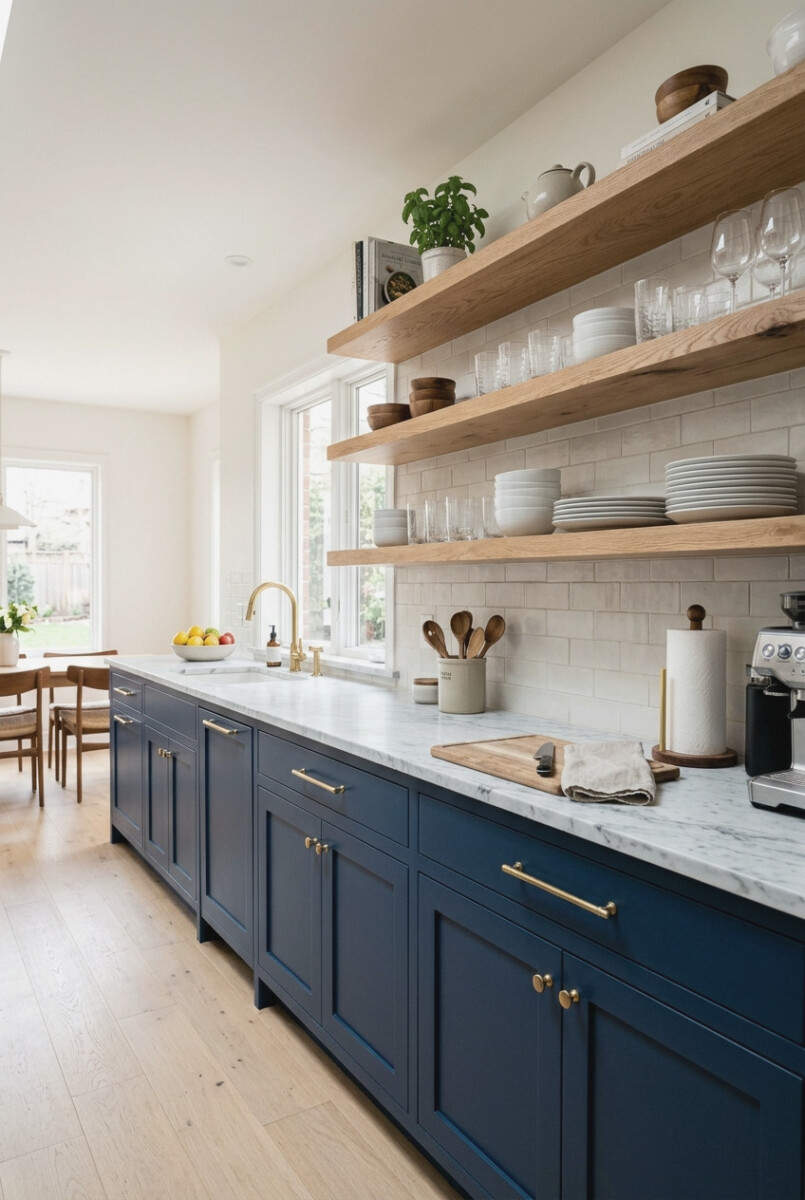
Open oak shelves above blue base cabinets can create a lighter upper wall than another row of cupboards. They also bring texture into the room and offer space for everyday dishes, small bowls, and a few decorative pieces. This arrangement can work well in a narrow kitchen with limited natural light.
Keep frequently used items within easy reach, and avoid placing shelves where cooking grease will build up quickly. Use suitable wall fixings and make sure the shelves can support the weight of dishes before loading them.
23. Paint a Pantry Cabinet Deep Blue

A tall pantry or freestanding larder is a good place to introduce blue when you want a change without repainting the whole kitchen. Deep navy or denim blue can make the cupboard feel like a separate furniture piece, particularly against cream walls and timber flooring.
Choose handles that relate to the rest of the kitchen so the pantry doesn’t look disconnected. If it sits in a narrow passage, check door clearance and keep the surrounding finishes fairly simple to avoid making the corner feel cramped.
24. Match the Range Hood to Blue Cabinetry
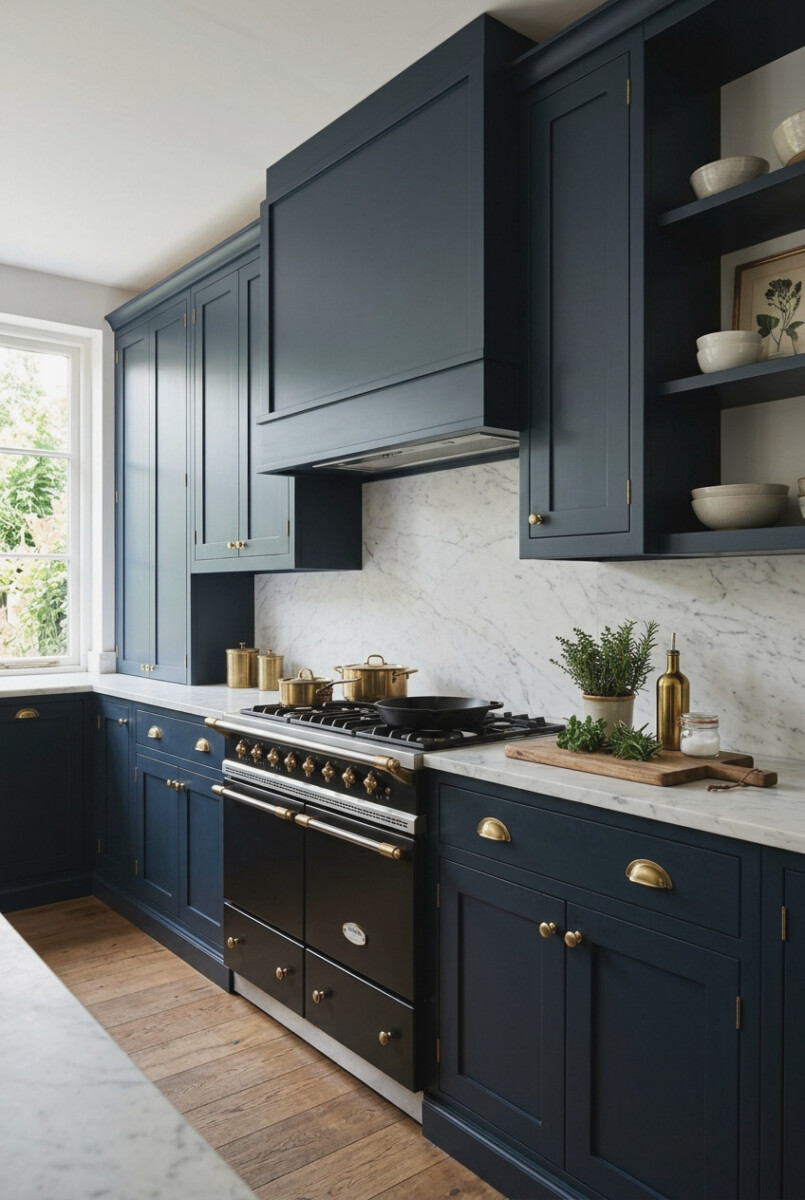
Painting a range hood enclosure to match the blue cabinets can create a continuous look along the cooking wall. This is especially effective when the hood is built into a simple plastered or paneled surround rather than a visible stainless steel unit.
Use only finishes and construction details appropriate for the appliance and its required clearances. A matching color is a design choice; the hood still needs correct ventilation, service access, and installation that follows the manufacturer’s specifications.
25. Layer Two Shades of Blue in One Kitchen
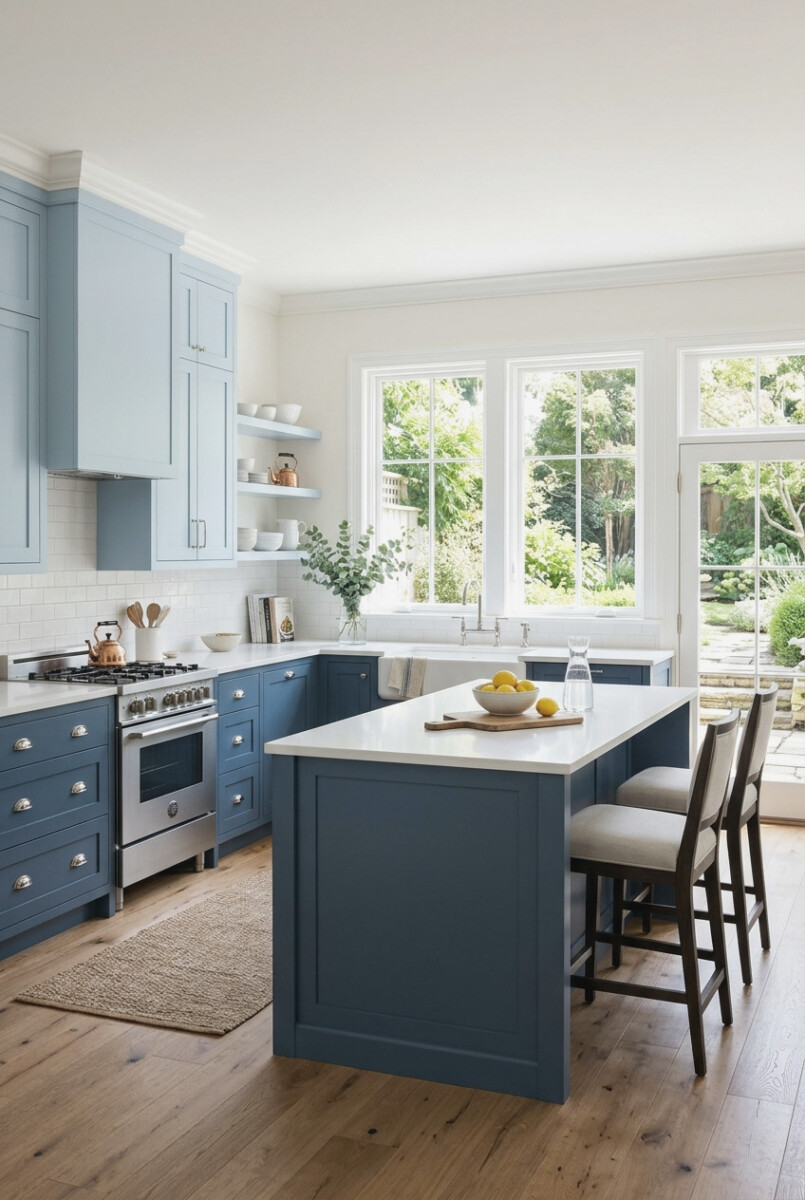
Two shades of blue can give a kitchen depth without introducing a completely different cabinet color. For example, lighter blue upper cabinets can sit above darker denim base units, or a navy island can contrast with soft blue perimeter cabinets. The variation works best when the shades share compatible undertones.
Place the samples side by side under the room’s natural and artificial light. Keep the countertop, backsplash, and major fixtures relatively restrained so the change in blue tone remains deliberate rather than busy.
26. Make a Small Galley Kitchen Light Blue
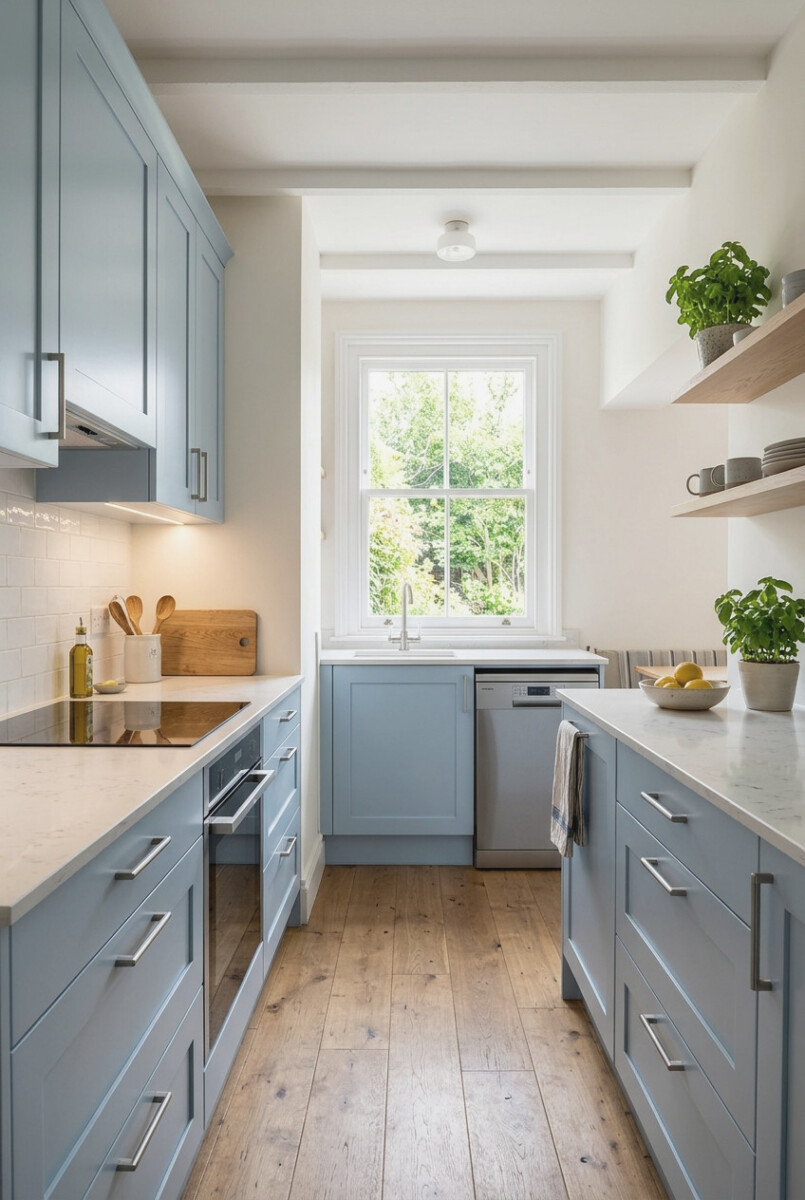
In a compact galley kitchen, soft blue cabinets can add personality while keeping the design relatively gentle. Pale blue lower units with light walls and simple handles can be particularly effective when counter space and daylight are limited.
Practical layout choices matter more than the color alone. Keep circulation clear, choose space-saving door and drawer hardware, and use good under-cabinet task lighting. A lighter shade may look more open, but it cannot replace a well-planned layout.
27. Add a Blue Banquette to a Breakfast Corner
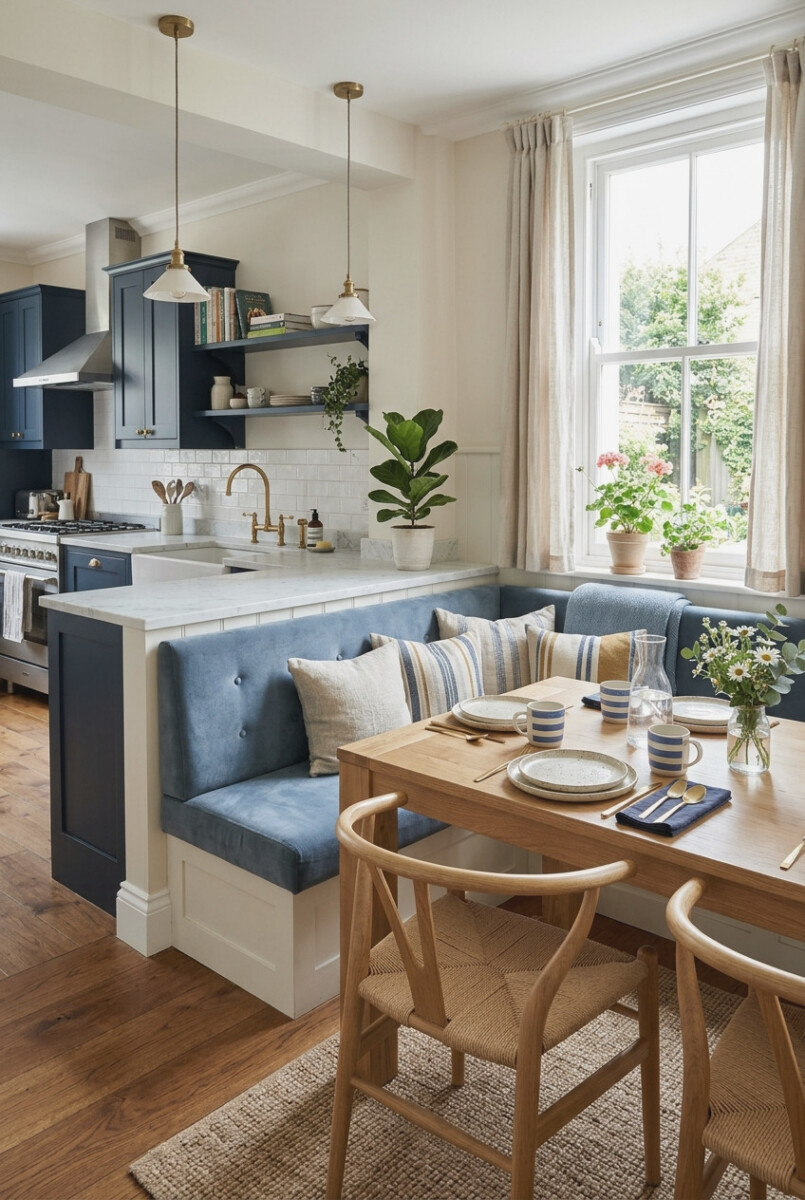
A blue upholstered banquette can bring color to a kitchen that has white or timber cabinets. It creates a comfortable dining spot and gives the room another texture besides painted wood and tile. Denim, muted blue velvet, or a washable blue-and-white stripe can each support a different style.
Choose durable upholstery that can handle food spills and frequent use. If the seat includes built-in storage, allow enough clearance to lift the lids and avoid storing items that need quick access during cooking.
28. Paint the Kitchen Ceiling Pale Blue
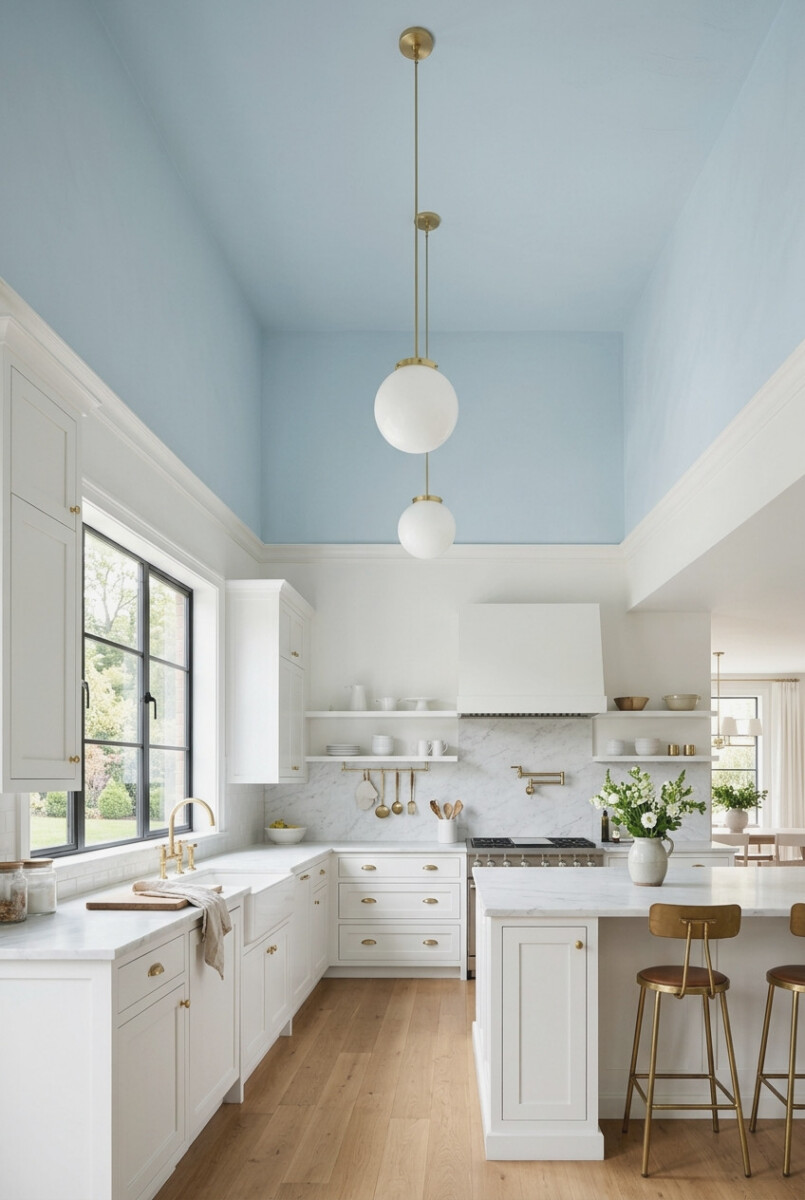
A pale blue ceiling can add an unexpected touch of color above a mostly white kitchen. It works particularly well with high ceilings, simple cabinetry, and plenty of natural light, providing a subtle alternative to painting the walls or cabinets.
Test the color on a large sample before painting. Pale blue can look surprisingly cool under certain bulbs, so compare it with the wall and trim whites. Keep the rest of the ceiling fixtures simple enough that the color remains the main detail.
29. Use a Blue Peninsula Instead of an Island
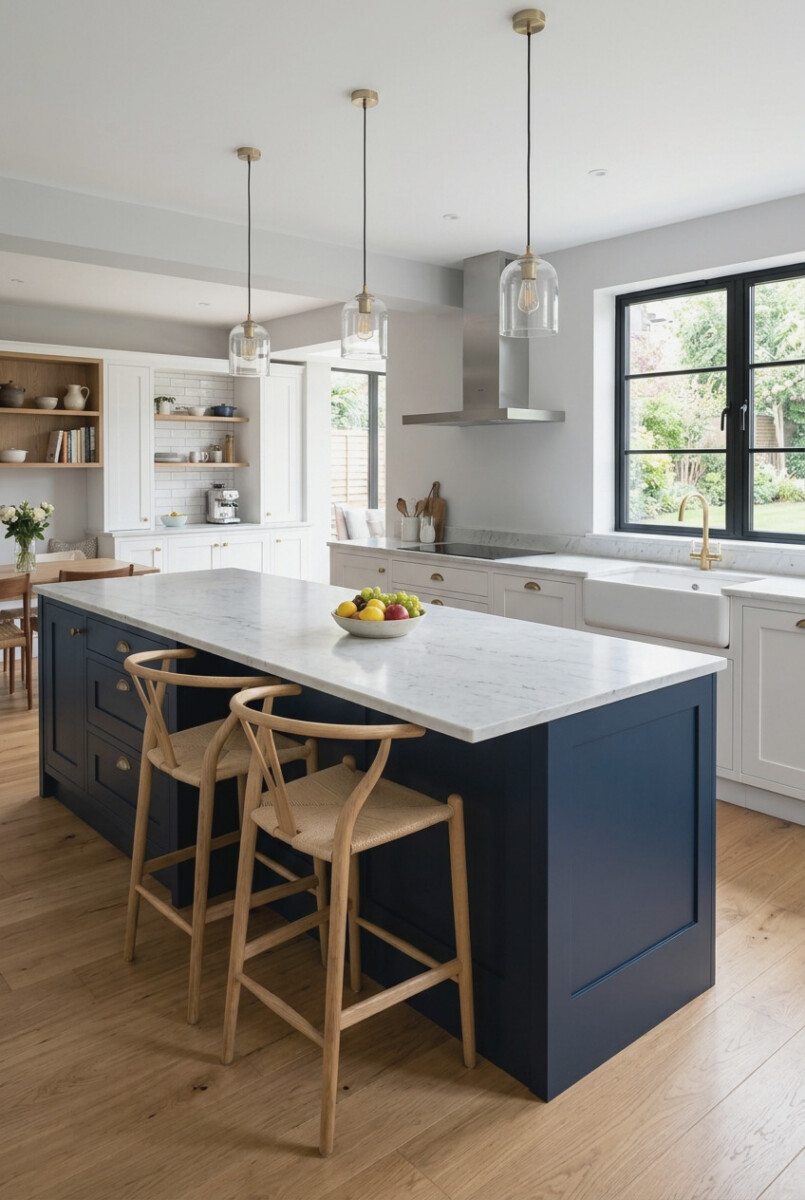
A blue kitchen peninsula offers a useful alternative when there isn’t enough space for a freestanding island. Because it connects to the main counter run, it can add extra worktop or casual seating without creating circulation space on every side. Painting only the peninsula gives the room a clear color accent.
Plan the depth, overhang, and walking routes before ordering cabinetry. If stools will sit along the peninsula, allow comfortable legroom and avoid placing seating where it interferes with appliance doors or the main preparation area.
30. Refresh a Kitchen with a Blue Interior Door
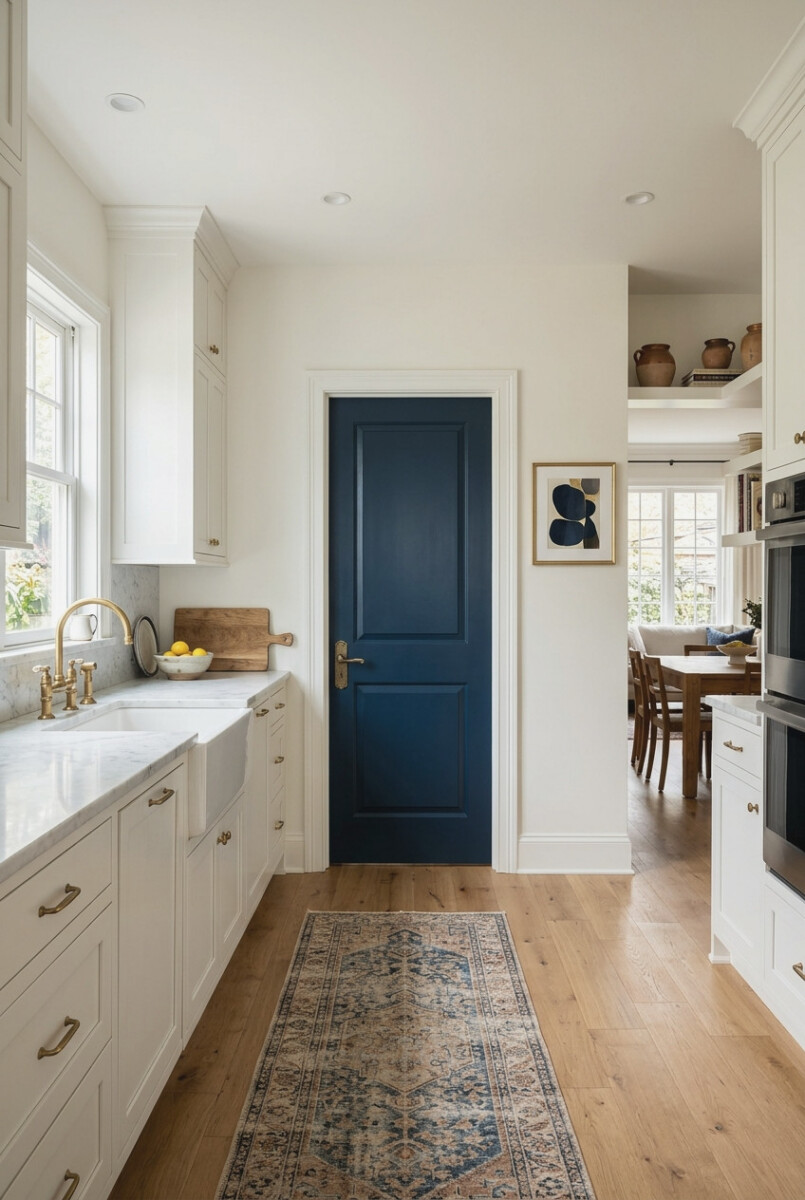
A blue kitchen door is a smaller commitment than painting built-in cabinetry, but it can still introduce a strong color note. An inky blue door against warm white walls feels classic, while a brighter blue can suit a playful modern kitchen.
Paint the door and frame carefully for a clean finish, using a product suited to the existing surface. You can repeat the shade in one other feature, such as a patterned textile or small piece of artwork, without making every accessory blue.
31. Choose Blue Patterned Floor Tiles
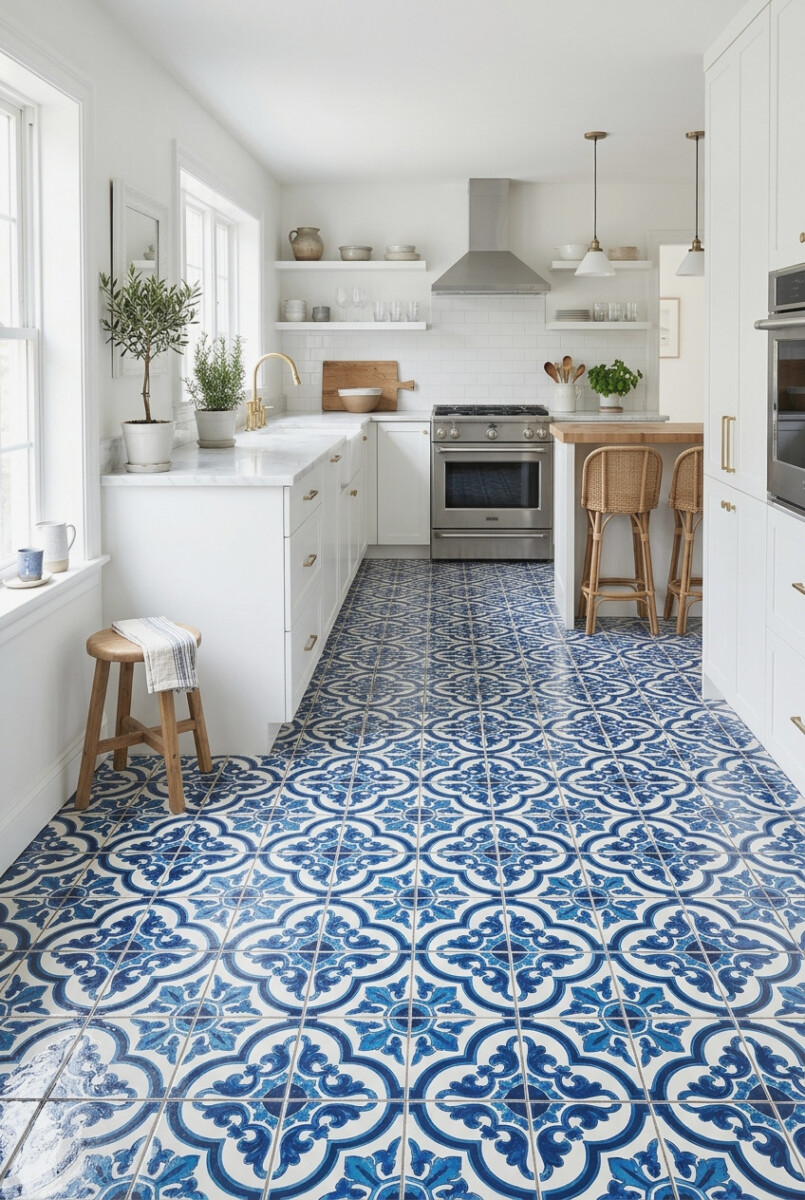
Blue patterned floor tiles can add interest beneath simple white or wood cabinetry. A small geometric motif creates a crisp look, while a faded Mediterranean-inspired design introduces a more traditional character. Keeping the upper half of the room relatively calm lets the floor do the decorative work.
Choose flooring rated for kitchen use and check its slip resistance and cleaning requirements. Patterned tiles are a permanent decision, so lay out a large sample area first to make sure the design works with the room’s proportions.
32. Try a Blue-and-White Coastal Palette
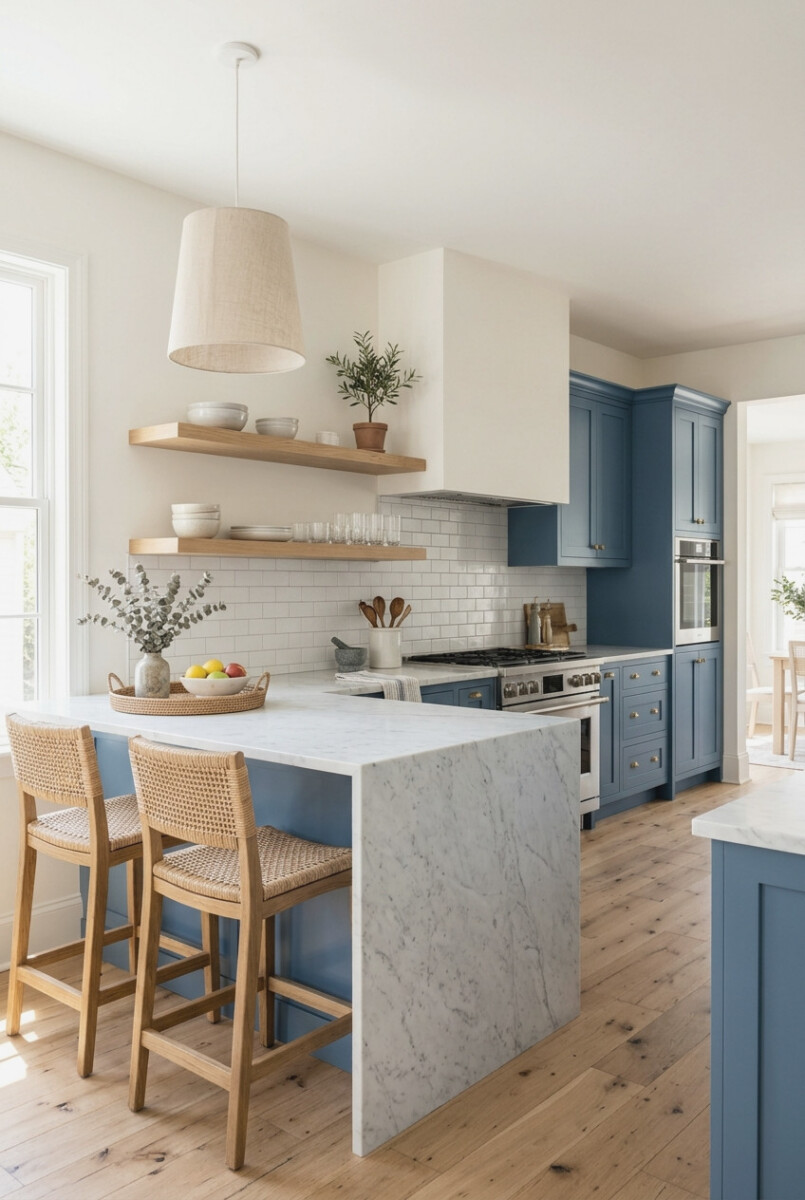
A blue-and-white kitchen can suggest a coastal mood without relying on shells or nautical decorations. Mid-blue cabinets, warm white walls, oak accents, and simple woven seating create a fresh combination that suits many homes, not just properties near the sea.
Use natural textures to prevent the blue and white from feeling too stark. A timber stool, linen shade, or light oak shelf is often enough. Choose a blue based on the room’s light rather than assuming every coastal kitchen needs a very pale shade.
33. Mix Mediterranean Blue with Terracotta

Rich Mediterranean blue looks inviting alongside terracotta floors, warm plaster tones, and handmade ceramics. The pairing gives blue a warmer setting than the usual white-and-gray kitchen and works well with simple cabinet shapes and open shelving.
Keep the palette controlled with one dominant blue and a few earthy accents. If you’re using real terracotta or handmade tile, check the sealing and maintenance requirements before installing it in a busy cooking area.
34. Give a Scandinavian Kitchen a Hint of Blue
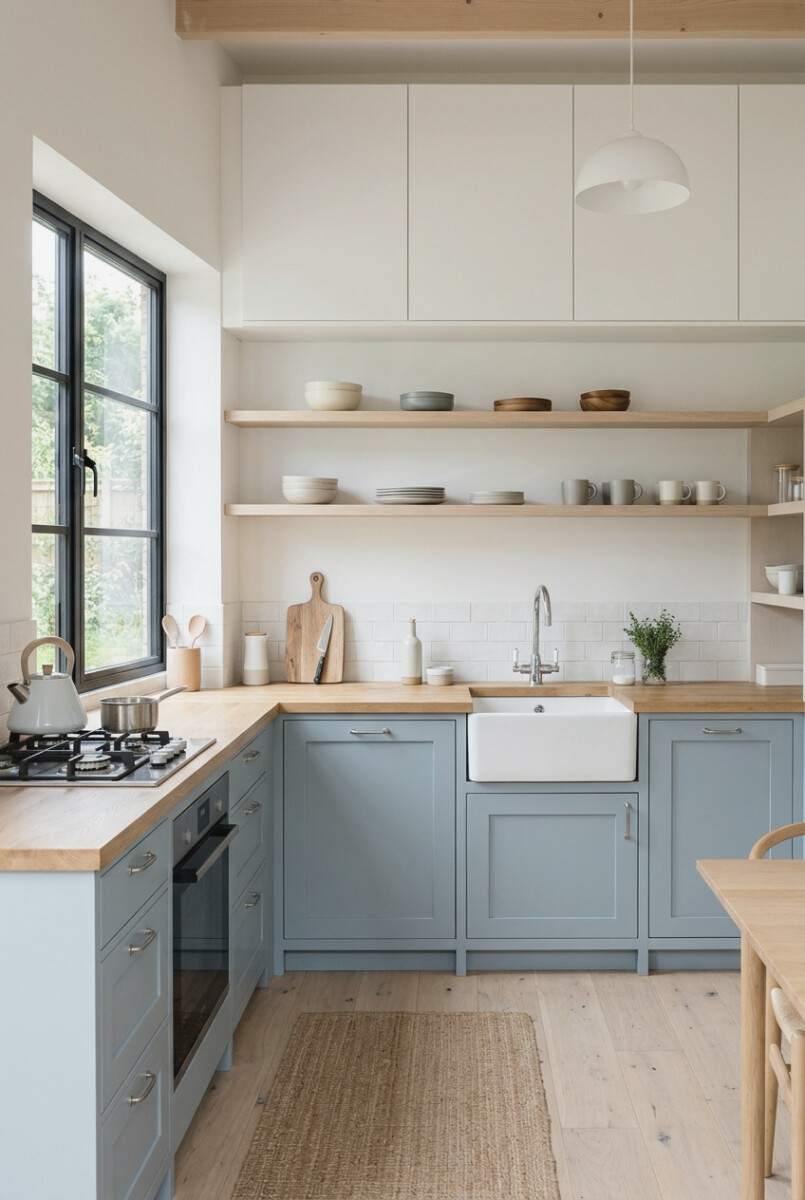
Soft blue can fit naturally into a Scandinavian-inspired kitchen with pale timber, clean cabinet fronts, and uncluttered surfaces. Blue-gray lowers or a single painted island add color without overwhelming the light wood and neutral finishes that define the scheme.
Choose simple handles and practical storage so everyday tools can stay organized. A pale wood floor and warm white walls will help soften the cool undertones of blue, particularly in kitchens that face north or receive limited daylight.
35. Bring in Blue with Bar Stools or Dining Chairs
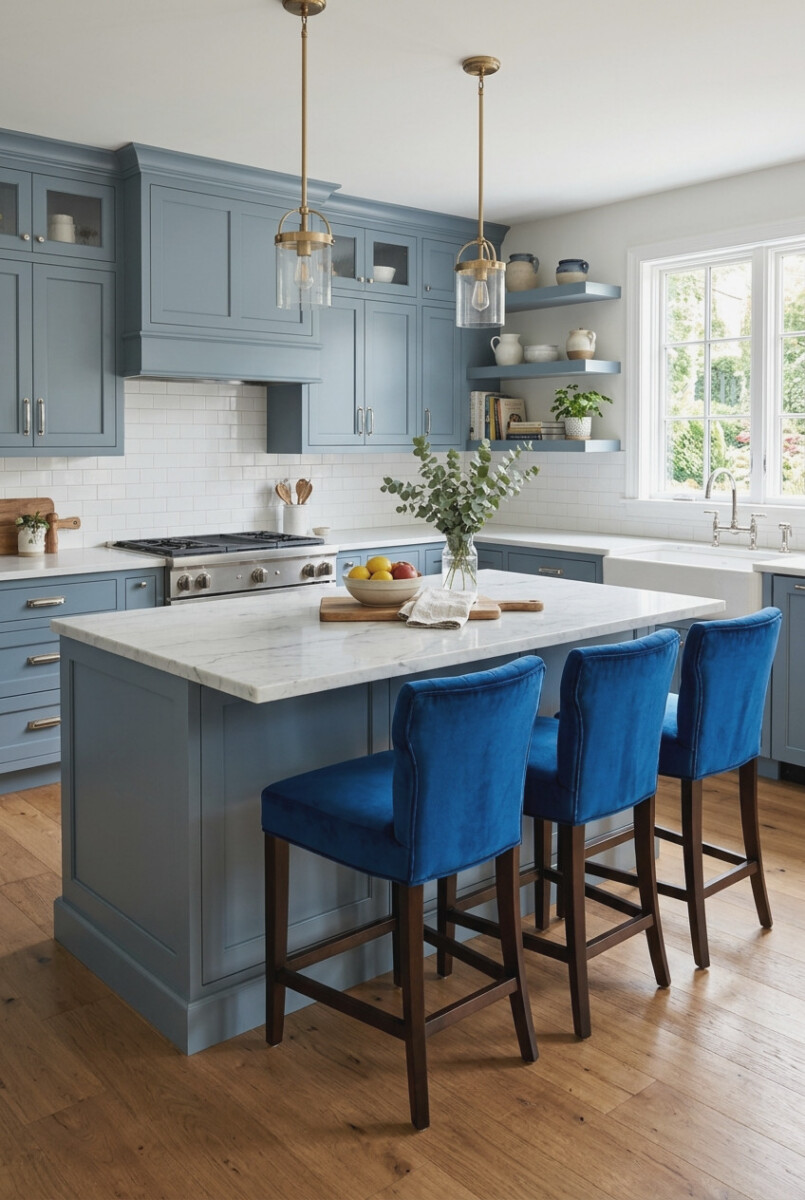
Blue seating lets you try the color before making a permanent change. Upholstered counter stools can soften a white kitchen island, while painted wooden chairs add character to a small breakfast table. Both choices work well when you want blue to complement existing cabinets rather than replace them.
Pay attention to seat height, back support, and the amount of space needed to move chairs in and out. Washable covers or wipe-clean finishes are useful in a kitchen, where attractive furniture still has to cope with everyday meals.
36. Finish with a Blue Patterned Kitchen Runner
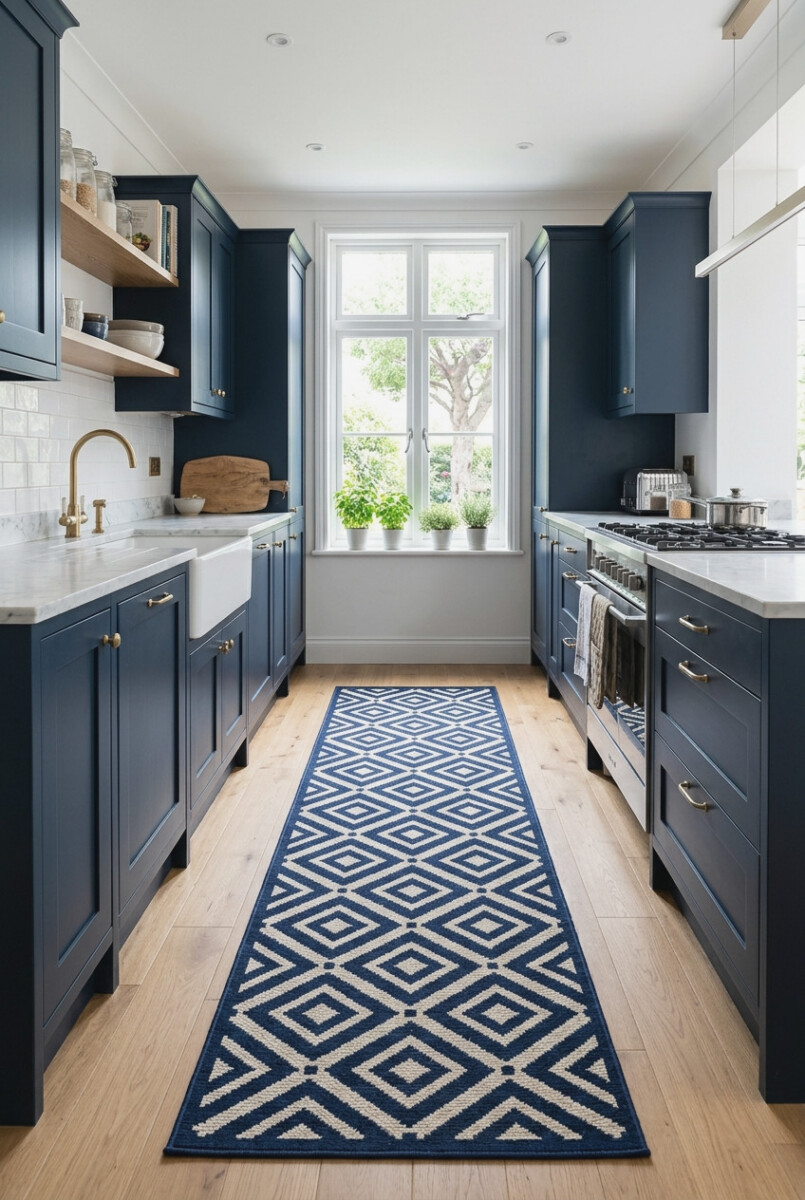
A patterned runner is an easy way to bring blue into a kitchen with otherwise neutral surfaces. A faded navy motif complements warm wood cabinetry, while a blue-and-cream stripe looks fresh against pale floors. In a galley layout, a runner also helps define the long central walkway.
Choose a low-profile, washable rug with a secure non-slip backing, and make sure the edges lie flat. Keep it clear of appliance doors and areas where spills are frequent. This is one of the simplest ways to test a blue palette without changing paint or tile.
Bringing Your Blue Kitchen Together
A blue kitchen doesn’t have to follow one formula. Navy cabinetry can create a strong contrast, powder blue can sit quietly beside oak, and a patterned backsplash or single painted island can introduce color without a full renovation. Think about which surfaces you want to notice first and let the remaining finishes support them.
Before making a permanent change, test colors beside the actual flooring, worktop, and lighting. Consider how you cook, clean, and move around the room, then choose materials that suit those routines. The most successful blue kitchens make good use of color while remaining comfortable and practical every day.
