Table of Contents
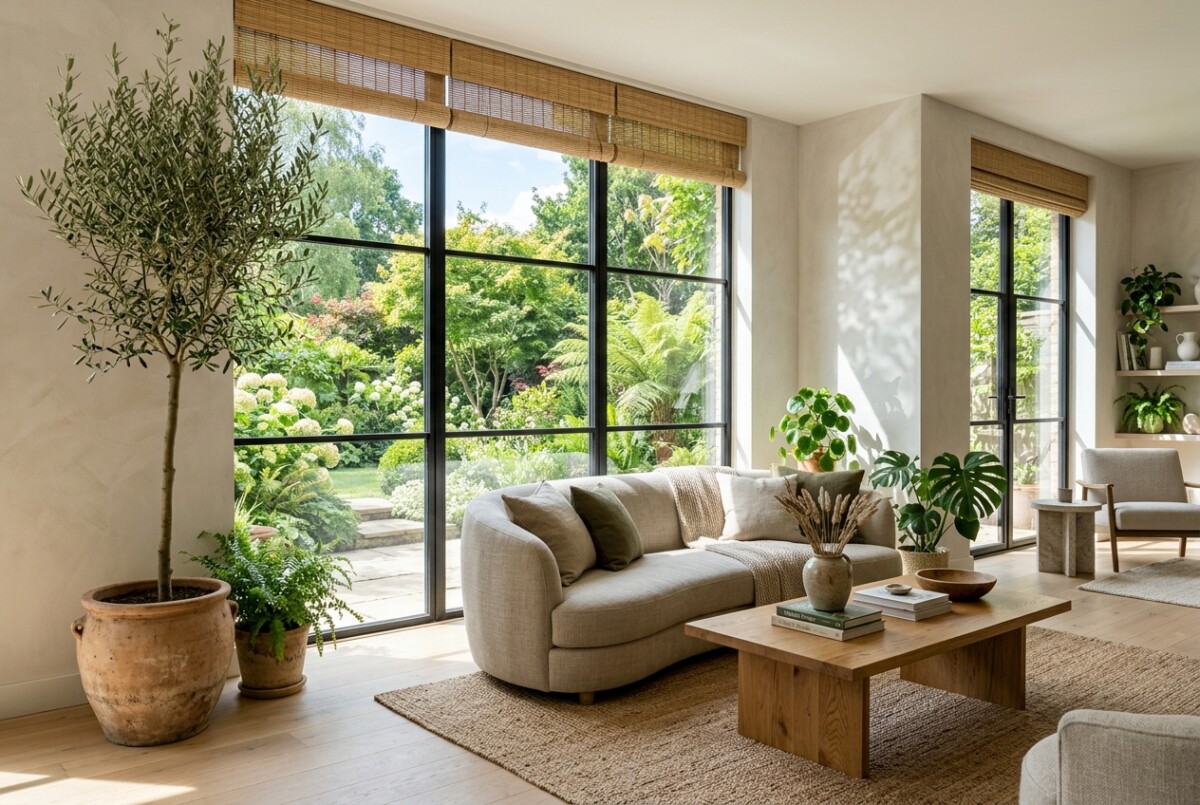
Biophilic interior design is about building a stronger connection between home and the natural world. Plants are one part of it, but daylight, views, natural materials, flowing air, and organic shapes matter too. A room can feel connected to nature without looking like a greenhouse, and even a compact apartment can use the same principles.
The most useful ideas start with how a space is lived in. A reading chair might need a view and softer light, while a bathroom needs durable surfaces and proper ventilation. These biophilic interior design ideas explore changes both small and ambitious, with practical ways to make them work in real homes.
1. Arrange Living Room Seating Around a Garden View
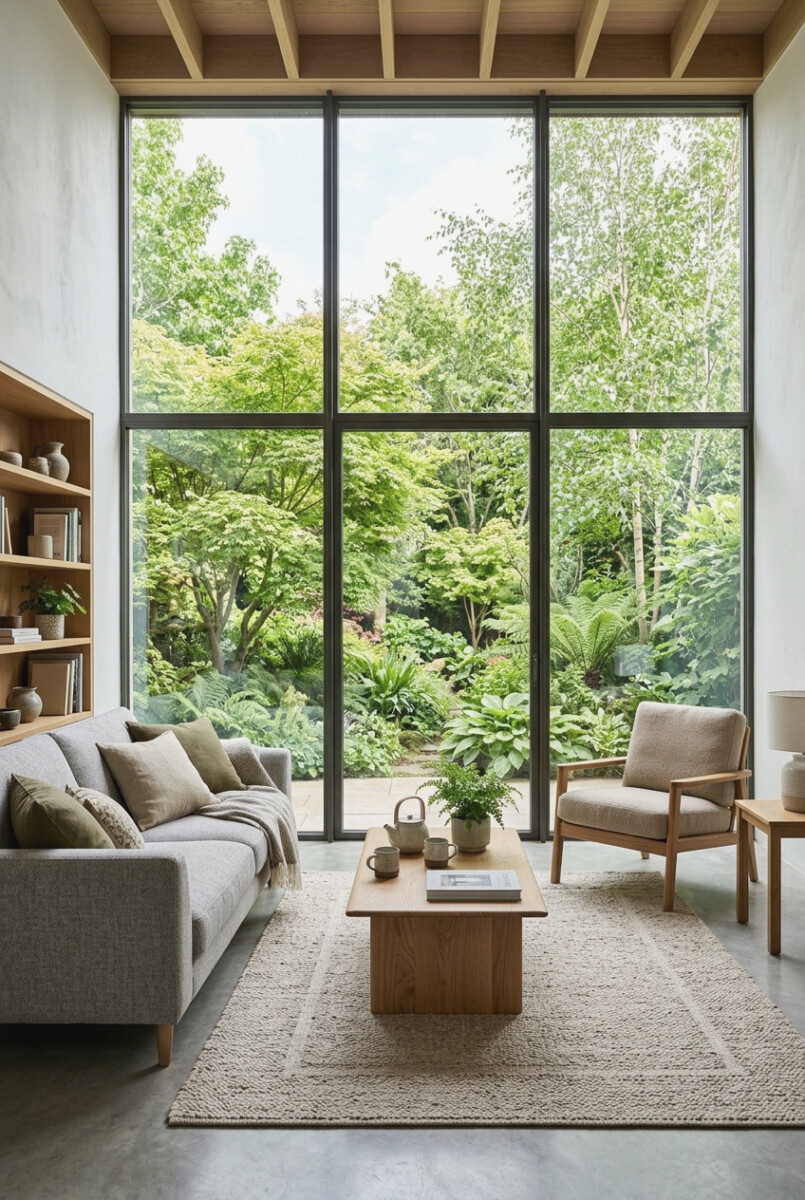
A view of trees, flowers, or even a small courtyard can become the main feature of a biophilic living room. Rather than arranging every seat toward the television, make space for people to enjoy what is happening outside. The changing light and greenery give the room something interesting to look at throughout the day.
Try angling the sofa toward a window or moving an armchair beside the best view. Keep tall cabinets and oversized decor away from the glass, and use a low table if furniture must sit in front of it. If the view is mostly a fence, a few well-placed outdoor planters can improve what you see from inside.
2. Choose One Statement Indoor Tree
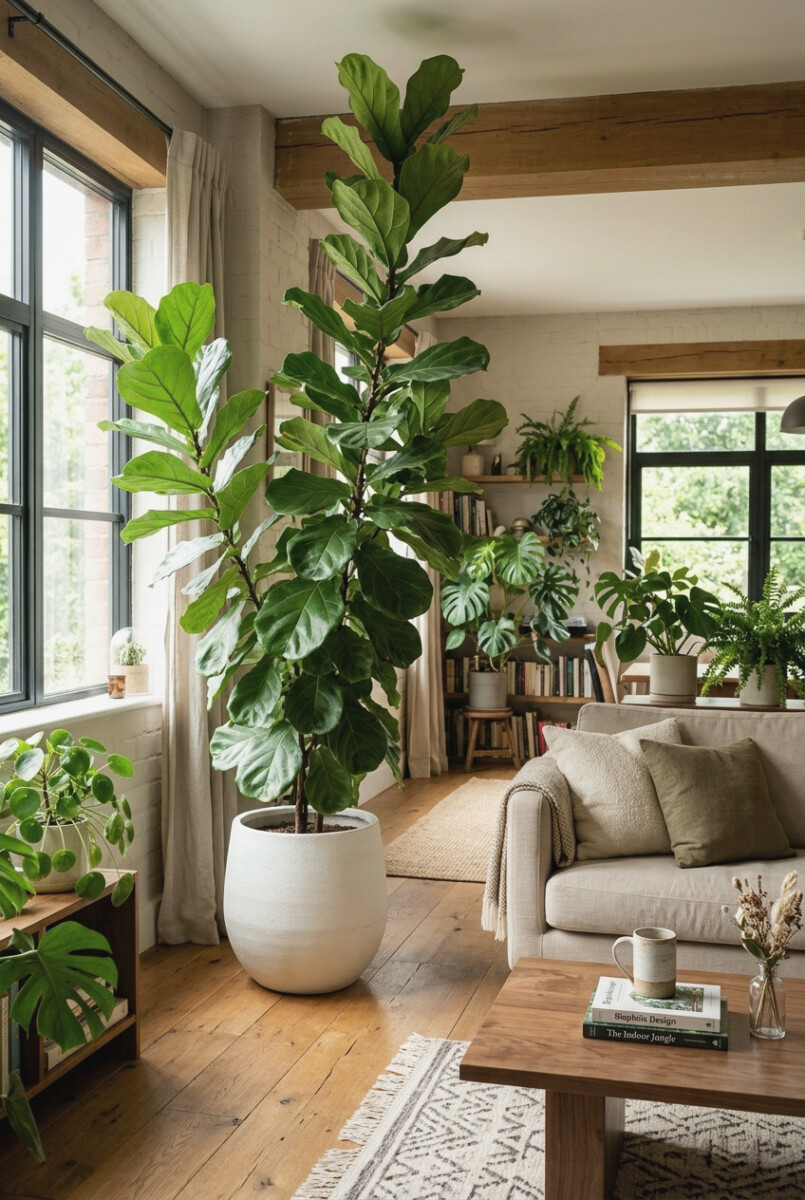
A tall indoor tree brings the scale and shape of nature into a room with ordinary furniture. Its branches and leaves add height, soften bare corners, and offer a living focal point without requiring several shelves of smaller plants. This approach works especially well in a bright living room or dining area.
Choose a species for the actual light and temperature conditions, not just its appearance. Check its mature width, use a stable planter with drainage, and keep leaves away from heat vents. Large plants need room to grow, so leave enough space to walk around the pot comfortably.
3. Build a Layered Plant Corner
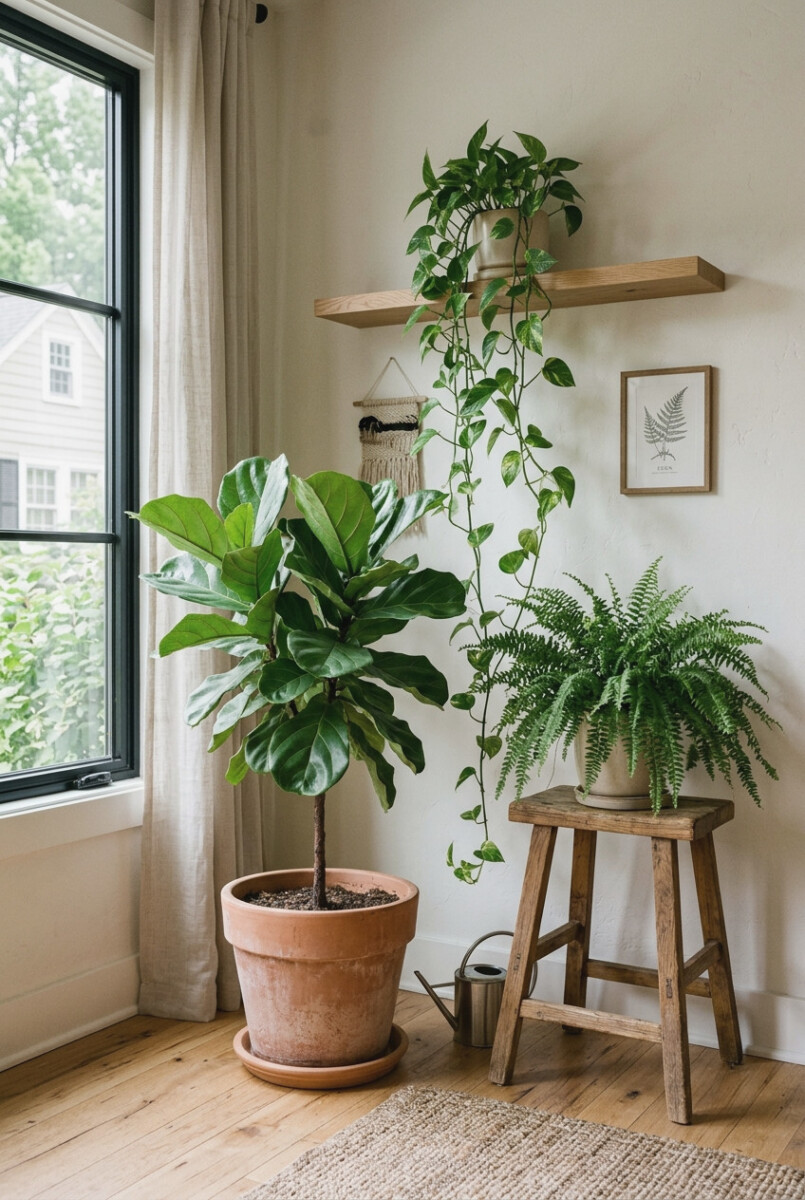
A group of plants at different heights creates a more convincing indoor garden than a row of matching pots. Broad leaves, fine foliage, and trailing vines bring variety, while the different sizes make the corner feel established rather than staged. It is a simple way to create a biophilic living room without renovating anything.
Begin with a floor plant, add a medium plant on a stool, and finish with one smaller pot on a shelf. Group plants with similar watering and light requirements, leave airflow between the leaves, and use saucers to protect the floor. Keep the arrangement small enough that every plant is easy to reach and care for.
4. Bring Outdoor Greenery Closer to Your Windows
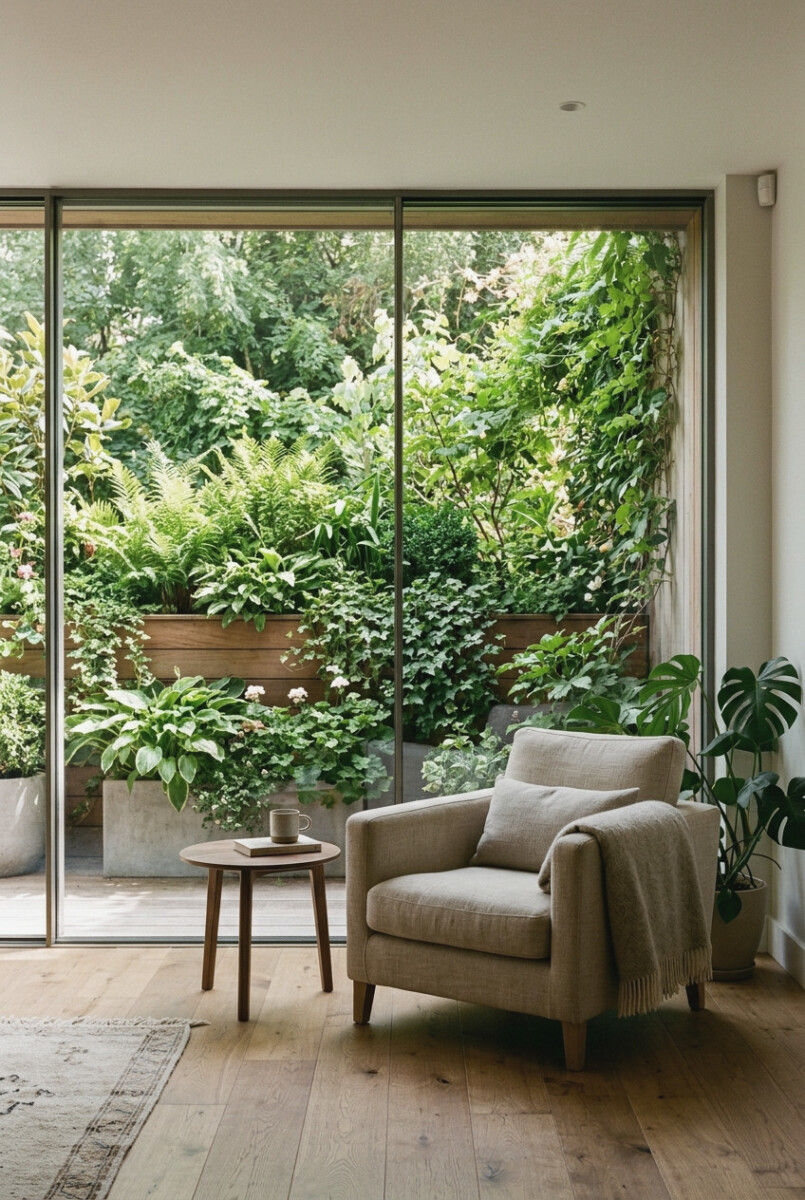
Biophilic design does not require every plant to live indoors. A leafy view just outside a window can connect a room to nature while keeping the interior uncluttered. Window boxes, patio pots, or a narrow planting bed are especially effective when a room overlooks a plain wall or paved area.
Place planters where they will be visible from your usual sitting position, not only when you stand beside the window. Choose plants suited to your climate and window exposure, and check that boxes and brackets are securely attached. Keep drainage away from the building and avoid blocking emergency exits or window operation.
5. Use Hanging Planters to Add Greenery Above Eye Level
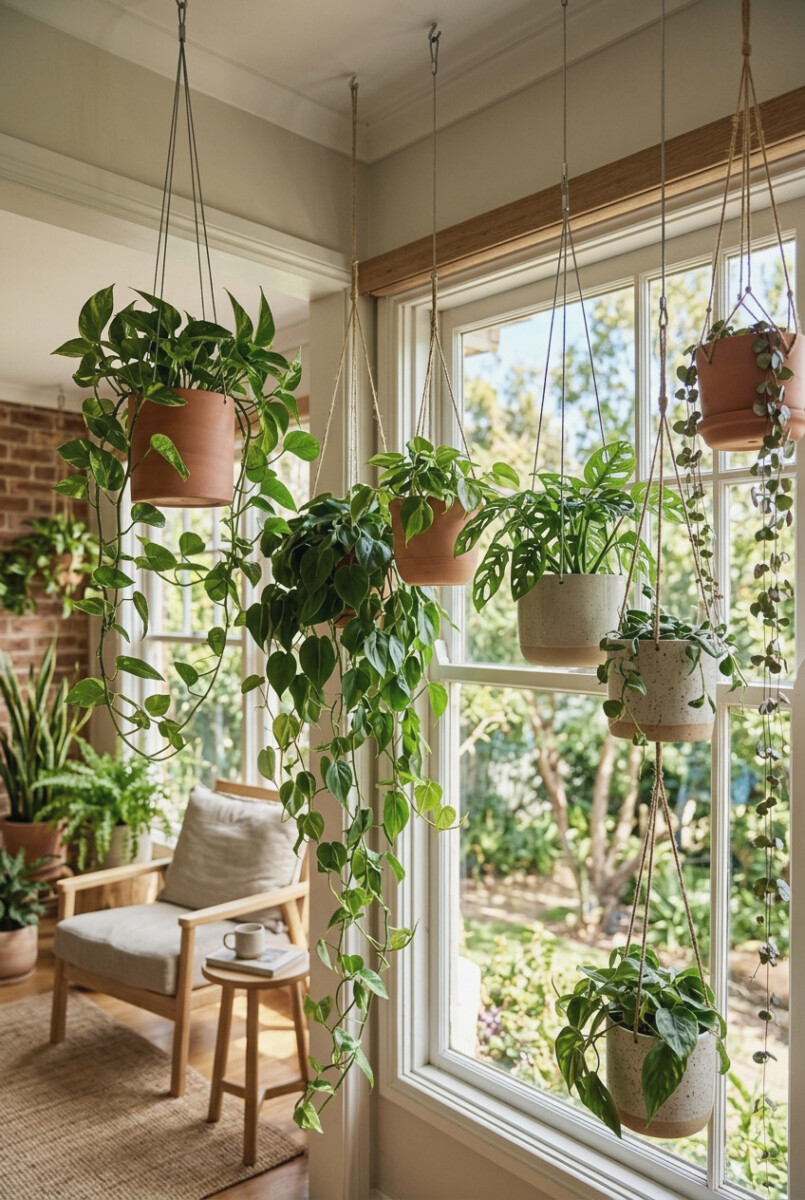
Hanging planters let greenery occupy the upper part of a room, creating a different relationship with plants than floor pots or shelves. A trailing vine beside a sunny window can soften a hard corner or frame a view without taking up valuable floor space.
Use properly anchored hooks and lightweight pots that can be watered without spilling. Keep the plants out of walkways and away from ceiling fans or light fixtures. Choose a hanging location that receives suitable light; placing a plant high above a dark window will not make up for poor growing conditions.
6. Turn a Bookshelf into a Small Indoor Plant Display
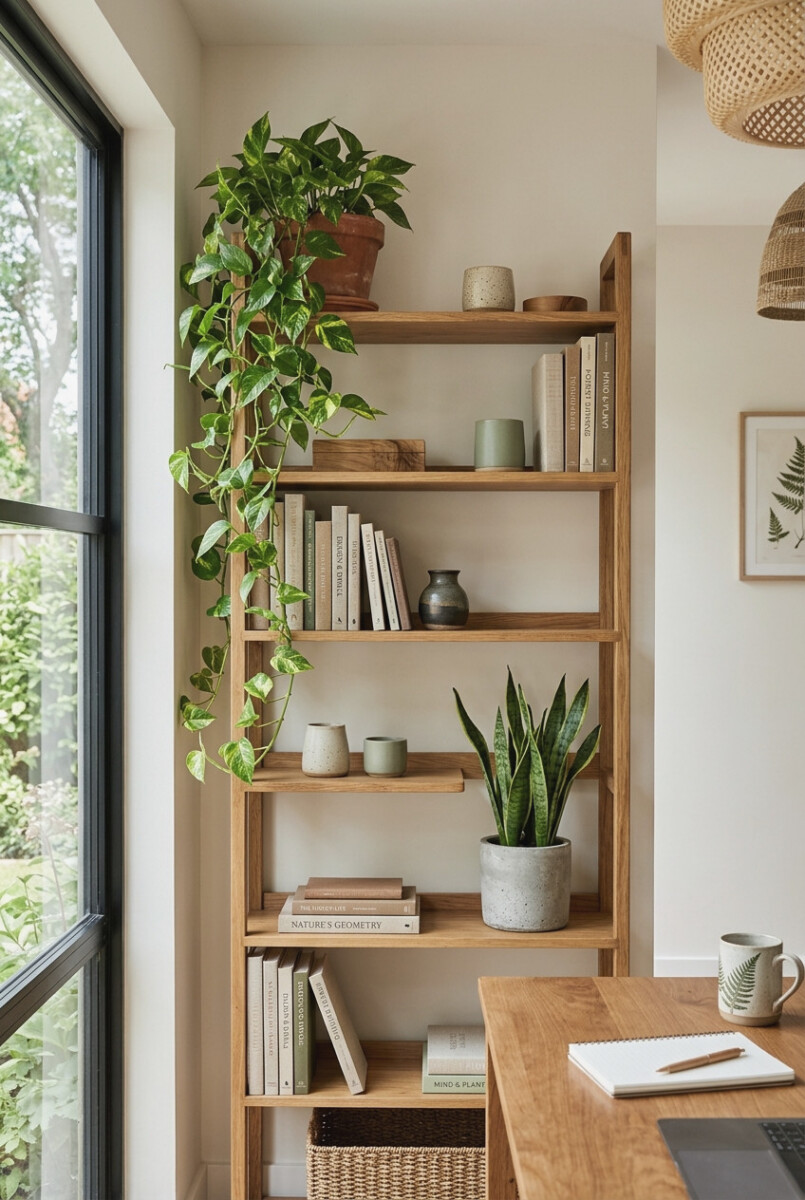
A shelf that mixes books, ceramics, and a few living plants creates a quiet nature-inspired detail in a bedroom or home office. The greenery breaks up straight horizontal lines and makes ordinary storage feel less rigid. This works well when there is no room for a large floor planter.
Choose compact plants that suit the shelf’s light and are easy to lift out for watering. Keep pots on waterproof trays and away from books or electrical items. Two or three healthy plants usually look better than filling every compartment with foliage that will be difficult to maintain.
7. Consider a Living Wall for a Bright Interior
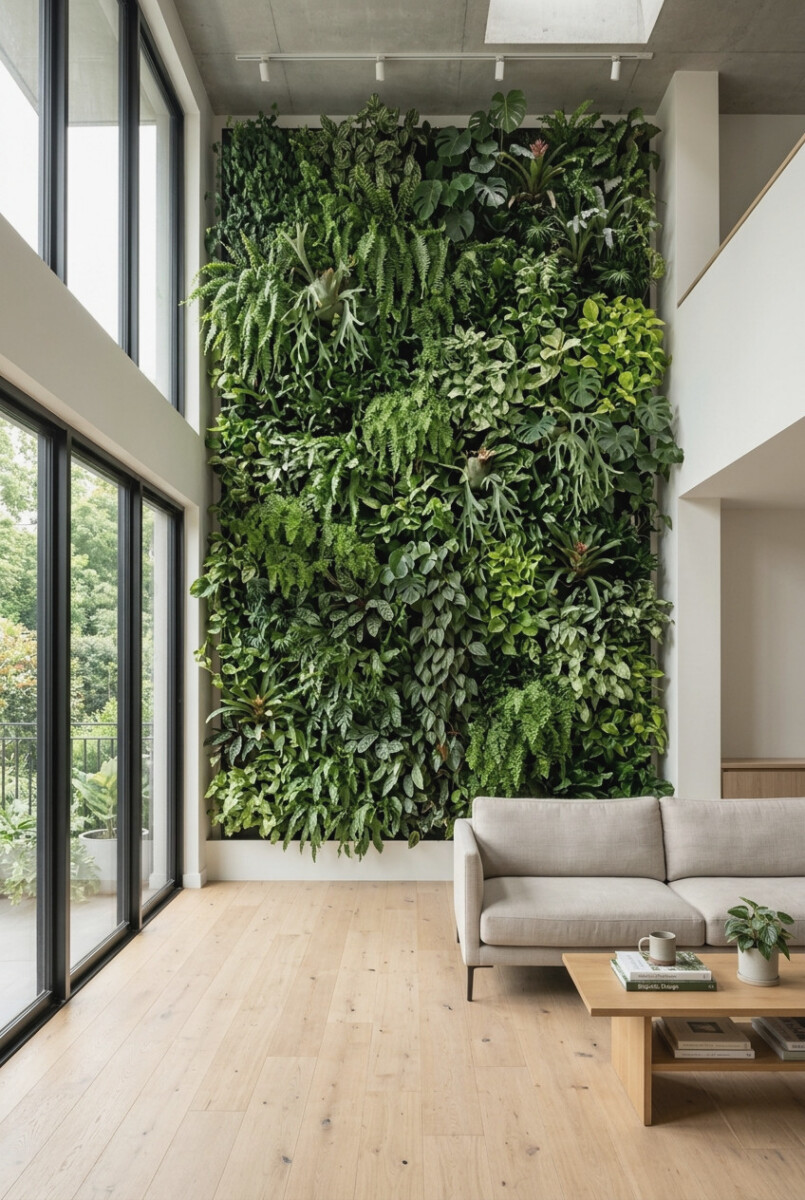
A planted wall can create a striking connection to nature in a hallway, stairwell, or living room with plenty of daylight. Unlike a botanical wallpaper, a living wall changes as the plants grow, bringing an active element to the architecture. It can work particularly well when there is little floor space for pots.
Treat this as a planted system rather than a decorative panel. Proper waterproofing, irrigation, drainage, lighting, and maintenance access are essential, and professional installation is often worthwhile. For a simpler alternative, use a freestanding grid with removable planters so individual plants are easier to replace.
8. Let Natural Light Travel Further Into the Room
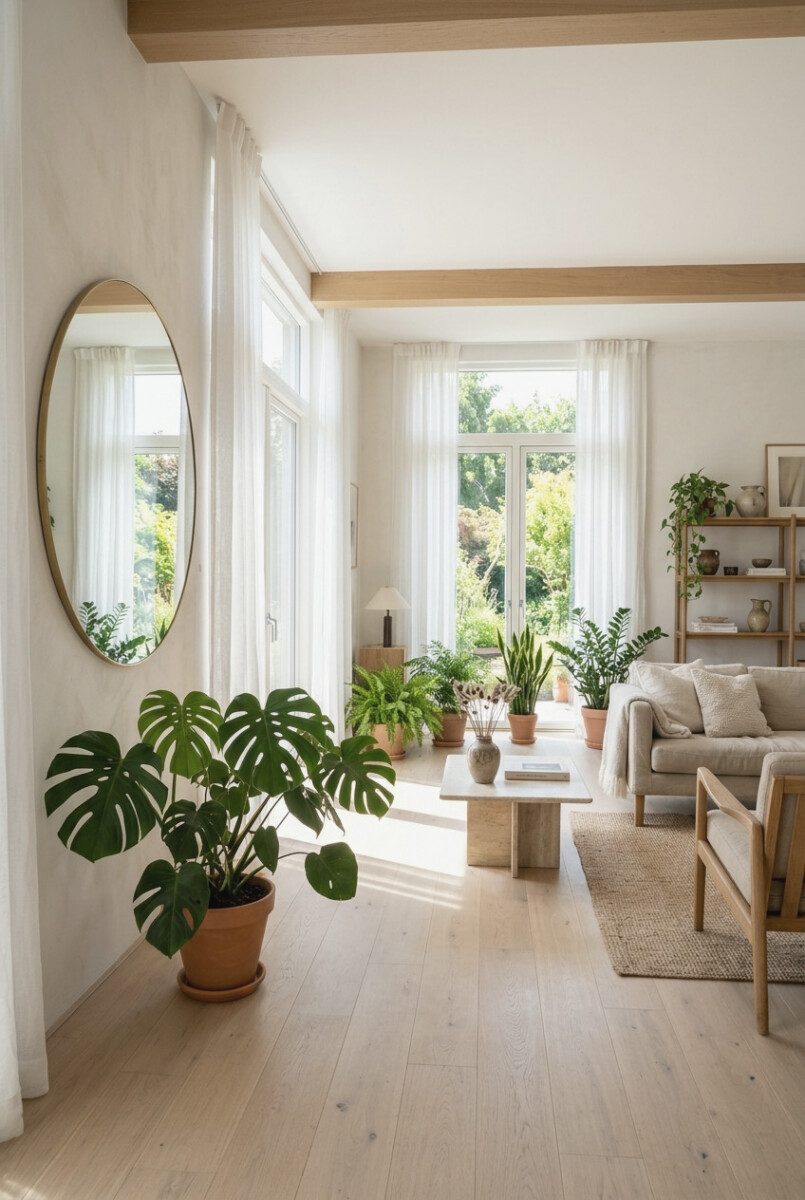
Daylight is one of the most useful starting points for biophilic interior design. A bright room shows off the texture of wood, stone, and plants, while the changing quality of light helps the space feel connected to the time of day. You may be able to improve it without installing new windows.
Move tall furniture away from the glass, clean the windows, and consider lighter window coverings. Pale walls and a carefully positioned mirror can spread brightness into darker corners, but check for reflected glare. Keep screens and seating out of harsh direct sun when that would make the room uncomfortable.
9. Bring Daylight From Above with a Skylight
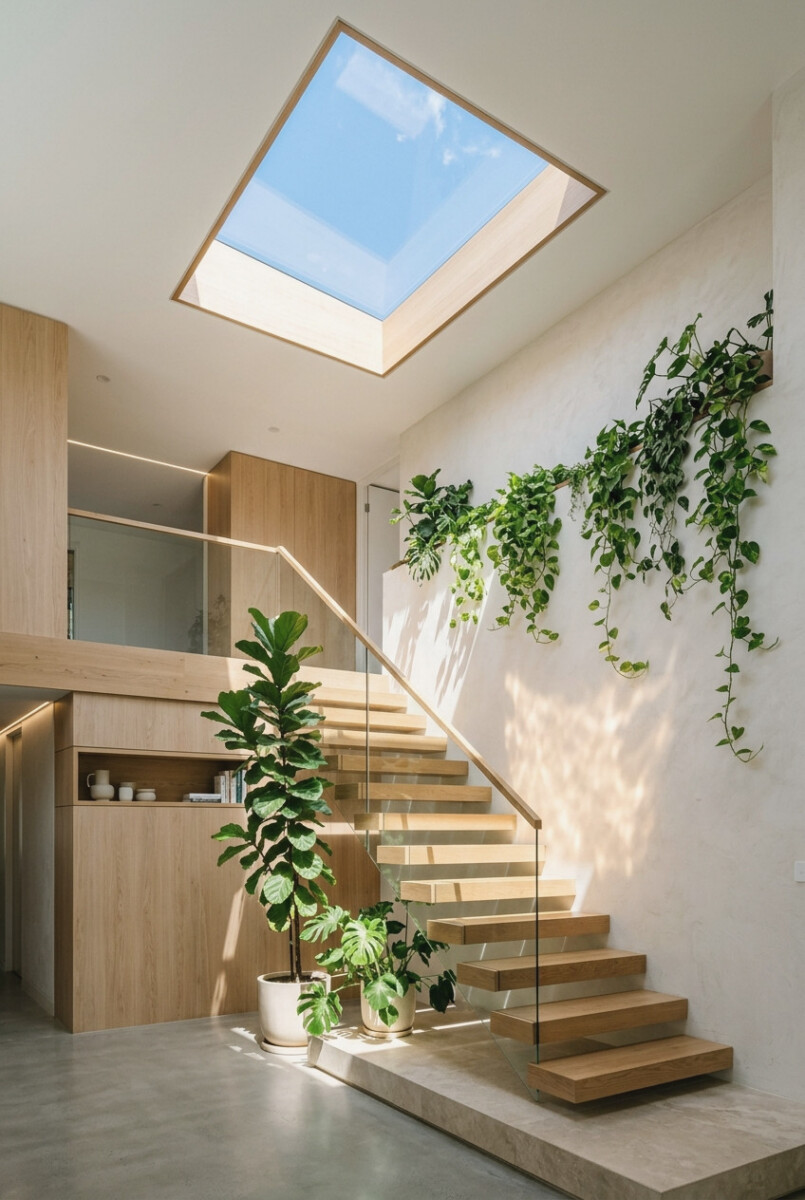
A skylight can introduce a connection to the sky where wall windows offer little light or privacy. It is particularly effective in a stairwell, bathroom, or interior hallway, where a changing patch of sunlight can make a narrow space more interesting throughout the day.
This is a structural project, so the roof, waterproofing, and insulation need professional assessment. Consider solar heat gain, potential glare, and how the opening will be shaded or ventilated. In a home where a skylight is impractical, a light-colored ceiling and well-planned lighting can create a gentler sense of openness.
10. Soften Strong Sun with Adjustable Woven Shades
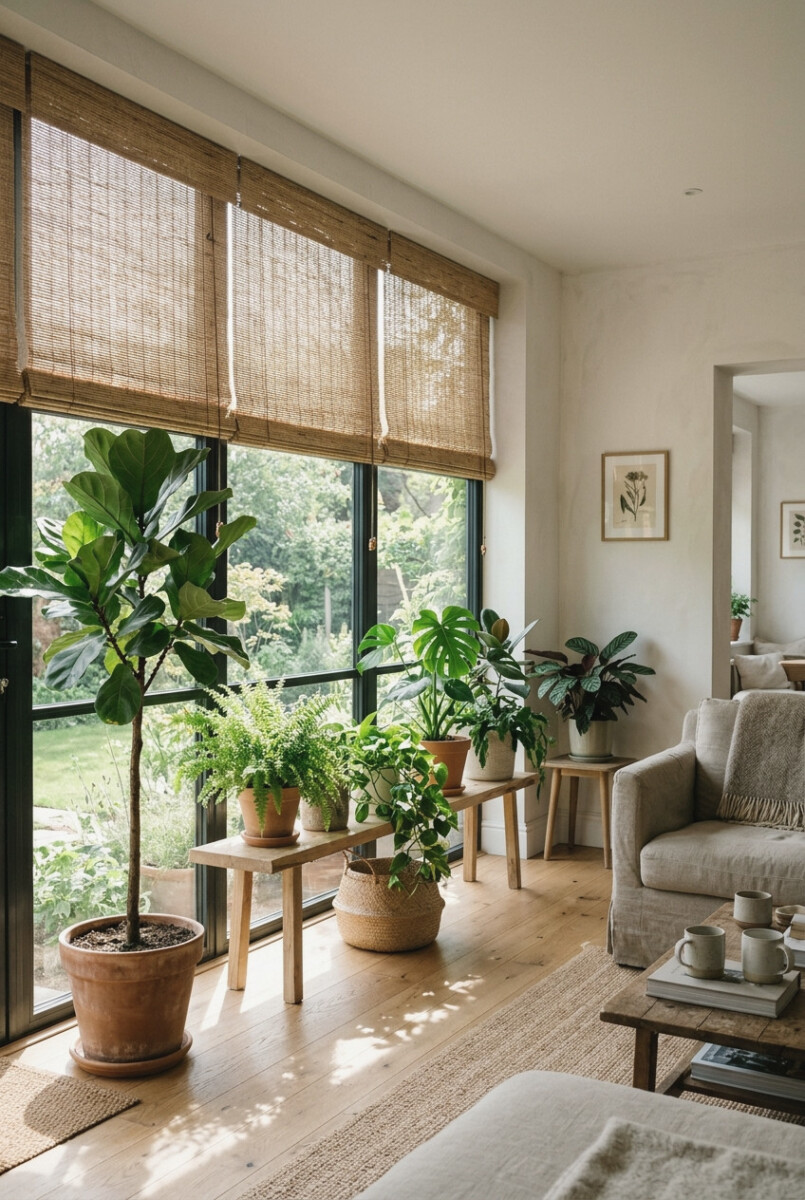
Natural light is valuable, but too much direct sunlight can make a room hot and difficult to use. Adjustable bamboo or woven wood shades filter brightness while adding a natural texture around the windows. They suit both a modern biophilic interior and a more relaxed, rustic scheme.
Choose the weave and lining based on privacy, glare, and heat-control needs. Some shades let more light through than expected, so check samples in the actual room. Use a cordless or otherwise child-safe operating system where appropriate, and keep shades clear of moisture-prone window frames.
11. Place a Reading Chair Beside a Window
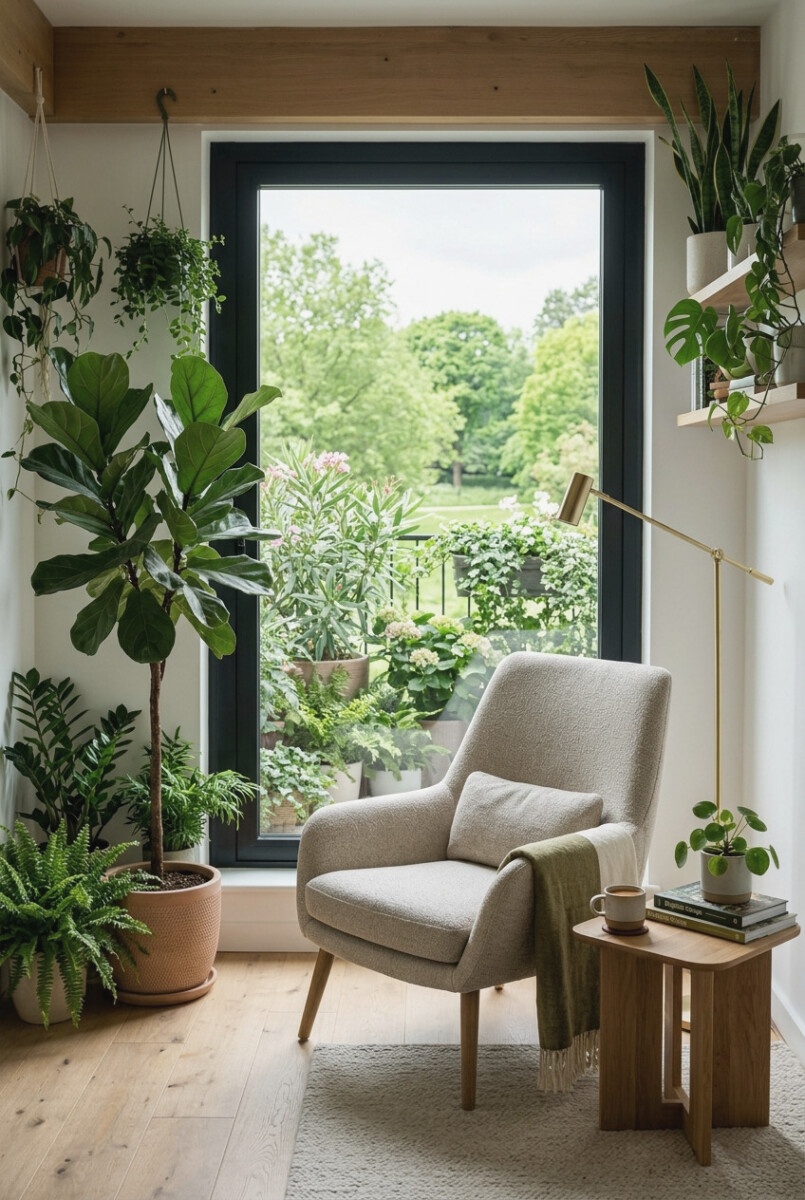
A reading chair near a window creates a small refuge with a view. The combination of a sheltered seat and a connection to the outside is one of the most approachable ways to bring biophilic design into an everyday routine. The room does not need to be large for it to work.
Pick a chair with good back support, add a small side table, and make sure you can read without glare falling directly onto the page. A soft lamp will keep the corner useful after sunset. If the window overlooks a courtyard or balcony, place a few plants outside to give the view more depth.
12. Build a Window Seat Overlooking Greenery
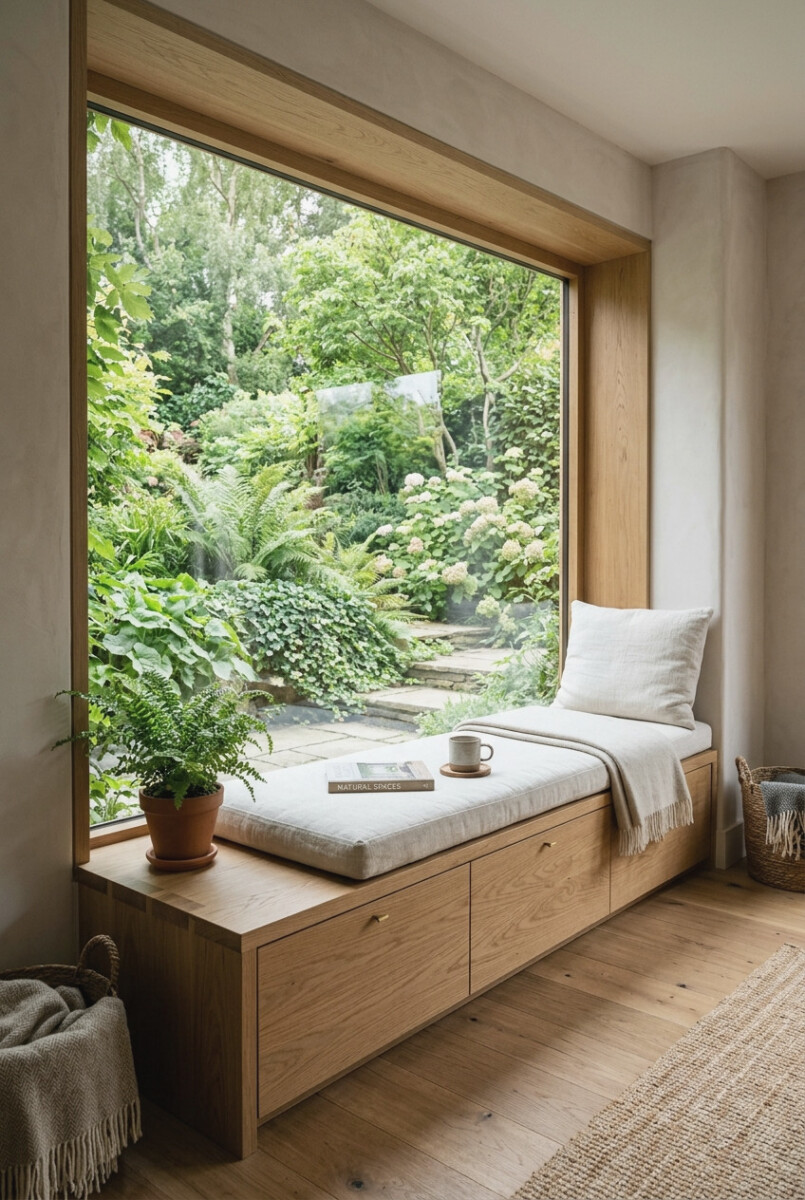
A built-in window seat makes the landscape part of the room’s daily experience. It gives you a place to sit at the edge of the interior, looking outward, without needing to fill the floor with extra chairs. The detail is especially effective in a bedroom, landing, or breakfast area.
Use a supportive cushion with a washable cover and leave access to opening windows and ventilation points. Under-seat drawers can hold blankets or books, but check that stored items will not overheat in direct sun. Keep the joinery shallow enough that it does not obstruct circulation.
13. Connect Indoor Rooms to a Patio with Glazed Doors
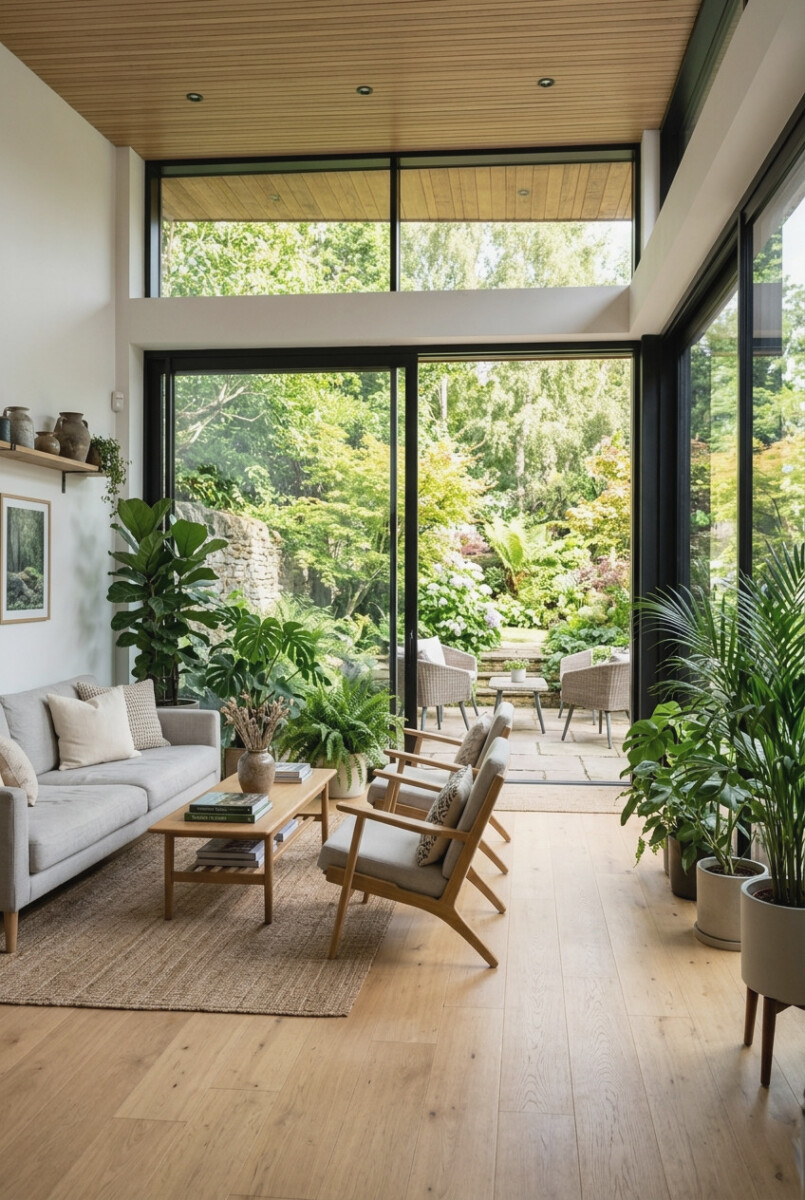
Glazed doors can strengthen the relationship between indoor living spaces and a garden or terrace. Even when the doors remain closed, an uninterrupted view of plants, weather, and daylight gives the room a stronger sense of place. This is a larger architectural move than adding decor, but it can change how the entire room feels.
For a renovation, compare insulation, glazing performance, thresholds, and shading before choosing large glass panels. Plan furniture so the opening remains practical and use slip-resistant flooring near the transition to outdoors. If replacement doors are not an option, clearing sightlines to an existing glazed door can still help.
14. Encourage Gentle Airflow with Operable Windows
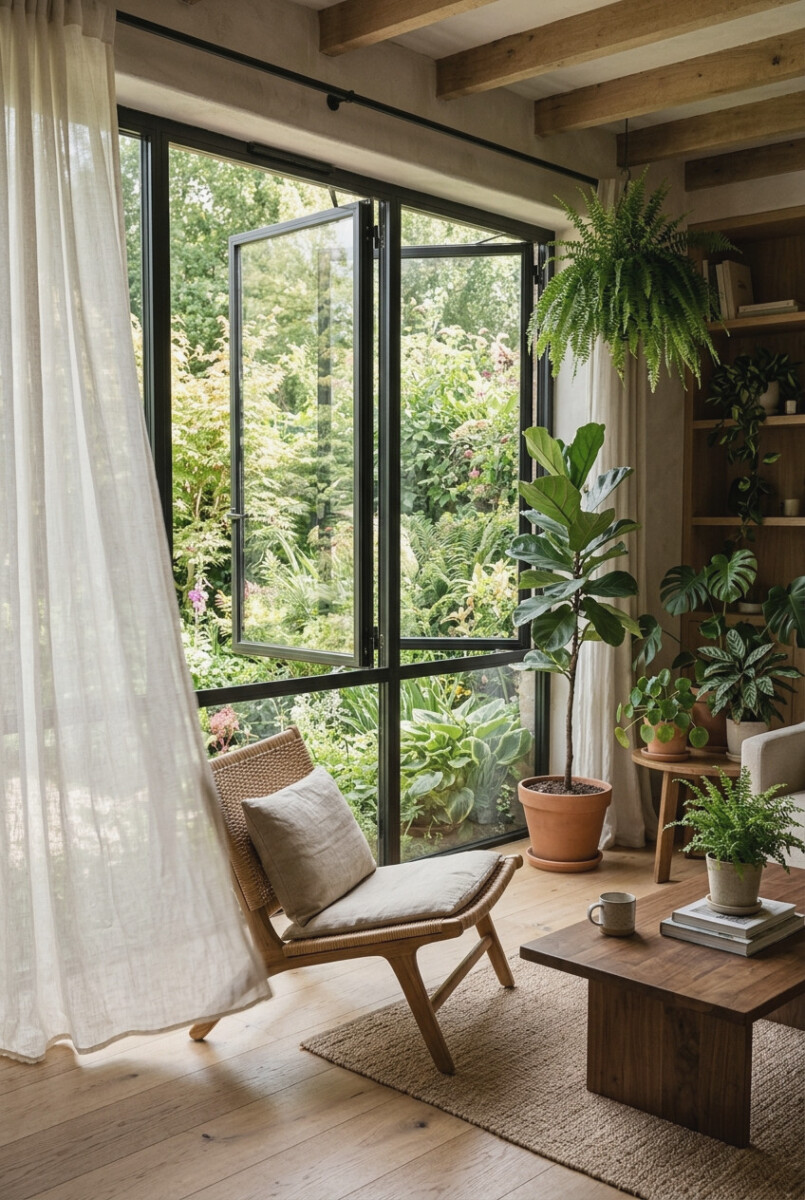
Biophilic interiors engage more than sight. A comfortable breeze, the sound of leaves outside, and subtle changes in air movement can make an indoor room feel less sealed off from its surroundings. Where outdoor conditions allow, opening windows offers a simple connection to nature.
Check outdoor air quality, pollen levels, humidity, insects, and safety before leaving windows open. Screens and window restrictors may be necessary, especially in homes with children. Natural airflow is a useful complement to mechanical ventilation, not a replacement for it in bathrooms or kitchens.
15. Use Wood Flooring with Visible Natural Grain
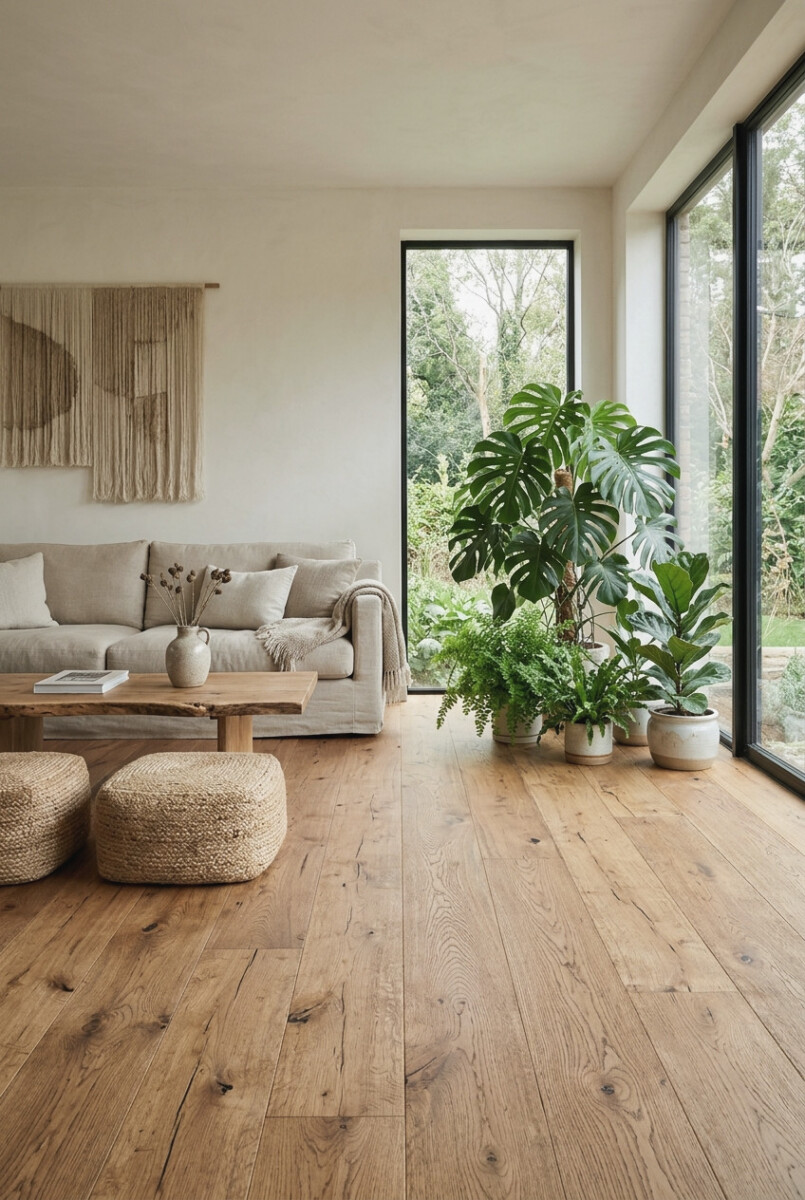
Wood flooring introduces a natural pattern that remains visible even in a room without many plants. Grain, knots, and slight color variation make the floor feel less uniform than a completely smooth synthetic finish. It can give a biophilic bedroom or living room a warm foundation.
Choose a floor suitable for the room’s moisture and foot traffic. Engineered wood may be more practical than solid boards in some conditions, while a wood-look floor can be useful where real timber is unsuitable. Ask about sourcing and finishes, and protect the surface near planters and exterior doors.
16. Choose Furniture That Shows the Character of Wood
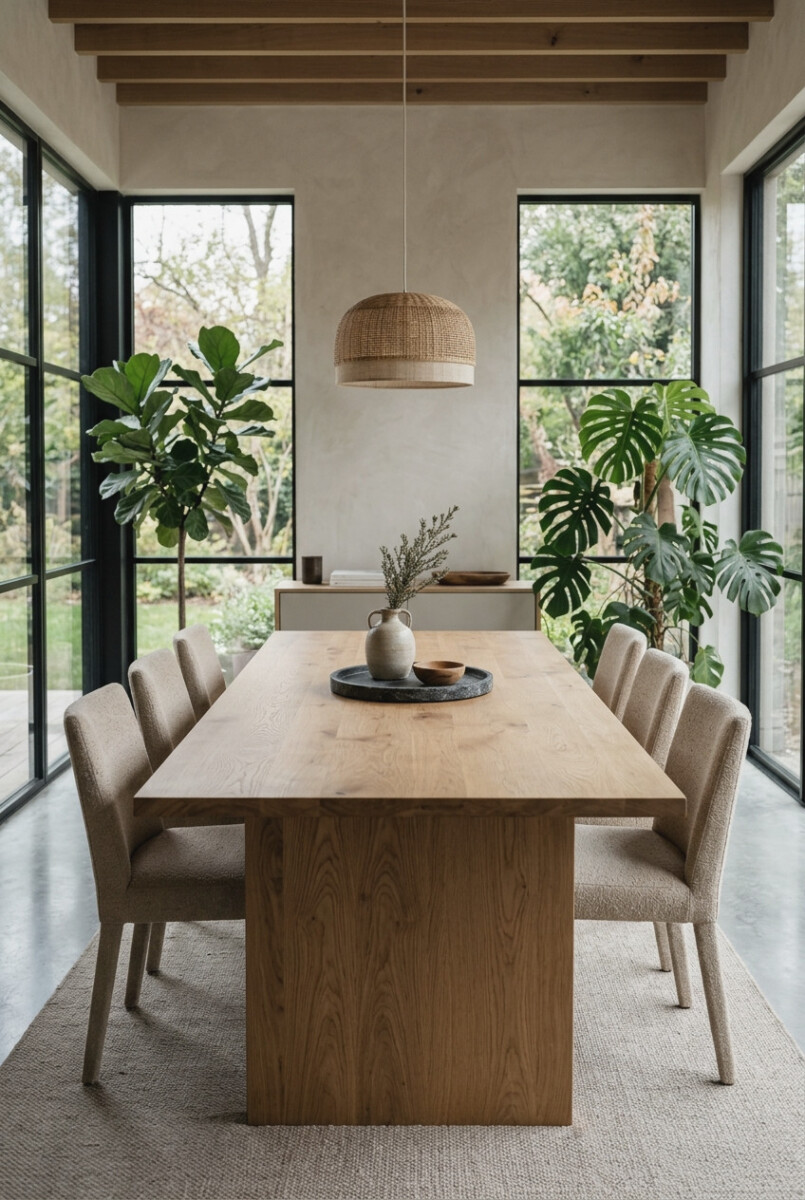
A dining table or coffee table with visible wood grain offers a simple, tactile link to natural materials. The appeal comes from the surface itself, so the piece does not need heavy carving or a dramatic live edge. Clean silhouettes can feel just as connected to nature.
Look for a finish that lets you see and feel the timber while being easy to maintain. Pair a wooden table with upholstered chairs or a stone accessory to avoid making every surface match. Choose durable construction and responsibly sourced materials when possible, rather than buying an oversized statement piece that dominates the room.
17. Bring Stone Texture into Everyday Surfaces
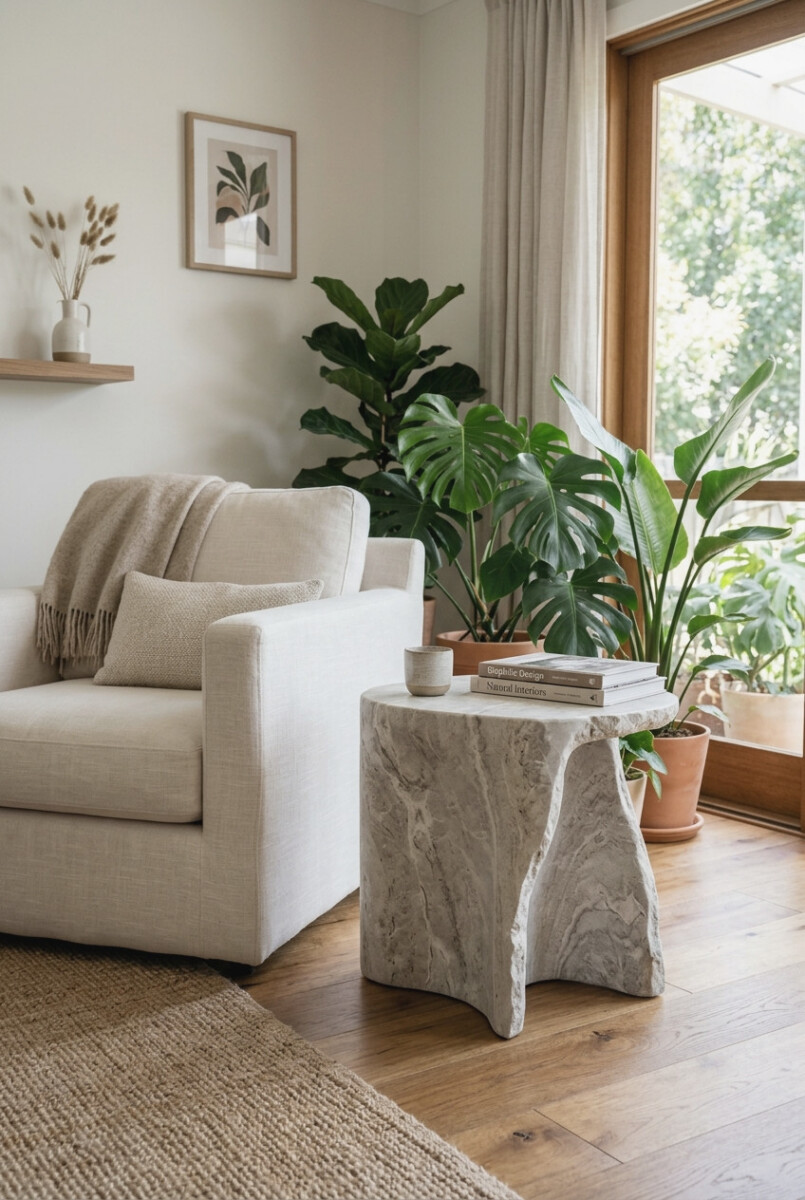
Stone adds another kind of natural variation to a home: fine veining, uneven color, and a cool, solid texture. A stone side table, windowsill, or small backsplash can introduce this quality without covering an entire wall. It provides a useful contrast to linen, timber, and leafy plants.
Select the material according to the surface’s job. Some stones need sealing and can stain or etch when exposed to common household products. If genuine stone is impractical, a well-made stone-look finish can create a similar visual effect with less maintenance.
18. Give Walls a Soft Mineral or Clay-Look Finish
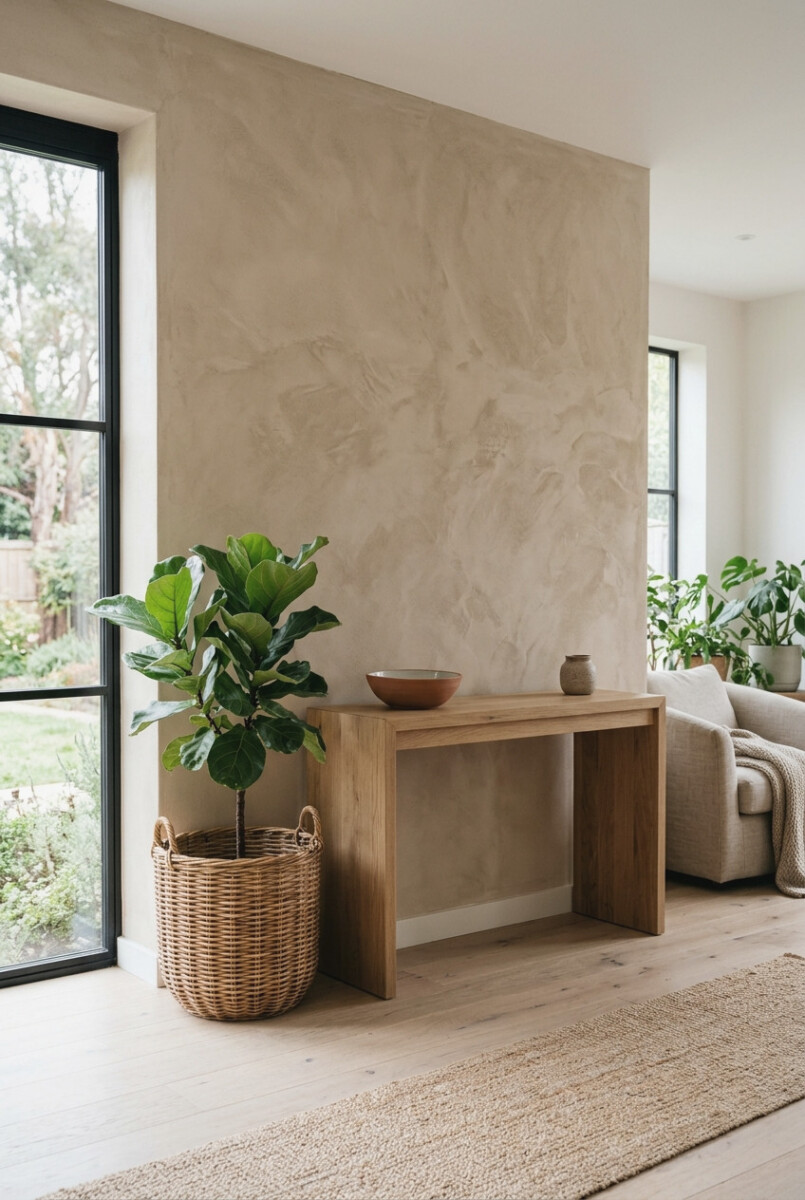
A matte wall finish with subtle movement can make a room feel closer to natural plaster or earth than a perfectly flat painted surface. Limewash and clay-effect finishes work particularly well behind timber furniture and woven pieces, where the texture catches soft daylight.
Test the finish on a small section first, since color and movement may change noticeably as it dries. Check the product’s compatibility with the wall and the room’s moisture level. In kitchens or bathrooms, use a finish appropriate for splashes and regular cleaning rather than assuming every mineral coating is waterproof.
19. Layer Linen, Cotton, and Wool Textiles
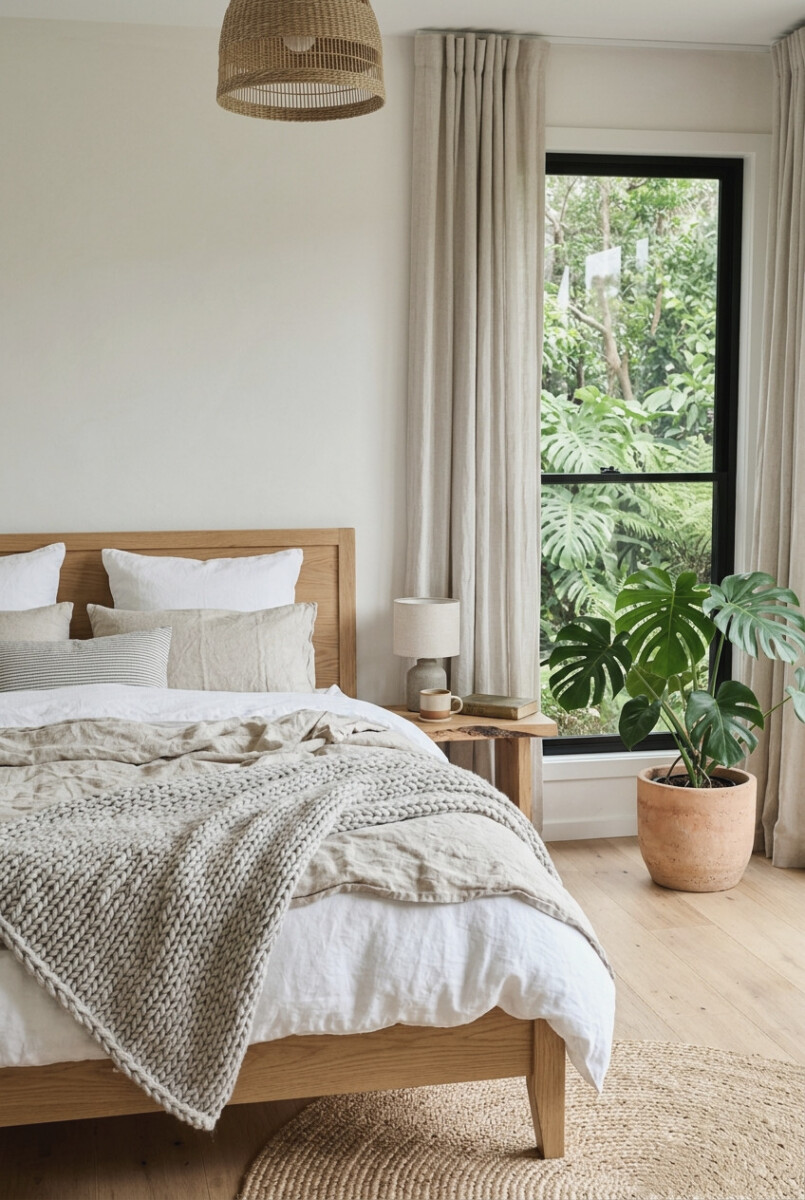
Natural textiles bring softness and a different kind of contact with nature. Linen curtains, a wool throw, or cotton bedding create useful variation in touch without relying on decorative plant motifs. Their slightly irregular weaves can make even a minimal room feel more comfortable.
Choose pieces for how they will be used and cleaned, not only their appearance. A washable linen-blend curtain may be practical at a busy window, while wool is better kept away from persistently damp areas. Work within a limited color palette so the materials stand out without making the room feel crowded.
20. Use Cork for Warmth and Quiet Texture
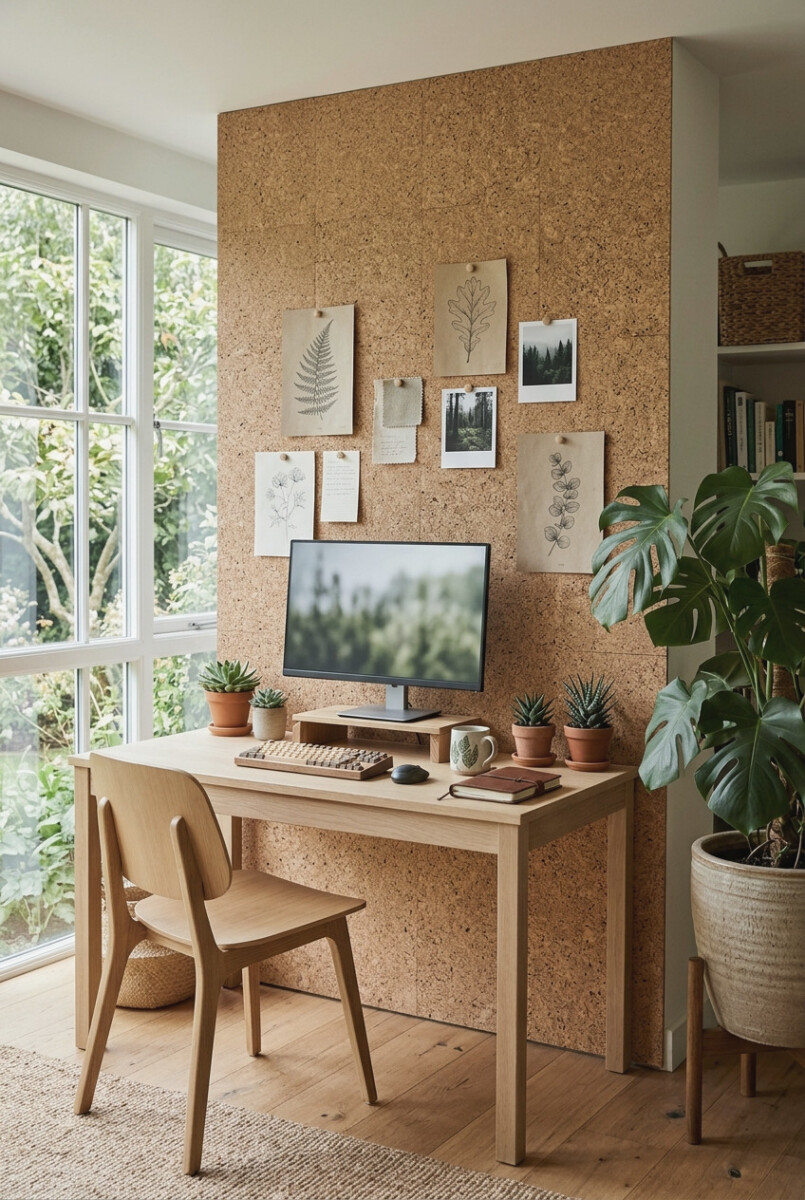
Cork is an often-overlooked natural material that can bring a soft, speckled pattern to a room. It works for pinboards, a small wall panel, accessories, or suitable floor finishes, especially in a home office where a visually warm surface can soften the work area.
Choose properly finished cork for the level of wear and moisture it will face. In a home office, a cork pinboard beside a window is an easy first step; it gives you space for notes and a few nature photographs without covering the wall with separate frames.
21. Mix Rattan and Cane with Simpler Furniture
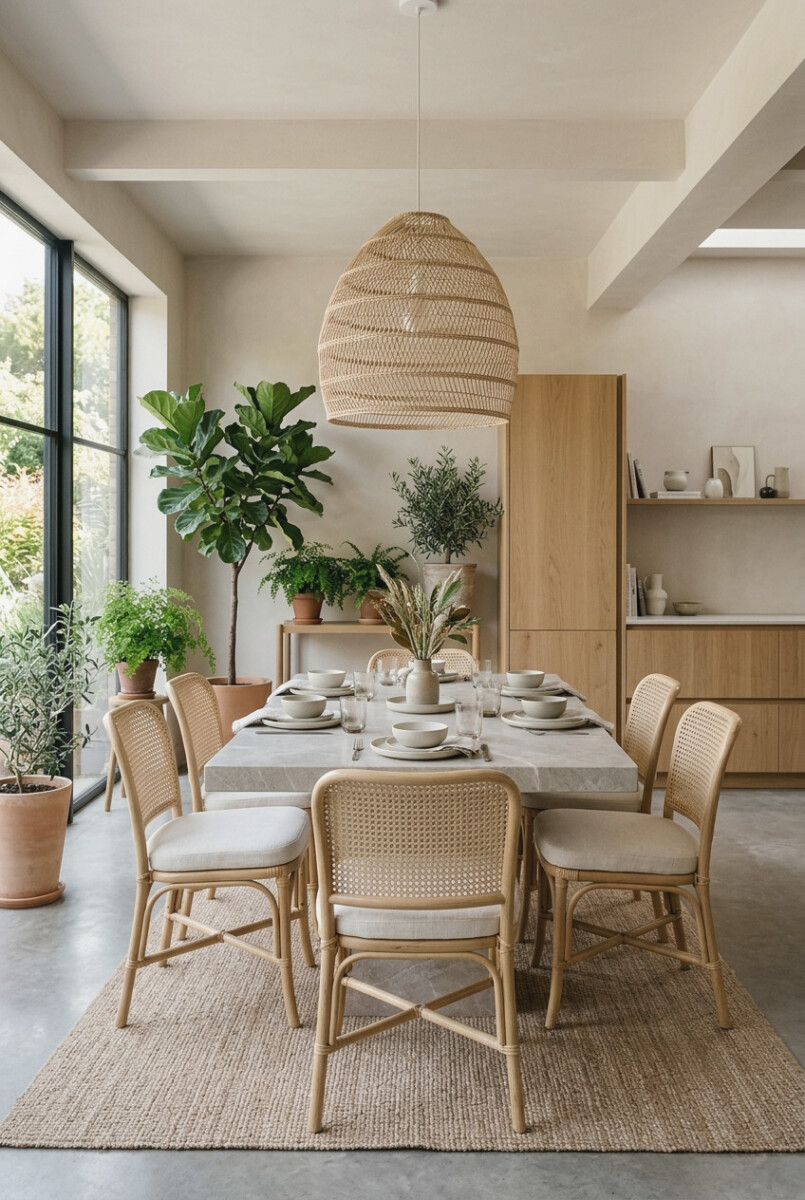
Rattan and cane introduce a woven pattern that feels connected to plant fibers and traditional craft. A cane-backed chair or rattan pendant can lighten a room filled with solid cabinetry and smooth walls, making it a natural fit for biophilic home decor.
Limit the woven pieces to a few places where the texture can be appreciated. Use supportive cushions on chairs meant for daily sitting, and avoid putting delicate cane where it will be repeatedly soaked or exposed to intense weather. Pair it with plain upholstery or a stone table for balance.
22. Work with an Earth-and-Foliage Color Palette

Green is common in biophilic interiors, but nature offers much more than one color family. Moss, bark brown, clay, sand, and stone gray can make a room feel grounded, while soft blue can pick up the sky or nearby water. These colors work well even in homes with very few plants.
Choose one main neutral, one deeper natural shade, and a smaller accent rather than using every earthy color at once. Test paint next to flooring and furniture in morning and evening light. The goal is a palette that reflects your surroundings, not a fixed formula that every room must follow.
23. Hang Botanical Artwork Where Plants Will Not Thrive
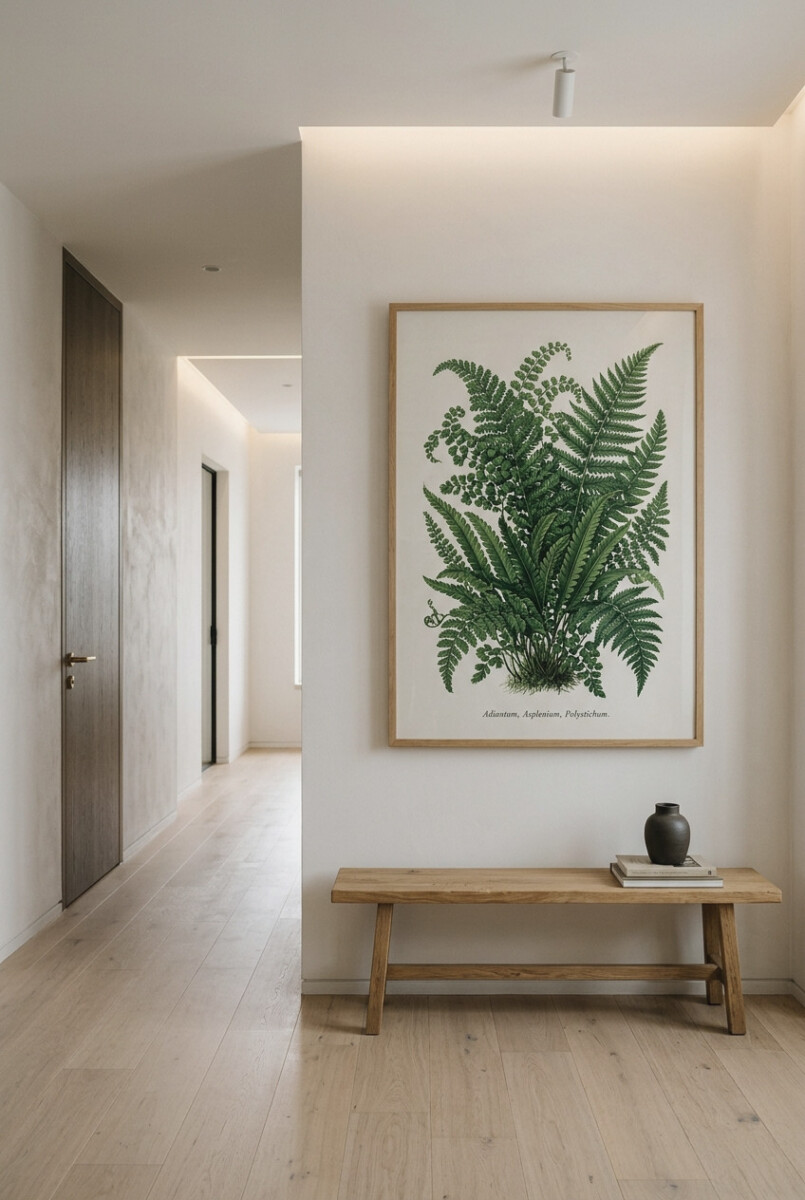
Botanical illustrations or landscape photography can provide a nature-inspired focal point in a hallway or dim corner where living plants would struggle. They are an indirect connection to the natural world, distinct from the movement and seasonal growth of actual greenery.
Use artwork that reflects plants or landscapes you genuinely like, and avoid crowding every wall with leaf prints. In a small room, one generously sized image often has more impact than a dense gallery. Keep valuable prints away from prolonged direct sunlight and use suitable glazing where necessary.
24. Introduce Leaf Patterns Through Everyday Fabrics
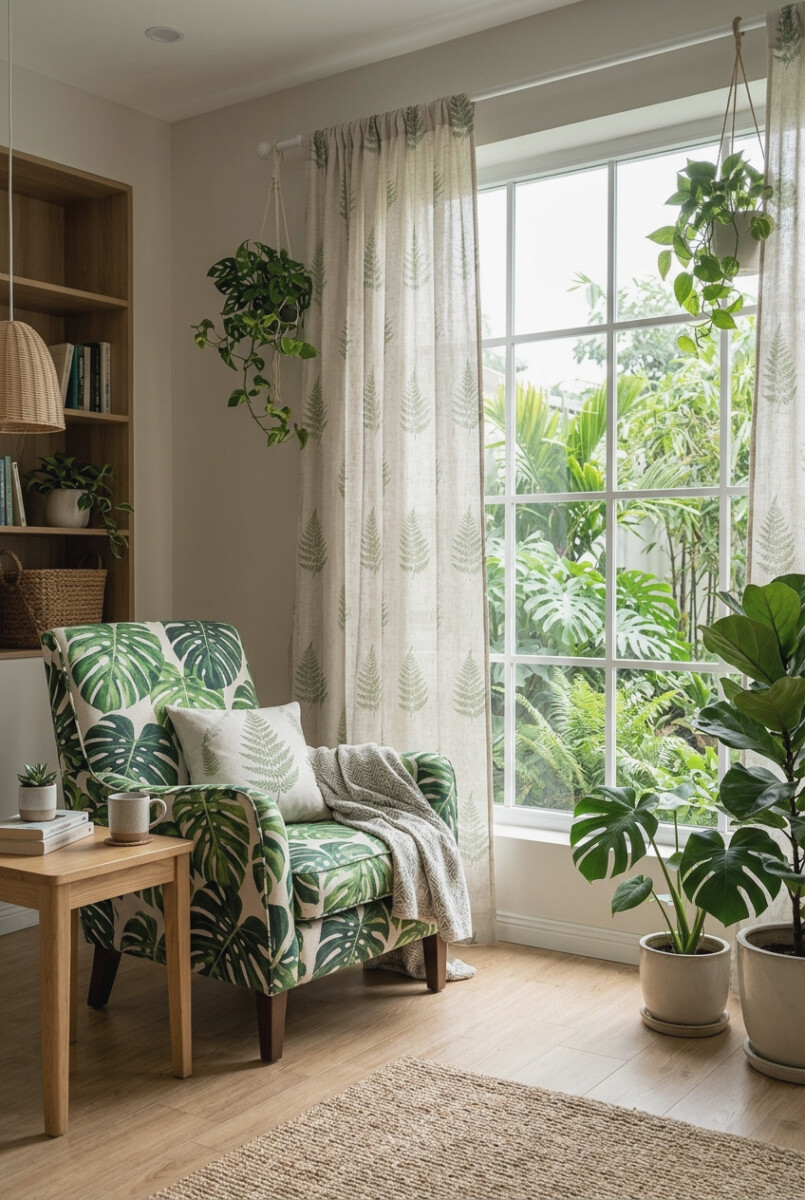
A botanical pattern on curtains, cushions, or upholstery can repeat the shapes of foliage already visible outside. It is a practical option for rooms without space for many plants and can make a neutral interior feel more connected to nature without changing the architecture.
Choose patterns with a scale that suits the room. A large leaf design may work well on one chair, while a smaller print is easier to use on curtains. Keep neighboring fabrics fairly simple so the botanical motif reads as a deliberate detail rather than visual clutter.
25. Choose Furniture with Organic Curves
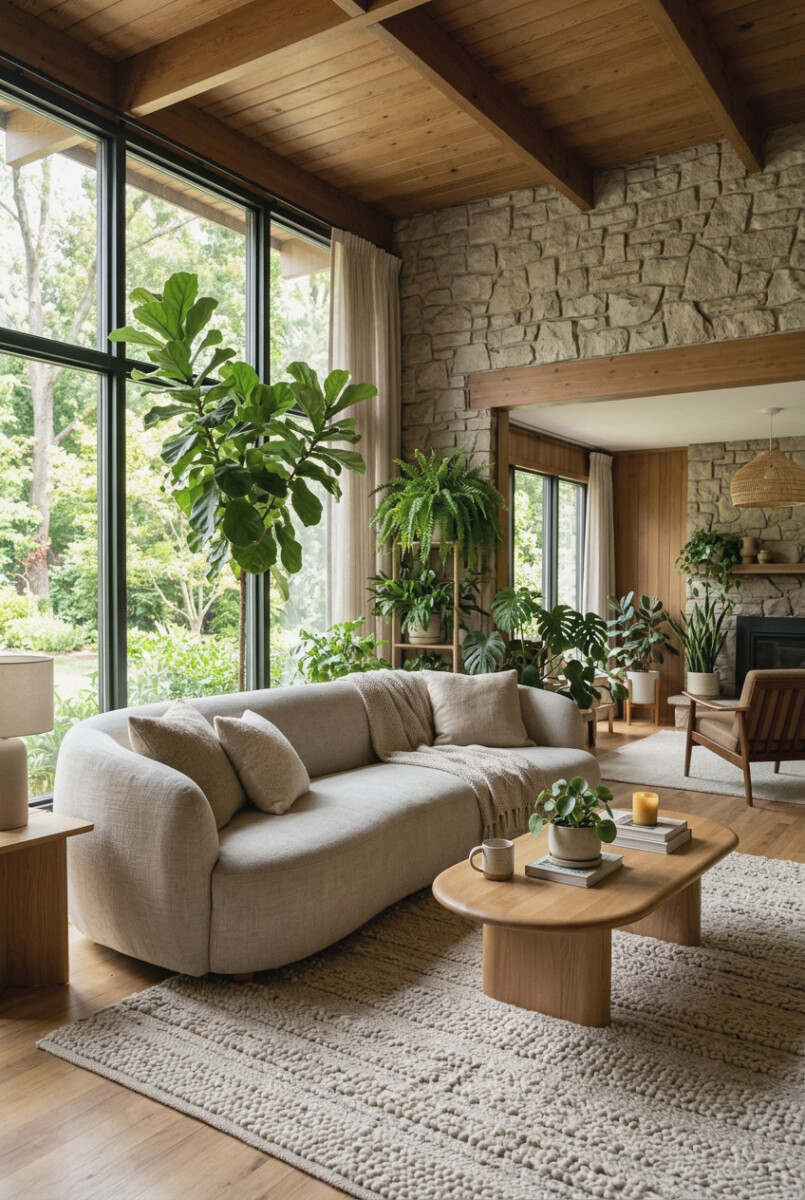
Curved furniture offers an indirect connection to natural forms. A rounded sofa, oval dining table, or softly shaped coffee table can break up the straight lines of cabinets and walls, giving the room a more fluid layout. It also pairs easily with timber and stone.
You do not need to replace a whole furniture set. Try one curved piece where people naturally gather, then check that there is enough room to move around it. A rounded table can be especially useful in a narrow dining area with frequent foot traffic.
26. Pick Lighting Inspired by Branches or Petals
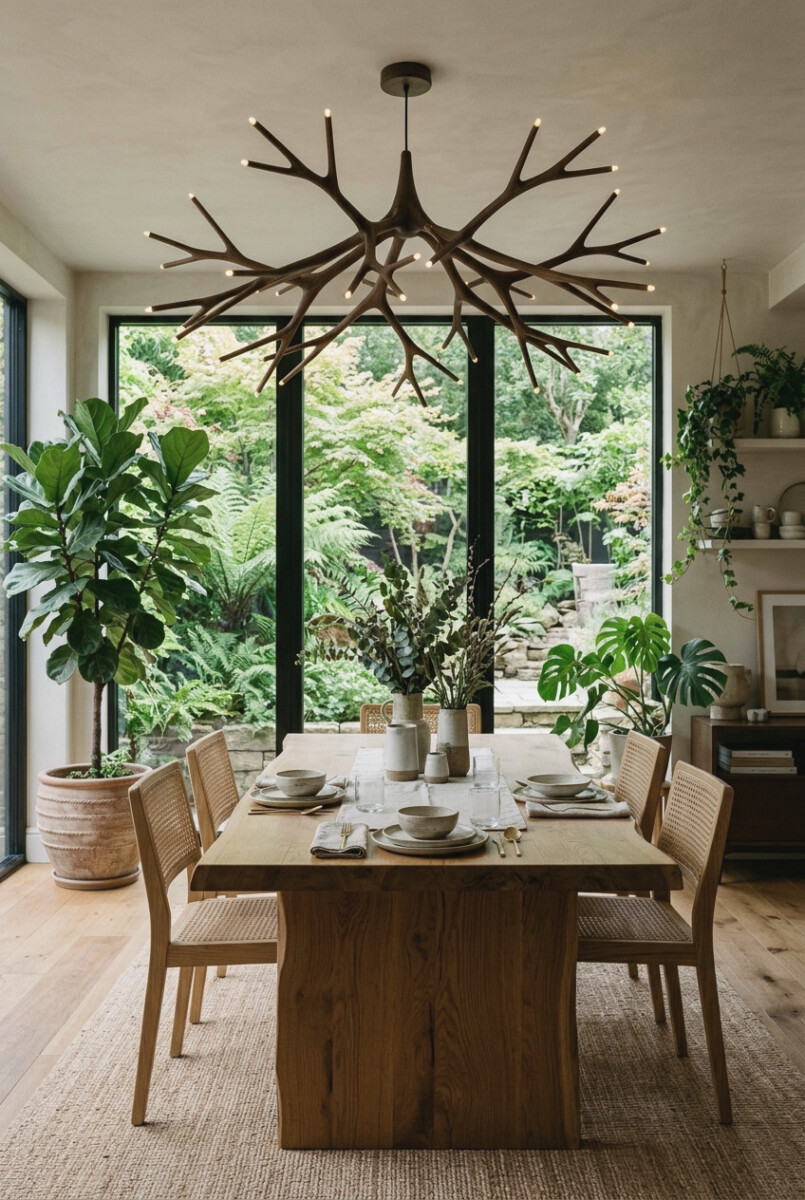
A branching chandelier or petal-shaped shade brings natural geometry into a room without imitating a plant too literally. These fixtures can add character above a dining table or in an entryway, especially when their materials echo nearby timber or ceramic pieces.
Choose a restrained design that suits the room’s scale and provides enough usable light. Natural-looking shades sometimes reduce brightness or create strong shadows, so plan task lighting separately where needed. Install fixtures with proper electrical support and clearances.
27. Style a Small Collection of Natural Objects
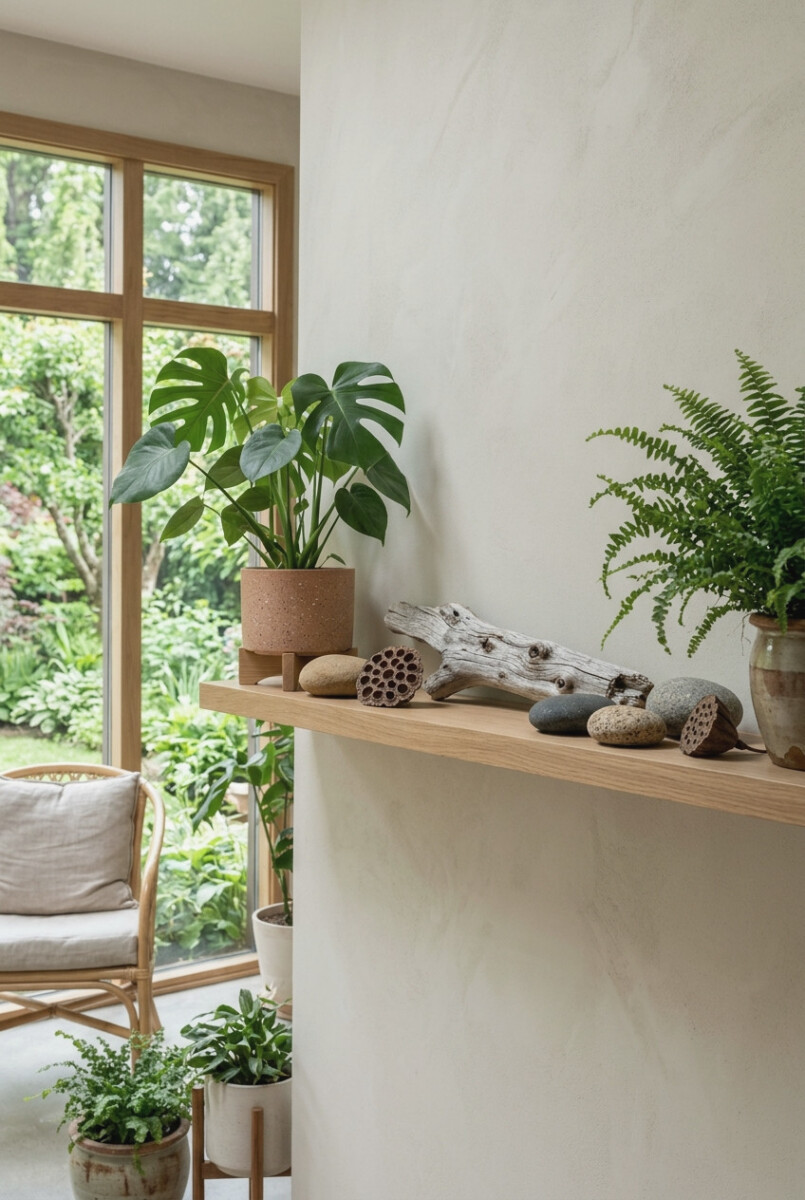
A few stones, seedpods, shells, or pieces of weathered wood can introduce the variety of shapes and textures found outdoors. A meaningful collection works better than a tray full of generic nature-themed accessories because each object has a reason to be there.
Arrange the pieces on a stable shelf with room between them and keep fragile items away from busy walkways. Clean and dry found materials before displaying them, and collect responsibly rather than removing plants, shells, or stones from protected places.
28. Make the Entryway a Transition to Nature
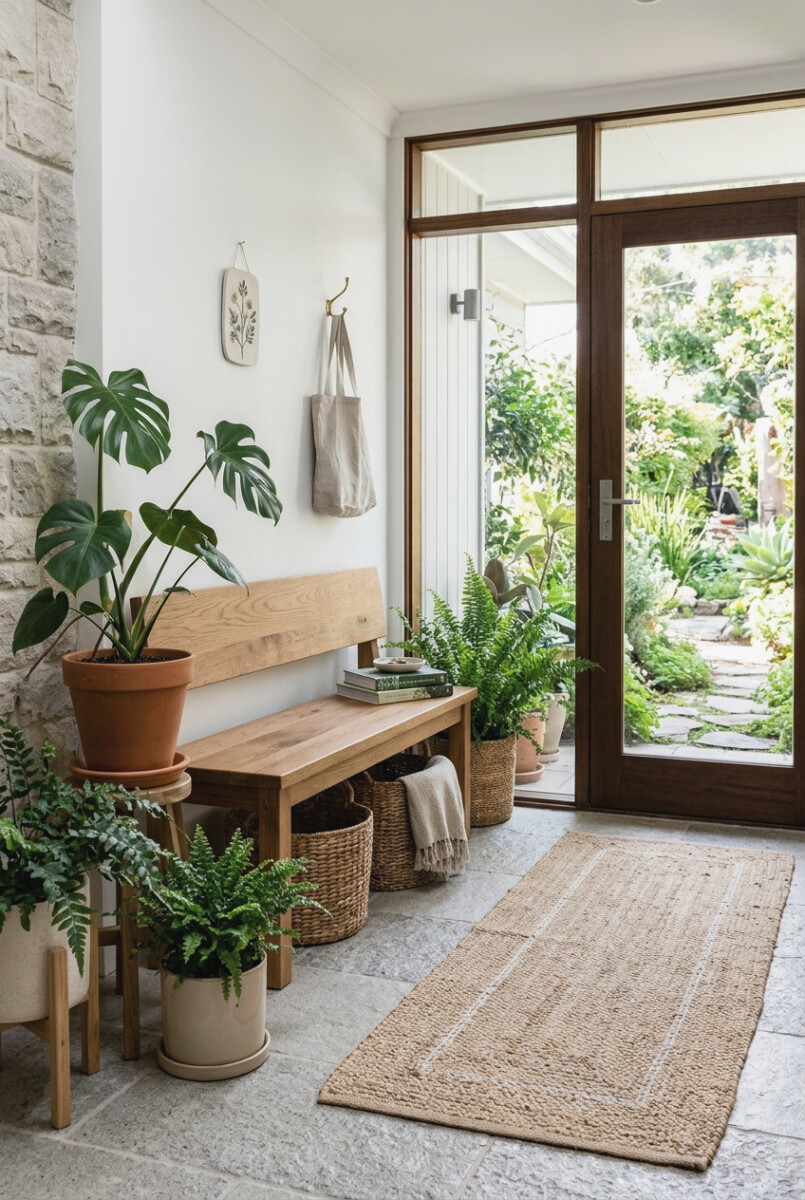
The entryway is where outdoor conditions first meet the interior. A bench made from visible timber, a view of the garden, and a small grouping of plants can make that transition feel intentional. It is also an opportunity to connect the rest of the home to the landscape beyond the door.
Choose finishes that stand up to wet shoes and frequent cleaning, then add natural texture through a washable runner or basket. Keep the route clear and make sure plants are not exposed to cold drafts every time the door opens. Function matters as much as appearance in this part of the house.
29. Create a Bedroom That Welcomes Morning Light
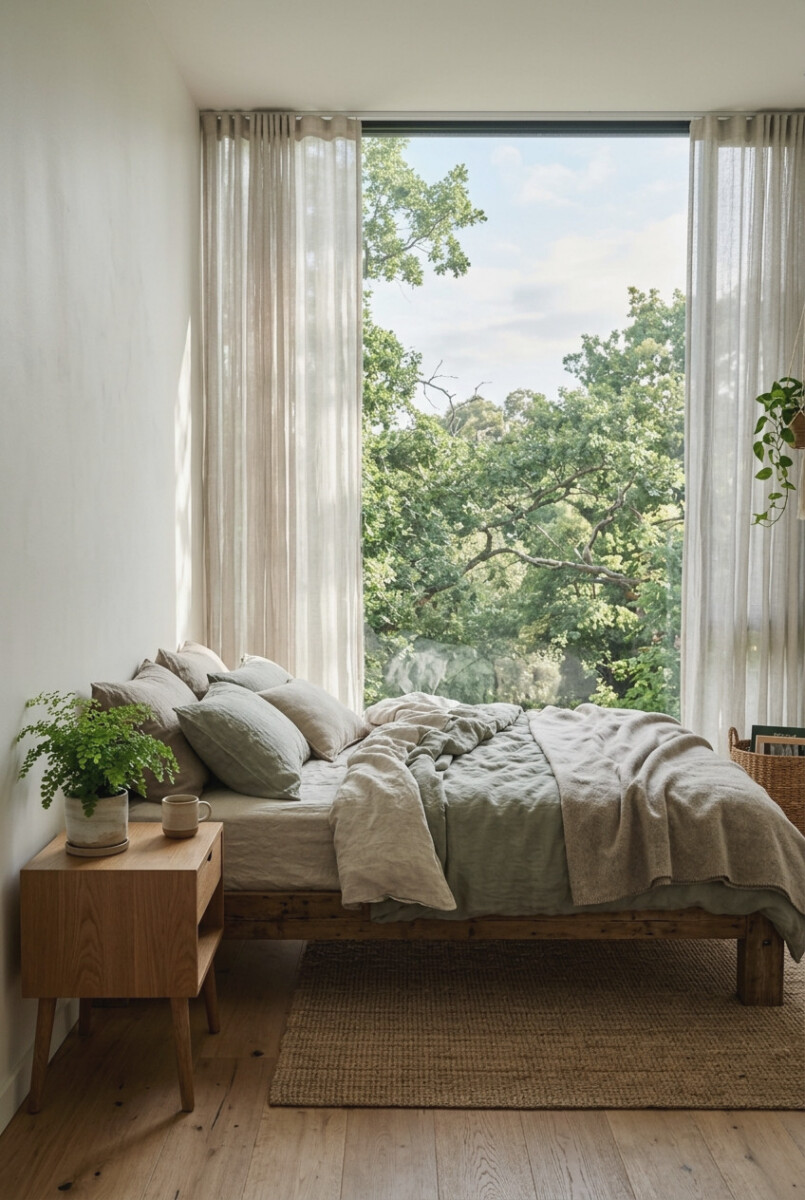
A biophilic bedroom can use daylight and outdoor views without sacrificing sleep or privacy. A bed positioned to catch a glimpse of trees or sky creates a gentle connection to the outside, while natural fabrics and muted colors help the room feel settled.
Arrange furniture so the window remains easy to open and clean, and use blackout curtains or layered shades when you need darkness at night. Keep the bedside area simple, with a timber table or a small plant suited to the available light rather than a crowded display.
30. Grow Kitchen Herbs Within Easy Reach
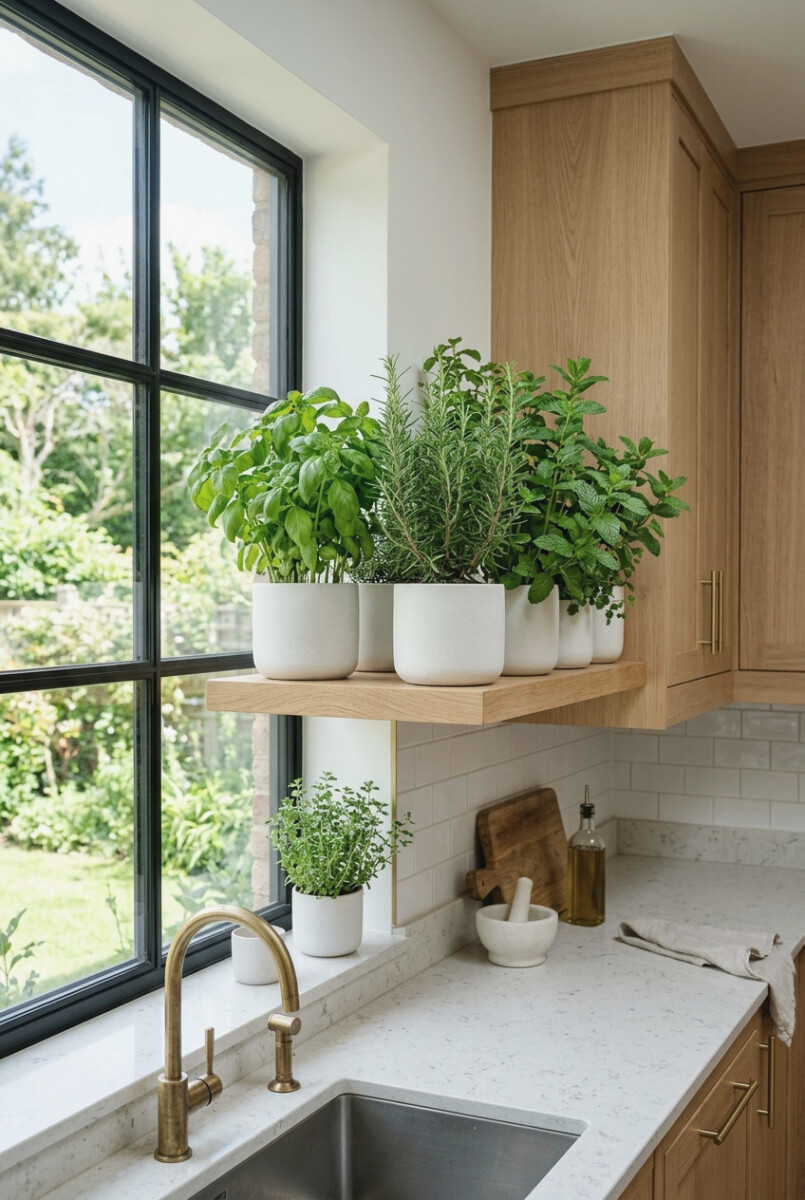
An indoor herb garden adds living greenery to a kitchen and makes the connection to plants useful. Basil, thyme, rosemary, or mint can bring changing leaves and seasonal growth to a place where you already work with fresh ingredients.
Choose a bright position and match the herbs to your light and temperature conditions. Use pots with drainage holes and trays, and keep them away from hot burners and food-preparation surfaces that need to stay clear. A few healthy herbs are more practical than a crowded shelf of struggling plants.
31. Make a Bathroom Feel Connected to the Outdoors
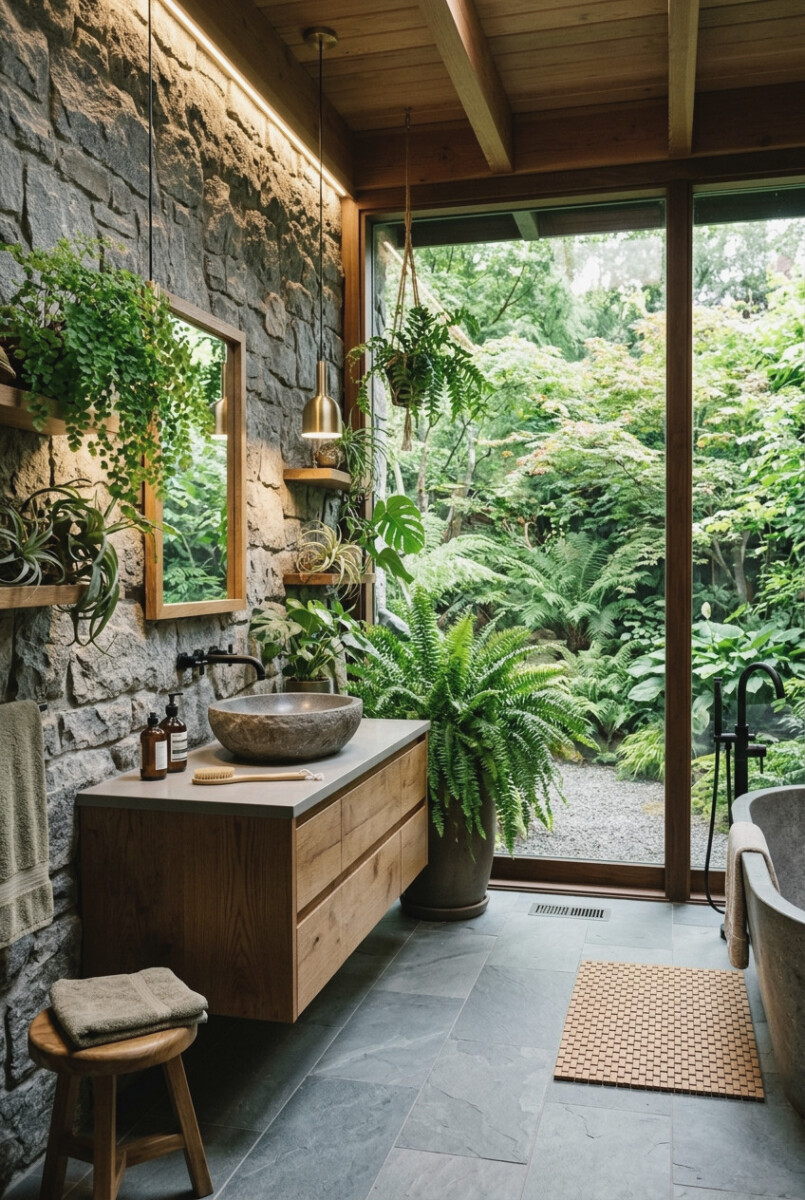
Stone textures, timber accents, and a carefully chosen plant can make a bathroom feel more like a garden retreat. A window onto greenery is especially effective, but even a small bathroom can gain from tactile surfaces and a simple natural palette.
Select materials designed for wet conditions, provide reliable ventilation, and choose plants for the light they actually receive. A humidity-tolerant plant still needs adequate daylight or suitable grow lighting. Never treat decorative stone, wood, or plaster as a substitute for waterproofing beneath the finish.
32. Position Your Home Office to Face Greenery
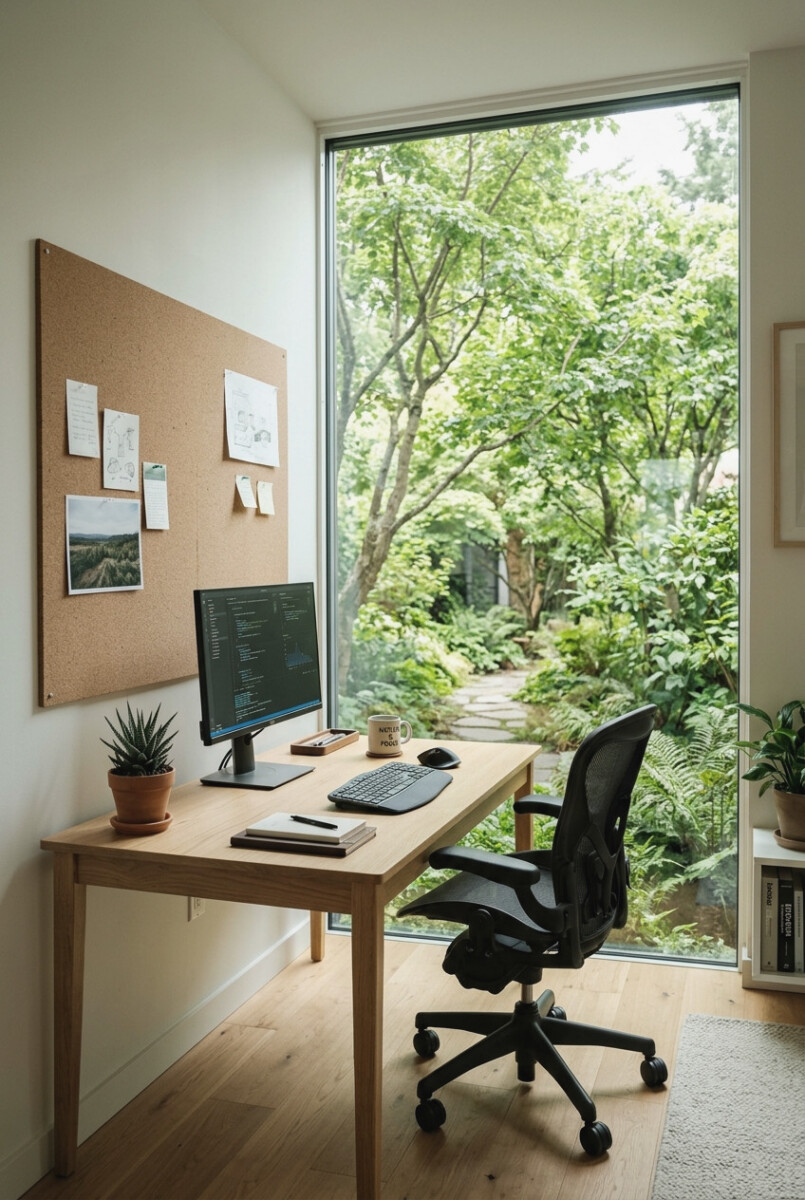
Looking out toward trees or a planted courtyard can give a home office a welcome break from screens. This is a direct visual connection to nature and does not require the workspace to be full of plants or botanical decorations.
Place the desk where the window is within easy view but does not create glare on the monitor. Use an adjustable blind if needed, and bring in one natural material such as a wooden desk or cork board. A small plant is optional if the room already has an attractive outdoor outlook.
33. Use a Courtyard or Lightwell as a Visual Anchor
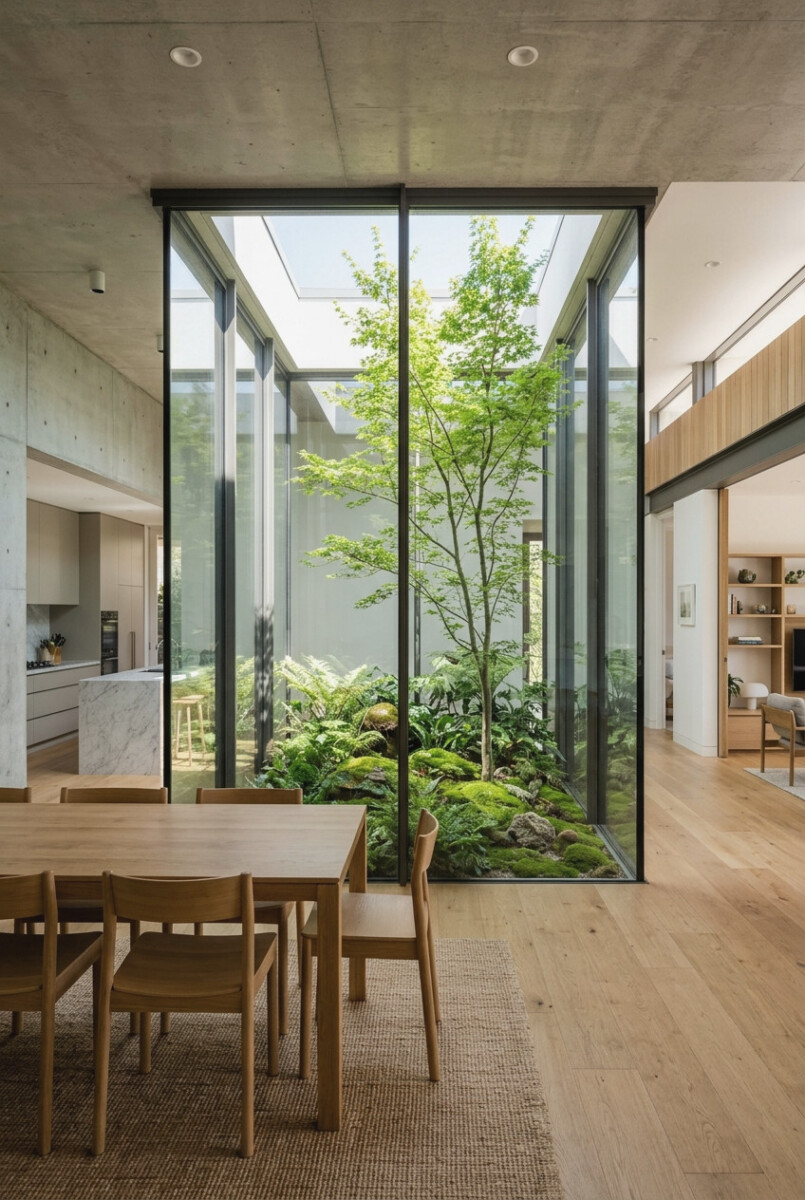
In homes with an internal courtyard or lightwell, the planted space can become a feature shared by several rooms. A glimpse of foliage from the hallway, dining area, or staircase strengthens the connection between the interior and the seasons outside.
Keep planting proportional to the space and make sure water drains away from foundations and interior walls. If you are planning a new courtyard, work with a designer on light, access, and irrigation. For an existing lightwell, one well-positioned planter may be enough to improve the view.
34. Add a Small, Easy-to-Maintain Water Feature
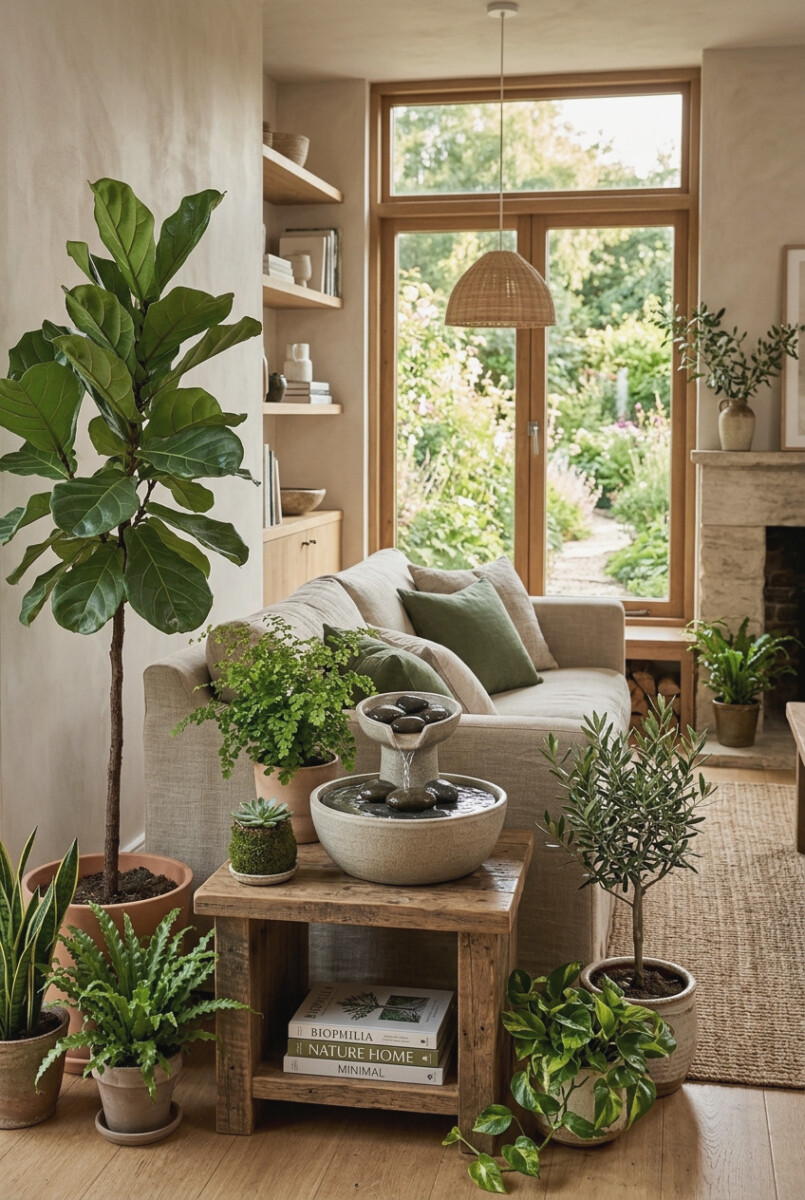
Moving water introduces a different sensory element through sound and changing reflections. A compact tabletop fountain can create a gentle background note in a living area, while a view toward an outdoor fountain offers a similar connection without bringing water indoors.
Choose a model that is easy to clean, place it on a waterproof stable surface, and keep cords away from water and walkways. Regular maintenance helps prevent mineral buildup and standing-water problems. If you prefer a quieter or lower-maintenance option, artwork showing water can suggest the same theme without a fountain.
35. Bring in the Sounds of the Garden
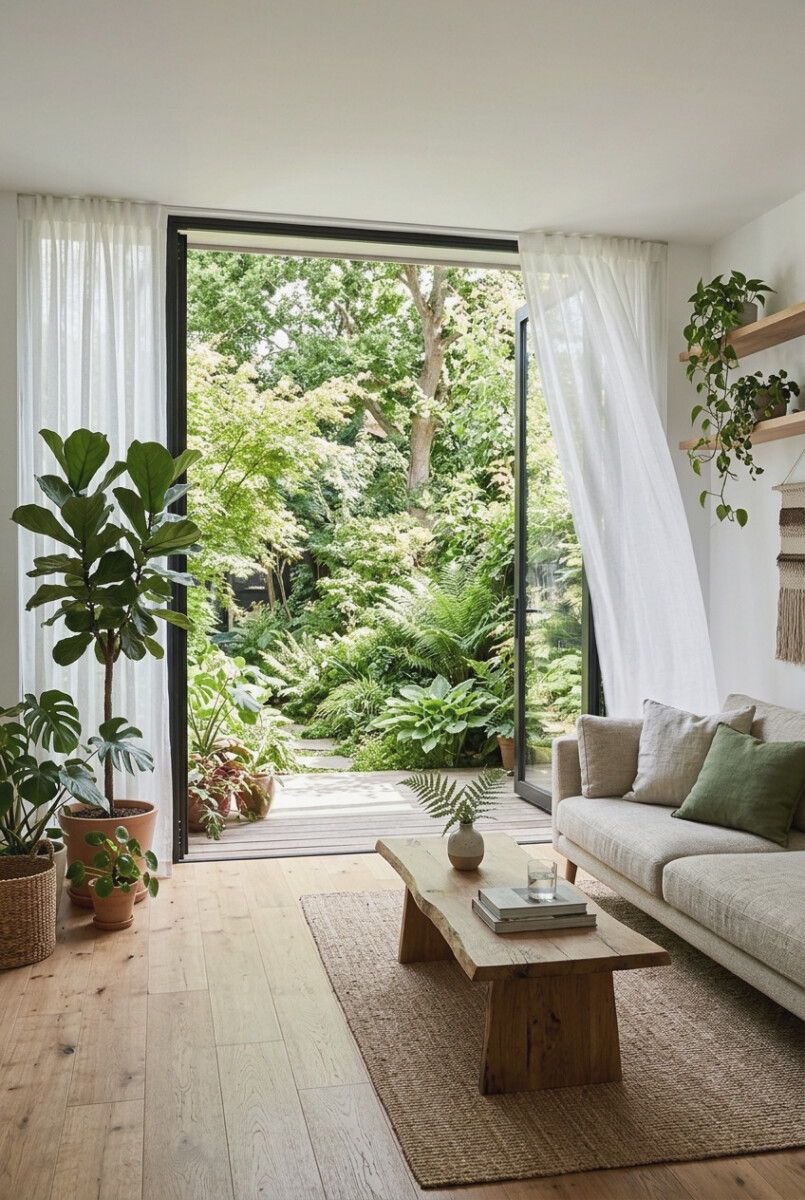
Birdsong, leaves moving in the wind, and distant rain can add another layer of connection to nature. These sounds make a room feel linked to its setting, especially when the view outside is partly hidden by buildings or walls.
Where it is safe and comfortable, open a window or spend time beside a screened door to hear the outdoor environment. If street noise makes that impractical, use quiet nature recordings at a low volume rather than relying on a loud indoor feature. Keep sound choices comfortable for everyone sharing the space.
36. Let Daylight Cast Moving Shadows
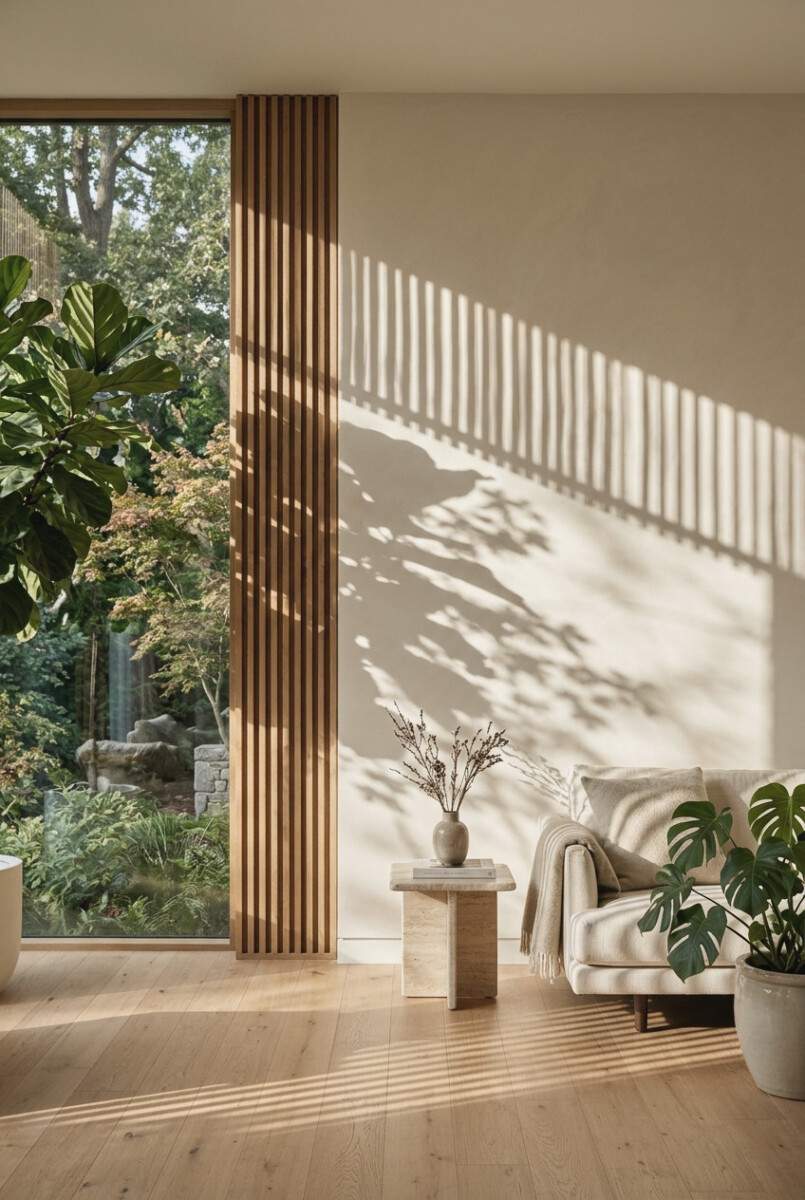
The movement of light and shadow across a wall creates an experience that changes naturally during the day. Slatted screens, tree branches outside, or a woven shade can produce soft patterns that make a simple room more interesting without adding many objects.
Look at how sunlight travels through the room before positioning a screen or plant. Keep the effect away from places where flickering glare would be distracting, such as a work monitor or reading chair. Adjustable shades make it easier to enjoy the patterns without giving up comfort.
37. Celebrate the Seasons with a Simple Nature Display
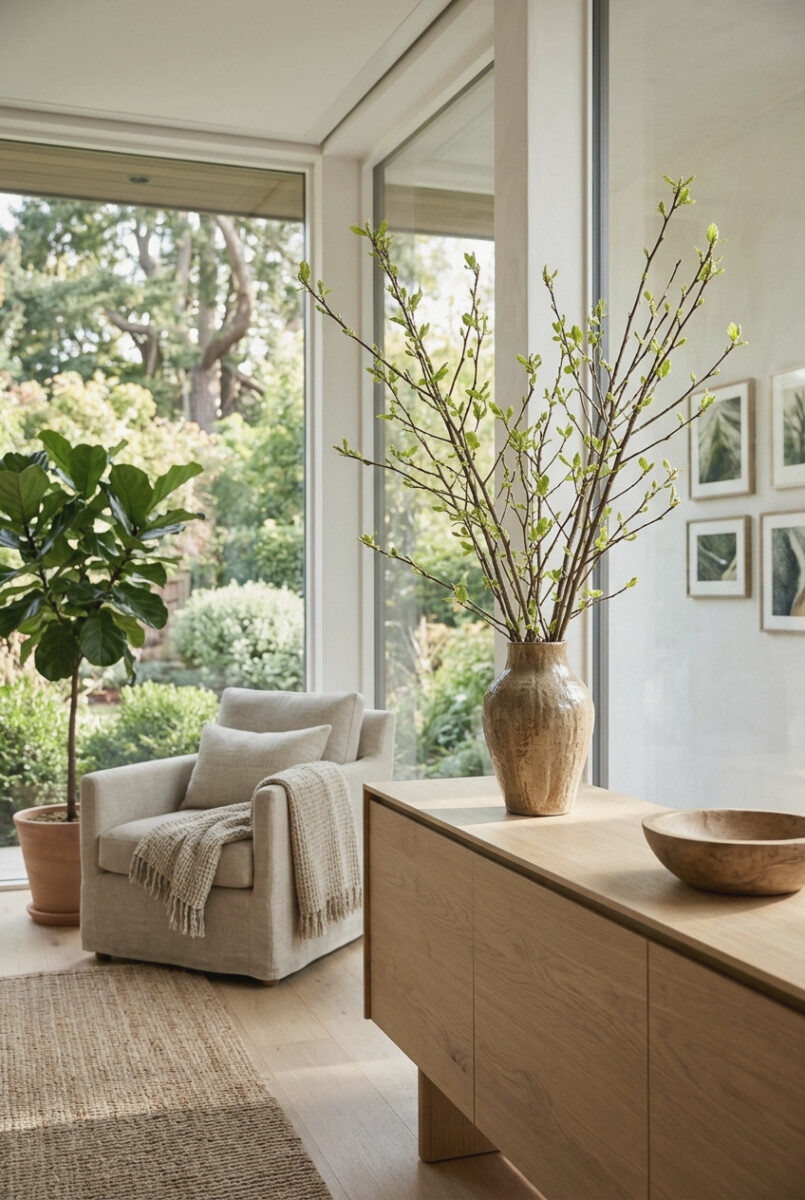
Biophilic design can acknowledge the passage of time as well as the appearance of nature. A seasonal branch, a bowl of fallen leaves, or fresh flowers from the garden offers a changing detail that keeps a room connected to what is happening outdoors.
Use one shelf or a small table rather than turning the room into a themed display. Choose locally appropriate materials, avoid protected plants, and remove arrangements before they become dusty or moldy. A vase of bare winter branches can be just as effective as spring flowers.
38. Balance Open Views with a Sheltered Nook
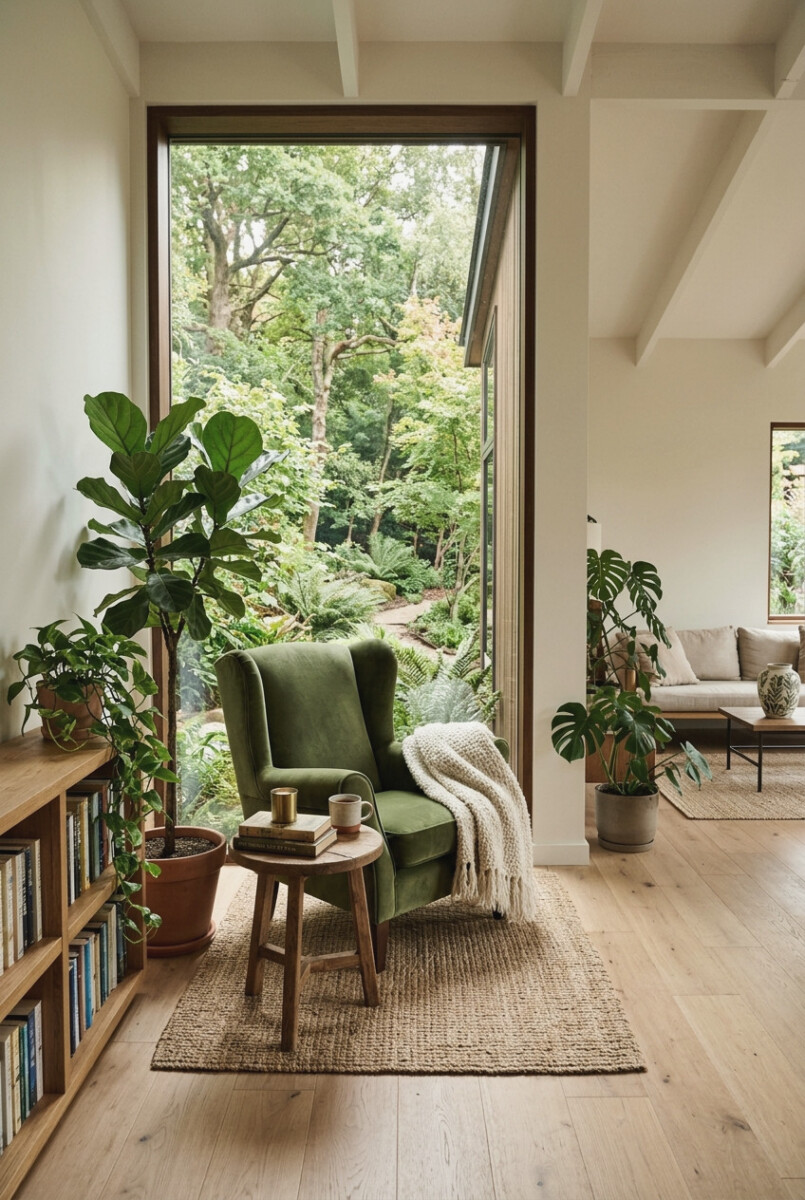
Many people enjoy a room that offers both a broad view and a more enclosed place to sit. In biophilic design, this balance is often described as prospect and refuge: you can see out into the space while still feeling comfortably sheltered. It can make an open-plan room easier to use.
Place a high-backed chair, small sofa, or reading bench beside a window with a view, then use a rug or low shelf to define the nook. Keep the main sightline open and avoid building a partition that makes the room dark. The effect comes from thoughtful placement, not necessarily a renovation.
39. Give a Small Apartment a Biophilic Refresh

A compact home can feel connected to nature without a living wall or expensive building work. One view-facing seat, a healthy houseplant, a visible wood texture, and better control of daylight can make a small room feel less disconnected from the outdoors.
Start by identifying the best window and the surfaces you touch or see most often. Move furniture before buying anything, then choose one practical improvement such as a woven shade, compact plant stand, or linen curtain. Leave open floor space so the room remains comfortable to use every day.
Bringing Biophilic Design into Everyday Life
Good biophilic interior design is less about collecting nature-themed decor and more about improving the everyday experience of a room. A better garden view, comfortable daylight, an honest wood surface, or a plant that thrives in the available light can each make a meaningful difference. The choices should suit the building and the people living in it.
Start with the view from your most-used seat, then pay attention to light, materials, and airflow. Add living plants only where you can care for them, and choose larger projects for reasons beyond appearance alone. A home that keeps a thoughtful connection to nature can still be simple, practical, and distinctly your own.
