Table of Contents
Your couch is the centerpiece of your living room. It is where you binge-watch your favorite television shows, host your friends for movie nights, take afternoon naps, and spend quality time with your pets. With all of this daily activity, it is no surprise that sofas quickly become magnets for accidental spills, lingering food odors, pet hair, and general grime. When your beloved sofa starts looking a little worse for wear, you might think it is time to call in an expensive professional upholstery cleaning service. However, before you spend a fortune, you should know that you likely already have a miracle cleaning solution sitting right in your bathroom and kitchen cabinets.
Learning how to clean couch with baking soda and hydrogen peroxide is an absolute game-changer for homeowners. This incredibly simple, natural, and budget-friendly combination has the power to lift stubborn stains, brighten dull fabrics, and completely neutralize unpleasant odors. In this comprehensive guide, we will walk you through exactly why this DIY method works, how to prepare your sofa, and the exact steps you need to take to restore your upholstery to its former glory.
Why Clean Your Couch with Baking Soda and Hydrogen Peroxide?
When dealing with dirty upholstery, many people reach for harsh chemical cleaners found in the aisles of their local grocery store. While these can sometimes be effective, they often leave behind sticky residues, emit strong synthetic fragrances, and contain volatile organic compounds (VOCs) that are less than ideal for households with children and pets.
Choosing to clean couch with baking soda and hydrogen peroxide offers a safer, eco-friendly alternative that is surprisingly powerful. Here is why this specific combination is so highly effective:
1. The Power of Baking Soda (Sodium Bicarbonate): Baking soda is a mild alkali and a natural deodorizer. Instead of just masking bad smells like an aerosol spray would, baking soda physically absorbs and neutralizes odor-causing molecules. Additionally, its incredibly fine, powdery texture provides a very gentle abrasive action. This helps to mechanically loosen dried dirt and grime from the woven fibers of your couch without causing scratches or fraying.
2. The Magic of Hydrogen Peroxide: Hydrogen peroxide (specifically the standard 3% concentration found in pharmacies) is a natural oxidizer. It acts as a mild, color-safe bleach. When applied to organic stains like food spills, coffee, wine, or pet accidents, it breaks down the chemical bonds of the stain, lifting the discoloration out of the fabric.
When you combine these two ingredients together—often with a tiny squirt of grease-cutting liquid dish soap—you create a chemical reaction that generates microscopic effervescent bubbles. These bubbles penetrate deep into the fabric fibers, physically pushing the trapped dirt, grease, and stains to the surface where they can be easily wiped away.
Understanding Couch Cleaning Codes Before You Start
Before you mix up your cleaning solution and start scrubbing away at your cushions, there is one absolutely crucial step you must take: checking your couch’s manufacturer care tag. Usually located underneath the seat cushions or on the bottom of the sofa frame, this tag contains vital cleaning codes that tell you exactly what types of liquids your fabric can safely handle.
- W (Water-Based Cleaners): This code means you can safely use water-based cleaning solutions on the fabric. If your couch has a “W,” the baking soda and hydrogen peroxide method is generally safe to use.
- S (Solvent-Based Cleaners): This means the fabric is dry-clean only and must be cleaned with water-free chemical solvents. Do not use water or hydrogen peroxide on “S” couches, as it can cause severe water rings, fabric shrinkage, or color bleeding.
- W/S or SW (Water or Solvent): You can use either water-based or solvent-based cleaners. Our DIY mixture is safe here, but proceed with a light touch.
- X (Vacuum Only): You cannot use any liquid cleaners on this fabric. Brushing and vacuuming are your only options.
Note: Even if your couch is labeled “W” or “W/S”, you must always perform a spot test before applying the cleaning mixture to the main seating areas.
What You Will Need for This DIY Couch Cleaner
Gathering the right supplies beforehand will make the cleaning process smooth and hassle-free. Here is what you will need:
- Baking soda: For sprinkling and mixing.
- Hydrogen peroxide (3%): Ensure it is standard household peroxide, not the high-concentration peroxide used for hair bleaching.
- Liquid dish soap: A grease-fighting soap like Dawn works best. (Optional but highly recommended).
- A spray bottle: To evenly disperse the cleaning solution.
- A vacuum cleaner: Ideally with an upholstery brush attachment.
- Microfiber cloths: These are perfect because they are lint-free and highly absorbent.
- A soft-bristled brush: An old toothbrush or an upholstery brush to gently agitate the fabric.
- A small bowl: For mixing.
Step-by-Step Guide: How to Clean a Couch with Baking Soda and Hydrogen Peroxide
Once you have determined that your couch is safe for water-based cleaning and you have gathered your supplies, it is time to get to work. Follow these detailed steps for the best results.
Step 1: Prep and Vacuum the Upholstery
Never apply a wet cleaner to a dusty couch. If you get dust and loose dirt wet, it will turn into mud and push deeper into the fabric fibers, creating a massive headache. Remove all throw pillows and blankets. Take off the seat cushions if they are detachable. Use your vacuum’s upholstery attachment to thoroughly vacuum every inch of the couch, paying special attention to the crevices, seams, and the space underneath the cushions where crumbs and pet hair love to hide.
Step 2: Perform a Hidden Spot Test
This is the golden rule of upholstery cleaning. Find an inconspicuous area of your couch, such as the back corner or the underside of the skirt. Apply a tiny amount of hydrogen peroxide to the spot using a cotton swab or white cloth. Press down gently. Wait about 15 to 30 minutes until it dries. If there is no color transfer onto your white cloth and the fabric has not faded or changed texture, you are safe to proceed.
Step 3: Pre-Treat with Dry Baking Soda for Odors
If your main issue is a smelly couch rather than specific stains, do a dry treatment first. Sprinkle a generous, even layer of dry baking soda over the entire surface of the couch. Use your hands or a dry soft brush to lightly spread it around so it sinks slightly into the fabric. Let this sit for at least an hour, though leaving it overnight is best for strong odors like pet urine or cigarette smoke. The baking soda will absorb the embedded smells and surface oils. After the waiting period, vacuum up all the baking soda thoroughly.
Step 4: Mix Your Homemade Cleaning Solution
If you have prominent stains, water spots, or deep-set dirt, it is time to make the liquid cleaner. In your spray bottle or a small bowl, mix:
- 1/2 cup of 3% hydrogen peroxide
- 2 tablespoons of baking soda
- 1 or 2 small drops of liquid dish soap
Mix the solution gently. If you are putting it in a spray bottle, do not shake it vigorously, as the baking soda and peroxide will react and build up pressure inside the bottle. A gentle swirl is all that is needed to combine the ingredients.
Step 5: Apply the Mixture to Stains
Spray the solution directly onto the stained areas. Alternatively, if you are using a bowl, dip your soft-bristled brush or microfiber cloth into the mixture and dab it onto the stain.
Important Tip: Do not over-saturate the couch. You only want to dampen the surface fabric. If you soak the couch, the liquid will seep down into the foam padding underneath, which takes forever to dry and can eventually lead to mildew and mold growth.
Step 6: Scrub Gently and Wipe Clean
Using your soft-bristled brush or toothbrush, gently work the solution into the stain using light, circular motions. Do not scrub aggressively, as this can damage the fabric fibers and leave a fuzzy, worn patch. Once you have agitated the stain, let the mixture sit on the fabric for 10 to 15 minutes. This gives the hydrogen peroxide time to oxidize the stain.
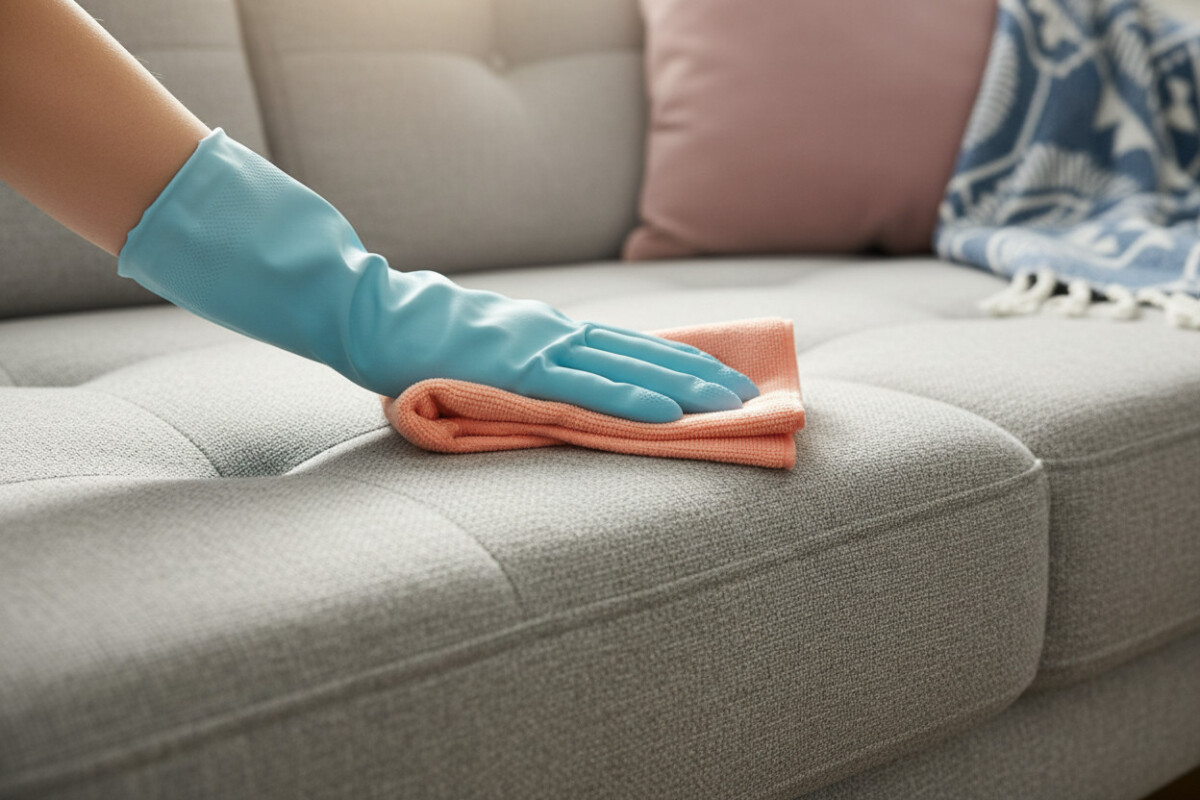
After the resting period, take a clean, slightly damp microfiber cloth and dab the area to lift away the lifted dirt and the remaining soap residue. Rinse your cloth in clean water, wring it out until it is barely damp, and dab the couch again. It is crucial to remove the soap residue, as dried soap will attract dirt faster in the future.
Step 7: Air Dry and Final Vacuum
Allow your couch to air dry completely. You can speed up this process by opening windows, turning on ceiling fans, or pointing a box fan directly at the sofa. Avoid using a hot hair dryer, as excessive heat can sometimes set invisible protein stains or warp certain synthetic fibers.
Once the couch is 100% dry, you might notice the fabric feels slightly stiff. This is entirely normal. Take your vacuum cleaner and go over the cleaned areas one last time with the upholstery brush. This will fluff the fibers back up, remove any lingering microscopic baking soda particles, and leave your couch feeling soft, fresh, and exceptionally clean.
Maintaining Your Couch’s Freshness
Now that you know how to successfully clean your sofa, maintaining it will extend its lifespan dramatically. Vacuum your couch at least once a week to prevent dust from embedding into the fibers. Address spills immediately by blotting them with a dry cloth—never rub a fresh spill! If you have pets, consider laying down a washable throw blanket over their favorite sleeping spot to catch the bulk of the dirt and oils.
Conclusion
You do not need an arsenal of expensive, toxic chemicals to keep your living space looking immaculate. By utilizing everyday household staples, you can effectively tackle everything from muddy paw prints to spilled coffee. Taking the time to properly clean couch with baking soda and hydrogen peroxide will save you money, protect your family from harsh fumes, and ensure your favorite piece of furniture remains a cozy, welcoming spot for years to come.