Table of Contents
Kitchen and bathroom cabinets are the true workhorses of any home. Day in and day out, they endure constant use, fluctuating temperatures, and varying humidity levels. Over time, this daily wear and tear can take a major toll, resulting in unsightly cracks, splits, and gouges in the wood. When faced with a damaged cabinet door or structural frame, your first instinct might be to reach for a standard bottle of traditional wood glue. However, what if you don’t have any on hand? Or, more importantly, what if the crack is a wide gap or a structural failure where liquid glue would simply seep right through without providing any structural support?
If you are currently wondering how to fix cracked wooden cabinets without glue, you have absolutely come to the right place. While wood glue is fantastic for bonding two clean, perfectly mated pieces of wood together in a controlled woodworking shop, it is practically useless for filling open voids, bridging wide gaps, or addressing superficial hairline fractures on existing cabinetry. In this comprehensive and in-depth guide, we will explore the most effective, durable, and aesthetically pleasing methods to repair your wooden cabinetry using alternative materials like wood filler, wax sticks, epoxy wood paste, and mechanical fasteners.
Why Do Wooden Cabinets Crack in the First Place?
Before diving directly into the repair methods, it is highly essential to understand exactly why your cabinet doors and frames are cracking. Wood is a porous, organic material that constantly breathes, reacting to its surrounding environment.
- Moisture and Humidity Changes: This is universally the number one culprit. During humid summer months, wood absorbs moisture from the air and expands. In the dry winter months, especially when indoor heating systems are running constantly, the wood loses moisture and shrinks. This constant, cyclical expansion and contraction create immense stress on the wood grain, eventually leading to stress fractures and splits along the weakest points.
- Age and Wear: Over decades of use, the natural oils naturally present within the wood tend to dry out, making the material brittle and far more susceptible to cracking under pressure.
- Physical Impact: Slamming cabinet doors in a rush, accidentally hitting the wood with heavy pots and pans, or swinging a door open too far beyond its hinge capacity can physically fracture the wood fibers.
- Improper Manufacturing Tolerances: Sometimes, the floating central panel of a solid wood cabinet door is fastened too tightly within its surrounding frame during the manufacturing process. When that inner panel attempts to expand but has no room to move, it cracks under its own pressure.
Understanding these root causes will not only help you firmly choose the correct repair method but also aid in preventing future damage from ruining your hard work.
Can You Really Repair Cracked Cabinets Without Wood Glue?
Absolutely. In fact, for many specific types of damage, attempting to fix cracked wooden cabinets without glue is actually the preferred and professional approach. Standard PVA (polyvinyl acetate) wood glue possesses virtually zero gap-filling properties. If you have a split where wood fibers have splintered off and are completely missing, wood glue will simply dry into a weak, sunken, and visually unappealing mess.
By utilizing highly specialized alternative products like two-part epoxy pastes, hard touch-up wax sticks, or acrylic-based wood fillers, you can effectively recreate the missing structure of the wood, sand it perfectly smooth, and blend it seamlessly into your existing kitchen finish. For severe structural failures, mechanical mending plates offer a permanent fix that no liquid adhesive can match.
Top Methods to Fix Cracked Wooden Cabinets Without Glue
Depending on the specific severity, width, and location of the cabinet crack, you will need to actively choose the appropriate repair medium. Here are the top professional techniques to seamlessly restore your cabinets.
1. Using Wood Filler or Putty for Surface Cracks and Gaps
For shallow gouges, hairline cracks, and small to medium-sized gaps, high-quality wood filler (or wood putty) is an excellent alternative to glue. Wood fillers typically contain real wood fibers mixed with a strong binder, allowing them to harden completely, be sanded flush, and take on stains or paints beautifully.
How to Apply Wood Filler:
- Clean the Area: Wipe down the cracked area with a degreaser or a mixture of warm water and dish soap to remove years of built-up kitchen grease. Let the wood dry completely.
- Prep the Crack: Use a sharp utility knife or the tip of a small flathead screwdriver to gently scrape out any loose splinters, dirt, or debris from inside the crack.
- Apply the Filler: Using a flexible plastic putty knife, press the wood filler firmly into the crack. Ensure you push it deep down into the void rather than just skimming the top.
- Overfill Slightly: Wood filler naturally tends to shrink slightly as its moisture evaporates during the drying process. Leave a small mound of filler sitting slightly proud of the cabinet surface.
- Sand Smooth: Once fully cured (always check the manufacturer’s recommended drying time), use 120-grit sandpaper followed by a finer 220-grit sandpaper to blend the patch totally flush with the surrounding wood.
- Refinish: Apply a matching wood stain or paint meticulously over the sanded area to complete the illusion.
2. Applying Wax Sticks for Minor Fissures
If you have tiny, superficial hairline cracks and you absolutely do not want to deal with the messy hassle of sanding, priming, and repainting your cabinets, a furniture wax stick (also known broadly as a touch-up crayon) is your best friend.
Wax sticks come in dozens of different natural wood tones, ranging from light bleached maple to deep dark espresso. You simply choose the color tone that best matches your existing cabinet finish.
How to Use Wax Sticks:
- Clean the surface thoroughly so the wax can adhere properly.
- Take the chosen wax stick and rub it vigorously back and forth directly over the crack, using friction to push the soft wax down into the crevice.
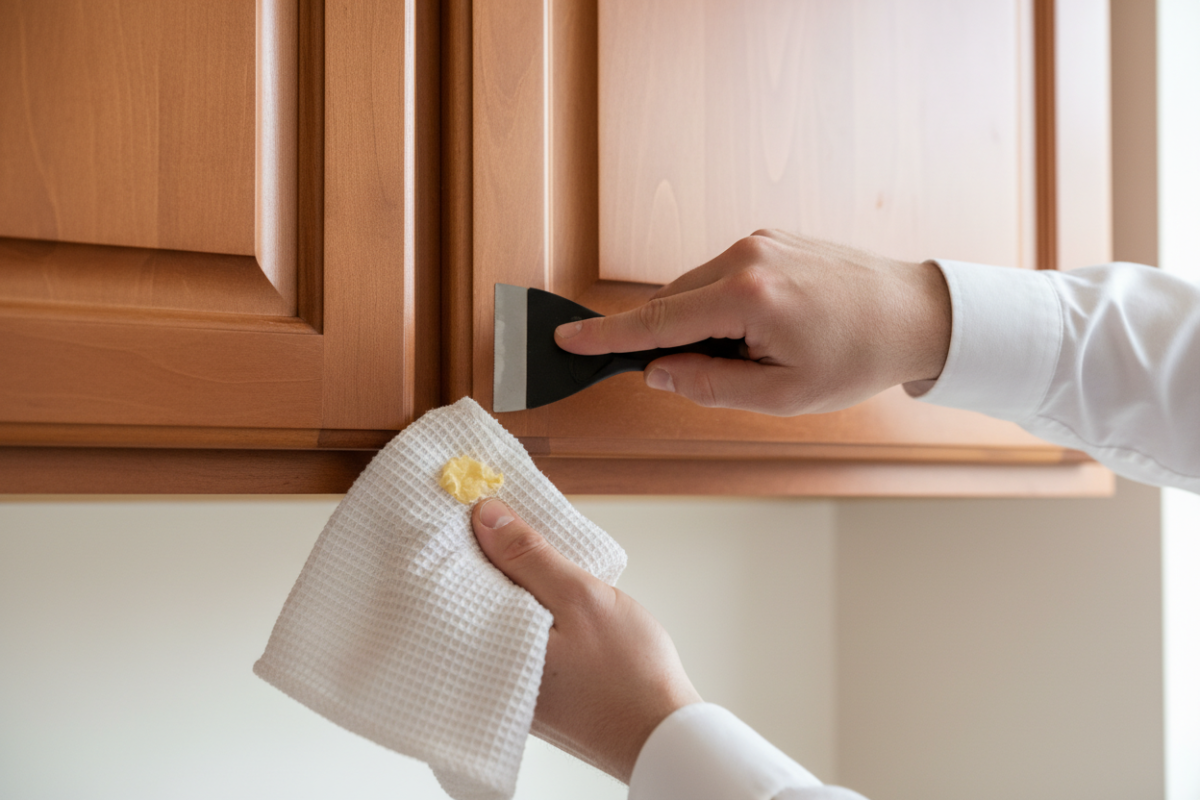
- Use a plastic scraper, the edge of an old credit card, or even your thumbnail to gently scrape away the excess wax sitting on the smooth surface.
- Take a clean, lint-free microfiber cloth and buff the area. The colored wax will seamlessly fill the crack, rendering it practically invisible, while the surrounding protective finish remains completely untouched.
3. Epoxy Wood Paste for Deep, Structural Cracks
When you are dealing with a highly severe split, a large chunk of missing wood, or a dangerous structural crack near a load-bearing hinge, standard wood filler simply won’t be strong enough. This is where a heavy-duty two-part epoxy wood paste shines. Epoxy does not shrink as it dries, it cures significantly harder than the wood itself, and it acts as an incredibly strong structural binder.
How to Apply Epoxy:
- Mix the Parts: Wood epoxy typically comes with a resin component and a hardener component. Mix equal parts on a piece of disposable scrap cardboard until they are completely and uniformly blended.
- Fill the Void: Using a sturdy putty knife, force the mixed epoxy paste deep into the wide crack. Because epoxy is thick and tacky, it will successfully bridge wide gaps without dripping down the cabinet face.
- Shape it: If you are actively rebuilding a shattered cabinet corner or a damaged edge, you can actually mold and sculpt the epoxy to perfectly match the original profile of the cabinet door.
- Sand and Paint: Epoxy cures very fast and sets incredibly hard. Once it is rock solid, sand it down flush. Note that while epoxy can be painted perfectly, it does not absorb traditional wood stain very well. If your cabinets are stained, you may need to cleverly use a specialized solid-color stain marker to camouflage the epoxy patch.
4. Mechanical Fasteners: Mending Plates and Brackets
Sometimes a cabinet frame is cracking so badly that it threatens to fall apart entirely, particularly where the vertical stiles meet the horizontal rails. In this extreme scenario, the most robust way to fix cracked wooden cabinets without glue is by using hidden mechanical reinforcement.
How to Install Brackets:
- Purchase small, flat metal mending plates or L-shaped corner braces from your local hardware store.
- Remove the affected cabinet door from its hinges and lay it flat on a stable work surface, facing down.
- Push the cracked wooden frame together as tightly as possible. You may heavily benefit from using a bar clamp to hold it perfectly in place.
- Position the metal mending plate flat against the interior back of the door, spanning directly across the crack.
- Pre-drill shallow pilot holes (being extremely careful not to accidentally drill all the way through the front face of the cabinet door).
- Drive short wood screws directly through the bracket and into the wood, safely locking the two cracked halves together permanently.
5. Flexible Caulk for Painted Cabinets
If you happen to have solid-colored, painted cabinets and you notice long cracks forming exclusively along the seams where the inner panel meets the outer frame, this is actually expected physical behavior. The central panel of a cabinet is intentionally designed to float. If you mistakenly use hard filler or rigid glue here, it will just crack again aggressively when the seasons inevitably change.
Instead, run a very thin, precise bead of paintable acrylic latex caulk directly along the separated seam. Smooth it out expertly with a damp finger. Caulk remains incredibly flexible, stretching and compressing dynamically as the wood naturally expands and shrinks, keeping the unsightly crack hidden permanently beneath your paint job.
How to Prevent Future Cracks in Your Kitchen Cabinets
Once you have successfully executed your repair, you will undoubtedly want to ensure your cabinets remain in pristine, structurally sound condition for years to come. Prevention is fundamentally always easier than a cure.
- Maintain Stable Humidity: The absolute ideal indoor humidity level for wooden cabinetry is between 35% and 50%. Consider utilizing a humidifier in the dry winter and a dehumidifier or air conditioning in the humid summer to keep moisture levels stable.
- Install Soft-Close Dampers: Upgrading your aging cabinet hinges to modern soft-close versions will immediately eliminate the physical impact of slamming doors, vastly preserving the structural integrity of the wood joints.
- Regular Cleaning: Do not let standing water or steam sit on your wooden cabinets. When boiling water or cooking aggressively, proactively use your stove’s exhaust fan to pull damaging moisture away from your upper cabinets. Promptly wipe away any accidental liquid spills.
- Oil and Condition: If your cabinets are traditionally stained (not painted), treat them generously with a high-quality wood conditioner or lemon oil once or twice a year to keep the wood fibers deeply nourished and highly flexible.
When to Call a Professional or Replace the Doors
While repairing cabinets yourself is an incredibly rewarding and money-saving DIY project, there are undeniable times when a door is simply beyond saving. If a cabinet door is severely warped beyond flattening, if the structural wood is rotting entirely due to long-term hidden water damage, or if the structural integrity of the main hinge mounting points is completely compromised, it may be time to consult a professional carpenter or order a brand-new replacement door directly from the manufacturer.
However, for the vast majority of cosmetic damages and moderate structural issues, thoroughly utilizing the methods explicitly outlined in this comprehensive guide will successfully breathe vibrant new life into your kitchen or bathroom space.
Conclusion
A damaged, cracked cabinet absolutely does not mean you have to painfully endure an expensive full kitchen remodel or awkwardly rush out to buy messy adhesives that may not even logically solve your specific problem. By carefully assessing the overall size, depth, and specific location of the damage, you can easily fix cracked wooden cabinets without glue using modern engineered fillers, robust epoxies, simple colored wax touch-ups, or sturdy metal braces. Armed confidently with the right materials, a little bit of patience, and these proven professional techniques, you can expertly restore the pristine beauty and complete functionality of your wooden cabinetry all by yourself.