Table of Contents
Spilling a glass of red wine, dropping a plate of greasy food, or discovering a sudden pet accident on your beautifully curated area rug can undoubtedly be a heart-sinking moment. For many homeowners, the immediate reaction is to panic, rush to the store for harsh chemical cleaners, or dial up an expensive professional carpet cleaning service. However, achieving a pristine, stain-free rug doesn’t always require a hefty investment or toxic chemicals. You might be surprised to learn that the secret to maintaining your floor coverings is likely sitting right inside your kitchen pantry or bathroom cabinet.
Learning how to spot clean rugs using household staples is an invaluable skill that will save you time, money, and unnecessary stress. Everyday items like baking soda, white vinegar, and standard liquid dish soap are not only incredibly effective at breaking down stubborn spots but are also much safer for your household. In this comprehensive guide, we will walk you through everything you need to know to tackle even the most daunting rug stains with confidence, using only simple, natural ingredients.
Why Choose Household Staples for Rug Cleaning?
Before diving into the exact methods and recipes for stain removal, it is important to understand why DIY carpet care is often superior to commercial alternatives. While store-bought products promise instant results, they frequently come with hidden drawbacks.
Eco-Friendly and Non-Toxic
Many conventional carpet cleaners contain strong solvents, artificial fragrances, and volatile organic compounds (VOCs) that can linger in your home’s air. When you spot clean rugs using household staples, you are utilizing natural, non-toxic substances. This is especially crucial for households with crawling babies, toddlers, and pets who spend a significant amount of time playing directly on the floor and breathing in close proximity to the rug fibers.
Cost-Effective Solution
Professional rug cleaning services can cost hundreds of dollars, and specialty stain-removing sprays aren’t cheap either. Conversely, a bottle of white vinegar or a box of baking soda costs merely pennies per use. Relying on items you already buy in bulk for cooking or basic household maintenance ensures that you are keeping your home spotless without straining your monthly budget.
Immediate Availability
Time is of the essence when dealing with rug stains. The longer a spill sits, the deeper it penetrates the fibers and the harder it becomes to remove. Because household staples are already in your cupboards, you can respond to a spill within seconds. There is no need to waste precious minutes driving to the store while the stain sets permanently into your expensive Moroccan or Persian rug.
Essential Household Staples for Spot Cleaning Rugs
To build your ultimate DIY stain-fighting arsenal, you only need a few basic ingredients. Here are the most effective staples to keep on hand:
Distilled White Vinegar
White vinegar is arguably the champion of natural cleaning. Due to its mild acetic acid content, vinegar is brilliant at cutting through grime, breaking down sticky residues, and dissolving water-soluble stains. It also possesses natural antibacterial properties and works wonders for neutralizing tough odors, making it indispensable for pet owners.
Baking Soda
Sodium bicarbonate, commonly known as baking soda, is a mildly alkaline powder that excels at absorbing moisture and drawing out greasy stains from carpet fibers. Additionally, it is a world-class odor neutralizer, making it the perfect follow-up treatment for pet accidents, food spills, or sour milk spots.
Liquid Dish Soap
A high-quality, clear liquid dish soap (like Dawn) is formulated to cut through heavy grease and oil on dishes, and it performs the exact same function on rug fibers. When mixed with water, it creates a gentle yet powerful surfactant that lifts dirt particles away from the rug so they can be easily blotted up without leaving a sticky residue.
Club Soda
The carbonation in club soda isn’t just for making cocktails; it’s a fantastic lifting agent for fresh stains. The effervescence helps to bubble the stain up to the surface of the rug, making it particularly effective against red wine, bright fruit juice spills, and other vibrant liquid accidents.
3% Hydrogen Peroxide
Think of hydrogen peroxide as a color-safe, natural bleach alternative. It is highly effective against organic stains like blood, sweat, and urine. However, because it has mild bleaching properties, it should only be used on light-colored rugs or after a rigorous patch test on darker fabrics to ensure it won’t strip the dye.
The Golden Rules of Spot Cleaning Rugs
Even with the best natural cleaners, improper technique can accidentally ruin a rug. Before applying any liquid to your floor covering, memorize these golden rules of spot cleaning.
Act Quickly
As mentioned earlier, speed is your best friend. A fresh spill is infinitely easier to remove than a dried, set-in stain. The moment a spill occurs, grab your supplies and get to work. Waiting even an hour can mean the difference between a quick fix and a permanent mark.
Blot, Never Rub
This is the most critical rule of carpet care. Rubbing or scrubbing a stain vigorously will untwist the rug fibers, causing them to fray and look permanently worn or fuzzy. Furthermore, rubbing pushes the staining substance deeper into the rug backing and spreads it outward. Always use a gentle, downward blotting motion with a clean, white microfiber cloth or paper towel.
Always Do a Patch Test
Rugs are made from a wide variety of materials, including wool, cotton, silk, jute, and synthetic blends. Some natural dyes are highly unstable and can bleed when exposed to liquids. Before applying any DIY solution to the center of your rug, test it on a hidden corner or the underside to ensure it does not cause discoloration.
Work from the Outside In
When blotting a stain, always start at the outer perimeter and slowly work your way toward the center. This prevents the stain from spreading and becoming a larger mess, ensuring the blemish is contained.
Step-by-Step Guide to Spot Clean Rugs Using Household Staples
Ready to tackle that blemish? Follow this universal step-by-step process for general stain removal using your natural ingredients.
Step 1: Remove Excess Liquid or Debris
If the spill is a liquid, gently blot it with a dry, white cloth to absorb as much moisture as possible. If the spill is solid or semi-solid (like mud or dropped food), use the dull edge of a butter knife or a spoon to carefully scrape the substance up and away from the rug. Never use a sharp knife, as you could accidentally cut the rug fibers.
Step 2: Prepare Your DIY Cleaning Solution
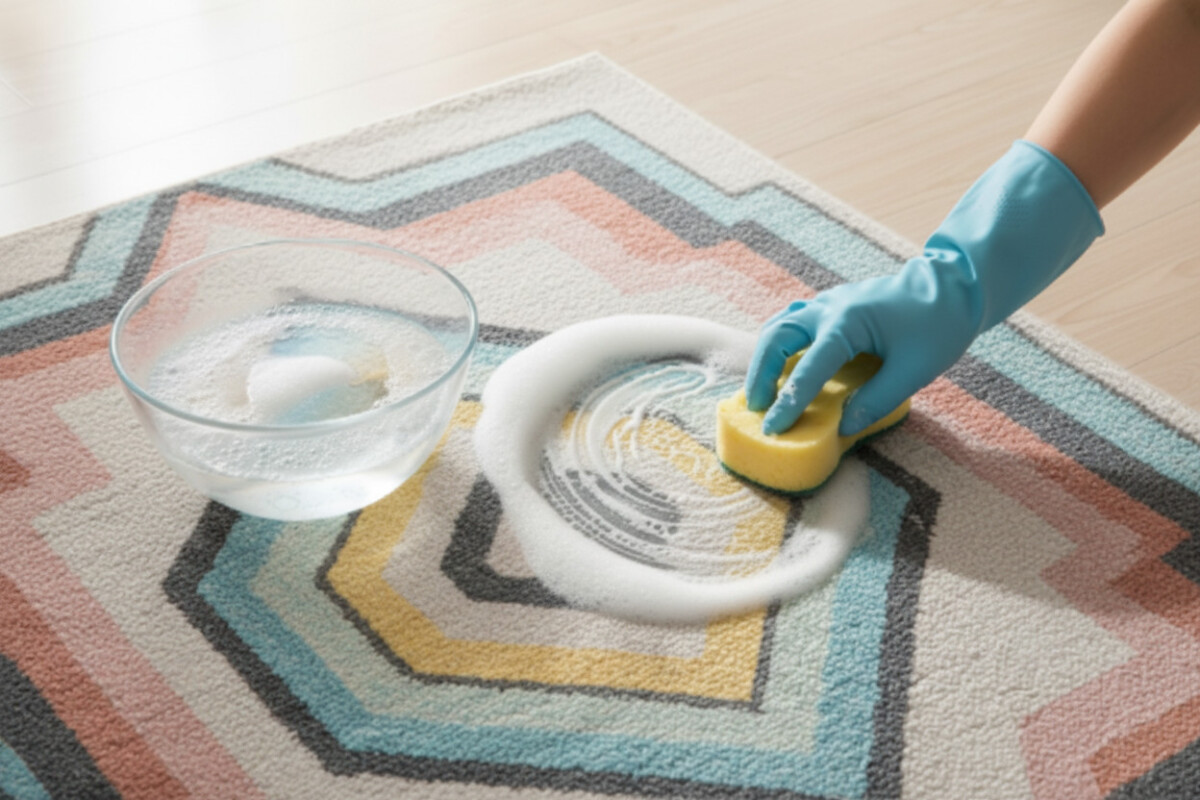
For a fantastic, all-purpose rug cleaner, mix one teaspoon of clear liquid dish soap, one cup of warm water, and one-quarter cup of white vinegar in a spray bottle. Shake the bottle gently to combine the ingredients without creating too many suds.
Step 3: Apply the Solution Sparingly
Mist the stained area lightly with your homemade solution. Do not oversaturate the rug. Soaking the rug completely can lead to water becoming trapped in the backing, which may result in mold, mildew, or a foul musty odor over time. Less is more when it comes to applying moisture.
Step 4: Blot the Stain Gently
Take a clean, white cloth and gently blot the treated area. You should see the stain beginning to transfer from the rug onto your cloth. Rotate your cloth frequently to a clean spot so you don’t accidentally reapply the stain to the rug fibers. Repeat the misting and blotting process until the stain is gone.
Step 5: Rinse with Clean Water
Once the stain has vanished, it is crucial to rinse the area. Leaving soap residue in the rug will actually attract more dirt in the future, turning your clean spot into a dark, muddy patch. Lightly spritz the area with plain, cool water and blot thoroughly with a fresh cloth to remove all leftover soap and vinegar.
Step 6: Absorb Moisture and Air Dry
Place a thick stack of dry paper towels or a heavy dry cloth over the damp area and weigh it down with a heavy object, like a stack of books or a heavy pot. Leave it for a few hours to absorb the remaining moisture deep in the fibers. Afterwards, remove the weight and let the rug air dry completely. Fluff the fibers with your fingers or a soft brush once fully dry.
Tackling Specific Types of Stains with Household Items
Different stains require different chemical reactions. Here is how to customize your approach based on what exactly was spilled on your carpet.
Pet Accidents (Urine and Vomit)
Pet stains are notorious for their strong odors and tricky biological enzymes. Start by blotting up as much liquid as possible. Next, pour a small amount of an equal-parts water and white vinegar solution over the area to break down the enzymes and neutralize the ammonia. Blot thoroughly. While the area is still slightly damp, sprinkle a generous layer of baking soda over the spot. Let it sit overnight to fully absorb the odor, then vacuum it up the next morning.
Red Wine and Fruit Juice
For dark, tannin-rich stains like wine or grape juice, club soda is your first line of defense. Pour a small amount of club soda directly onto the spill and blot continuously. If the stain persists, mix a paste of three parts baking soda to one part water, apply it to the stain, let it dry, and vacuum. For light-colored synthetic rugs, a mixture of dish soap and hydrogen peroxide works miracles on wine stains, lifting the color right out.
Coffee and Tea Spills
Coffee and tea can leave stubborn, yellowish-brown rings if not treated properly. Mix one tablespoon of liquid dish soap, one tablespoon of white vinegar, and two cups of warm water. Apply this solution with a clean sponge or cloth, blotting gently until the stain lifts. Rinse with cold water and blot dry.
Grease, Oil, and Butter
Water and vinegar won’t touch grease. For oil-based stains, generously sprinkle baking soda or cornstarch directly onto the spot and let it sit for at least 30 to 60 minutes to absorb the oils out of the fibers. Vacuum up the powder. Then, use a few drops of dish soap mixed with warm water to break down the remaining grease, blotting until the area is entirely clean.
Post-Cleaning Care: Keeping Your Rug Fresh
Once you have successfully mastered how to spot clean rugs using household staples, maintaining that cleanliness is the next vital step. Regular vacuuming—at least twice a week—prevents loose dirt, dust, and dander from being ground into the fibers, which can make the rug look dingy over time. Additionally, consider rotating your area rugs every six months to ensure even wear and sun exposure.
If you spill plain water on your rug, always dry it immediately. Even clean water can cause delicate natural rug fibers to weaken or develop a sour smell if left damp for too long. By staying vigilant and treating your rugs with consistent care, you will extend their lifespan significantly and keep them looking brand new.
Conclusion
Maintaining beautiful, cozy rugs doesn’t have to be an intimidating chore filled with toxic chemicals, expensive cleaning gadgets, or professional service bills. By raiding your pantry and utilizing the natural chemical properties of everyday items, you can confidently handle almost any spill life throws your way. The next time disaster strikes, don’t panic. Simply grab your white vinegar, baking soda, and dish soap, and trust in the power of natural cleaning. Knowing how to spot clean rugs using household staples empowers you to keep your home looking fresh, vibrant, and inviting all year round.