Table of Contents
When it comes to keeping your home spotless, the kitchen is undoubtedly the most demanding room in the house. Between bubbling sauces, splattering cooking oils, and accidental food spills, it is easy for grime to build up. To combat this, many homeowners cram their under-sink cabinets full of specialized, expensive, and often harsh chemical cleaners. There is a specific spray for the granite, a polish for the stainless steel, a harsh degreaser for the stovetop, and a heavy-duty scrub for the sink. But what if you could ditch the clutter and use a single, highly effective product for almost every surface?
The truth is, cleaning your kitchen with dish soap is not just an old-school trick; it is an incredibly effective, safe, and budget-friendly way to maintain a sparkling culinary space. Dish soap is specifically formulated to cut through stubborn food grease while remaining gentle enough for your hands. This unique combination makes it the absolute perfect all-purpose cleaner. In this comprehensive guide, we will explore exactly how you can use this humble staple to transform every inch of your kitchen.
Why You Should Be Cleaning Your Kitchen With Dish Soap
Before we dive into the step-by-step methods, it is important to understand why dish soap is superior to many commercial multi-surface cleaners.
First and foremost, dish soap is a mild surfactant. Surfactants work by breaking the surface tension of water, allowing it to lift dirt, oil, and grease away from surfaces so they can be easily wiped or rinsed away. Because kitchens are primarily coated in food-based grease, a grease-fighting dish soap is exactly what you need.
Secondly, dish soap is remarkably gentle. Unlike bleach, ammonia, or acidic cleaners (like vinegar and lemon juice), dish soap is pH-neutral. This means it will not etch your expensive natural stone countertops, strip the finish off your wooden cabinets, or degrade the protective seals on your appliances.
Finally, it is incredibly cost-effective. A single bottle of high-quality liquid dish soap costs only a few dollars and can last for months, even when diluted for whole-kitchen cleaning. When you commit to cleaning your kitchen with dish soap, you are simplifying your routine, saving money, and reducing the indoor air pollution caused by volatile organic compounds (VOCs) found in harsh chemical sprays.
Essential Supplies You Will Need
To get started on your kitchen transformation, you only need a few basic supplies. Gather the following items before you begin:
- High-Quality Liquid Dish Soap: Choose a brand known for its degreasing properties (blue Dawn is a cult favorite among cleaning professionals).
- Microfiber Cloths: These are essential for wiping surfaces without leaving lint or streaks behind.
- A Spray Bottle: For mixing your DIY all-purpose dish soap spray.
- Non-Abrasive Scrub Sponges: For tackling dried-on food without scratching delicate surfaces.
- A Soft-Bristle Toothbrush: For getting into tight crevices around faucets and hardware.
- Warm Water: Warm or hot water activates the soap and helps melt away greasy residue faster.
Step-by-Step Guide to Cleaning Every Surface
1. Wipe Down Countertops and Islands
Your kitchen countertops see a lot of action, from meal prep to dropping off the mail. Because they are food-contact surfaces, you want to use a cleaner that is safe and non-toxic.
The Method: Fill your clean spray bottle with two cups of warm water and add just two to three drops of dish soap. Give it a gentle swirl to mix (do not shake vigorously, or you will end up with too many bubbles). Spray this mild solution directly onto your countertops. Using a damp microfiber cloth, wipe down the surface in an S-pattern to ensure you aren’t just pushing dirt around.
Because dish soap is pH-neutral, this solution is perfectly safe for granite, quartz, marble, laminate, and butcher block surfaces. If you have sticky spots from spilled juice or jam, let the soapy water sit for a minute to soften the mess before wiping it away.
2. Degrease the Stovetop and Range Hood
The stovetop and the range hood above it are absolute magnets for aerosolized cooking grease. Over time, this grease forms a sticky, fuzzy layer that seems impossible to remove with standard wipes.
The Method: For heavy stovetop grease, you need a slightly stronger concentration. Add a squirt of dish soap directly to a bowl of hot water. Dip your non-abrasive sponge into the soapy water, wring it out slightly, and scrub the stovetop. The degreasers in the soap will immediately go to work breaking down the oily residue.
For removable burner grates or drip pans, fill your sink with hot water and a generous squirt of dish soap. Let the grates soak for 30 to 45 minutes. The baked-on grime will loosen significantly, allowing you to easily wipe it away. Finish by wiping the stovetop and hood with a clean, damp microfiber cloth to remove any leftover soap residue, which can cause streaks if left behind.
3. Make Your Stainless Steel Appliances Shine
Stainless steel refrigerators, dishwashers, and ovens look beautifully sleek—until they are covered in greasy fingerprints and water drips. Many people buy expensive, oil-based stainless steel polishes, but dish soap works just as well to clean the surface.
The Method: Dip a soft microfiber cloth into a diluted dish soap and warm water solution. Wring the cloth out until it is barely damp. Wipe down the front of your appliances, paying special attention to the handles where oils from your hands accumulate. Crucial tip: Always wipe in the direction of the “grain” of the stainless steel to avoid micro-scratches.
Once the appliance is clean, follow up immediately with a separate microfiber cloth dampened only with fresh water to rinse. Finally, take a dry microfiber cloth and buff the surface dry. Buffing is the secret to a streak-free, brilliant shine.
4. Refresh Kitchen Cabinets and Hardware
Kitchen cabinets—especially those located directly above or next to the stove—accumulate a surprising amount of grease and dust. Because cabinets are often made of painted wood or finished veneer, harsh chemicals can cause the paint to peel or the finish to dull.
The Method: Cleaning your kitchen with dish soap is the safest way to maintain your cabinetry. Using your highly diluted spray bottle mixture (just a few drops per two cups of water), lightly mist a microfiber cloth rather than spraying the wood directly. Gently wipe down the cabinet doors, starting from the top and working your way to the bottom.
Use your soft-bristle toothbrush dipped in soapy water to gently scrub the intricate grooves of the woodwork and the grime that builds up around the cabinet knobs and drawer pulls. Dry the cabinets immediately with a fresh towel to prevent moisture damage to the wood.
5. Tackle the Microwave Interior and Exterior
Microwaves are notorious for housing exploded butter, hardened pasta sauce, and mysterious food splatters.
The Method: Fill a microwave-safe bowl with a cup of water and a single drop of dish soap. Microwave the bowl on high for three to four minutes until the water boils and the interior of the microwave is filled with steam. Do not open the door right away; let it sit for another five minutes.
The soapy steam will penetrate and soften the rock-hard food splatters. When you finally open the door, carefully remove the hot bowl. Dip your sponge into the warm, soapy water from the bowl and effortlessly wipe away the loosened grime from the walls, ceiling, and glass turntable. Wipe dry with a clean cloth.
6. Scrub the Kitchen Sink and Fixtures
Even though water runs through it all day, the kitchen sink is actually one of the dirtiest places in the home. Dish soap is the perfect tool for getting it clean without scratching the basin.
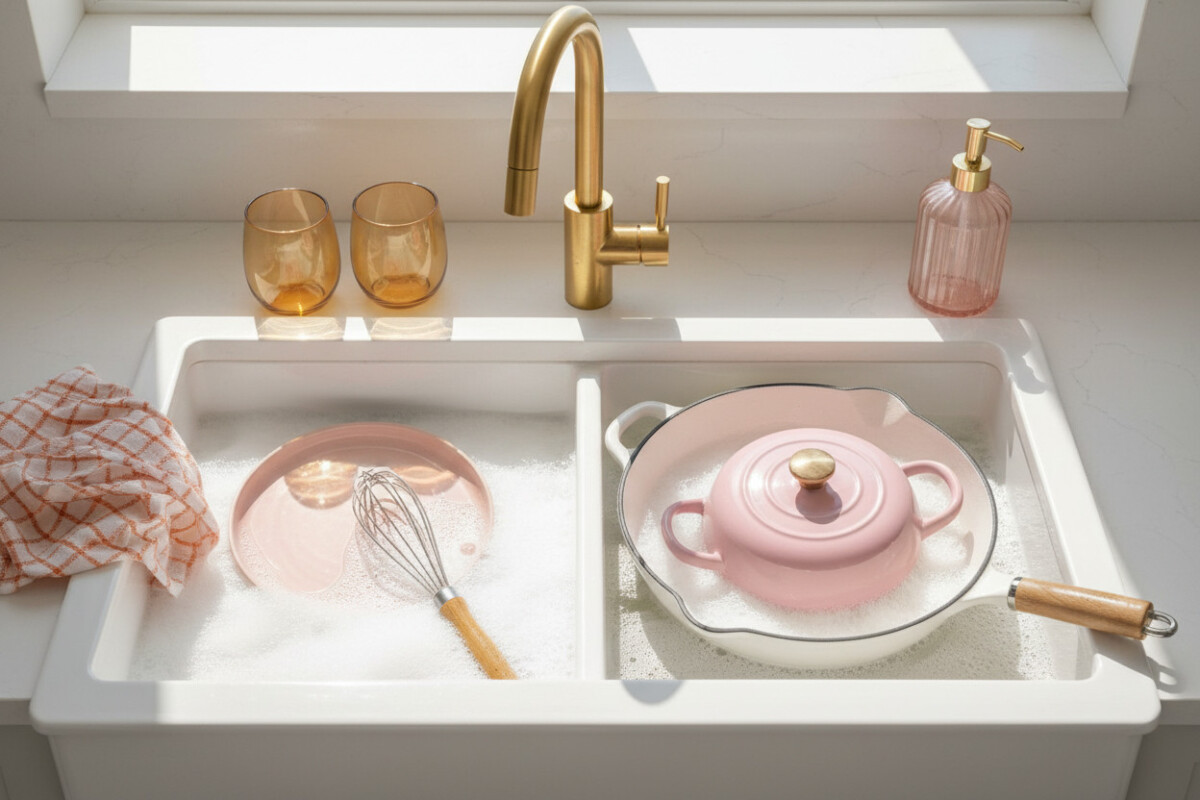
The Method: Squirt dish soap directly into the empty sink basin. Use your wet scrub sponge to work the soap into a thick lather, scrubbing the sides, the bottom, and the drain stopper. If you need a little extra abrasive power for stubborn coffee or tea stains, sprinkle a light layer of baking soda into the sink before you scrub. The combination of dish soap and baking soda creates a powerful, non-toxic scouring paste.
Don’t forget the faucet! Use your toothbrush to work the soapy lather around the base of the faucet and the handles where hard water and grime collect. Rinse the entire sink and fixture thoroughly with warm water, and buff the metal hardware dry to prevent water spots.
7. Mop the Kitchen Floor
The final step in cleaning your kitchen is addressing the floor. Whether you have ceramic tile, linoleum, vinyl, or sealed wood, dish soap is an excellent floor cleaner that won’t leave a cloudy buildup over time.
The Method: Fill your mop bucket with a gallon of hot water and add only one tablespoon of dish soap. Do not add too much soap! Using too much dish soap on the floor will leave a sticky residue that actually attracts dirt. Dip your mop into the solution, wring it out very well so it is damp but not dripping, and mop the floor in sections. The mild soapy water will easily lift muddy footprints, spilled sauces, and general dust, leaving your kitchen smelling fresh and looking immaculate.
Pro Tips for the Best Results
To ensure you get the absolute best results when utilizing this method, keep these professional tips in mind:
- Less is More: The biggest mistake people make with dish soap is using too much. Because it is highly concentrated, a single drop goes a very long way. Excess soap requires endless rinsing and leaves a dull, sticky film. Always start with less than you think you need.
- Always Rinse: While dish soap is safe, it is still soap. If you leave it on a surface, it can attract dust. Always do a quick wipe-down with a clean, damp, soap-free cloth as your final step.
- Pair with Baking Soda: As mentioned in the sink section, dish soap mixes beautifully with baking soda. If you have a burnt-on mess in a pan or on the stovetop, make a paste of dish soap and baking soda, let it sit for ten minutes, and scrub away.
Conclusion
Overhauling your cleaning routine doesn’t require a shopping spree in the household chemicals aisle. By simply utilizing the grease-fighting power of the product already sitting next to your faucet, you can achieve a superior level of cleanliness. Cleaning your kitchen with dish soap simplifies your chores, protects your expensive finishes, saves you a significant amount of money, and creates a safer environment for your family and pets. Grab a bottle, a few microfiber cloths, and see the sparkling difference for yourself.